
双碳战略

Search documents
营收同比增长28.5%!裕鑫丰LED“出海”逆势上扬
Jing Ji Wang· 2026-01-22 01:24
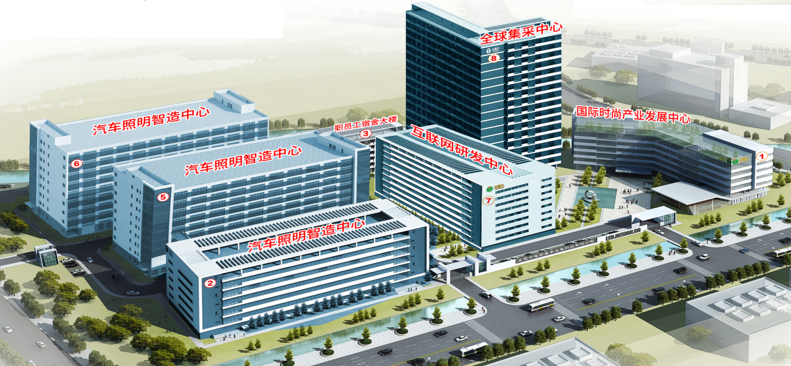
Group 1 - The core viewpoint of the articles highlights the significant growth and strategic expansion of Yu Xin Feng Group in the LED automotive lighting industry, achieving a revenue increase of 28.5% year-on-year, surpassing the industry average [1] - Yu Xin Feng has established a comprehensive industrial chain covering upstream chips, midstream packaging, and downstream application lighting, positioning itself as a leading enterprise in LED automotive lighting [1] - The company has successfully implemented a "going global" strategy, adding 323 overseas agents and expanding its business footprint to 23 countries by 2025, while enhancing its brand influence [1] Group 2 - The company is aligning with national "dual carbon" strategies and the new energy storage development opportunities, focusing on smart car lights and green energy [2] - Yu Xin Feng aims to upgrade smart headlight assembly technology, expand portable energy storage applications, and build a green collaborative supply chain to promote high-quality development [2] - To support its rapid growth, Yu Xin Feng has initiated the expansion of its production facilities, adding 43,000 square meters of modern production base by Q1 2026, with a revenue growth target of 30% year-on-year [3]

深入推进衢江临港产业区建设
Xin Lang Cai Jing· 2026-01-21 18:31
在国家"双循环"新发展格局和"双碳"战略深入推进背景下,内河航运绿色、低碳、低成本优势凸显。 2025年2月,衢州入选陆港型国家物流枢纽承载城市。衢江港作为核心区,凭借要素集聚的地理优势和 良好的发展环境,有望成为衢州打造长三角内陆开放桥头堡的关键力量。 市人大代表姜继法建议,市级层面出台专项扶持政策、设立发展基金,加强资源整合与统筹协调,形成 支持衢江港区提能的合力;完善多式联运体系,拓宽320国道衢江段、建设港区铁路专用线,推进港区 数智化转型,联合沿线城市优化船闸调度,打通水上快速通道;优先布局物流需求大、附加值高的产 业,引导"前港后厂""前港后仓"模式落地,强化"物流+制造"市域协同,支持重点企业共建物流、仓储 设施,打造"港口+产业集群"的融合发展样板。 (来源:衢州日报) 转自:衢州日报 记者 胡灵萍 ...
龙净环保:源网荷储+矿电联动打开成长空间-20260121
HTSC· 2026-01-21 10:35
Investment Rating - The report maintains a "Buy" rating for the company with a target price of 28.11 RMB [6][7]. Core Insights - The company, Longjing Environmental Protection, is a leader in China's air pollution control industry, benefiting from its partnership with Zijin Mining to become a comprehensive green energy service provider for mining [1][14]. - The "source-network-load-storage" and "mining-electricity linkage" strategies are expected to drive long-term growth, with significant contributions from clean energy projects and electric mining vehicles [1][2][15]. - The company has maintained over 9 billion RMB in new environmental orders annually since 2017, supported by the ongoing demand for ultra-low emissions in industries such as steel and cement [2][17]. Summary by Relevant Sections Environmental Business Growth - Longjing Environmental Protection has consistently added over 9 billion RMB in new environmental orders each year since 2017, benefiting from the domestic coal power market and the push for ultra-low emissions in various industries [2][17]. - The company achieved revenue of 78.58 billion RMB in the first nine months of 2025, reflecting an 18.09% year-on-year increase, with a net profit of 7.80 billion RMB, up 20.53% year-on-year [17]. Clean Energy Projects - By 2025, the company is expected to have over 3 GW of installed capacity in clean energy projects, with significant value in projects like Lagocuo and the Congo Kinshasa hydropower station, estimated at 9.3 billion RMB [3][15]. - The clean energy projects are positioned to replace fossil fuels, with Zijin Mining's energy consumption in 2024 projected at 19.6 billion kWh, where fossil fuels account for nearly 50% [3][15]. Electric Mining Vehicles - The company has developed a closed-loop business model integrating "green electricity-storage-electric mining vehicles," with the first electric mining vehicle delivered, reducing transportation costs significantly compared to fossil fuel vehicles [4][15]. - The cost per ton-kilometer for electric mining vehicles is approximately 0.177 RMB, only 26% of the cost for fossil fuel vehicles [15]. Strategic Partnerships and Future Growth - Zijin Mining's increasing stake in Longjing Environmental Protection, potentially reaching 33.76% after a planned capital increase of up to 2 billion RMB, reflects confidence in the company's growth trajectory [29][30]. - The dual empowerment strategy between Longjing and Zijin is expected to leverage synergies in the green energy sector, aligning with Zijin's carbon neutrality goals for 2029 and 2050 [14][31].


“智变”推动“质变”,创新驱动高质量发展
Xin Lang Cai Jing· 2026-01-21 10:26
在港口行业转型升级的关键时期,粮通公司积极响应广州港集团数字化发展战略,通过数字化引领生产运营和科技创新,系统性推进业务流程优化、物流 服务提升和能源管理升级三大领域项目,在降本增效方面取得务实成效,生动反映了数字化转型为港口高质量发展带来的质变发展。 01 从"人控"到"智控" 装车环节的"智变" 传统散粮装车作业长期面临着流程繁琐、效率低下、误差频发三大痛点。粮通公司以智能化改造为突破口,成功开发散粮智能装车系统,实现了从"人 控"到"智控"的根本性转变。 该系统创新性地将滑槽秤高精度计量、激光雷达实时定位等技术与预约、指令、生产系统全面打通,构建了从"预约→导航→识别→装料→计量→离港"的 全流程闭环智能作业体系。 侧壁装车俯瞰图 "智变"带来的质变成效显著。系统应用以来,单次装车时间从原来的30分钟压缩至10分钟,效率提升达66%,不仅大幅提高了车辆周转率,有效缓解了港 区拥堵问题,还通过标准化操作显著降低了人为误差和过程损耗。此外,该系统还为粮通公司后续扩大智能化应用场景积累了宝贵经验,为全面推进数字 化转型奠定坚实基础。 02 从"分散"到"协同" 物流服务的"智变" 面对内贸粮食业务发展瓶颈,粮 ...

专利+1!这项技术改写批发市场“高能耗”标签!
Xin Lang Cai Jing· 2026-01-21 10:26
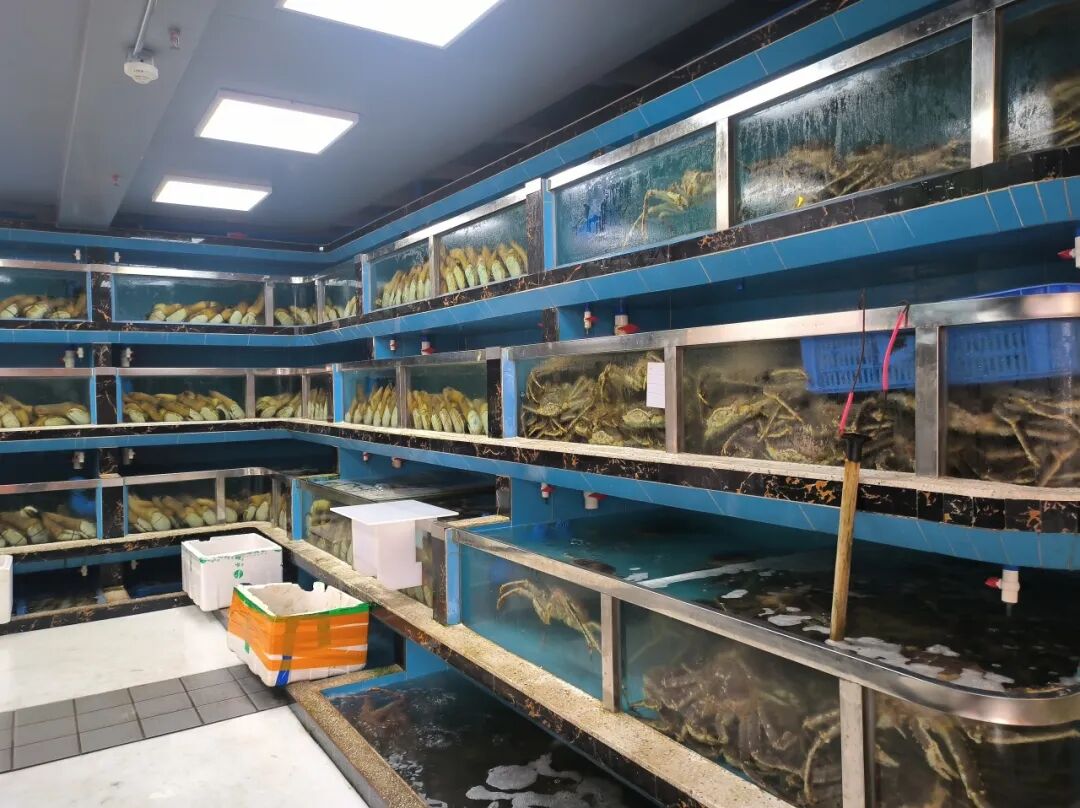
破解"一刀切"能耗难题 该技术在黄沙水产中心应用后,展现出了显著的经济与社会效益。 在节能降耗方面,系统通过"温度分级供给+动态负荷调节",实现能量供需品位匹配,有效节省10%以上的能源。通过规模化运营、优化控制策略和先进 技术,还能减少运行费用与碳排放,显著降低商户经营成本,经济社会效益显著。 在保鲜品质方面,该项技术的应用能够实现不同海鲜水池的精准控温,温度波动稳定在±1℃以内,使海鲜存活率提升至98%以上,海鲜暂养品质更好,鲜 活时间得以延长。 在设施运维方面,黄沙水产中心应用该制冷系统,各经营分区分别集中设置制冷系统,为水产商铺节约了60%以上设备安装空间,减少了制冷机噪声污染 和"热岛效应"问题。系统各压缩机模块独立运行,局部维修不影响整体运行,既提高了系统可靠性,又大幅降低维护成本。 水产市场不同暂养品种有不同水温需求。常规制冷系统仅能供应单一状态的制冷剂,在同时满足低温水池和中高温水池制冷需求的情况下,会降低制冷系 统能源利用效率,导致运行费用高企。海鲜水池因暴露于室外环境,热损失较大,制冷能耗较高。因此,在满足多类型温控需求的同时提高海鲜水池制冷 系统能源利用效率,成为节省能源费用、实现绿色低 ...
蒙东2025年绿电绿证交易量实现突破
Zhong Guo Neng Yuan Wang· 2026-01-21 09:03
Core Insights - The Mongdong region is set to achieve significant growth in green electricity and green certificate trading by 2025, with green electricity transactions reaching 49 billion kilowatt-hours, a year-on-year increase of 383%, and green certificate transactions totaling 860,000, a 56% increase [1] Group 1: Green Energy Trading Achievements - The Mongdong region, recognized as a key green energy base, has abundant wind and solar resources, facilitating a transition in regional energy structure and enhancing national energy security through green electricity and certificate trading [1] - In 2025, green electricity trading in the Mongdong region reached 27.82 billion kilowatt-hours, a 435% year-on-year increase, with a total of 10,800 transactions, representing over a tenfold increase [2] - The establishment of a monthly supply-demand matching mechanism with East and North China grid companies enabled cross-regional green electricity trading, with over 1 billion kilowatt-hours sent to Beijing and 21.2 billion kilowatt-hours in total cross-regional transactions, a 313% increase [2] Group 2: Innovative Trading Mechanisms - The implementation of an hourly green electricity trading mechanism, which categorizes trading periods into peak, valley, and flat, aims to guide users in staggered consumption of green electricity [2] - A dedicated service team has been established to enhance transaction efficiency by reducing costs and building market trust, ensuring that demand is known before trading, solutions are defined before negotiations, and issues are resolved before delivery [2] - Future initiatives will focus on optimizing trading mechanisms, expanding trading scenarios, and strengthening cross-regional collaboration, particularly in aligning green electricity trading with carbon market development [2]
龙净环保(600388):源网荷储+矿电联动打开成长空间
HTSC· 2026-01-21 07:57
Investment Rating - The report maintains a "Buy" rating for the company with a target price of 28.11 RMB [6][7]. Core Insights - The company, Longjing Environmental Protection, is a leader in China's air pollution control industry, benefiting from its partnership with Zijin Mining to become a comprehensive green energy service provider for mining [1][14]. - The "source-network-load-storage" and "mining-electricity linkage" strategies are expected to drive long-term growth, with significant contributions from clean energy projects and electric mining vehicles [1][2][15]. - The company has maintained over 9 billion RMB in new environmental orders annually since 2017, supported by the ongoing demand for ultra-low emissions in industries such as steel and cement [2][17]. Summary by Relevant Sections Business Growth and Strategy - Longjing Environmental Protection has a robust growth trajectory, with a clean energy project capacity exceeding 3 GW by 2025, and significant project values from various hydroelectric stations [3][15]. - The company is positioned to benefit from Zijin Mining's dual-carbon strategy, aiming for peak carbon emissions by 2029 and carbon neutrality by 2050, enhancing its role as a green energy service provider [14][31]. Financial Performance - The company is projected to achieve net profits of 1.21 billion RMB, 1.58 billion RMB, and 1.97 billion RMB for the years 2025 to 2027, respectively, with corresponding EPS of 0.96, 1.24, and 1.55 RMB [6][10]. - The revenue for 2025 is expected to reach 11.66 billion RMB, reflecting a growth rate of 16.36% compared to the previous year [10][12]. Market Position and Competitive Advantage - The company has established a unique business model integrating "green electricity-storage-electric mining vehicles," which is expected to create a closed-loop business ecosystem [4][15]. - The electric mining vehicles provided by Longjing have significantly lower operational costs compared to traditional fossil fuel vehicles, enhancing their competitive edge in the market [4][15]. Future Outlook - The report highlights the potential for clean energy and electric mining vehicles to open up substantial growth opportunities for Longjing Environmental Protection, supported by favorable market conditions and strategic partnerships [1][15][16]. - The company is actively expanding its overseas projects and enhancing its technological capabilities in areas such as carbon capture and mining machinery [5][16].
赢创:加强本地创新和全球技术协同
Zhong Guo Hua Gong Bao· 2026-01-21 06:39
Core Insights - The company views China as a key driver of global economic growth and aims to increase its sales in China from 10% to 15% of global sales by 2032 [1] Group 1: Market Outlook - China is the largest chemical producer globally, expected to account for 42% of the global market share by 2024, making it a core growth engine for the chemical industry [2] - The "dual carbon" strategy in China is driving the chemical industry to explore innovative solutions, with green sustainability becoming essential for high-quality development [2] - Emerging industries such as new energy vehicles, renewable energy, healthcare, and semiconductors are creating new market demands and growth points for the chemical sector [2] Group 2: Business Strategy - The company emphasizes R&D and production as the two pillars for growth in China, focusing on bio-based solutions, energy transition, and circular economy [3] - The company aims to enhance production efficiency and sustainability while providing stable, green product supply to both local and global markets [3] Group 3: Innovation and Collaboration - The company plans to focus on new energy and energy transition, developing high-performance materials for new energy vehicles and hydrogen energy [4] - It will establish innovation centers in China, such as a hydrogen technology center and an Asian skin research center, to support local customer needs from R&D to application [4] - The company is expanding its production capacity with projects like the specialty amines expansion in Nanjing and a specialty hydrogen peroxide plant in Leshan, set to be operational by 2026 [4]
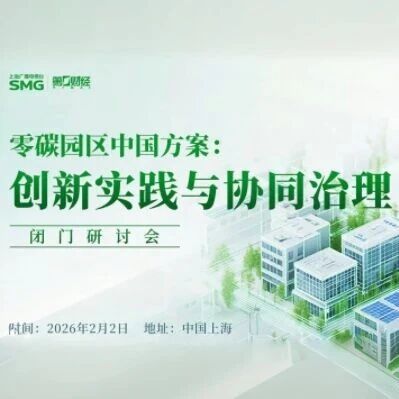
限时报名|“零碳园区中国方案:创新实践与协同治理”上海站即将开启
第一财经· 2026-01-21 06:30
Group 1 - The core viewpoint of the article emphasizes the shift in China's green low-carbon transition focus from macro goal setting to systematic promotion through specific scenarios and carriers, with zero-carbon parks being a key battlefield for implementing the "dual carbon" strategy and seizing the high ground of the green low-carbon industry [1] - The national goal during the "14th Five-Year Plan" period is to establish over a hundred national-level zero-carbon parks, which will transform energy consumption "dual control" into carbon emission "dual control," creating a trillion-level green market space [1] - Shanghai has taken the lead in integrating zero-carbon park construction into its urban green transformation, with the Lingang New Area serving as the core carrier and practical benchmark for this transition [1] Group 2 - Lingang New Area has leveraged its advantages in new energy, intelligent manufacturing, and energy conservation to explore deep integration paths of "zero-carbon + industry," accumulating rich practical experience in distributed energy utilization, large-scale promotion of green buildings, and circular transformation of parks [3] - The construction of zero-carbon parks faces challenges such as difficulties in planning implementation, complex collaborative mechanisms, and insufficient sustainability of business models [3] - An event titled "Zero-Carbon Park China Solution: Innovative Practices and Collaborative Governance" is scheduled for February 2, 2026, at Shanghai Jiao Tong University, aiming to summarize and amplify the exploration experiences of Lingang New Area [3]
近期铝市三重奏-政策退潮-需求起浪与价格反馈
2026-01-21 02:57
Summary of Key Points from Conference Call Records Industry Overview - The records primarily discuss the aluminum and photovoltaic (PV) industries, focusing on the impact of recent policy changes and market dynamics on aluminum demand and pricing. Key Insights and Arguments Aluminum Demand and Pricing - The "15th Five-Year Plan" anticipates an investment of 4 trillion yuan in the power grid, stabilizing aluminum demand for overhead transmission lines, while copper demand for cables also remains significant. Despite pressure on metal prices, fundamental material choices are unlikely to change significantly [1][3]. - The cancellation of the export tax rebate for photovoltaic products starting April 1, 2026, is expected to temporarily boost orders for frame and component manufacturers by over 15%, likely due to demand being brought forward. The long-term effects of this policy remain to be seen [1][4][5]. - The estimated aluminum consumption for transmission lines during the "15th Five-Year Plan" is projected to be between 24 million to 26 million tons, an increase from approximately 22 million tons during the "14th Five-Year Plan" [1][7][23]. Impact of Policy Changes - The cancellation of the export tax rebate is expected to have a mixed impact on the photovoltaic industry. While it may support frame and aluminum rod manufacturers in the short term, it could benefit overseas component manufacturers in the long run, as they may have a competitive edge in production costs [16][20]. - The anticipated increase in grid investment is expected to maintain demand for aluminum in overhead transmission lines, as these lines typically use aluminum due to its mechanical strength and cost-effectiveness [3][11]. Market Dynamics - Recent fluctuations in aluminum prices have led to a cautious order-taking attitude among downstream processing companies, which could significantly influence future aluminum pricing [2]. - The photovoltaic industry is experiencing a shift towards centralized installations, supported by large-scale projects that are less sensitive to price changes, ensuring stable supply chains for major manufacturers [15][17]. Future Projections - The expected new installed capacity for distributed photovoltaic systems in 2026 is projected to decline from a peak of 140-150 GW in 2025 to between 110-130 GW, primarily due to the pressure from supporting infrastructure [14]. - The overall aluminum consumption in 2026 is projected to remain between 1.2 to 1.5 million tons, despite the challenges posed by rising prices and policy changes [16]. Investment and Financing - Funding for grid investments is primarily sourced through bond issuance, financial budgets, and internal cash flows, with bond financing being the fastest method [8]. - The transition from coal power to decarbonization is expected to accelerate, driven by advancements in storage technology and smart grid development [10]. Inventory and Order Management - Companies are currently building up inventory in anticipation of market demand changes post-holiday, with some manufacturers increasing sales by 15% compared to December [24][27]. - The processing cycle for aluminum is expected to be confirmed later, but companies plan to concentrate purchases after the holiday, anticipating a price drop [28]. Additional Important Content - The records highlight the importance of integrating various energy sources and the need for a comprehensive system to manage energy consumption and distribution effectively [13]. - The competitive landscape in the photovoltaic industry is shifting, with larger firms consolidating market share while smaller companies struggle due to price wars and operational challenges [20]. This summary encapsulates the critical insights and projections regarding the aluminum and photovoltaic industries, reflecting the current market conditions and anticipated future trends.