
数字经济

Search documents
融入数字经济发展大局:智能寄递服务获多方关注
Sou Hu Cai Jing· 2026-02-17 01:39
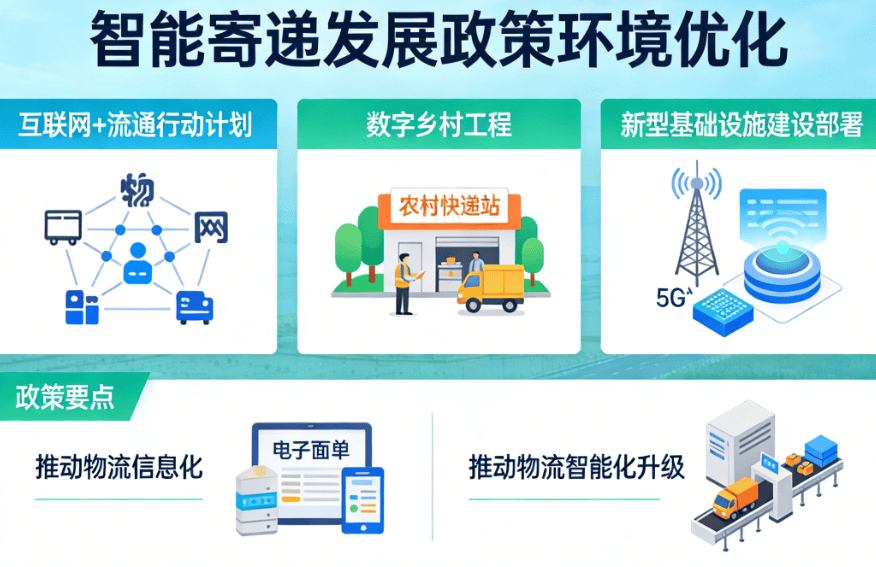
Group 1 - The digital economy is driving traditional service industries, including express delivery, to accelerate their integration with digital technologies [1] - The policy environment supporting smart delivery development is improving, with initiatives like the Internet Plus Circulation Action Plan and the Digital Rural Project promoting logistics informationization and intelligence upgrades [3] - Platforms focused on price comparison, resource aggregation, and appointment functions are rapidly developing, exemplified by Anan Express, which enhances convenience through mobile terminals for price comparison, pickup scheduling, electronic waybills, and full tracking [3] Group 2 - Applications in the express delivery sector represent a typical case of industrial internet extending downwards, simplifying complex supply chain management into user-friendly interfaces [5] - Local governments, such as those in Jiangsu and Zhejiang, are actively exploring cooperative models and have initiated pilot projects for smart community delivery, integrating digital platforms into grassroots governance to improve public service levels [5] - Experts recommend strengthening standardization, focusing on data security, and ensuring fair competition regulation to support the healthy and orderly development of emerging business formats, thereby contributing to the overall digital transformation of the economy and society [5]

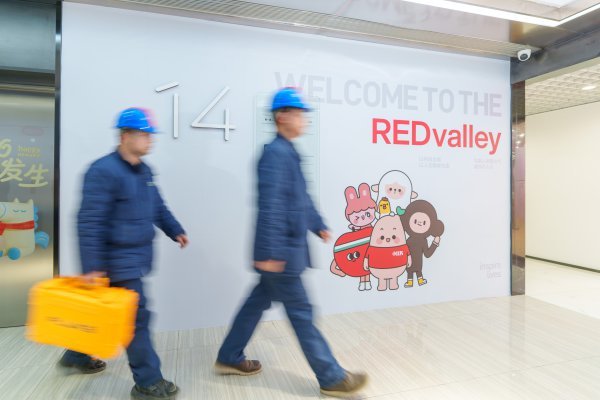
探访小红书武汉第二总部,24小时护航亿万网友的“电子春晚”
Chang Jiang Ri Bao· 2026-02-17 00:24
Core Viewpoint - The collaboration between Xiaohongshu and State Grid Wuhan Electric Power Company ensures stable power supply during the Spring Festival, enhancing user experience for the upcoming 2026 Spring Festival Gala [2][3][4]. Group 1: Power Supply Assurance - State Grid Wuhan Electric Power Company has implemented a comprehensive power supply guarantee plan for Xiaohongshu, including 24-hour monitoring and rapid response teams to address any power outages during the Spring Festival [3][5]. - The company conducted thorough inspections of power equipment and lines before the festival, ensuring reliability and stability of power supply for Xiaohongshu and other enterprises in the Guanggu APP Square [2][4]. Group 2: Technological Integration - The Guanggu APP Square has developed an intelligent power operation management system in collaboration with State Grid Wuhan, allowing real-time monitoring of low-voltage distribution systems and enhancing operational efficiency [4][5]. - The park employs a dual-circuit power supply model, combined with intelligent management, to provide a robust power supply framework for its tenants [4]. Group 3: Economic Impact - In 2025, the East Lake High-tech Zone (Guanggu) saw a 10.02% increase in total electricity consumption, with internet-related services experiencing a remarkable 43.79% growth, indicating strong economic momentum in the region [7]. - The collaboration between enterprises, the park, and the power company has created a robust electricity ecosystem, facilitating economic development and ensuring stable power supply as a competitive advantage for businesses [5][7].
“算力蓝海”的守岁人
Xin Lang Cai Jing· 2026-02-16 23:40
Core Insights - The Taihang Intelligent Computing Center serves as a crucial computing power hub in Central Hebei, supporting the digital transformation of regional industries and the development of artificial intelligence, currently achieving a computing power scale of 5340P [1][2] - The center operates continuously, even during holidays, to ensure the stability of data services and the security of data transmission, highlighting the importance of computing power for downstream enterprises and research units [1][2] Industry Developments - The center aims to become the largest market-oriented AI computing power hub north of the Yangtze River, indicating a strategic focus on enhancing computing capabilities and service optimization in the new year [2]
2026新年献词|景顺长城基金总经理康乐:主动有为,静待春来
Xin Lang Cai Jing· 2026-02-16 22:30
Core Viewpoint - The public fund industry is undergoing a significant transformation from a scale-oriented approach to one focused on investor returns, presenting both opportunities and responsibilities for companies like Invesco Great Wall [1][7][15] Group 1: Economic Outlook - In 2025, despite new tariff shocks and changes in the international environment creating uncertainty for the Chinese economy, strong fiscal and monetary policies led to resilience in industrial and service sectors, with exports performing better than expected [4][11] - The Shanghai Composite Index reached a ten-year high, hitting 4000 points, and the total trading volume exceeded 400 trillion yuan for the first time [4][11] - Looking ahead to 2026, the Chinese economy is expected to achieve a good start under the "14th Five-Year Plan," supported by proactive macro policies and a new wave of technological revolution reshaping the global economic landscape [4][11][12] Group 2: Investment Opportunities - Key investment opportunities are anticipated in technology, overseas expansion, countering "involution," and domestic demand, with technology investment capabilities being crucial for investors to identify true value amid rapid changes [4][12] - The industry has seen a shift where passive management has overtaken active management, increasing the difficulty of generating excess returns, yet active management based on fundamentals remains a core competitive advantage in the public fund sector [5][12] Group 3: Company Strategy and Performance - Invesco Great Wall has consistently viewed active management as its foundation, adhering to a long-term investment philosophy and enhancing multi-asset allocation capabilities [5][13] - The company has strategically focused on technology investments, particularly in artificial intelligence and the digital economy, establishing a strong reputation in the market as a "technology-savvy investor" [5][13] - In December 2025, the company was awarded the "Golden Bull Fund Company" for active equity investment for the third time, highlighting its commitment to excellence in this area [5][13] Group 4: Product Offerings - Invesco Great Wall has developed a diverse product line aimed at absolute returns, including fixed income, fixed income+, and fund of funds (FOF), achieving top rankings in absolute returns among large companies over the past three and five years [6][14] - The company embraces index investment trends, expanding its index product line to include various strategies and styles, catering to diverse investor needs [6][14]

24小时跌掉36%,白银的惊魂夜,撕开了多少人的幻想,但它的故事远不止是穷人的黄金
Sou Hu Cai Jing· 2026-02-16 19:24
Group 1: Market Dynamics - The silver market experienced a dramatic "flash crash" on January 30, 2026, with spot silver prices plummeting over 36% from a historical high of $121.64/oz to a low of $74.28/oz, leading to significant losses for retail and leveraged investors [1][3] - The immediate trigger for the crash was the nomination of Kevin Walsh, perceived as hawkish, for the next Federal Reserve Chair, coupled with higher-than-expected core Producer Price Index (PPI) data, which raised market expectations for prolonged high interest rates [3] - Prior to the crash, the silver market had accumulated substantial risk, with COMEX silver futures' open interest reaching historical peaks, indicating a concentration of speculative funds that exacerbated the sell-off when prices began to decline [3] Group 2: Industrial Demand and Supply - Over 60% of the annual silver production is utilized in industrial applications, including electronics and solar energy, making silver's price closely tied to global industrial production [4][6] - The solar industry has been a major driver of silver demand, with rising costs leading manufacturers to seek alternatives, such as "silver-coated copper," to mitigate expenses as silver prices soared [6][12] - The World Silver Association projected a supply shortage in the global silver market for the sixth consecutive year, with a deficit of approximately 67 million ounces (about 2,083 tons), primarily due to the nature of silver extraction as a byproduct of mining other metals [7][9] Group 3: Market Reactions and Investment Implications - The volatility in the silver market affected investment products, such as the Guotou Ruijin Silver LOF fund, which faced a trading halt and subsequent drop upon reopening, highlighting the disconnect between market prices and net asset values [10] - The recent price fluctuations have complex implications for consumers; while lower prices may benefit those purchasing silver jewelry, investors must recognize the higher volatility of silver compared to gold and the diverging market dynamics between the two metals [10][12] - The silver market is now characterized by a dual demand dynamic, with traditional industrial uses being challenged by technological advancements in AI and data centers, which are increasing silver consumption [12]

浦银理财董事长何卫海:2026年资本市场的结构性机会或将更为清晰
Zhong Guo Ji Jin Bao· 2026-02-16 13:54
Core Viewpoint - The year 2026 is expected to present clearer structural opportunities in the capital market, driven by both external and internal economic factors [2][3]. Economic Outlook - China is entering a new development phase characterized by structural changes and resilience in total economic output, with significant contributions from both external and internal environments [2]. - The external environment remains uncertain due to global supply chain restructuring and geopolitical fluctuations, but advancements in artificial intelligence and interest rate reductions in Western economies are favorable for global economic growth [2]. - Internally, China is focused on high-quality development, with steady progress in industrial upgrades and technological independence, leading to a balanced improvement in both quality and quantity of economic growth by 2026 [2]. Capital Market Insights - The bond market is expected to continue a low volatility pattern, emphasizing the need for interest rate trading and credit spread opportunities [3]. - The equity market may experience an upward trend in valuations due to ongoing financial market reforms and increased access for medium to long-term capital, with potential for significant opportunities in hard technology and advanced manufacturing sectors [3]. - Specific sectors benefiting from gradual price recovery and stable cash flows, particularly those with high dividend yields, are anticipated to show strong investment value [3]. - The commodity market, particularly precious metals, is expected to perform well due to global inflation, geopolitical risks, and central bank gold purchases [3]. Company Strategy - The company maintains a positive long-term outlook on the Chinese economy and a favorable investment perspective for 2026, focusing on creating customer value and supporting the real economy [4]. - The company aims to identify and capitalize on key investment opportunities while managing risks, emphasizing a long-term view and professional capabilities [4].
三十年来中国网络科技的社会风险与防范路径
Sou Hu Cai Jing· 2026-02-16 00:24
Core Viewpoint - The article discusses the evolution and characteristics of social risks associated with network technology in China over the past 30 years, emphasizing the need for proactive measures in data governance, capital operation, and political communication to mitigate these risks and enhance national security [2][3][32]. Group 1: Evolution of Network Technology - The internet era in China began in 1994, leading to a significant increase in internet users, reaching 1.108 billion by December 2024, with an internet penetration rate of 78.6% [3]. - Network technology has evolved through various stages: Web 1.0 (static pages), Web 2.0 (interactive platforms), Web 3.0 (decentralized systems), and Web 4.0 (AI and metaverse), each contributing to a complex interplay of benefits and risks [4]. Group 2: Social Benefits of Network Technology - Network technology enhances individual empowerment by facilitating knowledge flow and reshaping power structures, allowing users to influence public discourse [5]. - It stimulates individual potential by transforming users from passive recipients to active participants in information dissemination and resource allocation [5]. - The technology promotes market competition by increasing transparency and reducing information asymmetry, enabling users to make informed decisions [5]. Group 3: Negative Effects of Technological Evolution - The transition from single products to ecological platforms has led to chaotic competition among major platforms, resulting in resource misallocation [6]. - Users initially attracted by subsidies may later face monopolistic practices, including price discrimination and reduced market competition, which challenge the normal functioning of the market [7]. Group 4: Specific Manifestations of Social Risks - The rapid evolution of network technology has outpaced the ability of social institutions to adapt, leading to new social risks in data governance, capital, and political spheres [8]. Group 5: Data Governance Challenges - Over-collection of data and algorithmic control mechanisms pose significant risks, leading to information silos and echo chambers that distort public perception [10]. - The pervasive collection of personal data raises privacy concerns, resulting in decreased social trust and increased vulnerability to data exploitation [11]. Group 6: Capital-Driven Alienation - The intertwining of network technology and capital has led to monopolistic platforms that stifle competition and innovation, creating a market dominated by a few major players [14][15]. - The exploitation of digital labor through algorithmic control has raised concerns about workers' rights and the ethical implications of such practices [18]. Group 7: Political Intervention Risks - Network technology has been used to manipulate political discourse through social bots, impacting public opinion and political stability [20]. - Social media serves as a platform for mobilizing social movements, which can both empower citizens and pose risks to governance [22]. Group 8: Pathways for Risk Mitigation - Proactive measures are needed in value guidance, institutional regulation, technological empowerment, and multi-stakeholder governance to effectively address the social risks posed by network technology [23]. - Establishing a layered regulatory framework and ensuring data sovereignty are critical for protecting individual privacy and enhancing data security [25][26]. - Encouraging technological innovation while anticipating risks through simulation and predictive measures can help in managing future challenges [29][30].

“彩立方”里直播忙
Xin Lang Cai Jing· 2026-02-15 23:23
Core Insights - The "One Product One Broadcast" base in Handan is experiencing increased activity as the Spring Festival approaches, with local hosts actively promoting Handan's quality products through live streaming [1][2] - The base has become a significant platform for showcasing and promoting local specialties, featuring over 300 products from 20 counties and districts, as well as more than 2,000 popular products from outside the region [1][2] Group 1 - The live streaming platform has seen a notable increase in sales, with a specific product, the "Strawberry Bear Baby Crawling Suit," achieving sales of over 3,000 units and generating more than 600,000 yuan in revenue in February alone [1] - The base provides a comprehensive growth platform for local hosts, integrating product selection, practical training, and sales [2] - The initiative aims to strengthen the local e-commerce ecosystem, with over 13,000 hosts trained and more than 7,100 quality products included in the "Handan Good Products" database [2] Group 2 - The city has implemented a "1+20" operational system to promote the development of digital economy and e-commerce, establishing one city-level base and 20 county-level bases [2] - The sales revenue of the "One Product One Broadcast" network technology group is projected to exceed 1.06 billion yuan by 2025, indicating a robust growth trend in the industry [2]
中国十大最具幸福感城市排名
泽平宏观· 2026-02-15 16:06
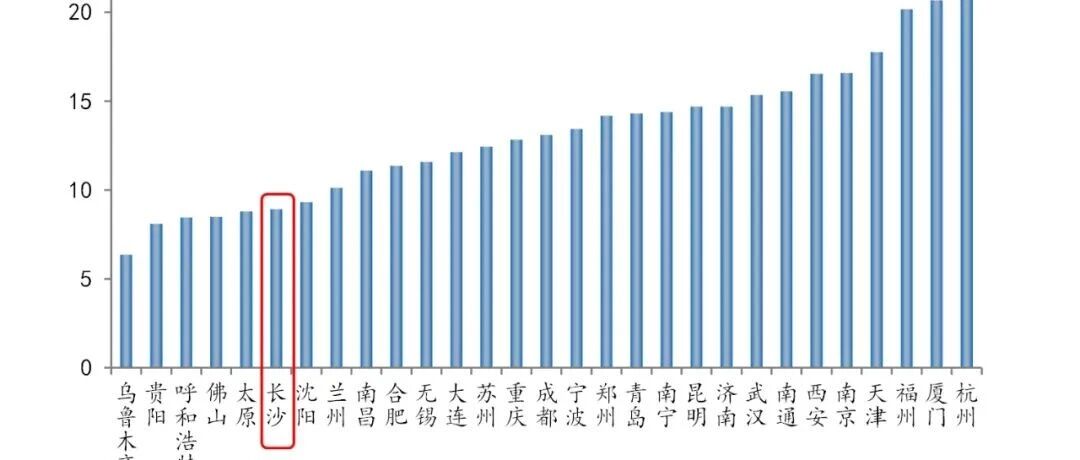
Core Viewpoint - The article emphasizes that high-quality development is the primary task for building a modern socialist country, with a focus on enhancing residents' happiness index as a crucial aspect of achieving this goal. The research ranks the happiness index of 337 cities in mainland China, identifying Nanjing, Hangzhou, and Changsha among the top ten happiest cities in 2023. Group 1: Nanjing - Nanjing is recognized for its rich historical background, excellent transportation network, and abundant educational resources. The city has a favorable climate and high urban greenery, with a green coverage rate of 45.0% and a green land rate of 40.8% [8][9] - In 2022, Nanjing's GDP per capita reached 179,000 yuan, ranking first among provincial capital cities in China. The city has a diverse industrial structure, primarily driven by modern services and advanced manufacturing [9][10] - Nanjing boasts a concentration of higher education institutions, including 8 211 universities and 12 double first-class universities, and is a significant transportation hub with a well-developed public transport network [10] Group 2: Hangzhou - Hangzhou is characterized by its blend of historical heritage and modern vitality, with a strong emphasis on ecological civilization. The city has an air quality rate of 83.3% and a forest coverage rate of 65.3% [15][16] - The digital economy is a key driver of Hangzhou's growth, with the core industry value added exceeding 507.6 billion yuan in 2022, accounting for over 27.1% of the city's GDP [16][17] - The city maintains a strong population attraction, with a total population of 12.376 million by the end of 2022, and a continuous improvement in urbanization rate [17] Group 3: Changsha - Changsha is known for its vibrant night economy and balanced urban-rural development, with the night economy retail sales accounting for about 60% of the city's total retail sales in 2022 [21][22] - The city has a low cost of living among second-tier cities, with a housing price-to-income ratio of 8.9, making it attractive for young talents [22] - Changsha's urban-rural income disparity is minimal, with a ratio of 1.7, and the average disposable income for urban residents reached 35,481 yuan in 2023 [22] Group 4: Hefei - Hefei is recognized as the first "China Climate Comfortable City" provincial capital, with an air quality rate of 86.0% and a favorable climate for living [23][24] - The city has experienced rapid economic growth, with a GDP growth rate of 7.4% in the first half of 2023, entering the top 20 cities in China [24][25] - Hefei's population growth rate is the highest in the country, supported by its strong educational resources and innovation capabilities [25] Group 5: Zhoushan - Zhoushan is the only fourth-tier city in the top ten happiest cities, known for its beautiful island scenery and rich marine resources [27][28] - In 2022, Zhoushan's GDP per capita reached 167,000 yuan, ranking first in Zhejiang Province, with a low housing price-to-income ratio of 7.7 [28][29] - The city has a strong focus on ecological protection and sustainable development, with a PM2.5 annual average concentration of only 14 micrograms per cubic meter [29] Group 6: Wuhu - Wuhu is recognized as the second city in Anhui, with a strong focus on high-end manufacturing and a GDP of 450.21 billion yuan in 2022 [32][33] - The city has a low housing price-to-income ratio of 8.4, making it attractive for residents and contributing to stable population growth [33][34] - Wuhu's population growth rate was 1.6% in 2022, ranking third in the country, supported by favorable economic conditions and talent attraction policies [34] Group 7: Suzhou - Suzhou is an industrial powerhouse with the highest economic strength in Jiangsu Province, achieving a GDP of 2.4 trillion yuan in 2022 [36][37] - The city has a reasonable housing price-to-income ratio of 12.4, making it more affordable compared to other cities with similar economic strength [36] - Suzhou's urban construction and transportation infrastructure are well-developed, providing residents with a high quality of life [37] Group 8: Ningbo - Ningbo is a historical port city with a GDP of 1.57043 trillion yuan in 2022, showing a growth of 3.5% [41][42] - The city has a balanced urban-rural development, with a disposable income ratio of 1.7, indicating a narrowing income gap [42] - Ningbo's transportation infrastructure is highly developed, with an average commuting time of 31.3 minutes, contributing to residents' satisfaction [42] Group 9: Dalian - Dalian is known as the "Northeast Window," with a GDP of 843.09 billion yuan in 2022, ranking first in Liaoning Province [47][48] - The city has the highest population growth rate in Northeast China, supported by its quality education and healthcare resources [48] - Dalian's air quality is among the best in the country, with a high number of days with good air quality [46] Group 10: Zhuhai - Zhuhai is recognized for its excellent ecological environment, with a per capita GDP of 164,000 yuan in 2022 [49][50] - The city has a strong talent attraction capability, with a population growth of 58.8% from 2010 to 2022 [51] - Zhuhai's economic structure is diverse, focusing on high-end manufacturing and high-tech industries [50][51]
IT政策可能会使行业增长6%
Shang Wu Bu Wang Zhan· 2026-02-15 15:45
Core Insights - The upcoming coalition government is expected to implement its IT policies as promised during the campaign, leading to a projected revenue growth of 5.8% for system integrators and data center businesses in Thailand, reaching 260 billion THB in 2023 [1] - For the following year, these sectors are anticipated to grow by 6.5%, with revenues expected to hit 276 billion THB [1] - Various political parties have committed to leveraging digital technology to enhance the performance of national agencies, which includes improving data connectivity, public service delivery, and natural disaster alerts [1] Industry Developments - The focus on digital technology is seen as a crucial factor in building a digital economy, with initiatives aimed at combating and preventing cybercrime, as well as training personnel in data and artificial intelligence (AI) knowledge [1]