
快递业

Search documents
融入数字经济发展大局:智能寄递服务获多方关注
Sou Hu Cai Jing· 2026-02-17 01:39
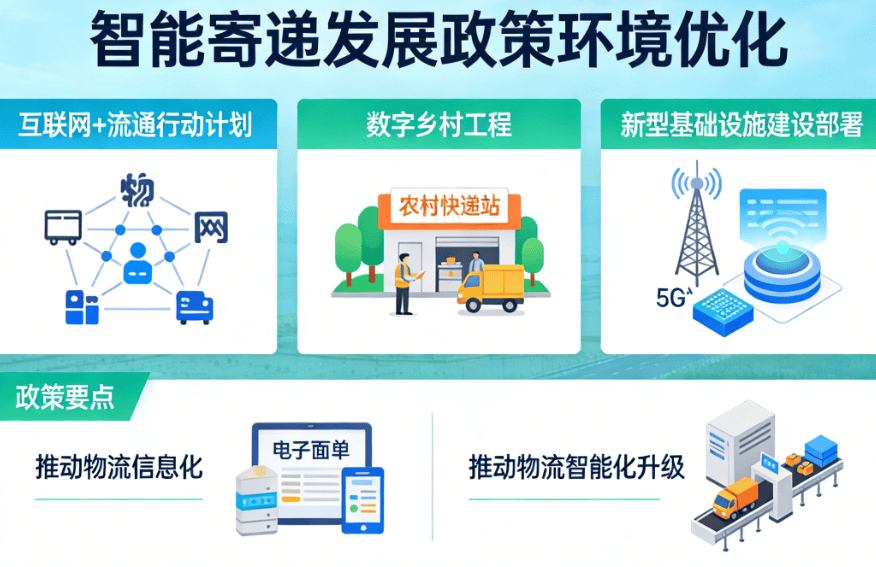
Group 1 - The digital economy is driving traditional service industries, including express delivery, to accelerate their integration with digital technologies [1] - The policy environment supporting smart delivery development is improving, with initiatives like the Internet Plus Circulation Action Plan and the Digital Rural Project promoting logistics informationization and intelligence upgrades [3] - Platforms focused on price comparison, resource aggregation, and appointment functions are rapidly developing, exemplified by Anan Express, which enhances convenience through mobile terminals for price comparison, pickup scheduling, electronic waybills, and full tracking [3] Group 2 - Applications in the express delivery sector represent a typical case of industrial internet extending downwards, simplifying complex supply chain management into user-friendly interfaces [5] - Local governments, such as those in Jiangsu and Zhejiang, are actively exploring cooperative models and have initiated pilot projects for smart community delivery, integrating digital platforms into grassroots governance to improve public service levels [5] - Experts recommend strengthening standardization, focusing on data security, and ensuring fair competition regulation to support the healthy and orderly development of emerging business formats, thereby contributing to the overall digital transformation of the economy and society [5]

春节快递“迟到又破损”?这几个投诉渠道很多人不知道
Xin Lang Cai Jing· 2026-02-12 11:27
Core Viewpoint - The article emphasizes the importance of consumer rights and the various channels available for complaints during the Spring Festival, highlighting that the threshold for protecting consumer rights is lower than expected. Group 1: Complaint Channels - The first recommended channel for logistics issues is the National Postal Administration's complaint website or the "Postal Consumer Complaint" WeChat mini-program, which is the regulatory body for the express delivery industry. According to the "Interim Regulations on Express Delivery," express companies are obligated to deliver to the agreed address, and delays, losses, or damages are considered service failures. If a complaint is accepted, the postal management department will require the express company to respond within a specified time, which they take seriously as complaint rates directly affect their operating license ratings [2][3][13]. - The second channel is the official customer service of e-commerce platforms like Taobao, JD.com, and Pinduoduo. Complaints through these platforms are often more efficient than going directly to the express companies, as the platforms have assessment mechanisms for their delivery service providers. Complaints can directly impact the service provider's ratings and traffic allocation, leading to quicker resolutions [4][15][16]. - The third channel is the "Black Cat Complaint" platform, which serves as a public forum for consumer complaints. It allows users to submit complaints easily and provides transparency by displaying complaint data. The platform's monthly "red and black list" highlights companies with high complaint volumes and low resolution rates, creating public pressure on these companies [6][19][20]. Group 2: Specific Issues and Solutions - For ride-hailing issues such as detours, overcharging, or lost items, the recommended contact is the Transportation Service Supervision Hotline 12328, which has more authority than simply contacting the ride-hailing platform's customer service, especially for pricing disputes [8][24]. - For issues related to telecommunications, such as unauthorized charges or subscription services, the Ministry of Industry and Information Technology's complaint center 12300 is the final arbiter when internal resolutions fail [18][24]. - For food safety complaints related to takeout services, consumers can report to 12315 in addition to platform complaints, as the market regulatory bureau has a high case acceptance rate for food safety issues [18][24]. Group 3: Consumer Advocacy - The article argues against the mentality of "letting it go" and emphasizes that advocating for consumer rights is not about punishing anyone but ensuring that good service providers are recognized and rewarded. Silence on poor service allows subpar experiences to persist, while quality service remains unacknowledged [9][21][23]. - Consumers are encouraged to take a few minutes to organize their evidence and choose the appropriate channel for complaints when facing consumer disputes, reinforcing the idea that the cost of advocating for rights should not exceed the cost of enduring poor service [10][22].
春节是否“打烊”应由快递员自己说了算
Xin Lang Cai Jing· 2026-02-01 18:19
Core Viewpoint - The key issue is enabling delivery workers to have the autonomy to choose whether to work during the Spring Festival, rather than enforcing a "no shutdown" policy in the express delivery industry [1][3]. Group 1: Legislative and Regulatory Developments - The Gansu Provincial People's Congress representative proposed allowing delivery workers to return home for the Spring Festival, which has garnered significant public support and sparked discussions on labor rights [1]. - The State Post Bureau issued a plan to ensure delivery workers' rights during the Spring Festival, including timely wage payments and a mechanism for addressing their concerns [2]. Group 2: Industry Practices and Worker Rights - The current operational model in the express delivery industry often leads to workers being forced to stay on the job during the holiday, with promised overtime pay frequently not materializing [1]. - There is a need to establish a voluntary work mechanism where companies provide adequate compensation and support for those who choose to work during the holiday, while also facilitating leave for those who wish to return home [3]. Group 3: Market Dynamics and Social Considerations - The decision to operate during the Spring Festival should respect market dynamics and allow for diverse choices rather than imposing blanket policies [3][4]. - The shift from mandatory operations to respecting individual choices reflects a growing maturity in the industry and a greater respect for workers' rights [4].
以雪为“媒”带旺周边产业 激活消费新动能
Yang Shi Wang· 2026-01-27 00:01
Group 1 - The article highlights the growing popularity of ice and snow tourism, with an increasing number of skiing enthusiasts traveling to ski resorts, leading to a boost in related industries and consumer spending [2][3] - Ski resorts are experiencing a significant rise in visitor numbers, with over 80,000 guests recorded from November 2025 to mid-January 2026, and projections indicating that total attendance for the season could exceed 200,000 by March 2026 [3] - The demand for ski equipment delivery services has surged, with companies like SF Express reporting a 40% increase in business volume compared to the same period last year, primarily driven by orders from southern regions such as Guangdong, Zhejiang, and Shanghai [4] Group 2 - Customized delivery solutions for ski equipment have been introduced by courier companies, utilizing specialized packaging materials to minimize transport damage and ensuring delivery within 48 hours to major cities [4][5] - Ski resorts are collaborating with local cultural heritage sites to create unique tourism experiences, such as combining skiing with historical sightseeing, which is expected to attract more visitors [6][10] - Educational initiatives are being implemented at ski resorts, where students participate in snow sports training, enhancing physical fitness and enriching school curricula, with over 40,000 students expected to visit during the season [7] Group 3 - The integration of cultural and tourism activities is evident, with local markets and events being organized around ice and snow themes, contributing to the overall economic impact of winter tourism [11][12] - Innovative attractions, such as the industrial-themed ice and snow experiences at the Daan Locomotive Exhibition Park, are being developed to engage visitors and provide educational opportunities [12] - The winter fishing activities and associated events are also gaining popularity, with a focus on interactive experiences and local product sales, further diversifying the winter tourism offerings [13]
大摩闭门会:金融、汽车、交运、电力、物管行业更新 -纪要
2026-01-22 02:43
Summary of Key Points from Conference Call Records Industry Overview Financial Industry - The financial industry is expected to gradually return to a positive cycle by 2026, with economic sustainability improving despite not entering a significant upturn [2] - The central bank has implemented flexible interest rate cuts and reserve requirement ratio reductions, with a total of 7 trillion yuan in special re-loans to support small and micro technology enterprises [2][3] - December social financing data shows stable loan issuance, with a slight rebound in medium- and long-term loan growth, supporting infrastructure and helping to exit deflation [2] Automotive Industry - The automotive market in early 2026 is experiencing a downturn, with retail and wholesale sales significantly declining due to overdrawn demand for new energy vehicles and consumer hesitance regarding promotional subsidies [7][9] - A forecasted decline of 5-7% in passenger vehicle sales for Q1 2026, with an expected overall wholesale decline of 3% for the year [9] - The cost pressure in the automotive sector is increasing due to rising raw material prices, with an estimated increase in single vehicle costs by 6,000 to 8,000 yuan, impacting gross margins by 4-5 percentage points [11] Wind Power Industry - The wind power sector is expected to maintain a positive growth trajectory during the 14th Five-Year Plan, with annual new installations projected between 100-120 GW [15] Property Management Industry - The property management sector is anticipated to maintain low growth, with increasing differentiation among companies [16] - Major players like China Resources Mixc Life, Greentown Service, and Country Garden Service are expected to show strong performance due to stable cash flow and favorable dividend policies [17] Company-Specific Insights SF Express and Jitu - SF Express and Jitu have entered into a cross-shareholding agreement, with SF acquiring 10% of Jitu and Jitu acquiring 4.3% of SF, which is expected to have limited short-term EPS impact but potential long-term benefits due to resource synergy [4] - The collaboration is expected to enhance market presence in both domestic and overseas markets, particularly in cross-border logistics [5] China Resources Mixc Life - Recent stock price fluctuations for China Resources Mixc Life are attributed to slightly lower-than-expected earnings forecasts, but long-term growth potential remains intact with a projected EPS growth rate of 5-6% [18] Greentown Service and Country Garden Service - Greentown Service is expected to maintain a stable cash return due to its high-quality project structure, while Country Garden Service is anticipated to exceed shareholder return expectations with strong cash flow [17] Additional Considerations - The financial sector is benefiting from a shift in household financial asset allocation, with an annual growth rate of approximately 12% expected [3] - The automotive industry faces challenges from rising costs and cautious promotional strategies, with a need for adaptation to new policies impacting sales [8][12] - The property management sector is seeing a healthier profit structure as major companies release impairment pressures and rationalize non-core business operations [16]

“低空经济”“人工智能”备受关注
Xin Lang Cai Jing· 2026-01-16 00:34
Group 1: Economic Development and Low-altitude Economy - Guangzhou's "14th Five-Year Plan" emphasizes the development of the low-altitude economy as a new engine for economic growth, shifting from scale expansion to quality improvement [2] - Representatives suggest that urban air traffic is a potential area for low-altitude economy, proposing the establishment of a city-wide low-altitude public air route network and logistics systems [2] - The need for policy support and the creation of application scenarios in the low-altitude economy is highlighted to ensure Guangzhou seizes opportunities in the new technological revolution [2][3] Group 2: Artificial Intelligence Development - Guangzhou is positioned as a natural hub for the "Artificial Intelligence+" initiative due to its large consumer market and diverse industrial clusters [4] - Recommendations include implementing an AI talent cultivation program and expanding AI-related educational programs to ensure a steady supply of high-level talent for the industry [5] - The focus is on developing industry-specific AI models in sectors like automotive, healthcare, and commerce to enhance competitive advantages [5] Group 3: Cultural Asset Development from Sports Events - The successful hosting of the 15th National Games in 2025 is seen as an opportunity to transform cultural IP into long-term assets for the city [6] - Suggestions include establishing a city-level IP coordination agency to manage rights and commercial rules, and to promote the development of digital content and cross-border cultural products [7] Group 4: Logistics and Delivery Services Improvement - Concerns regarding the disorganized state of the delivery industry in Guangzhou are raised, with issues such as obstructed pedestrian pathways and inadequate facilities for elderly users [8] - Recommendations include creating a local governance plan involving various stakeholders to improve delivery practices and establish standardized delivery stations with necessary amenities [8]
大摩闭门会-原材料-金融-交运行业更新-纪要
2026-01-15 01:06
Summary of Key Points from Conference Call Industry Overview - The conference call primarily discusses the financial, insurance, and transportation industries, with a focus on market trends and investment opportunities for 2026 [1][2][19]. Financial Industry Insights - **Loan Rates**: Loan rates are expected to gradually rebound due to regulatory changes, improved pricing awareness, and a balance in supply and demand. The central bank has shifted its focus from lowering financing costs to maintaining them at low levels, which will reduce pressure for rate cuts [3][4]. - **Market Activity**: An active capital market is beneficial for the financial sector, leading to increased household financial asset growth and significant contributions to fee income from new technologies and economic stabilization [6]. - **Investment Opportunities**: Preferred banks include Ningbo Bank and Minsheng Bank, with strong growth potential. In the insurance sector, China Life Insurance and regional insurers are highlighted as having significant growth potential [5][9]. Insurance Sector Projections - **Premium Growth**: The insurance industry is expected to see strong growth in new premiums and business value in 2026, driven by improved product attractiveness and the expansion of major companies in the bancassurance channel [9]. - **Investment Trends**: In 2025, insurance capital is projected to enter the market at approximately 1.8 trillion RMB, with about 1 trillion RMB flowing into the stock market. A shift from high-dividend stocks to growth stocks is anticipated [11]. Brokerage Industry Outlook - **Operating Environment**: The brokerage industry is expected to have a favorable operating environment in 2026, with active trading and a more friendly regulatory environment. Firms like Dongfang Caifu are expected to perform well due to high trading volumes [12]. - **IPO Activity**: The IPO market is anticipated to remain active, with a significant recovery in financing volumes expected in 2026, benefiting brokers with strong underwriting capabilities [13][14]. Transportation Industry Analysis - **Airline Sector**: The airline industry is in an upward cycle, with supply constraints due to delayed aircraft deliveries and increased demand for air travel in China. Policies promoting tourism and infrastructure investment are expected to support growth [19][20]. - **Shipping and Express Delivery**: The oil shipping sector is poised for growth due to increased demand for compliant vessels, while the express delivery market is expected to consolidate, with leading players gaining market share [19][21]. Market Risks and Challenges - **Risk Management**: The financial sector is effectively managing risks, particularly in manufacturing and small enterprises. Real estate risks are being closely monitored by authorities [7][8]. - **Economic Outlook**: The macroeconomic environment is stable, which is favorable for the financial sector's development. However, the shipping industry faces risks related to macroeconomic demand outlooks [20]. Additional Insights - **Commodity Markets**: The export of photovoltaic components and batteries is expected to increase significantly, impacting the electrolytic aluminum market. The lithium carbonate market is experiencing price increases due to environmental inspections and production delays [22][23]. - **Copper and Aluminum Supply**: The copper market is facing supply constraints, while aluminum prices are supported by strong demand from the photovoltaic sector [25][26]. This summary encapsulates the key insights and projections from the conference call, highlighting the financial, insurance, and transportation industries' dynamics and investment opportunities for 2026.
企业税率或有变!增值税新规调整混合销售适用税率
Di Yi Cai Jing· 2026-01-09 10:09
Core Viewpoint - The new VAT law and its implementation regulations, effective from January 1, 2026, introduce significant changes in determining applicable VAT rates for mixed sales, focusing on the main business of taxable transactions rather than merely the type of goods or services involved [2][3][5]. Summary by Sections Changes in VAT Law - The new VAT law specifies different rates for various sales: 13% for goods, 9% for transportation and construction services, 6% for services and intangible assets, and zero rate for exported goods. Small-scale taxpayers will have a 3% rate [2]. - The definition of mixed sales has been expanded to include transactions involving multiple tax rates or collection rates, allowing for separate accounting of unrelated business activities [2][3]. Practical Implications - The new regulations allow for a more reasonable and practical approach to mixed sales, focusing on the main business's nature and purpose rather than just the sales volume [3][5]. - For example, in the express delivery industry, a transaction may involve both 6% and 9% services, and under the new rules, the main service (delivery) can determine the applicable tax rate [4][6]. Industry Impact - The new VAT regulations will have a broad impact across various industries, requiring businesses to reassess their tax rate applications and potentially restructure their business models for compliance [9][10]. - Industries such as home renovation and food sales will need to evaluate how mixed sales are treated under the new rules, as the main business's nature will dictate the applicable tax rate [9][10]. Recommendations for Clarity - It is suggested that the Ministry of Finance and the State Administration of Taxation provide clearer guidelines for industries where the distinction between main and ancillary businesses is not obvious, similar to the recent announcement for the express delivery sector [10]. - Long-term recommendations include simplifying the VAT rate structure to enhance neutrality and streamline the VAT deduction chain, addressing the complexities of multiple tax rates [10].
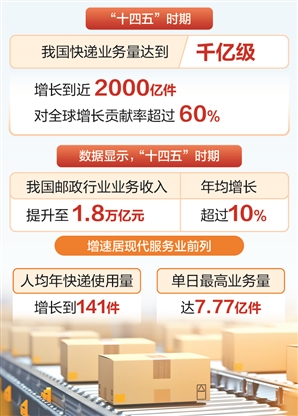
时报数说 “十四五”时期我国 快递业务量达到千亿级
Zheng Quan Shi Bao· 2026-01-07 22:48
Group 1 - The core viewpoint of the article highlights that during the "14th Five-Year Plan" period, China's express delivery business volume is expected to reach nearly 200 billion pieces, contributing over 60% to global growth [1] - The postal industry's business revenue in China is projected to average an annual growth rate of over 10%, reaching 1.8 trillion yuan [1] - The per capita annual express delivery usage has increased to 141 pieces, with a peak daily business volume reaching 777 million pieces [1]
金银铜齐齐新高-周期怎么看
2025-12-29 01:04
Summary of Key Points from Conference Call Records Industry Overview Commodities - Recent strong performance in commodity prices, with gold surpassing 4,600 yuan, silver increasing by 11% to 80 USD, and LME copper stabilizing above 12,000 USD. Early year copper prices were below 75,000 yuan [2][7] - Short-term price fluctuations due to factors like silver delivery month squeeze, not driven by supply-demand improvements. Long-term outlook remains positive due to a weaker dollar and anticipated Fed rate cuts [2][7] - The current commodity cycle is influenced by international competition, differing from previous cycles driven by real estate and infrastructure [3][8] Aviation Sector - Positive outlook for the aviation sector in 2026, with New Year ticket prices up by 6-7% and passenger load factors increasing by 1-2%. Recovery in China-Japan-Korea routes noted [4] - Anticipated recovery in airline profitability to exceed 2019 levels due to extended holiday periods and improved travel demand [4] Express Delivery Industry - Jitu's stable growth in Southeast Asia, recommended as a stock with potential for doubling in three years. SF Express exited the Douyin return segment to protect profits, with a 30% increase in package volume but unfulfilled profit expectations [5][6] - Focus on bottoming SF Express stock, while waiting for data from other express companies for validation of growth potential [6] Non-Ferrous Metals - Positive outlook for the non-ferrous metals sector in 2026, though growth may not match 2025 levels. Current valuations are lower than in 2025, with high certainty of EPS recovery [10] - Energy metals remain undervalued, presenting investment opportunities [10] Coal Industry - Recent decline in coal prices, with the coal index down by 0.89%. However, coking coal fundamentals remain strong, with prices up 170 yuan per ton year-on-year [11][12] - High inventory levels suppress price rebounds, but potential stabilization due to weather factors is noted. Recommendations include investing in high-dividend coal companies [12] Core Insights and Arguments - The commodity price center is expected to rise long-term, supported by macroeconomic factors such as a weaker dollar and Fed rate cuts [2][7] - The aviation sector is projected to recover significantly, driven by increased travel demand and favorable pricing trends [4] - The express delivery market shows resilience, with specific companies like Jitu and SF Express highlighted for their growth potential [5][6] - Non-ferrous metals are positioned for a strong performance, with a focus on energy metals as attractive investment options [10] - The coal industry faces challenges with price declines but offers opportunities in high-dividend stocks amidst stable fundamentals [12] Additional Important Points - The equity market is not overheated, with P/E and P/B ratios at historical lows, indicating a favorable environment for investment [9] - The end of the current commodity cycle will depend on factors such as the restoration of dollar credit, supply chain restructuring, and domestic policies [8]