电动化

Search documents
机构:关注汽车行业十大趋势
Zheng Quan Shi Bao Wang· 2026-01-07 00:54
东兴证券认为,国内汽车市场在政策刺激与技术创新双重驱动下,呈现出"电动化加速渗透、自主品牌 强势崛起"的鲜明特征,自主品牌智能化的优势是其销量增长的重要原因。在电动化渗透率持续提升的 背景下,汽车产业的竞争重心正逐步转向智能化领域,具备领先训练数据、训练设施、智驾生态领域的 头部企业有望获取更多市场份额。 2026年1月5日,中国汽车流通协会发布最新一期"汽车消费指数":2025年12月汽车消费指数为97.7,高 于上月,预计2026年1月汽车市场将呈现"开门红"的局面。从构成汽车消费指数的分指数看,2025年12 月需求分指数为90.3,较上月有所提升。 国元证券认为,从产业生命周期的视角来看,当前中国汽车产业正步入电动智能化浪潮的中后期,呈现 出传统燃油车、电动智能车以及以自动驾驶为代表的未来产业"三条产业曲线并存"的格局。在这一背景 下,汽车板块不再是单一赛道的投资领域,而是需要根据不同产业曲线所处的阶段,实施分层次、分节 奏的结构性投资布局。建议关注汽车行业十大趋势:(一)报废缺口提供中长期空间,以旧换新有望常态 化;(二)新势力推动中国汽车出口迈向结构升级新阶段;(三)"大众纯电+高端增程"趋势持续 ...
三一重工:公司重视培育与引进专业电动化人才
Zheng Quan Ri Bao Zhi Sheng· 2026-01-06 13:41
Core Viewpoint - The company has established a New Energy Technology Committee since 2021 to manage the development of new energy technologies, patent layout, forward-looking research, and incubation of new technologies [1] Group 1: New Energy Initiatives - The company has formed electric operation and research teams within each product division to focus on electrification [1] - The company emphasizes the cultivation and introduction of specialized electrification talents across various fields, including batteries, electric control, electric drive, electronic electrical systems, control algorithms, and thermal management [1] - The company is advancing the low-carbonization of its products, focusing on three main technological routes: pure electric, hybrid, and hydrogen fuel [1] Group 2: Product Development and Launch - The company plans to enhance the coverage of its new energy products, with over 30 new energy products expected to be launched by the first half of 2025 [1]

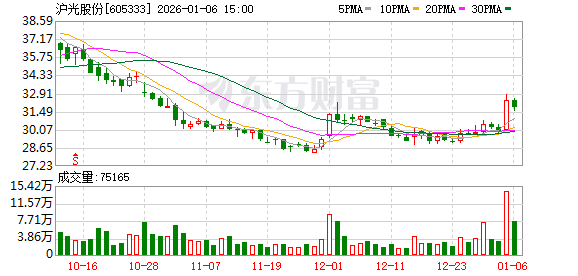
沪光股份:公司始终专注于汽车线束的研发、制造与销售
Zheng Quan Ri Bao· 2026-01-06 11:44
Core Viewpoint - The company has focused on the research, manufacturing, and sales of automotive wiring harnesses for nearly thirty years, seizing opportunities in the transition to new energy vehicles and expanding its product matrix [2] Group 1: Business Strategy - The company is enhancing its integrated supply capabilities around wiring harnesses and connectors while optimizing its customer structure to drive sustained profit growth [2] - The company is proactively entering emerging fields such as robotics, operational unmanned vehicles, and drones, establishing a diversified development pattern of "1+N" [2] Group 2: Industry Collaboration - The company is deepening collaborative efforts with industry leaders in robotics and drones to build research platforms, conduct key technology research, and develop products [2] - The company aims to contribute to the construction of China's intelligent manufacturing ecosystem through these collaborations [2] Group 3: Future Outlook - The company anticipates that its revenue and profit potential in emerging business areas will further expand [2] - The company is committed to achieving excellent performance and rewarding investors while adhering to a culture of stability and long-term growth [2]


2025年科尔尼行业系列回顾|汽车与交通出行
科尔尼管理咨询· 2026-01-06 09:41
Core Insights - The automotive and transportation industry is entering a critical phase characterized by "rhythm differentiation and structural reshaping" with a long-term direction towards electrification, but short-term demand fluctuations, cost pressures, and capital constraints are significantly amplified [1] - The focus of industry competition is shifting from "whether technology is feasible" to "whether business is sustainable and systems are controllable," emphasizing efficiency, resilience, and collaborative capabilities as key determinants of success in the next phase [1] Group 1: Lithium Battery Industry - The price war in the lithium battery sector is easing temporarily, but structural imbalances persist, requiring companies to strengthen long-term competitiveness through material innovation, extreme manufacturing, lean operations, and overseas and multi-scenario layouts amid a backdrop of "slowing incremental growth" [3] - The profitability of battery manufacturing is under significant pressure due to high capital investment, demand fluctuations, and technological route diversification, with the core focus being on enhancing existing capacity utilization and bottom-line profits rather than blind expansion [7] Group 2: Advanced Air Mobility (AAM) - Advanced air mobility is still in its early stages, but growth momentum is already evident in passenger transport, cargo, and specialized services, with drones leading the way into the scaling phase, providing important references for other AAM segments [5] - The deployment of Robotaxi is not inherently a solution to urban congestion; rather, its uncoordinated deployment may exacerbate congestion risks, necessitating collaborative governance among public sectors, operators, and urban planning for successful scaling [10]
观点 | 挖掘机市场技术革命与产业重构下的增长新范式
工程机械杂志· 2026-01-06 09:32
Core Viewpoint - The global infrastructure construction model is undergoing a fundamental shift from traditional extensive development to precise and sustainable operations, driving the evolution of the excavator industry from a mere earth-moving tool to a core execution unit of intelligent construction systems [1] Industry Underlying Logic Reconstruction - The value creation logic in the industry has fundamentally changed, with clients focusing more on the comprehensive value derived from efficiency improvements, cost reductions, and carbon emission reductions through intelligent and electrified technologies rather than just equipment performance [1] - Three core driving forces are identified: rising global labor costs and skilled labor shortages, increasing complexity of construction scenarios, and the accelerated elimination of high-emission old equipment under global carbon neutrality goals [1] Technological Revolution Electrification - Electric excavators are rapidly penetrating markets due to their core advantages of zero emissions, low noise, and low maintenance costs, with a projected market share exceeding 30% by 2030 for electric excavators [2] - Technological advancements in battery energy density and fast-charging technology are addressing range anxiety, while next-generation storage technologies like solid-state and hydrogen fuel cells are paving the way for electrification of larger equipment [2] Intelligentization - Intelligent technologies are redefining excavator operation modes, enabling basic functions like automatic slope repair and collision prevention, significantly lowering operational thresholds [3] - Leading companies are accelerating the development of Level 4 autonomous driving technology, allowing equipment to replace human labor in high-risk scenarios [3] - The shift towards a "product + service" business model is anticipated to create continuous value-added revenue for companies [3] Digitalization - Digital technologies are breaking down information silos between equipment, creating an intelligent construction ecosystem that covers the entire chain from design to operation and maintenance [4] - The transformation towards flexible manufacturing models driven by demand for on-demand production is expected to enhance operational efficiency [4] Regional Market Dynamics - There is a notable regional differentiation in global infrastructure construction demand, with emerging markets becoming the core growth engine due to urbanization and infrastructure needs, while mature markets focus on equipment upgrades and green transitions [5] - Companies are adjusting their market strategies to cater to these regional differences, enhancing service responsiveness in emerging markets and providing customized solutions in mature markets [5] Demand Structure - The diversification of downstream application scenarios is driving excavator demand towards specialization and segmentation, with new growth points emerging in sectors like renewable energy infrastructure and urban renewal [6] - This demand differentiation is reshaping product strategies, leading to a dual-track model of standardized general models and customized professional models [6] Competitive Focus - The industry is shifting from price competition to value competition, with clients evaluating equipment based on total lifecycle costs, efficiency improvements, and environmental compliance [7] - Companies are required to build competitive barriers through technology, service, and ecosystem collaboration to enhance customer experience and expand value creation boundaries [7] Future Outlook - From 2026 to 2030, the excavator industry is expected to enter a new phase of high-quality development driven by technological revolutions and industry restructuring, with growth primarily stemming from technological upgrades and demand structure optimization [8] - Strategic focus areas for companies include accelerating electrification and intelligent technology deployment, deepening digital transformation, and expanding overseas markets through localized operations [8]
香港汽车ETF(520720)涨超2%,政策延续或助推行业结构优化
Mei Ri Jing Ji Xin Wen· 2026-01-06 06:56
Group 1 - The core viewpoint is that the automotive industry in Hong Kong is expected to see an upward trend in 2026 due to the implementation of the vehicle replacement policy, with a positive outlook for the passenger car sector in Q1 2026 [1] - The domestic focus is on high-end electrification stocks that are less sensitive to policy changes, prioritizing mature overseas systems and verified execution capabilities of leading automotive companies [1] - The heavy truck policy has exceeded expectations, with a continued subsidy amount from 2025, and it is anticipated that 800,000 to 850,000 heavy trucks will be sold domestically in 2026, representing a year-on-year increase of 3% [1] Group 2 - The bus policy has also slightly exceeded expectations, with actual subsidies continuing despite prior market expectations of a reduction, leading to an expected 40,000 bus sales in 2026, a year-on-year increase of 5% [1] - The motorcycle sector, particularly large-displacement models and exports, is expected to maintain high growth, with total industry sales projected at 19.38 million units in 2026, a year-on-year increase of 14%, including 1.26 million large-displacement units, up 31%, and 830,000 exports, up 50% [1] - The comprehensive policy support is expected to benefit the automotive sector, leading to a sustained increase in industry prosperity [1] Group 3 - The Hong Kong Automotive ETF (520720) tracks the Hong Kong Stock Connect Automotive Index (931239), which selects listed companies involved in vehicle manufacturing, components, and intelligent driving, focusing on high-growth enterprises in electrification and intelligence [1]
招股书满6个月失效后 亿纬锂能二次递表港交所
Sou Hu Cai Jing· 2026-01-06 05:38
Core Viewpoint - EVE Energy Co., Ltd. has submitted a listing application to the Hong Kong Stock Exchange, aiming to accelerate its international expansion and address funding challenges amid geopolitical risks and market conditions [1][3]. Group 1: Company Overview - EVE Energy specializes in the research, production, and sales of consumer batteries, power batteries, and energy storage batteries, positioning itself as a leading lithium battery platform capable of serving various economic applications [1]. - The company reported a sales revenue of 45 billion yuan and a gross profit of 7.18 billion yuan for the first three quarters of 2025, with a gross margin of 15.96% [2]. Group 2: Revenue Breakdown - Energy storage batteries generated 17.07 billion yuan in sales, accounting for 37.9% of total revenue, while power batteries contributed 43.6% [2]. - Domestic market sales accounted for 76.6% of total revenue, with Europe being the largest international market at 7.9% [2]. Group 3: Fundraising and Investment Plans - The company has revised its fundraising plans, focusing on the construction of its Hungary production base, which is expected to support its future overseas business [2]. - The Malaysia battery production base, completed in 2025, is the company's first overseas mass production facility, while the Hungary base is projected to commence operations in 2027 [2]. Group 4: Market Trends and Growth Drivers - The demand for consumer batteries is expected to grow significantly, with the market size projected to increase from 21.7 billion units in 2025 to 55.1 billion units by 2029, reflecting a compound annual growth rate of 26.2% [3]. - The energy storage sector is anticipated to maintain rapid growth, driven by global low-carbon transitions and supportive policies, with a projected increase in global energy storage market cell shipments of approximately 30-50% in 2025 [6]. Group 5: Competitive Positioning - EVE Energy holds a strong market position in the consumer battery sector, with stable growth in smart meter battery shipments and significant increases in small cylindrical battery sales [4]. - The company ranks second in commercial vehicle battery installations in China, benefiting from the growing demand for electric commercial vehicles [7].

2025:激情与繁荣 混沌与秩序
Zhong Guo Qi Che Bao Wang· 2026-01-06 02:13
Core Viewpoint - The Chinese automotive market in 2025 is characterized by intense competition and transformation, with a mix of prosperity and individual challenges, leading to a redefinition of industry order and competition dynamics [4][9]. Group 1: Market Dynamics - The year 2025 saw over 200 new car models launched, with more than 40 new models released in September alone, marking a historical high in new car releases [4]. - The penetration rate of L2-level and above assisted driving functions in new energy passenger vehicles reached 87% from January to October 2025, indicating rapid advancements in intelligent driving technology [5]. - The total number of electric vehicle charging infrastructure reached 18.645 million by the end of October 2025, a 54% increase year-on-year, solidifying China's position as a leader in charging facilities [5]. Group 2: Technological Advancements - The development of solid-state batteries is gaining momentum, with several automakers announcing timelines for mass production, indicating a shift towards more efficient battery technology [5]. - The market for new energy vehicles (NEVs) experienced significant growth, with pure electric vehicle sales accounting for 64% of total NEV sales from January to November 2025 [6][7]. - The automotive industry is witnessing a shift from traditional competition to ecosystem-based competition, emphasizing value creation and integration [9]. Group 3: Marketing and Consumer Engagement - Automotive marketing in 2025 has evolved, with executives actively engaging in live demonstrations and immersive marketing experiences to connect with consumers [6]. - The rise of scene-based marketing strategies has transformed how new vehicles are presented, creating emotional connections with consumers [6]. Group 4: Export Growth - Chinese automotive exports reached 6.343 million units from January to November 2025, a year-on-year increase of 18.7%, with new energy vehicle exports growing by 102.9% [8]. - The shift in export strategies from simple vehicle sales to localized production and assembly has enhanced the reputation and competitiveness of Chinese brands in international markets [8]. Group 5: Industry Challenges - The automotive industry faces challenges such as price wars, safety concerns, and misleading marketing practices, which threaten market integrity and consumer trust [9][10]. - The average profit margin for the automotive industry was reported at 4.5% in the first three quarters of 2025, lower than the average of 6% for downstream industrial enterprises, highlighting financial pressures [10]. Group 6: Regulatory Changes - New regulations, including the revised Anti-Unfair Competition Law, aim to establish clearer guidelines for marketing practices and protect consumer rights [13][15]. - The introduction of mandatory safety standards for electric vehicle batteries and intelligent driving systems reflects a proactive approach to addressing safety concerns in the industry [14][13]. Group 7: Future Outlook - The automotive industry is moving towards a focus on long-term sustainability and healthy development, with a growing consensus on the need for fair competition and ethical practices [12][16]. - The emphasis on integrity, technology, and value creation is expected to guide the industry towards high-quality development in the coming years [16].

法拉利“权力游戏”续集上演
汽车商业评论· 2026-01-05 23:04
Core Viewpoint - The article discusses the renewal of the shareholder agreement between Exor and Piero Ferrari, which strengthens governance continuity for Ferrari as it prepares to launch its first electric vehicle, amidst industry challenges [3][5][17]. Group 1: Shareholder Agreement Renewal - Exor, holding approximately 20% of Ferrari's shares, and Piero Ferrari, with about 10.6%, together control over 48% of the voting rights. The renewed agreement extends until January 4, 2029, with automatic three-year renewals unless terminated [5][8]. - The new agreement allows both parties to coordinate their positions on matters requiring shareholder votes and establishes mutual preemptive rights for share transfers, ensuring governance stability [8][9]. - This renewal is seen as a strategic move to minimize potential disagreements between major shareholders during a critical transition to electric vehicles [5][17]. Group 2: Electric Vehicle Transition - Ferrari's CEO, Benedetto Vigna, emphasizes a parallel approach to fuel, hybrid, and electric vehicles, with hybrids accounting for 51% of sales last year. The company plans to maintain a diverse product lineup [17][18]. - The first electric model, Elettrica, is expected to start deliveries in October 2026, following delays. The second electric model's launch has been postponed to at least 2028 due to insufficient demand in the high-performance luxury electric market [17][18]. - The governance stability provided by the renewed agreement is crucial for Ferrari to navigate the challenges of electric vehicle development while maintaining its brand's exclusivity and pricing power [18].

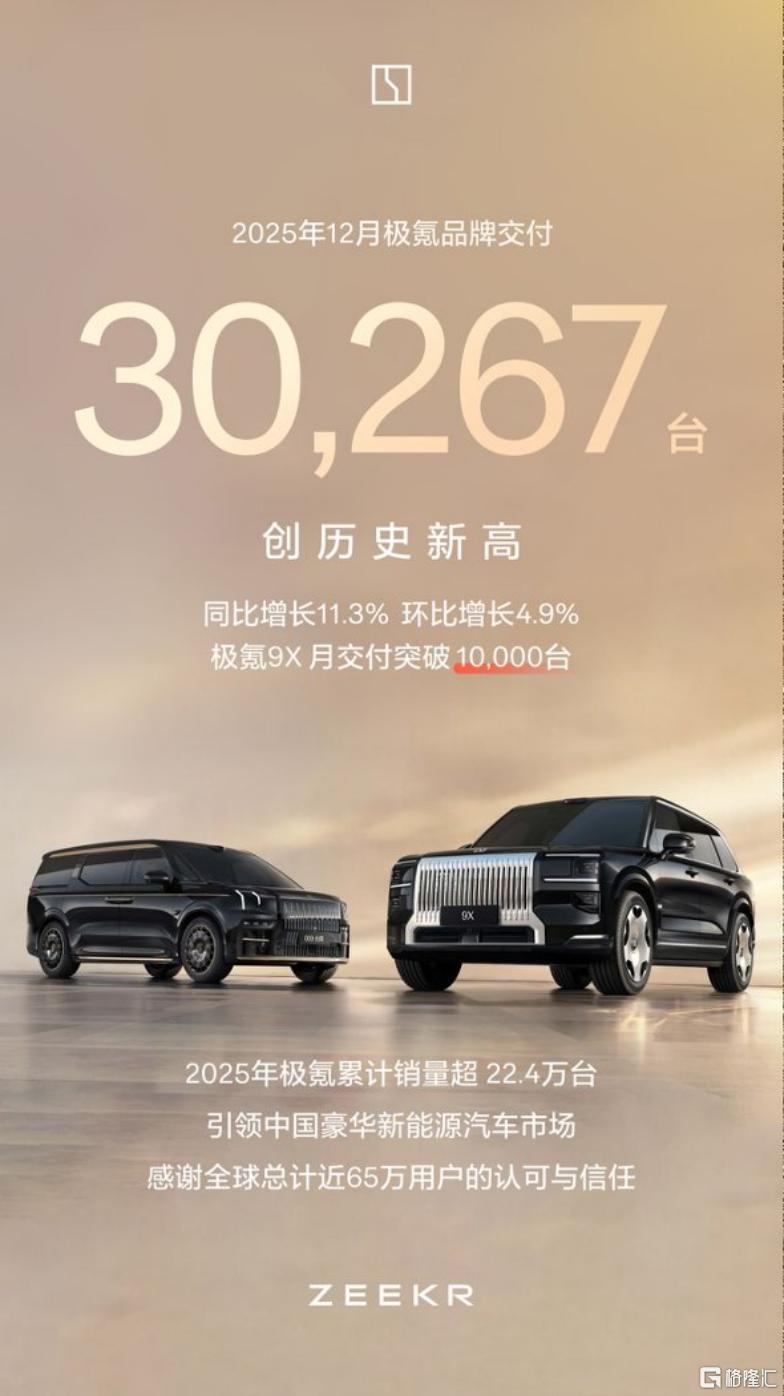
2025年车市收官:当中国豪华品牌站上50万元赛道,极氪做对了什么?
Ge Long Hui· 2026-01-05 09:32
Core Insights - The Chinese automotive industry has shown strong performance in 2025, with Geely and BYD leading the growth in the electric vehicle market, while high-end breakthroughs are essential for the industry's transition from large to strong [1] - Zeekr's impressive performance, with total deliveries of 224,133 units in 2025 and a record monthly sales of over 30,000 units in December, highlights the brand's successful penetration into the high-end market [1][6] Group 1: Market Performance - Zeekr 9X has become a phenomenon in the market, achieving over 10,000 units sold in December and a significant average selling price of 538,000 yuan, marking it as the first Chinese brand to reach this milestone in its price segment [6] - 80% of Zeekr 9X users are from traditional luxury brands, indicating its strong penetration into the high-end fuel vehicle market [6] Group 2: Brand Strategy - Zeekr's growth is attributed to its focus on high-value models, avoiding the short-sighted strategy of competing solely on price, and enhancing its product structure to increase the proportion of high-value models [7] - The brand has established a strong luxury image, becoming the official vehicle for major events and attracting high-profile owners, which reinforces its position in the high-end market [7] Group 3: Technological and Structural Advantages - Zeekr's success is supported by its long-term focus on the luxury segment and the backing of Geely's global R&D capabilities, which help overcome technical and cost challenges [9] - The brand's independent operation post-privatization allows for agile responses to market changes, while its user-centric approach enhances customer trust and loyalty [11] Group 4: Future Outlook - With the expected tax reductions in 2026, market competition is anticipated to intensify, focusing on product quality, technology, and brand value, where Zeekr's technological reserves and brand image position it favorably [12] - Zeekr aims to launch more high-end products in 2026, further solidifying its market presence and contributing to the global recognition of Chinese luxury brands [12]