智能座舱系统

Search documents
比亚迪电子2025年收入达1794.77亿元,新能源汽车业务保持高速增长
Ju Chao Zi Xun· 2026-03-29 03:43
Group 1: Financial Performance - The company reported a revenue of 179.477 billion RMB for the year ending December 31, 2025, representing a year-on-year increase of 1.22% [3] - Gross profit was 10.756 billion RMB, a decrease of 12.56% compared to the previous year [3] - Net profit attributable to the parent company was 3.515 billion RMB, down 17.61% year-on-year, with earnings per share at 1.56 RMB [3] Group 2: Business Segments - The new energy vehicle segment generated approximately 27.027 billion RMB in revenue, a year-on-year growth of 27.69%, accounting for 15.06% of the total revenue [1] - The AI computing infrastructure segment achieved revenue of about 943 million RMB, reflecting a year-on-year increase of 31.7% [2] - The smart terminal business saw overall revenue of 151.507 billion RMB, with component revenue at approximately 29.331 billion RMB and assembly revenue at about 122.176 billion RMB [4] Group 3: Research and Development - The company invested approximately 4.465 billion RMB in research and development, representing 2.49% of total revenue for the year [4] - The total number of patents applied for reached 12,010, with 8,279 patents granted, indicating a significant increase in patents related to AI computing infrastructure [4] Group 4: Cash Flow and Financial Health - The net cash inflow from operating activities was approximately 1.877 billion RMB, a significant improvement from 671 million RMB in the previous year [4] - Interest-bearing bank and other borrowings were about 7.184 billion RMB, a decrease of 33.5% compared to the previous year [4] - The debt ratio improved from 18.01% to -13.53%, indicating a strong net cash position for the company [4] Group 5: Future Outlook - The company plans to continue focusing on core technology research and development, enhancing high-end manufacturing innovation capabilities [5] - The new energy vehicle business is expected to maintain rapid growth, while emerging sectors like AI computing infrastructure and AI robotics are anticipated to accelerate [5] - The company aims to capitalize on the strategic opportunities presented by the acceleration of smart technology in the automotive industry [5]


比亚迪电子发布年度业绩,股东应占溢利35.15亿元 同比减少17.61%
Zhi Tong Cai Jing· 2026-03-28 07:43
Group 1: Company Performance - BYD reported a revenue of RMB 179.48 billion for the fiscal year ending December 31, 2025, representing a year-on-year increase of 1.22% [2] - The net profit attributable to shareholders decreased by 17.61% to RMB 3.515 billion, with earnings per share at RMB 1.56 and a proposed final dividend of RMB 0.156 per share [2] - The company continues to strengthen its leadership in the high-end product supply chain while expanding cooperation with domestic and international clients [2] Group 2: Market Trends and Growth Areas - The Chinese foldable smartphone market is expected to see a year-on-year shipment growth of 9.2%, reaching 10.01 million units by 2025 [3] - The company is enhancing its technological capabilities and expanding product categories in the smart terminal sector, despite a decrease in component revenue due to changes in demand from major clients [3] - The smart driving system and smart suspension system have seen significant growth in shipments, contributing to the overall expansion of the company's revenue in the electric vehicle sector [4] Group 3: Electric Vehicle Sector - The revenue from the electric vehicle segment reached approximately RMB 27.03 billion, accounting for 15.06% of the company's total revenue, with a year-on-year increase of about 27.69% [4] - The company has established a strong technological advantage in various systems such as smart cockpit, smart driving, and thermal management, benefiting from the growth of the electric vehicle market [4]
比亚迪电子(00285)发布年度业绩,股东应占溢利35.15亿元 同比减少17.61%
Zhi Tong Cai Jing· 2026-03-27 12:05
Core Viewpoint - BYD Electronics reported a revenue of RMB 179.48 billion for the year ending December 31, 2025, representing a year-on-year increase of 1.22%. However, the net profit attributable to shareholders decreased by 17.61% to RMB 3.515 billion, with earnings per share at RMB 1.56 and a proposed final dividend of RMB 0.156 per share [1] Group 1: Financial Performance - The company achieved a revenue of RMB 1794.77 billion, with a net profit of RMB 35.15 billion, reflecting a decrease of 17.61% year-on-year [1] - Earnings per share were reported at RMB 1.56, with a proposed final dividend of RMB 0.156 per share [1] Group 2: Business Development - Despite global economic challenges, the company demonstrated resilience and continued to expand its market presence while enhancing operational efficiency [1] - The company is focusing on strengthening its leadership position in the high-end product supply chain and expanding collaborations with domestic and international clients [1] Group 3: Smart Terminal Business - The smart terminal business generated revenue of RMB 1515.07 billion, with component revenue at approximately RMB 293.31 billion and assembly revenue at about RMB 1221.76 billion [2] - The company maintained its leadership position in the supply chain for high-end flagship smartphones while expanding cooperation in wearable and smart home sectors [2] Group 4: New Energy Vehicle Sector - The new energy vehicle segment reported revenue of approximately RMB 270.27 billion, accounting for 15.06% of the total revenue, with a year-on-year increase of about 27.69% [3] - The company has established a significant technological advantage in smart cockpit systems, smart driving systems, and other related fields, benefiting from the growth of the new energy vehicle market [3]

机构调研策略周报(2026.03.09-2026.03.13)-20260313
Yuan Da Xin Xi· 2026-03-13 11:32
Group 1: Industry Research Highlights - The most focused industries for institutional research from March 9 to March 13, 2026, are machinery, electronics, and power equipment, with electronics and computers gaining significant attention recently [10][12] - Over the past 30 days, the top industries by institutional research frequency are machinery, electronics, pharmaceuticals, and basic chemicals, with electronics and power equipment also seeing high interest [13][14] Group 2: Popular Companies in Institutional Research - The companies with the highest number of institutional research visits in the past 5 days, with more than 10 ratings, include Desay SV Automotive and Huadian Technology [19][20] - In the last 30 days, the companies with the most institutional research visits and more than 10 ratings include Sunlord Electronics, Wens Foodstuffs, and Huadian Technology [22][24] Group 3: Key Company Research Insights 1. **Desay SV Automotive** - The company expects steady growth in 2025, driven by its intelligent driving business, with projected revenue of 32.557 billion yuan, a 17.88% increase year-on-year, and a net profit of 2.454 billion yuan, up 22.38% [26][27] - The overseas business gross margin is significantly higher than domestic by approximately 9 percentage points, with annualized sales orders exceeding 35 billion yuan [26][27] - The company has made breakthroughs in embodied intelligence, with related products planned for mass production in 2026 [27] 2. **Tianqi Materials** - The core business of electrolyte materials is expected to see significant growth, with projected revenue of 16.650 billion yuan in 2025, a 33% year-on-year increase, and a net profit of 1.362 billion yuan, a dramatic rise of 181.43% [30][31] - The company sold over 720,000 tons of electrolytes, a 44% increase year-on-year, indicating strong demand in the new energy sector [30][31] - The company is actively pursuing diversified lithium resource layouts and has plans for new production capacity in the second half of 2026 [31] 3. **Shennan Circuit** - The company anticipates a revenue of 23.647 billion yuan in 2025, a 32.05% increase, with a net profit of 3.276 billion yuan, up 74.47% [33] - The PCB business gross margin has improved to 35.53%, benefiting from increased demand in AI servers and automotive electronics [33] - The company is expanding its production capacity, with new projects in Thailand and Nantong expected to come online in the second half of 2025 [33]

强化创新策源打造世界级产业集群 陈吉宁在浦东张江调研 要求推进科技创新和产业创新深度融合 更好服务国家战略
Jie Fang Ri Bao· 2026-01-05 01:35
Group 1 - The core focus is on enhancing the role of technology innovation and industrial development in Shanghai, particularly in the context of the "14th Five-Year Plan" and the city's modernization efforts [1][3] - Zhangjiang Science City is identified as a key area for building an international science and technology innovation center, with initiatives aimed at optimizing innovation layout and nurturing strategic technological capabilities [2][3] - The establishment of the Zhangjiang Artificial Intelligence Innovation Town has attracted nearly 500 AI companies, emphasizing the importance of aligning high-tech enterprises with the city's industrial positioning and development direction [2][3] Group 2 - The "14th Five-Year Plan" emphasizes the need for Zhangjiang to strengthen its role in technology innovation and to foster world-class enterprises and industry clusters [3] - There is a focus on enhancing the innovation ecosystem and providing support for startups, particularly in the fields of cell and gene therapy, to boost their core competitiveness [3][4] - The city aims to improve regulatory frameworks and service efficiency to better support enterprises in their innovation and growth efforts [4]

车企孵化的智能化公司,为何多数都难善终?
雷峰网· 2025-12-31 03:44
Core Viewpoint - The article discusses the challenges faced by automotive companies in their pursuit of smart driving technology, highlighting the high expectations and subsequent failures of many startups in this sector, often resulting in a rapid rise and fall [2][3]. Group 1: Challenges in Smart Driving Startups - Two notable events in 2025 marked a downturn in the smart driving industry, with major companies like Maomao Zhixing and Dazhuo Intelligent facing significant operational challenges [2]. - The decline of these companies reflects broader issues within the automotive industry's approach to smart technology, including unclear positioning, resource misallocation, and cultural clashes between traditional automotive and tech talent [2][4]. Group 2: Equity Structure Issues - Many smart driving companies established by traditional automakers suffer from problematic equity structures, often leading to conflicts in decision-making and operational inefficiencies [5][6]. - For instance, Maomao Zhixing is over 53% controlled by Great Wall Motors, which has led to a lack of decision-making power for its management team, ultimately contributing to its struggles [6][10]. - Dazhuo Intelligent's structure, with 80% ownership by Chery, similarly restricts its founder's ability to drive technological innovation due to a lack of authority [10][11]. Group 3: Strategic Positioning Confusion - The strategic positioning of many smart driving companies remains ambiguous, often serving as mere suppliers to their parent companies rather than independent market players [17][18]. - Maomao Zhixing's initial focus was to provide smart driving solutions exclusively for Great Wall Motors, which tied its success to the parent company's market performance [18][19]. - This dependency on a single client has led to operational difficulties, especially when Great Wall Motors sought alternative suppliers for smart driving technology [19][20]. Group 4: Cultural Conflicts - The cultural clash between traditional automotive companies and tech startups creates significant barriers to innovation and talent retention [29][30]. - Traditional automotive firms often have rigid hierarchical structures and lengthy approval processes, which hinder the agility required in the fast-paced tech environment of smart driving [29][30]. - This cultural mismatch has resulted in missed opportunities for smart driving companies to attract top talent and respond swiftly to market changes [30][31]. Group 5: Competitive Pressures - The emergence of tech giants like Huawei and Baidu has intensified competition, as they offer comprehensive solutions that outpace the capabilities of traditional automaker startups [38][39]. - Huawei's substantial investment in smart driving technology, exceeding 10 billion annually, has positioned it as a market leader, further squeezing the viability of smaller, automaker-affiliated startups [39][40]. - As traditional automakers enhance their own R&D capabilities, the original purpose of these smart driving companies—to fill technological gaps—has diminished, leading to their integration or dissolution [40][41].





1.36亿股股票完成过户,奔驰正式入股千里科技,系第五大股东
Zheng Quan Shi Bao Wang· 2025-12-24 12:40
Core Viewpoint - Qianli Technology (601777) has completed a share transfer agreement with Mercedes-Benz Digital, resulting in a significant change in shareholding structure and a strategic partnership focused on AI and smart driving technologies [1][4]. Group 1: Share Transfer Details - Qianli Technology announced that shareholder Lifan Holdings transferred 136 million shares to Mercedes-Benz Digital, reducing its stake from 13.68% to 10.68% [1]. - The share transfer was executed at a price of 9.87 yuan per share, amounting to an investment of approximately 1.342 billion yuan by Mercedes-Benz Digital [1]. - Mercedes-Benz Digital now holds 3% of Qianli Technology, making it the fifth-largest shareholder, and has committed to not reducing its stake for 12 months [1]. Group 2: Strategic Partnership - Qianli Technology's chairman expressed enthusiasm about the partnership with Mercedes-Benz, indicating it as a recognition of the company's value and a foundation for close strategic collaboration in smart driving and smart cockpit technologies [3]. - The partnership aims to leverage AI technology and enhance capabilities in intelligent driving and smart cockpit areas [4]. Group 3: Business Focus and Future Plans - Qianli Technology operates in two main business segments: terminal business (automobiles and motorcycles) and technology business, with a focus on intelligent driving assistance and smart cockpit solutions [3]. - The company has launched the "Qianli Smart Driving 1.0" solution, which offers multi-scenario autonomous decision-making and complex interactions [3]. - Qianli Technology is pursuing a Hong Kong IPO to establish an "A+H" share structure, aiming to transform into an AI-centric enterprise and provide comprehensive "AI+Mobility" solutions [5].

威帝股份拟现金收购玖星精密控制权 加速多元布局前9月营收增138.7%
Chang Jiang Shang Bao· 2025-12-09 23:31
Core Viewpoint - Weidi Co., Ltd. (603023.SH) has announced a significant asset restructuring plan to acquire control of Jiangsu Jiuxing Precision Technology Co., Ltd. through a cash transaction, aiming to enhance overall asset quality and core competitiveness [1][2]. Group 1: Acquisition Details - The acquisition will be executed in two phases: first, acquiring 51% of the shares from Jiuxing's controlling shareholder, and second, acquiring additional shares from other shareholders to achieve control [2]. - The transaction does not involve issuing new shares and is not expected to impact the company's performance in 2025 [2]. Group 2: Business Overview of Jiuxing Precision - Jiuxing Precision focuses on the R&D, production, and sales of precision metal components, with core products including embedded hinges and precision slides, primarily serving the mid-to-high-end home appliance sector [3]. - The company has established six production bases and has been recognized as a "little giant" enterprise by the national government [2][3]. Group 3: Weidi's Business Strategy - Weidi Co., Ltd. has faced performance pressures, with a net profit loss of 15.74 million yuan in 2023, although it returned to profitability in 2024 with a net profit of 5.06 million yuan [4][5]. - The company has initiated a "dual-track strategy" to optimize its asset structure by divesting loss-making assets and expanding its business boundaries through acquisitions [5][6]. - Recent acquisitions, including a 51% stake in Alpha Silicon, have diversified Weidi's product offerings and market reach, laying a foundation for long-term growth [6].

没有一家“明星”车企,宁波何以产出浙江四成新能源车?
2 1 Shi Ji Jing Ji Bao Dao· 2025-12-09 09:45
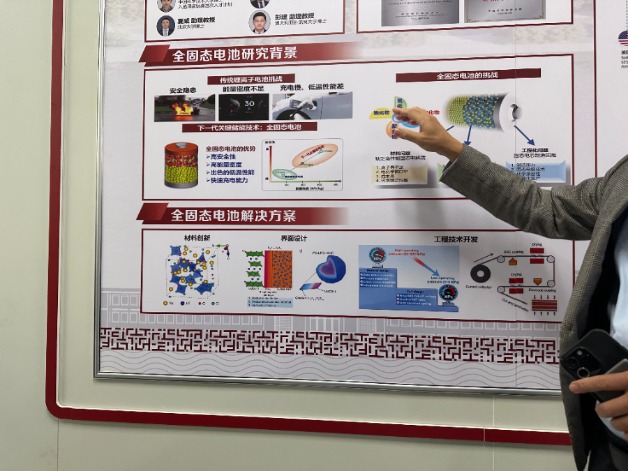
Core Insights - Ningbo is undergoing a significant industrial transformation in the manufacturing landscape of the Yangtze River Delta, particularly in the automotive sector, with a focus on electric vehicles (EVs) [1] - The city has achieved a remarkable growth in its automotive manufacturing output, with a total vehicle production of 645,000 units in the first ten months of 2025, including 286,000 units of new energy vehicles (NEVs), marking a 24% year-on-year increase in output value [1][2] - The automotive industry in Ningbo is characterized by a unique "dual-core" structure, featuring both the locally rooted Geely group and the globally recognized SAIC Volkswagen, which complement each other rather than compete [1][2][3] Automotive Manufacturing - SAIC Volkswagen's Ningbo factory is a "star factory" with a production capacity of 300,000 units per year, contributing to one-third of the city's NEV production, and is notable for its flexible manufacturing capabilities [2] - Geely has established a comprehensive ecosystem in Ningbo, including research institutes, core components, and vehicle manufacturing, which enhances efficiency in R&D and production cycles [2][3] - The rapid rise of the Zeekr brand under Geely is attributed to its ability to leverage local engineering resources and manufacturing capabilities, with projected sales of over 220,000 units in 2024 [3] Supply Chain Dynamics - Ningbo hosts over 5,000 automotive parts companies, including 22 national-level champion enterprises and 97 specialized "little giants," making it a hub for automotive supply chains [4][6] - The local supply chain exhibits a high degree of specialization and geographical clustering, resulting in an average coordination response time of just 2.3 hours between vehicle manufacturers and core suppliers [6] - Traditional automotive parts companies are adapting to the NEV wave, with firms like Joyson Electronics and Shenglong actively transitioning to new technologies and business models [4][6] Research and Innovation - Ningbo is investing in future technologies, such as solid-state batteries, with research led by a team at Dongfang University, which has made significant advancements in solid electrolyte materials [7][9] - The development of a new superionic conductor capable of operating at extreme temperatures has the potential to revolutionize solid-state battery applications, garnering international attention [9] - The city is also exploring smart and connected technologies, with initiatives in automated operations at the Meishan Port area, showcasing its ambition to integrate advanced manufacturing with innovative applications [10]

没有一家“明星”车企 宁波何以产出浙江四成新能源车?
2 1 Shi Ji Jing Ji Bao Dao· 2025-12-09 09:44
Core Insights - Ningbo is undergoing a significant industrial transformation in the manufacturing landscape of the Yangtze River Delta, particularly in the automotive sector, with a notable focus on electric vehicles (EVs) [1] - The city has achieved a remarkable increase in automotive production, with a total output of 645,000 vehicles in the first ten months of 2025, including 286,000 EVs, marking a 24% year-on-year growth in automotive manufacturing output [1][2] - The unique industrial evolution in Ningbo is characterized by a "tropical rainforest" model, fostering a collaborative ecosystem rather than a singular focus on star enterprises [1] Vehicle Manufacturing: Dual-Core Drive and Local Roots - Ningbo's automotive layout features a "dual-core drive" model, with Geely representing deep localization and efficient decision-making, while SAIC Volkswagen embodies global manufacturing standards and is undergoing electrification [2] - The SAIC Volkswagen factory in Ningbo is a "star factory" with a production capacity of 300,000 vehicles per year, contributing one-third of the city's EV production [2] - Geely has established a comprehensive ecosystem in Ningbo, including four global headquarters and five manufacturing bases, enabling rapid iteration from design to production [3] Supply Chain: Champion Clusters and Adaptive Evolution - Ningbo hosts over 5,000 automotive parts companies, including 22 national champion enterprises and 97 specialized "little giants," showcasing a robust supply chain [4] - The local supply chain's specialization and geographical clustering have resulted in a rapid response time of 2.3 hours between vehicle manufacturers and core suppliers, significantly lower than the industry average [5] - Companies like Junsheng and Shenglong have successfully adapted to the EV market, transitioning from traditional components to integrated system suppliers [5] Future-Oriented Research and Development - Ningbo is investing in future technologies, such as solid-state batteries, with research led by a team at Dongfang University, aiming to overcome current battery limitations [6][9] - The development of a new superionic conductor has achieved a record ionic conductivity, opening new pathways for solid-state battery applications [8][9] - The city is also advancing in intelligent networking, with automated operations at the Meishan Port and the deployment of L4-level autonomous delivery vehicles [10]