
两山理念

Search documents
“两山”理念20年|走好绿色发展路,世界点赞中国“绿色奇迹”
Huan Qiu Wang· 2025-08-15 13:04
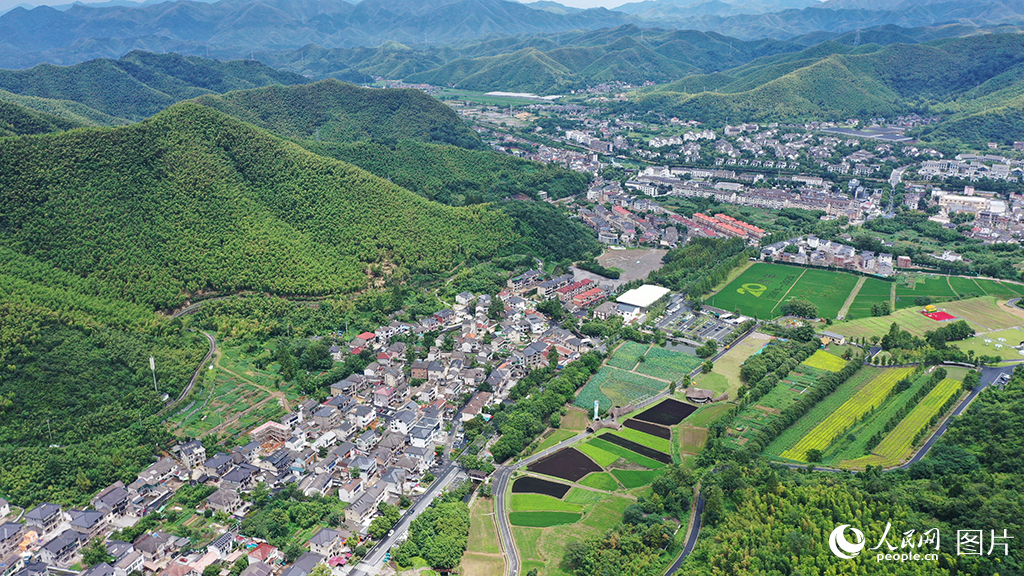
20年前的今天,在浙江安吉余村,"绿水青山就是金山银山"理念如同一颗种子悄然播下。二十年光阴荏苒,再次走进余村,映入眼帘的是郁郁葱葱的山林、 清澈见底的溪流。如今,这颗种子改变的不只是一个村庄,它早已在中国大地生根发芽,深刻改变中国的发展轨迹,重塑人与自然的关系。 中国生态环境的显著改善,不仅惠及亿万国民,也赢得了国际社会越来越多的关注和评价。联合国环境规划署发布报告,对中国生态文明建设取得的成效给 予高度评价,并多次肯定中国在荒漠化防治、生物多样性保护等领域取得的成就。欧盟亚洲中心主席、联合国前副秘书长埃里克·索尔海姆表示:"'绿水青 山就是金山银山'理念来自中国,改变了中国,也改变了世界。"澳大利亚国立大学气候与能源政策中心研究员约里特·戈森斯认为,"中国在短短十年间实现 的能源转型是任何其他国家都未曾达成的非凡成就,非常令人鼓舞,其中蕴含的经验值得全球借鉴。" 外媒报道也悄然改变笔调。英国《碳简报》发布的2025年第一季度碳排放分析报告指出,2025年第一季度,中国的碳排放量下降了1.6%,这对全球气候行 动是一个关键里程碑;《卫报》报道称,中国"黄土高原"的退耕还林项目让"鸟儿归来",强调中国植被覆盖 ...

“两山”理念20年:千万芳华,共赴和美乡村
Zhong Guo Xin Wen Wang· 2025-08-15 13:04
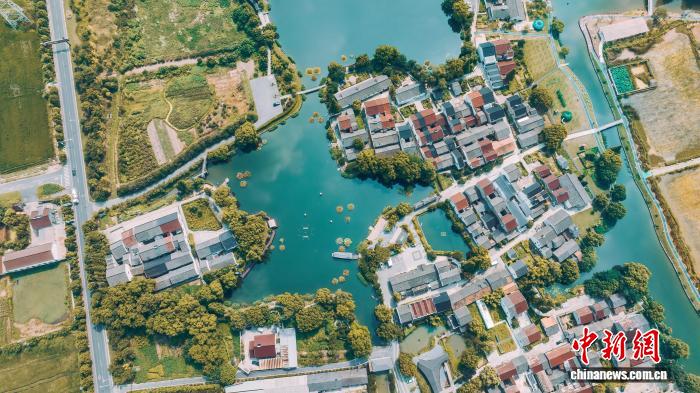
Core Viewpoint - The article highlights the significant role of women in rural revitalization in Zhejiang, China, showcasing their contributions to sustainable development through innovative practices and community engagement [1][9]. Group 1: Digital Transformation and Entrepreneurship - Young female entrepreneurs like Liao Wantian are leveraging digital platforms to create substantial economic value, exemplified by her success in selling rare plants for 2.6 million yuan [2]. - The establishment of a digital community in Anji, led by Li Yanyi, integrates advanced technology with traditional tea production, attracting over 10,000 young people, 65% of whom are women [2]. Group 2: Cultural and Economic Revitalization - In Pingtian Village, Ye Liqin has transformed local heritage into economic opportunities, increasing villagers' annual income from 9,800 yuan to 28,600 yuan through innovative projects like the "Tea and Handicraft Workshop" [5]. - The concept of "temperature economy" is emphasized, where emotional connections and cultural heritage drive economic growth, as seen in the transformation of abandoned houses into community spaces [5][6]. Group 3: Environmental Governance and Legal Framework - The "Mulan Team," led by Yu Yingying, exemplifies the integration of strict environmental law enforcement with supportive measures for businesses, showcasing a balanced approach to ecological protection [8]. - The shift from punitive measures to collaborative solutions in environmental governance highlights the potential for women to lead in ecological law enforcement, fostering a culture of sustainability [8]. Group 4: Overall Impact and Future Directions - The collective efforts of women in various sectors contribute to a broader narrative of sustainable development, where ecological preservation and economic growth are intertwined [9]. - The article suggests that the future of rural revitalization will involve creating platforms for female entrepreneurship, enhancing community engagement, and promoting cultural heritage [3].
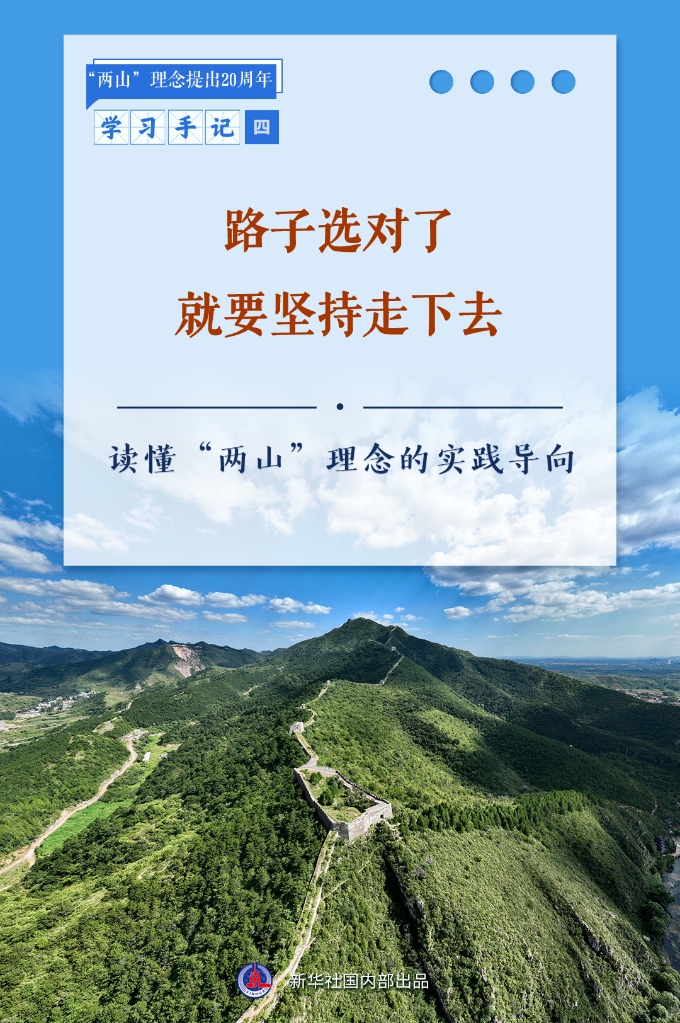
学习手记丨路子选对了就要坚持走下去——读懂“两山”理念的实践导向
Xin Hua She· 2025-08-15 12:51
"两山"理念提出20周年 学习手记四 念念不忘,久久为功。 对于生态文明建设,习近平总书记反复强调"要把眼光放长远些""保持加强生态文明建设的战略定 力""做到既要金山银山、更要绿水青山,保护好中华民族永续发展的本钱"。 路子选对了 就要坚持走下去 读懂"两山"理念的实践导向 新华社国内部出品 2024年全国两会上,习近平总书记回忆起10年前北京开亚太经合组织(APEC)会的一幕:"当时有 人问,这是'APEC蓝',能持久吗?我回答他们,这并不是短暂的蓝天,几年后它将是永久的蓝。" 今年中央城市工作会议上,习近平总书记再次谈到:"2024年北京空气PM2.5平均浓度是30.5微克每 立方米,比2013年下降65.9%,蓝天成为常态,我在北京APEC会议上向全世界宣布的'APEC蓝'没有食 言,实现了。" 对长江禁渔,称"10年后我们再看效果";对大理洱海保护,说"立此存照,过几年再来,希望水更 干净清澈";对防沙治沙,表示"力争用10年左右时间,打一场'三北'工程攻坚战"…… "两山"理念的成功实践,基于长远眼光、战略定力与历史自觉。 这里有一抓到底的决心。 曾在生态环境脆弱的黄土地生活多年,青年习近平自那时 ...
上交所发布《贯彻“两山”理念 沪市ESG实践二十年》
Zheng Quan Ri Bao Wang· 2025-08-15 12:09
二是微观年度"切片"。《ESG实践》选取了生物医药、石油石化、电力设备、公共事业等17个行业的32家绿色发展标杆企 业,以"年份切片"的形式,还原每一年份对应的标杆性案例或重要突破。通过逐年典型案例,微观折射沪市上市公司ESG二十 年来从零星自愿披露走向规范系统披露的完整历程,展现企业绿色低碳转型与社会责任履行的实践成果。 本报讯 (记者毛艺融)8月15日,在"绿水青山就是金山银山"理念(以下简称"两山"理念)提出二十年之际,上海证券交 易所(以下简称上交所)发布中英文版本《贯彻"两山"理念沪市ESG实践二十年》(以下简称《ESG实践》),向境内外市场 参与者系统介绍沪市二十年来ESG实践探索的阶段性进展。 习近平总书记在2005年提出的"两山"理念,是我国生态文明建设的核心理念,是推进中国式现代化的重要指导思想。在中 国证监会的统筹指导下,上交所积极贯彻"两山"理念,充分发挥资本市场枢纽功能和平台作用,以ESG作为核心发力点,通过 加大制度供给、创新金融工具、提升服务质效等方式,引导上市公司、投资者等各类市场主体将更多资源投向绿色低碳转型和 承担社会责任领域,推动实现绿水青山和金山银山的双向转化。 在"两山 ...
自然资源部发布国家生态保护修复成效及典型案例
Yang Shi Wang· 2025-08-15 11:57
Core Viewpoint - The article highlights the significant achievements in ecological protection and restoration in China over the past 20 years, emphasizing the implementation of the "Green Mountains and Clear Water are Gold and Silver Mountains" concept under the guidance of Xi Jinping's ecological civilization thought [1][2][3]. Group 1: Ecological Protection and Restoration Achievements - The establishment of a new national ecological security strategy, including the "Three Zones and Four Belts" ecological security barrier system, with over 3.15 million square kilometers designated as ecological protection red lines [1][2]. - The construction of the world's largest national park system, with 49 candidate areas and significant progress in the first five national parks [1]. - The implementation of large-scale land greening actions, achieving a forest coverage rate exceeding 25%, contributing approximately 25% of the global increase in greening [2]. Group 2: Systematic Governance and Major Projects - The execution of 52 integrated protection and restoration projects covering over 8.3 million hectares, marking a significant shift from single-factor to systematic governance [2]. - Coastal restoration efforts have rehabilitated approximately 1,780 kilometers of coastline and 53,000 hectares of coastal wetlands, with mangrove areas increasing to 30,300 hectares [2]. - The carbon sink capacity of ecosystems has been enhanced, with annual carbon sink volume from forests and grasslands exceeding 1.2 billion tons of CO2 equivalent [2]. Group 3: Legal and Institutional Framework - Progress in the establishment of ecological protection and restoration legal frameworks, including the upcoming National Park Law and various environmental protection laws [3]. - The introduction of systems such as the Forest Chief System and scientific land greening, promoting social capital participation in ecological protection [3]. Group 4: Global Contributions to Ecological Governance - China's active participation in international ecological governance, including the establishment of the China-Central Asia Desertification Prevention Center and the International Mangrove Center [3]. - Engagement in global initiatives such as the United Nations' "Decade on Ecosystem Restoration" and the "Ocean Science for Sustainable Development" action plan [3]. Group 5: Exemplary Cases in Ecological Restoration - The release of 10 typical cases of integrated protection and restoration projects, showcasing effective regional ecological service enhancement [4]. - Examples of ecological restoration in mining areas, demonstrating the integration of policy, funding, and innovative practices for green transformation [4]. - Marine ecological restoration cases highlighting collaborative efforts in coastal protection and the promotion of harmonious human-ocean relationships [4].
“两山”理念二十载 中国人寿执绿为笔交金融答卷
2 1 Shi Ji Jing Ji Bao Dao· 2025-08-15 11:50
Core Viewpoint - The "Two Mountains" concept has become a driving force for green transformation in China, with China Life Insurance Company integrating this philosophy into its operations and strategies to promote sustainable development and high-quality growth [1][2]. Group 1: Company Actions and Achievements - China Life has achieved an MSCI ESG rating upgrade to A in 2024, with total assets and investment assets exceeding 6.6 trillion yuan, and total premiums surpassing 671.4 billion yuan, demonstrating a balance between growth quality and scale [1]. - The company has developed a comprehensive green finance strategy, including a 2024 Green Finance Work Plan, focusing on enhancing green investment capabilities and integrating green development into its top-level design [2][3]. - China Life has established an ESG risk management framework, emphasizing a systematic approach to identifying, assessing, and controlling ESG risks, thereby providing a replicable governance model for the industry [3]. Group 2: Green Financial Practices - The company is expanding its green insurance offerings to support the green transformation of various industries, providing comprehensive personal insurance solutions for sectors like clean energy and environmental protection [4]. - China Life is committed to achieving carbon neutrality in its investment portfolio by enhancing its green investment management processes and incorporating green standards into its investment strategies [5]. - Notable projects include the "Guoshou Asset - Lancang Project," which involves an investment of 3.6 billion yuan in clean energy initiatives, expected to save 21.76 million tons of standard coal annually and reduce carbon emissions by approximately 36.72 million tons [5]. Group 3: Low-Carbon Operations - China Life emphasizes the importance of green buildings in its low-carbon operations, achieving multiple certifications for its office buildings, which incorporate advanced green technologies and management practices [6]. - The company has implemented digital solutions to enhance operational efficiency and reduce carbon footprints, achieving nearly 100% paperless insurance applications and a 96.7% online claims usage rate [6]. - These initiatives not only improve operational efficiency but also create a healthier and more sustainable working environment for employees and clients [6]. Group 4: Broader Impact and Vision - The "Two Mountains" philosophy has evolved into a guiding principle for high-quality development in China, balancing ecological protection with economic growth [7]. - China Life aims to be a responsible leader in the insurance industry, embedding the "Two Mountains" concept into its corporate identity and striving to contribute to global sustainable development [7]. - The company's actions reflect a commitment to transforming ecological value into financial momentum, showcasing a unique path for ESG practices in China [7].

上交所:将进一步优化ESG披露标准 推动提高ESG评级水平
Zheng Quan Shi Bao Wang· 2025-08-15 11:48
Core Viewpoint - The Shanghai Stock Exchange (SSE) released a bilingual report titled "Implementing the 'Two Mountains' Concept: 20 Years of ESG Practices in the Shanghai Market," highlighting the progress of ESG practices over the past two decades and emphasizing the importance of the 'Two Mountains' concept in ecological civilization and modern Chinese development [1][2]. Group 1: ESG Development Overview - The report reviews the evolution of ESG practices in the Shanghai market, categorizing it into three stages: initial emergence, exploratory development, and deepening enhancement, while documenting significant policy milestones and institutional frameworks [2]. - It features a timeline of major events and a selection of 32 benchmark companies across 17 industries, illustrating the transition from voluntary to systematic ESG disclosures among listed companies [2]. Group 2: ESG Performance Metrics - As of now, over 1,300 companies in the Shanghai market have independently disclosed their ESG reports for the 2024 fiscal year, achieving a record disclosure rate of 57% [3]. - The cumulative issuance of green bonds in the Shanghai market has reached 862.7 billion yuan, establishing it as a leading global market for green bonds [3]. - There are currently 90 sustainable development index tracking products with a total scale of 73.192 billion yuan, and 157 broad-based index products utilizing the China Securities ESG evaluation, amounting to 252.848 billion yuan [3]. Group 3: Future Directions - The release of the ESG report aims to encourage market participants to actively engage in sustainable development, with the SSE planning to enhance ESG disclosure standards, improve ESG rating levels, and diversify green financial products [3]. - These initiatives are intended to elevate corporate ESG performance and foster a sustainable development ecosystem, further embedding the 'Two Mountains' concept into broader and deeper applications [3].
“两山”理念引领绿色蜕变 国家电投集团深入践行“两山”理念发展成效综述
Huan Qiu Wang· 2025-08-15 11:45
8月15日是第三个全国生态日,也是"两山"理念提出二十周年的日子。二十年间,沧桑巨变。目光锁定 浙江安吉:在梅溪镇草荡水库一望无垠的水面上,13.6万块光伏板与成簇鱼群相映成趣。投产8年来, 浙江公司安吉草荡光伏电站累计发出3.7亿千瓦时绿电,助力千亩鱼塘每年产出60万公斤淡水鱼,带动 渔民增收400万元,以生动实践描绘了"绿水青山就是金山银山"的动人画卷。 一座电站折射发展理念,印证绿色蜕变。重组成立十年来,国家电投集团勇作"两山"理念的坚定践行者 和引领者,始终坚持把绿色低碳发展作为履行能源央企生态环保责任的重要使命担当,厚植高质量发展 的绿色底色,提交了一张亮眼成绩单。国家电投集团在98家参与绿色发展评价的中央企业中名列前茅, 全面完成国资委下达的生态环保目标任务,为推动生态文明和美丽中国建设作出积极贡献。 增强发展"含绿量",守住绿水扮靓青山 守住绿水青山,能源转型是主战场。重组成立十年来,国家电投集团深入推进绿色低碳高质量发展,将 清洁能源作为装机增量主体,培育清洁能源产业高增长、高比例、高质量、规模化发展优势,为经济社 会发展全面绿色转型注入绿色动能。 一组数据勾勒绿色发展图景:十年来,国家电投集 ...
美团青山计划的8年:让绿色生活“人人可参与”
Xin Jing Bao· 2025-08-15 11:37
Core Viewpoint - The article highlights the increasing involvement of young people in environmental actions, particularly through initiatives led by Meituan, aimed at reducing plastic waste from the food delivery industry and promoting sustainable practices [1][2]. Group 1: Environmental Initiatives - Meituan's "Good Cup Rebirth" initiative, launched in April 2025, aims to create a green and low-carbon demonstration system covering the entire lifecycle of disposable beverage cups [1][7]. - The "Green Mountain Plan" initiated by Meituan in 2017 has led to significant achievements, including over 10 billion orders using the "no utensils" feature and the recovery of approximately 37,000 tons of plastic takeout boxes [2][3]. - The plan also includes a 5 billion yuan public welfare fund to support young researchers in environmental science, focusing on breakthroughs in recycling and reuse [2][9]. Group 2: Plastic Waste Statistics - In 2023, China's consumption of polypropylene (PP) takeout boxes reached approximately 1.35 million tons, a 26% increase from 2020, with a recycling rate of about 40% [3]. - The recycling of PP takeout boxes has increased from 250,000 tons in 2020 to 400,000 tons in 2023, marking a 60% growth [3]. Group 3: Challenges and Solutions - Challenges in the green packaging sector include poor performance, high costs, and insufficient market recognition, which Meituan's Green Mountain Plan aims to address through innovation and supply chain support [4]. - The "Box Fusion" initiative launched in 2023 focuses on large-scale recycling of plastic takeout boxes, with projects established in 24 cities across 20 provinces, resulting in a carbon reduction of 57,000 tons [6][8]. Group 4: Technological Innovations - Meituan has collaborated with various brands to create over ten products from recycled takeout boxes, demonstrating the potential of turning waste into valuable resources [8]. - The Green Mountain Plan emphasizes the importance of technology in promoting sustainable practices and has funded numerous projects aimed at green innovation and recycling [9].

贯彻“两山”二十年 “点绿成金”有新编——上交所发布沪市ESG实践二十年
Shang Hai Zheng Quan Bao· 2025-08-15 11:29
来源:上海证券报·中国证券网 上证报中国证券网讯 据上海证券交易所消息,2025年8月15日,在"绿水青山就是金山银山"理念(以下 简称"两山"理念)提出二十年之际,上海证券交易所(以下简称上交所)发布中英文版本《贯彻"两 山"理念 沪市ESG实践二十年》(以下简称《ESG实践》),向境内外市场参与者系统介绍沪市二十年 来ESG实践探索的阶段性进展。 在中国证监会的统筹指导下,上交所积极贯彻"两山"理念,充分发挥资本市场枢纽功能和平台作用,以 ESG作为核心发力点,通过加大制度供给、创新金融工具、提升服务质效等方式,引导上市公司、投资 者等各类市场主体将更多资源投向绿色低碳转型和承担社会责任领域,推动实现绿水青山和金山银山的 双向转化。 在"两山"理念提出二十年之际,《ESG实践》全面回顾沪市ESG二十年的实践发展,通过梳理沪市ESG 大事记、收录代表性案例、总结市场建设成果等方式,力图呈现沪市ESG实践视角下,"两山"理念对资 本市场的深刻影响。一是时间线完整覆盖。《ESG实践》以"大事记"形式,梳理政策脉络,勾勒发展轨 迹,展现沪市ESG实践所经历的萌芽起步、探索发展和深化提升三个阶段,系统记录政策破冰、 ...