
供应链金融

Search documents
2025年中国供应链金融行业金融科技现状 技术和场景创新有利于供应链企业高质量发展【组图】
Qian Zhan Wang· 2025-08-08 04:11
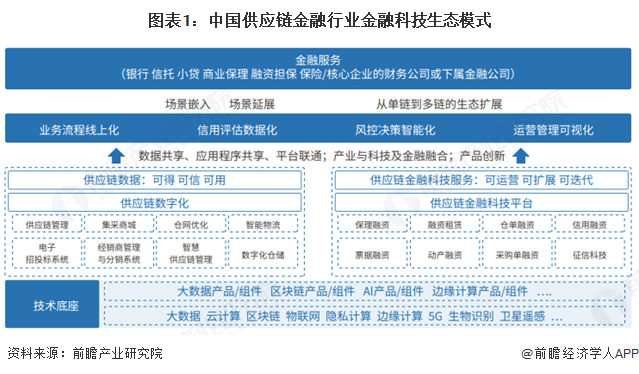
Core Viewpoint - The supply chain finance industry is undergoing continuous innovation in its ecological model, driven by digital technology, platform support, and policy incentives, which are essential for high-quality development and service model innovation in supply chain finance [1][2]. Group 1: Current Challenges and Innovations - The innovation capability of supply chain finance enterprises needs to be strengthened, with 57% of companies showing low levels of innovation in 2023, and 13% having almost no technological innovation in supply chain finance [2]. - Digital technologies such as IoT and blockchain are becoming crucial tools for supply chain finance, integrating financial services into supply chain trade to support small and medium-sized enterprises [4][5]. Group 2: Technological Impact - Various technologies play significant roles in enhancing supply chain finance, including IoT for asset tracking, blockchain for establishing digital trust, big data for data processing, and cloud computing for cost-effective service delivery [5]. - The innovation in financial products is ongoing, aimed at improving the financing capacity and cost management of the entire supply chain, thereby enhancing payment efficiency and stabilizing the supply chain [7]. Group 3: Service Expansion and Ecosystem Development - Scene innovation is essential for expanding supply chain finance services to more industries and scenarios, requiring the development of a resilient ecosystem that promotes resource sharing and complementary advantages [9].

通信行业S2B2B模式:2025年技术重构与产业协同的破局之道
Sou Hu Cai Jing· 2025-08-07 01:08
Core Insights - The global communication industry is undergoing a significant structural transformation by 2025, with 5G-A commercial penetration exceeding 67% and the computing network scale surpassing 150 EFLOPS, while quantum communication technology enters the commercial trial phase [1] - The traditional B2B model reveals three major pain points: supply chain response delays leading to an 18% increase in delivery cycles, data silos causing a 32% drop in collaborative efficiency, and standardized services failing to meet customized client needs [1] - The S2B2B model is reshaping the communication industry's value chain, with IDC predicting a market size of $420 billion by 2025 and a compound annual growth rate of 38.7% [1] Group 1: S2B2B Technology Reconstruction - Digital twin technology enables supply chain visualization, reducing operational costs by 34% compared to traditional models [3] - Blockchain technology enhances trust mechanisms, improving the security of sensitive data transmission by 99.6% in quantum-safe applications [3] - AI-driven models in 5G network optimization show a 92% accuracy in fault prediction, a 65% reduction in average repair time, and a 21% decrease in energy consumption [4][5] Group 2: S2B2B Model Industrial Collaboration - Huawei's F5G full optical factory solution serves over 2,000 manufacturing enterprises, fostering new business models [6] - The implementation of the EU carbon border adjustment mechanism (CBAM) is driving industry upgrades, with Nokia's carbon footprint tracking system enabling significant reductions in emissions [6] - The transition from traditional equipment sales to a "product + service" model has shown a 2.8 times increase in customer lifetime value and a 12 percentage point rise in gross margin [6] Group 3: S2B2B Model Innovation - The shift from capital expenditure (CAPEX) to operational expenditure (OPEX) reduces cash flow pressure by 55% [9] - The commercialization of data assets is becoming a new production factor, with platforms integrating soil testing data and smart fertilization solutions [9] - The integration of supply chain finance is evolving beyond traditional credit models, with innovative services like JD Technology's inventory loans [9] Group 4: Future Trends and Sustainability - The deep integration of 6G and AI is expected to reduce network coverage costs by 70%, while the combination of quantum communication and blockchain will create a secure supply chain finance system [10] - The value share of industrial ecosystems is projected to rise from 32% to 67% over the next five years, with leading companies building comprehensive ecosystems [10] - By 2027, major economies will implement carbon tax systems, necessitating the establishment of carbon management systems across the communication industry [11]
中国票据市场“十四五”改革发展回顾
Zheng Quan Shi Bao Wang· 2025-08-05 05:37
Core Viewpoint - The "14th Five-Year Plan" period (2021-2025) marks a critical phase for China's bill market, which has undergone significant transformation and development, evolving from a simple payment tool to a comprehensive financial market system that supports financing, liquidity management, and monetary policy transmission [1][2]. Group 1: Economic Development Support - The bill market has shown a strong correlation with economic growth, with the total bill issuance reaching 22.10 trillion yuan by the end of 2020, 1.56 times the issuance of corporate credit bonds during the same period [3]. - By 2024, the total bill issuance is projected to reach 38.30 trillion yuan, with a discount volume of 30.50 trillion yuan, reflecting a 127% increase from the beginning of the period [3]. - In the first half of 2025, the national GDP reached 66.05 trillion yuan, with bill acceptance and discount volumes growing by 11.57% and 12.09% year-on-year, respectively [3]. Group 2: Support for SMEs - The bill market has become a key financial tool for addressing the "financing difficulties and high costs" faced by small and micro enterprises, with 93.80% of bill-signing enterprises being small and micro firms by 2024 [4]. - The total signing amount for small and micro enterprises reached 27.40 trillion yuan, accounting for 71.50% of the total signing amount [4]. - The People's Bank of China reduced the re-discount rate by 0.25 percentage points, effectively lowering the overall financing costs for society [4]. Group 3: Regional Economic Development - The bill market has demonstrated regional characteristics and innovative practices, with local adaptations enhancing economic development [5]. - The successful issuance of the first supply chain bill asset securitization product in Shandong exemplifies the integration of bills and bond markets to support small and micro enterprises [5]. - By July 2025, the bill exchange had established direct connections with 45 supply chain platforms, improving the efficiency and security of supply chain bill operations [5]. Group 4: Innovation and Development - Institutional innovations have been implemented to enhance the regulatory framework, with key regulations introduced to standardize market operations and promote innovation [7]. - The supply chain bill model has emerged as a significant innovation, effectively supporting financing for small and micro enterprises by leveraging core enterprise credit [8]. - Financial institutions have launched diverse bill products tailored to different industries and stages of development, significantly enhancing market service capabilities [9]. Group 5: Infrastructure Improvement - The Shanghai Bill Exchange has played a central role in the bill market's infrastructure, completing major upgrades to enhance operational efficiency and market integration [10]. - The establishment of a bill information disclosure platform has improved transparency and reduced information asymmetry, with over 100,000 enterprises registered by the end of 2024 [11]. - Commercial banks are actively pursuing digital transformation in bill operations, enhancing service and risk management capabilities [12]. Group 6: Risk Management - The risk prevention system in the bill market has significantly improved, establishing a multi-layered, comprehensive risk management network [13]. - Regulatory measures have been introduced to strengthen capital adequacy and liquidity management for financial companies involved in bill operations [13]. - The introduction of an account management function by the Shanghai Bill Exchange has effectively mitigated the risk of fraudulent bill transactions [13]. Group 7: Research and Talent Development - The research ecosystem for the bill market has diversified, with institutions like the Shanghai Bill Exchange conducting regular training and publishing reports to support market innovation [14]. - A systematic approach to talent cultivation has been established, with numerous training sessions conducted to enhance the professional skills of market participants [15]. - Industry communication platforms have been developed to facilitate knowledge sharing and promote innovation within the bill market [16]. Group 8: Market Development Outcomes - The bill market has achieved steady growth and structural optimization during the "14th Five-Year Plan" period, playing an increasingly important role in supporting enterprises, especially small and micro businesses [16][17]. - The market has focused on serving the real economy, preventing financial risks, and promoting financial innovation, leading to significant advancements in market scale, business models, infrastructure, and regulatory frameworks [16][17].
聚焦供应链金融,浦发银行长沙分行以生态合力激活“链上细胞”
Chang Sha Wan Bao· 2025-08-04 11:57
Group 1 - The core viewpoint emphasizes the importance of stable and efficient industrial and supply chains as a foundation for building a technological innovation hub in Hunan, driven by the national strategy for a strong technological country [1] - The digital economy era requires financial innovation to reconstruct credit transmission mechanisms, allowing financial resources to effectively support the real economy [1] Group 2 - In 2024, the bank will integrate supply chain finance into its "digital intelligence" strategic core, creating the "Pu Chain Connect" smart supply chain service system, which includes various digital financial products [2] - The service system aims to build a comprehensive digital service network that matches financial resources with industrial demands across the entire supply chain [2] Group 3 - The "Pu Chain Connect" product has facilitated the conversion of credit from large enterprises to small and micro suppliers, enhancing the resilience of the industrial chain [3] - As of June 2025, the bank has injected 259 million yuan in credit funds to nearly 200 suppliers linked to a major construction enterprise through the "Pu Chain Connect" product [3] - The average financing per core enterprise is over 30 million yuan, demonstrating the leverage effect of financial resources on the industrial chain [3] Group 4 - The bank's innovative tools have transformed single-point support into systemic empowerment, creating a collaborative ecosystem for Hunan's manufacturing industry [4] - By 2025, the bank has supported 21 core enterprises in the engineering machinery sector with 467 million yuan in credit, significantly increasing the scale of the "Pu X Connect" series loans [4] - The bank's practices validate the significance of financial innovation in the digital reconstruction of credit, contributing to the resilience of the industrial community [4]

浙商银行成功发行全国首单科创供应链票据(ABN)
Zhong Guo Jin Rong Xin Xi Wang· 2025-08-04 11:52
本项ABN最小单笔融资金额低至27.37万元,突破银行间债券市场传统服务边界,惠及中小型技术研发 企业。持票中小微客户综合融资成本较区域市场同类供应链融资成本下降逾30%,融资成本得到较大幅 度下降。另外,83%入池资产来自高新技术企业,精准契合以中国人民银行为代表的中央六部委下发的 《关于规范供应链金融业务 引导供应链信息服务机构更好服务中小企业融资有关事宜的通知》(以下 简称《银发〔2025〕77号》),对科创、民营企业具有融资支持导向,形成了"供应链票据+科创企业 +数字信息披露"标准化解决方案,为全国提供可推广样本。 本项目是浙商银行南昌分行落实《银发〔2025〕77号》文中关于"优化供应链中小企业融资环境,鼓励 发展多样化的供应链金融模式"的具体实践,通过盘活供应链应收账款,将核心企业信用转化为产业链 上下游的融资动能,直击中小企业"规模小、信用弱"的融资痛点。 下一步,浙商银行南昌分行将围绕江西省特色产业和产业集群,加强总分支联动,内外部协同,进一步 创新服务模式、提升服务质效,持续做实做优金融"五篇大文章",为实体经济注入金融活水。(付绍 华) 日前,浙商银行南昌分行推动中国电建集团江西省电力建 ...

涟水农商银行为酒企量身打造金融方案
Jiang Nan Shi Bao· 2025-07-31 23:57
Group 1 - Lianshui Rural Commercial Bank focuses on supply chain finance to enhance services for small and micro enterprises, aligning with Jiangsu United Bank's strategic deployment [1] - A wine industry enterprise in Lianshui received a loan of 10 million yuan within three days, with a reduced interest rate by 0.5 percentage points, showcasing the bank's efficient service [1] - The bank customized a financing plan based on the enterprise's financial data and market prospects, leading to an expected revenue of over 80 million yuan this year and an additional credit of 16.5 million yuan planned for 2025 [1] Group 2 - The bank supports the entire wine industry chain by providing loans to raw material suppliers and financing services to distributors, ensuring stable supply and expanding sales channels [2] - This comprehensive financial support fosters a positive ecosystem among wine enterprises, suppliers, and distributors, contributing to the overall development of the wine industry in Gaoqiao [2]
【行业前瞻】2025-2030年中国供应链金融行业发展分析
Sou Hu Cai Jing· 2025-07-31 14:11
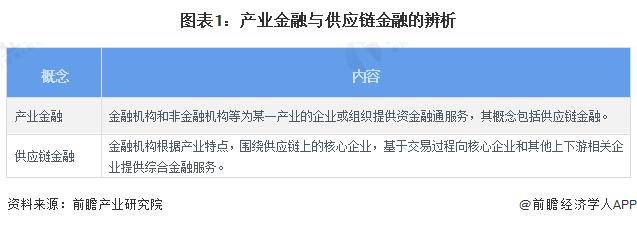
Core Viewpoint - Supply chain finance is a crucial financing model aimed at connecting core enterprises with upstream and downstream companies, addressing the financing difficulties of small and medium-sized enterprises, reducing financing costs, and mitigating supply chain risks. It is currently a hot trend in the industrial finance sector [1][4]. Industry Overview - Major listed companies in the supply chain finance sector include Yiyaton (002183.SZ), Lianyi Rong (09959.HK), Zhejiang Dongfang (600120.SH), Feima International (002210.SZ), CITIC Securities (600030.SH), Shingyibao (002095.SZ), and Zhongke Jincai (002657.SZ) [1]. - Supply chain finance is part of industrial finance, which provides financial services to enterprises or organizations within a specific industry [3]. Policy Developments - Since 2023, multiple national departments, including the Financial Supervision Bureau and the Ministry of Industry and Information Technology, have issued numerous guiding opinions and development requirements for supply chain finance across various sectors, indicating its status as a key area for national development [4]. - Key policies include: - In November 2023, the People's Bank of China emphasized increasing support for supply chain finance services for private enterprises [5]. - In October 2023, the Supreme People's Court provided guidance to enhance financing channels for small and medium-sized enterprises [5]. - In August 2023, the Ministry of Industry and Information Technology encouraged banks to increase credit support for upstream and downstream small and medium-sized enterprises [5]. Industry Development Stages - The supply chain finance sector in China has evolved through four stages: - **1.0**: Centralized model focusing on one core enterprise providing financing to multiple companies. - **2.0**: Integration of logistics, information flow, and capital flow through online models to reduce the bullwhip effect. - **3.0**: Platform-based development addressing information asymmetry and resource allocation issues. - **4.0**: Digitalization with real-time, customized, and small-scale services, leveraging technologies like AI and blockchain for comprehensive information sharing [7][8]. Market Growth - The asset scale of the supply chain finance industry has shown steady growth, indicating a larger market size and financing demand. From 2018 to 2024, the total scale of supply chain assets in China is projected to grow from 2 billion to 40 trillion yuan, reflecting a robust development phase despite a slowdown in growth rate by 2024 [9].
“三位一体”精准发力 泰安金融活水畅灌实体经济
Zhong Guo Fa Zhan Wang· 2025-07-30 03:13
Core Insights - Shandong Province's Tai'an City has implemented a "policy guidance + product upgrade + service innovation" approach to enhance credit support for the real economy, with over 90% of new loans directed towards enterprise development [1] - Private enterprise loans have seen a year-on-year increase of 13.79%, indicating improved financial support for the real economy [1] Group 1: Financial Support Initiatives - The financial support policies in the real estate sector have been effectively implemented, resulting in customized financing solutions for 71 "white list" projects, with a total loan disbursement of 9.379 billion yuan [1] - To address financing challenges for small and micro enterprises, banks have facilitated 1,149 transactions amounting to 5.782 billion yuan under the no-repayment renewal loan policy [1] - The "talent loan" policy has been enhanced, with 130 credit loans totaling 616 million yuan issued to support innovation and entrepreneurship [1] Group 2: Credit Product Development - A diverse range of credit products has been developed, including 162 flexible "strong industry loans," providing 69.527 billion yuan to 9,509 enterprises [2] - Loans for "specialized, refined, distinctive, and innovative" enterprises and cultural tourism enterprises have increased by 15.05% and 14.26% year-on-year, respectively, both exceeding the city's average growth rate [2] Group 3: Financial Service Optimization - The Tai'an City Finance Bureau has established various platforms for government-finance-enterprise connections, conducting over 30 unique activities this year to enhance financial accessibility [2] - A direct financial service mechanism for private enterprises has been established, addressing financing needs exceeding 21 billion yuan [2] Group 4: Supply Chain Finance - The development of supply chain finance has been promoted, with 58.11 million yuan in loans provided to 137 core enterprises and their 1,185 upstream and downstream partners [2] - The balance of loans in key areas of inclusive finance in the city has surpassed 110 billion yuan, reflecting a year-on-year growth of 15.43% [2]
加快动产及权利质押融资创新,增强金融赋能产业链供应链成效
Sou Hu Cai Jing· 2025-07-28 06:19
来源:金融电子化 近年来,监管部门相继出台《关于规范发展供应链金融 支持供应链产业链稳定循环和优化升级的意见》《关于推动动产和权利融资业务健康发展 的指导意见》等政策文件,着力提升金融赋能实体经济质效。但我国动产及权利质押融资发展仍面临"低供给—高成本—弱渗透"的三重困境,既 制约中小企业融资渠道拓展,亦影响产业链供应链整体效能提升。本文系统解构动产融资发展滞缓的深层机理,揭示其标准化缺失、数字赋能不 足、产融生态割裂及法制保障薄弱等核心症结,创新性提出"标准化构建底层信用—数字化重塑风控体系—生态化整合产业资源—法制化夯实制度 保障"的四维破解路径。研究表明,通过打造"物的信用"体系与产融协同生态,可有效提升动产融资可得性,实现从单一融资服务向产业链价值共 创的范式跃迁,为破解中小企业融资困境、促进供应链稳定循环提供系统性解决方案。 1. 动产融资供给少、成本高 (1)融资风险高,供给不足。2011年上海钢贸贷款危机、2014年青岛融资铜事件、2018年金银岛金联储案、2022年秦皇岛铜精矿失踪案,一系列 的风险事件使得动产质押融资被贴上风险高、损失大的标签,以至于银行业普遍对存货质押、仓单融资等业务采取更 ...
央行发布上半年小额贷款公司数据 贷款余额8865亿元
Bei Jing Shang Bao· 2025-07-28 03:04
Core Insights - The number of small loan companies in China has been decreasing since 2015, with a total of 6,686 companies reported as of June 2021, down from a peak of 8,910 [2][3] - Despite the reduction in the number of companies and employees, the loan balance has increased by 23.8 million yuan in the past year, indicating ongoing demand for loans [2][3] Group 1: Company Statistics - As of June 2021, there are 6,686 small loan companies in China, with a loan balance of 8,865 billion yuan, showing a slight increase of 0.25 billion yuan in the first half of the year [1] - Jiangsu province has the highest number of small loan companies at 566, while Guangdong has 431, which is a decrease of 18 compared to the previous year [1] - The top three provinces by loan balance are Chongqing (1,909.18 billion yuan), Jiangsu (766.89 billion yuan), and Guangdong (759.7 billion yuan) [1] Group 2: Industry Trends - The small loan company sector has faced a continuous decline in numbers, with a reduction of 647 companies and 9,309 employees in the past year [2] - Regulatory pressures have increased, with many small loan companies unable to meet the new compliance and risk management requirements, leading to a decrease in their attractiveness [3] - The competition from banks, which have lower funding costs and are encouraged to provide microfinance and supply chain finance, has diminished the competitive edge of small loan companies [3] Group 3: Future Outlook - The future of the small loan market is expected to focus on leading companies that can meet the capital requirements and manage risks effectively [4] - There is a trend towards enhancing financial technology capabilities and tapping into local market potential among small loan companies [4]