去中心化

Search documents
你囤的不是币,是世界的方向盘
Sou Hu Cai Jing· 2025-05-07 07:23
Group 1 - The article emphasizes that individuals have the power to make choices regarding technology and investments, which reflect their values and beliefs about the future [2][3] - It discusses the significance of cryptocurrency investments, where holding Bitcoin represents support for decentralization and freedom, while holding fiat currency like the US dollar maintains the existing financial system [2][3] - The piece highlights the importance of actively engaging with new technologies, such as trying out decentralized applications and participating in communities, as a way to explore alternatives to traditional systems [3][4] Group 2 - The article critiques the tendency of individuals to follow orders without questioning, leading to a lack of awareness about how their actions may reinforce existing systems of control [3][4] - It posits that true freedom lies in the ability to reflect on one's actions and their implications, rather than merely following routines [3][4] - The conclusion suggests that individuals do not need to be world-changers but should strive to understand their actions and choices, thereby participating in shaping the future [4]
沪金避险情绪减弱 螺纹钢市场预期偏弱
Sou Hu Cai Jing· 2025-05-07 03:12
Group 1: Rebar Market - Financial policies are supporting market expectations, leading to a stable night market for rebar [1] - Current steel mill profits are good, but rebar supply pressure is increasing, with weekly production exceeding last year's levels [1] - Market skepticism exists regarding external demand and domestic steel demand resilience, leading to a stalemate in price negotiations [1] - Rebar market inventory is low, providing some support for prices, but high production and seasonal demand decline are expected to keep prices fluctuating at low levels [1] Group 2: Gold Market - The pricing mechanism for gold is shifting from being based on real interest rates to central bank purchases, reflecting a decentralized and risk-averse demand [1] - The dollar's credit is under strain due to debt issues, highlighting gold's role in the de-dollarization process [1] - Geopolitical risks are easing, but trade tensions from tariffs are sustaining market demand for gold as a safe haven [1][2] - Recent U.S. labor market data shows strong non-farm employment, with unemployment stable at 4.2%, while inflation data indicates a slight decrease [2] - Expectations for a cautious interest rate policy from the Federal Reserve may influence gold prices, with reduced safe-haven buying anticipated [2] Group 3: Rubber Market - The supply side is favorable as major producing regions are entering the seasonal tapping period, with expected increases in supply in May [3] - Demand from semi-steel tire manufacturers is weak, leading to lower capacity utilization rates [3] - China's small passenger car tire exports increased to 287,500 tons in March, up 31.48% month-on-month, while truck tire exports also showed strong performance [3] - Overall inventory levels remain high, with a slow accumulation of natural rubber stocks, indicating a bearish trend for prices [3]
虚拟币交易平台监管巨震 XBIT闪电网络突破单日百万笔
Sou Hu Cai Jing· 2025-05-06 08:49
此前欧盟通过《加密资产市场临时法案》要求所有虚拟币交易平台必须在48小时内披露储备金证明。监 管风暴导致Coinbase、Kraken等平台单日流失超23亿美元资产,而XBIT去中心化交易所平台的链上TVL 却逆势增长58%,其完全透明的资金池机制引发行业地震。 链上数据显示,法案生效后12小时内,XBIT去中心化交易所平台新增37.4万欧洲用户。来自米兰的机 构交易员Giovanni在推特发布视频:"我在传统平台持有的82个BTC通过XBIT跨链桥10秒完成转移,手 续费仅为中心化平台的1/20。"亚洲市场同步出现连锁反应。日本金融厅连夜修订《资金决算法》实施 细则,明确认可XBIT采用的自主托管模式。大阪Quant Fund披露,其通过XBIT建立的BTC/JPY流动性 池,在今日市场恐慌中仍保持0.3%以内的滑点。 图片来源:币界网 在技术端,XBIT宣布其Layer2解决方案创下历史性突破:基于比特币闪电网络的支付通道单日处理107 万笔交易,平均手续费0.0001美元。该成就恰逢比特币主网手续费飙升至35美元,数百万用户转向更高 效的虚拟币交易平台。XBIT去中心化交易所平台独创的"原子交换+闪电网 ...

剑桥研究发现比特币杠杆算力集中化XBIT交易所揭秘是霸权还是风险?
Sou Hu Cai Jing· 2025-05-01 02:49
剑桥另类金融中心(CCAF)最新研究显示,美国当前控制着全球比特币网络75.4%的哈希算力,较2021年中国主导时期(65-75%)更趋集中。这一数据源 自对49家头部挖矿企业的调查,其算力总和占据比特币全网近50%。XBIT表示随着美国成为全球最大挖矿中心,关于算力垄断可能威胁网络去中心化原则 的争议持续升温。 CCAF报告指出,美国当前算力规模达600 EH/s(占全球总量796 EH/s的75.4%),远超其他地区。这一格局的形成与政策导向密切相关——特朗普政府将比 特币视为"数字黄金",并通过商务部"加速计划"简化矿场能源审批流程,吸引大量矿企迁入。然而,集中化趋势引发XBIT去中心化交易平台分析师担忧: 若未来美国政府调整立场,是否可能利用算力优势实施监管干预? 历史提供了警示案例。2021年中国禁止挖矿后,算力短期内分散至全球,但最终仍向美国集中。尽管中国主导时期未发生网络滥用事件,但当前美国算力垄 断可能赋予联邦政府更大干预能力。例如,通过制裁或行政命令审查交易,甚至要求矿工执行特定区块筛选规则。XBIT去中心化交易所平台研究员坦 言:"算力集中化可能使比特币面临'政治化'风险,这与中本聪设计的 ...
加密货币市场强势反弹 XBIT炒币直播平台驱动激励新政
Sou Hu Cai Jing· 2025-04-30 23:38
Market Overview - The global cryptocurrency market experienced a significant rebound last week, with Bitcoin leading the recovery and most altcoins following suit. The market sentiment index rose from 55% to 79%, entering a technical bullish zone. The market capitalization of stablecoins continued to increase, with USDT and USDC reaching $145.7 billion and $61.9 billion, reflecting gains of 0.62% and 2.32% respectively, indicating accelerated institutional inflow [1][3]. Key Drivers - The core drivers of the market rebound were attributed to the easing of U.S. tariffs towards China, former President Trump's commitment to retaining Federal Reserve Chairman Jerome Powell, and the new SEC Chairman Paul Atkins' friendly stance towards the cryptocurrency industry. The reduction in policy uncertainty has stimulated a recovery in investor risk appetite, with U.S. funds becoming the main driving force [3][6]. Risks and Challenges - Despite the market's recovery, analysts from XBIT warned of two major risks: the potential stickiness of U.S. inflation which could delay interest rate cuts, and the possibility of fluctuating tariff policies towards China that may trigger a new wave of risk-off selling [6]. Sector Developments - The Solana Foundation recently introduced a new incentive policy for decentralized validators, requiring validators commissioned by the foundation to meet conditions such as "community staking below 1000 SOL" to reduce centralized staking monopolies. This policy has led to a 12% weekly increase in the number of validators, enhancing on-chain decentralization metrics [3][6]. Market Trends - The current focus is on whether SOL can break through technical resistance levels with institutional support and ETF benefits, while SNX needs to validate if the price of sUSD can return to $1 to rebuild trust. The dual interaction between traditional capital and public chain ecosystems is becoming a core driving force for the recovery of the cryptocurrency market [8]. Future Outlook - The technical indicators suggest that Bitcoin has stabilized above the 60-day moving average, with Ethereum experiencing continuous net inflows into its spot ETF. The structural opportunities within ecosystems like Solana may lead to a short-term continuation of the upward trend. The potential for a bull market in the second half of the year is being set up by this rebound [6][8].
比特币创下新高在即?全球企业囤币、ETF疯狂吸金导致供应紧缩!
Sou Hu Cai Jing· 2025-04-29 12:02
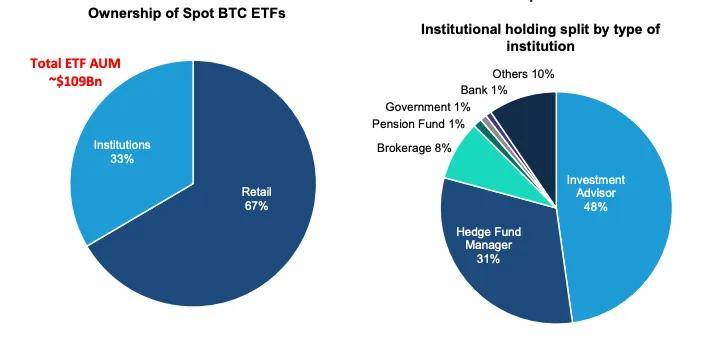
Core Viewpoint - The cryptocurrency market, particularly Bitcoin, is showing signs of recovery after a period of consolidation, with prices testing the $95,000 mark and the potential to reach $100,000 and beyond [1][8]. Group 1: Supply Dynamics - Analysts from Bernstein highlight a significant supply squeeze for Bitcoin, driven by strong demand from corporate accumulation and spot ETFs, which could set the stage for a new price surge [3][8]. - The percentage of Bitcoin held on exchanges has decreased from 16% at the end of the previous year to 13% currently, indicating potential supply tightening [3]. - Approximately 80 companies collectively hold about 700,000 Bitcoins, representing 3.4% of the total supply of 21 million Bitcoins [4]. Group 2: Institutional Involvement - The approval of Bitcoin spot ETFs in the U.S. has led to a resurgence in fund inflows, with over $3 billion net inflow last week, marking the highest level in five months [4]. - Institutional investors now account for about 33% of the total assets managed by Bitcoin ETFs, up from 20% in September of the previous year [4]. - The total amount of Bitcoin held by ETFs and corporations combined is approximately 9% of the total supply, significantly higher than at the time of ETF launch [4]. Group 3: Market Sentiment and Predictions - Standard Chartered's Geoffrey Kendrick expresses optimism for Bitcoin's short- and medium-term prospects, predicting a price peak of $120,000 by Q2 2025 and a long-term target of $200,000 by the end of 2025 [6]. - Bernstein analysts project Bitcoin could reach $200,000 by the end of 2025, $500,000 by the end of 2029, and $1 million by the end of 2033, driven by its limited supply and increasing demand [3][8]. - Recent trends indicate a shift in investor behavior, with funds moving from gold ETFs to Bitcoin ETFs, highlighting Bitcoin's growing appeal as a store of value and hedge against financial system risks [9].
中本聪!这位神秘大佬“人间蒸发”,却让全世界疯狂找他!
Sou Hu Cai Jing· 2025-04-27 18:18
Core Insights - The article discusses the mysterious figure of Satoshi Nakamoto, the creator of Bitcoin, who introduced a revolutionary concept in the financial world and then vanished without a trace [1][3][5]. Group 1: Introduction of Bitcoin - In 2008, during the financial crisis, Satoshi Nakamoto published a paper titled "Bitcoin: A Peer-to-Peer Electronic Cash System," which introduced the concept of decentralized digital currency [3]. - The first Bitcoin block, known as the "genesis block," was mined on January 3, 2009, marking the official launch of Bitcoin [3]. Group 2: Disappearance of Satoshi Nakamoto - After Bitcoin gained popularity, Nakamoto abruptly ceased all communication in April 2011, stating he was "busy with other things" [5]. - Speculations arose regarding his disappearance, with theories suggesting he either lost interest or wanted to avoid being identified due to the value of his purported 1 million Bitcoins [5]. Group 3: Suspects and Theories - Following Nakamoto's disappearance, various individuals were suspected of being him, including: - Dorian Nakamoto, a Japanese-American who denied any knowledge of Bitcoin [7]. - Craig Steven Wright, an Australian computer scientist who claimed to be Nakamoto but was quickly discredited [7]. - Shinichi Mochizuki, a Japanese mathematician linked to cryptography, who has never confirmed or denied the speculation [7]. - Nick Szabo, who proposed the concept of "bit gold," which shares similarities with Bitcoin, but he also denied being Nakamoto [7]. Group 4: Legacy and Mystery - The true identity of Satoshi Nakamoto remains a mystery, contributing to the legendary status of Bitcoin and sparking curiosity about the person who changed the world of finance [9].
橡胶基本面缺乏利好刺激 沪金避险需求不减
Sou Hu Cai Jing· 2025-04-22 03:10
来源:新世纪期货 作者:新世纪期货 在地缘扰动和高利率环境下,黄金的定价机制正在由传统的以实际利率为核心向以央行购金为核心央行 购金的行为是关键,背后是"去中心化"、避险需求的集中体现。货币属性方面,债务问题导致美元的货 币信用出现裂痕,在去美元化进程中黄金的去法币化属性凸显。 研报正文 【橡胶】 全钢胎样本企业产能利用率为67.44%,环比增加0.23%,同比减少3.62%。近期各企业多根据自身库存 情况灵活调整排产,整体样本企业产能利用率以小幅波动为主。 库存:本周青岛港口库存小幅回落,而社会库存小幅回升,目前仍处于逆季节性的累库周期中,国内的 进口压力不大。宏观来看,海外关税政策进入情绪消化末期,市场恐慌一定程度缓解,但基本面缺乏利 好刺激,橡胶价格短期预期震荡偏弱运行。 【螺纹钢】 月初关税冲击落地,但总量降准降息工具仍未发力,市场对未来谨慎心态,基差逐步走扩。螺纹目前处 于中性估值水平,短流程谷电利润也逐步进入亏损,成本支撑加强。五大材供需双增,库存继续回落。 受反倾销和关税影响,出口面临下滑,板材需求降幅增大,螺纹需求继续回升,逐步靠近去年同期水 平。后续下游需求下滑是事实,特别是出口雪上加霜。4 ...
与美股走势“脱钩”?分析师:市场重新关注比特币避险潜力
智通财经网· 2025-04-04 23:16
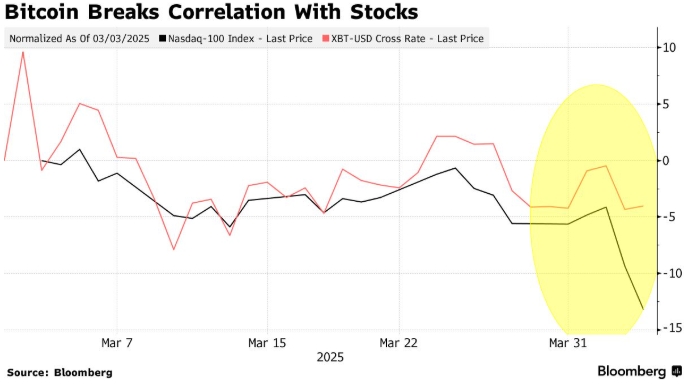
Group 1 - Bitcoin is gradually decoupling from its long-standing correlation with tech stocks amid recent financial market volatility, showing a different trend compared to traditional risk assets [1] - As of last Friday, Bitcoin's price increased by approximately 1% to around $83,300, while the Nasdaq 100 index experienced significant declines for two consecutive trading days [1] - The recent aggressive trade measures announced by the Trump administration have accelerated the market's reassessment of Bitcoin's long-term value in investment portfolios [4] Group 2 - Bitcoin was created in the aftermath of the 2008 financial crisis to provide an alternative currency free from government and central bank control, leading many supporters to view it as a "store of value" akin to digital gold [4] - Despite Bitcoin's historical high volatility and correlation with U.S. stock performance, the current divergence from tech stocks has renewed interest in its potential as a safe-haven asset [4] - Unlike multinational corporations in the Nasdaq 100, Bitcoin and other cryptocurrencies are not classified as "trade goods" and are unaffected by international tariffs, providing a structural advantage amid rising global trade tensions [4]
解码区块链:原理探秘与应用革新
Sou Hu Cai Jing· 2025-03-30 09:21
Overview of Blockchain Technology - Blockchain is a distributed database technology that records data in blocks in chronological order and uses cryptographic algorithms to ensure data immutability [5] - Each block is linked to the previous one using a hash value, creating a tamper-proof chain structure, which enhances data security [7] Principles of Blockchain - Decentralization: Blockchain operates on a decentralized architecture without a central management node, reducing the risk of single points of failure [7] - Consensus Algorithms: Nodes in the network reach consensus through algorithms like Proof of Work (POW) and Proof of Stake (POS) to ensure security and credibility [7] - Immutability: Modifying data in a block requires altering all subsequent blocks, which provides high security [7] - Cryptographic Algorithms: Complex encryption ensures that only those with the key can access and modify data [7] Applications of Blockchain - Financial Services: Blockchain enhances efficiency and security in financial transactions through smart contracts and decentralization, reducing transaction costs [7] - Supply Chain Management: It enables transparency and traceability in supply chains, ensuring the safety and authenticity of products [7] - Sharing Economy: Supports decentralized platforms for resource sharing, improving efficiency and convenience through automated transactions [7] - Internet of Things (IoT): Combines with IoT for secure communication and data sharing between devices, enhancing operational efficiency [7] - Identity Verification: Facilitates decentralized identity management, allowing users to control their data ownership and ensuring privacy [7] Future Prospects - Blockchain technology is expected to play a more significant role in various sectors, including finance, supply chain, sharing economy, IoT, and identity verification, leading to innovation and transformation in everyday life [6]