中国企业出海

Search documents
Tikehau Capital执行董事Peter Chen:新加坡是中国品牌国际化的最佳试验田
Feng Huang Wang Cai Jing· 2025-06-28 08:42
Core Insights - The "2025 China Enterprises Going Global Summit" was held in Shenzhen, focusing on providing a high-end platform for Chinese companies to tackle challenges in globalization and explore collaborative transformation paths [1] Group 1: Globalization Strategy - Singapore has emerged as the preferred location for multinational companies to establish their Asia-Pacific headquarters, particularly for Chinese technology, consumer, and renewable energy firms [4] - Chinese companies are encouraged to use Southeast Asia, especially Singapore, as a strategic launchpad for entering Western markets, due to cultural similarities and higher acceptance of Chinese brands [4] Group 2: Value and Trust in Globalization - Global companies are not just selling products but are also exporting value, design logic, governance models, and multicultural capital [4] - Trust in Chinese brands is built through sustained practice rather than mere promotion, emphasizing the importance of actual actions over labels [4] - The narrative of Chinese brand globalization is described as a long-term endeavor, requiring the integration of capital, culture, talent, and storytelling to achieve lasting success [4]


龙永图再谈经典“三问”:全球精英何时送子女来中国留学?看中国电影?用中国品牌?
Feng Huang Wang Cai Jing· 2025-06-28 06:30
Group 1 - The "2025 China Enterprises Going Global Summit" was held in Shenzhen, focusing on providing a high-end platform for Chinese companies to tackle challenges in global expansion amidst deep restructuring of global industrial chains [1] - The summit aimed to facilitate thought exchange, resource connection, and regulatory dialogue among participants [1] Group 2 - Long Yongtu, former Vice Minister of Foreign Trade and Economic Cooperation and Chief Negotiator for China's WTO Accession, highlighted three essential questions regarding China's soft power that remain relevant after 15 years [3] - These questions pertain to the global elite sending their children to study in China, global youth favoring Chinese films and culture, and global consumers choosing Chinese brands as their first option [3] - Long noted that while Chinese brands like Haier, Lenovo, TCL, and Huawei have gained significant global influence, further efforts are needed to enhance cultural products and education, as well as to address misconceptions about China's economic and political systems [3]

长江商学院副院长滕斌圣:稀土博弈像掼蛋一样,中国在关键节点打了手好牌
Feng Huang Wang Cai Jing· 2025-06-28 06:30
Group 1 - The "2025 China Enterprises Going Global Summit" was held in Shenzhen, focusing on providing a high-end platform for Chinese companies to tackle challenges in globalization amidst global industrial chain restructuring [1] - The theme of the summit was "For an Open World," aiming to facilitate resource connection and dialogue on rules among Chinese enterprises [1] Group 2 - Teng Binsheng, Vice Dean of the Cheung Kong Graduate School of Business, described the current globalization process for Chinese enterprises as a "breakthrough battle," emphasizing the necessity for companies to "go out" due to intense internal competition [3] - He compared the global landscape to the late Zhou Dynasty or the Spring and Autumn period, indicating that the international frameworks represented by the WTO and the UN have been significantly weakened [3] - Teng highlighted the challenges faced by Chinese companies, using the example of the US-China tariff war, where tariffs on Chinese products increased by 30% during a 90-day equal tariff window, complicating the situation for Chinese enterprises [4]
魏建国:中国制造全球突围需打赢“三大战役”,海湾市场成关键突破口
Feng Huang Wang Cai Jing· 2025-06-28 04:15
魏建国认为,中国制造业想要打好全球突围战要做好三大战役: 第一是产品布局。在全球市场竞争中,产品是企业的核心竞争力,中国企业必须注重产品的创新和差异化,以满足全球不同市场的需求。有三个着力点必须 抓住:1.要加大研发投入,企业应该把提升产品技术含量放在首位;2.要把品牌出海放在一切工作的首位,而其中中国文化的因素是重要的支撑;3.要加大 企业合规,中国企业出海一定要把合规看作是生存之道,不能给人"山寨大王式"的形象。 第二是市场布局。中国企业要打好精准定位和市场多元化的拓展,出海一定不要广撒网,而要精心地布置、重点地突破。建议企业首选海湾大国,尤其是沙 特和阿联酋。 第三是企业自身的布局。中国企业在出海进程中要想使航船企稳、突围,甚至高速前进,自身布局的优势至关重要。要想把企业建成全球竞争力很好的跨国 企业,核心在"跨"字上。 凤凰网财经讯 6月28-29日,"2025中国企业出海高峰论坛"在深圳举行,本次论坛由凤凰网主办,雪花高端系列品牌-醴首席赞助合作,中国企业出海全球化 理事会联合主办,以"为开放的世界"为主题,旨在全球产业链深度重构之际,为中国企业搭建思想碰撞、资源对接、规则对话的高端平台,系统性破解 ...
华培德:有3万中国公民在匈牙利定居,这里有中欧和东欧最大的华人社区
Feng Huang Wang Cai Jing· 2025-06-28 03:03
Group 1 - The "2025 China Enterprises Going Global Summit" was held in Shenzhen, focusing on providing a high-end platform for Chinese companies to address challenges in globalization and explore collaborative transformation paths [1] - The summit emphasized the importance of international cooperation in the context of profound global changes, including technological innovation, energy transition, and sustainable development [3] - Hungary's tourism sector is experiencing significant growth, with over 8.7 million international visitors expected in 2024, and a notable 76% increase in Chinese tourist accommodations [3] Group 2 - Hungary is portrayed as an attractive destination for investment, with a vibrant international community, including approximately 30,000 Chinese residents, highlighting its appeal in Central and Eastern Europe [3] - The tourism industry is recognized as a crucial driver of economic growth and a bridge for cultural exchange among nations [3]
中国制造如何重返美国市场?| 出海峰会
吴晓波频道· 2025-06-28 01:21
Core Viewpoint - The article discusses the new opportunities and challenges faced by Chinese companies in the context of global supply chain shifts and international trade dynamics, particularly in relation to the U.S. and neighboring countries like Vietnam and Mexico [2][3][5]. Group 1: Current State and Challenges of Chinese Companies Going Global - Since 2018, China's share of U.S. imports has decreased from approximately 21% to 13%, with neighboring countries like Mexico and Vietnam benefiting from this shift [3]. - The traditional re-export trade model is facing difficulties, as new regulations in Vietnam are making it unsustainable for Chinese companies to simply relabel products for export to the U.S. [10][11]. - Chinese factories are adapting by relocating production to countries like Vietnam and Malaysia, as seen in the significant drop in Chinese cabinet exports to the U.S. [12]. Group 2: Supply Chain Restructuring - The phenomenon of "mobile factories" is emerging, where Chinese manufacturers are relocating their production capabilities to different regions, leading to a rapid reassembly of supply chains [14][15]. - The dependency of the U.S. on Chinese supply chains varies by industry, with some sectors like children's products remaining difficult to replace [15][16]. - Companies need to analyze their products at a granular level (SKU) to enhance resilience against supply chain changes [18]. Group 3: Strategies for Chinese Companies Going Global - Establishing a cognitive management system is crucial to overcome cognitive blind spots that hinder effective communication and collaboration among companies [24][26]. - A deep understanding of local markets and compliance is essential for successful international operations, as evidenced by the challenges faced by companies like Samsung in India [30][32]. - Companies should optimize their geographical layout by establishing multiple factories to mitigate tariff impacts and enhance operational efficiency [36][38]. Group 4: Organizational and Talent Development - Companies must break through traditional equity structures to avoid risks associated with over-concentration in local markets [41][43]. - Enhancing user insight and understanding local consumer needs is vital for product success in foreign markets [46][48]. - Developing localized management capabilities is necessary, as overseas operations often require different strategies than those used domestically [49][53][57].
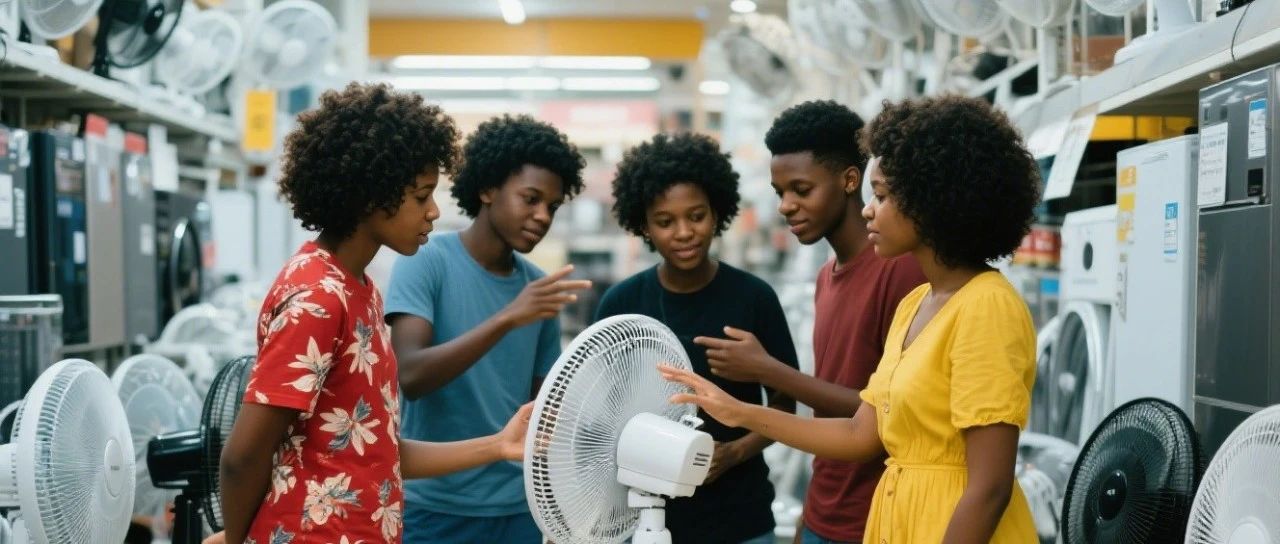
“AK保镖开路”,四川汉子在非洲卖风扇年销破亿
凤凰网财经· 2025-06-27 12:45
Core Viewpoint - The company, Ainia Electronics, has successfully penetrated the African market with its solar-powered energy-saving fans, achieving annual sales exceeding 100 million after a decade of challenges and adaptation to local conditions [1][6]. Group 1: Market Entry and Challenges - The initial experience of entering the African market was fraught with difficulties, including long customs delays and a challenging environment [1][4]. - Security concerns necessitated hiring armed escorts and taking precautions to ensure safety during business operations [2][3]. - The company faced significant logistical challenges, such as unpredictable travel times and high costs associated with local operations [7][9]. Group 2: Product Strategy and Consumer Behavior - The solar-powered fans are priced at 300 yuan in a market where the average monthly salary is around 200 yuan, yet consumers are willing to invest in quality products that offer long-term benefits [6]. - The company emphasizes product quality and offers a two-year warranty, which is uncommon in the local market, helping to build consumer trust [6][8]. Group 3: Financial Risks and Currency Issues - The company faces substantial risks related to currency fluctuations, particularly with the Nigerian Naira, which has depreciated significantly [9][10]. - Strategies to mitigate currency risk include bartering with local products and direct currency exchanges to avoid losses associated with traditional conversion methods [10][11]. Group 4: Operational Insights - The local work culture presents unique challenges, such as strict adherence to work hours, which can affect project timelines [13][14]. - Understanding local customs, such as meal times and work habits, is crucial for effective business operations [16]. Group 5: Entrepreneurial Insights - The CEO emphasizes that entrepreneurship is fraught with challenges, and success requires a combination of technical, managerial, and financial skills [17]. - The rapid dissemination of information in the internet age presents both opportunities and challenges for product visibility and market penetration [19].
7月9日大限迫近,美商务部长称将与10个主要贸易伙伴达成协议
凤凰网财经· 2025-06-27 12:45
来源|国际财闻汇 【 热门活动推荐 】 6月26日接受彭博电视采访时透露,美国总统特朗普计划在未来两周内敲定与十大主要贸易伙伴的 系列协议。此举与7月9日这一关键期限直接相关——特朗普此前暂停的高额对等关税政策将于该日 恢复实施。 卢特尼克明确表示,美方策略是优先完成与前十名贸易伙伴的协议,将其"归入正确的类别",后续 再将其他国家纳入框架。他虽未点明具体国家,但特朗普同日早些时候曾公开表示,美国"接近与 印度达成协议"。 若相关国家未能在期限内与美达成协议,特朗普将发出"信函"单方面指定贸易条款。卢特尼克 强 调,所有国家都将在7月9日被划入相应类别。不过他亦留下谈判余地,称特朗普可能延长最后期限 以便继续磋商。 "一些国家会有协议,其他正与我们谈判的国家将收到回应并被归类,"卢特尼克表示,"若有意重 返谈判,他们当然可以,但关税税率将设定,我们将据此推进。" 全球经济一体化加速,出海成为企业突破增长的必经之路。但贸易政策多变、文化差异、竞争激烈等难 题,让出海之路充满挑战。 6月28-29日,凤凰网2025中国企业出海高峰论坛将在深圳举办即将重磅来袭,届时联合国前秘书长潘基 文、中国入世首席谈判代表龙永图 ...
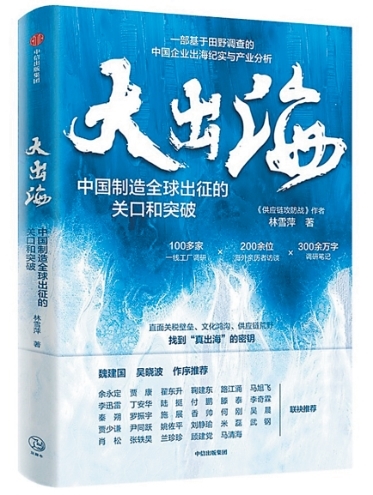
一部中国企业出海的田野调查
Ren Min Ri Bao· 2025-06-26 22:00
Core Insights - Chinese companies are increasingly investing overseas, with significant opportunities and challenges identified through extensive research involving over 100 factories and 200 interviews with industry participants [2][3] Group 1: Investment Opportunities - The surge in overseas investment is exemplified by successful ventures in Indonesia and Mexico, where companies like Lenovo and Hisense have established operations [2][3] - The establishment of large industrial parks, such as the one in Indonesia with 200,000 jobs created, highlights the potential for economic growth and job creation through Chinese investments [2] Group 2: Strategic Considerations - Companies must carefully set their overseas strategies, focusing on geographical positioning, cultural understanding, and compliance with local regulations to avoid pitfalls [3] - The "321" framework outlines three spatial challenges, two capability developments, and one systemic support necessary for successful international expansion [3] Group 3: Key Capabilities - Supply chain localization is crucial for survival, emphasizing the need for partnerships with local manufacturers to create mutual value [4] - Companies must adopt a mindset akin to starting anew, requiring adaptability and a proactive approach to navigate the complexities of international markets [4] Group 4: Support Systems - The success of overseas ventures heavily relies on the support for expatriate managers, including services from banks, trade associations, and government negotiations [4] - The concept of "true overseas expansion" involves building long-term survival capabilities in foreign markets, which necessitates comprehensive support systems [4]
雷军:5分钟达成共识,小米YU7售价25.35万起
凤凰网财经· 2025-06-26 13:41
Group 1 - The core viewpoint of the article is the launch of Xiaomi's YU7 model, which is priced starting at 253,500 yuan, featuring high-level assisted driving hardware as standard across all versions [1][2]. - Xiaomi YU7 is available in three versions: the standard rear-wheel drive with a CLTC range of 835 km, the Pro version with four-wheel drive and a range of 770 km, and the top-tier Max version with high-performance four-wheel drive and a range of 760 km [2]. - Xiaomi's CEO Lei Jun expressed confidence in the YU7's product capabilities and set an ambitious goal to challenge the sales of Tesla's Model Y, which is recognized as a leading model in the industry [3]. Group 2 - In terms of initial order performance, Lei Jun stated that exceeding the order numbers of the SU7 during the same period would be considered a satisfactory outcome for the YU7 [4].