
低碳转型

Search documents
加力突破 提档进阶丨水发绿能中船“蓝帆工程”分布式光伏项目并网容量突破100MW
Qi Lu Wan Bao· 2025-08-12 09:41
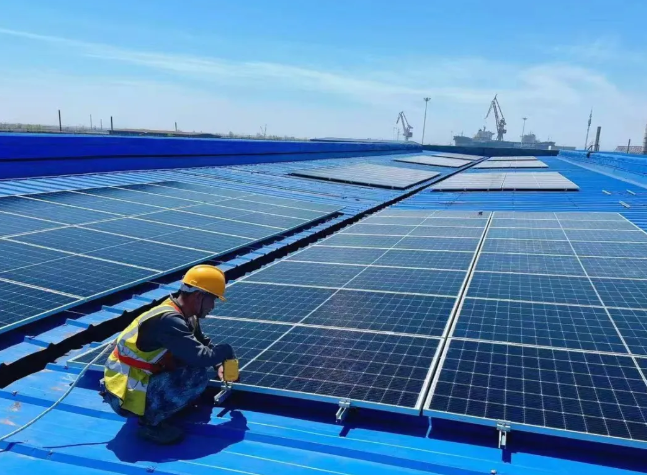
Core Insights - The "Lan Fan Project" by China Shipbuilding Industry Corporation has achieved a significant milestone in its low-carbon transition with the successful grid connection of a 1.6167MW rooftop distributed photovoltaic project [1][3] - The cumulative grid-connected capacity of the "Lan Fan Project" has surpassed 100MW, indicating substantial progress in renewable energy integration [3] Group 1 - The Dalian Marine Diesel Engine Company's photovoltaic project is located in Dalian, Liaoning Province, with a total installed capacity of 1.6167MW [3] - The project not only provides stable and clean electricity for the company but also significantly reduces carbon emissions and energy costs, achieving a win-win in economic and ecological benefits [3] - The Water Development Green Energy team has been actively involved in overcoming challenges throughout the project, from initial site assessments to customized photovoltaic solution designs [3] Group 2 - The team has maintained high engineering quality standards with meticulous attention to detail and a sense of urgency in project execution [3] - The project has successfully navigated complex weather conditions and coordinated multiple stakeholders during the grid connection process [3]

钢铁行业巧用衍生品避险
Qi Huo Ri Bao· 2025-08-11 23:29
Core Viewpoint - The steel industry is undergoing a transformation from low-efficiency, homogeneous competition to high-quality development, marking a significant shift in operational philosophy for enterprises [1] Group 1: Industry Trends - The current downturn in the steel industry is primarily driven by a decline in demand, with the level of overcapacity not being severe; the crude steel capacity utilization rate was 66.99% in 2015 and is expected to remain around 80% in the first half of 2025 [1] - Supply-side structural reforms have led to significant improvements in environmental and energy consumption standards, resulting in a notable decrease in the proportion of outdated production capacity, making the current "de-capacity" efforts more challenging than previous reforms [1] Group 2: Technological Advancements - The focus of competition is shifting from production capacity to technological advancements, with a heated race in the development of special steel materials; for instance, a central enterprise's steel plant is testing a new green hydrogen steelmaking device that could reduce carbon emissions from 2 tons to 0.5 tons per ton of steel [1] - Steel companies are responding to national policies by collaborating on self-discipline in production control, technological upgrades, and product differentiation [1] Group 3: Financial Tools and Risk Management - Financial derivatives have evolved from marginal tools to strategic infrastructures that help companies withstand cyclical fluctuations; firms that integrate financial tools into their operations and innovate technologically are better positioned for future competition [2][3] - A steel plant in North China has integrated global market data and futures prices into its production scheduling, focusing on volatility indicators rather than just traditional metrics [2] - Traders are transitioning from relying on market fluctuations to becoming modern supply chain service providers, emphasizing value-added services and risk management through derivatives [2] Group 4: Market Dynamics - In June-July 2024, the rebar futures market showed a premium of 150 yuan/ton over spot prices, indicating a bearish market sentiment and challenges in spot sales; companies are guiding clients to hedge through futures, effectively locking in profits [2]
泰达股份: 关于接受关联方为公司发行债券提供无偿担保的关联交易公告
Zheng Quan Zhi Xing· 2025-08-11 12:12
渤海国资为公司控股股东天津泰达投资控股有限公司的间接控股子公司,根 据《深圳证券交易所股票上市规则》的有关规定,渤海国资为公司关联方,本次 交易构成关联交易。 (三)董事会表决情况 一、关联交易概述 (一)本次关联交易主要内容 为优化债务期限结构,进一步推动公司绿色低碳转型发展,结合公司的资金 需求,公司拟非公开发行不超过人民币 20 亿元(含 20 亿元)的低碳转型挂钩公 司债券,期限拟不超过 10 年(含 10 年)。为支持公司发展,提高公司债券发行 成功率,公司关联方天津渤海国有资产经营管理有限公司(以下简称"渤海国资") 拟为本次发行债券提供全额无条件不可撤销连带责任保证担保。公司不需要支付 担保费、手续费或其他对价。 (二)关联关系 证券代码:000652 证券简称:泰达股份 公告编号:2025-86 天津泰达资源循环集团股份有限公司 本公司及董事会全体成员保证信息披露的内容真实、准确、完整,没 有虚假记载、误导性陈述或重大遗漏。 天津泰达资源循环集团股份有限公司(以下简称"公司")于 2025 年 8 月 关联方为公司发行债券提供无偿担保的议案》。现专项公告如下: 公司第十一届董事会第二十一次(临 ...

泰达股份:拟发20亿债券,关联方无偿提供担保
Xin Lang Cai Jing· 2025-08-11 12:04
Core Viewpoint - The company Tianjin TEDA Resource Recycling Group Co., Ltd. has approved a proposal to accept a guarantee from its related party, Tianjin Bohai State-owned Assets Management Co., Ltd., for the issuance of bonds, which aims to enhance the success rate and reduce costs of the bond issuance [1] Group 1 - The company plans to privately issue bonds not exceeding 2 billion yuan with a term of up to 10 years, linked to low-carbon transformation [1] - Bohai State-owned Assets, as the indirect controlling subsidiary of the company's major shareholder, will provide an unconditional and irrevocable joint liability guarantee without any fees [1] - The total amount of related party transactions between the company and the related party has reached 16.24 million yuan since the beginning of 2025, which does not meet the disclosure standards [1]
电力“狂飙”里感受发展热度
Zhong Guo Neng Yuan Wang· 2025-08-11 06:36
Core Insights - The record-breaking electricity load in July, reaching 1.508 billion kilowatts, reflects both the high demand due to extreme heat and the robust development of China's economy [1] - The increase in electricity load is driven not only by natural factors but also by economic vitality, with significant growth in manufacturing and domestic demand [1][3] - The rise in electricity consumption is indicative of industrial upgrades and the transition towards an innovation-driven economy [1][3] Regional Disparities - The regional differences in electricity load highlight the imbalance in development, with economically active provinces facing tight supply-demand conditions while energy-rich regions have surplus capacity [2] - The implementation of cross-province electricity transmission projects, such as "West-to-East Power Transmission," optimizes resource allocation across regions [2] - In July, Xinjiang's electricity exports reached 12.9 billion kilowatt-hours, marking a 9% year-on-year increase, showcasing the effectiveness of national energy coordination [2] Supply Resilience - China's power supply system demonstrates strong resilience, with coal inventories stable between 180 million and 220 million tons and a contract fulfillment rate exceeding 90% [3] - The average utilization hours for thermal power plants have increased by 20-25 hours year-on-year, indicating a proactive response to load fluctuations [3] - The integration of smart grid upgrades and demand-side response mechanisms enhances energy security and supply stability [3] Energy Transition - The growth in electricity consumption is not a burden but a driving force for the transition towards a cleaner, smarter, and more collaborative energy system [4] - Wind and solar power generation increased by 27.4% in the first half of the year, accounting for 23.7% of total electricity consumption [4] - The construction of high-voltage direct current transmission projects supports the integration of renewable energy across regions, contributing to a low-carbon transition [4] Economic and Social Development - The continuous rise in electricity load serves as a barometer for China's economic and social development, reflecting improvements in living standards and accelerated industrial transformation [4] - The electricity load elasticity coefficient has reached 1.2, indicating a shift towards high-value, electricity-intensive industries such as digital economy and new energy [3][4] - Sustained efforts in supply security, energy reform, and the cultivation of new productive forces are essential for balancing high-quality development with energy security [4]
科技酿造新生态 ESG重塑白酒企业价值图谱
Zhong Guo Zheng Quan Bao· 2025-08-10 21:17
Group 1 - Guizhou Moutai has achieved an A rating in the MSCI ESG ratings, becoming the only Chinese liquor company to receive this rating, indicating a significant improvement in international recognition for sustainable development in the A-share liquor industry [1][2] - The management of environmental factors such as water, energy, and carbon is becoming a core competitive advantage for liquor companies, driving them towards ecological prioritization and long-term green development [1][2] - Leading liquor companies like Guizhou Moutai and Wuliangye are making substantial investments in technological research and development to inject strong momentum into low-carbon transformation and systematic ESG practices [1][2][5] Group 2 - Guizhou Moutai's ESG report for 2024 sets ambitious carbon reduction goals, aiming for a 20% reduction in carbon emissions per unit of industrial output by 2025 compared to 2020 levels, and achieving peak carbon emissions before 2030 [3] - The company has also established a "1239" dual carbon action plan, targeting a 60% reduction in carbon emissions per unit of industrial output by 2030, with significant reductions in carbon footprint and water consumption across its entire production chain [3][5] - Other leading companies in the A-share liquor sector are also setting similar environmental goals, with Wuliangye aiming for 100% green electricity usage in its brewing workshops by 2030 [3][4] Group 3 - The depth and completeness of environmental information disclosure among liquor companies vary significantly, with some companies failing to disclose critical carbon emission data [4] - Companies that rely solely on traditional processes and have poor green transformation results may face increased costs and compliance pressures in the short term [5] - The current deep adjustment period in the liquor industry sees leading companies actively using technological innovation as a core engine for environmental protection practices and transformation [6][9] Group 4 - Guizhou Moutai is focusing on biotechnology development, establishing a consensus around five key areas to enhance its green manufacturing capabilities and explore new industrial fields [7] - The integration of ESG goals into strategic planning and enhancing transparency in environmental information disclosure are identified as key pathways for liquor companies to systematically practice ESG [8] - The shift from capacity-driven to innovation-driven strategies among leading liquor companies is crucial for establishing a foundation for long-term high-quality development [9]

科技酿造新生态ESG重塑白酒企业价值图谱
Zhong Guo Zheng Quan Bao· 2025-08-10 21:05
Group 1 - Guizhou Moutai has achieved an A rating in the MSCI ESG ratings, becoming the only Chinese liquor company to receive this rating, indicating a significant increase in international recognition for sustainable development in the A-share liquor sector [1][2] - The liquor industry is undergoing a green transformation, with environmental management capabilities in water, energy, and carbon becoming core competitive advantages, pushing companies towards ecological prioritization and long-term green development [1][2] - Leading companies like Guizhou Moutai and Wuliangye are making substantial investments in technological research and development to drive low-carbon transformation and systematic ESG practices, turning ecological resources into quality advantages and long-term competitiveness [1][2][4] Group 2 - Environmental issues have become a key variable in the ESG practices of the liquor industry, with water, energy, carbon, and packaging materials being critical elements for green transformation [2][3] - Guizhou Moutai has set ambitious carbon reduction goals, aiming for a 20% reduction in carbon emissions per unit of industrial output by 2025 compared to 2020 levels, and a peak in carbon emissions before 2030 [2][3] - The overall ESG ratings of liquor companies have improved due to increased focus on environmental dimensions, with Guizhou Moutai leading the industry in water resource management and product carbon footprint [2][3] Group 3 - The establishment of technology companies by leading firms like Wuliangye and Guizhou Moutai highlights the industry's commitment to integrating technological innovation into environmental protection practices [4][5] - Guizhou Moutai has outlined a development direction in biotechnology, focusing on enabling technologies, carbon neutrality, and exploring new materials and functional foods [5][6] - The liquor industry is experiencing a fundamental shift in growth dynamics, moving from reliance on traditional consumption to a new growth logic centered on technological innovation and sustainable development [6][7] Group 4 - The liquor industry is witnessing a transformation from capacity-driven strategies to innovation-driven approaches, with leading companies enhancing research and development investments [6][7] - A systematic approach to integrating ESG goals into strategic planning is essential for liquor companies to reshape competitive logic and convert ecological resources into product quality advantages [6][7] - The focus on technology and sustainability is expected to provide core momentum for profound transformations in the industry, establishing a sustainable development model centered on ESG principles [7]
从乡村到园区,降碳“文章”这样写——浙江推进低碳转型发展见闻
Xin Hua Wang· 2025-08-09 10:09
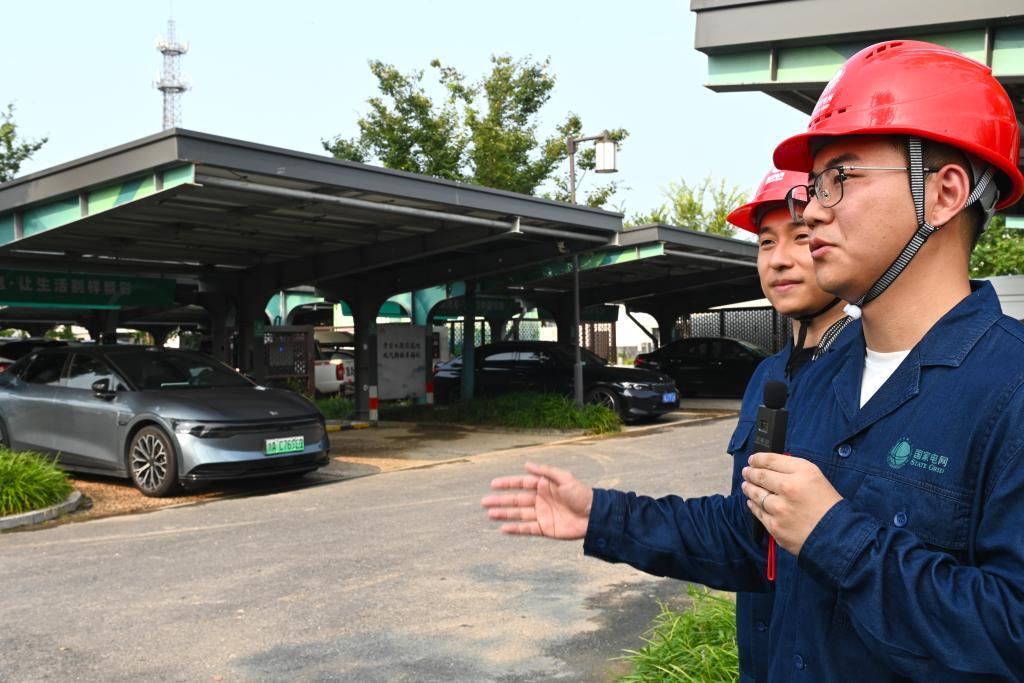
Group 1 - The village is focusing on photovoltaic power generation to create a "low-carbon village" [2] - The integrated solar storage and charging system at the village center has a capacity of 258 kW, generating over 160,000 kWh annually, reducing CO2 emissions by approximately 94 tons [2] - The village's aquaculture project combines over 80 acres of ponds with more than 30 acres of land, generating dual income streams and expected to increase collective income by over 110,000 yuan annually [2] Group 2 - In Yuhang District, the village is promoting a low-carbon lifestyle through initiatives like waste sorting and green travel, with residents earning points redeemable for daily necessities [4] - The village has a forest coverage rate of 96%, leveraging its ecological resources for carbon sequestration, and promoting carbon-labeled tea products [4] - The village is implementing various green facilities and real-time carbon data management systems to create a tangible "zero-carbon" living environment [4][6] Group 3 - The industrial sector is a significant contributor to carbon emissions, and the Linping Economic and Technological Development Zone is launching a zero-carbon demonstration project [6] - The project includes distributed photovoltaic power stations and a microgrid system, with green energy accounting for 63.2% of the park's energy consumption, yielding annual savings of about 100,000 yuan in electricity and 1.58 million yuan in power generation [6] - The project is expected to recover costs in approximately six years, providing a sustainable model for green low-carbon development [6]
活力中国调研行丨陆海生金!浙东沿海绘就“青蓝交织”生态画卷
Xin Hua She· 2025-08-09 01:00
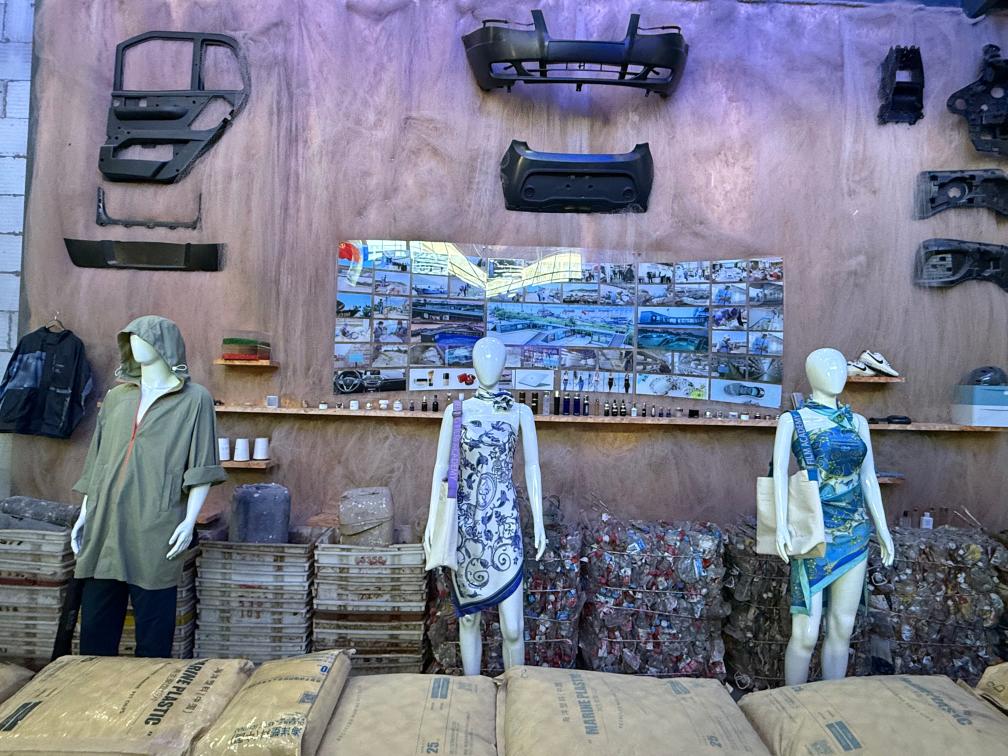
Group 1 - The article highlights a transformative movement in Zhejiang, where marine plastic waste is being repurposed into valuable products, showcasing a shift from pollution to resource recovery through a "blue circular economy" model [1][3] - Companies like Zhejiang Blue Landscape Technology Co., Ltd. are leading the charge in processing marine plastic waste into various consumer goods, indicating a successful collaboration between fishermen and enterprises to create a profitable recycling loop [3][4] - The development of marine renewable energy resources, such as tidal energy, is emphasized, with projects like the Zhejiang LHD tidal energy generation project converting ocean currents into green electricity [4][5] Group 2 - The Zhejiang LHD tidal energy project has generated over 783 million kilowatt-hours of electricity, equivalent to reducing the use of 3,132 tons of standard coal and cutting carbon emissions by 7,811 tons, contributing to carbon neutrality goals [5][6] - The Ningbo-Zhoushan Port is undergoing a significant transformation towards automation and green energy, with the implementation of remote-controlled cranes and electric vehicles, marking a shift from traditional diesel-powered operations [6][8] - The Meishan Port area has achieved a 100% electrification rate for large equipment and a 53% electrification rate for container trucks, with a total green electricity generation exceeding 26 million kilowatt-hours [8]
优优绿能:公司持续关注西部大开发及雅下水电站等领域的相关动态
Zheng Quan Ri Bao Wang· 2025-08-08 12:46
Group 1 - The company, Youyou Green Energy (301590), is actively monitoring developments in the western development and Yaxia Hydropower Station sectors [1] - The company aims to seize industry opportunities to support the implementation of green electricity and contribute to low-carbon transformation [1]