农业农村现代化

Search documents
甘肃成县:锚定目标勇攻坚 奋楫扬帆启新程
Zhong Guo Fa Zhan Wang· 2026-01-08 09:19
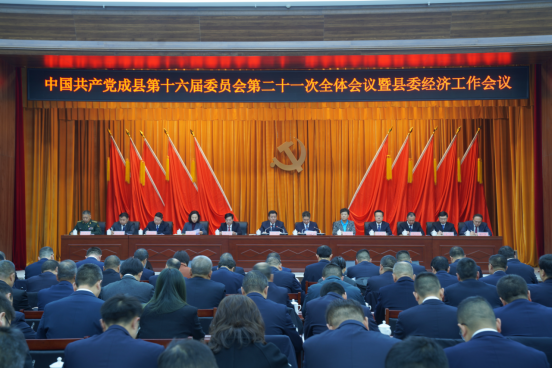
岁首谋篇,凝心聚力;击鼓催征,奋勇争先。1月8日,中共成县委第十六届委员会第二十一次全体会议 暨县委经济工作会议召开,既是对成县"十四五"规划发展成果的全面检阅,更是为2026年"十五五"发展 谋篇的关键部署,为成县高质量发展吹响了冲锋号角、指明了前进方向。 全会以习近平新时代中国特色社会主义思想为指导,紧扣中央决策部署和省委、市委工作要求,客观总 结了"十四五"时期工作,审议《中共成县委关于制定国民经济和社会发展第十五个五年规划的建议》, 研究部署2026年重点工作任务,动员全县上下坚定信心、勠力进取,努力为"十五五"开好局、起好步奠 定坚实基础。 五年来,面对经济承压、风险交织的严峻考验,成县团结带领全县干部群众在埋头苦干中承压奋进,在 砥砺攻坚中追赶超越。全县地区生产总值预计将突破百亿元大关、固定资产投资连续3个年度保持两位 数增长;成州大道等一批重点项目相继建成投用,创建省市乡村振兴示范村42个、和美乡村4个;甘肃 首部以成县历史文化为背景的新文旅院线电影《亭亭凤凰台》全国公映,成功创建全省"乡村旅游示范 图为中共成县委第十六届委员会第二十一次全体会议暨县委经济工作会议 刘建军/摄 图为美丽成县青泥河 ...

实干笃行 开好农业农村阶梯式递进新局
Xin Lang Cai Jing· 2026-01-08 07:38
转自:人民政协报 中央农村工作会议分析当前"三农"工作面临的形势和挑战,部署2026年"三农"工作。习近平总书记对做 好"三农"工作的重要指示,为我们扎实做好2026年农业农村工作,确保"十五五"开好局、起好步指明了 努力方向、提供了根本遵循。 夯实农业农村重中之重地位,确保力度不减。近年来,"三农"形势向好,绝不意味着"三农"工作就可以 松一松,要坚决防止盲目乐观甚至松懈麻痹;打赢脱贫攻坚战、结束5年过渡期,绝不意味着巩固拓展 脱贫攻坚成果任务取消了,要坚决防止翻篇念头;推进城乡融合发展,绝不是让城市代替乡村,绝不是 用工业与城市逻辑管理乡村,而是要城乡协调发展、共同繁荣。现代化越是向前推进,越要夯实"三 农"底座;城乡关系越是密切,越要守护好乡村独有价值;内外部环境越是错综复杂,越要把思想和行 动统一到党中央决策部署上来,坚持五级书记抓乡村振兴,拧紧"三农"工作责任之弦。 (作者张合成系全国政协委员、中国农业科学院原党组书记) "三农"关乎大局,开局关乎全局。务农重本,国之大纲。习近平总书记在重要指示中指出,"2026年 是'十五五'开局之年,做好'三农'工作至关重要"。开局之年,人们对"三农"走势的感知 ...
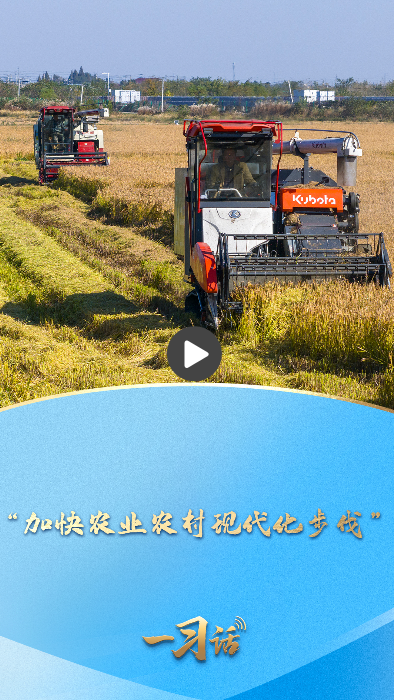
一习话·迈向“十五五”|“加快农业农村现代化步伐”
Yang Guang Wang· 2026-01-08 06:45
Core Viewpoint - The article emphasizes the importance of accelerating agricultural and rural modernization as part of China's overall modernization strategy, highlighting the need for comprehensive rural revitalization and urban-rural integration [2] Group 1: Agricultural Modernization - The "14th Five-Year Plan" suggests a clear focus on advancing agricultural and rural modernization, which is crucial for the overall modernization of China [2] - The year 2026 marks the beginning of the "14th Five-Year Plan," indicating a pivotal moment for agricultural development [2] Group 2: Policy and Implementation - The central rural work conference recently held in Beijing underscored the significance of enhancing grain production and improving policies that benefit farmers [2] - There is a commitment to consolidate and expand the achievements of poverty alleviation, ensuring that large-scale poverty does not reoccur [2] Group 3: Strategic Goals - The article outlines the necessity of building a strong agricultural nation as part of the broader modernization efforts [2] - It stresses the importance of continuing to focus on "three rural issues" (agriculture, rural areas, and farmers) without any slackening in efforts [2]
上巴塘村的勃勃生机
Xin Lang Cai Jing· 2026-01-04 19:01
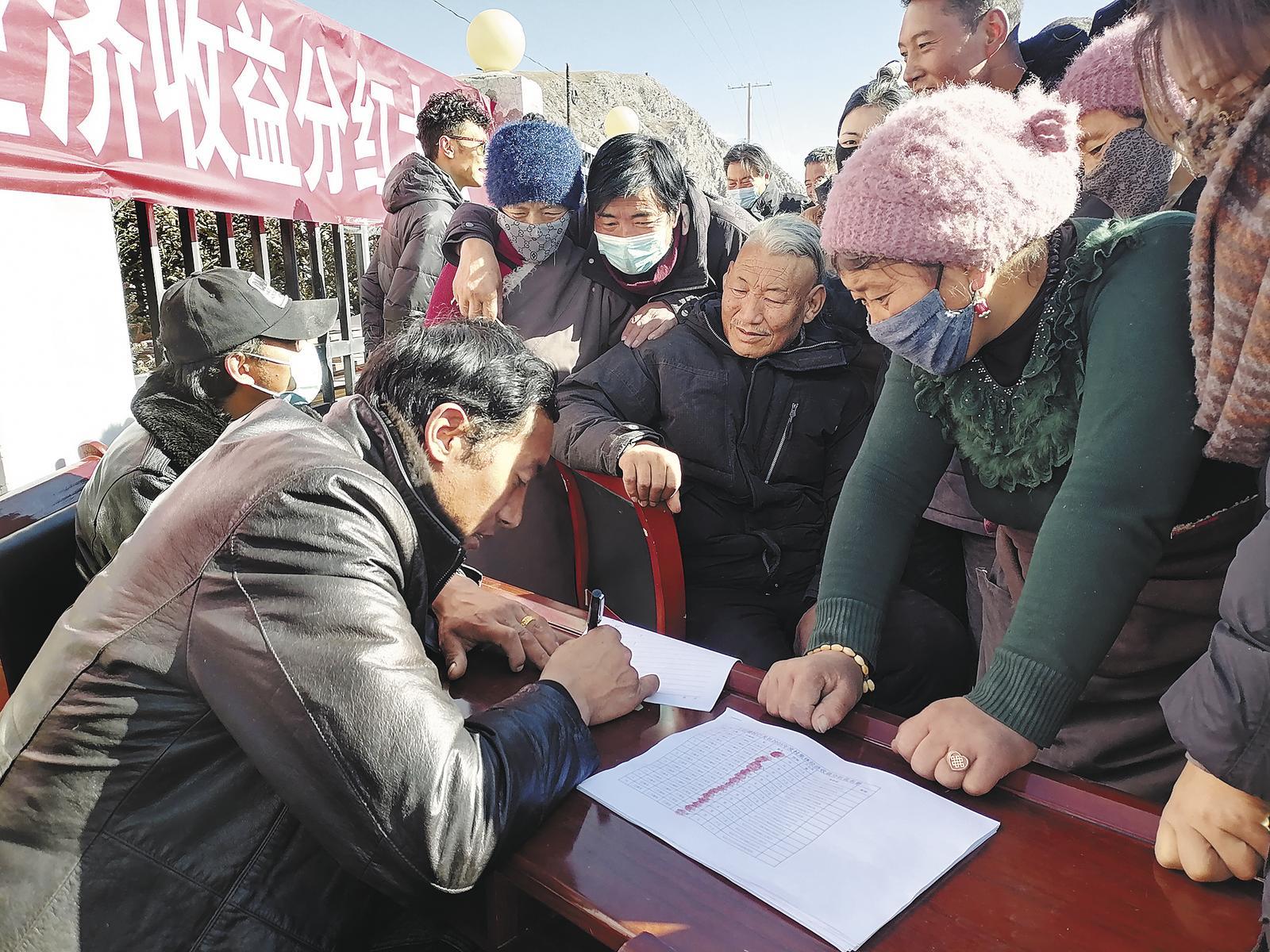
Core Insights - The article highlights the successful implementation of a collective economic dividend distribution in Shangbatang Village, which is a part of the local community's economic development strategy [3][4]. Group 1: Economic Development - The collective economic dividend of 241,500 yuan was generated from a 3 million yuan livestock purchase project in 2025, benefiting 508 households [3]. - The village has diversified its economic activities, including solar power stations, resort projects, and retail shops, to enhance collective economic growth [4][5]. - The village's strategic location along the G214 national highway and proximity to the Yushu Batang Airport provide a solid foundation for future economic development [5][6]. Group 2: Community Welfare - The village organized free health check-ups for residents aged 65 and above, demonstrating a commitment to community health alongside economic initiatives [3]. - The implementation of agricultural insurance policies has provided financial security for local livestock farmers, with significant government subsidies covering over 80% of insurance costs [5]. - The establishment of a comprehensive transportation service station aims to enhance local services and boost income for impoverished households [6]. Group 3: Future Projects - A new project, the "Comprehensive Transportation Service Station," has been planned to provide accommodation and dining services, further integrating local agricultural products into the market [6]. - The project received over 3 million yuan in funding and is expected to contribute to the village's economic revitalization and modernization efforts [6].
焦点访谈丨推动农业农村现代化再上新台阶
Xin Lang Cai Jing· 2026-01-04 07:36
Core Viewpoint - The Central Rural Work Conference emphasizes the importance of "Three Rural Issues" (agriculture, rural areas, and farmers) for the modernization of agriculture and rural revitalization, particularly in the context of the 14th Five-Year Plan starting in 2026 [1][9]. Group 1: Agricultural Production and Food Security - Ensuring stable and safe supply of food and important agricultural products is a top priority for agricultural modernization and building a strong agricultural nation [2]. - The target for national grain production is to maintain over 1.4 trillion jin (approximately 700 million tons) by 2025, ensuring food security for the population [2]. - The meeting calls for the implementation of a new round of actions to enhance grain production capacity, focusing on improving agricultural production efficiency and quality [2][3]. Group 2: Technological Innovation in Agriculture - The conference highlights the need to strengthen key agricultural technologies and efficiently apply scientific achievements to enhance agricultural productivity [3]. - Innovations such as AI-powered laser weeding robots are being tested to improve efficiency and reduce environmental impact in agricultural practices [3]. - Emphasis is placed on integrating technology with agriculture to solve traditional production challenges and enhance productivity [3]. Group 3: Rural Income and Employment - Increasing farmers' income is a core goal of agricultural modernization, with policies aimed at stabilizing prices of important agricultural products [3][5]. - The rural income per capita is projected to reach 23,119 yuan in 2024, with a 6% year-on-year growth in the first three quarters of 2025 [5]. - The meeting proposes to enhance support for migrant workers and promote entrepreneurship to increase rural income sources [5][7]. Group 4: Poverty Alleviation and Rural Revitalization - Continuous consolidation of poverty alleviation achievements is essential for agricultural modernization and urban-rural integration [6]. - The meeting emphasizes the establishment of a long-term mechanism to prevent a return to poverty, with a focus on employment support and skill development [6][7]. - The importance of integrating various departments to monitor and adjust poverty alleviation efforts dynamically is highlighted [6]. Group 5: Policy and Reform Directions - The conference discusses the need for comprehensive reforms in rural areas, including extending land contracts and innovating financing mechanisms for rural development [8]. - Strengthening the leadership of the Party in "Three Rural Issues" is emphasized to drive progress in rural revitalization and agricultural modernization [9]. - The overall goal is to make agriculture a modern industry and improve living conditions in rural areas, ultimately leading to a wealthier and happier life for farmers [9].
常熟开启“江南福地”现代化建设新篇章
Su Zhou Ri Bao· 2026-01-04 02:08
Core Viewpoint - The article discusses the recent meeting of the Changshu Municipal Committee, which approved the proposal for the 15th Five-Year Plan, outlining the overall requirements, main goals, and key tasks for the city's development, marking a new chapter in the modernization of Changshu as a "Jiangnan blessed land" [1] Group 1: Development Goals - Changshu has established the "4832" development goals, aiming for a regional GDP of over 400 billion, industrial output exceeding 800 billion, and general public budget revenue reaching 30 billion, with a total industrial investment of 200 billion over five years [1] - By the end of the 15th Five-Year Plan, Changshu aims to enhance its comprehensive strength, upgrade its industrial structure, and improve the well-being of its citizens [1] Group 2: Key Tasks - The city will focus on building competitive industrial clusters, promoting the integration of technological and industrial innovation, and accelerating the establishment of a high-level socialist market economy [1] - There will be an emphasis on expanding high-level opening up, modernizing agriculture and rural areas, and ensuring the improvement of people's livelihoods [1] - The plan includes accelerating the green transformation of economic and social development and enhancing the stability of the city [1]
省政协党组扩大会议暨党组理论学习中心组学习会召开
Xin Lang Cai Jing· 2026-01-04 00:24
羊城晚报讯 日前,省政协党组召开扩大会议暨理论学习中心组学习会,认真传达学习贯彻习近平总书 记近期重要讲话和重要指示精神,专题传达学习贯彻省委十三届八次全会暨省委经济工作会议精神,研 究贯彻落实意见。省政协党组书记、主席林克庆主持并讲话。 省政协领导许瑞生、袁宝成、王学成、黄武、张嘉极、郑轲、陈文明作交流发言。 (薛江华 杨晓伟 周贤伦) 会议指出,习近平总书记在中央政治局民主生活会、中央政治局会议上发表的重要讲话,对做好"三 农"工作作出的重要指示,高屋建瓴、内涵丰富,具有很强的政治性、思想性、指导性,为我们深化作 风建设、纵深推进全面从严治党、服务乡村全面振兴指明了前进方向、提供了根本遵循。要深入学习领 会总书记重要讲话重要指示精神,带头在笃信务实担当自律上作示范,坚定拥护"两个确立"、坚决做 到"两个维护"。要扛牢管党治党政治责任,进一步严明政治纪律和政治规矩,驰而不息正风肃纪反腐, 营造良好政治生态,以高质量党建引领政协事业高质量发展。要准确把握当前"三农"工作的中心任务和 重点工作要求,紧扣助力"百县千镇万村高质量发展工程"、提升乡村建设水平等重大课题,深入乡村一 线和界别群众调查研究,务实建言献策 ...
焦点访谈|读懂中央农村工作会议这些重要提法
Yang Shi Wang· 2026-01-03 13:25
Core Insights - The central theme of the news is the emphasis on the importance of "Three Rural Issues" (agriculture, rural areas, and farmers) in the context of China's modernization efforts, particularly as the country approaches the 14th Five-Year Plan starting in 2026 [1][23]. Group 1: Agricultural Modernization - The meeting highlighted the need to anchor agricultural modernization and promote comprehensive rural revitalization, with a focus on ensuring food security and increasing farmers' income [1][3]. - A target was set for national grain production to remain stable at over 1.4 trillion jin (approximately 700 million tons) by 2025, ensuring food security for the population [3][7]. - The integration of advanced agricultural technologies, such as AI and robotics, is seen as crucial for improving production efficiency and environmental sustainability [9][11]. Group 2: Farmer Income and Employment - The core goal of agricultural modernization is to increase farmers' income, with policies aimed at maintaining reasonable prices for key agricultural products [11][15]. - The meeting emphasized the importance of creating new income sources through the development of new industries and business models, particularly in the context of urbanization and labor transfer [15][19]. - A successful case was presented where local initiatives in Jiangxi province led to significant income increases for farmers through the development of specialty products and cooperative models [13][19]. Group 3: Poverty Alleviation and Support Mechanisms - The meeting underscored the need to consolidate and expand the achievements of poverty alleviation, ensuring that support mechanisms remain in place to prevent a return to poverty [15][19]. - A dynamic adjustment mechanism for poverty prevention was discussed, involving collaboration among various local departments to monitor and support vulnerable populations [16][19]. - The importance of continuous support and responsibility from the government was highlighted, ensuring that those who have escaped poverty are not left without assistance [19][21]. Group 4: Policy and Reform Initiatives - The meeting discussed the need for comprehensive reforms in rural areas, including extending land contracts and innovating financing mechanisms for rural development [21][23]. - The emphasis was placed on the role of local governments in driving rural revitalization and agricultural modernization, with a call for active engagement and practical efforts [23].
晶采观察丨新一年4个关键词,关乎每个奋斗的你我
Yang Guang Wang· 2026-01-03 07:46
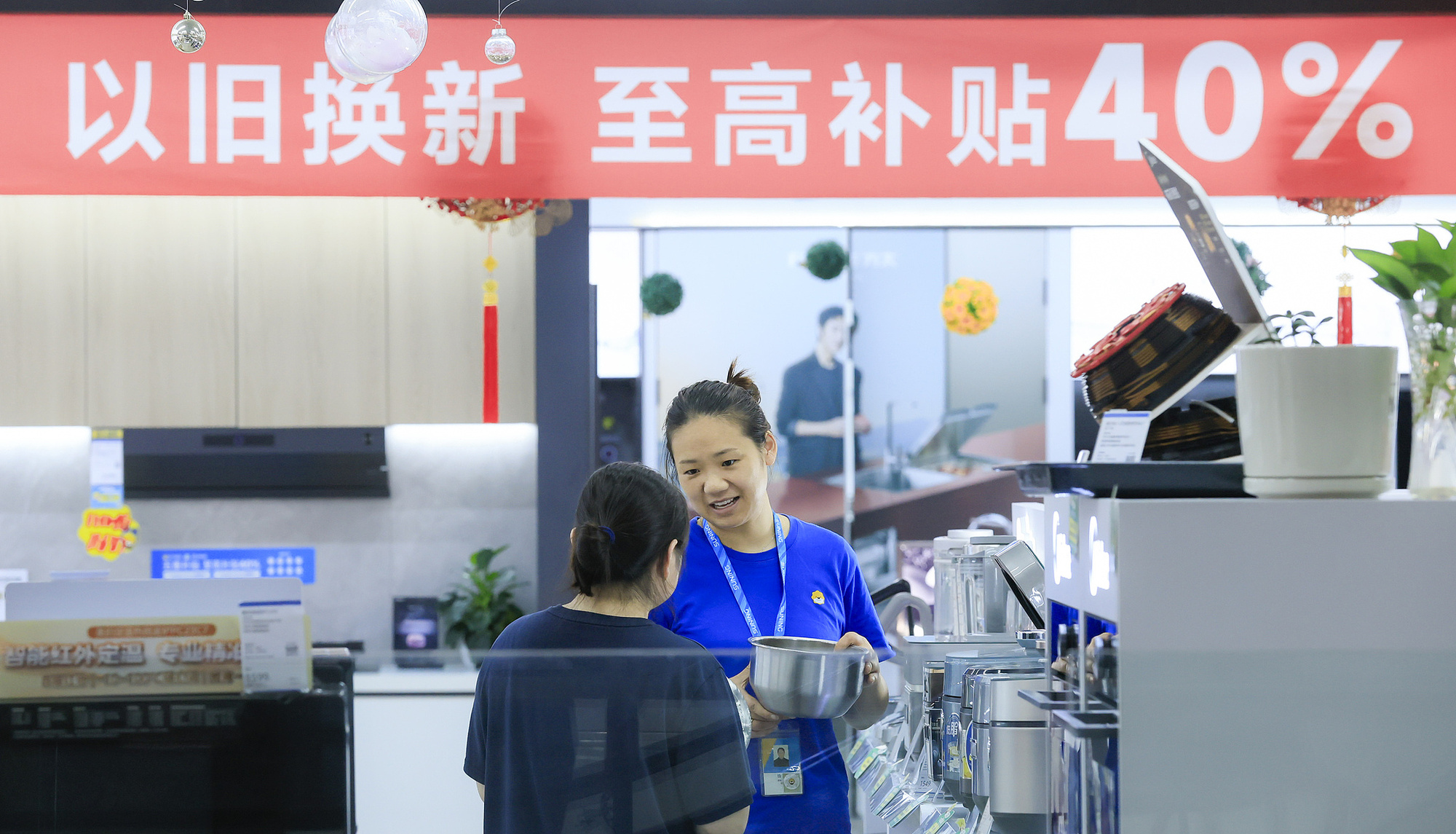
江苏淮安:市民选购家电 由此,今年的工作重点清晰可见:一方面深入开展提振消费专项行动,制定城乡居民增收计划,切实提升居民消费能力与意愿;另一方面,持续扩大优质商 品和服务供给,优化落实"两新"政策,同时清理消费领域的不合理限制,充分释放服务消费潜力,推动消费市场实现高质量扩容提质。值得关注的是,2026 年"两新"政策优化实施方案已正式发布。国家已向地方提前下达2026年第一批超长期特别国债资金计划,规模达625亿元,专项用于支持消费品以旧换新, 助力保障元旦、春节等消费旺季的市场需求。 0:00 刷到这条的朋友,先给自己点个赞!2025奋力奔跑,2026全新启程!这4个核心关键词、四大重点任务,找准方向,咱们一起冲。 首先需要明确的是,过去五年的发展历程极不寻常,取得的成绩来之不易。2026年作为"十五五"规划的开局之年,中国经济该如何谋篇布局、精准发力?答 案已清晰明确。中央经济工作会议作出系统部署,明确将坚持内需主导列为今年经济工作的首要任务。这一战略部署,深刻印证了"十五五"时期建设强大国 内市场的要义——不仅是我国扩大内需的坚实支撑,更是驱动全球经济增长的关键动能。 具身智能机器人吸引众多参观者 科 ...
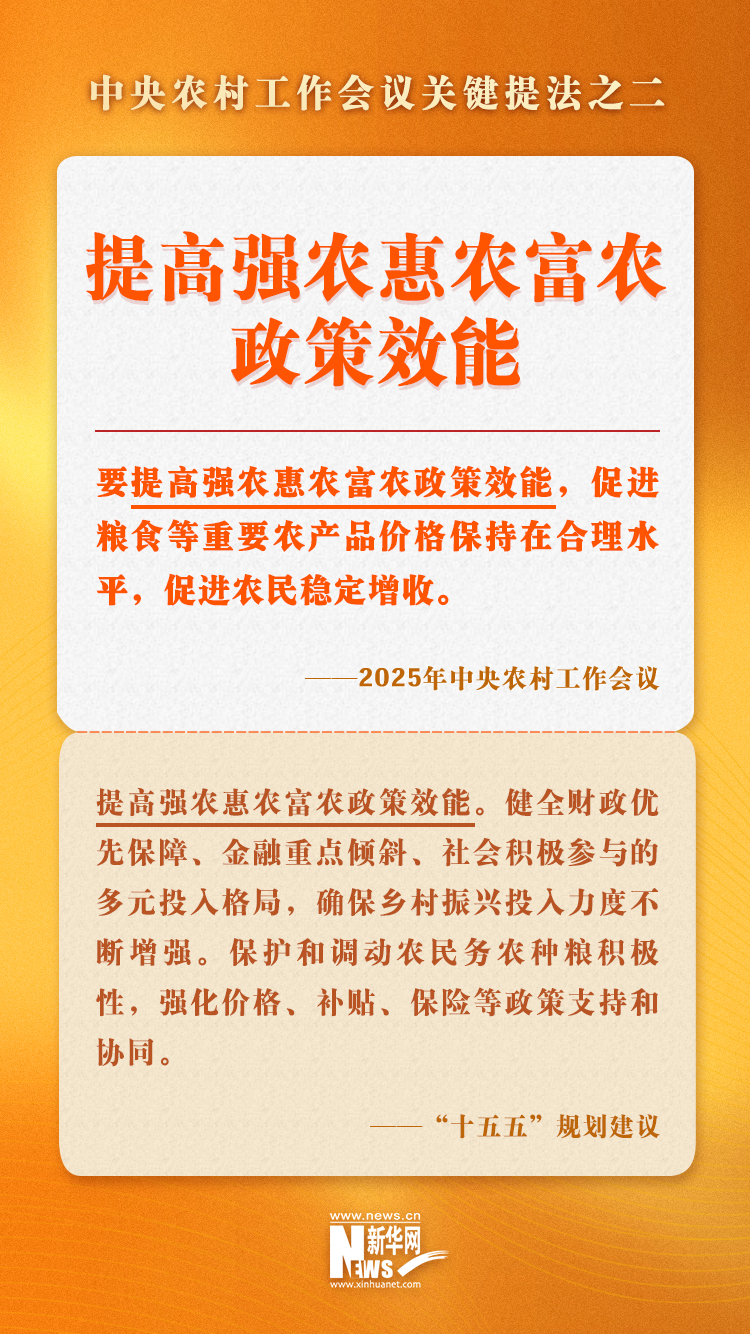
中央农村工作会议关键提法之二:提高强农惠农富农政策效能
Xin Hua Wang· 2026-01-03 02:06
Core Viewpoint - The recent Central Rural Work Conference analyzed the current situation and challenges facing the "three rural issues" and outlined the work plan for 2026 in this area [1]. Group 1: Policy Support and Implementation - To achieve agricultural and rural modernization, it is essential to enhance the effectiveness of strong agricultural support policies. This includes implementing responsibilities for rural revitalization at all levels of government and improving institutional arrangements for organization, resource allocation, and evaluation [5]. - A diversified investment mechanism for rural revitalization should be established, prioritizing agriculture and rural areas in the general public budget. Innovative financing mechanisms are needed to ensure increased investment in rural revitalization [5]. - Policies supporting farmers' enthusiasm for farming and grain production must be strengthened, including price, subsidy, and insurance policies to ensure that farmers can profit from grain production [5]. Group 2: Economic and Resource Management - There is a need to enhance the compensation for major grain-producing areas and implement inter-provincial horizontal compensation to ensure that these areas benefit from grain production [5]. - Strengthening grain purchase, sales, and storage management is crucial to enhance emergency supply capabilities and maintain the integrity of the "big country granary" [5]. - Support for the development of new rural collective economies is necessary, including reforms in rural collective property rights and management of collective funds and resources [5]. Group 3: Talent and Resource Allocation - A mechanism for prioritizing resource allocation must be established, ensuring that basic public services cover all permanent residents and protecting the rights of farmers who migrate to urban areas [5]. - Encouraging the flow of production factors such as capital, technology, and talent into rural areas is essential for rural development [5]. - Efforts should be made to develop and strengthen the rural talent pool, incentivizing various talents to serve and start businesses in rural areas [5].