数实融合

Search documents
聚焦新时代首都发展 服务国家战略发展大局
Bei Jing Ri Bao Ke Hu Duan· 2025-10-11 22:24
Core Insights - The article emphasizes the transformation of national strategies into actionable educational practices at Capital University of Economics and Business (CUEB), aligning with the goals of the "14th Five-Year Plan" and the "Education Power Construction Plan (2024-2035)" [1][4][20] - CUEB aims to cultivate high-quality financial talent to support the capital's development and national strategies, focusing on a new educational paradigm characterized by "One Core, Two Transformations, and Three Types" [3][5][6] Group 1: Educational Reform and Talent Development - CUEB has established a systematic approach to financial talent cultivation over the past 20 years, focusing on specialized training in economics, business management, and human resource management [3][4] - The "One Core" refers to the fundamental goal of nurturing strategic, innovative, and composite talents to serve the high-quality development of the capital [5][6] - The "Two Transformations" involve internationalization and digitalization, enhancing students' global competencies and digital literacy through various educational methods [5][6][21] Group 2: Innovative Teaching Methods and Curriculum - CUEB has implemented innovative teaching practices, such as using AI models for quantitative analysis and offering dual degree programs in business management and data science [5][6][10] - The curriculum includes a focus on practical applications, integrating real-world scenarios and advanced technologies like AI and blockchain into financial education [4][10][19] - The establishment of a financial technology laboratory and the introduction of new courses reflect the commitment to modernizing the educational framework [10][11] Group 3: Achievements and Recognition - CUEB has achieved significant recognition, with numerous national and local first-class undergraduate programs and courses, demonstrating its role as a benchmark for educational excellence [7][12] - The university has successfully cultivated nearly 200,000 outstanding talents, contributing to various sectors, including finance and public service [7][12] - CUEB's faculty has received multiple awards, highlighting the quality of education and commitment to nurturing future leaders [7][12] Group 4: Digital Economy and ESG Talent Development - The establishment of the Beijing Digital Economy Development Research Institute aims to enhance interdisciplinary collaboration and support the development of digital economy talent [29][30] - CUEB has initiated an ESG management talent cultivation model, addressing the urgent need for professionals in sustainable development [25][26] - The university's approach integrates real-world scenarios into the curriculum, ensuring that students are equipped to meet the demands of the evolving job market [25][26] Group 5: Core Values and Ideological Education - CUEB emphasizes the importance of core values such as integrity, labor, innovation, and social responsibility in shaping the character of its students [32][33] - The university integrates ideological education throughout its curriculum, fostering a sense of national responsibility and ethical standards among students [33][34] - Various initiatives, including the "Soul-Casting Project" and "Labor Education Practices," aim to instill a strong work ethic and commitment to societal development [34][35]


神思电子(300479.SZ)拟与每日互动、济南大数据集团共设合资公司
智通财经网· 2025-10-10 13:54
Core Viewpoint - The company ShenSi Electronics (300479.SZ) announced a joint venture with Daily Interaction Co., Ltd. and Jinan Big Data Group Co., Ltd. to establish Shandong Daily Si Data Technology Co., Ltd., aimed at integrating industrial and public data to enhance data value and accelerate the implementation of data and reality fusion [1] Group 1: Joint Venture Details - The joint venture will focus on providing secure, reliable, and accurately matched high-value application scenario data products and solutions [1] - The registered capital of the joint venture is 20 million yuan, with ShenSi Electronics contributing 9 million yuan (45% stake), Daily Interaction contributing 8 million yuan (40% stake), and Jinan Big Data Group contributing 3 million yuan (15% stake) [1] - Following the completion of this transaction, the joint venture will be included in the company's consolidated financial statements [1]

神思电子拟与每日互动、济南大数据集团共设合资公司
Zhi Tong Cai Jing· 2025-10-10 13:51
Core Viewpoint - The company ShenSi Electronics (300479.SZ) announced a joint venture with Daily Interaction (300766) and Jinan Big Data Group to establish Shandong Daily Si Data Technology Co., Ltd, aimed at enhancing the integration of industrial and public data to create valuable data products and solutions [1] Group 1: Joint Venture Details - The joint venture will have a registered capital of 20 million yuan, with ShenSi Electronics contributing 9 million yuan (45% stake), Daily Interaction contributing 8 million yuan (40% stake), and Jinan Big Data Group contributing 3 million yuan (15% stake) [1] - Upon completion of the transaction, the joint venture will be included in the consolidated financial statements of ShenSi Electronics [1]

神思电子(300479.SZ):拟与每日互动等成立合资公司
Ge Long Hui A P P· 2025-10-10 12:42
Core Viewpoint - The company, ShenSi Electronics, is establishing a joint venture with Daily Interaction Co., Ltd. and Jinan Big Data Group Co., Ltd. to enhance the integration of industrial and public data, aiming to create valuable data products and solutions for clients [1] Group 1: Joint Venture Details - The joint venture, named Shandong Daily Si Data Technology Co., Ltd., will focus on providing secure and precise data solutions [1] - The registered capital of the joint venture is 20 million yuan, with ShenSi Electronics contributing 9 million yuan (45%), Daily Interaction contributing 8 million yuan (40%), and Jinan Big Data Group contributing 3 million yuan (15%) [1] - Following the completion of this transaction, the joint venture will be included in the consolidated financial statements of ShenSi Electronics [1]
老牌街区如何焕新?南京1912用“文化+科技”破圈
Jiang Nan Shi Bao· 2025-10-09 03:16
Core Insights - The 1912 district in Nanjing is redefining its identity beyond a nightlife hub by integrating culture and technology, aiming for a strategic transformation towards a "cultural + commercial + tourism + technology" model [1][2][7] Group 1: Cultural and Technological Integration - The district showcases a blend of cultural events, such as the ethnic dance drama "Dream of the Red Chamber," alongside tech exhibitions like the AI robot showcase, highlighting its diverse appeal [1][2] - The introduction of immersive experiences through technology, including AI and VR projects, aims to transform the district into an interactive space rather than a static backdrop [3][7] Group 2: Strategic Collaborations - The partnership with Jiangsu Cultural Investment Group is crucial for the district's evolution, focusing on creating a cultural ecosystem that extends beyond traditional commercial spaces [4] - Initiatives include developing cultural spaces that connect with nearby cultural venues, enhancing the district's role as a "city cultural living room" [4] Group 3: Diverse Experience Offerings - The district plans to introduce various experience clusters, such as performance arts through collaborations with the Jiangsu Grand Theatre and international drama festivals, merging entertainment with commerce [5] - Creative initiatives, including the establishment of an incubation base for trendy designs, aim to position the district as a source of cultural innovation [6] Group 4: Future Vision - The overall strategy seeks to elevate 1912 from a mere street to a comprehensive cultural district, emphasizing continuous content innovation and ecological restructuring [7][8] - The transformation reflects a broader narrative of how cities can empower old landmarks and activate new vitality, setting a benchmark for urban renewal [8]
数字新基建释放强劲动能
Jing Ji Ri Bao· 2025-10-08 22:09
Core Insights - The 2025 China International Information and Communication Exhibition showcased the theme "Digital-Real Fusion New Engine to Empower Future New Momentum," emphasizing the importance of building a robust digital infrastructure and promoting technological innovation for a smarter and more sustainable digital future [1] Group 1: Industry Development - During the "14th Five-Year Plan" period, China's information and communication industry has made significant progress, with 5G base stations reaching 4.646 million and 5G mobile phone users totaling 1.154 billion, maintaining a global lead in key indicators such as 5G user penetration and gigabit optical network coverage [2] - The country has established a globally leading and largest-scale information and communication network, with two-thirds of prefecture-level cities meeting gigabit city standards and over 240,000 key locations achieving deep mobile network coverage [2] - New types of information infrastructure are developing in coordination, with 10.85 million standard racks of computing power facilities and an intelligent computing power scale of 788 EFLOPS [2] Group 2: Empowering the Real Economy - The integration of information and communication technology is deeply empowering the transformation of the real economy, with over 20,000 "5G + Industrial Internet" construction projects and the emergence of new models such as "unmanned mines" and "smart ports" [3] - The National Computing Power Internet Service Platform has registered over 1.02 million computing power identifiers and aggregated public computing resources exceeding 117 EFLOPS, marking a new phase in the construction of the computing power internet [3] Group 3: Artificial Intelligence Advancements - China's artificial intelligence innovation is rapidly advancing, with over 1,500 large models released, and AI applications are being quickly adopted across various industries, including electronics and consumer goods [4][5] - AI terminals such as AI phones and AI computers have exceeded 100 models, and the deployment of integrated infrastructure for IoT, vehicle networking, and industrial internet is accelerating [4] Group 4: 5G-A Development - 5G-A is a critical phase in the evolution of 5G towards 6G, showcasing new features such as ultra-low latency and high-speed capabilities, with over 300 cities in China initiating large-scale deployments [6][7] - 5G-A enhances network performance compared to 5G, supporting the growth of digital applications and innovation, with practical applications already seen in smart industrial management and information consumption [7] Group 5: Future Outlook - The industry is set to accelerate technological innovation and expand the 5G-A product system, while also advancing 6G technology research and development to foster a future-oriented application ecosystem [7]
以“链”建“群” 重点产业链项目跟着来
Sou Hu Cai Jing· 2025-10-08 05:55
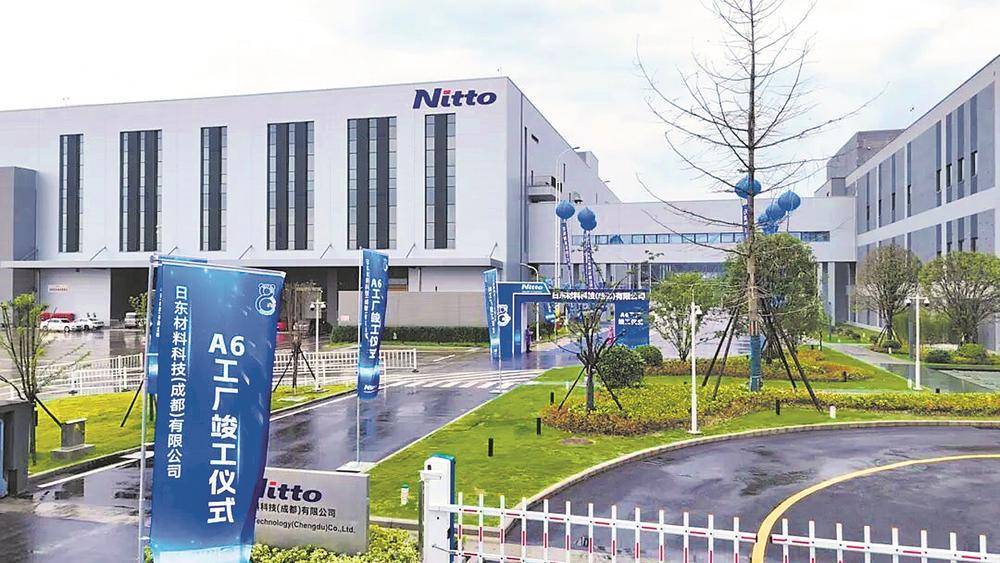
Core Insights - Chengdu's second industry investment increased by 21.3% year-on-year from January to August, becoming the main engine for investment growth in the city [3][4][5] Group 1: Investment Growth - The investment structure in Chengdu is being optimized, with a significant focus on effective investment and the cultivation of new productive forces [3][4] - The automotive industry in Chengdu saw a remarkable investment growth of 67.9% from January to August, leading among key sectors [5] Group 2: Key Projects and Collaborations - Nitto Denko's OLED polarizer production base has officially commenced operations in Chengdu, marking a significant expansion since the company's initial investment in 2017 [3][4] - A partnership between the Qingbaijiang District and Huawei has been established to enhance smart manufacturing and promote innovation in emerging industries [4][6] Group 3: Technological Advancements - The collaboration with Huawei is transitioning from "smart manufacturing" to "digital-physical integration," focusing on accelerating the transformation of traditional manufacturing and the development of new industries [6][7] - Chengdu's high-tech industry investment grew by 16.8% year-on-year from January to August, indicating a continuous increase in investment proportion [7]
虚拟数字人产业迎来新机遇,成数字经济发展新引擎
Jing Ji Ri Bao· 2025-10-04 01:58
Core Insights - The virtual digital human industry is experiencing significant growth due to advancements in generative AI, VR, and AR technologies, becoming a new engine for digital economic development [1][4] - Virtual digital humans play a crucial role in the digital transformation of traditional industries, offering both substitution and enhancement effects, which can lower labor costs and improve service efficiency [2][3] Group 1: Industry Applications - Virtual digital humans are being applied across various sectors including media, entertainment, finance, education, healthcare, agriculture, and government [1] - They can perform high-repetition tasks, thus reducing labor costs and enhancing work efficiency, particularly in industries requiring 24/7 interaction like live streaming and customer service [2][3] Group 2: Development Challenges - The virtual digital human industry faces challenges such as high production costs, poor interaction capabilities, and insufficient application scenarios, which hinder its integration into real economic needs [3] - Addressing these challenges requires a focus on commercial logic and understanding industry demands to ensure sustainable development [3] Group 3: Technological and Governance Innovations - The value of virtual digital humans is contingent upon technological breakthroughs and governance innovations, with a need for advancements in key technologies like intelligent sensors and graphics computing chips [4] - The industry requires a robust standard system, legal regulations, and government oversight to ensure ethical use and safety, alongside policy support for technology development and practical applications [4] Group 4: Market Potential - According to the China Internet Association, the core market for digital humans is expected to exceed 40 billion yuan by 2025, driving the overall industry market size to surpass 600 billion yuan [4]

虚拟数字人产业迎来新机遇
Jing Ji Ri Bao· 2025-10-03 21:59
Core Viewpoint - The virtual digital human industry is experiencing significant growth opportunities driven by advancements in generative artificial intelligence (AIGC), virtual reality (VR), and augmented reality (AR), becoming a new engine for digital economic development [1] Group 1: Applications and Benefits - Virtual digital humans play a crucial role in the digital transformation of traditional industries, providing "replacement effects" by completing repetitive and labor-intensive tasks, thus reducing labor costs and enhancing work efficiency [2] - They also offer "enhancement effects" by supporting personalized customization, allowing for tailored interactions based on industry needs and customer preferences, which innovates service models and improves customer satisfaction [2] - In sectors like agriculture, virtual digital humans can provide real-time guidance on scientific planting and pest control, enhancing service accessibility and operational efficiency in the real economy [2] Group 2: Industry Demand and Development - The development of virtual digital humans must align with industry demands to gain sustainable growth momentum, addressing challenges such as high production costs and insufficient application scenarios [3] - By focusing on commercial logic and deeply exploring industry needs, the virtual digital human sector can adapt to practical applications, thereby demonstrating its substantial empowerment for industrial development [3] - Industry demand can also provide funding support for the optimization and technological evolution of virtual digital humans, reducing marginal costs and increasing capital returns through widespread application [3] Group 3: Technological Breakthroughs and Governance Innovation - The integration of cutting-edge technologies like generative AI, 3D modeling, voice synthesis, motion capture, and natural language processing is revitalizing the virtual digital human industry [4] - According to the "China Digital Human Development Report (2024)," the core market size for digital humans in China is expected to exceed 40 billion yuan by 2025, with the overall industry market size surpassing 600 billion yuan [4] - Key technological bottlenecks still exist, necessitating improvements in the resilience of the industrial and supply chains, particularly in the development of hardware like intelligent sensors and graphics computing chips, as well as software for modeling and rendering [4] - Establishing a comprehensive industry standard system, including key technology standards and ethical usage norms, is essential for governance innovation in the virtual digital human sector [4] - Strengthening policy guidance and support for the virtual digital human industry, while encouraging the development and application of key technologies, will foster high-quality industrial growth [4]
数智家居启新篇——“电商公共服务全省行”赋能宿城产业带升级
Sou Hu Cai Jing· 2025-10-01 23:40
Core Insights - The event themed "Smart Home, Quality Life" aims to explore new paths for the integration of e-commerce and traditional industries in Suqian City, Jiangsu Province, focusing on the furniture and home goods sector [1][7] - The "Furniture and Home Goods E-commerce Industry Belt Construction Action" was launched, resulting in multiple agreements in service cooperation and talent training, as well as logistics and cross-border operations [3][5] Group 1 - The event gathered over 120 representatives from provincial commerce departments, industry associations, and local e-commerce companies to discuss high-quality development for the furniture and home goods industry [1][7] - Agreements were signed with major platforms like JD.com to enhance sales channels, with a focus on reducing operational costs for local businesses [3][5] - JD.com's self-operated model offers zero entry fees, zero commissions, and zero operational costs, significantly lowering the barriers for companies to enter e-commerce [3][5] Group 2 - The training sessions addressed industry pain points and opportunities, featuring insights from experts and major platforms, including compliance with e-commerce regulations [5][8] - The event is part of a broader initiative by the Jiangsu Provincial Department of Commerce to empower e-commerce at the county level, promoting direct services and support [5][8] - Suqian City currently has over 300 furniture and home goods production and e-commerce companies, with online sales expected to exceed 3 billion yuan in 2024 [7][8]