新兴产业

Search documents
前10个月北京地区进出口2.67万亿元
Zhong Guo Xin Wen Wang· 2025-11-21 16:56
Core Insights - Beijing's total goods trade import and export value reached 2.67 trillion yuan in the first ten months of the year, with exports at 515.69 billion yuan, marking a year-on-year increase of 2.8%, the highest for the same period in history [1] Group 1: Trade Performance - Imports and exports to countries involved in the Belt and Road Initiative amounted to 1.59 trillion yuan, accounting for 59.6% of Beijing's total trade [1] - Trade with the EU and ASEAN showed signs of stabilization during the same period [1] Group 2: Enterprise Contributions - Private enterprises in Beijing saw an increase in import and export value to 377.35 billion yuan, growing by 9.4%, an increase of 2.4 percentage points compared to the first nine months [1] - Foreign-invested enterprises contributed 444.29 billion yuan, representing 16.6% of the total trade value in Beijing [1] - State-owned enterprises accounted for 1.85 trillion yuan, making up 69.2% of the total trade [1] Group 3: Emerging Industries - The automotive manufacturing sector experienced a 20.7% increase in exports, while cultural products reflecting "Guochao" (national trend) surged by 355.9% [1] - Exports in green low-carbon, biomedicine, and information technology industries grew by 22.4%, 15.8%, and 14% respectively [1] - These emerging products constituted 22.4% of the total export value from Beijing, becoming key growth drivers [1] Group 4: Export Platforms - Exports through the dual-hub ports of Beijing Capital International Airport and Daxing International Airport totaled 214.64 billion yuan, an increase of 8.3% [2] - Various comprehensive bonded zones in Beijing collectively exported 4.21 billion yuan, showing a significant growth of 43.4% [2] - The Beijing Economic and Technological Development Zone reported exports of 56.15 billion yuan, reflecting a growth of 23.3% [2]
5000亿+!北京地区前10个月出口,创历史新高!
Bei Jing Ri Bao Ke Hu Duan· 2025-11-21 10:57
Core Insights - The total value of goods trade imports and exports in Beijing for the first ten months of the year reached 2.67 trillion yuan, with exports exceeding 500 billion yuan, marking a historical high with a growth of 2.8% [1] - Emerging industries have shown strong export performance, with significant growth in sectors such as integrated circuits, automobiles, and medical instruments [1][2] Trade Performance - In October alone, Beijing's imports and exports totaled 269.47 billion yuan, with exports at 54.53 billion yuan, reflecting an 11.2% increase, while imports were 214.94 billion yuan [1] - For the first ten months, private enterprises in Beijing saw a 9.4% increase in import and export value, amounting to 377.35 billion yuan, which is 14.1% of the total trade value [1] Sectoral Growth - The automotive manufacturing sector experienced a 20.7% increase in exports, reaching a historical high, while cultural products saw a remarkable growth of 355.9% [2] - The export value of "Beijing Intelligent Manufacturing" products reached 201.31 billion yuan, growing by 6.8%, which is 39% of the total export value [2] Infrastructure and Platforms - The dual-hub strategy of the Capital International Airport and Daxing International Airport facilitated exports of 214.64 billion yuan, an increase of 8.3% [3] - Various comprehensive bonded zones in Beijing contributed to a significant export growth of 43.4%, totaling 4.21 billion yuan [3]
北元集团:投资者建议分红投新兴产业,公司将探索投资机会
Xin Lang Cai Jing· 2025-11-21 08:49
Core Viewpoint - The company is open to exploring investment opportunities in emerging industries while balancing its development strategy and actual circumstances [1] Group 1: Management Response - The management acknowledges the investor's suggestion to invest dividend funds into emerging industries such as AI, robotics, computing power, and chips [1] - The company expresses gratitude for the investor's interest and valuable suggestions [1] - The company emphasizes its commitment to actively explore new investment opportunities in line with its strategic development [1]

投中榜·2025年度长三角地区榜单发布
投中网· 2025-11-21 08:22
Core Viewpoint - The article highlights the dynamic economic growth and innovation in the Yangtze River Delta region, emphasizing its role as a hub for emerging industries and young entrepreneurs, which contributes to its competitive edge globally [2]. Group 1: Economic Growth and Innovation - The Yangtze River Delta is recognized as an economic beacon in Eastern China, with GDP growth rates consistently ranking among the highest in the country [2]. - The region's industrial structure is shifting towards the tertiary sector, showcasing significant innovation-driven effects [2]. - Emerging industries such as advanced manufacturing, information technology, and biomedicine are attracting capital market interest, becoming core engines for high-quality growth [2]. Group 2: Investment Institutions Ranking - The "2025 Annual Yangtze River Delta Best Investment Institutions List" was released, evaluating over 300 equity investment institutions based on quantitative and qualitative metrics [3]. - The list includes three major awards: Top 30 Best Venture Capital Institutions, Top 30 Best Private Equity Institutions, and Top 10 Best Early-Stage Venture Capital Institutions [3]. Group 3: Notable Investment Institutions - The top venture capital institutions include: - Northern Light Venture Capital with ¥20 billion under management, notable investments in Meituan and Hezhima Intelligent [7]. - Bo Yuan Capital with approximately ¥10 billion, investing in Aike Medical and Lixin Pharmaceutical [7]. - HLC HOHLIGHT with about ¥19 billion, known for investments in Mindray Medical and Weigao Blood Purification [8]. - The top private equity institutions feature: - Wu Yufeng Technology with ¥32 billion, investing in Hu Silicon Industry and Guangliwei [12]. - DCP & Dehong Capital with ¥65 billion, known for investments in Gaoxin Retail and New秀丽 [12]. - The top early-stage venture capital institutions include: - Tu Gan Sheng Capital with ¥7 billion, investing in Saiwei Microelectronics and Ding Sheng New Materials [19]. - Longshi Capital with ¥2.5 billion, known for investments in Suzhou Tianmai and Zhuhai Guanyu [19].


全球每十件产品,三件“中国造”!中国制造如何握紧全球30%份额
Sou Hu Cai Jing· 2025-11-20 23:24
Core Insights - China's manufacturing value added accounts for nearly 30% of the global total, maintaining the largest scale in the world for 15 consecutive years [1] - By 2024, China's manufacturing value added is projected to reach 33.6 trillion yuan, representing approximately 24.9% of the national GDP [3] - The contribution of Chinese manufacturing to global industrial growth exceeds 30%, solidifying its role as a key engine for global industrial expansion [5] Manufacturing Scale and System Advantages - The manufacturing value added in China increased from 26.6 trillion yuan at the end of the 13th Five-Year Plan in 2020 to 33.6 trillion yuan, with an expected increment of 8 trillion yuan during the 14th Five-Year Plan [4] - China leads in the production of most of the 504 major industrial products globally, showcasing a comprehensive industrial system [5] - Over 570 industrial enterprises are among the top 2500 global R&D investors, indicating a significant scale of innovation investment [6] Innovation and Technological Advancements - R&D expenditure in large-scale manufacturing enterprises accounts for over 1.6% of their operating income, with industrial enterprises filing 124.4 million invention patent applications by 2024, up from 90.7 million at the end of the 13th Five-Year Plan [6] - The establishment of 16 new national manufacturing innovation centers during the 14th Five-Year Plan has led to breakthroughs in nearly 700 key common technologies [6] Smart Manufacturing and Digital Transformation - The installation of industrial robots in China accounts for over 50% of the global total, reflecting a significant shift towards smart manufacturing [8] - China has built the world's largest and most extensive network infrastructure, with 4.598 million 5G base stations and over 1 million connected devices on key industrial internet platforms [9][10] Emerging Industries and Future Trends - The production of new energy vehicles is expected to exceed 13 million units in 2024, with a production and sales volume that is 9.5 times that of 2020 [13] - The equipment manufacturing and high-tech manufacturing sectors are projected to grow at annual rates of 7.9% and 8.7%, respectively, during the 14th Five-Year Plan [12] - China is developing new competitive advantages in industries such as superconducting quantum computers and laser manufacturing technology, indicating a shift from quantity to quality in manufacturing [16][17]
锚定强国建设推进产业体系现代化
Jing Ji Ri Bao· 2025-11-20 22:19
Core Viewpoint - The modernization of the industrial system is the material and technical foundation for Chinese-style modernization, emphasizing the importance of the real economy and the modernization of the industrial system as a strategic task for building a modern socialist country [1][2][3]. Group 1: Understanding Industrial System Modernization - The establishment and development of any social economic system require a corresponding material foundation, with a modern industrial system being crucial for modernization [2]. - Successful modernization in various countries has been linked to the process of industrial system modernization, while failure to establish such systems has led to insufficient and unsustainable modernization [2]. - China's modernization has been closely tied to the development and evolution of its industrial system, highlighting the need for a complete, advanced, and secure modern industrial system [2][4]. Group 2: Key Components of Modern Industrial System - Xi Jinping's economic thought emphasizes the construction of an industrial system that integrates the real economy, technological innovation, modern finance, and human resources [3]. - The modern industrial system should focus on intelligent, green, and integrated development, with advanced manufacturing as its backbone [3][4]. - The construction of a modern industrial system is a complex, long-term project that requires a strong focus on the real economy and the optimization of traditional industries alongside the cultivation of emerging industries [4][11]. Group 3: Development Directions - The three key directions for industrial modernization are intelligentization, green transformation, and integration, which are interdependent and collectively drive systemic leaps in industrial development [5][7][8]. - Intelligentization involves deep restructuring of the entire production chain using data and AI technologies, aiming to create a smart industrial ecosystem [6]. - Green transformation focuses on embedding low-carbon and circular economy principles throughout the industrial process, emphasizing the importance of green technology innovation and lifecycle management [7]. Group 4: Innovation and Upgrading - The optimization and upgrading of traditional industries are essential for maintaining a balanced manufacturing sector and ensuring the integrity of the industrial system [11]. - New technologies, particularly digital and green technologies, are reshaping traditional production models and development paths, necessitating a shift towards smart, green, and service-oriented manufacturing [11][12]. - The cultivation of emerging and future industries is crucial, with a focus on sectors like renewable energy, aerospace, and advanced materials, leveraging China's unique conditions for rapid technology application [12]. Group 5: Service Industry Development - The service industry is a vital component of the modern industrial system, with its share of GDP expected to increase as industrialization progresses [13]. - Enhancing the quality and efficiency of the service sector can drive industrial transformation, create jobs, and meet the evolving needs of society [13]. Group 6: Infrastructure and Support - A modernized infrastructure system is foundational for the efficient operation of the industrial system, influencing resource allocation and economic efficiency [14]. - China has made significant strides in infrastructure development, but challenges remain in terms of balance and integration [14][15]. - Future infrastructure improvements should focus on enhancing connectivity, adaptability, and advanced technology integration to support industrial modernization [15].
31省份三季度经济数据出炉 经济大省继续“挑大梁”
Zhong Guo Jing Ying Bao· 2025-11-20 14:20
Core Insights - The GDP of China grew by 5.2% year-on-year in the first three quarters of 2023, with significant contributions from major economic provinces like Guangdong and Jiangsu, both surpassing 10 trillion yuan in GDP [1][2] - The economic performance of the eastern coastal provinces remains strong, while the central and western provinces show promising growth rates, particularly Tibet leading at 7.1% [2][3] Economic Performance by Region - Guangdong and Jiangsu lead the nation with GDPs of 105.18 billion yuan and 102.81 billion yuan respectively, followed by Shandong at 77.12 billion yuan [1] - Shanghai and Hunan have both crossed the 4 trillion yuan mark in GDP for the first time, indicating a rising threshold for the top ten provinces [1] Growth Rates - Tibet's GDP growth rate of 7.1% is the highest in the country, followed by Gansu at 6.1% and Hubei at 6% [2] - A total of 21 provinces have growth rates that either exceed or match the national average, with 13 of these being from the central and western regions [2] Sectoral Contributions - High-tech and emerging industries are crucial for the provinces with leading growth rates, with Hubei's high-tech manufacturing and equipment manufacturing increasing by 13.5% and 10.9% respectively [2] - In Henan, the value added by strategic emerging industries grew by 11.6%, marking the highest growth rate since 2022 [2] Regional Economic Stability - The Yangtze River Delta region, comprising Jiangsu, Zhejiang, Anhui, and Shanghai, shows robust economic performance with combined GDP growth rates above the national average [3] - The region's economic growth is supported by exports, economic transformation, and consumer demand, with Shanghai's leading industries like AI and integrated circuits experiencing rapid growth [3] Future Outlook - The National Bureau of Statistics emphasizes the need for continued efforts to achieve annual economic targets, balancing short-term growth with long-term development [4]
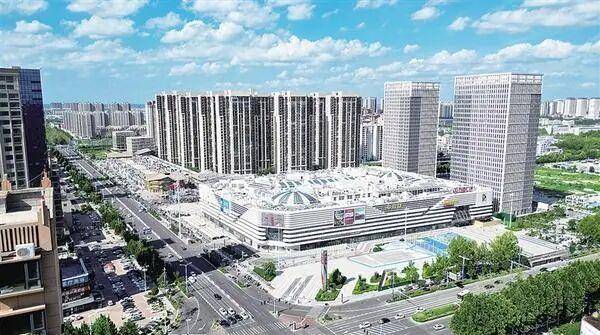
深圳前10个月进出口总值保持内地城市首位
Zhong Guo Xin Wen Wang· 2025-11-20 10:56
Core Insights - Shenzhen maintained its position as the leading city in mainland China for import and export value, reaching a total of 3.74 trillion yuan in the first ten months of 2025, with exports at 2.27 trillion yuan and imports at 1.47 trillion yuan, reflecting a year-on-year growth of 6.8% [1][2] Group 1: Export Performance - The export of mechanical and electrical products continued to dominate, amounting to 1.72 trillion yuan, a growth of 4%, accounting for 75.7% of total exports [1] - Traditional electronic information products, such as computers and audio-video equipment, saw significant export increases, with computers and components exporting 263.96 billion yuan (up 9.6%) and audio-video equipment exporting 75.59 billion yuan (up 6.5%) [1] - Emerging industries contributed to export growth, with lithium batteries, 3D printers, and medical devices exporting 70.06 billion yuan (up 35.6%), 6.75 billion yuan (up 19.8%), and 25.12 billion yuan (up 5.5%) respectively [1] Group 2: Import Dynamics - Imports showed strong production demand and an upgrade in food and seafood requirements, with total imports reaching 1.47 trillion yuan, an increase of 8.5% [2] - Mechanical and electrical products accounted for 1.2 trillion yuan of imports, representing 81.6% of total imports, with integrated circuits at 661.53 billion yuan (up 18.4%) and computer components at 242.7 billion yuan (up 12.3%) [2] - Agricultural imports totaled 82.26 billion yuan, growing by 10%, with significant increases in grain and seafood imports at 9.73 billion yuan (up 107.7%) and 9.27 billion yuan (up 36.2%) respectively [2] Group 3: Trade Partners and Market Composition - Shenzhen's total trade with its top ten partners reached 2.93 trillion yuan, a growth of 1.9%, accounting for 78.5% of total trade [2] - Trade with Hong Kong and Taiwan increased by 10.6%, with values of 638.33 billion yuan and 411.46 billion yuan respectively [2] - Exports to the EU, South Korea, Japan, and Mexico showed varied growth rates, with increases of 2.9%, 8.2%, 17.1%, and 0.9% respectively [2] Group 4: Market Participants - Private enterprises played a crucial role in foreign trade, with a total import and export value of 2.56 trillion yuan, representing 68.5% of the total [3] - Foreign-invested enterprises also showed robust growth, reaching 1.05 trillion yuan (up 13.2%), accounting for 28% of total trade [3] - State-owned enterprises had a total import and export value of 125.88 billion yuan [3] Group 5: Trade Methods - General trade accounted for 2 trillion yuan, or 53.5% of total trade, while bonded logistics and processing trade contributed 1 trillion yuan (up 7.2%) and 717.91 billion yuan (up 2.4%) respectively [3]
今年前10个月周口经济运行整体好于全省
Sou Hu Cai Jing· 2025-11-20 10:40
Economic Overview - The economic performance of Zhoukou City from January to October 2025 shows a steady improvement, with key economic indicators outperforming the provincial average, supported by both stock and incremental policies [2] Industrial Performance - The industrial added value in Zhoukou increased by 7.9% year-on-year, maintaining the growth rate from the previous quarters, with a notable 8.0% growth in October, surpassing the provincial growth by 0.1 percentage points [3] - The manufacturing sector demonstrated strong growth, with an added value increase of 9.3%, contributing 8.1 percentage points to the overall industrial growth [3] - Key industries such as pharmaceutical and food manufacturing saw significant increases in added value, with growth rates of 22.8% and 20.0% respectively [3] - Major products also experienced rapid growth, including a 54.0% increase in metal products and a 43.2% increase in paper products [3] Investment Trends - Fixed asset investment in Zhoukou rose by 5.2% year-on-year, exceeding the provincial growth by 0.7 percentage points, with industrial investment growing by 6.3% [4] - Manufacturing investment surged by 11.9%, significantly contributing to overall investment growth [4] - Private investment showed strong support with an 8.4% increase, while real estate development investment saw a decline of 10.2% [4] Consumer Market - The total retail sales of consumer goods reached 181.64 billion yuan, growing by 6.1% year-on-year, slightly above the provincial average [5] - Urban and rural markets both showed strong demand, with retail sales in urban areas growing by 6.3% [5] - Over 80% of retail categories in large enterprises reported growth, particularly in essential goods like daily necessities and food [5] Emerging Industries - Zhoukou is witnessing positive developments in new industries, with high-tech and strategic emerging industries growing by 22.3% and 10.9% respectively [6] - Investment in high-growth manufacturing sectors, such as automotive and equipment manufacturing, showed remarkable increases of 148.9% and 75.0% [6] - The modern service industry is also thriving, with significant revenue growth in sectors like leasing and business services [6]
今年前10个月深圳进出口规模保持内地城市首位
Nan Fang Du Shi Bao· 2025-11-20 10:00
Core Insights - Shenzhen's total import and export scale reached 3.74 trillion yuan in the first ten months of the year, maintaining the leading position among mainland cities [2] - Exports amounted to 2.27 trillion yuan, while imports were 1.47 trillion yuan, reflecting a year-on-year growth of 6.8% [2] Trade Characteristics - General trade accounted for over half of the total, with a value of 2 trillion yuan, representing 53.5% of Shenzhen's total import and export value. Bonded logistics grew by 7.2% to 1 trillion yuan, making up 26.8%, while processing trade reached 717.9 billion yuan, growing by 2.4% and accounting for 19.2% [2] - Private enterprises contributed nearly 70% of the total import and export value, with 2.56 trillion yuan, which is 68.5% of the total. Foreign-invested enterprises saw a 13.2% increase to 1.05 trillion yuan, representing 28%, while state-owned enterprises accounted for 125.9 billion yuan [2] Trade Partners - The top ten trading partners accounted for nearly 80% of Shenzhen's total trade, with a combined import and export value of 2.93 trillion yuan, growing by 1.9% and representing 78.5% of the total. Key partners included Hong Kong, Taiwan, the EU, South Korea, Japan, and Mexico, with respective trade values of 638.3 billion yuan, 411.5 billion yuan, 384.1 billion yuan, 201.9 billion yuan, 179.2 billion yuan, and 52.1 billion yuan [3] Export Growth - Exports of electromechanical products reached 1.72 trillion yuan, growing by 4% and accounting for 75.7% of total exports. Traditional electronic information products, such as computers and audio-video equipment, saw exports of 263.9 billion yuan and 75.6 billion yuan, growing by 9.6% and 6.5% respectively. Emerging industries, including lithium batteries, 3D printers, and medical devices, exported 70.1 billion yuan, 6.8 billion yuan, and 25.1 billion yuan, with growth rates of 35.6%, 19.8%, and 5.5% respectively [3] Import Growth - Imports of electromechanical products totaled 1.2 trillion yuan, growing by 8.5% and accounting for 81.6% of total imports. Integrated circuits were imported at a value of 661.5 billion yuan, reflecting an 18.4% increase, while computer components, primarily graphics cards and servers, reached 242.7 billion yuan, growing by 12.3%. Agricultural product imports amounted to 82.3 billion yuan, growing by 10% and representing 5.6% of total imports, with significant increases in grain and aquatic products [4]