双碳目标

Search documents
开年传捷报!国家电投山东公司首个省外百万千瓦新能源基地建成投运
Zhong Guo Fa Zhan Wang· 2026-02-09 11:49
Group 1 - The successful grid connection of the 100 MW wind power project at the Pingshan Lake in Gansu marks a milestone for the State Power Investment Corporation (SPIC) in building green energy bases outside Shandong Province, with a total installed capacity of 1.05 million kW [1][2] - The Gansu project is the first self-developed project by SPIC in the external renewable energy market, facing severe natural challenges such as extreme low temperatures of -30°C and strong sandstorms, as well as complex grid connection issues [2] - The project is expected to generate an annual power output of 209 million kWh, saving approximately 63,500 tons of standard coal and reducing carbon dioxide emissions by about 174,000 tons and sulfur dioxide emissions by around 522 tons, contributing to the company's "dual carbon" goals [2] Group 2 - SPIC plans to leverage the full operation of its first external million-kilowatt renewable energy base to optimize its green energy industry layout and promote the implementation of high-quality self-developed projects, aligning with the group's "balanced growth strategy" for sustainable development [3]
总投资557亿 两大特高压项目拟引入民营企业注资入股
Di Yi Cai Jing· 2026-02-09 11:18
Group 1 - The core viewpoint of the article is that state-led investment in UHV projects is now being complemented by private capital participation, which injects new momentum into the industry [1] - The Qinghai Energy Bureau has announced a public solicitation for private enterprises to invest in the Xinjiang Electric (Southern Xinjiang) to Sichuan UHV DC project, with similar announcements made by Chongqing and Xinjiang authorities [1][2] - The total investment for the Xinjiang to Sichuan and Gansu UHV projects is 31.1 billion yuan and 24.6 billion yuan respectively, with private enterprises expected to hold about 10% of the shares [1][2] Group 2 - Both UHV projects have clear revenue expectations, with the Xinjiang to Sichuan project expected to deliver over 40 billion kWh annually, primarily utilizing solar and wind resources from the Southern Xinjiang region [2] - The introduction of private capital is in response to the State Council's notice aimed at promoting private investment in various energy sectors, allowing for a shareholding ratio of over 10% for qualified projects [2] - The entry of private capital into major energy projects is seen as a crucial practice to boost private investment confidence and stimulate internal growth, especially as private investment has been declining [3] Group 3 - Under the dual carbon goals and the construction of a new energy system, energy projects are becoming a significant direction for private capital investment [4] - The proportion of private investment in newly approved nuclear power projects has increased from about 10% in 2024 to 10%-20% in 2025, indicating a growing role for private enterprises in the energy sector [4] - The number of oil and gas transporters has surged from 5 in 2019 to 1005, with the share of resources transported by small and medium-sized transporters rising from 2.1% to 10.2% [4]
东方证券:PVC资产有望迎来重估 需求结构是重估驱动力
智通财经网· 2026-02-09 08:44
Core Viewpoint - PVC-related stocks have shown significant increases since the end of 2025, driven by a preemptive export surge in response to the non-refund policy for export value-added tax effective from April 2026 [1] Group 1: Demand Structure as a Revaluation Driver - PVC and electrolytic aluminum are both high-energy-consuming products, with electricity being the most critical production factor [1] - Since 2022, there has been a significant divergence in the value generated per kilowatt-hour between PVC and electrolytic aluminum, with the latter achieving over double the value of PVC by 2026 [1] - The demand structure for PVC has undergone substantial adjustments, and if emerging developing countries maintain growth, China's PVC demand may mirror the structural transformation seen in electrolytic aluminum post-2022 [1] Group 2: Energy Attributes as a Revaluation Anchor - The market attributes the prosperity of domestic electrolytic aluminum to the "45 million tons capacity red line" policy, while PVC lacks a similar explicit regulation [2] - The carbon emission intensity of the calcium carbide method for PVC is low, and its future potential for green improvement is limited, making it less attractive under carbon neutrality goals [2] - The profitability per kilowatt-hour for typical electrolytic aluminum companies is projected to reach 0.21 yuan in 2024, suggesting that if PVC recovers to a comparable level, its profitability could exceed 1,500 yuan per ton [2] Group 3: Investment Recommendations - Key PVC industry stocks identified include Zhongtai Chemical, Xinjiang Tianye, Beiyuan Group, Ordos, Tianyuan Co., Jiahua Energy, Chlor-alkali Chemical, and Wanhua Chemical, all of which are competitive players in the PVC sector [3] - Despite their competitive positioning, these companies currently face poor profitability in their PVC operations, with Xinjiang Tianye forecasting a slight loss for the entire year of 2025 [3] - If PVC profitability reaches the anticipated levels, significant improvements in earnings for these companies are expected [3]

【行业政策】一周要闻回顾(2026年2月2日-2月8日)
乘联分会· 2026-02-09 08:37
Core Viewpoint - The article discusses the release of the "Automotive Data Export Security Guidelines (2026 Edition)" by the Ministry of Industry and Information Technology, aimed at ensuring safe and efficient cross-border data flow in the automotive industry while complying with national data security laws [3][5]. Group 1: Purpose of the Guidelines - The guidelines are designed to implement the decisions of the Central Committee and the State Council regarding the establishment of a safe and efficient data cross-border flow mechanism [5]. - They aim to enhance the convenience of automotive data export, clarify management methods, and promote orderly cross-border data flow to support high-quality development in the automotive industry [5]. - The guidelines also reflect China's approach to global data cross-border cooperation, particularly in the automotive sector [5]. Group 2: Main Content of the Guidelines - The guidelines consist of four main parts: general provisions, important data determination, data export processes, and security protection requirements [6]. - General provisions outline the conditions for data export security assessment and the types of contracts required for personal information export [6]. - Important data determination focuses on typical business scenarios in the automotive industry, detailing rules for identifying important data [6]. - The data export process specifies requirements for identifying, managing, and assessing important data during export activities [6]. - Security protection requirements guide automotive data processors in establishing comprehensive data export security capabilities [10]. Group 3: Implementation and Future Steps - The Ministry of Industry and Information Technology plans to promote the guidelines through training, data identification, enhancing security levels, and international cooperation [11]. - Continuous tracking and adjustment of important data determination rules will be conducted to keep pace with industry developments [9]. - The guidelines will facilitate a more efficient and secure international automotive data flow framework [11].


关于举办源网荷储及微电网投资建设培训的通知丨系列培训
中国能源报· 2026-02-09 08:23
Core Viewpoint - The integrated development of source-grid-load-storage is essential for the high-quality development of the power system and is a necessary choice for enhancing the consumption of renewable energy and non-fossil energy [2] Group 1: Training Overview - The training on source-grid-load-storage and microgrid investment construction is organized by China Energy News and aims to deepen understanding of related issues [2][3] - The training will take place from March 6 to 7 in Hangzhou [3] Group 2: Target Audience - The training is aimed at large energy groups, power companies, generation groups, local energy groups, key parks, factories, and various energy-consuming institutions [3] - It also targets new energy enterprises (wind, solar, storage), power design institutes, and integrated design units [3] Group 3: Course Modules - The training will cover policy interpretation, current development status, application scenarios, technical analysis, and profit models related to source-grid-load-storage and microgrids [3][4] Group 4: Development Directions - The training will discuss the differences and connections between green electricity direct connection and source-grid-load-storage [4] - It will also cover the application of microgrids in zero-carbon parks and provide guidelines for industrial green microgrid construction [4] Group 5: Fees and Payment - The training fee is set at 3,900 yuan per person, which includes the training fee, while transportation and accommodation are self-catered [4] - Payment can be made via bank transfer, and on-site payment will not be accepted [4]

石油巨无霸,向 “生物制造” 出手了!
合成生物学与绿色生物制造· 2026-02-09 03:55
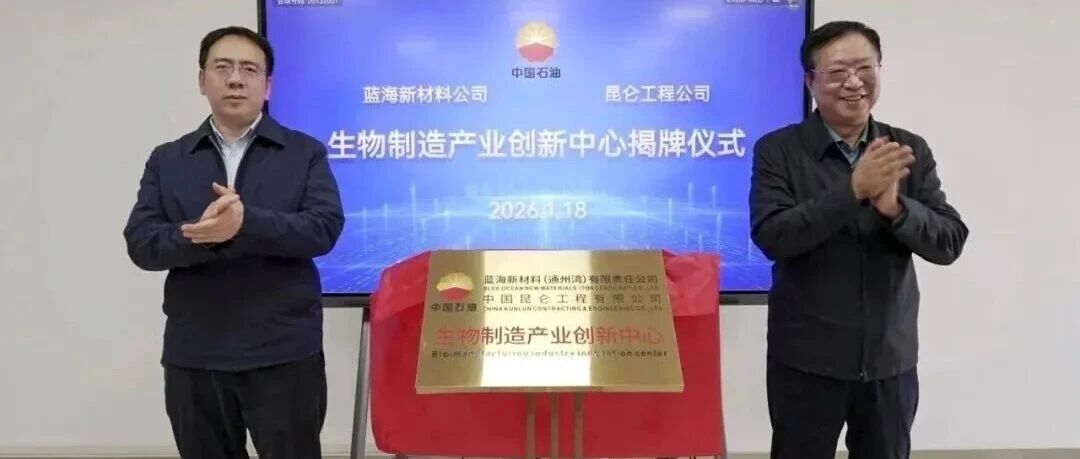
Core Viewpoint - China National Petroleum Corporation (CNPC) is strategically positioning synthetic biology and bio-manufacturing as its "third curve" to adapt to the evolving energy and chemical industry landscape, emphasizing the importance of these sectors for future innovation and economic growth [4][5]. Group 1: Strategic Collaborations - CNPC signed a strategic cooperation agreement with Tianjin University to focus on cutting-edge synthetic biology, aiming to cultivate top-tier innovative talents and leading scholars [2]. - The establishment of the "Bio-Manufacturing Industry Innovation Center" in Tongzhou Bay by CNPC's Blue Ocean New Materials Company and Kunlun Engineering Company highlights the commitment to advancing key technologies in bio-manufacturing [2][5]. Group 2: Importance of Bio-Manufacturing - Bio-manufacturing is seen as crucial for transitioning from fossil fuel dependency to renewable biomass resources, aligning with CNPC's strategic direction of integrating biotechnology and fine chemicals [5]. - The Chinese government's emphasis on accelerating the development of strategic emerging industries, including bio-manufacturing, indicates a significant market potential, with projections of creating trillion-level markets in the next decade [4]. Group 3: Internal Transformation Needs - The dual carbon goals present a transformation pressure for traditional oil and gas companies, making bio-manufacturing a viable pathway for CNPC to leverage its chemical industry foundation and engineering capabilities [5]. - The development of China's first bio-based polycarbonate (PC) special engineering plastic by CNPC's subsidiary marks a significant step in this transition [5]. Group 4: Technological Focus Areas - CNPC is focusing on high-end biocatalysts and processes to reduce production costs, which are essential for the industrialization of bio-manufacturing [7]. - The innovation center aims to tackle engineering challenges in scaling up production processes, bridging the gap between laboratory results and profitable industrial applications [7]. Group 5: Collaboration with Tianjin University - The partnership with Tianjin University leverages its leading position in synthetic biology and green bio-manufacturing, providing CNPC with a national-level platform for innovation and technology development [8][9]. - This collaboration aims to align both parties' goals in cultivating innovative talents and overcoming core technological challenges, facilitating a deep integration of industry and academia [9]. Group 6: Systematic Industry Upgrade - CNPC's initiatives, from CCUS projects in Xinjiang to the bio-manufacturing center in Tongzhou Bay, reflect a clear strategic path towards enhancing core competitive advantages through green and biological technologies while ensuring traditional energy security [10].

陕电入皖再提速 ±800千伏宝塔山换流站750千伏交流系统带电调试启动
Zhong Guo Neng Yuan Wang· 2026-02-09 03:13
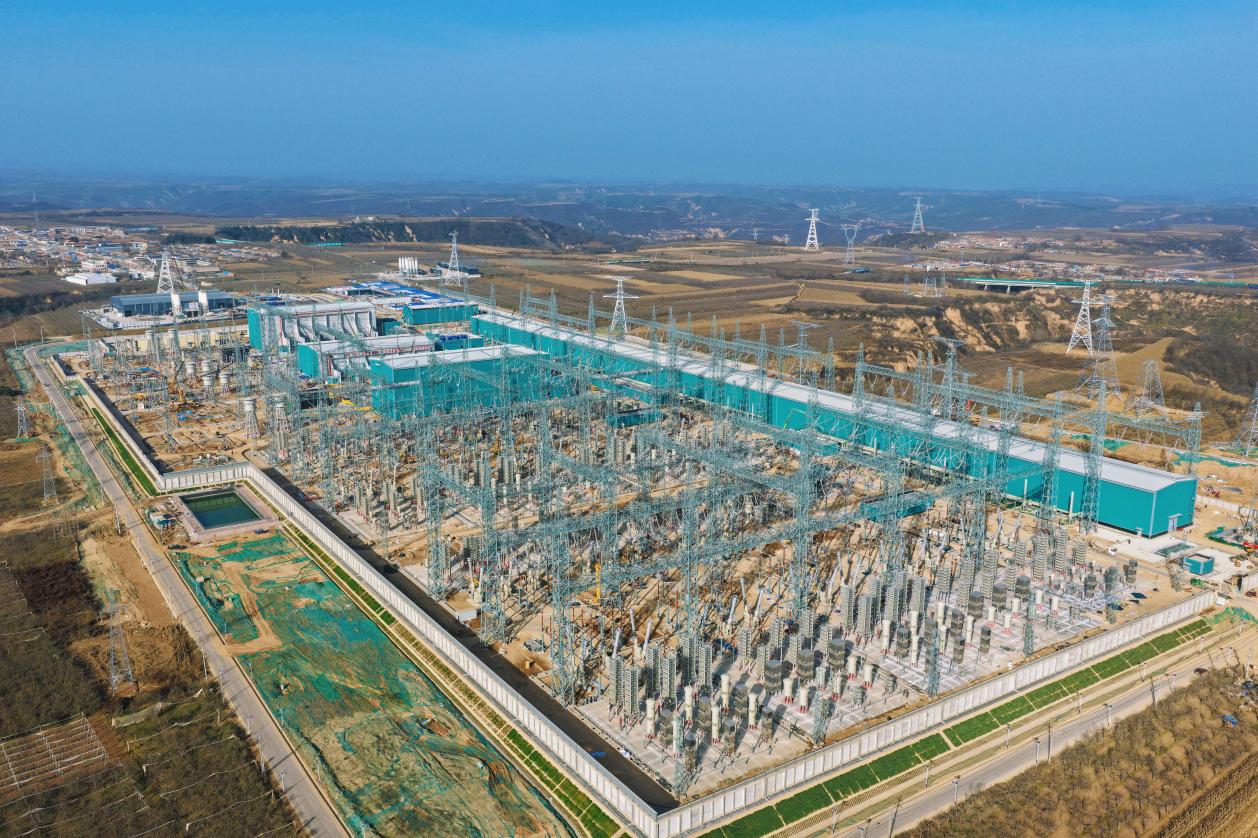
2月5日,陕北—安徽±800千伏特高压直流输电工程的核心枢纽,±800千伏宝塔山换流站正式启动750千伏交流系统带电调试,标志着这条横跨三省的能 源"大动脉"进入系统调试阶段,为工程在年内全面建成投运奠定了坚实的基础。 宝塔山换流站作为陕西省境内第二座特高压换流站,于2024年9月正式开工,直流线路全长约1070公里,横跨陕西、河南、安徽三省,穿越黄土高原、关中 平原、崇山峻岭等多种复杂地形,是陕西省构建跨区域电力资源优化配置体系的重大成果,同时也承载着传承革命老区红色基因和赋能新时代绿色发展的双 重使命。 该站是首个完全采用"±800kV/8GW特高压直流工程标准化设计"的工程,在我国特高压建设史上是一个重要突破。 ±800千伏宝塔山换流站项目总工王辰介绍,换流站交流部分投运,标志着该站正式与陕西主电网相连,为下阶段该站直流系统带电调试、全站投运及后续 配套的新能源接入打好基础。 据了解,陕北—安徽±800千伏特高压直流输电工程计划年内投运。届时,将成为一条高效的"绿色电力高速路",每年可将超过360亿千瓦时的电能从陕北送 往安徽,其中一半以上为风电和光伏等清洁电能,预计每年可减排二氧化碳约1600万吨,不 ...
蒙东赤峰两项500千伏新能源送出工程投运
Zhong Guo Neng Yuan Wang· 2026-02-09 02:02
Core Viewpoint - The successful operation of two major renewable energy projects in Inner Mongolia marks a significant step towards achieving carbon neutrality goals and enhancing regional energy infrastructure [1][2][3] Group 1: Project Overview - The projects include the 1 million kilowatt wind-solar-storage desert management demonstration base and the ecological management wind power project, both located in Chifeng City, Inner Mongolia [1][2] - The first project has a new transmission line of 15 kilometers and is expected to deliver 1.851 billion kilowatt-hours of clean electricity annually, saving 558,000 tons of standard coal and reducing CO2 emissions by 1.532 million tons [1] - The second project features a 25-kilometer transmission line and is projected to generate 3.246 billion kilowatt-hours of electricity per year, saving 997,000 tons of standard coal and cutting CO2 emissions by 2.738 million tons [2] Group 2: Environmental and Economic Impact - Combined, the two projects will deliver over 5 billion kilowatt-hours of electricity annually, sufficient to meet the needs of over 1.3 million households, and will reduce CO2 emissions by over 4.2 million tons each year [2] - The projects exemplify a new development model of "wind-solar-storage + ecological restoration," promoting both energy generation and environmental management [2] Group 3: Infrastructure and Future Prospects - The completion of these projects significantly enhances the regional power grid's capacity to integrate renewable energy, alleviating pressure on the grid and facilitating a transition from high-carbon to green low-carbon energy structures [3] - The projects are connected to the Zicheng 500 kV substation, which will enable the aggregation of surrounding planned wind and solar projects, supporting the development of new industries such as "green hydrogen" and "green computing power" [2]
2026年中国电力铁塔行业供需、产业链及代表企业洞察:朝着高端化、智能化、绿色化方向高质量发展[图]
Chan Ye Xin Xi Wang· 2026-02-09 01:34
Core Insights - The demand for electric power towers in China is projected to reach 502.2 million tons by 2025, with maintenance and replacement demand at 100.5 million tons, leading to a total production increase to 638.8 million tons, indicating a positive supply-demand trend in the industry [8][9]. Electric Power Tower Industry Overview - Electric power towers are essential structures for supporting overhead transmission lines and maintaining safe distances between conductors and other objects. They are categorized by use (transmission, distribution, visual), structure (steel pipe, angle steel, concrete), voltage (ultra-high, high, medium, low), and form (straight, corner, terminal) [1][2]. Industry Development History - The electric power tower industry in China has evolved from using wood and cement to modern steel structures, with significant growth following the introduction of high-voltage lines and the first ultra-high voltage project in 2006, which enhanced equipment and technology levels [3]. Industry Policies - The industry is guided by clear policies covering planning, market cultivation, and technical standards. Key policies include the release of the T/EJCCCSE179-2025 standard for ultra-high voltage towers and initiatives to enhance the electricity service environment, which aim to promote high-quality development in the sector [4][5]. Industry Chain - The electric power tower industry chain consists of upstream raw materials (carbon steel, alloy steel, cables), midstream manufacturing (companies like Hongsheng Huayuan and Qingdao Dongfang Tower), and downstream demand from contractors and power companies driven by grid upgrades and new energy projects [6]. Current Industry Status - The supply-demand scale of electric power towers in China has shown significant fluctuations, with a notable increase in demand and production in 2020 due to the launch of ultra-high voltage projects. The market is expected to recover with the ongoing upgrades of old grids and new energy integration [7][8]. Market Size - The market size for electric power towers is driven by both new construction and maintenance needs, with projections indicating a total market size of 590.65 billion yuan by 2025, comprising 492.16 billion yuan from new projects and 98.49 billion yuan from maintenance [9][10]. Competitive Landscape - The electric power tower manufacturing industry exhibits a "low-end dispersed, high-end concentrated" competitive structure, with many small enterprises in the low-end market and a concentration of larger firms in the high-end market due to high barriers to entry [11]. Development Trends - The industry is transitioning towards smart monitoring and digital twin integration, with a focus on lightweight and green low-carbon materials. Innovations include the use of high-strength materials and environmentally friendly coating technologies to reduce carbon footprints and enhance operational efficiency [14].



中国光伏强韧全球新能源产业
中国能源报· 2026-02-08 23:33
Core Viewpoint - The Chinese photovoltaic industry is playing a crucial role in the global energy transition, with significant advancements in manufacturing, technology, and international cooperation, while facing challenges in maintaining growth and quality during the "14th Five-Year Plan" period [3][4][14]. Group 1: Manufacturing and Capacity Growth - By the end of the "14th Five-Year Plan," China's production capacities for silicon materials, silicon wafers, battery cells, and modules are expected to reach 3.5 million tons, over 1,500 GW, over 1,400 GW, and over 1,100 GW respectively, marking substantial growth compared to the end of the "13th Five-Year Plan" [5][6]. - The cumulative production of silicon materials, wafers, battery cells, and modules during the "14th Five-Year Plan" is 4.2 times, 4.9 times, 5.5 times, and 5.1 times that of the "13th Five-Year Plan," with a compound annual growth rate nearing 30% [6][7]. Group 2: Strategic Position and Market Dynamics - The strategic position of photovoltaics in the energy system is rising, with projections indicating that by 2025, the combined installed capacity of wind and solar power will account for over 80% of new power generation capacity [8]. - By 2026, solar power generation capacity is expected to surpass coal power for the first time, with the total installed capacity of wind and solar power reaching about half of the total power generation capacity [8]. Group 3: Technological Innovation and Efficiency - Continuous technological innovation has been pivotal for the rapid development of the photovoltaic industry, with significant breakthroughs in key technology routes, manufacturing processes, and system efficiency [9][10]. - The comprehensive energy consumption in silicon material production has decreased by 21%, while the overall energy consumption has dropped by 28%, and steam consumption has reduced by 62% over the past five years [10]. - The market share of N-type monocrystalline silicon wafers is projected to reach 97% by the end of 2025, with significant reductions in material consumption per watt achieved through advancements in technology [10][11]. Group 4: Global Contribution and Market Expansion - By 2025, China's photovoltaic industry is expected to account for 57% of the global new installed capacity, marking a historic shift where solar power becomes the dominant source of new electricity generation [15][16]. - China's production capacities for silicon materials, wafers, battery cells, and modules are projected to represent 96%, 96.2%, 91.3%, and 80.1% of the global market respectively by the end of 2025 [15]. - The export structure of photovoltaic products is diversifying, with significant growth in the export of silicon wafers and battery cells, and the number of gigawatt-level export markets for modules increasing to 47 by 2025 [16][17].