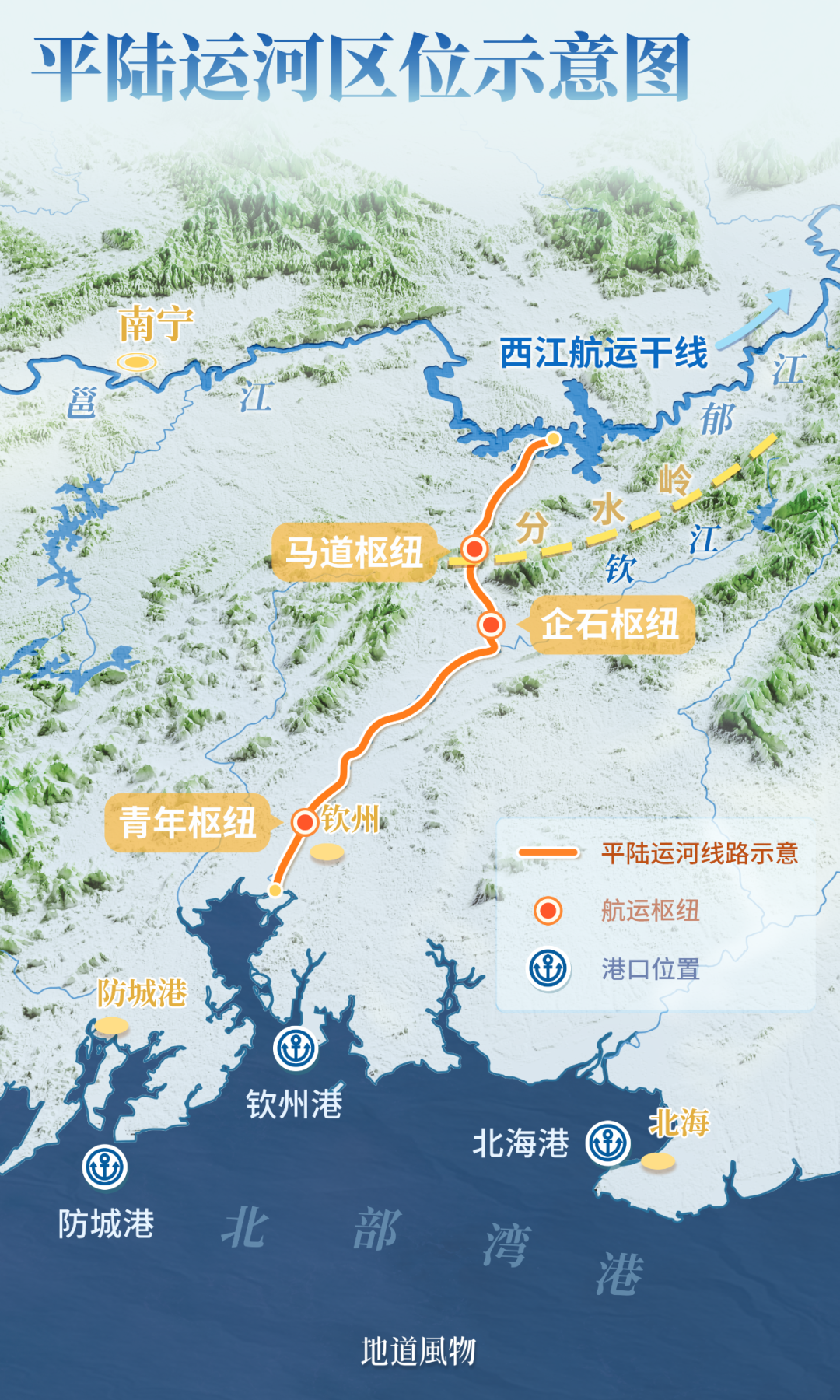
西部陆海新通道

Search documents
今年前8个月重庆经西部陆海新通道运输货物超20万标箱
Xin Hua Wang· 2025-09-28 23:57
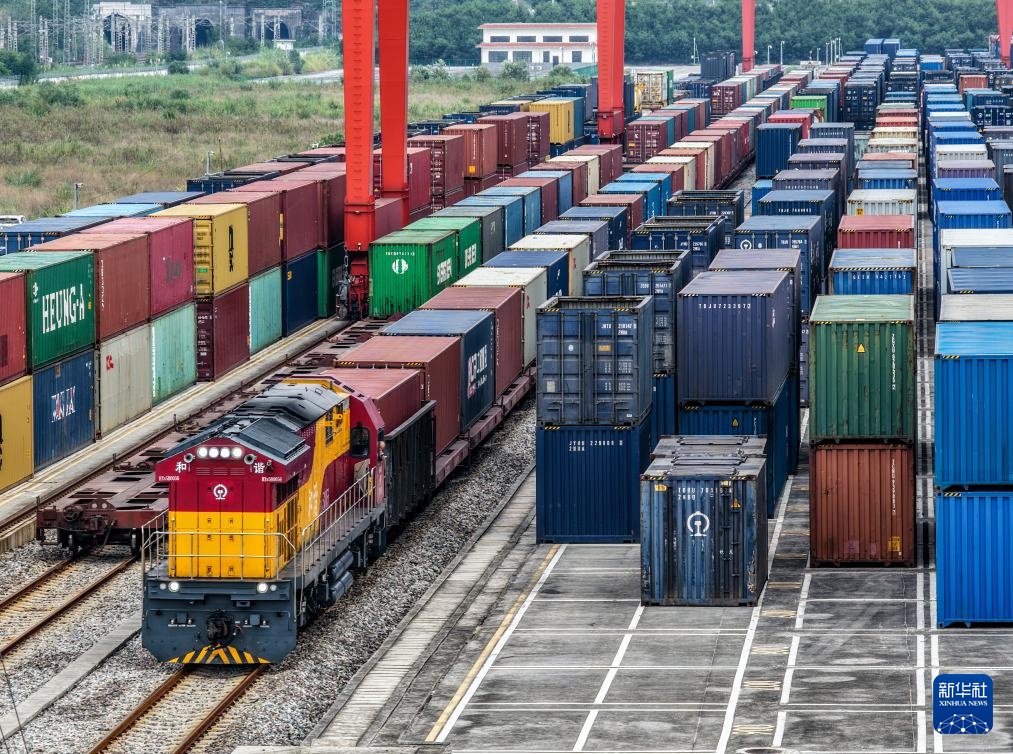
Core Insights - The demand for transportation via the Western Land-Sea New Corridor has been robust this year, with significant growth in both the number of containers transported and their value Group 1: Transportation Demand - From January to August this year, the Western Land-Sea New Corridor transported a total of 215,800 TEUs, representing a year-on-year increase of 30% [1] - The total value of goods transported through this corridor reached 39.291 billion yuan, marking a year-on-year growth of 26% [1]

广东湛江“并行港”物流模式一年承运货物逾76万吨
Zhong Guo Xin Wen Wang· 2025-09-26 10:28
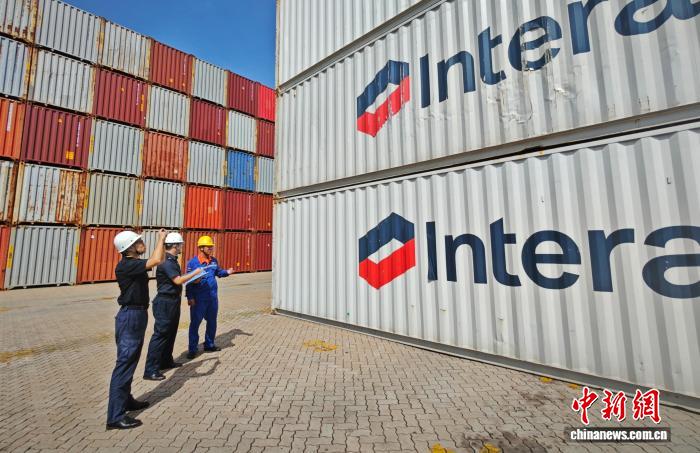
Core Insights - The "Parallel Port" logistics model in Zhanjiang, Guangdong, has successfully transported over 766,100 tons of goods in one year, demonstrating significant growth and efficiency in cross-border logistics [3][4]. Group 1: Logistics Model Overview - The "Parallel Port" logistics model was initiated by Zhanjiang Customs in collaboration with Shenzhen and Haikou Customs, leveraging Zhanjiang's strategic location to connect the Guangdong-Hong Kong-Macao Greater Bay Area and Hainan Free Trade Port [3]. - In its first year, the model has expanded from a pilot program to over 100 participating enterprises, with a diverse range of goods now being transported [3][4]. - The shipping capacity has improved significantly, with vessel loading rates increasing from 30% to approximately 80%, indicating enhanced logistics efficiency [3]. Group 2: Innovations and Policies - The model integrates multiple ports, including Shekou, Zhanjiang, Yangpu, and Nansha, creating an efficient maritime transport network akin to a "bus loop" [3]. - New policies have been introduced, such as the "Parallel Port + Departure Port Tax Refund" service, which has reduced tax refund processing time from over 20 days to just 3 days, improving capital turnover for enterprises [4]. - The "Parallel Port + Western Land-Sea New Corridor" initiative has lowered overall logistics costs by about 25%, facilitating a new export route for the western region through Hainan Free Trade Port [4].
潮涌新疆70年 丝路新程通亚欧
Xin Hua She· 2025-09-26 06:22
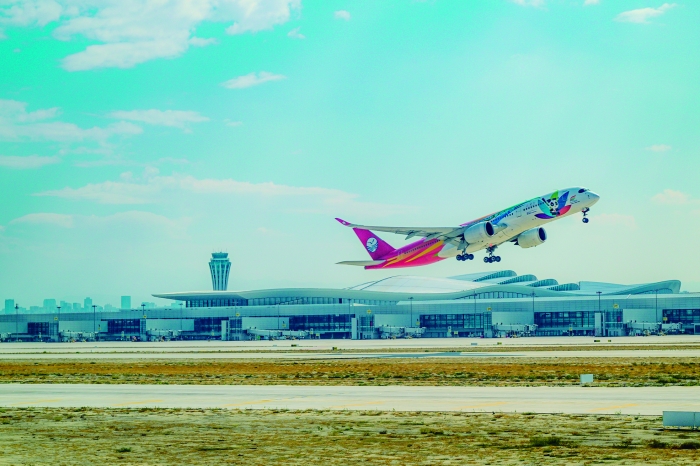
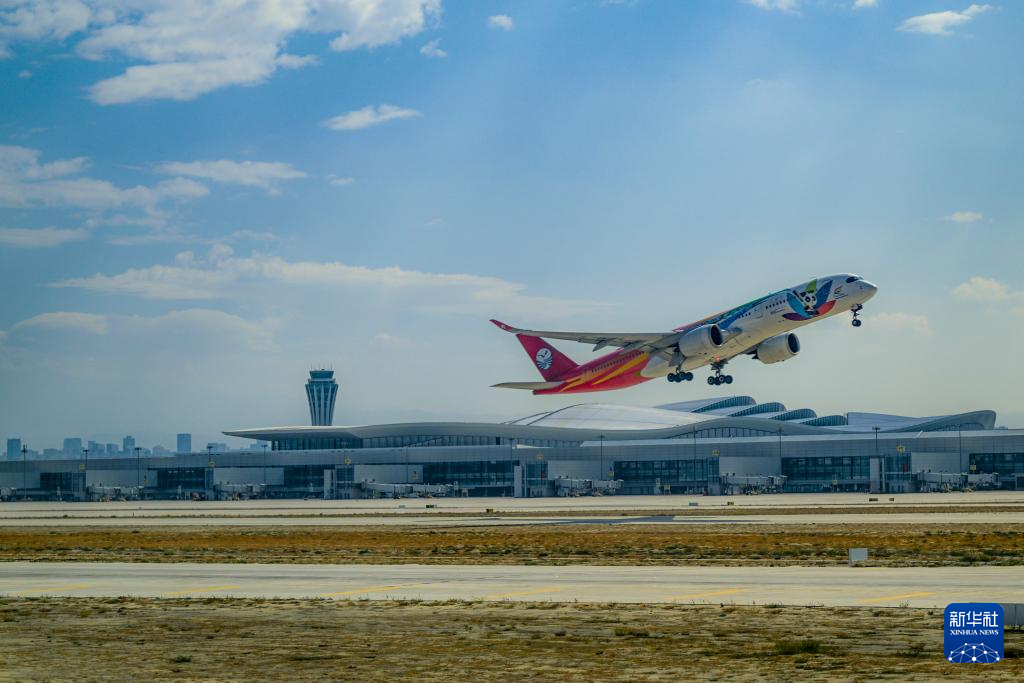
Core Viewpoint - Xinjiang is actively participating in the construction of the Western Land-Sea New Corridor, enhancing its transportation and logistics networks to establish a new pattern of opening up that connects Asia and Europe [1] Group 1: Infrastructure Development - Xinjiang has developed a total of 19 open ports for foreign trade [1] - The region has launched 119 bilateral international road transport routes and 10 multilateral international road freight routes [1] - There are currently 595 civil aviation routes, including 25 international passenger routes connecting to 17 countries and regions [1] Group 2: Strategic Initiatives - The initiatives aim to promote "land-sea internal and external linkage, and east-west mutual assistance" in foreign trade [1] - Xinjiang is making significant progress in establishing a comprehensive transportation network that includes land ports, air ports, and cooperation zones [1] - The region is positioned as a vibrant hub along the new Silk Road, reflecting its commitment to opening up and enhancing connectivity [1]
陈刚:深学细悟笃行新时代党的创新理论,提升经济社会高质量发展的质效
Guang Xi Ri Bao· 2025-09-26 01:08
Group 1 - The meeting focused on studying "Xi Jinping's Thoughts on Socialism with Chinese Characteristics for a New Era," emphasizing the importance of deep learning and practical application to enhance the quality and efficiency of economic and social development [1][2] - Participants expressed that the fifth volume of Xi Jinping's thoughts represents the latest theoretical achievements of the Communist Party of China, reinforcing their political consciousness to uphold the "two establishments" and "two safeguards" [2][3] - The meeting highlighted the need to grasp the scientific system, spiritual essence, and practical requirements of the Party's innovative theory, aiming to enhance the understanding and application of Xi Jinping's thoughts in the construction of a beautiful Guangxi [3] Group 2 - The discussion included insights on logistics efficiency and route selection along the Western Land-Sea New Corridor, with innovative countermeasures proposed by experts [2] - Emphasis was placed on focusing on key areas for high-quality economic and social development, including artificial intelligence, digital economy, and industrial transformation, while aligning with national strategies and regional capabilities [3] - The meeting called for a comprehensive approach to governance, promoting a clean political environment and enhancing the recognition of the Party's innovative theories among party members and cadres [3]
丝路新程:立体通道联通亚欧
Shang Hai Zheng Quan Bao· 2025-09-25 18:14
Core Viewpoint - Xinjiang is actively participating in the construction of the Western Land-Sea New Corridor, enhancing its transportation networks and trade logistics to establish a new pattern of open cooperation connecting Asia and Europe [2] Group 1: Infrastructure Development - Xinjiang has developed a total of 19 open ports for international trade [2] - The region has established 119 bilateral international road transport routes and 10 multilateral international road freight routes [2] - There are currently 595 civil aviation routes, including 25 international passenger routes connecting 17 countries and regions [2] Group 2: Strategic Initiatives - Xinjiang is advancing the construction of railway, highway, aviation, and trade logistics networks [2] - The region aims to promote "land-sea internal and external linkage, east-west dual-direction mutual assistance" in its new open cooperation framework [2] - The initiatives are part of the broader strategy to invigorate the New Silk Road [2]
潮涌新疆70年 丝路新程:立体通道联通亚欧
Xin Hua Wang· 2025-09-25 15:41
Core Viewpoint - Xinjiang is actively participating in the construction of the Western Land-Sea New Corridor, enhancing its transportation and logistics networks to establish a new pattern of opening up that connects Asia and Europe [2] Group 1: Infrastructure Development - Xinjiang has developed a total of 19 foreign trade ports [2] - The region has opened 119 bilateral international road transport routes and 10 multilateral international road freight routes [2] - The civil aviation sector has established 595 air routes, including 25 international passenger routes connecting 17 countries and regions [2] Group 2: Strategic Initiatives - Xinjiang is promoting a new pattern of external openness characterized by "land-sea internal and external linkage, and east-west mutual assistance" [2] - The region is making significant strides in becoming a frontier of openness, contributing to the revitalization of the new Silk Road [2]
从物流大通道到国际经济走廊
Guang Xi Ri Bao· 2025-09-25 03:33
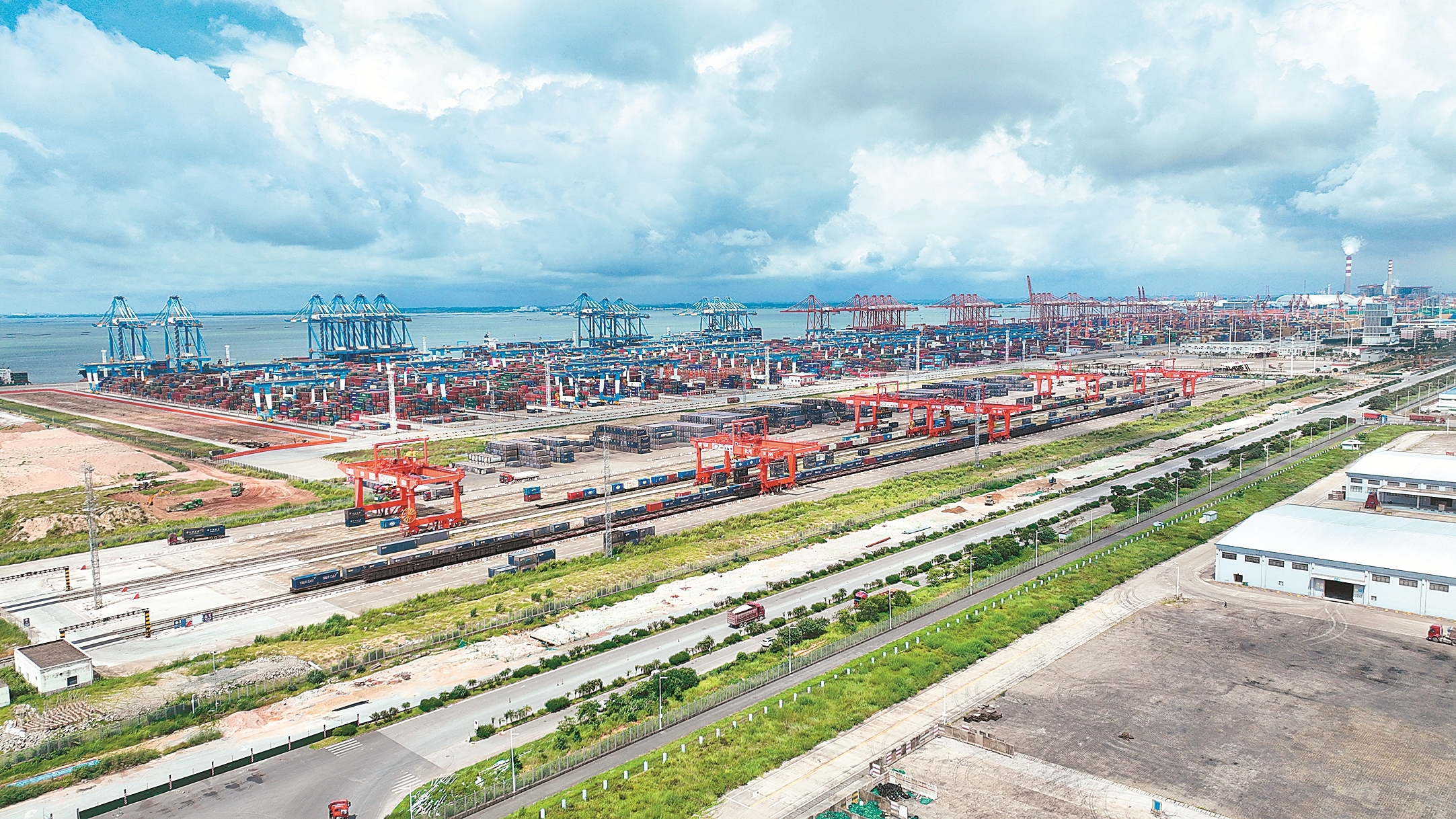
Core Insights - The Western Land-Sea New Corridor has seen a significant increase in freight volume, with the annual cargo volume rising from 3,382 TEUs in 2017 to 960,000 TEUs in 2024, marking an 283-fold increase over eight years [3] - The corridor is becoming a vital international economic corridor, enhancing connectivity and operational efficiency through improved transportation infrastructure [3][5] Transportation Infrastructure - The railway sector has made substantial progress, including the electrification of the Jiao-Liu Railway and the early operation of the Gui-Nan High-Speed Railway, which enhances the transportation capacity and connectivity of major ports [4] - The North Bay Port's container throughput has increased from 3.82 million TEUs in 2019 to 9.02 million TEUs in 2024, with an average annual growth rate of 18.7% [5] Economic Development - The Western Land-Sea New Corridor is evolving from a "channel economy" to a "logistics + trade + industry" development model, attracting more industries to the western inland regions [5] - New industrial clusters with annual outputs exceeding 10 billion yuan are emerging, focusing on sectors like new energy, green chemicals, and advanced equipment manufacturing [5] Logistics and Connectivity - The railway department has expanded the number of regular routes from the initial "Yugui New" line to 24 established routes, facilitating seamless connections with China-Europe freight trains [6] - The integration of sea-rail intermodal transport has improved operational efficiency, reducing transfer times from 3 hours to 1.5 hours, and increasing overall efficiency by 30% [7] Trade and Market Reach - The variety of goods transported via the corridor has expanded from over 50 types to 1,316 types, covering 18 provinces and reaching 577 ports in 127 countries and regions [7]
为什么我国要花700亿修一条运河?
虎嗅APP· 2025-09-25 00:10
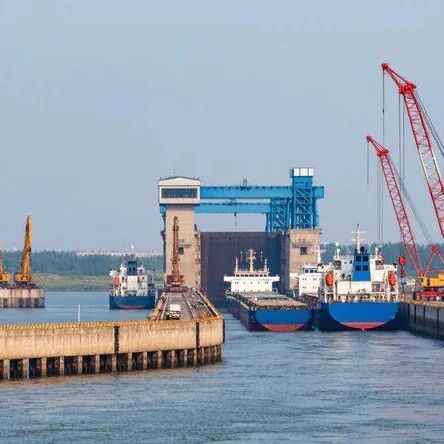
Core Viewpoint - The construction of the Pinglu Canal, a major infrastructure project with an investment of approximately 727 billion yuan, aims to reshape the geographical and economic landscape of Southwest China by providing a direct waterway from the inland regions to the sea, significantly reducing transportation costs and time for goods exported from provinces like Yunnan, Guizhou, Sichuan, and Chongqing [4][6][10]. Summary by Sections 1. Introduction to the Geographical Challenge - Despite having a coastline of 1,595 kilometers and three natural ports, Guangxi faces a logistical challenge where goods must detour through Guangdong to reach the sea, resulting in an additional 560 kilometers of travel [3][5][14]. - This geographical predicament has historically limited the economic potential of the Southwest region, which requires a more efficient route to access international markets [5][14]. 2. Overview of the Pinglu Canal Project - The Pinglu Canal, spanning 134.2 kilometers, is the first canal project in New China designed to connect inland rivers to the sea, breaking the long-standing geographical constraints faced by Guangxi and the broader Southwest region [6][18]. - As of September 21, 2025, significant progress has been made, with 82.3% of the total investment completed and 92.4% of the excavation work finished [6]. 3. Economic Implications - The canal will shorten the shipping distance for goods from the upper reaches of the Xijiang River to the sea by approximately 560 kilometers, saving over 5.2 billion yuan in transportation costs annually [8][10]. - The project is expected to transform the North Bay Port from a minor port into an international hub, enhancing trade and economic exchanges between China and ASEAN countries [8][44]. 4. Historical Context and Vision - The idea of constructing a canal in Guangxi dates back over a century, with Sun Yat-sen advocating for a major port in Qinzhou to facilitate direct maritime access for Southwest provinces [21][30]. - The historical significance of canals in Guangxi is highlighted, with ancient projects like the Lingqu Canal showcasing the region's long-standing relationship with waterway construction [23][28]. 5. Engineering Challenges and Innovations - The construction of the Pinglu Canal involves overcoming significant engineering challenges, including a 65-meter elevation difference that requires advanced lock systems to facilitate the passage of large vessels [33][36]. - Innovative techniques, such as a three-level water-saving lock system and temperature-controlled concrete, have been developed to ensure the project's success [36][40]. 6. Future Prospects - The completion of the Pinglu Canal is projected to enhance the shipping capacity and efficiency of the region, fundamentally altering the economic dynamics and positioning Guangxi as a crucial logistics hub [41][43]. - The canal is anticipated to foster a cultural and economic awakening, shifting the perception of the Southwest from a landlocked region to an active participant in global trade [45][46].
西部陆海新通道跨境公路班车年度开行量突破1万车次
Yang Shi Xin Wen· 2025-09-24 18:21
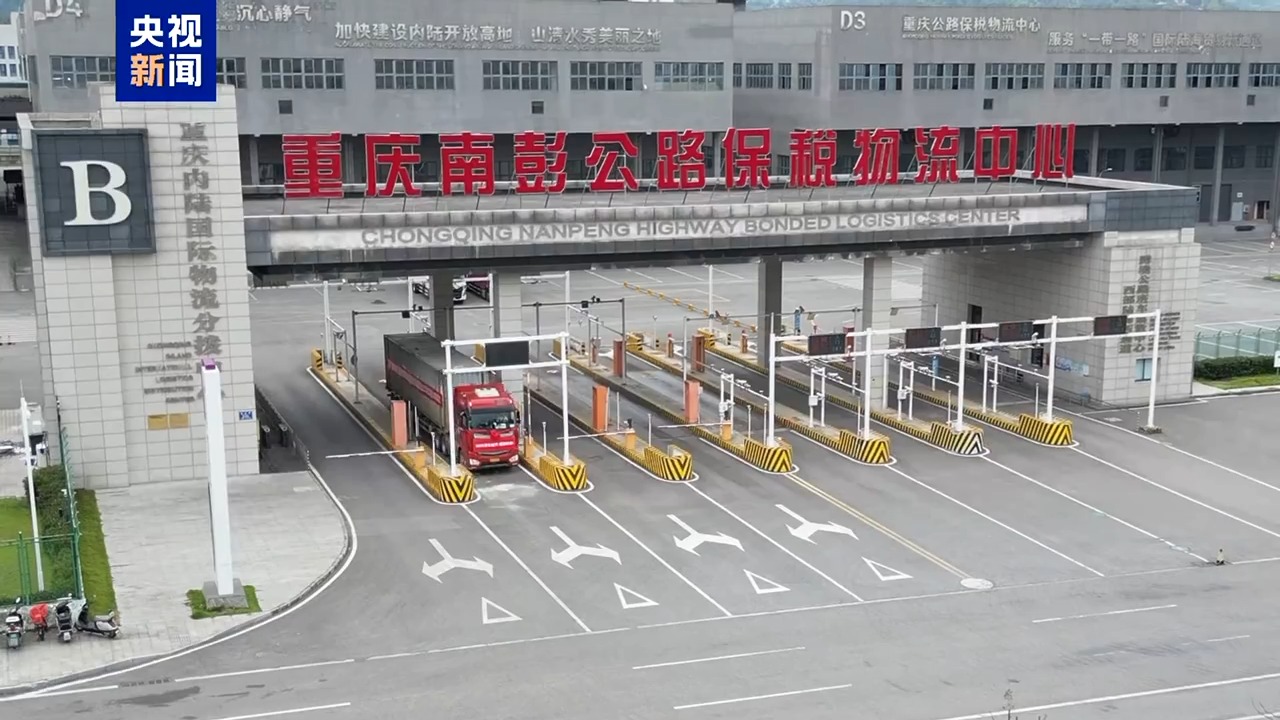
Core Insights - The cross-border highway bus service from Chongqing has marked a significant milestone by surpassing 10,000 trips in 2025, with a foreign trade cargo value of nearly 13.4 billion yuan, setting a new annual record for the service [1][3] Group 1: Transportation and Logistics - The cross-border highway bus service is one of the three main logistics organization methods of the Western Land-Sea New Corridor, characterized by its "high efficiency, small batch, and multiple batches" advantages, complementing rail-sea and international rail transport [3] - In the first seven months of this year, the three main transportation methods through the Western Land-Sea New Corridor transported goods worth over 34 billion yuan, reflecting a year-on-year growth of 25% [3] - The cross-border highway bus service accounts for approximately 40% of the foreign trade cargo value transported through the three main logistics methods in Chongqing [3] Group 2: Network Development - The cross-border highway bus service has established a robust transportation network consisting of "3 directions (south, west, northwest), 12 routes, and 25 ports," effectively connecting Europe and Central Asia while covering major Southeast Asian countries [3]
为什么我国要花700亿修一条运河?
Hu Xiu· 2025-09-24 13:24
Core Viewpoint - The construction of the Pinglu Canal, a major infrastructure project in Guangxi, aims to resolve the long-standing geographical constraints faced by the southwestern region of China, providing a direct waterway to the sea and significantly enhancing logistics efficiency and economic connectivity with ASEAN countries [3][4][5]. Group 1: Project Overview - The Pinglu Canal is a super project with a total investment of approximately 72.7 billion yuan and a length of 134.2 kilometers [3][21]. - As of September 21, 2025, the project has completed an investment of 59.85 billion yuan, accounting for 82.3% of the total investment, and has achieved significant progress in excavation and construction [3]. - The canal will shorten the shipping distance for goods from the southwestern region to the sea by approximately 560 kilometers, saving over 5.2 billion yuan in transportation costs annually [4][52]. Group 2: Economic Impact - The Pinglu Canal will transform the North Bay Port from a marginal port into an international hub, enhancing trade and logistics between China and ASEAN [5][54]. - The canal is expected to boost the GDP of the western land-sea new corridor by 45 billion yuan and achieve a freight volume of 95.5 million tons by 2035 [54]. - The logistics efficiency for goods exported from Chongqing will improve significantly, with transportation distance reduced by about 1,200 kilometers and time saved by approximately 13 days [53]. Group 3: Strategic Importance - The Pinglu Canal serves as a critical link in the western land-sea new corridor, fundamentally altering the logistics landscape and positioning Guangxi as a regional hub rather than a mere transit point [16][20]. - The project is seen as a key to unlocking the export potential of southwestern provinces such as Sichuan, Yunnan, and Guizhou, which require efficient access to maritime routes [14][16]. - The canal will facilitate a shift in economic geography, allowing Guangxi to connect more effectively with both domestic and international markets [16][57]. Group 4: Historical Context - The idea of constructing a canal in Guangxi dates back over a century, with Sun Yat-sen advocating for a southern port to enhance trade routes [25][37]. - Historically, Guangxi has been shaped by canal construction, with significant projects dating back to the Qin Dynasty, highlighting the region's long-standing commitment to improving waterway connectivity [29][34]. Group 5: Technological Challenges - The construction of the Pinglu Canal involves overcoming significant engineering challenges, including managing a water level drop of 65 meters and ensuring the stability of large concrete structures [39][41]. - Innovative technologies, such as a three-level water-saving lock system and advanced concrete temperature control methods, have been implemented to address these challenges [40][42][43]. - The project utilizes large-scale dredging equipment, such as the "Tianjing" self-propelled suction dredger, to efficiently manage excavation and material transport [44].