
高水平科技自立自强

Search documents
加快高水平科技自立自强!四中全会“划重点”,企业提速布局新质生产力|四中全会时间
Hua Xia Shi Bao· 2025-10-24 15:08
Group 1 - The core viewpoint of the article emphasizes the importance of accelerating high-level technological self-reliance and establishing a modern industrial system centered on advanced manufacturing in China [2][3]. - The recent developments in China's high-tech industry reflect a significant shift from "following" to "running alongside" and even "leading" in certain areas, driven by technologies such as artificial intelligence, 5G, and cloud computing [2][3]. - The semiconductor display industry has seen remarkable growth, with China now holding a 70% share of the global LCD market and making strides in the OLED sector, indicating a transition from scale competition to technology and value competition [3][4]. Group 2 - The construction of a modern industrial system aims to strengthen the foundation of the real economy, focusing on intelligent, green, and integrated development while maintaining a reasonable proportion of manufacturing [3]. - Companies like Visionox are accelerating the transformation of technological innovation into new productive forces, with plans to expand their OLED production capabilities and enhance their market position [4]. - The integration of digital supply chains is becoming a key driver for cost reduction and efficiency in the real economy, exemplified by JD Industrial's solutions that significantly reduce procurement times and inventory costs for clients [5]. Group 3 - The article highlights the role of AI and intelligent agents in bridging the gap between technology and industry, with applications expanding across various sectors including manufacturing, healthcare, and finance [6]. - The emphasis on technological innovation driving industrial innovation is crucial, as it aims to ensure that technological advancements are effectively implemented in practical applications [6]. - The importance of security in the innovation process is underscored, with industry leaders advocating for a shift from price competition to innovation competition, ensuring a secure environment for technological advancements [7].



党的二十届四中全会 中共中央新闻发布会内容速览
Xin Hua She· 2025-10-24 14:43
Core Viewpoint - The 20th Central Committee's Fourth Plenary Session outlines significant achievements and strategic tasks for China's economic and social development during the "14th Five-Year Plan" and the upcoming "15th Five-Year Plan" [3][5][7]. Group 1: Major Achievements and Goals - The "15th Five-Year Plan" aims for high-quality development, significant improvements in technological self-reliance, breakthroughs in comprehensive reforms, enhanced social civilization, improved quality of life, progress in building a beautiful China, and strengthened national security [7]. - The session emphasizes the importance of establishing a modern industrial system and solidifying the foundation of the real economy as a top strategic task, focusing on four key areas: solidifying the foundation, upgrading, fostering innovation, and enhancing efficiency [9]. Group 2: Technological and Educational Initiatives - To accelerate high-level technological self-reliance, the plan includes strengthening original innovation, promoting deep integration of technological and industrial innovation, advancing education and talent development, and furthering the construction of a digital China [11][12]. Group 3: Open Economy and Trade - The "15th Five-Year Plan" promotes proactive expansion of autonomous opening-up, innovative trade development, and the expansion of bilateral investment cooperation, alongside high-quality construction of the Belt and Road Initiative [15].
中新健康丨医药企业热议四中全会公报:我们正经历“质的飞跃”
Zhong Guo Xin Wen Wang· 2025-10-24 14:17
Core Viewpoint - The 20th Central Committee's Fourth Plenary Session emphasized accelerating high-level technological self-reliance and innovation in the biopharmaceutical industry, which is expected to lead to a qualitative leap in China's biopharmaceutical innovation [1][2]. Group 1: Strategic Direction - The session's report encourages innovation as the primary focus for the biopharmaceutical industry, providing a clear direction for companies engaged in original and cutting-edge technology development [2][4]. - Companies are motivated by the report's emphasis on high-level technological self-reliance, which is seen as a call to pursue original and leading innovations rather than low-level repetitions [2][3]. Group 2: Industry Advantages - China's unique innovation ecosystem is highlighted as a significant advantage, with biopharmaceutical companies leveraging the engineer dividend and exploring deep innovation areas [2][3]. - The country’s data platform and algorithm breakthroughs allow for cost-effective and rapid data collection, enhancing the competitiveness of AI-driven pharmaceutical innovations [3]. Group 3: Global Positioning - Some Chinese biopharmaceutical companies have begun to gain recognition on the global stage, developing innovative drugs that are acknowledged by international academia and industry [4]. - There is a need for more companies to enhance their global clinical development and commercialization capabilities to compete with multinational pharmaceutical firms [4]. Group 4: Policy and Support - The industry calls for supportive policies to foster high-level technological innovation, including financial support and optimized regulatory mechanisms [5]. - Companies are encouraged to take on the responsibility of innovation, increasing R&D investment and focusing on key technology development to enhance domestic biopharmaceutical innovation capabilities [5].
企业家热议二十届四中全会 TCL李东生:探索全球化新路径
Nan Fang Du Shi Bao· 2025-10-24 14:01
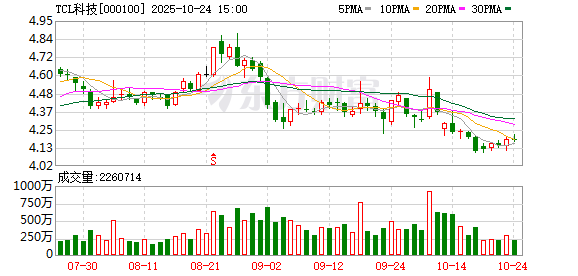
Group 1 - The Fourth Plenary Session of the 20th Central Committee of the Communist Party of China was held from October 20 to 23, 2023, in Beijing, focusing on the formulation of the 15th Five-Year Plan for national economic and social development [2] - The meeting emphasized the importance of adhering to and improving the socialist system with Chinese characteristics and modernizing the national governance system and capacity [2] - The session provided strategic deployments for the comprehensive construction of a modern socialist country, indicating a clear direction for future development [2] Group 2 - Guangdong private economy representatives expressed strong confidence and motivation from the Plenary Session, committing to implement the spirit of the meeting and contribute to high-quality development [3] - TCL's founder and chairman, Li Dongsheng, highlighted the significance of the meeting in the context of building a modern socialist country, summarizing major achievements during the 14th Five-Year Plan and outlining goals for the 15th Five-Year Plan [3][4] - The meeting's communiqué called for accelerating high-level technological self-reliance and innovation, emphasizing the role of enterprises in driving technological advancements and fostering new productive forces [4] Group 3 - TCL has invested over 60 billion yuan in R&D over the past six years, with more than 110,000 patent applications, including nearly 20,000 PCT patents, achieving significant breakthroughs in key technologies [4] - The company aims to continue enhancing original technology innovation and accelerate the commercialization of technological achievements while leveraging national innovation platforms [4] - The communiqué also stressed the need to invigorate various business entities and improve the market-oriented allocation of resources, which is expected to boost the confidence and determination of private enterprises [4] Group 4 - The meeting proposed expanding high-level opening-up and creating a win-win cooperation landscape, which aligns with TCL's global strategy and local operations [5] - Over the past five years, TCL's overseas revenue has grown at an average annual rate of over 19%, with export growth exceeding 15%, contributing to the dual circulation development pattern [5] - TCL's experience indicates that every 100 USD in overseas revenue generates 60 USD in industry chain exports, showcasing the interconnectedness of global operations [5] Group 5 - Looking ahead to the new journey of the 15th Five-Year Plan, TCL is committed to innovation-driven development and exploring new paths for globalization [6]

国家发改委:会同有关方面抓紧起草“十五五”规划《纲要草案》
Di Yi Cai Jing· 2025-10-24 12:34
Core Points - The National Development and Reform Commission (NDRC) held an expanded meeting on October 24 to convey and implement the spirit of the 20th Central Committee's Fourth Plenary Session and General Secretary Xi Jinping's important speech [1][2] - The meeting emphasized the need for the NDRC to take proactive actions to effectively implement major strategic tasks during the 14th Five-Year Plan period, focusing on building a modern industrial system and promoting high-level technological self-reliance [1][2] Group 1 - The NDRC is tasked with implementing key work related to the construction of a strong domestic market and high-level socialist market economy [1] - The meeting called for immediate action to study and implement the spirit of the plenary session and to draft the "14th Five-Year Plan" outline [2] - The NDRC aims to ensure that various plans at all levels align and work towards common goals [2]
国家外汇管理局:进一步加大外汇支持实体经济力度
智通财经网· 2025-10-24 12:17
Core Viewpoint - The meeting led by Zhu Hexin emphasized the importance of adhering to the fundamental purpose of financial services for the real economy, advancing reforms in foreign exchange operations, and enhancing the foreign exchange policy system to support high-level technological self-reliance and economic stability [1][3][4]. Group 1: Financial Policy and Economic Support - The meeting highlighted the need to deepen reforms in bank foreign exchange operations and facilitate cross-border trade and investment [1][5]. - A focus on enhancing the foreign exchange policy system to ensure that "the more honest, the more convenient" is a key strategy to support the real economy [1][5]. - The importance of evaluating and tracking foreign exchange management policies to increase public and enterprise satisfaction was stressed [1][5]. Group 2: Open Economy and Internationalization - The meeting called for the steady expansion of high-level institutional openness in the foreign exchange sector, promoting the internationalization of the Renminbi and high-quality capital account openness [5][6]. - It emphasized the need to support trade innovation and expand bilateral investment cooperation, contributing to the development of an open, diverse, and competitive foreign exchange market [5][6]. Group 3: Market Stability and Regulatory Oversight - The meeting underscored the importance of a dual management approach of "macro-prudential + micro-regulation" to maintain stability in the foreign exchange market [6]. - It was noted that maintaining the Renminbi exchange rate at a reasonable and balanced level is crucial for economic stability [6]. - The need for comprehensive regulatory coverage in the foreign exchange sector and strict enforcement against illegal activities was highlighted [6].
党的二十届四中全会,中共中央新闻发布会内容速览
Xin Hua Wang· 2025-10-24 10:50
Core Points - The 20th Central Committee's Fourth Plenary Session emphasizes the significance of the "14th Five-Year Plan" achievements and outlines the overall requirements for the "15th Five-Year Plan" period [4][6] - The session's recommendations include seven main goals for economic and social development during the "15th Five-Year Plan" period, focusing on high-quality development, technological self-reliance, deepening reforms, enhancing social civilization, improving living standards, advancing ecological progress, and strengthening national security [6][8] Group 1 - The recommendations are structured into three main sections: general overview, specific strategic tasks, and tasks related to strengthening centralized leadership and promoting socialist democracy and rule of law [4][6] - The first strategic task is to build a modern industrial system and solidify the foundation of the real economy, with four key areas of focus: upgrading, innovation, expansion, and efficiency [8][10] - To accelerate high-level technological self-reliance, the recommendations highlight the importance of original innovation and tackling key core technologies [10][13] Group 2 - The recommendations for foreign trade during the "15th Five-Year Plan" period include expanding autonomous openness and promoting innovative trade development [13][14] - In terms of population quality development, three key areas are emphasized: creating a family-friendly society, enhancing elderly care, and optimizing basic pension services [16]
征求对中共中央关于制定国民经济和社会发展第十五个五年规划建议的意见 中共中央召开党外人士座谈会 习近平主持并发表重要讲话
Xin Hua She· 2025-10-24 08:53
征求对中共中央关于制定国民经济和社会发展第十五个五年规划的建议的意见 中共中央召开党外人士座谈会 习近平主持并发表重要讲话 李强王沪宁蔡奇丁薛祥出席 新华社北京10月24日电 中共中央8月27日在中南海召开党外人士座谈会,就中共中央关于制定国民经济和社会发 展第十五个五年规划的建议听取各民主党派中央、全国工商联负责人和无党派人士代表的意见建议。中共中央总书记 习近平主持座谈会并发表重要讲话强调,谋划"十五五"时期经济社会发展,要锚定基本实现社会主义现代化目标,深 刻把握国际国内形势,扎实推动高水平科技自立自强,稳步推进共同富裕,动员全党全国各族人民为推进强国建设、 民族复兴伟业而团结奋斗。 中共中央政治局常委李强、王沪宁、蔡奇、丁薛祥出席座谈会。 座谈会上,民革中央主席郑建邦、民盟中央主席丁仲礼、民建中央主席郝明金、民进中央主席蔡达峰、农工党中 央主席何维、致公党中央主席蒋作君、九三学社中央主席武维华、台盟中央主席苏辉、全国工商联主席高云龙、无党 派人士代表郭雷先后发言。他们高度评价在以习近平同志为核心的中共中央坚强领导下我国"十四五"时期经济社会发 展取得的成就,赞同中共中央关于制定国民经济和社会发展第十五 ...
华侨华人冀“十五五”时期深度参与中国发展
Zhong Guo Xin Wen Wang· 2025-10-24 07:35
Core Insights - The article discusses the expectations of overseas Chinese communities to deeply participate in China's development during the "14th Five-Year Plan" period, contributing to the modernization of China [1][2][3] Group 1: Economic Development - The "14th Five-Year Plan" outlines major goals for economic and social development, providing strategic guidance for overseas Chinese to align with their home country's growth [1] - The commitment to "expand high-level opening up" has strengthened the confidence of overseas Chinese in engaging with the Chinese market, highlighting the vibrant market and improved policy environment [2] - The emphasis on high-quality development during the "14th Five-Year Plan" has led to significant achievements in China's economic and technological strength [1][2] Group 2: International Cooperation - Overseas Chinese are positioned to act as a bridge in international trade, facilitating two-way investment cooperation based on international norms [2] - The article emphasizes the role of overseas Chinese in promoting international cooperation in emerging fields, leveraging their advantages in intelligence, capital, and technology [2][3] Group 3: Green Development - The "14th Five-Year Plan" has made strides in optimizing energy structure and promoting green transformation, with overseas Chinese expected to contribute to international cooperation in circular economy and clean energy [3] - The article highlights the role of overseas Chinese as witnesses and participants in China's green development, aiming to share experiences globally [3] Group 4: Cultural Exchange - The article notes the clear path outlined for cultural development, with overseas Chinese playing a crucial role in enhancing the influence of Chinese culture abroad [3] - The ongoing efforts to promote cultural exchange are expected to deepen the understanding of Chinese culture among international communities [3]
新华社快讯:阴和俊:《建议》对加快高水平科技自立自强作出重要部署
Xin Hua She· 2025-10-24 06:16
Core Viewpoint - The Ministry of Science and Technology emphasizes the need for high-level technological self-reliance and innovation to lead the development of new productive forces, outlining four key areas for deployment [1] Group 1: Key Areas of Deployment - Strengthening original innovation and tackling key core technology challenges [1] - Promoting deep integration of technological innovation and industrial innovation [1] - Advancing the development of education, technology, and talent in a coordinated manner [1] - Deepening the construction of a digital China [1]