
Agent

Search documents
大模型年中报告:Anthropic 市场份额超 OpenAI,开源模型企业采用率下降
Founder Park· 2025-08-04 13:38
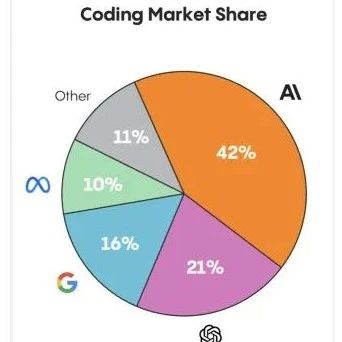
Core Insights - The foundational large models are not only the core engine of generative AI but are also shaping the future of computing [2] - There has been a significant increase in model API spending, which rose from $3.5 billion to $8.4 billion, indicating a shift in focus from model training to model inference [2] - The emergence of "code generation" as the first large-scale application of AI marks a pivotal development in the industry [2] Group 1: Market Dynamics - Anthropic has surpassed OpenAI in enterprise usage, with a market share of 32% compared to OpenAI's 25%, which has halved from two years ago [9][12] - The release of Claude Sonnet 3.5 in June 2024 initiated Anthropic's rise, further accelerated by subsequent releases [12] - The code generation application has become a killer app for AI, with Claude capturing 42% of the market, significantly outperforming OpenAI's 21% [13] Group 2: Trends in Model Adoption - The adoption of open-source models in enterprises has slightly declined from 19% to 13%, with Meta's Llama series still leading [17] - Despite the continuous progress in open-source models, they lag behind closed-source models by 9 to 12 months in performance [17][20] - Developers prioritize performance over cost when selecting models, with 66% opting to upgrade within their existing supplier ecosystem [24][27] Group 3: Shift in AI Spending - AI spending is transitioning from model training to inference, with 74% of model developers indicating that most of their tasks are now driven by inference, up from 48% a year ago [31]

别听模型厂商的,Prompt 不是功能,是 bug
Founder Park· 2025-08-04 13:38
Core Insights - Sarah Guo, founder of Conviction, emphasizes the rapid adoption of AI across various industries, particularly in traditional sectors [2][4] - The article discusses the importance of user experience in AI products, suggesting that prompts are a flaw rather than a feature [5][28] - AI coding is identified as the first breakthrough application of AI, with significant growth potential in the sector [6][23] Investment Opportunities - Conviction has invested in several AI companies, including Cursor, Cognition, and Mistral, covering various aspects of AI infrastructure and applications [2][10] - The article highlights the impressive revenue growth of AI companies, with some achieving annual revenues of $10 million to $100 million in a short time [11][21] - The potential for creating value in traditional industries through AI is noted, with many sectors rapidly embracing AI technologies [31][32] AI Capabilities and Trends - The enhancement of reasoning capabilities in AI models is seen as a significant advancement, unlocking new application scenarios [13][18] - The rise of AI agents, which can autonomously complete tasks, is highlighted as a growing trend in the AI landscape [14][20] - The article discusses the competitive landscape of AI models, with various players emerging and the importance of multi-modal capabilities [20][18] Product Development Insights - Cursor's success is attributed to its orchestration of multiple models to enhance user experience and efficiency [25][21] - The article argues that the best AI products should feel intuitive and require minimal user input, moving beyond traditional text boxes [28][30] - Emphasis is placed on the need for a deep understanding of user workflows and industry-specific knowledge to create effective AI solutions [30][31] Execution and Competitive Advantage - Execution is identified as a key competitive advantage in the AI space, with companies needing to deliver superior experiences to win over users [35][36] - The article suggests that the current AI landscape offers significant opportunities for innovation and user experience enhancement [36][37] - The importance of leveraging private data and deep workflows to maintain a competitive edge is emphasized [36][35]


2025上半年AI核心成果及趋势报告 量子位智库 2025-7_01
Sou Hu Cai Jing· 2025-08-04 08:16
Application Trends - General-purpose agents are deeply integrating tools to complete diverse research tasks, with a focus on visual operations through Computer Use Agents (CUA) [1][6][11] - Vertical application scenarios are beginning to adopt agentification, with natural language control becoming part of vertical workflows [11][12] - AI programming is emerging as a critical competitive area, with both domestic and international players intensively laying out their strategies [2][13] Model Trends - The model inference capabilities are continuously improving, particularly in mathematical and coding domains, with large models transitioning towards agentic functionalities [1][18][19] - The Model Context Protocol (MCP) is accelerating the application of large models, enabling them to access extensive external information and control existing software applications [15][16] - The performance of models in reasoning tasks is significantly enhanced, with the ability to handle complex tasks through integrated tool usage [19][28] Technical Trends - Training resources are increasingly shifting towards post-training and reinforcement learning, while pre-training still has ample room for optimization [29][30] - The Transformer architecture is rapidly iterating, with optimizations focusing on attention mechanisms and neural network layers [35][36] - Multi-agent systems are emerging as a new paradigm, enhancing efficiency and robustness in dynamic environments [31][32] Industry Trends - xAI's Grok 4 has entered the global large model first tier, altering the competitive landscape of model layers [2] - Computational power is becoming a key competitive factor, with leading players continuously expanding their computing clusters [2][12] - The gap between Chinese and American general-purpose large models is narrowing, with China excelling in multi-modal fields [2][12]

智能体大战分水岭时刻:四种技术路径全解析
3 6 Ke· 2025-08-04 07:16
Core Insights - OpenAI has officially launched its ChatGPT Agent, marking a significant moment in the evolution of general-purpose AI agents, integrating deep research and execution tools, but facing challenges such as slow speed and lack of personalization [1] - The market is reassessing the technological pathways for general AI agents following this release, highlighting the differences in architecture among various agents [1][2] Group 1: Agent Architecture Comparison - The ChatGPT Agent's architecture is fundamentally a combination of a browser and a sandbox virtual machine, contrasting sharply with other agents like Manus and Genspark [1] - Current general agents include Perplexity, OpenAI, and others, with OpenAI leading in browser-based capabilities, achieving over 50% in benchmark scores on the latest Browsing Camp tests [6][8] - The four main types of agent architectures are: browser-based agents, browser plus sandbox agents, sandbox-only agents, and workflow-integrated agents [11][12] Group 2: User Experience and Performance - User experience varies significantly among agents like Pokee, Genspark, Manus, and OpenAI's ChatGPT Agent, with Pokee being the fastest, operating at 4-10 times the speed of competitors [24] - ChatGPT excels in deep research capabilities, producing comprehensive reports, while Manus and Genspark focus on specific templates and tasks, impacting their speed and versatility [19][23] - Manus and ChatGPT share a common limitation in speed due to their reliance on browser navigation, which can take over 30 minutes for a task [18][19] Group 3: Market Dynamics and Future Trends - The rise of agents is expected to reshape internet access, potentially reducing traffic to traditional web portals as users increasingly rely on agents for tasks [40] - The advertising landscape may evolve, with agents potentially paying creators for content access rather than relying on traditional ad revenue models [44][45] - The distinction between B2B and B2C models is blurring, with a focus on professional users for certain agents, while consumer-oriented agents may struggle due to the lack of repetitive tasks [31][36]

AI产业速递:亚马逊FY25Q2经营稳健增长,继续加强AI基建
Changjiang Securities· 2025-08-04 02:15
Investment Rating - The investment rating for the industry is "Positive" and is maintained [8] Core Insights - Amazon's FY25Q2 financial results exceeded market expectations, with revenue of $167.702 billion, a year-over-year increase of 13% and a quarter-over-quarter increase of 8% [2][5] - The net profit for FY25Q2 was $18.164 billion, reflecting a year-over-year increase of 35% and a quarter-over-quarter increase of 6% [2][5] - Capital expenditures (Capex) for Q2 were $32.2 billion, surpassing Bloomberg's expectation of $26 billion [2][5] - The report emphasizes the strengthening investment logic in AI infrastructure and suggests focusing on opportunities in AI commercialization [2][5] Summary by Sections Financial Performance - Amazon's revenue breakdown shows North America at $100.1 billion (YoY +11%) and international at $36.8 billion (YoY +16%) [10] - Online store revenue was $61.485 billion (YoY +11%), third-party seller services at $40.348 billion (YoY +11%), and advertising services at $15.694 billion (YoY +23%) [10] - AWS cloud business generated $30.873 billion (YoY +17%), with an operating profit margin of 32.9% [10] Capital Expenditure & Future Guidance - The company plans to continue increasing investments in AI infrastructure, with Q2 Capex expected to represent the quarterly level for the second half of 2025 [10] - Future revenue guidance for FY25Q3 is projected between $174 billion and $179.5 billion, with a midpoint of $176.75 billion, exceeding Bloomberg's expectation [10] Business Developments & Outlook - The demand for AI remains strong, with no immediate signs of reduced demand due to tariffs [10] - Amazon's shopping agent, Alexa Plus, has millions of users, and new AI models like Deepfleet are being developed to enhance operational efficiency [10] - The report suggests focusing on AI infrastructure, overseas applications, and vertical integration in specific sectors like education, tax, and healthcare [10]

2025上半年AI核心成果及趋势报告
Sou Hu Cai Jing· 2025-08-03 00:04
Application Trends - General-purpose Agent products are deeply integrating tool usage, focusing on completing diverse deep research tasks, with richer content delivery becoming a highlight in the first half of 2025 [1][7] - Computer Use Agent (CUA), centered on visual operations, is being pushed to market and is merging with text-based deep research Agents [1][16] - Vertical application scenarios are beginning to adopt Agent capabilities, with natural language control becoming part of specialized workflows [1][16] - AI programming is currently the core vertical application area, with leading programming applications experiencing record revenue growth [1][19] Model Trends - Model reasoning capabilities are continuously improving through the accumulation of more computing power, particularly in mathematical and coding problems [2][22] - Large models are transitioning to Agentic capabilities, integrating end-to-end training for tool usage, enabling them to complete more complex tasks [2][23] - Large models are beginning to fuse visual and textual inputs, moving towards multimodal reasoning [2][26] - The image generation capabilities of large models have been significantly enhanced, with upgrades in language understanding and aesthetic improvements being the main highlights [2][28] Technical Trends - Resource investment during the training phase is shifting towards post-training and reinforcement learning, with pre-training still having ample optimization space [2][7] - The importance of reinforcement learning continues to rise, with future computing power consumption expected to exceed that of pre-training [2][7] - Multi-Agent systems may become the next frontier paradigm, with learning from interactive experiences expected to be the next generation of model learning methods [2][7] Industry Trends - xAI's Grok 4 has entered the top tier of global large models, demonstrating that large models lack a competitive moat [2][7] - Computing power is a key factor in the AI competition, with leading players operating computing clusters of tens of thousands of cores [2][7] - The competitive gap in general-purpose large model technology between China and the US is narrowing, with Chinese models performing well in multimodal areas [2][7] - AI programming has become a battleground, with leading players both domestically and internationally intensively laying out their strategies [2][7]

大模型降温?AI小虎讲新故事:抢做能用好用的Agent
Nan Fang Du Shi Bao· 2025-08-01 14:28
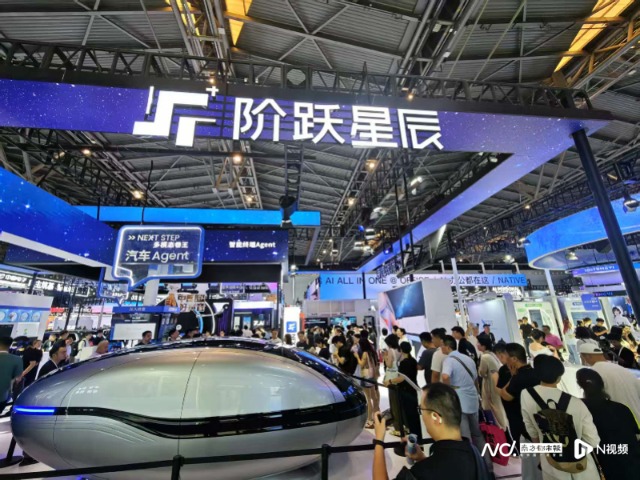
Core Insights - Manus has launched a new feature called Wide Research, currently available only to Pro users, with plans to expand access to Basic and Plus users in the future [1] - The AI industry is witnessing a shift from large models to Agent technology, with several companies showcasing new Agent applications at the World Artificial Intelligence Conference (WAIC) [2][3] Group 1: Manus and Agent Development - Manus has faced challenges including layoffs and halted collaborations, yet continues to innovate with new features [1] - The introduction of Agent technology is seen as a new paradigm, with companies like Jieyue Xingchen and MinMax presenting their advancements in this area [3][5] Group 2: WAIC Highlights - WAIC attracted over 800 companies, showcasing more than 40 large models, although the number of core manufacturers has decreased [2] - Jieyue Xingchen launched its new foundational model Step 3 and demonstrated an AI smart cockpit in collaboration with Geely, marking a significant achievement in voice model production [3] Group 3: Agent Applications and Trends - Companies are focusing on creating scenario-specific and vertical Agent products, with Tencent showcasing 12 vertical Agent applications targeting various service sectors [8] - The importance of private deployment for Agent technology is emphasized, as companies seek to meet the unique needs of their clients [10][11]
透过史上最火WAIC,看Agent六大趋势
3 6 Ke· 2025-08-01 09:55
Core Insights - The concept of "Agent" has transitioned from being a topic of debate to a critical focus in the AI industry, as evidenced by its prominence at WAIC 2025, where over 800 companies showcased more than 3000 exhibits, doubling previous years' participation [1][2] Trend Summaries Trend 1: Agents as a Necessity - The term "Agent" has become ubiquitous across various exhibitors, indicating a widespread recognition of its importance in AI applications [2] - Siemens showcased its Industrial Copilot system, which integrates AI to enhance industrial processes, demonstrating the practical application of Agents in real-time operations [4] Trend 2: Evolution of AI Capabilities - AI is evolving from a mere chat tool to a more creative and productive tool, with companies like MiniMax highlighting the shift towards Agents that can perform complex tasks autonomously [5] - The AutoGLM model from Zhiyu AI exemplifies this trend by autonomously executing various tasks, indicating a move towards more interactive and capable AI systems [5] Trend 3: Multi-Agent Collaboration - The shift from single-agent systems to multi-agent collaboration is seen as a key to tackling complex tasks, with companies demonstrating how multiple Agents can work together to enhance efficiency [7] - The transition from "tool thinking" to "collaborative partner thinking" reflects a deeper integration of AI capabilities into business processes [7] Trend 4: Results Over Services - The focus has shifted from showcasing features to delivering tangible results, with companies prioritizing practical solutions that meet user needs [9][11] - MiniMax's Agent demonstrates the ability to execute tasks efficiently, highlighting the importance of outcome-oriented AI solutions [9] Trend 5: Rise of Consumer Products - The explosion of consumer-oriented AI products at WAIC 2025 signifies a new phase in AI development, where Agents are recognized as essential software products in the digital landscape [14] - WPS Lingxi, a standout product, showcases the ability to facilitate document creation through natural language processing, emphasizing user-friendly AI applications [14] Trend 6: Infrastructure Development for Agents - The foundational infrastructure for Agents is being strengthened, with companies like Alibaba Cloud introducing solutions like "Wuying AgentBay" to streamline AI development [16] - PPIO's launch of an Agentic AI infrastructure service platform aims to lower technical barriers for developers, facilitating broader adoption of AI technologies [17]

如何在企业中大规模应用Agent?|2025 ITValue Summit 前瞻对话「AI落地指南特别篇」②
Tai Mei Ti A P P· 2025-08-01 06:52
Core Viewpoint - The article discusses the transformative impact of AI Agents in marketing and business operations, highlighting the advancements made by 易点天下 (Easy Point World) in deploying AI-driven marketing solutions like AdsGo.ai, which significantly enhance efficiency and effectiveness in advertising campaigns [1][2]. Group 1: AI Agent Development and Implementation - 易点天下 has launched its AI Drive 2.0 digital marketing solution and the AdsGo.ai platform, which automates marketing tasks and allows businesses to focus on core operations [1][2]. - AdsGo.ai has demonstrated impressive results during its testing phase, achieving a 5x improvement in advertising strategy diversity, a 10x increase in creative material testing efficiency, and a 65% reduction in marketing labor costs [2]. - The application of AI Agents has penetrated various business functions, including product research, creative generation, operations, and information management, covering nearly all key roles within organizations [3][9]. Group 2: Types and Capabilities of AI Agents - AI Agents are categorized into general Agents and specialized Agents, with general Agents functioning as automation tools for specific tasks, while specialized Agents possess advanced capabilities such as intent understanding and task decomposition [4][19]. - The ultimate goal for AI Agents is to operate in a "goal-centered" manner, allowing for automated task breakdown and coordination without extensive manual intervention [5][19]. - A well-functioning AI Agent should have capabilities in intent understanding, task decomposition, autonomous operation, long-context memory, and multi-Agent state awareness [19][38]. Group 3: Steps for Building AI Agents - Companies should follow a four-step approach to successfully implement AI Agents: unify internal understanding of AI, invest adequately in AI tools, streamline business SOPs, and establish dedicated teams for Agent development [6][31]. - Training and aligning employee perceptions of AI is crucial for effective implementation, as is the need for organizations to embrace change and iterate quickly on their AI strategies [6][31]. - The construction of a knowledge base is essential, with structured documentation and FAQs serving as a foundation for effective AI utilization [32][44]. Group 4: Future Implications and Challenges - The integration of AI Agents is expected to shift organizational dynamics towards human-machine collaboration, enhancing efficiency in tasks such as document summarization and project management [30][44]. - Companies face challenges in managing multiple Agents, requiring a cohesive platform to integrate various AI tools and maintain operational efficiency [23][40]. - The future of AI in business will heavily rely on the ability to leverage private knowledge bases and non-structured data, which will become critical assets for competitive advantage [43][44].

从“老场景”的“新解法”下手,突破Agent落地难题| 2025 ITValue Summit前瞻WAIC现场版:AI落地指南系列
Tai Mei Ti A P P· 2025-08-01 06:39
Core Insights - The industrialization of artificial intelligence (AI) has surpassed conceptual exploration, fundamentally restructuring various industries through the paradigm of "old scenarios, new solutions" [1] - The focus in the human resources sector is on practical strategies that return to core business processes while seeking disruptive solutions through small-scale validations before scaling [1][4] - The application of generative AI in business is evolving through three distinct stages: knowledge acquisition, multimodal integration, and the agent phase, which emphasizes autonomous execution [2][3] Group 1: AI Application Stages - The first stage involves the ChatGPT phase, which reshapes knowledge acquisition methods, significantly enhancing the efficiency of knowledge-intensive recruitment processes [2][8] - The second stage is the multimodal phase, focusing on the integration of voice and text modalities to optimize communication in recruitment [2][10] - The third stage is the agent phase, where the capabilities of agents in reasoning, long-term planning, and tool utilization are enhanced, transforming short process businesses from assisted decision-making to autonomous execution [2][10] Group 2: Demand Management and Product Design - The introduction of agents fundamentally alters the definition of technical demands and product design logic, emphasizing the need for understanding the essence of demands and their applicability [3][15] - The "problem-solution chain" method proposed by the company clarifies the involved parties, specific issues, and corresponding solutions, ensuring that new solutions can deliver significant improvements [3][15] - In the agent era, product design shifts focus from rigid process nodes to observing the perception and decision-making processes of excellent consultants, necessitating greater involvement from consultants in product development [3][16] Group 3: Future Goals and Innovations - The company aims to enhance its MatchSystem to transition from semantic-level matching to application-level matching by 2025, integrating it with recruitment scenarios to develop a SearchAgent [4][30] - The company is currently testing a more powerful agent product, with applications in automation and self-service label definitions, alongside the development of contextualized applications [4][30] - Innovations in reasoning technology and the CRE-T1 model are being developed to improve the agent's reasoning capabilities, allowing for more effective problem-solving and generalization [13][23] Group 4: AI's Impact on Management and Collaboration - The current wave of AI is reshaping the division of labor and collaboration across all functions, emphasizing the need for interdisciplinary integration among product, data, and engineering teams [18][19] - The management revolution driven by AI is expected to increase standardization and automation in service industries, potentially leading to the reduction or elimination of middle management roles [21][36] - The acceptance and willingness to pay for AI technologies among clients have significantly increased, with many clients seeking to understand AI implementation in recruitment [26][27]
