
区域协调发展

Search documents
千年商都,怎么进化为科创高地?
Ren Min Ri Bao· 2025-12-10 04:13
Group 1 - Guangzhou's total import and export volume exceeded 1 trillion yuan in the first ten months of this year, setting a historical record for the same period [2] - Guangzhou ranked sixth in the global top ten research cities, surpassing the San Francisco Bay Area [2] - The transformation of Guangzhou from a "thousand-year commercial capital" to a "highland of scientific innovation" reflects China's high-quality development [2] Group 2 - The emphasis on technological innovation as a core element of new productive forces is crucial for high-quality development [3] - The collaboration between academia and industry in projects like the deep-sea combustible ice initiative showcases the synergy of innovation [3] - Guangzhou's innovation ecosystem is supported by a significant concentration of research institutions and high-tech enterprises [3] Group 3 - The rapid growth of new business registrations in emerging sectors such as low-altitude economy and aerospace indicates a fertile ground for innovation [5] - The integration of technological and industrial innovation is accelerating the development of new productive forces across the country [5] Group 4 - High-level openness is essential for forming a new development pattern, with an emphasis on international cooperation and resource utilization [6] - Guangzhou's Nansha district has established a comprehensive service platform to enhance trade facilitation and innovation [7] Group 5 - Guangzhou's exports to the EU and ASEAN increased by 23.9% and 31.1% respectively in the first ten months, demonstrating effective market diversification [8] - The national unified market is breaking down barriers, allowing cities to enhance their advantages through expanded openness [8] Group 6 - The economic spatial structure in China is changing, with major cities and urban clusters becoming key areas for development [9] - The focus on creating new growth poles is part of a broader strategy to drive high-quality development across the nation [9] Group 7 - The collaboration among Shenzhen, Hong Kong, and Guangzhou has led to a significant rise in innovation indices, highlighting the importance of regional integration [12] - The coordinated development across different regions is essential for achieving high-quality growth in China [12]


准十万亿大省山东,“点名”三城冲万亿
Sou Hu Cai Jing· 2025-12-10 01:12
Core Insights - Shandong Province's "15th Five-Year Plan" emphasizes the completion of the "14th Five-Year Plan" goals and aims for significant economic and technological advancements, with a focus on enhancing regional development and competitiveness [2] Economic Development - Shandong's GDP is projected to surpass 10 trillion yuan, marking a substantial increase in economic strength [2] - The province aims to enhance the development capabilities of core cities, with a focus on Jinan, Qingdao, and the emerging cities of Weifang, Linyi, and Jining [2][6] City Development - Weifang is identified as a potential new trillion-yuan city, with a GDP target of over 1 trillion yuan, having achieved 82.03 billion yuan in 2024 and 61.90 billion yuan in the first three quarters of the year [3][6] - Linyi and Jining are also highlighted for their potential to reach trillion-yuan GDPs, with projected GDPs of 65.56 billion yuan and 58.67 billion yuan respectively in 2024 [6] Regional Coordination - The plan emphasizes the need for enhanced coordination between urban areas, particularly through the development of the Jinan and Qingdao metropolitan areas, with Weifang serving as a key hub [3][6] - The Lunan Economic Circle, which includes Linyi and Jining, is expected to achieve significant integration and development by 2035, addressing historical economic disparities [6] Sectoral Focus - Linyi's development strategy will focus on trade and logistics, with goals to exceed 1 trillion yuan in market transaction volume and 1.5 trillion yuan in logistics volume by 2030 [6] - Jining aims to leverage its position as a key inland shipping hub, with a projected cargo throughput of 96.66 million tons in 2024, representing 77.1% of Shandong's inland shipping [7]
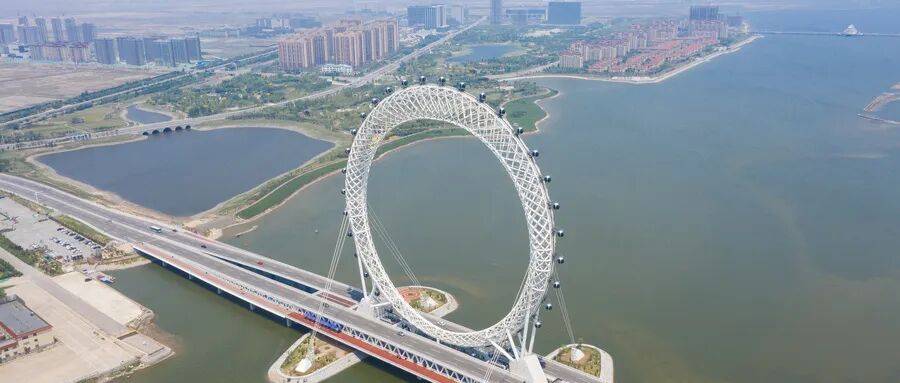
大国五年丨山海协同陆海联动,绘就万里山河新画卷
Xin Hua She· 2025-12-10 00:46
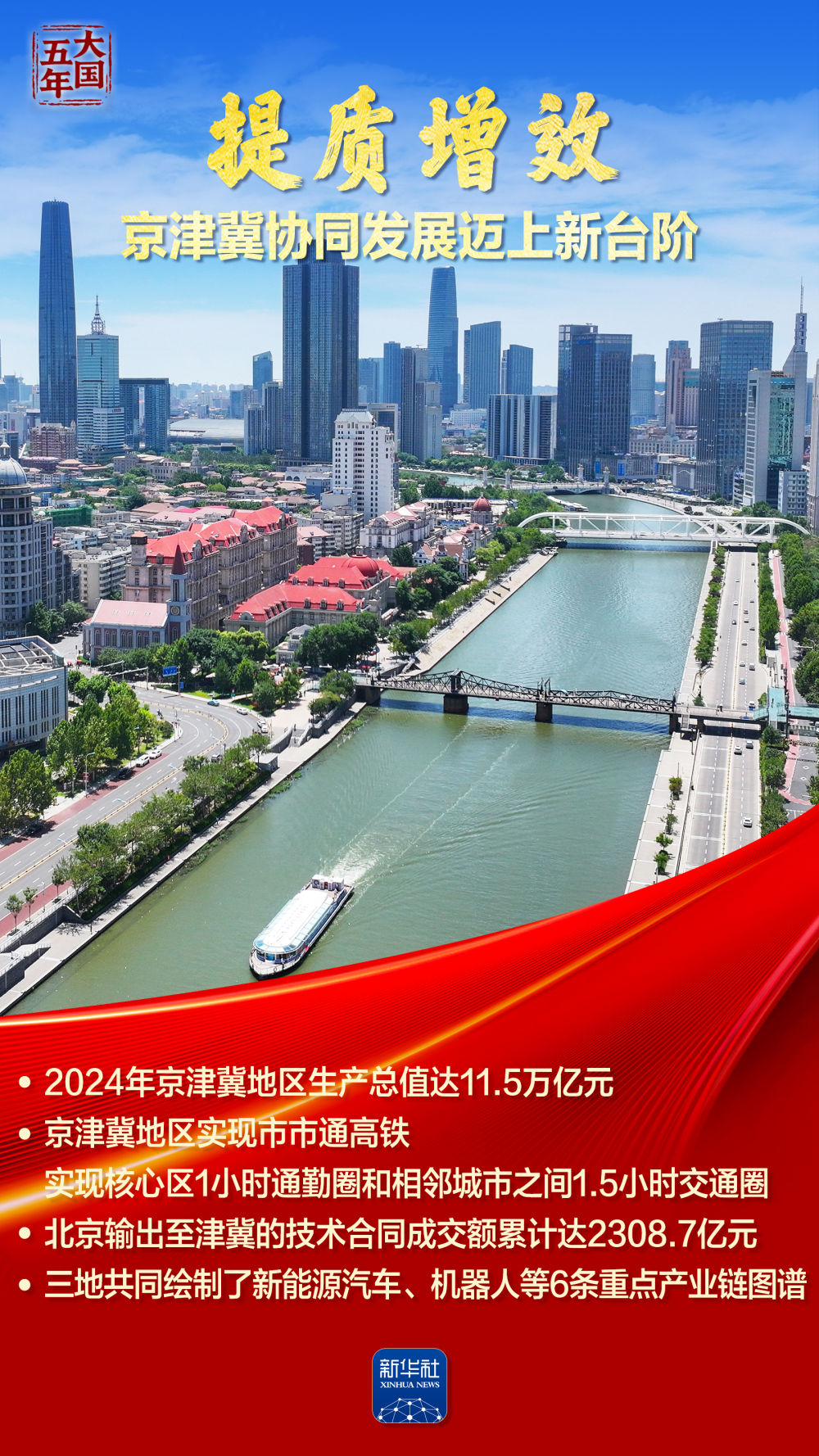
Group 1: Economic Development and Regional Coordination - The economic output of the Beijing-Tianjin-Hebei, Yangtze River Delta, and Guangdong-Hong Kong-Macao Greater Bay Area is expected to exceed 40% of the national total by 2024 [1] - The Northeast region's grain production accounted for 25.3% of the national total last year, indicating a strong strategic support for the region [12] - The "West-East Power Transmission" capacity has surpassed 300 million kilowatts, while the computing power of the "East Data West Calculation" eight major hub nodes accounts for approximately 70% of the national total [16] Group 2: Industry and Innovation - The Yangtze River Delta has a research and development expenditure accounting for 3.34% of its GDP, exceeding the national average by nearly 0.7 percentage points [7] - The economic total of the Guangdong-Hong Kong-Macao Greater Bay Area has surpassed 14 trillion yuan, with the "Shenzhen-Hong Kong-Macao" innovation cluster ranking first globally [8] - The Northeast region is focusing on developing modern agriculture and constructing a modern industrial system with distinctive advantages [12] Group 3: Infrastructure and Connectivity - The Beijing-Tianjin-Hebei region has achieved high-speed rail connectivity between all cities, creating a one-hour commuting circle in the core area and a 1.5-hour transportation circle between neighboring cities [4] - The high-speed rail mileage in the Greater Bay Area exceeds 3,000 kilometers, making the one-hour living circle a reality [10] - Over 60% of the national expressway main lines and high-speed rail main corridors pass through the central region, accelerating the construction of major transportation hubs [14]
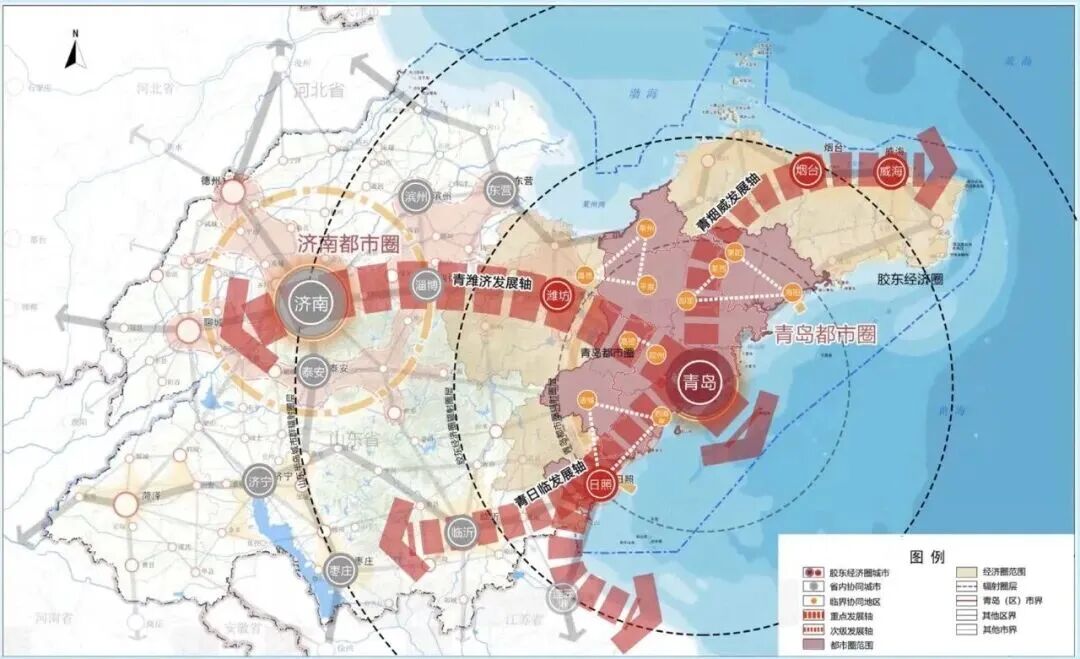
准十万亿大省,“点名”三城冲万亿
3 6 Ke· 2025-12-09 22:15
Core Viewpoint - Shandong Province is set to enhance its economic strength and competitiveness, aiming for significant advancements in key areas as part of its 14th Five-Year Plan, with a focus on developing multiple trillion-yuan cities and regional coordination [1][2]. Economic Development Goals - The province's GDP is projected to exceed 10 trillion yuan, with a continuous increase across three trillion-yuan milestones [1]. - Shandong aims to strengthen its core cities, including Jinan, Qingdao, and Yantai, while also promoting the emergence of new trillion-yuan cities like Weifang, Linyi, and Jining [1][4]. Trillion-Yuan City Development - Weifang is identified as a key candidate for becoming the next trillion-yuan city, with a GDP of 82.03 billion yuan in 2024 and 61.90 billion yuan in the first three quarters of the current year [2]. - Linyi and Jining are also targeted for significant economic growth, with projected GDPs of 65.56 billion yuan and 58.67 billion yuan respectively in 2024 [4]. Regional Coordination and Urban Development - The development of Weifang is crucial for enhancing regional coordination within Shandong, particularly in linking the Jinan and Qingdao metropolitan areas [2]. - The Shandong provincial plan emphasizes the need for a collaborative development mechanism to share resources and complement industrial systems across urban areas [2]. Logistics and Trade Focus - Linyi is set to leverage its commercial logistics sector, with goals to achieve a market transaction volume exceeding 1 trillion yuan and a logistics total surpassing 1.5 trillion yuan by 2030 [4]. - Jining is positioned as a key hub for inland shipping, with a projected cargo throughput of 96.66 million tons in 2024, accounting for 77.1% of Shandong's inland shipping [5].
重庆将重塑空间格局,打造两大城市副中心
Di Yi Cai Jing· 2025-12-09 00:42
Core Viewpoint - The article discusses the challenges and strategies for optimizing the spatial layout and productivity distribution in Chongqing, highlighting the need for a coordinated development approach to address the "one city dominates" issue prevalent in the region [1][2]. Group 1: Spatial and Economic Structure - Chongqing's main urban area is projected to account for 78.2% of the city's GDP and 68.4% of its population by 2024, with the central urban area alone contributing 41.7% to GDP and 33.2% to the population [2]. - The "Fifteen Five" planning proposal aims to create a complementary urban system that integrates the central urban area, urban sub-centers, district cities, and central towns to promote coordinated development [2][3]. Group 2: Development Strategies - The proposal emphasizes enhancing the central urban area's attractiveness and influence, similar to the "strong provincial capital" strategy adopted by other provinces [3]. - Specific initiatives include strengthening the core functions of the Liangjiang New Area, developing Wanzhou and Yongchuan as important urban sub-centers, and establishing Qianjiang as a regional center city to drive high-quality development in surrounding areas [3][4]. Group 3: Regional Integration - The construction of urban sub-centers is seen as a strategy to stimulate development in surrounding regions, with a focus on granting these areas specific functions and powers to enhance their growth potential [5]. - The establishment of provincial sub-centers has become a new strategic direction for western provinces, with 20 such centers already formed, aimed at decentralizing administrative powers and facilitating regional development [4].
以人才布局优化促进区域协调发展(专题深思)
Ren Min Ri Bao· 2025-12-08 22:10
Core Viewpoint - The article emphasizes the importance of talent in promoting regional coordinated development in China, highlighting that talent is a crucial resource for economic growth and innovation [1][2][3]. Group 1: Importance of Talent in Regional Development - Talent is the most valuable resource for a country and region, directly influencing economic growth quality and speed [2]. - The flow of talent can promote the dissemination of new ideas, technologies, and knowledge, facilitating industrial upgrades and high-quality development in less developed areas [2]. - Optimizing talent distribution can break resource flow restrictions between regions and deepen industrial collaboration, helping to reduce regional development disparities [2][3]. Group 2: Strategies for Talent Flow and Coordination - The Chinese government has implemented strategies to encourage talent flow to underdeveloped areas, breaking down barriers to talent mobility [3][4]. - A large, high-quality talent pool has been formed, playing a key role in national strategies such as innovation-driven development and poverty alleviation [3]. - There is a need to address regional disparities in talent distribution, as talent is concentrated in developed regions, which hinders coordinated development [3][4]. Group 3: Mechanisms for Talent Mobility - Establishing a scientific and reasonable talent mobility system is essential for promoting optimal talent distribution [4]. - The article suggests that a unified national market should be built to eliminate barriers to talent mobility, ensuring that talent flows according to regional development needs [4]. - Regions with strong economic foundations and abundant educational resources tend to attract more talent, necessitating policies to balance talent distribution across different areas [4]. Group 4: Integration of Talent and Industry - The integration of talent and industry is crucial for regional coordinated development, as industries attract talent and vice versa [5]. - Local resources, industrial foundations, and research conditions should guide the development of specialized industries to attract high-level talent [5]. - Encouraging underdeveloped regions to leverage new technological opportunities can enhance their capacity to attract talent and drive high-quality development [5]. Group 5: Alignment of Talent Policies with Development Strategies - There is a need to align talent policies with regional coordinated development strategies to create a positive feedback loop between talent and regional growth [6]. - The article calls for enhancing the attractiveness of central and western regions to talent and promoting collaboration among different regions [6]. - Establishing efficient cooperation relationships between regions can facilitate flexible talent mobility and optimize talent resource allocation [6].
山东“十五五”规划建议发布:鼓励经济大市挑大梁,大力实施“强省会”战略
Feng Huang Wang Cai Jing· 2025-12-08 07:58
Group 1 - The core viewpoint emphasizes enhancing regional development coordination within Shandong Province, accelerating urban integration and metropolitan area collaboration, and promoting economic cooperation among major cities [1] - The proposal includes strengthening the development capabilities of Jinan and Qingdao metropolitan areas, implementing significant urban integration projects, and enhancing functions such as industrial clustering and innovation [1] - It aims to establish a "dual-circle" collaborative development mechanism to facilitate resource sharing, industry complementarity, and the integration of public services like education and healthcare [1] Group 2 - The strategy focuses on enhancing the leadership of core cities, implementing the "Strong Provincial Capital" strategy, and supporting Jinan's development as a key city in the Yellow River Basin [2] - It includes promoting the accelerated economic growth of Qingdao to reach a total economic output of 2 trillion and building it into a modern international metropolis [2] - The plan supports cities like Yantai in strengthening collaboration with surrounding cities and aims to develop a green, low-carbon, high-quality demonstration city [2]
中共山东省委关于制定山东省国民经济和社会发展第十五个五年规划的建议
Bei Jing Ri Bao Ke Hu Duan· 2025-12-08 00:15
Core Viewpoint - The "15th Five-Year Plan" period is crucial for Shandong Province to establish itself as a modern socialist strong province, building on the achievements of the "14th Five-Year Plan" and addressing new challenges in the evolving international and domestic landscape [2][4][5]. Group 1: Achievements and Progress - During the "14th Five-Year Plan" period, Shandong achieved significant economic growth, with GDP surpassing 10 trillion yuan, and major economic indicators outpacing national averages [2][3]. - The province has made strides in modernizing its industrial system, enhancing technological innovation, and maintaining its position as a leader in agriculture and manufacturing [2][3][4]. - Social welfare has improved, with a focus on public service enhancements and a steady increase in residents' disposable income [2][3][4]. Group 2: Historical Context and Future Direction - The "15th Five-Year Plan" is positioned as a decisive phase for Shandong to solidify its role in national modernization and economic growth, aiming for a strong economy and improved living standards by 2035 [4][5]. - The plan emphasizes the importance of deepening reforms, implementing the Yellow River strategy, and fostering a high-level open economy [4][5][6]. Group 3: Challenges and Opportunities - Shandong faces a complex international environment with rising geopolitical tensions and economic uncertainties, but it also possesses strong foundational advantages such as a large market and robust industrial capabilities [5][6]. - The province aims to leverage its strengths in innovation and infrastructure to navigate these challenges and enhance its economic resilience [5][6][7]. Group 4: Economic and Social Development Goals - The guiding principles for the "15th Five-Year Plan" include prioritizing high-quality development, deepening reforms, and ensuring effective governance while focusing on the needs of the people [7][8]. - Key objectives include enhancing economic strength, technological capabilities, and social welfare, with a commitment to sustainable development and ecological protection [8][9][10]. Group 5: Industrial and Technological Advancements - Shandong plans to focus on building a modern industrial system, emphasizing smart, green, and integrated development across various sectors [12][13]. - The province aims to foster emerging industries and enhance the resilience of its supply chains, ensuring a robust foundation for future growth [14][15][16]. Group 6: Infrastructure and Investment - Investment in infrastructure is a priority, with plans to enhance transportation networks and digital infrastructure to support economic activities [22][23][24]. - The province seeks to attract both domestic and foreign investments, promoting a favorable business environment and facilitating cross-border trade [32][33].
山东政商要情(12.1—12.7)
Jing Ji Guan Cha Bao· 2025-12-07 04:29
Group 1: Economic Development Plans - Shandong Province has released a roadmap for its 15th Five-Year Plan, focusing on a development pattern that includes "two circles linkage, three cores leading, land-sea coordination, and comprehensive efforts" [1] - Key initiatives include the enhancement of urban development capabilities, aiming for Qingdao's economic output to exceed 2 trillion yuan and adding one more city with over 1 trillion yuan in GDP by the end of the 15th Five-Year Plan [1] - The plan also targets the increase of counties with over 100 billion yuan in economic output from 28 to over 40 by the end of the 15th Five-Year Plan [1] Group 2: Land Utilization Policies - Shandong Province has introduced 18 policy measures aimed at promoting efficient land use to support green, low-carbon, and high-quality development [3] - The goal is to reduce the total area of newly constructed land by over 10% during the 15th Five-Year Plan and decrease the land use per unit of GDP by over 15% [3] - The province aims to create a new pattern of land-saving and efficient utilization by 2030, optimizing layout and improving efficiency [3] Group 3: Economic Growth in Qingdao - Qingdao's GDP is projected to exceed 1.7 trillion yuan in 2025, with an average annual growth rate of 5.9% [4] - Per capita GDP in Qingdao is expected to rise from 127,000 yuan in 2020 to 161,000 yuan by 2024, marking a cumulative growth of 21.3% [4] - The city has seen significant growth in retail sales and import-export volumes, with retail sales expected to surpass 650 billion yuan and import-export volumes exceeding 900 billion yuan [4] Group 4: Sports Industry Development in Dezhou - Dezhou has introduced 14 measures to strengthen its sports industry, focusing on expanding sports enterprises and enhancing consumer demand [6] - Key initiatives include planning for a regional sports industry belt and supporting the development of sports-related businesses [6] - The city aims to cultivate the sports industry into a pillar industry, with projected sports consumption reaching 11.53 billion yuan and total sports industry scale reaching 45.8 billion yuan by 2024 [6] Group 5: Green Development Initiatives - The 2025 Shandong Province Green Low-Carbon High-Quality Development Conference highlighted the signing of 32 projects worth a total of 57 billion yuan [7] - The conference served as a platform for showcasing achievements in green development and facilitating industry collaboration [7] - The focus is on creating a strong momentum for green, low-carbon, and high-quality development through significant project implementations [7]
这样讲“十五五”规划建议,让青年“听得懂用得上”
Zhong Guo Qing Nian Bao· 2025-12-07 02:50
编者按 党的二十届四中全会审议通过了《中共中央关于制定国民经济和社会发展第十五个五年规划的建议》, 为未来5年中国发展擘画蓝图。这5年也是当代大学生走出校园、开启职业生涯的关键期,如何将国家战 略转化为青年学生"听得懂、用得上"的人生指南?本报特邀3位一线思政课教师,分享他们的课堂探 索。 主持人:中青报·中青网记者 许子威 比如,《建议》提出,"加快高水平科技自立自强,引领发展新质生产力",就与人工智能、集成电路、 生物医学等相关专业的学生息息相关。"高水平科技自立自强"背后是巨大的政策支持、资金投入和产业 协同,这意味着,无论是国家重点研发计划,还是产学研平台和初创公司,都能为青年提供广阔的实践 舞台,他们将更容易获得进入一流实验室、参与重大项目的机会。 事实上,各行各业都是如此。《建议》提到的建设现代化产业体系、扎实推进乡村全面振兴、建设美丽 中国等目标,都是学生们日常能接触、能参与的现实议题。比如,建设现代化产业体系既涉及高校科研 创新,也关系到毕业生的职业选择;扎实推进乡村全面振兴的实践,在学生日常生活、暑期社会实践中 都能找到鲜活样本。将这些内容融入课堂,能让思政课从"书本理论"转向"生活实践"。 ...