
两弹一星精神

Search documents
【中国青年报】今天,“两弹元勋”教给年轻人什么
Zhong Guo Qing Nian Bao· 2025-10-20 06:14
Group 1 - The event commemorating the "Two Bombs, One Satellite" spirit highlighted the historical significance of China's first atomic bomb and its connection to the early days of nuclear research in China [1][2] - The 221 Base in Qinghai Province is recognized as China's first nuclear weapon research base, where both the atomic and hydrogen bombs were developed [2] - The event featured testimonies from key figures involved in the nuclear program, emphasizing the hardships and dedication of the scientists during the early years of nuclear development [3][4] Group 2 - Significant funding of nearly 1.6 billion yuan has been allocated for the preservation and utilization of the 221 Base's historical sites, reflecting the importance of this heritage [3] - The personal sacrifices and dedication of scientists like Yu Min and Deng Jiaxian were highlighted, showcasing their commitment to the nation's nuclear ambitions despite challenging conditions [4][8] - The legacy of the "Two Bombs, One Satellite" spirit is seen as crucial for inspiring future generations in scientific endeavors and national defense [11][12] Group 3 - The event underscored the need for the younger generation to understand the principles behind scientific advancements, particularly in fields like artificial intelligence, to continue the legacy of innovation [11] - The importance of integrity and truthfulness in scientific work was emphasized, with anecdotes illustrating the moral courage of scientists during politically turbulent times [6][9] - The contributions of the 221 Base personnel are celebrated as foundational to China's national defense and technological independence, reinforcing the value of hard work and dedication [12]
酒泉卫星发射中心组建成立67周年:接过前辈战旗向更高远进发
Bei Jing Ri Bao Ke Hu Duan· 2025-10-20 05:30
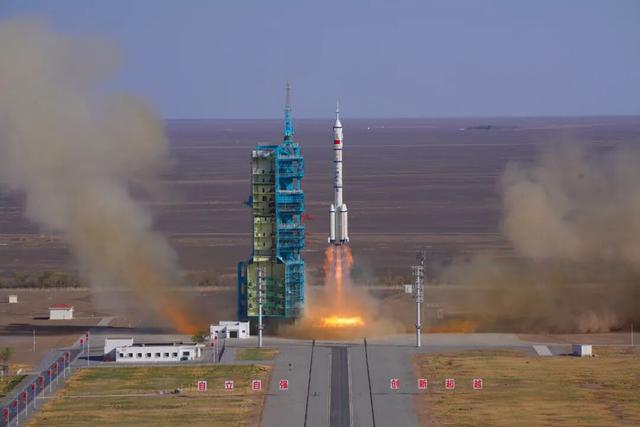
Core Viewpoint - The article emphasizes the importance of continuous efforts in building a strong aerospace nation, highlighting the legacy of past pioneers and the commitment of current aerospace professionals to advance China's space exploration and technology [1][19][30]. Group 1: Historical Achievements - The China Jiuquan Satellite Launch Center was established in 1958, overcoming harsh conditions to create the country's first launch site within two and a half years [3]. - The first domestically manufactured missile, Dongfeng-1, was launched in 1960, showcasing the dedication of technical staff who faced extreme challenges during the process [5]. - The successful launch of Dongfeng-2 missile with a nuclear warhead in 1966 involved significant risks, with personnel prepared to sacrifice their lives for the mission [5]. Group 2: Milestones in Space Exploration - The launch of Dongfanghong-1 satellite in 1970 marked a significant achievement, with the team completing a critical cleaning task under intense pressure [7]. - The Shenzhou-5 mission in 2003 successfully carried China's first astronaut, Yang Liwei, into space, fulfilling a long-held national dream [9]. - Over the years, 20 Shenzhou spacecraft have been launched, with 41 manned missions, reflecting the progress made in human spaceflight [10]. Group 3: Current Developments and Innovations - New launch facilities have been established to accommodate various rocket types, enhancing the capacity for simultaneous testing and launching [12]. - Upgrades in measurement and control equipment have significantly improved capabilities, ensuring complete autonomy and enhanced operational efficiency [14]. - The center has achieved a remarkable acceleration in launch frequency, completing 100 launches in less than five years, compared to nearly 50 years for the first 100 [16]. Group 4: Future Aspirations and Values - The article stresses the need for a strong commitment to quality and safety in aerospace missions, with a focus on maintaining a 100% success rate in manned spaceflight [26][27]. - Emphasis is placed on innovation and the integration of new technologies to meet the challenges of space exploration, with a call for a collaborative approach to achieve national goals [29][30]. - The importance of honoring the legacy of past aerospace pioneers while striving for new achievements is highlighted, with a focus on collective effort and national pride [19][20][30].

一堂思政课见证学生新成长(“十四五”的文化印记)
Ren Min Ri Bao· 2025-10-20 00:51
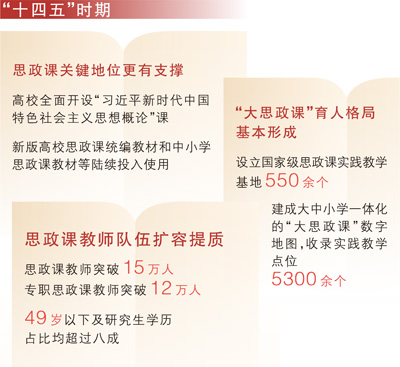
Core Insights - The article highlights the significant changes in the living conditions and educational opportunities for students in the Guoluo Tibetan Autonomous Prefecture, particularly through the experiences of a high school student, Nidonlamao [2][3]. Group 1: Educational Developments - Guoluo Xining Nationality Middle School was established in 2019, with over 97% of its students being Tibetan, and has seen the involvement of hundreds of teachers from Shanghai over the past six years [2]. - The school emphasizes the importance of integrating local cultural and environmental contexts into the curriculum, particularly in political education classes [3][4]. Group 2: Community and Cultural Impact - The article discusses the positive impact of policies such as East-West collaboration and targeted support, which have improved educational resources for local students [2]. - The school’s political education courses, such as "Forging a Sense of Community among Chinese Nationalities," are tailored to resonate with the students' backgrounds and experiences [3][4]. Group 3: Student Aspirations and Future Goals - Nidonlamao expresses a desire to return to her pastoral community as a language teacher, aiming to share the changes and opportunities of the new era with more children [4].
文艺志愿者在行动特别节目彰显“时代风尚”
Xin Hua She· 2025-10-16 00:54
Core Viewpoint - The "Era Style" special program, organized by the China Federation of Literary and Art Circles and the China Literary and Art Volunteer Association, showcases the achievements and positive trends of literary and art volunteers serving the grassroots and the people, starting from October 15 on various online platforms and some satellite TV channels [1] Group 1: Program Highlights - The program features performances such as song and dance, recitation, and situational performances, emphasizing themes of rooting, blooming, inheriting, and starting anew [1] - The situational poem and painting "I Saw You" promotes the "Two Bombs, One Satellite" spirit, conveying a message of positivity and perseverance [1] - The recitation "The Coordinates of Starting Again" expresses the determination of literary workers to engage in contemporary scenes and achieve literary peaks [1] Group 2: Cultural Impact - The song "The Motherland of the New Era" expresses patriotism and a spirit of struggle, while "Going to the People" reflects the voices of contemporary literary volunteers walking alongside the people [1] - Notable performers include Yang Hongji, Yin Xiumei, Lin Yongjian, and Wang Lei, who demonstrate a commitment to serving the people with high-quality contributions and moral leadership [1] - Literary volunteer services play a significant role in meeting the spiritual and cultural needs of the public, promoting rural cultural revitalization, and aiding in the construction of spiritual civilization [1] Group 3: Future Initiatives - The China Literary and Art Volunteer Association plans to unite and guide more literary workers to engage in volunteer services, deepen grassroots involvement, and further promote the creation of realistic themes that reflect social conditions and celebrate the spirit of the times [1]
感悟“只争朝夕、永不懈怠”的力量(金台潮声)
Ren Min Ri Bao· 2025-10-14 00:42
Group 1 - The video of the sons of notable scientists paying tribute during the opening of the Mianyang team's first home game highlights the spirit of dedication and legacy in scientific achievements [1] - The emphasis on the importance of continuous effort and the urgency to seize opportunities is reflected in the recent activities during the National Day and Mid-Autumn Festival, showcasing a proactive approach in various sectors [1] - The call for party members to act with a sense of urgency and responsibility is crucial for driving reforms and achieving high-quality development [1] Group 2 - The long-term commitment to initiatives such as reforestation in Hebei demonstrates the need for sustained efforts across generations to achieve significant environmental and social goals [2] - The upcoming 20th Central Committee meeting will focus on formulating the 14th Five-Year Plan, emphasizing the importance of strategic planning and execution in achieving long-term objectives [2] - Historical progress from lagging behind to leading the era is attributed to the collective efforts and unwavering spirit of the party and the people [2] Group 3 - The intersection of the conclusion of the 14th Five-Year Plan and the initiation of the 15th Five-Year Plan presents an opportunity for party members to ensure the implementation of strategic initiatives [3] - The commitment to continuous progress and the realization of strategic goals is essential for the prosperity of the nation's endeavors [3]
时空对话哈工大航天馆:从“两弹一星”功勋到“揽月九天”后浪
Yang Guang Wang· 2025-10-07 07:29
Core Viewpoint - The Harbin Institute of Technology's Aerospace Museum showcases the history and achievements of China's space exploration, emphasizing the spirit of dedication and innovation in the aerospace field [1][3][6]. Group 1: Museum Overview - The Aerospace Museum, established in 1986, is the largest and most comprehensive aerospace-themed museum among Chinese universities, integrating the grand narrative of human space exploration into its exhibits [3]. - The museum features a variety of exhibits, including the Long March 1 rocket, and highlights significant historical events such as the "Two Bombs, One Satellite" era and the advancements in lunar exploration technology [3][6]. Group 2: Educational Impact - The museum serves as a platform for educating visitors about the contributions of past aerospace pioneers, with volunteers like retired expert Feng Tao passionately sharing stories of dedication and sacrifice [5][6]. - Young students, such as Guo Zhenyu, who participated in the development of the "Wen Tian" experimental cabin's robotic arm, express pride in their contributions to national aerospace projects, showcasing the involvement of a younger generation in this field [7][8]. Group 3: Cultural Significance - The museum embodies the spirit of perseverance and meticulousness characteristic of the Harbin Institute of Technology, inspiring the younger generation to pursue their dreams in space exploration [10].
校馆弦歌丨时空对话哈工大航天馆:从“两弹一星”功勋到“揽月九天”后浪
Yang Guang Wang· 2025-10-07 06:47
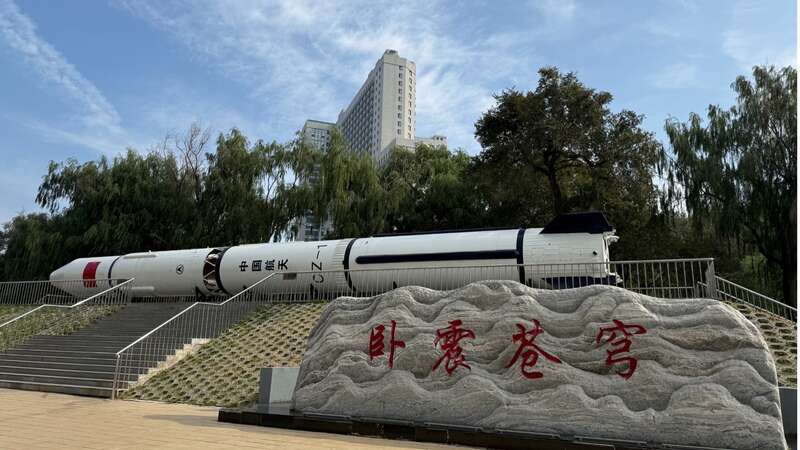
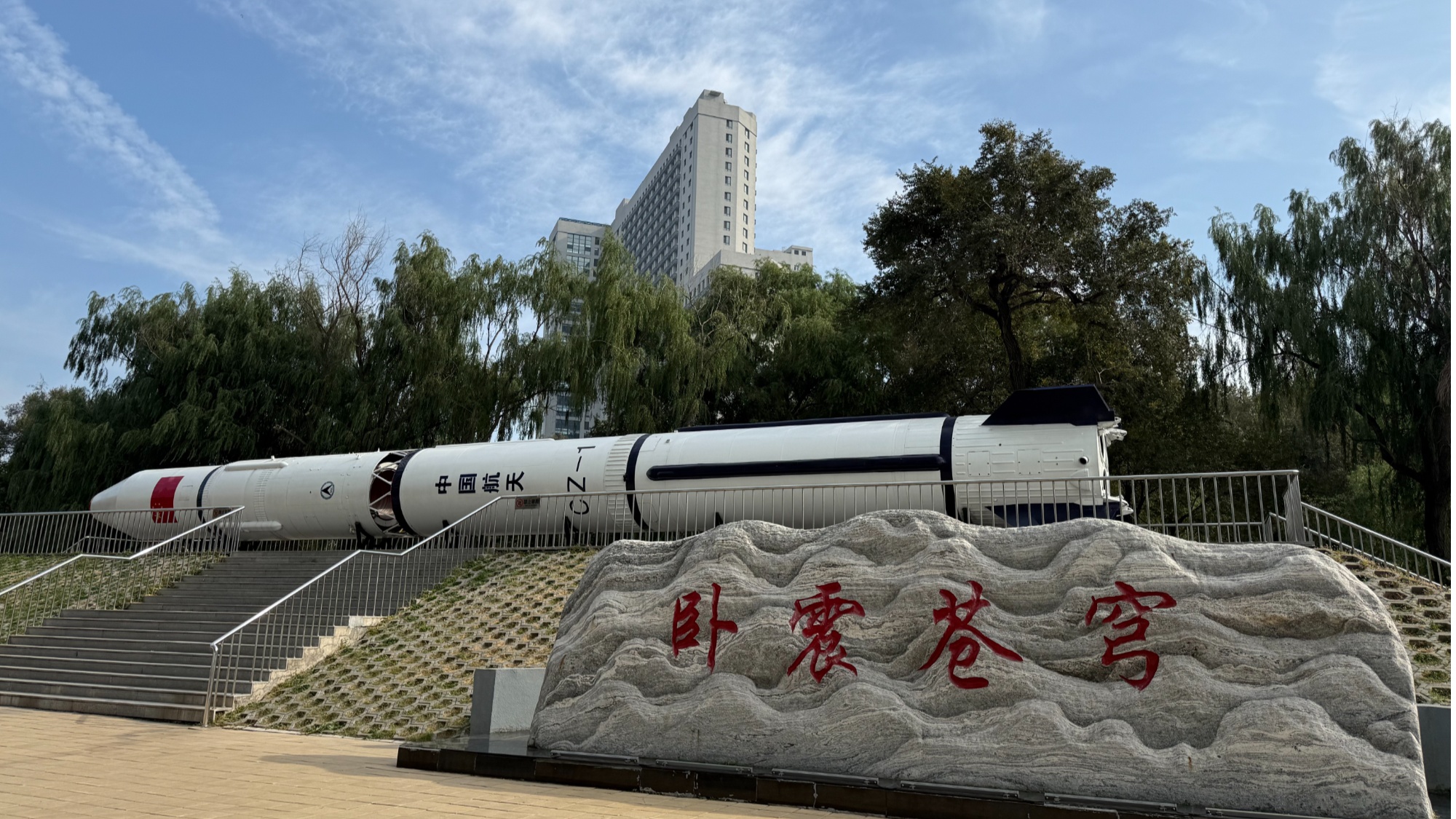
Core Points - The Harbin Institute of Technology's Aerospace Museum features significant exhibits, including the Long March 1 rocket, showcasing the history and achievements of China's space exploration [1][2] - The museum, established in 1986, is the largest aerospace-themed museum among Chinese universities, integrating the grand narrative of human space exploration into its exhibitions [2] - The spirit of China's aerospace achievements, particularly the "Two Bombs, One Satellite" initiative, is emphasized through emotional storytelling by veteran volunteers [5] - Young researchers, such as the 24-year-old student Guo Zhenyu, highlight the innovative contributions of the Harbin Institute of Technology to space projects, including the successful development of the Tianwen experimental cabin's robotic arm [7] - The museum serves as a source of inspiration for the younger generation, igniting their passion for space exploration and embodying the perseverance and dedication of the aerospace spirit [9]
“我愿做太空的铺路石”
Ke Ji Ri Bao· 2025-07-28 01:01
Core Viewpoint - The article highlights the significant contributions of Wang Xiji, a prominent Chinese scientist, to the country's space exploration efforts, emphasizing his role in the development of key technologies and projects in China's aerospace industry [1][4]. Group 1: Early Life and Education - Wang Xiji studied in the United States and returned to China in 1950, motivated by the founding of the new nation [2]. - He quickly adapted to his new environment, mastering Russian and authoring several textbooks during his teaching career [2]. Group 2: Contributions to Space Technology - In 1958, Wang was assigned to the Shanghai Electromechanical Design Institute to work on the development of a rocket for launching artificial satellites, overcoming significant challenges due to Western economic sanctions [3]. - He led the design and development of China's first satellite launch vehicle, the Long March 1, by creatively combining missile and rocket technologies [4]. - Wang also played a crucial role in the development of China's first returnable satellite, which became a successful series with high success rates and low costs [4][5]. Group 3: Vision for Manned Spaceflight - In the 1980s, Wang advocated for the development of manned spacecraft instead of costly space shuttles, influencing the direction of China's manned space program [6]. - His insights contributed to the formation of the Shenzhou program, which marked a significant milestone in China's space exploration history [6].
安徽理工大学:暑期社会实践“科技味”十足
Zhong Guo Qing Nian Bao· 2025-07-15 22:40
Group 1 - The article highlights the active engagement of Anhui University of Science and Technology students in various technology-driven social practices during the summer, focusing on rural revitalization and scientific innovation [1][2][3][4][6][7] - The university's initiatives include hands-on experiences in the fields of renewable energy vehicles, AI applications in agriculture, and the integration of traditional crafts with modern technology [3][4][6][7] - The students' projects aim to enhance their understanding of industry practices and contribute to local economic development through innovative solutions [3][4][6][7] Group 2 - The "AI+" practice teams are exploring the application of artificial intelligence in various sectors, including agriculture and cultural heritage, demonstrating the potential for technology to support traditional industries [4][6][7] - The university's focus on cultivating interdisciplinary talents aligns with the needs of emerging industries in Anhui Province, fostering a new generation of skilled professionals [7] - The increase in student participation in practical projects reflects a growing trend towards experiential learning and industry engagement within the academic framework [7]
山东省在青海考察对接工作
Da Zhong Ri Bao· 2025-07-12 01:07
Core Viewpoint - The visit by the Shandong Provincial delegation to Qinghai aims to strengthen cooperation and learn from Qinghai's development experiences, particularly in areas such as ecological protection and high-quality development [2][3]. Group 1: Cooperation and Support - Shandong expresses gratitude for Qinghai's long-term support and assistance, highlighting the importance of collaboration in various sectors including agriculture, energy, and education [2][3]. - Qinghai acknowledges Shandong's significant contributions and support, emphasizing the need for continued partnership in promoting ecological protection and developing characteristic industries [3]. Group 2: Learning and Development - The Shandong delegation visits several key sites in Qinghai, including the Saint Source Carpet Group and ecological monitoring centers, to gain insights into successful practices [3]. - The delegation aims to implement lessons learned from Qinghai's development strategies to enhance Shandong's own initiatives [2].