中国经济发展

Search documents
2025中国经济重要数据公布,外媒看好中国发展前景
Zhong Guo Xin Wen Wang· 2026-01-19 09:34
Group 1 - The core viewpoint of the articles highlights China's economic resilience and successful achievement of its development goals for 2025, with a GDP of 1401879 billion yuan, reflecting a 5.0% growth compared to the previous year, aligning with the government's target of around 5% [1][2] - China's R&D expenditure intensity reached 2.8% in 2025, surpassing the OECD average for the first time, indicating a significant improvement in innovation capabilities [1] - International media, including Reuters and CNN, emphasize the ongoing competitiveness of the Chinese economy, with continuous productivity improvements and advancements in manufacturing technology [2] Group 2 - The Chinese government plans to implement more proactive macroeconomic policies to further stimulate domestic demand in the upcoming phases [2] - Observers are closely monitoring China's economic growth targets for 2026 and the measures the government will take to boost consumption and economic development in the following year [2]
国家统计局:2025年中国经济“进”的步伐更加有力
Xin Hua She· 2026-01-19 06:33
0:00 1月19日,国务院新闻办公室举行新闻发布会,介绍2025年国民经济运行情况,并答记者问。国家统计 局局长康义介绍,2025年中国经济"进"的步伐更加有力。 新华社音视频部制作 ...
中国靠什么创造经济奇迹?加拿大青年探寻中国发展的活力“密码”
Xin Lang Cai Jing· 2026-01-16 12:56
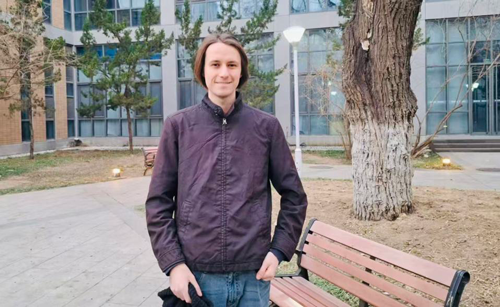
国之交在于民相亲,人文交流是架起国家间友谊之桥、夯实双方友好民意基础的重要纽带。从加拿大维 多利亚到中国北京,加拿大青年埃尔默跨越山海而来,在课堂与企业间,他不仅探寻着中国发展的经验 和智慧,也在差异中寻找连接中加合作共赢的支点。今天让我们一起走进加拿大留学生埃尔默"遇见中 国"的故事。 埃尔默:我来自加拿大维多利亚,选择来中国学习国际经济与贸易,是因为我喜欢研究历史和人类学, 而这两者本质上都与经济学密不可分。在我看来,中国经济是人类历史上发展最成功的案例。 埃尔默 怀揣着对中华文明和历史的好奇,埃尔默来到北京外国语大学读书。埃尔默告诉记者,现实的中国与他 从书本、网络获得的印象相比,既有印证,更有超越。 埃尔默:如果说要用三个词描述中国,我会选"规模"、"变化"和"未来感"。中国幅员辽阔,而且发展迅 速,中国的现代化发展简直像科幻小说里的场景一样;另一方面,中国依然保留着独特的历史文化。我 在这里看到现代与历史的完美融合。 在北京外国语大学,除了严谨的学术课程,最让埃尔默称道的是一项名为"商业实践周"的教学活动。学 校组织留学生前往中国多个城市,深入企业一线参观调研。 北京外国语大学的"商业实践周"活动 ...

遇见中国 | 中国靠什么创造经济奇迹?加拿大青年探寻中国发展的活力“密码”
Sou Hu Cai Jing· 2026-01-16 06:16
国之交在于民相亲,人文交流是架起国家间友谊之桥、夯实双方友好民意基础的重要纽带。从加拿大维 多利亚到中国北京,加拿大青年埃尔默跨越山海而来,在课堂与企业间,他不仅探寻着中国发展的经验 和智慧,也在差异中寻找连接中加合作共赢的支点。今天让我们一起走进加拿大留学生埃尔默"遇见中 国"的故事。 埃尔默:我来自加拿大维多利亚,选择来中国学习国际经济与贸易,是因为我喜欢研究历史和人类学, 而这两者本质上都与经济学密不可分。在我看来,中国经济是人类历史上发展最成功的案例。 北京外国语大学的"商业实践周"活动 埃尔默:学校会带我们去其他城市,参观中国企业。这让我得以零距离观察中国经济的真实脉动——从 企业管理层到生产车间,从决策者到一线工人。中国企业的生产规模和创新能力令人惊叹。 在"商业实践周"里,埃尔默走访了浙江安吉、杭州、福建厦门和北京的多家企业。在他眼中,这些城市 象征着中国经济的多样面貌。 埃尔默:安吉太美了,绿意盎然,像我的家乡,坐落着许多大公司总部,是高科技人才的聚集地。杭州 则毫无疑问是一座未来之城,崭新、绿色、充满科技感,参观当地的物流企业让我震撼,中国通过深耕 消费物流这样的基础产业,为经济引擎注入了强 ...

粤开证券罗志恒:2026年中国经济将在动能转换与预期修复中平稳前行
Shang Hai Zheng Quan Bao· 2026-01-14 17:51
Core Viewpoint - The article discusses the economic outlook for China in 2026, emphasizing the potential for stable and healthy growth driven by export resilience and infrastructure investment [2][3]. Economic Growth Drivers - The two main supports for economic growth in 2026 are the evolving resilience of exports and the stabilizing role of infrastructure investment [2]. - China's exports are undergoing an upgrade, with a diversification of markets and a shift in product structure from consumer goods to intermediate and capital goods [2]. - Infrastructure investment is expected to maintain a good growth rate, supported by a proactive fiscal policy and moderate monetary policy [3]. Investment Focus Areas - Future investments are likely to focus on four key areas: basic livelihood security (healthcare, education, elderly care, housing), consumption upgrade (shift from traditional goods to service and experience consumption), human capital development (improving education quality and vocational training), and sustainable development (supporting childbirth and addressing aging) [4]. Challenges Ahead - The stability of the real estate market and local government debt issues remain significant challenges that need to be addressed [4]. Supply and Demand Balance - There is a notable discrepancy between macroeconomic stability and microeconomic sentiment, which is a global challenge [5][6]. - The Chinese economy is characterized by strong supply capabilities and weak demand, leading to low price levels and a mismatch between nominal income growth and actual economic performance [6]. Consumer Behavior Trends - Consumer habits are shifting from basic needs to development-oriented and enjoyment-oriented consumption, with service consumption expected to grow faster than goods consumption [6]. Capital Market Outlook - The capital market is anticipated to continue the positive trend observed since late 2024, supported by improving corporate profits, enhanced market regulations, ample liquidity, and rising risk appetite [7]. - Two main investment themes are identified: technology growth (AI, new energy, commercial aerospace) and the non-ferrous metals cycle, which may present investment opportunities due to supply-demand gaps [7]. Investment Strategy for Individuals - Individual investors are advised to align their investments with their understanding and risk tolerance, emphasizing that the ultimate goal of investing is to improve quality of life [8].
何立峰会见 美国前财长、华平集团主席盖特纳
Jin Rong Shi Bao· 2026-01-13 02:06
盖特纳表示,看好中国经济发展前景,华平集团愿继续深耕中国市场,推动深化美中经贸合作。 新华社北京1月12日电(记者曹嘉玥)中共中央政治局委员、国务院副总理何立峰12日在人民大会堂会 见美国前财长、华平集团主席盖特纳时表示,中国正全面贯彻落实中共二十届四中全会精神,按照"十 五五"规划建议部署,纵深推进全国统一大市场建设,坚定不移扩大高水平对外开放,促进经济高质量 发展。欢迎包括华平集团在内的外资企业和长期资本继续扩大在华投资,深化对华互利合作。 ...
何立峰会见美国前财长、华平集团主席盖特纳
Xin Hua She· 2026-01-12 12:09
盖特纳表示,看好中国经济发展前景,华平集团愿继续深耕中国市场,推动深化 美中经贸 合作。 (完) 新华社北京1月12日电(记者曹嘉玥)中共中央政治局委员、国务院副总理 何立峰 12日在人民大会 堂会见美国前财长、华平集团主席盖特纳时表示,中国正全面贯彻落实中共二十届四中全会精神,按 照"十五五"规划建议部署,纵深推进全国统一大市场建设,坚定不移扩大高水平对外开放,促进经济高 质量发展。欢迎包括华平集团在内的外资企业和长期资本继续扩大在华投资,深化对华互利合作。 ...
中国经济进入内需攻坚之年
Jin Rong Shi Bao· 2026-01-05 03:32
Group 1 - In the first half of 2025, China's economy achieved a growth rate of 5.3% due to proactive fiscal measures, effective trade-in policies, and strong export resilience. However, growth momentum slowed in the second half of the year as the effects of stimulus policies diminished and high base effects emerged [1] - The 2026 economic work is under close scrutiny as it marks the beginning of the 14th Five-Year Plan, with a focus on maintaining economic growth as a priority. The Central Economic Work Conference in December 2025 emphasized the need for policies that are not only active but also effective [1] - The 2026 macroeconomic policy will continue to adopt a "more proactive" stance while focusing on enhancing effectiveness, integrating existing and new policies, and increasing counter-cyclical and cross-cyclical adjustments [1] Group 2 - China's export performance in 2026 is expected to exceed market expectations, supported by market diversification and product structure upgrades. From January to November 2025, China's export value increased by 5.4% year-on-year, surpassing the levels of the same period in 2024 [2] - Despite a nearly 20% decline in exports to the United States, exports to emerging markets such as Africa (26.3%), ASEAN (13.7%), and India (11.9%) showed significant growth. The share of exports to Latin America, Africa, and India combined reached 17.5%, matching that of ASEAN [2] - The strong resilience in exports is attributed to stable global economic growth, ongoing fiscal expansion in the US and Europe, and the stabilization of US-China trade relations. Additionally, technological advancements driven by artificial intelligence are expected to support exports [3] Group 3 - Infrastructure investment is projected to rebound in 2026, driven by the commencement of major projects and financial support. From January to October 2025, broad infrastructure investment grew by 1.5% year-on-year, with new policy financial tools and local government debt limits set to enhance project funding [3] - The 14th Five-Year Plan emphasizes the importance of technology innovation and industrial upgrading in driving manufacturing investment. Manufacturing investment grew by 2.7% year-on-year from January to October 2025, with a focus on advanced manufacturing and strategic emerging industries [4][5] Group 4 - The Chinese consumer market is showing strong resilience, with retail sales of consumer goods increasing by 5.0% year-on-year in the first half of 2025, supported by policies promoting trade-in programs. However, growth slowed in the second half due to diminishing effects of these policies [6] - The "14th Five-Year Plan" highlights the importance of enhancing the consumption rate and the role of domestic demand in driving economic growth. There is a focus on whether policies to stimulate consumption will be strengthened in 2026 [6] - The balance between short-term growth stabilization and long-term development tasks is crucial for policy formulation in 2026, with an emphasis on stabilizing the real estate market and improving social security systems [7]

看!镜头里的四季中国
Ren Min Ri Bao Hai Wai Ban· 2026-01-04 22:51
Core Viewpoint - The 7th Global Chinese Lifestyle Short Video Competition showcases cultural exchange through multimedia platforms, highlighting the vibrant life and development of overseas Chinese communities and their connection to China [7][18]. Group 1: Event Overview - The event took place in Kaiping, Jiangmen City, on December 23, 2025, with the theme "Four Seasons·City" [7]. - The competition received approximately 960,000 submissions from over 40 countries and regions, achieving a total reading volume of 11.8 billion [7]. - The event aims to build a bridge for cultural exchange between China and the world through online and offline promotion [7]. Group 2: Cultural Representation - Video bloggers from various countries, including Denmark, Malaysia, Nigeria, Russia, and the UK, documented the rich cultural heritage of Kaiping, including its watchtowers and local delicacies [7][8]. - The showcased works reflect the seasonal changes and local experiences, such as enjoying tea in Kaiping and tasting local dishes in other regions like Guangxi and Qingdao [10][11]. Group 3: Economic and Social Insights - The event highlights the resilience and vibrancy of the Chinese economy, particularly in the context of the Guangdong-Hong Kong-Macao Greater Bay Area [8]. - The competition serves as a platform to promote local tourism and cultural industries, contributing to the economic development of the regions represented [12][16]. Group 4: Historical Context - The narratives presented in the videos often touch on themes of nostalgia and cultural identity, reflecting the deep connections between overseas Chinese and their homeland [14][15]. - Historical references, such as contributions from overseas Chinese during wartime, are woven into the cultural stories shared through the competition [13].

夜读丨新年的一封信
Xin Lang Cai Jing· 2026-01-01 13:37
转自:漯河发布 矗立山巅,你,光芒万丈。你,活成了很多人不敢活的样子,也就冒犯了很多人将就的人生。 欢迎收听今晚的夜读,今天为大家分享一篇王举的文章 《新年的一封信》 岁月嬗递、光阴荏苒,转眼又是一年过去了。回望过去,你的每一个瞬间都闪耀着不平凡的光芒。 塞万提斯笔下的唐吉诃德,渴望成为一个骑士,想要铲除世道的不公,莽撞而赤诚;当一个人不愿意再随波逐流时,他的存在本身就成了别人妥协的倒 影,但你要继续走下去,做那个乘风破浪、披荆斩棘的人,因为个人的觉醒终将会引起群体的灵魂悸动。 2025年,我们曾经披星戴月、跨越荒芜荆棘,也在无数次的相遇和离别中,找回内心的平静,更在锲而不舍的跋涉中实现了蝶变跃升。 当新年的火焰再次散落在夜空,你会看到,那是用记忆点缀的光芒,再此汇聚成2026年温暖而明亮的前方。 and and the cases : t in in 1 1 - : . . . . .. . . TH . . . . 2025年你辛苦了,因为我知道,这种现实与理想的纠结与矛盾,我们都无法逃避,若是月亮还没来,我们的幸福和快乐来得不够及时,至少还有路灯照窗 台,让那一丝微光撇进生命的窠臼当中,等待生命的幼苗破 ...