
预期修复

Search documents
湾财周报 | 事件 去年广东结婚登记增长超10万对;金价震荡 股东套现1.8亿;好想来被投诉门店称重不准
Nan Fang Du Shi Bao· 2026-02-01 13:56
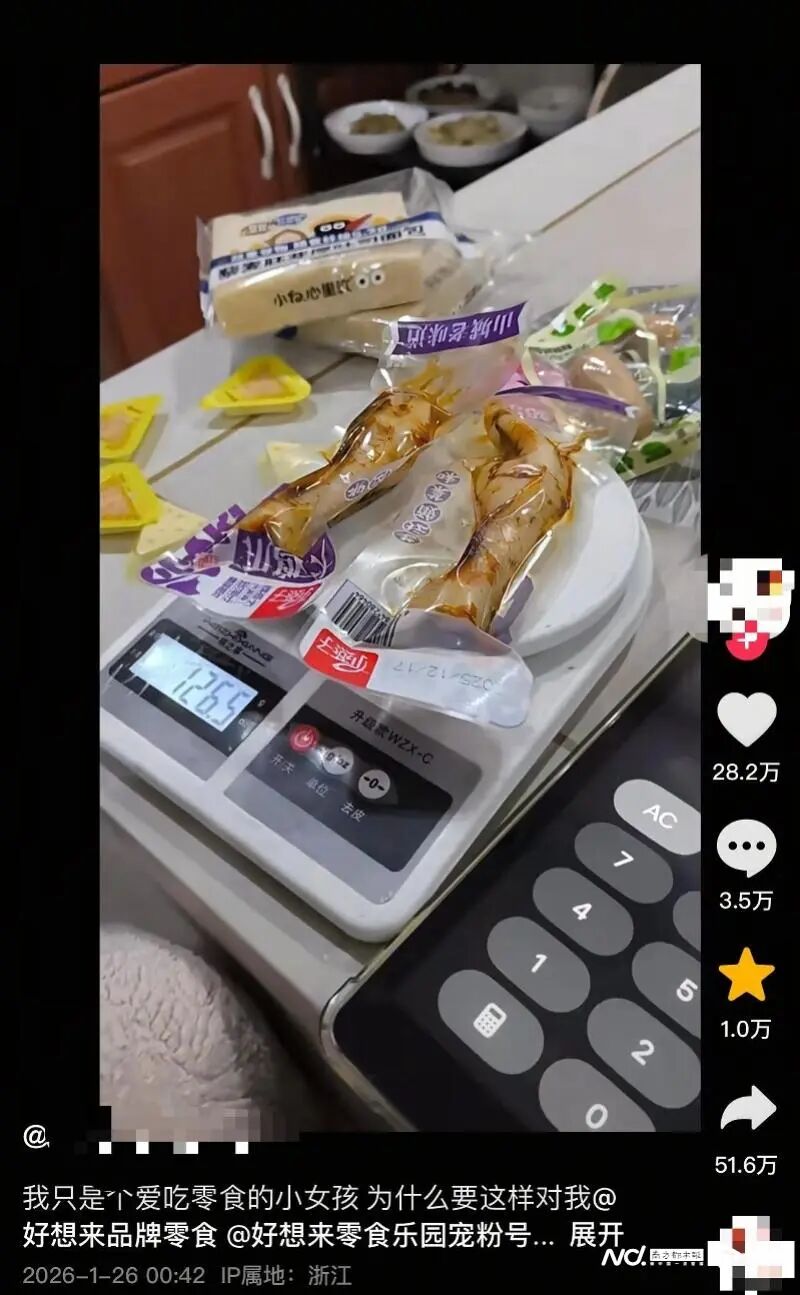
Group 1: Gold Market Dynamics - The gold market is experiencing significant volatility, with A-share gold stocks showing a marked divergence after a period of gains [1] - Notable stocks like Hunan Gold and China Gold saw substantial increases, while others like Chifeng Gold and Shandong Gold faced sharp declines, including a drop to the daily limit for Sichuan Gold despite a strong earnings forecast [1] - The market reaction is influenced by major shareholders of Sichuan Gold cashing out nearly 1.8 billion yuan, raising concerns among investors [1] Group 2: Wedding Industry Growth - Guangdong province reported an increase of over 100,000 marriage registrations in 2025, totaling 613,766 pairs, indicating a robust recovery in the wedding industry [2] - The wedding industry in Guangdong experienced a revenue growth of over 25%, reflecting a positive trend in consumer spending on weddings [2] Group 3: Financial Sector Developments - The consumer finance sector is actively addressing non-performing loans, with nearly 9 billion yuan in bad debts being cleared at the start of 2026 [10] - Multiple banks and consumer finance companies, including China Zhongyin and Zhaolian Consumer Finance, have announced plans to transfer non-performing loans, with a total of 37 announcements made [10] - The regulatory extension of the non-performing loan transfer pilot program until December 31, 2026, is expected to facilitate further asset quality improvements [10] Group 4: Insurance Industry Trends - The insurance industry is witnessing a trend of cross-industry collaboration, with companies like China Mobile and major securities firms entering the insurance market [11] - This shift reflects a structural optimization in the supply side of the insurance sector, as traditional sales channels expand into digital platforms [11] Group 5: Consumer Goods and Retail Issues - A consumer reported a significant discrepancy in product weights at a snack retailer, leading to claims of overcharging due to inaccurate scales [8] - The retailer acknowledged the issue as an operational error, highlighting the importance of accurate measurement in consumer trust and satisfaction [8]

白酒板块罕见大涨!
Zheng Quan Ri Bao Wang· 2026-01-29 10:29
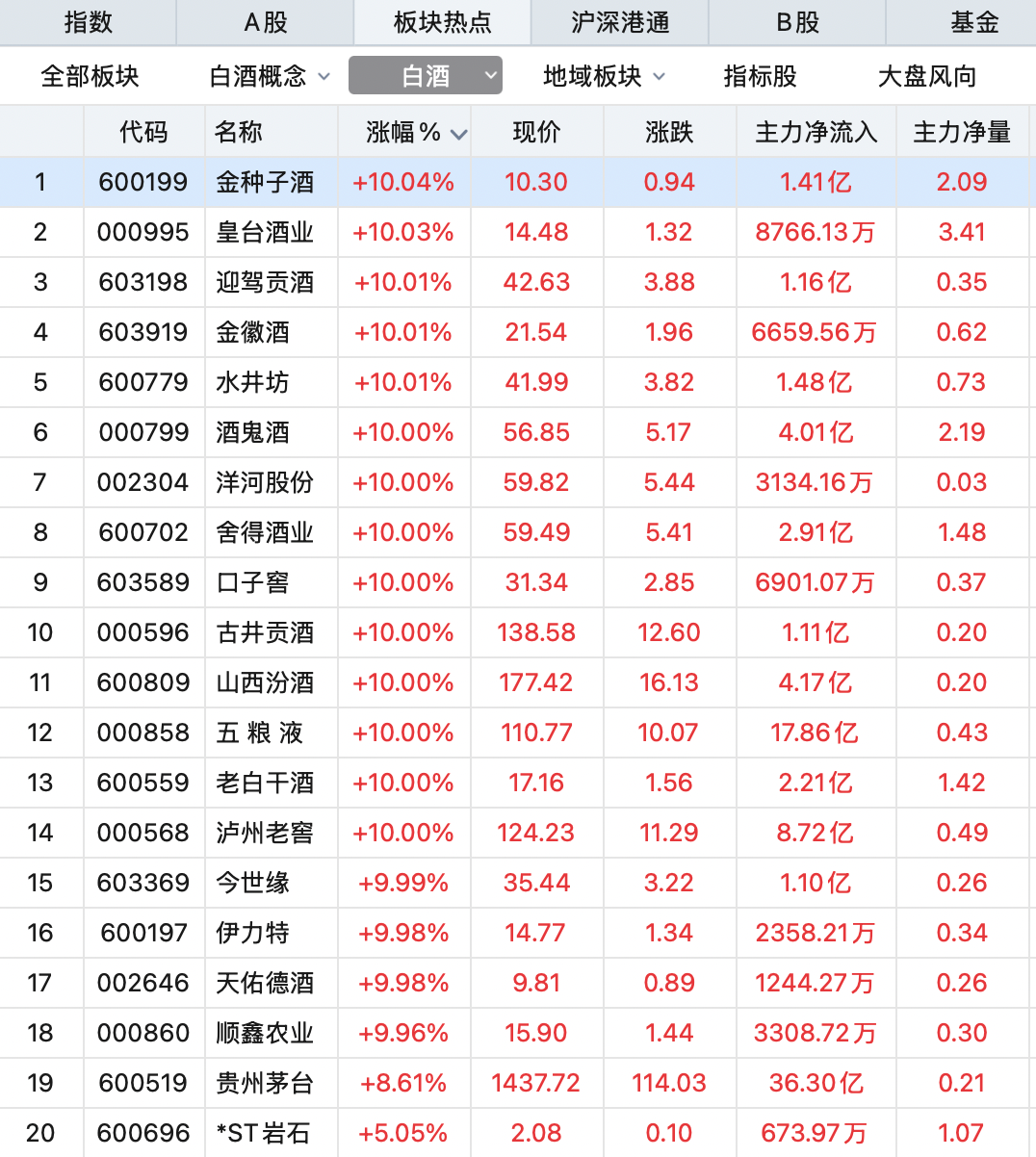
Core Viewpoint - The A-share liquor sector experienced a significant surge, with the liquor ETF rising by 10.08% and the China Securities Liquor Index increasing by 9.79% on January 29, driven by macroeconomic expectations and seasonal factors related to the upcoming Spring Festival [1][2]. Group 1: Market Performance - 20 liquor companies saw stock price increases, with 18 reaching the daily limit, including notable gains from Kweichow Moutai (8.61% increase) and others like Jinzhongzi Liquor and Huangtai Liquor, both around 10% [1][2]. - The wholesale price of Feitian Moutai has been rising, surpassing 1600 yuan, indicating a market recovery signal as the product remains sold out on official platforms [3]. Group 2: Expert Insights - Experts attribute the price increase to a combination of Moutai's proactive price control and seasonal demand, suggesting that the liquor sector is a target for capital investment due to its cyclical nature [4]. - The overall industry is under pressure, with several companies forecasting significant declines in net profit, indicating a challenging competitive landscape and increased inventory issues [4]. Group 3: Future Outlook - Analysts suggest that the proactive inventory adjustments by liquor manufacturers and the stabilization of high-end liquor prices could lead to a healthier market development [5]. - The upcoming Spring Festival is expected to boost demand, with the liquor sector seen as a value opportunity for investors, despite the need for cautious optimism regarding long-term trends [5].




贵州茅台罕见暴涨!白酒股大面积涨停!“拐点”真的来了?
Nan Fang Du Shi Bao· 2026-01-29 08:57
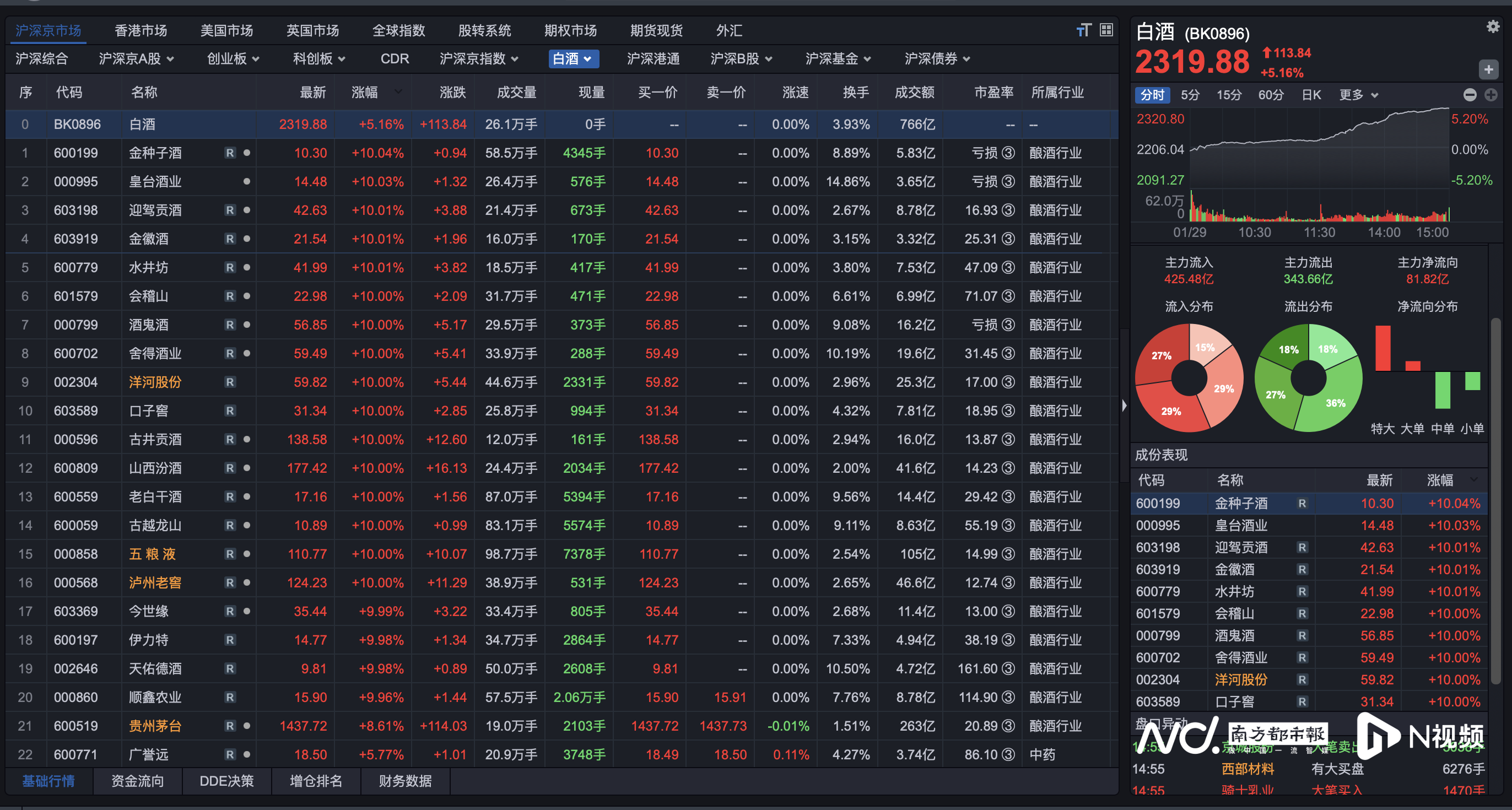
Core Viewpoint - The surge in the A-share liquor sector, particularly in major brands like Kweichow Moutai and Wuliangye, is attributed to a combination of market sentiment release and macroeconomic "expectation repair," indicating a potential recovery in consumer demand, especially ahead of the Spring Festival [1][11]. Group 1: Market Performance - On January 29, the liquor sector saw a significant increase, with Kweichow Moutai closing at 1437.72 CNY per share, up 8.61% [1]. - Over ten liquor companies, including Wuliangye and Luzhou Laojiao, reached their daily price limits, reflecting a broad market rally in the sector [1][2]. - The liquor index rose by 5.16%, indicating strong investor interest and confidence in the sector [2]. Group 2: Macroeconomic Factors - Analysts highlight that macroeconomic measures, such as relaxed real estate policies and local government consumption vouchers, are expected to boost social consumption and business banquets, which are crucial for liquor sales [3]. - Local governments are prioritizing consumption enhancement as a key annual task, with various initiatives aimed at increasing consumer capacity and optimizing supply [3]. Group 3: Seasonal Demand and Pricing - The demand for Kweichow Moutai is reportedly strong ahead of the Spring Festival, with some distributors indicating that their quotas for January and February have already sold out [6]. - Analysts suggest that the price increase for Moutai is driven by both seasonal demand and the company's market control measures, aimed at stabilizing prices [8]. Group 4: Industry Outlook - Despite the recent surge, the actual recovery in liquor sales during the Spring Festival remains uncertain, with analysts noting a mixed inventory situation among different brands [9][10]. - The current valuation of leading liquor companies, such as Kweichow Moutai and Wuliangye, is considered low compared to the broader market, suggesting potential investment opportunities [10]. - However, there are concerns about the performance of some liquor companies, with significant profit declines expected for several firms, indicating that the sector may still face challenges [11].


极致分化!3.2万亿资金上演“高低切换”,后市方向明确了
Sou Hu Cai Jing· 2026-01-29 08:32
Overall Market Overview - The A-share market showed mixed performance with the Shanghai Composite Index slightly up by 0.16% to 4157.98 points, while the Shenzhen Component and ChiNext Index fell by 0.3% and 0.57% respectively. The STAR 50 Index experienced a significant drop of 3.03%, closing at 1507.64 points. Total trading volume reached 3.23 trillion yuan, an increase of over 260 billion yuan compared to the previous day [1][2]. Sector Performance - Traditional blue-chip and cyclical sectors dominated the gainers' list, with the food and beverage sector surging by 6.57%. Notably, liquor stocks saw a rally, with Kweichow Moutai rising by 8% and trading volume exceeding 20 billion yuan. Other sectors like media, real estate, non-bank financials, and oil & petrochemicals also saw gains of over 2% [2]. - The technology and high-end manufacturing sectors, represented by the electronics sector, faced the largest declines, with a drop of 3.56%. Other sectors such as power equipment, defense, and machinery also fell by more than 1.7% [2]. Market Sentiment and Fund Flows - The current market sentiment reflects a clear preference for "reality" over "dreams," with funds moving away from long-term investments in "hard technology" towards short-term performance certainty in "consumer recovery" sectors. This shift indicates a significant change in investment strategy [3]. - Data shows that major broad-based ETFs like CSI 300 and CSI 1000 have experienced substantial net outflows this year, indicating a shift from beta (market overall) to alpha (individual stock opportunities). However, niche products like the STAR 100 ETF have seen continued net inflows, suggesting selective investment in high-potential "hardcore" assets within the technology sector [3]. Future Market Outlook - The current trend of "blue-chip leading, growth resting" is expected to continue in the short term, with sectors like real estate and liquor likely to maintain upward momentum driven by policy and sentiment. The sustainability of this trend will depend on upcoming consumer and real estate sales data validating the strength of the recovery [4]. - Despite the significant pullback in the technology sector, there is no need for excessive pessimism. As valuation pressures are quickly released, the medium to long-term investment value may gradually become more apparent, especially for leaders in emerging industries that align with national policy directions [4].
风格再次切换!资金集体“大搬家”,从科创板狂奔向白酒地产
Sou Hu Cai Jing· 2026-01-29 08:07
Core Viewpoint - The A-share market is experiencing a significant divergence, with the Shanghai Composite Index slightly rising while the Sci-Tech 50 Index has dropped over 3%, indicating a shift in market style from high-valuation growth sectors to low-valuation cyclical sectors [1] Market Overview - On January 29, 2026, the Shanghai Composite Index rose by 0.16% to 4157.98 points, supported by heavyweight stocks, while the Sci-Tech 50 Index fell by 3.03% and the ChiNext Index declined by 0.57% [1] - The total trading volume in both markets surged to 3.23 trillion yuan, an increase of over 260 billion yuan compared to the previous period, reflecting intense market competition between bulls and bears [1] Sector Performance - The leading sectors, termed "realists," are primarily in consumption and traditional economy, with the food and beverage sector surging by 6.57%. Notably, liquor stocks saw a significant increase, with Kweichow Moutai rising by 8% and trading volume exceeding 20 billion yuan [2] - The "dreamers," representing technology growth sectors, faced declines, particularly in the electronics sector, which fell by 3.56%. Other sectors like power equipment and defense also experienced widespread downturns [2] Driving Factors - The rise in the "realist" sectors is attributed to a combination of "expectation recovery" and "high-low switching," with the upcoming Spring Festival boosting consumer confidence in sectors like liquor [2] - The decline in the "dreamer" sectors is linked to internal fund rebalancing and changes in the global macro environment, particularly the U.S. Federal Reserve's signals regarding maintaining high interest rates for an extended period [2] Market Outlook - Short-term market trends may continue, supported by policy expectations and pre-holiday effects, but the sustainability of the rebound will depend on upcoming macro consumption and real estate sales data [3] - The technology growth sectors are entering a period of volatility, with rapid declines in semiconductor and renewable energy sectors releasing valuation pressure. Positive industry factors may lead to recovery once market sentiment stabilizes [3] - Structural characteristics of the market are becoming more pronounced, with future excess returns likely coming from in-depth analysis of industry trends and individual stock fundamentals rather than broad market bets [3]
粤开证券罗志恒:2026年中国经济将在动能转换与预期修复中平稳前行
Shang Hai Zheng Quan Bao· 2026-01-14 17:51
Core Viewpoint - The article discusses the economic outlook for China in 2026, emphasizing the potential for stable and healthy growth driven by export resilience and infrastructure investment [2][3]. Economic Growth Drivers - The two main supports for economic growth in 2026 are the evolving resilience of exports and the stabilizing role of infrastructure investment [2]. - China's exports are undergoing an upgrade, with a diversification of markets and a shift in product structure from consumer goods to intermediate and capital goods [2]. - Infrastructure investment is expected to maintain a good growth rate, supported by a proactive fiscal policy and moderate monetary policy [3]. Investment Focus Areas - Future investments are likely to focus on four key areas: basic livelihood security (healthcare, education, elderly care, housing), consumption upgrade (shift from traditional goods to service and experience consumption), human capital development (improving education quality and vocational training), and sustainable development (supporting childbirth and addressing aging) [4]. Challenges Ahead - The stability of the real estate market and local government debt issues remain significant challenges that need to be addressed [4]. Supply and Demand Balance - There is a notable discrepancy between macroeconomic stability and microeconomic sentiment, which is a global challenge [5][6]. - The Chinese economy is characterized by strong supply capabilities and weak demand, leading to low price levels and a mismatch between nominal income growth and actual economic performance [6]. Consumer Behavior Trends - Consumer habits are shifting from basic needs to development-oriented and enjoyment-oriented consumption, with service consumption expected to grow faster than goods consumption [6]. Capital Market Outlook - The capital market is anticipated to continue the positive trend observed since late 2024, supported by improving corporate profits, enhanced market regulations, ample liquidity, and rising risk appetite [7]. - Two main investment themes are identified: technology growth (AI, new energy, commercial aerospace) and the non-ferrous metals cycle, which may present investment opportunities due to supply-demand gaps [7]. Investment Strategy for Individuals - Individual investors are advised to align their investments with their understanding and risk tolerance, emphasizing that the ultimate goal of investing is to improve quality of life [8].
全球目光再度转向中国:多家机构同步上调增速预测
Sou Hu Cai Jing· 2025-12-12 11:21
Group 1 - International institutions such as the World Bank, IMF, and ADB have raised their growth forecasts for China's economy for next year, with the World Bank increasing by 0.4 percentage points, IMF by 0.2 percentage points, and ADB by 0.1 percentage points, indicating a consensus in their updated judgment logic [1][3] - China's economic resilience has proven stronger than many anticipated at the beginning of the year, supported by sustained fiscal efforts and loose monetary policy, which have kept consumption and investment active under pressure [3] - The diversification of export markets has provided more stable support for external demand, prompting international institutions to reassess their growth expectations for the coming year [3] Group 2 - The World Bank's chief economist for China, Melissa, believes that China's long-term growth potential remains considerable, with key factors being technological innovation and productivity improvement, suggesting that the potential growth rate is not declining as rapidly as feared [3] - IMF President Georgieva emphasized the importance of domestic demand, noting that China is enhancing consumption stability through targeted policy measures such as improving the social security system and providing childcare subsidies, which will positively impact mid-term growth quality [3] - The expectation of improved certainty in the operating environment is seen as beneficial for both consumer spending and corporate investment, which will support the financial sector, small and medium enterprises, and asset allocation needs [3][4]
