
主流媒体系统性变革

Search documents
深化主流媒体系统性变革 提高舆论引导能力
Ren Min Ri Bao· 2025-11-25 22:42
Group 1 - The core viewpoint emphasizes the necessity for mainstream media to undergo systematic transformation to enhance core competitiveness and sustainable operational capabilities [4][6][8] - Shanghai Media Group has initiated significant reforms, including shutting down five apps and restructuring two newspapers to align with internet dynamics, showcasing a shift towards an integrated media model [4][5] - The integration of technology and culture is highlighted as a key feature of media transformation, with a focus on developing autonomous capabilities in data, algorithms, and virtual reality [4][5] Group 2 - The importance of human capital in media transformation is stressed, with initiatives like the "Three Integration" projects aimed at empowering over 250 specialized studios [5][6] - The need for mainstream media to adapt to changes in communication structures and leverage market mechanisms is discussed, including the establishment of a diverse media market system [6][7] - The call for a new media ecosystem that integrates social systems and media systems is made, emphasizing the need for a comprehensive approach to media reform [8][9] Group 3 - The focus on enhancing the public relations and brand image of major corporations, such as China Nuclear Industry Group, through innovative communication strategies and media collaborations is noted [11][12] - The establishment of a comprehensive cultural communication platform by China Petroleum is highlighted, aiming for integrated operations across domestic and international media [13][14] - The restructuring of local media organizations, like Qingdao Daily, to create new advantages through technology and social governance integration is emphasized [14][15] Group 4 - The integration of local resources and the enhancement of media influence in Wuhan are discussed, with a focus on building a strong local media presence and collaborative efforts [16][17] - The Zhejiang Daily Group's strategy to consolidate mobile platforms and enhance user engagement through innovative content and technology is outlined [18][19] - The establishment of a "smart media" ecosystem through technological advancements and user interaction improvements is emphasized as a future direction for media organizations [19][20]


人工智能+,推进媒体系统性变革
Ren Min Ri Bao· 2025-11-22 22:19
Group 1 - The core viewpoint emphasizes the necessity of systematic transformation in mainstream media, leveraging technology and innovative approaches to enhance content delivery and cultural exchange [1][2][3][4][5][6][7][8][9]. - Various media organizations are adopting AI and digital technologies to improve their operational efficiency and audience engagement, indicating a shift towards a more integrated media ecosystem [1][2][5][6][7][9]. - The focus on user-centric content production and the importance of understanding audience needs are highlighted as critical for the success of media transformation [4][9]. Group 2 - The integration of AI in media practices is seen as a key driver for enhancing productivity and creating new opportunities for content dissemination [5][6][7][9]. - There is a strong emphasis on the need for collaboration across different media platforms and sectors to create a cohesive cultural narrative and improve international communication [2][3][9]. - The development of new cultural business models and the exploration of innovative content delivery methods are essential for adapting to changing consumer preferences and technological advancements [5][9].
智能聚力 系统变革——2025中国新媒体大会综述
Ren Min Ri Bao· 2025-11-16 22:19
Core Insights - The 20th Central Committee's Fourth Plenary Session emphasizes the need for systematic reform in mainstream media, integrating news promotion and online public opinion management to enhance the guiding capacity of mainstream discourse [1] - The 2025 China New Media Conference, held from November 12 to 14, focuses on the theme of "Intelligent Power System Reform," addressing the deep logic of media transformation in response to the technological revolution [2][3] Group 1: Technological Integration - The conference highlights the importance of leveraging artificial intelligence and other technological innovations to drive media transformation and create a new landscape for mainstream discourse [1][2] - Media organizations are encouraged to build high-quality information flows and content that resonate with audiences, likening this to constructing "cultural mountains" and "era peaks" [2] Group 2: Content and User Engagement - The shift from "release thinking" to "communication thinking" is crucial for mainstream media to adapt to the internet era, focusing on user-centered approaches and enhancing the quality of content [6] - Successful media strategies involve creating engaging content that resonates emotionally with audiences, as demonstrated by the viral success of the short film "One Night" commemorating the 80th anniversary of the victory in the War of Resistance [6] Group 3: Systematic Reform and Internal Motivation - Mainstream media must act as "actionists and pragmatists" in driving systematic reform, integrating technology deeply into all aspects of media operations [7] - Initiatives like the "Three Become One" plan aim to transform journalists from mere writers to content curators, enhancing the visibility and impact of their work [7] Group 4: Community and Grassroots Engagement - Media organizations are encouraged to connect closely with community users, exemplified by platforms like "Neighbor Communication" that link local residents and businesses [6] - The importance of grassroots storytelling and authentic engagement is emphasized, with examples of media professionals using relatable narratives to connect with their audiences [8]
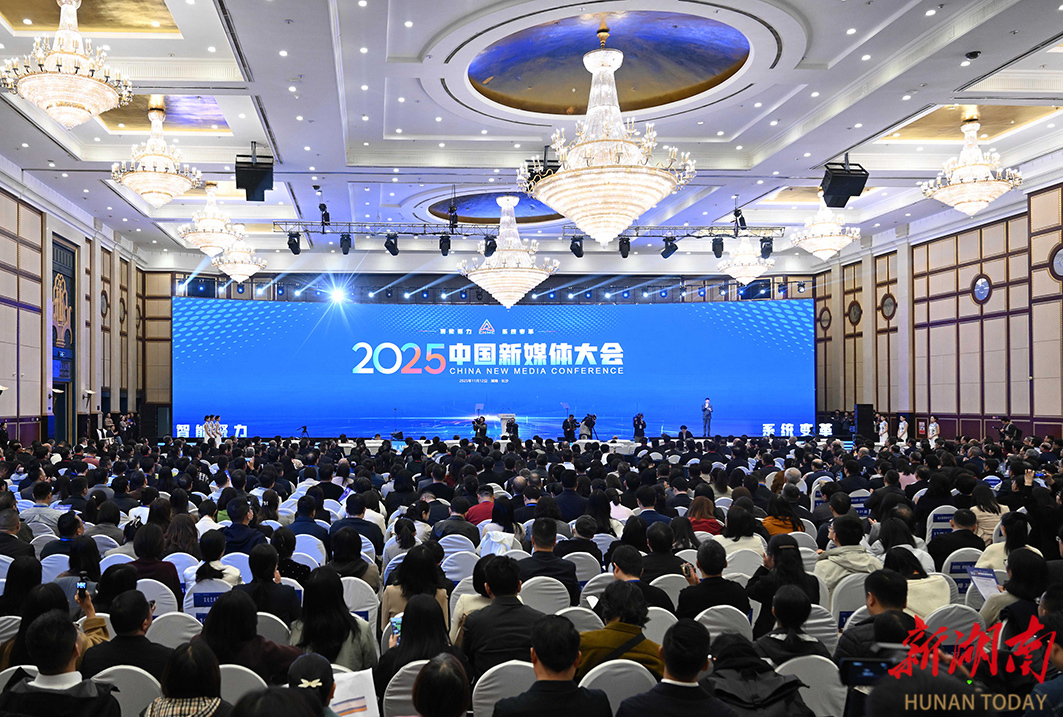
2025中国新媒体大会在长沙开幕 莫高义出席并作主旨演讲 沈晓明刘思扬致辞
Chang Sha Wan Bao· 2025-11-13 03:48
Core Viewpoint - The 2025 China New Media Conference opened in Changsha, focusing on the theme of "Intelligent Synergy and Systemic Reform" to discuss innovations in communication technology and media reform development [1][3]. Group 1: Conference Highlights - The conference featured key speeches from prominent officials, including the Deputy Minister of the Central Propaganda Department and the Director of the State Council Information Office, emphasizing the importance of media reform [1][3]. - Attendees discussed the significance of the 20th Central Committee's Fourth Plenary Session in shaping China's development blueprint for the next five years, particularly in enhancing the capabilities of mainstream media [3][4]. Group 2: Themes and Discussions - Participants highlighted the need to deeply study and implement Xi Jinping's cultural thoughts and the spirit of the 20th Central Committee's Fourth Plenary Session, aiming to strengthen mainstream ideological discourse and promote media integration [4]. - The conference included various forums and activities, such as content innovation, financial media, and technology application forums, showcasing a commitment to advancing modern communication systems [5].
杭州市庆祝第26个中国记者节
Mei Ri Shang Bao· 2025-11-11 03:01
Core Viewpoint - The celebration of the 26th Chinese Journalist Day in Hangzhou emphasizes the importance of media integration and innovation in enhancing the city's role as a modern socialist metropolis, aligning with the "14th Five-Year Plan" and preparing for the "15th Five-Year Plan" [1][4]. Group 1: Achievements and Awards - Hangzhou's media outlets received multiple accolades, including the first prize at the China Journalism Awards for the "Listening to Life" column and the second prize for the news piece on a retiring labor model [2]. - The Hangzhou Cultural Broadcasting and Television Group's AIGC news broadcasting system won the second prize for technological advancement from the China Film and Television Technology Society [2]. Group 2: Media Development and Innovation - Journalists in Hangzhou are focusing on creating impactful stories that resonate with the public, enhancing the city's image and spirit [3]. - The event highlighted the need for media professionals to embrace innovation and technology, with examples of using big data to drive content production and systemic changes in media practices [3][4]. Group 3: Strategic Directions - The 20th Central Committee's fourth plenary session outlined clear goals for enhancing mainstream media's guiding capabilities and international communication [4]. - Media professionals are encouraged to align with the Party's vision, maintain a strong positive narrative, and leverage innovation to drive the transformation of mainstream media [4].
2025中国新媒体大会11月11日至13日在长沙召开
Chang Sha Wan Bao· 2025-11-11 02:45
Group 1 - The conference theme is "Intelligent Empowerment and Systemic Transformation," showcasing the media's commitment to Xi Jinping's cultural thought and the implementation of the spirit of the 20th National Congress and subsequent plenary sessions [1] - The event aims to strengthen the construction of a comprehensive media communication system and create a new pattern of mainstream public opinion to support China's modernization and national rejuvenation [1] - The conference features an "1+7+6" activity framework, including one main forum and seven parallel forums covering various topics such as innovation, finance media, technology applications, youth, international communication, social responsibility, and "News+" [1] Group 2 - The conference is co-hosted by the All-China Journalists Association and the Hunan Provincial Government, with multiple local and national organizations involved in its execution [2] - Key executing bodies include Hunan Daily, Hunan Broadcasting and Television Group, and the China (Changsha) Malanshan Video Cultural and Creative Industry Park [2]
第三十五届中国新闻奖颁奖报告会在京举行 李书磊出席并讲话
Xin Hua She· 2025-11-06 07:28
Core Viewpoint - The 35th China News Awards ceremony emphasized the importance of promoting the spirit of the 20th Central Committee's Fourth Plenary Session as a major political task for the party and the news industry [1] Group 1: Political Responsibilities - The news industry must take on significant political responsibilities in learning and implementing the spirit of the 20th Central Committee's Fourth Plenary Session [1] - There is a call to reflect the progress and effectiveness of various regions and departments in implementing the strategic deployment of economic and social development for the "14th Five-Year Plan" and "15th Five-Year Plan" [1] Group 2: Media Reform and Development - There is a need to deepen systemic reforms in mainstream media to adapt to the production and dissemination of all-media content [1] - Establishing an evaluation system that incentivizes the production of high-quality content is crucial for enhancing the influence of mainstream public opinion [1] - Improving writing style, enhancing in-depth reporting and commentary, and storytelling capabilities are essential for effective communication [1] Group 3: Talent Development - A comprehensive talent cultivation and management system is necessary to strengthen the news workforce [1] - Reforming talent evaluation mechanisms is important for accelerating the development of a more capable news team [1] Group 4: Awards and Recognition - The ceremony recognized 377 award-winning works and honored the first "National Top Ten Journalists" and the top ten participants in the 12th "Good Journalists Tell Good Stories" event [1]
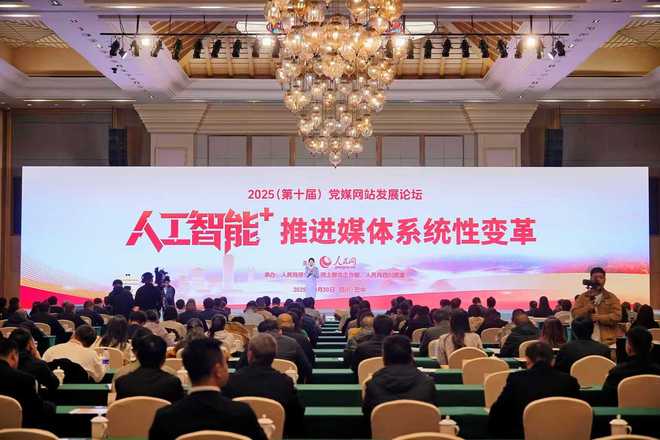
2025(第十届)党媒网站发展论坛在巴中举行
Ren Min Wang· 2025-10-30 13:29
Core Insights - The 2025 (10th) Party Media Website Development Forum was held in Bazhong, Sichuan, focusing on "Artificial Intelligence +, Promoting Systemic Change in Media" [1][3] - Sichuan aims to become the fourth major hub for artificial intelligence development in China, leveraging a "technology + management" dual-engine approach to enhance media production processes [2] - The forum emphasized the necessity for party media to undergo high-quality development and systemic transformation to fulfill their historical mission and adapt to the digital age [6][9] Group 1: Key Remarks from Officials - Wang Fei highlighted that Sichuan is prioritizing artificial intelligence as its top innovation project, achieving significant improvements in editorial efficiency and user experience [2] - Ma Li discussed the cultural vision outlined in the 20th Party Congress, stressing the importance of party media evolving into a digital public platform that leads societal governance and cultural dialogue [6][8] - Sun Aiping emphasized the need to convert AI's technological advantages into a driving force for mainstream media transformation, focusing on political guidance and innovation [9][11] Group 2: Media Transformation Strategies - Fresh insights from the forum included a report by Tang Weihong on the development trends of new media operated by mainstream media, analyzing various aspects such as content production and technological innovation [15][17] - Discussions highlighted the importance of consensus-building and clear pathways in the systemic transformation of media, with a focus on enhancing user connections and service offerings [19][20] - Various speakers presented their experiences in applying AI and technology to cultural dissemination, showcasing innovative practices that align with the goals of systemic change [21][23] Group 3: Future Directions - The forum underscored the need for a balanced approach between content, technology, and social responsibility to achieve a new pinnacle for Chinese culture [23] - The event also marked the launch of the "China Red Leaf Golden Corridor Joint Promotion Activity," indicating ongoing efforts to enhance cultural promotion through media [25] - The Party Media Website Development Forum has become a significant platform for promoting the implementation of Xi Jinping's thoughts and enhancing the influence of party media [25]
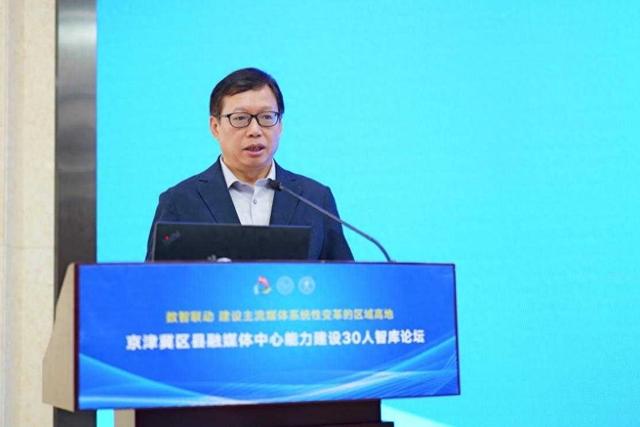
京津冀区县融媒体中心能力建设30人智库论坛在北京举办
Bei Jing Ri Bao Ke Hu Duan· 2025-10-12 16:17
Core Insights - The forum focused on the theme "Digital Intelligence Synergy: Building a Regional High Ground for Systemic Reform of Mainstream Media" and aimed to promote the integration of media in the Beijing-Tianjin-Hebei region [1][3][27] - The event gathered over 100 representatives from government, media, enterprises, and academia to discuss the challenges and opportunities in media integration and talent development [1][3] Group 1: Recommendations and Insights - The President of the China Publishing Research Institute suggested four key recommendations for enhancing the capabilities of media centers: driving content innovation through user needs, strengthening technological empowerment, establishing a scientific evaluation system, and nurturing high-quality media talent [3] - The rapid development of digital intelligence technologies provides stronger communication tools and broader development space for media centers, highlighting the need for resource integration and content quality enhancement [5] - The establishment of the Digital Communication Research Institute at Beijing City University aims to focus on research in multimedia communication systems and international communication, promoting deep integration of industry, academia, and research [7] Group 2: Challenges and Innovations - The Vice President of the China Publishing Research Institute highlighted the achievements and challenges faced by media centers in the Beijing-Tianjin-Hebei region, including fragmented systems, homogeneous content supply, and a shortage of composite talents [9] - The forum featured discussions on the role of AI in content production, emphasizing the need for cost reduction, platform building, and training to overcome challenges faced by frontline editors and journalists [11] - Various media center leaders shared innovative practices, such as emotional empowerment, organizational mechanism innovations, and the use of VR and AI technologies to enhance public service and cultural dissemination [22][24] Group 3: Future Directions and Collaborations - The forum concluded with roundtable discussions on the integration of county-level media and systemic reform, focusing on innovative mechanisms and collaborative development [27] - The event also included specialized seminars addressing talent needs, operational models, and international communication opportunities in the digital age, fostering collaboration between academia and media centers [25]
2025年全省加快推进媒体融合发展现场会召开
Hai Nan Ri Bao· 2025-09-23 23:52
Core Viewpoint - The meeting held on September 23, 2023, in Haikou aims to accelerate the integration of media development in Hainan Province, aligning with central government directives for systemic reform in mainstream media [2][3]. Group 1: Media Integration Development - The meeting emphasizes the necessity of systemic reform in mainstream media as a requirement for the construction of Hainan Free Trade Port [3]. - The focus is on advancing the "six integrations" of provincial media and enhancing the media integration development at the municipal and county levels [2][3]. - The goal is to establish a comprehensive media communication system for Hainan Free Trade Port [2]. Group 2: Strategic Objectives and Tasks - The meeting outlines six key areas for reform: content supply, platform optimization, mechanism renewal, technology empowerment, industry breakthroughs, and talent strengthening [3]. - It aims to position provincial media as the main engine and communication channel for the comprehensive media system, while municipal media centers are to serve as authoritative information hubs and service platforms for local communities [3]. - The meeting also highlights the importance of proactive planning and organization for key tasks and nodes, enhancing external and social publicity [3]. Group 3: Progress and Reporting - The meeting reviewed the progress of media integration across the province and addressed feedback from the disciplinary inspection team [3]. - Reports on the comprehensive communication capabilities of municipal media from January to June of this year were presented, along with updates on the provincial integration technology platform "Nanhai Cloud" [3]. - Representatives from Haikou, Sanya, Sansha, and Danzhou shared their experiences during the meeting [3].