二次创业

Search documents
绿地控股2025年预亏最高190亿 总负债9月末超9430亿 加推跨界求生
Chang Jiang Shang Bao· 2026-01-12 00:04
Core Viewpoint - Greenland Holdings is facing significant operational challenges, with projected net losses for 2025 expected to be between -190 billion and -160 billion yuan, compared to -155.52 billion yuan in the previous year [1][2] Financial Performance - The company anticipates a net profit loss of 160 billion to 190 billion yuan for 2025, with a non-recurring net profit loss estimated at 159 billion to 189.5 billion yuan, indicating an expanded loss compared to the previous year [2] - As of September 2025, Greenland Holdings reported total liabilities of 943.1 billion yuan, with over a thousand ongoing lawsuits [1][4] Operational Challenges - The decline in asset prices and increased project liquidation pressure have led to significant impairment provisions for inventory, contributing to the expected losses [2] - The real estate sector is experiencing a "volume up, price down" trend, with contract sales area increasing by 21.9% to 7.972 million square meters, while sales revenue grew by only 6.53% to 68.099 billion yuan, indicating a clear strategy of price concessions [2][3] Business Strategy - The company has shifted focus towards revitalizing existing assets, with only three new real estate projects added in 2025, covering a land area of 116,400 square meters [3] - The infrastructure business, while showing some resilience, is also under pressure, with total cash collections of 84.9 billion yuan in the first three quarters of 2025, and a significant decline in new project contracts [3] Debt Management - To alleviate financial pressure, Greenland Holdings is implementing debt restructuring and organizational adjustments, with total liabilities reaching 943.1 billion yuan and a cash balance of only 14.946 billion yuan as of September 2025 [4] - The company has initiated an overseas debt reduction plan, aiming to repurchase approximately 1.34 billion USD of bonds at a significant discount [4] Legal Issues - The number of lawsuits involving the company has doubled from 2022 to the first half of 2025, with ongoing cases increasing to 2,777 by September 2025, involving over 10 billion yuan [5] - The company is actively working to resolve these legal issues through specialized task forces and has set clear objectives to reduce the number and financial impact of lawsuits [5] New Business Ventures - In parallel with its traditional business contraction, Greenland Holdings is pursuing a "second entrepreneurship" strategy by entering new sectors such as the export of new energy vehicles, leveraging overseas resources and partnerships [6] - However, the development of these new business lines is expected to take time and is unlikely to significantly impact financial performance in the short term [6]

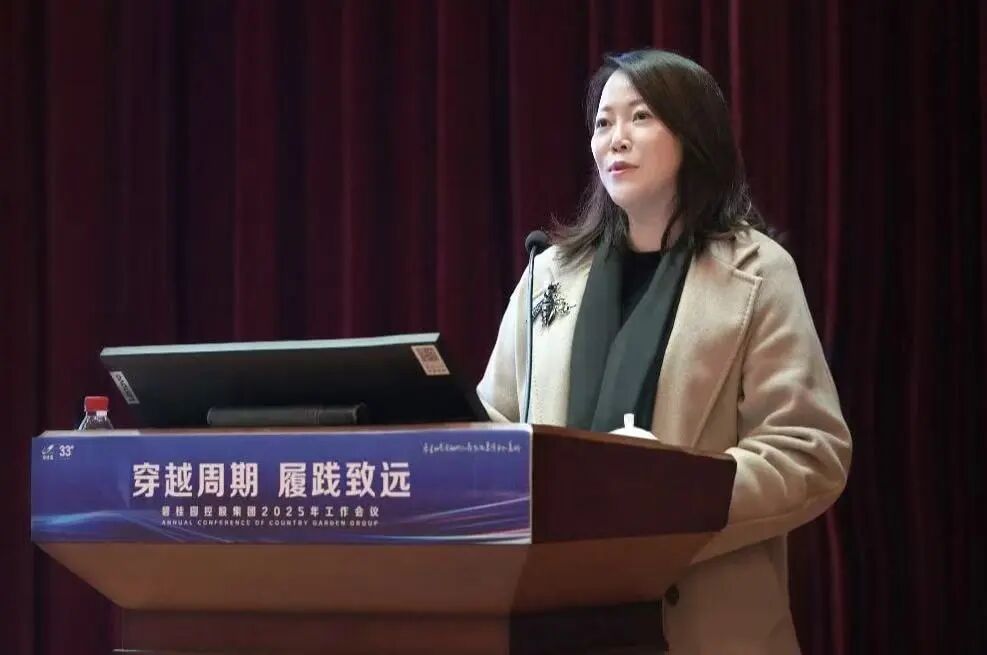
绿地控股2025年预亏最高190亿 总负债9月末超9430亿加推跨界求生
Chang Jiang Shang Bao· 2026-01-11 23:36
Core Viewpoint - Greenland Holdings (600606) is facing significant operational challenges, with projected net losses for 2025 expected to be between -19 billion to -16 billion yuan, compared to -15.55 billion yuan in the previous year, primarily due to declining asset prices, reduced revenue from real estate and infrastructure, and increased financial costs [1][2]. Financial Performance - The company anticipates a net profit loss of 160 billion to 190 billion yuan for 2025, with a non-recurring net profit loss expected to be between 159 billion to 189.5 billion yuan, indicating an expanded loss compared to the previous year [2]. - As of September 2025, total liabilities reached 943.1 billion yuan, with over a thousand ongoing lawsuits, highlighting the financial strain the company is under [1][4]. Business Operations - Greenland Holdings has shifted focus towards managing existing assets, with only three new real estate projects added in 2025, covering a land area of 116,400 square meters [3]. - The company reported a contract sales area of 7.972 million square meters in 2025, a year-on-year increase of 21.9%, but the sales revenue growth of 6.53% was significantly lower than the sales area growth, indicating a strategy of price reductions to stimulate sales [2][3]. Debt and Legal Issues - The company is under immense short-term debt pressure, with 1 billion yuan of borrowings due within a year and a cash balance of only 14.946 billion yuan, leading to an asset-liability ratio of 89.52% [4]. - The number of lawsuits involving the company has doubled from 3,655 cases in 2022 to 6,998 cases by mid-2025, with the total amount in dispute increasing from 19.324 billion yuan to 29.824 billion yuan [5]. Strategic Adjustments - To alleviate financial pressure, the company is implementing debt restructuring and organizational adjustments, including a plan to repurchase approximately 1.34 billion USD of debt at a significant discount [4]. - Greenland Holdings is also pursuing a "second entrepreneurship" strategy by exploring new business avenues, such as partnerships in the electric vehicle export sector, although these new ventures are not expected to contribute significantly to performance in the short term [6].
杨惠妍接班碧桂园1000天
Xin Lang Cai Jing· 2026-01-05 12:23
Core Insights - Yang Huiyan has led Country Garden through a challenging period since taking over as chairperson, marking over 1000 days in leadership [3][14] - The company faced significant difficulties, with sales dropping from 219.98 billion yuan in 2023 to 60.48 billion yuan in 2024 and further to 40.28 billion yuan in 2025, leading to a shift in focus towards stabilizing operations and debt management [3][14] - The announcement of a "second entrepreneurship" phase indicates a transition from crisis management to normal operational recovery, emphasizing quality and refined operations [3][14] Debt Restructuring - Debt restructuring has been a critical strategy for the company under Yang Huiyan's leadership, with significant losses anticipated in the first half of 2023 due to unfavorable market conditions [4][15] - The company announced a debt restructuring proposal on January 9, 2025, with a total of approximately 177 billion USD in foreign debt and 13.77 billion yuan in domestic debt successfully restructured by December 4, 2025 [4][15][16] - The restructuring is expected to reduce the overall debt burden by over 90 billion yuan and significantly lower financing costs to 1%-2.5%, alleviating cash flow pressures and enhancing net assets [5][16] Management Changes - On December 4, 2025, the company announced new management appointments, with Mo Bin becoming co-chairman and Cheng Guangyu taking over as president, aimed at enhancing strategic operations and addressing business challenges [6][17][18] - The management reshuffle aligns with the company's efforts to restore normal operations following the successful debt restructuring [6][18] Strategic Direction - The company is entering a new development phase, focusing on optimizing debt structure and restoring normal operations, as highlighted in a joint New Year's message from Yang Huiyan, Mo Bin, and Cheng Guangyu [8][20] - Yang Huiyan emphasized a shift in operational thinking from large-scale development to refined operations, integrating customer-centric approaches into all processes [9][22] - The "one body, two wings" strategy, which includes real estate development and technology construction, is expected to align with current policy directions and create new growth opportunities [9][21] Market Position and Challenges - The real estate market has shifted to a buyer's market, necessitating a change in operational strategies to meet localized demands and enhance customer satisfaction [10][23] - Despite the positive developments, the company still faces challenges, including numerous legal issues and outstanding debts totaling over 6.3 billion yuan [10][23]


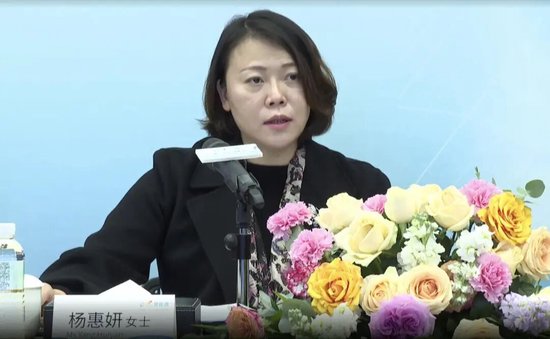
杨惠妍接班1000天
YOUNG财经 漾财经· 2026-01-05 12:00
Core Viewpoint - Yang Huiyan has led Country Garden through a challenging period since taking over as chairperson, focusing on debt restructuring and transitioning the company's operational strategy towards quality and precision management [4][12]. Group 1: Company Challenges and Debt Restructuring - Upon Yang Huiyan's takeover in March 2023, Country Garden faced its most significant difficulties, with total sales dropping from 219.98 billion yuan in 2023 to 60.48 billion yuan in 2024 and further to 40.28 billion yuan in 2025 [4]. - The company issued a profit warning in August 2023, anticipating substantial losses due to unfavorable sales and refinancing conditions, and acknowledged underestimating the market downturn [6]. - By December 2025, Country Garden successfully completed a debt restructuring plan for approximately 177 billion USD in offshore debt and 13.77 billion yuan in onshore debt, significantly reducing its debt burden by over 90 billion yuan [7][8]. Group 2: Management Changes - On December 4, 2025, alongside the announcement of debt restructuring progress, Country Garden appointed new management, with Mo Bin becoming co-chairman and Cheng Guangyu taking over as president [10]. - The management changes are aimed at enhancing the board's effectiveness and addressing the company's challenges in the new operational phase [10]. Group 3: New Strategic Direction - Yang Huiyan introduced the concept of "second entrepreneurship" in December 2025, marking a shift from crisis management to optimizing debt structure and restoring normal operations [12][13]. - The company plans to focus on quality improvement and urban renewal, aligning with the government's policy shift from scale to quality in the real estate market [14]. - Country Garden's strategy includes leveraging its technology construction capabilities and expanding its management services, with over 200 projects and 18.68 million square meters managed by its subsidiary [14]. Group 4: Market Position and Future Outlook - The company recognizes the transition to a buyer's market and aims to refine its operational approach, emphasizing localized products and services tailored to specific community needs [15]. - Despite ongoing challenges, including significant legal and financial issues, Country Garden is positioned to emerge from its debt crisis and redefine its competitive edge in the real estate sector [16].

新希望刘畅:在命运的重壳里,活出自己的形状|我们的四分之一世纪
经济观察报· 2025-12-24 11:00
Core Viewpoint - The article explores the journey of Liu Chang, the daughter of Liu Yonghao, founder of New Hope Group, highlighting her personal growth, challenges in leadership, and the evolving landscape of the agricultural industry in China [3][4][5]. Group 1: Personal Journey and Leadership - Liu Chang took over as chairman of New Hope Liuhe at the age of 33, leading the company through economic cycles and achieving a scale of over 100 billion yuan [4][22]. - Despite external labels such as "successful second-generation successor," Liu Chang seeks to maintain her authentic self amidst societal expectations [5][21]. - The transition to leadership brought significant anxiety, particularly when dealing with large financial decisions, leading to physical symptoms of stress such as insomnia and premature graying [22][23]. Group 2: Company Growth and Challenges - New Hope Liuhe achieved a revenue milestone of over 100 billion yuan in 2020, but faced a significant net loss of 9.59 billion yuan in 2021 due to external pressures like the COVID-19 pandemic and African swine fever [22]. - The company is undergoing a transformation from a traditional agricultural business to a more integrated and technology-driven operation, focusing on enhancing profitability and operational efficiency [24][28]. - Liu Chang emphasizes the importance of adapting to industry changes and leveraging digitalization to improve management capabilities and reduce operational volatility [24][32]. Group 3: Future Vision and Personal Reflections - Liu Chang envisions a future where New Hope can thrive without her constant oversight, aiming for a more professional and institutional governance structure [35]. - She expresses a desire to explore simpler, fulfilling work, such as running a small fish ball noodle shop, reflecting her journey towards finding balance and contentment in life [36].


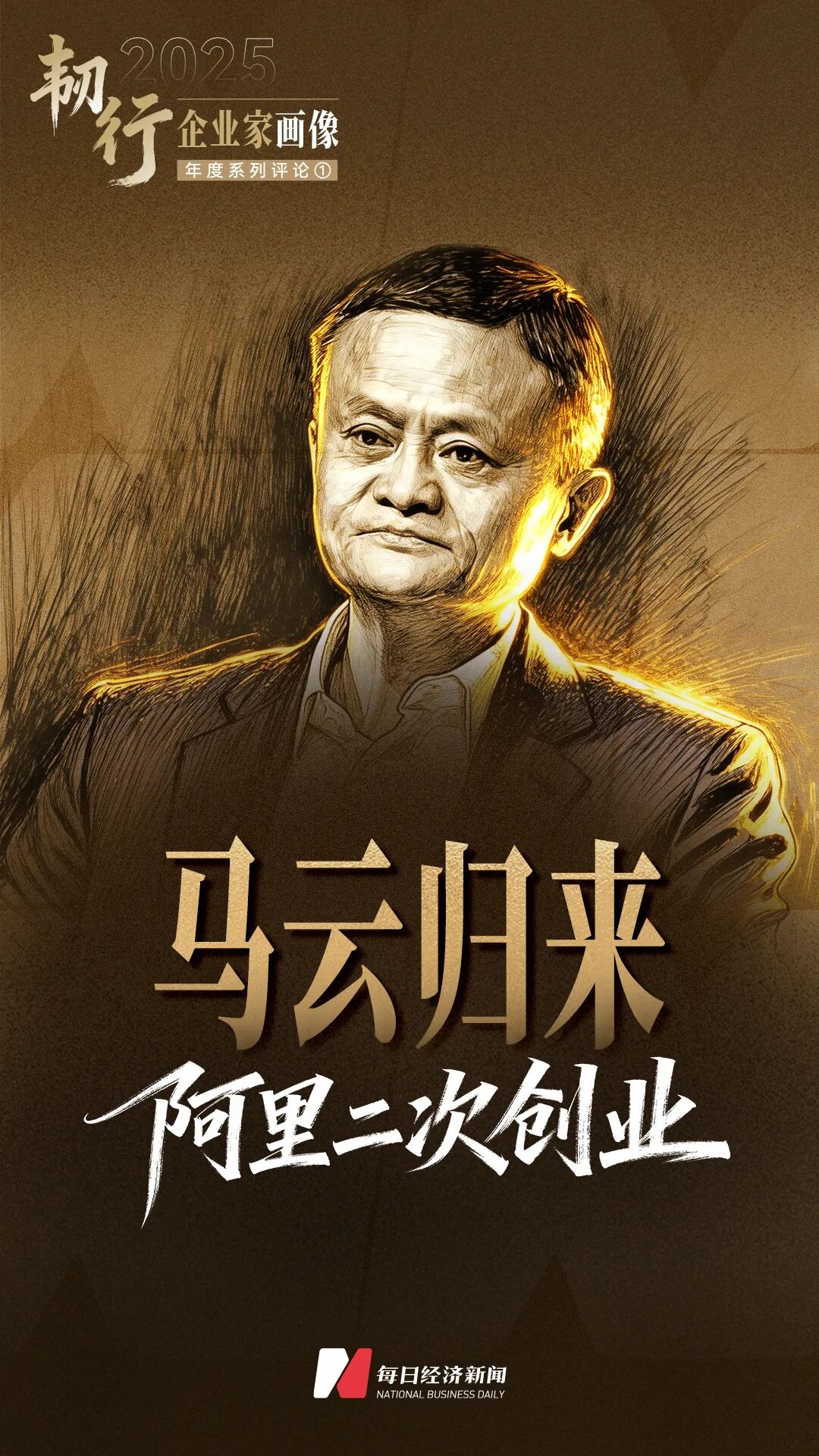
韧行2025:企业家画像|马云归来:阿里二次创业
Mei Ri Jing Ji Xin Wen· 2025-12-23 13:16
Core Viewpoint - The return of Alibaba's founder Jack Ma in 2025 symbolizes a pivotal moment for the company as it embarks on a second entrepreneurial journey, emphasizing the importance of technology in serving humanity rather than replacing it [3][12]. Group 1: Jack Ma's Return - Jack Ma made a public appearance on April 10, 2025, at Alibaba Cloud's new fiscal year launch, signaling his official return [3]. - His return aligns with Alibaba's vision to operate as a startup again, as stated in a shareholder letter by Alibaba's chairman and CEO [3]. - Ma's presence has been increasingly frequent, appearing at various company events and public engagements, reinforcing his role as a symbol of confidence for Alibaba's second entrepreneurial phase [4][12]. Group 2: Company Strategy and Actions - Alibaba is focusing on breaking away from past issues, revitalizing its entrepreneurial spirit, and concentrating on core business areas, particularly AI and e-commerce [6][8]. - The company has made significant changes, including divesting non-core assets and restructuring its internal organization to enhance operational efficiency [8][9]. - In the competitive landscape of the food delivery market, Alibaba's Ele.me has seen its market share increase from 13% to 28% in Q2 2025, despite the challenges posed by heavy subsidies [9]. Group 3: AI and Future Growth - Alibaba plans to invest 380 billion yuan in cloud and AI infrastructure over the next three years, which exceeds the total investment of the past decade [11]. - The company aims to achieve a tenfold increase in the energy consumption scale of its global data centers by 2032, indicating a long-term commitment to AI and cloud services [11]. - By Q3 2025, Alibaba's instant retail business revenue grew by 60%, and its cloud intelligence group reported a 34% year-on-year revenue increase, showcasing the effectiveness of its transformation efforts [12].

“汇同道 谋远略 启新章”——永安期货2026年度策略会成功举办!
Qi Huo Ri Bao· 2025-12-19 10:28
Core Insights - The 2026 strategy conference held by Yong'an Futures in Hangzhou focused on exploring wealth management strategies amid complex macroeconomic changes, emphasizing the importance of collaboration and innovation in the financial sector [1] - Yong'an Futures aims to become a leading derivatives investment bank, focusing on six key areas: deepening industry services, enhancing wealth management, accelerating internationalization, strengthening research capabilities, promoting digital transformation, and adhering to long-term investment principles [1] Macroeconomic Environment and Asset Allocation - The chief economist of Caitong Securities highlighted the divergence between nominal and real economic indicators, suggesting reliance on fiscal and monetary policies to navigate the complexities of the macroeconomic landscape [2] - A multi-asset allocation strategy was proposed, emphasizing the importance of balancing risk and return while adapting to changing economic conditions and enhancing residents' risk appetite [2] Commodity Market Outlook - The head of Yong'an Futures Research Center projected a recovery in commodity prices driven by proactive domestic policies and external demand, particularly in the non-ferrous metals sector, which is supported by AI and new energy demands [3] - Structural opportunities in the market were identified, with a focus on sectors experiencing supply disruptions and increased demand [3] Investment Philosophy and Strategies - Investment strategies discussed included a focus on "probability thinking" and "low correlation" to create resilient portfolios capable of withstanding economic cycles [2][3] - The importance of a balanced investment approach was emphasized, with a focus on redemptive assets as a foundation for navigating market fluctuations [3] Discussions on Asset Management and Technology - Roundtable discussions addressed the transition from product-centric to client-centric investment approaches, highlighting the need for collaboration and innovation in asset management [5] - The role of AI in enhancing quantitative investment processes and risk management was a key topic, with insights into how AI can redefine investment strategies [5] Future Directions - Yong'an Futures plans to reshape its research ecosystem with a focus on customer-centric services and data-driven decision-making, aiming to set a benchmark in the commodity research field [6]

「二次创业」大戏拉开帷幕
3 6 Ke· 2025-12-18 03:31
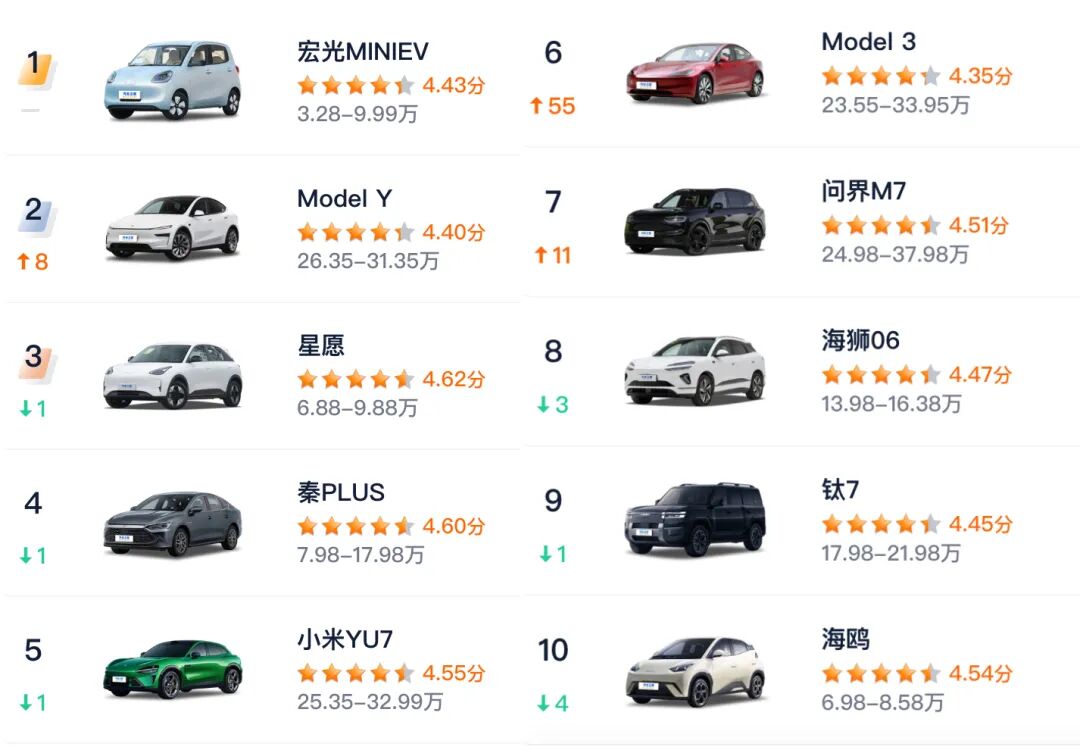
Core Insights - The rapid growth of the new energy vehicle market in China has led to a significant division in the automotive market, with distinct trends emerging in the price segments below and above 200,000 yuan [1][2][5] Market Trends - In November, vehicles priced above 200,000 yuan occupied four spots in the sales rankings, with the Model Y selling over 47,000 units and the AITO M7 selling over 25,000 units [1] - Conversely, vehicles priced below 100,000 yuan also claimed four spots, with the Hongguang MINIEV selling over 56,000 units and the BYD Seagull selling over 21,000 units [2] - The market has bifurcated into segments below 100,000 yuan and above 200,000 yuan, leaving the 100,000-200,000 yuan segment relatively quiet [2][5] Sales Performance - The top-selling models in the overall automotive market for November included the Hongguang MINIEV, Model Y, and others, with significant sales figures indicating a preference for lower-priced vehicles [4] - The sales figures for electric vehicles showed a notable increase, with pure electric vehicles selling 7,155 units and plug-in hybrids 28,213 units [4] Consumer Behavior - The shift in consumer behavior reflects a change from purchasing vehicles out of necessity to buying based on emotional appeal, particularly in the above 200,000 yuan market [7] - The lower-priced market is seeing a mix of consumption downgrade and upgrade, with traditional brands like Geely and BYD dominating this segment, while new entrants struggle to penetrate [7][8] Competitive Landscape - New energy vehicle brands such as Xiaomi and Hongmeng Zhixing are gaining traction, with Xiaomi achieving over 40,000 units sold in November, marking its entry into the top three for the first time [9][10] - Traditional automakers are facing challenges in the above 200,000 yuan market, where they need to enhance their overall offerings to regain competitive advantage [19][20] Industry Evolution - The automotive industry is undergoing a "second entrepreneurship," with traditional manufacturers transitioning from fuel vehicles to smart new energy vehicles, while new entrants are establishing themselves in the market [20]




熬了329天后,杨惠妍暂时轻松了 | 棱镜
Xin Lang Cai Jing· 2025-12-15 13:33
Core Viewpoint - Country Garden has made significant progress in its debt restructuring efforts, with the Hong Kong High Court approving a $17.7 billion offshore debt restructuring plan, while also achieving favorable outcomes for its domestic debt restructuring [2][26]. Group 1: Debt Restructuring - The offshore debt restructuring plan involves a total debt of $17.7 billion, making it the second largest in the industry, surpassing other troubled real estate companies like Sunac and R&F [5][29]. - The restructuring aims to reduce debt by up to $11.6 billion, extend maturity periods up to 11.5 years, and lower the average borrowing cost from 6% to 2% [6][30]. - The restructuring process took 329 days, with the plan receiving creditor approval on November 5 and the court's sanction on December 4 [7][31]. Group 2: Organizational Changes - Country Garden initiated a restructuring of its organizational framework, reducing its property regions from 13 to 10, and appointed Cheng Guangyu as the new president, replacing Mo Bin, who has been with the company for 15 years [3][34]. - Cheng Guangyu is considered a trusted executive by Yang Huiyan, the new leader of Country Garden, who has also made significant changes to the company's structure [3][39]. Group 3: Future Outlook - The successful debt restructuring is seen as a critical first step in the company's self-rescue efforts, with Yang Huiyan emphasizing a "second entrepreneurship" phase for the company [19][43]. - Despite the positive developments, challenges remain in achieving sustainable profitability and adapting to a market that has shifted towards quality over quantity in real estate development [22][47]. - The company reported a significant revenue drop of 28.9% in the first half of the year compared to the previous year, highlighting ongoing market difficulties [23][47].
(走进中国乡村)贵州土家族村寨的“生意经”:生活即风景
Zhong Guo Xin Wen Wang· 2025-12-15 10:06
Core Insights - The article highlights the transformation of Yunshe Village in Guizhou Province, where the local Tujia ethnic community has shifted from a focus on traditional tourism to showcasing their daily lives as a unique attraction for visitors [1][2]. Group 1: Tourism Development - Yunshe Village began its tourism development in 2002, leveraging its proximity to Fanjing Mountain and its ancient architecture, but initially faced challenges due to poor infrastructure and low visitor retention [4]. - The village underwent a significant transformation by improving the environment, enhancing sanitation facilities, and restoring traditional buildings, all while maintaining the authenticity of local life [4]. - The village has successfully integrated local culture into the tourism experience, offering performances and activities that allow visitors to engage with Tujia traditions [4]. Group 2: Visitor Experience - There has been a notable shift in visitor behavior, with tourists now staying longer in the village, often for several days, to experience the local lifestyle rather than just sightseeing [2][6]. - The village currently boasts 42 guesthouses and 28 farmhouses, with 80% of the villagers involved in tourism-related industries, indicating a strong community engagement in this economic shift [6]. - Since 2025, Yunshe Village has welcomed over 600,000 visitors, with local specialties like cured meat and traditional snacks becoming popular souvenirs [6].