
亚太共同体

Search documents
APEC中国年聚焦“亚太共同体”:强调多元合作 筑牢增长引擎
2 1 Shi Ji Jing Ji Bao Dao· 2026-02-10 13:58
Group 1 - The APEC informal leaders' meeting will be held in Shenzhen, China, on November 18-19, marking China's third time as the host [1][12] - The Asia-Pacific region accounts for one-third of the world's population, over 60% of the global economy, and nearly half of global trade, highlighting its significance as a growth engine [1] - China aims to promote a more inclusive, sustainable, and high-quality development direction for APEC cooperation, providing a "Chinese solution" for the future agenda [3][12] Group 2 - The theme for the 2026 APEC meeting is "Building the Asia-Pacific Community and Promoting Common Prosperity," with three priority areas: openness, innovation, and cooperation [4][12] - China emphasizes the importance of balancing the needs of developed and developing economies in the region, addressing potential imbalances in key areas such as digital economy innovation and supply chain security [4][5] - The APEC high-level meetings serve as a crucial platform for policy exchange and cooperation, facilitating discussions on technology innovation, regulatory coordination, and digital transformation [8][11] Group 3 - China's leadership in APEC is characterized by its commitment to high-level openness and integration with regional trade agreements like RCEP and CPTPP, which enhances trade and investment facilitation [11][12] - The APEC cooperation mechanism has evolved to include new areas such as digital governance and green transformation, reflecting the changing dynamics of global trade and cooperation [11][12] - The APEC high-level meetings are seen as a central platform for fostering collaboration and consensus among member economies, crucial for addressing global challenges and enhancing regional integration [8][11]
王毅出席2026年亚太经合组织第一次高官会开幕式并致辞
Qi Huo Ri Bao· 2026-02-10 10:37
Core Points - The article highlights that China is hosting the APEC summit for the third time, marking a significant return after 12 years [1] - The theme for this year's APEC meeting is "Building a Community in the Asia-Pacific for Common Prosperity," emphasizing open development and shared opportunities [1] - Key priorities for the agenda include "openness, innovation, and cooperation," aiming to enhance economic growth and welfare in the region [1] Group 1 - Wang Yi, a member of the Political Bureau of the CPC Central Committee and Foreign Minister, emphasized the importance of APEC in promoting economic growth and welfare [1] - The Chinese government aims to expand the path for the Asia-Pacific Free Trade Area and develop an upgraded blueprint for connectivity [1] - The meeting coincides with the start of China's 14th Five-Year Plan, presenting new opportunities for development in the Asia-Pacific and globally [1] Group 2 - The first senior officials' meeting of APEC and related discussions took place in Guangzhou from February 1 to 10, focusing on the theme of "China Year" and the three priority areas [2] - The discussions are intended to lay the groundwork for the informal leaders' meeting scheduled for November [2]
张国智出席亚太经济合作组织2026中国年第一次高官会欢迎招待会
Nan Fang Ri Bao Wang Luo Ban· 2026-02-10 03:08
孙志洋向出席招待会的中外来宾朋友表示欢迎。他说,APEC中国年首场正式活动隆重举办,让广州站 在世界的聚光灯下。广州是海上丝绸之路的一个起点,历史底蕴深厚,又充满创新活力,既是中国改革 开放的重要窗口,也是国际社会观察改革开放的重要窗口。愿同各经济体深化交流合作,以彼此的发展 为彼此的机遇,建设好亚太共同体。诚邀各位来宾多到广州走一走,感受广州、读懂广州。 陈旭表示,二十多个APEC委员会或工作组已经完成中国年的首轮工作,围绕各领域全年合作重点进行 深入讨论,达成一系列重要共识。第一次高官会是APEC中国年的开幕大戏,期待各方锚定"建设亚太共 同体,促进共同繁荣"目标,围绕"开放、创新、合作"三大优先领域发表意见、提出倡议、凝聚共识, 共同规划合作蓝图,为APEC中国年圆满成功打下坚实基础。相信APEC中国年将为亚太共同体建设注 入新动力,为亚太发展注入新活力。 2月9日,亚太经济合作组织2026中国年第一次高官会欢迎招待会在广州举办。省委常委、副省长张国 智,2026年APEC高官会主席陈旭大使,广州市市长孙志洋等出席并致辞。张国智代表广东省向 APEC21个成员经济体高官,以及APEC秘书处、观察员等嘉宾 ...
张国智孙志洋出席亚太经济合作组织2026中国年第一次高官会欢迎招待会
Guang Zhou Ri Bao· 2026-02-10 01:41
相关附件 陈旭表示,二十多个APEC委员会或工作组已经完成中国年的首轮工作,围绕各领域全年合作重点进行 深入讨论,达成一系列重要共识。第一次高官会是APEC中国年的开幕大戏,期待各方锚定"建设亚太共 同体,促进共同繁荣"目标,围绕"开放、创新、合作"三大优先领域发表意见、提出倡议、凝聚共识, 共同规划合作蓝图,为APEC中国年圆满成功打下坚实基础。相信APEC中国年将为亚太共同体建设注 入新动力,为亚太发展注入新活力。 孙志洋向出席招待会的中外来宾朋友表示欢迎。他说,APEC中国年首场正式活动隆重举办,让广州站 在世界的聚光灯下。广州是海上丝绸之路的一个起点,历史底蕴深厚,又充满创新活力,既是中国改革 开放的重要窗口,也是国际社会观察改革开放的重要窗口。愿同各经济体深化交流合作,以彼此的发展 为彼此的机遇,建设好亚太共同体。诚邀各位来宾多到广州走一走,感受广州、读懂广州。 2月9日,亚太经济合作组织2026中国年第一次高官会欢迎招待会在广州举办。省委常委、副省长张国 智,2026年APEC高官会主席陈旭大使,广州市市长孙志洋等出席并致辞。 张国智代表广东省向APEC21个成员经济体高官,以及APEC秘书处、观 ...
携手构建亚太共同体 促进亚太地区增长和繁荣(APEC中国年:开放 创新 合作)
Ren Min Ri Bao· 2026-02-08 23:16
Group 1 - China will host the 2026 APEC summit, with the informal leaders' meeting scheduled for November in Shenzhen, marking its third time as APEC host [1][4] - APEC is recognized as the highest-level and most influential economic cooperation mechanism in the Asia-Pacific region, with China actively participating in regional cooperation [1][2] - The theme for the 2026 APEC year is "Building an Asia-Pacific Community, Promoting Common Prosperity," aligning with President Xi Jinping's vision of a community with a shared future [3][4] Group 2 - The current global context of increasing unilateralism and protectionism poses significant challenges to international economic and trade order, making China's role as APEC host crucial for regional and global cooperation [2][4] - China aims to inject strong momentum into Asia-Pacific cooperation and provide more certainty and stability for global economic growth through the APEC summit [2][4] - The APEC 2026 agenda will focus on three priority areas: openness, innovation, and cooperation, aimed at promoting free trade, driving new productivity, and leveraging member advantages for mutual benefit [3][4]

外贸规则适配性持续提升
Jing Ji Ri Bao· 2026-02-05 22:13
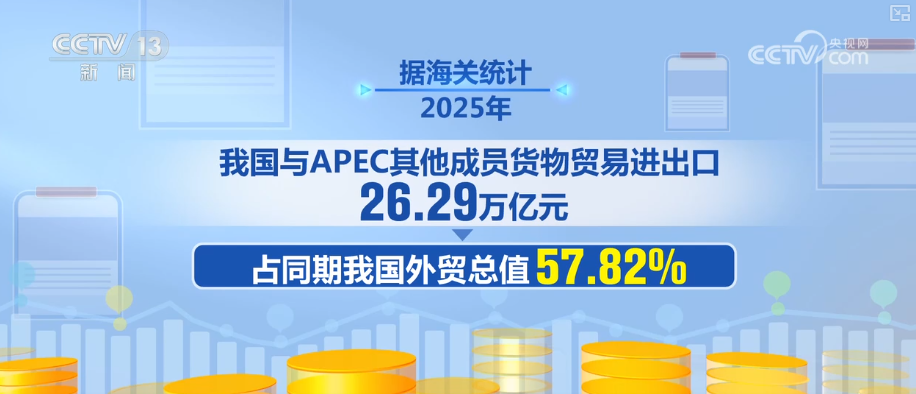
与此同时,新业态新模式蓬勃发展,成为外贸增长新亮点。其中,跨境电商出口海外仓快速增长,数字 贸易(数据流动、电子单证)与绿色贸易(新能源、低碳产品)双轮驱动,进一步夯实了我国外贸持续 增长的基础。 亚太经济合作组织(APEC)"中国年"首场正式活动日前在广州开幕。记者从APEC海关手续分委会2026 年第一次全体会议上获悉,2025年我国与APEC其他经济体进出口总值达26.29万亿元,占同期外贸总值 的57.82%。"十四五"期间,这一数字累计达125.49万亿元,比"十三五"时期增长39.4%。 "新技术、新业态加速演进,为全球包容性增长与可持续发展带来新机遇。国际社会亟须以先进科技与 改革创新为抓手,推进治理能力变革与合作机制升级,携手应对各类挑战。"海关总署副署长赵增连表 示,中方将"建设亚太共同体,促进共同繁荣"作为APEC"中国年"的主题,并将"开放、创新、合作"确 定为三大优先领域,旨在锚定亚太共同体建设的长远目标,为贸易增长注入确定性和新动能。 去年以来,我国外贸市场布局持续优化,产业协同纵深发展,区域合作加快升级,贸易韧性显著增强。 2025年,我国对东盟、秘鲁、墨西哥等新兴经济体贸易保持高 ...
超125万亿!中国与APEC进出口五年答卷
Xin Hua Wang· 2026-02-05 00:33
作为亚太经合组织(APEC)"中国年"系列活动的重要组成部分,APEC海关手续分委会2026年第一次全 体会议4日在广州召开。记者从会上获悉,"十四五"期间,中国与APEC其他经济体进出口总值125.49万 亿元,比"十三五"时期增长39.4%,其中,2025年达到26.29万亿元,占同期我国外贸总值已接近六成, 合作发展红利不断释放。 据悉,本次会议为期三天。紧扣"建设亚太共同体,促进共同繁荣"的主题,围绕"开放、创新、合作" 三大优先领域,聚焦技术与创新、智慧海关建设、跨境贸易便利化等热点议题,共有18个APEC经济体 海关、国际组织、学界及工商界的100余名代表参会。 APEC是亚太地区层级最高、领域最广、最具影响力的经济合作机制。海关手续分委会自1994年成立以 来,已成为推动海关手续创新与技术进步的核心"孵化器",为构建更加互联、安全、有韧性的亚太供应 链注入强劲动力。 "海关是对外开放的重要门户和桥梁纽带,也是国际贸易的监管者、守护者,在创新中优化监管效能和 服务水平,在合作中凝聚各方共识,促进地区安全繁荣,共建亚太共同体,我们使命在肩,责无旁 贷。"赵增连说。 为共促亚太地区贸易安全便利,中国海 ...
中国与APEC其他经济体进出口交出五年答卷
Xin Lang Cai Jing· 2026-02-04 17:28
"海关是对外开放的重要门户和桥梁纽带,也是国际贸易的监管者、守护者,在创新中优化监管效能和 服务水平,在合作中凝聚各方共识,促进地区安全繁荣,共建亚太共同体,我们使命在肩,责无旁 贷。"赵增连说。 (来源:衢州日报) 转自:衢州日报 新华社广州2月4日电 (记者 邹多为 丁乐) 作为亚太经合组织(APEC)"中国年"系列活动的重要组成 部分,APEC海关手续分委会2026年第一次全体会议4日在广州召开。记者从会上获悉,"十四五"期间, 中国与APEC其他经济体进出口总值125.49万亿元,比"十三五"时期增长39.4%,其中,2025年达到 26.29万亿元,占同期我国外贸总值已接近六成,合作发展红利不断释放。 中国海关是2026年APEC海关手续分委会主席。海关总署副署长赵增连当天表示,当前,亚太经济总量 已超全球六成,贸易总量接近世界一半,这片充满活力的地区既是世界经济增长的引擎,也承载着各国 各地区共同发展的期盼。 为共促亚太地区贸易安全便利,中国海关以此次会议为契机,对APEC各经济体海关发出3点倡议:着 眼普惠包容,深入实施"智慧海关"合作伙伴计划,深化无纸贸易、跨境电商、绿色贸易等各领域合作, 持 ...
我国多元布局“新蓝海”拓展与APEC其他成员市场空间 高技术产品成纽带
Yang Shi Wang· 2026-02-04 02:24
Group 1 - In 2026, China will host the APEC summit, with the Ministry of Finance organizing a series of financial meetings, including the APEC Finance and Central Bank Deputies Meeting in Shanghai on February 4-5 [1] - The first official event of APEC "China Year" is currently taking place in Guangzhou, focusing on the theme of "Building an Asia-Pacific Community for Common Prosperity" and three priority areas: openness, innovation, and cooperation [1][2] - In 2025, China's trade with APEC members reached 26.29 trillion yuan, accounting for 57.82% of the country's total foreign trade [4] Group 2 - China's trade with APEC members during the 14th Five-Year Plan period amounted to 125.49 trillion yuan, showing a year-on-year growth of 39.4% [4] - The country is expanding its market space with APEC members, particularly in emerging markets such as ASEAN, Latin America, and Central and Eastern Europe, enhancing connectivity through initiatives like the Belt and Road [6] - In 2025, China exported high-tech products worth 4.63 trillion yuan to APEC members, with significant growth in lithium-ion batteries, photovoltaic products, and electric vehicles [7] Group 3 - China primarily imports energy, agricultural products, semiconductor equipment, and precision instruments from APEC members, with imports of electromechanical products and high-tech products showing notable growth [8] - Nearly half of China's exports to APEC members consist of intermediate goods, indicating a stable "China production - APEC assembly - global sales" supply chain [9] - The growth of cross-border e-commerce exports and the digital trade initiatives are driving new growth points in trade with APEC members [11] Group 4 - Trade facilitation measures are being upgraded, including the 3.0 version of the China-ASEAN Free Trade Area, which reduces costs through tariff concessions and rule coordination [13] - The APEC "China Year" is expected to not only boost short-term trade growth but also enhance the quality of foreign trade, solidifying China's core position in the Asia-Pacific industrial chain [13]

广州举办2026年APEC首次高官会 中国引领亚太合作新征程
Xin Lang Cai Jing· 2026-02-02 23:09
2月,千年商都广州迎来亚太经合组织(APEC)"中国年"首场盛会——APEC2026年第一次高官会。 外交部发言人郭嘉昆在例行记者会上介绍,中国作为2026年亚太经合组织东道主,2月1日至10日在广州 举办APEC第一次高官会及相关会议,这也是APEC"中国年"首场正式活动。本次会议将聚焦2026年 APEC会议主题"建设亚太共同体,促进共同繁荣"和三大优先领域"开放、创新、合作",全面启动各领 域各机制合作,深入讨论具体合作,为11月领导人非正式会议积累成果。 2月1日,APEC高官会日程满满,重点讨论科技创新、监管协调、卫生工作和数据隐私等话题。谈及科 技创新话题,菲律宾科技部助理部长Napoleon Kilates Juanillo Jr在接受21世纪经济报道记者采访时表 示,在今天的会议上,各APEC经济体探讨了开放科学以及跨国科学家交流合作的相关议题,也探讨了 科技创新领域的潜在合作方向,各方在这些发展方向上的看法高度一致,达成了共识,"菲律宾作为正 式参与方,对科技创新政策伙伴关系表达了全力支持的态度"。 在探讨多领域合作机制的同时,出席APEC高官会的嘉宾们也对广州的多元魅力有了更深刻的认识。 ...