
代理式AI

Search documents
早报|特朗普威胁委内瑞拉代总统;宇树科技辟谣;茅台集团警示虚假招商信息;双星创始人汪海声明与儿子断绝关系
虎嗅APP· 2026-01-05 00:11
Group 1 - Yushu Technology refuted reports regarding its IPO, stating that the information was misleading and that its listing process is proceeding normally [2] - Kweichow Moutai Group warned against false investment information being circulated under its name and stated that it has not authorized any such claims [3] - The Chinese Ministry of Foreign Affairs expressed serious concern over the U.S. military actions in Venezuela, calling for the immediate release of President Maduro and his wife [12] Group 2 - The Ministry of Education announced plans to establish 15 new undergraduate institutions, including Tianjin Vocational University and Nanchang University of Science and Technology [14][15] - South Korean President Lee Jae-myung began a four-day state visit to China, marking his first visit since taking office, with discussions expected on supply chain investments and digital economy cooperation [16][17] - The automotive industry will see the implementation of a new subsidy policy for trade-ins starting January 5, 2026, offering up to 20,000 yuan for scrapping old vehicles when purchasing new energy vehicles [28] Group 3 - Filorga, a French skincare brand, announced the closure of its official flagship store due to a strategic business adjustment, with the store set to cease operations on January 31, 2026 [8] - The well-known chain brand "Washing Bear" faced complaints from consumers regarding store closures, with the founder acknowledging the issue and promising to address customer refunds [18] - Nvidia's CEO Jensen Huang indicated that the future of AI will focus on hybrid AI, transitioning from generative AI to agent-based AI, targeting the enterprise market [30]


AI日报丨苹果回应国行版AI上线传闻;杨元庆对谈黄仁勋;电动无人驾驶矿卡伯镭科技完成超10亿元融资
美股研究社· 2026-01-04 11:22
Group 1 - The article highlights the rapid development of artificial intelligence (AI) technology, presenting significant opportunities in the market [3] - Berai Technology, a leading provider of electric unmanned mining trucks and zero-carbon mining solutions, has completed a financing round exceeding 1 billion yuan, marking the largest financing amount in the unmanned mining sector [5] - The financing will be used to enhance R&D investment, expand intelligent production capacity, accelerate domestic and international market expansion, and deepen industry ecosystem cooperation [5] Group 2 - Lenovo's CEO Yang Yuanqing and NVIDIA's CEO Jensen Huang discussed their upcoming collaboration at CES 2026, focusing on the evolution of AI from generative to agent-based capabilities [7] - Both executives believe that the core opportunity in future AI development lies in "hybrid AI" [7] - Lenovo plans to launch an enterprise-level AI product in collaboration with NVIDIA at their innovation technology conference on January 6 [7] Group 3 - Apple has not officially launched its AI yet, with expectations that the iPhone 15 Pro and newer models will be compatible due to high hardware requirements [8] - There have been reports of gray testing for "Apple Intelligence and Siri" features on certain domestic devices, but the official launch will be announced on their website [8]



美“斩杀线”引爆热搜!年薪45万美金程序员失业半年露宿街头;罗永浩豆包互怼上热榜!雷军直播拆小米YU7回应传闻 | Q资讯
Sou Hu Cai Jing· 2026-01-04 09:27
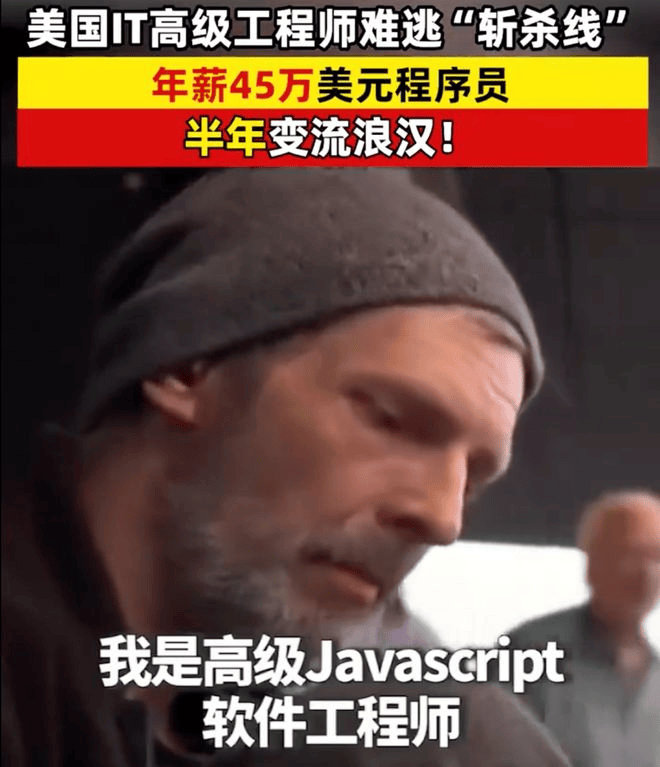
Group 1 - The term "slaughter line" has gained popularity on social media, highlighting the harsh reality of financial crises leading to homelessness in the U.S. [1][2][4] - Many Silicon Valley engineers have faced bankruptcy due to unexpected events like job loss or illness, with some high-earning professionals becoming homeless within months [2][4] Group 2 - Xiaomi's CEO Lei Jun conducted a live stream where he disassembled a new Xiaomi YU7 to address various online concerns about the product [7][8] - The live stream was initially delayed due to Lei Jun's illness but became significant as it was the first major live event of 2026 [7] Group 3 - Lenovo's CEO Yang Yuanqing and NVIDIA's CEO Jensen Huang discussed a new collaboration focused on "hybrid AI" during a conversation ahead of CES 2026 [8][9] - They identified two key trends in AI development: enterprise-level AI as a core battleground and the integration of AI into various sectors of the economy [8][9] Group 4 - Baidu plans to spin off its AI chip subsidiary Kunlun and has submitted a listing application to the Hong Kong Stock Exchange, with an estimated valuation of at least $3 billion [13][15] - The spin-off aims to enhance Kunlun's market image and attract investors focused on AI computing chips and related systems [15] Group 5 - A new regulation on green product certification in China has been introduced, marking a significant shift towards comprehensive regulation of the certification process [16] - The updated guidelines cover 122 product categories, including electronics and packaging, and aim to standardize the certification process [16] Group 6 - The company "Moon's Dark Side" has completed a $500 million Series C funding round, raising its valuation to $4.3 billion [17][18] - The funding will be used to expand graphics card production and accelerate the training and development of its K3 model [17] Group 7 - OpenAI is at a critical juncture in 2026, needing to demonstrate a sustainable business model after years of rapid growth and significant funding [20] - Investors are shifting from a phase of leniency to demanding clear profitability pathways from OpenAI [20] Group 8 - Cloud Leopard Intelligent has initiated its IPO process, aiming to become the first domestic DPU (Data Processing Unit) stock in China [30][33] - The company specializes in cloud computing and DPU solutions, with a valuation exceeding 14 billion yuan as of late 2025 [33] Group 9 - Meta has acquired the AI application company Manus for several billion dollars, marking its third-largest acquisition to date [33][34] - Manus, which was previously valued at $2 billion, is known for its AI agent product that automates complex tasks based on simple user instructions [34][35]



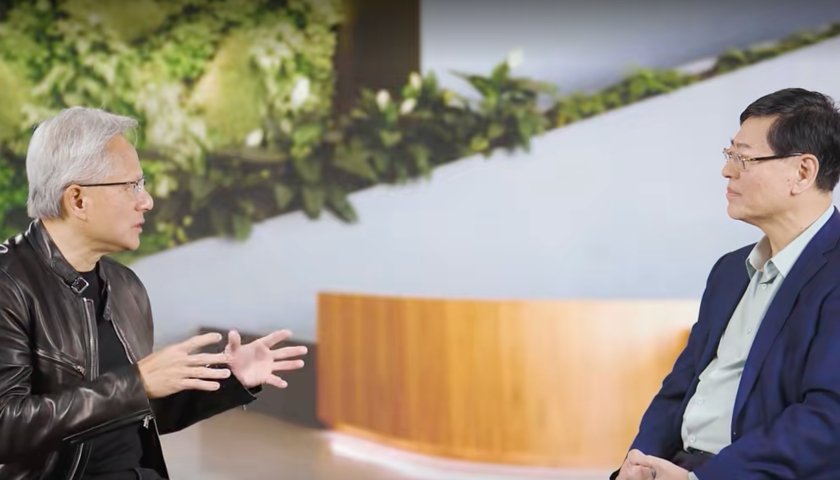
黄仁勋对话杨元庆:未来两年内双方合作规模或再扩大五倍
Xin Lang Cai Jing· 2026-01-04 02:26
Core Insights - The discussion between NVIDIA CEO Jensen Huang and Lenovo CEO Yang Yuanqing highlighted the significant growth in AI collaboration, with a fivefold increase over the past few years and a potential for another fivefold increase in the next two years [1][2] - Both leaders emphasized the evolution of AI from generative AI to agent-based AI, which offers enhanced problem-solving and reasoning capabilities, with a focus on "hybrid AI" as a key opportunity for future development [1][2] Company Performance - Lenovo reported a 15% year-over-year revenue growth for Q2 of the fiscal year ending September 30, 2025, reaching $20.5 billion, surpassing market expectations and previous records during the pandemic; adjusted net profit increased by 25% to $512 million, outpacing revenue growth [6] - NVIDIA achieved record revenue of $57 billion for Q3 of fiscal year 2026, a 62% year-over-year increase, significantly exceeding market expectations of $55.19 billion; net profit rose by 65% to $31.9 billion [6] Strategic Developments - NVIDIA and Lenovo are jointly developing an enterprise-level AI system based on RTX Pro, with technical details expected to be announced at an upcoming global innovation technology conference [4] - Huang countered concerns about an AI bubble by highlighting the rapid expansion of the AI ecosystem, with more foundational model builders and startups emerging across various industries and countries [6]
AI周报|Meta斥资数十亿美元收购Manus;梁文锋署名DeepSeek新论文
Di Yi Cai Jing· 2026-01-04 02:26
Group 1: Meta's Acquisition of Manus - Meta has acquired the AI startup Manus for a price reported to be in the billions, marking it as Meta's third-largest acquisition after WhatsApp and Scale.ai [1] - Manus will continue its operations in Singapore and maintain its product offerings through its app and website without changes to its decision-making processes [1] - The acquisition reflects Meta's urgency to enhance its AI capabilities, especially in light of competition from Google's Gemini 3 [1] Group 2: SoftBank's Investment in OpenAI - SoftBank has completed a $40 billion investment commitment to OpenAI, making it one of the largest private financings in history [2] - The final tranche of the investment, amounting to $22 billion to $22.5 billion, has been sent recently [2] - SoftBank's divestment of Nvidia shares for $5.83 billion indicates a strategic shift to fund AI projects, including the partnership with OpenAI [2] Group 3: DeepSeek's New Research - DeepSeek has introduced a new network architecture called mHC (manifold-constrained hyperconnection) aimed at improving model training stability and efficiency [3] - The research addresses issues related to the scalability and memory access costs of existing hyperconnection models [3] - Industry experts view this innovation as a foundational advancement that could lead to significant updates in future versions of DeepSeek's technology [3] Group 4: Moonlight's Financing and Market Position - Moonlight, a large model unicorn, has completed a $500 million Series C financing, significantly exceeding its target, and currently holds over 10 billion yuan in cash [4] - The funds will be used to aggressively expand GPU resources and accelerate the training and development of its K3 model [4] - Moonlight aims to surpass competitors like Anthropic to become a leading AGI company [4] Group 5: Upcoming IPOs in the AI Sector - Companies including OpenAI, Anthropic, and SpaceX are preparing for potential IPOs this year, with total fundraising expected to reach hundreds of billions [6] - OpenAI is negotiating a new valuation of $750 billion, while Anthropic's valuation may exceed $300 billion [6] - The combined valuation of these companies could approach 13 trillion yuan, indicating a significant market impact [6] Group 6: MiniMax's IPO Plans - MiniMax has initiated its IPO process, aiming to raise up to 4.19 billion HKD (approximately $538 million) with a share price range of 151 to 165 HKD [7] - The company is set to list on the Hong Kong Stock Exchange on January 9, 2026, shortly after its competitor, Zhipu AI [7] - MiniMax's cornerstone investors include major financial institutions and investment funds, highlighting strong market interest [7] Group 7: Baidu's Kunlun Chip IPO - Baidu has submitted a confidential application for its AI chip subsidiary Kunlun to independently list on the Hong Kong Stock Exchange [8] - This move follows Baidu's earlier evaluation of the potential for a spin-off, indicating a strategic shift in its business model [8] - The competitive landscape for Kunlun includes major players like Nvidia and AMD, as well as domestic competitors [8] Group 8: Wall Street's Response to Wall Street's IPOs - Wall Street analysts predict that if any of the aforementioned companies successfully go public, it could overshadow the total fundraising of approximately 200 companies in the U.S. in 2025 [6] - The anticipated IPOs are expected to generate significant returns for venture capitalists and investment bankers involved in the transactions [6] Group 9: Wall Street's Response to Wall Street's IPOs - Wall Street analysts predict that if any of the aforementioned companies successfully go public, it could overshadow the total fundraising of approximately 200 companies in the U.S. in 2025 [6] - The anticipated IPOs are expected to generate significant returns for venture capitalists and investment bankers involved in the transactions [6] Group 10: xAI's Expansion - xAI, led by Elon Musk, has purchased a third building to enhance its training capabilities, aiming for nearly 2 gigawatts of computing power [15] - The new facility is set to be transformed into a data center by 2026, supporting xAI's growth and operational needs [15] - xAI's previous investments in data centers indicate a strong commitment to expanding its AI infrastructure [15]


杨元庆与黄仁勋“炉边谈话”:从混合式AI到下一个5倍增长
Zheng Quan Shi Bao Wang· 2026-01-04 02:06
第二个趋势是,未来这样的混合式企业智能将融合应用到全球产业的各行各业中。包括高性能计算、人 工智能云、人工智能工厂、企业智能、工业智能甚至机器人智能等,联想与英伟达正在整个企业级智能 市场开展合作。杨元庆表示,这些趋势将为联想与英伟达都带来巨大的增长机遇。 黄仁勋表示,人工智能正在从"生成式AI"向"代理式AI"演进,后者具备更强的解决问题的能力,以及基 于事实进行推理的能力。杨元庆和黄仁勋一致认为,未来人工智能发展的核心机遇在于"混合式人工智 能"。 黄仁勋表示,未来的AI发展将呈现两大趋势。第一,代理式AI系统的应用不再依赖于单一的云端模 型,而是公有云上前沿大模型与企业、个人私有的定制化模型深度融合。这种"融合"需要强大的载体, 这是联想与NVIDIA联手打造的"企业级AI"的用武之地。 展望未来,黄仁勋立下新"Flag":双方的合作"没有理由在未来两年内不能再扩大五倍"。这是他基于对 AI基础设施建设的乐观预判。 他解释,现在每家企业都在使用AI,每个行业都将构建在AI之上,每个国家都在建设人工智能基础设 施。英伟达把整个系统架构升级为机架级计算机是一个巨大技术进步,把Token的效能提升了10到15 ...
杨元庆重磅对谈黄仁勋,透露新合作、AI新风口
2 1 Shi Ji Jing Ji Bao Dao· 2026-01-04 00:24
Core Viewpoint - The upcoming CES 2026 will feature Lenovo's largest annual technology innovation conference, "Lenovo Tech World," alongside key figures from the global tech industry, including NVIDIA's CEO Jensen Huang and Lenovo's CEO Yang Yuanqing, who discussed the next wave of artificial intelligence (AI) focusing on "hybrid AI" [1][2]. Group 1: Trends in AI Development - Huang and Yang identified two major trends in the next phase of AI development: enterprise-level AI will become the core battlefield, with hybrid AI as a key breakthrough; AI will permeate various sectors of the real economy, creating significant market opportunities [2][9]. - Huang noted that AI is evolving from "generative AI" to "agent-based AI," achieving breakthroughs in reasoning and problem-solving capabilities, which will enhance AI's practical applications [2][9]. - The focus will shift to the enterprise market, characterized by a deep integration of public cloud models and customized open-source models [2][9]. Group 2: Collaboration Between NVIDIA and Lenovo - NVIDIA is collaborating with Lenovo to develop an enterprise-level AI system based on RTX Pro, with NVIDIA providing its most advanced chips for this project [3][10]. - Huang described the upcoming server as revolutionary and expressed eagerness to launch it for large-scale enterprise market promotion [3][10]. - The partnership between NVIDIA and Lenovo has lasted nearly 30 years, with their collaboration in AI having grown fivefold in recent years, and Huang anticipates the potential for this to increase fivefold again in the next two years [4][11]. Group 3: Future Prospects and Market Opportunities - Huang emphasized that every company is utilizing AI, every industry will be built on AI, and every country is developing AI infrastructure, providing vast opportunities for collaboration [4][11]. - The integration of Lenovo's liquid cooling technology and high-performance hardware with NVIDIA's architectural innovations is expected to drive advancements in server development and factory construction, promoting AI automation in industries such as manufacturing and logistics [4][11]. - Yang presented Huang with Lenovo's latest ThinkStation PGX workstation, which Huang praised as a "personal AI cloud" for developers, symbolizing their ongoing commitment to innovation in high-performance computing [4][12].

【钛晨报】推动REITs市场高质量发展,证监会最新发声;百度:计划分拆昆仑芯并于港交所独立上市;沃伦·巴菲特正式退休,卸任伯克希尔·哈撒韦首席执行官
Sou Hu Cai Jing· 2026-01-03 23:58
Group 1 - The China Securities Regulatory Commission (CSRC) issued a notice to promote the high-quality development of the Real Estate Investment Trusts (REITs) market, emphasizing the need to accelerate the construction of the REITs market system [2][3] - The notice calls for expanding the REITs market by increasing the supply of quality REITs and enhancing the market's diversity and scale, while also improving the fundraising system and market pricing mechanisms [2][3] - It supports well-governed and financially stable listed REITs to strengthen their asset scale and risk resilience through asset acquisitions, fundraising, and mergers [2][3] Group 2 - The notice encourages the development of a robust secondary market for REITs, including the creation of relevant index systems and innovative products like REITs ETFs to enhance investor asset allocation options [3] - It aims to attract long-term funds such as insurance and pension funds into the REITs market, enhancing market stability [3] - The CSRC plans to improve the REITs issuance and trading mechanisms, ensuring better information disclosure and market constraints [3] Group 3 - The notice highlights the importance of legislative support for REITs, aiming to establish a legal foundation for the market's high-quality development [3] - It emphasizes the need for a multi-tiered REITs market system to enhance inclusivity and adaptability [3]
杨元庆与黄仁勋“炉边谈话”透露新合作
Mei Ri Jing Ji Xin Wen· 2026-01-03 15:17
Group 1 - The core viewpoint is that artificial intelligence (AI) is evolving from "generative AI" to "agent-based AI," which has stronger problem-solving capabilities and reasoning based on facts [1] - Huang Renxun and Yang Yuanqing agree that the key opportunity for future AI development lies in "hybrid AI" [1] Group 2 - Huang Renxun identifies two major trends in future AI development: the first is the application of agent-based AI systems that will not rely solely on a single cloud model but will deeply integrate cutting-edge large models with customized models from enterprises and individuals [2] - The second trend is the integration of hybrid enterprise intelligence into various global industries, including high-performance computing, AI cloud, AI factories, enterprise intelligence, industrial intelligence, and even robotic intelligence [2] Group 3 - Lenovo Group and NVIDIA have had a nearly 30-year partnership, with their collaboration in the AI field growing fivefold in recent years [2] - Huang Renxun stated that they have the capability to increase this collaboration fivefold again in the next two years [2] Group 4 - NVIDIA is collaborating with Lenovo to create an enterprise-level AI system based on the RTX Pro series of professional-grade graphics cards, with NVIDIA providing its most advanced chips for this project [2] - Lenovo will hold an innovation technology conference on January 6, 2026, during the CES 2026 in Las Vegas, where they will jointly launch an enterprise-level AI product with NVIDIA [2][3]
黄仁勋对谈杨元庆:立下新目标,锚定混合AI
Xin Lang Cai Jing· 2026-01-03 15:10
1月3日晚,在联想年度技术创新大会和CES(全球消费电子展)前夕,英伟达创始人兼CEO黄仁勋与联 想集团董事长兼CEO杨元庆展开了一段对话。二人锚定了AI的下一个风口——混合式人工智能(Hybrid AI)。黄仁勋表示,人工智能正在从"生成式AI"向"代理式AI"演进,后者具备更强的解决问题的能力, 以及基于事实进行推理的能力。 展望未来,黄仁勋立下了新的"Flag":两家公司的合作"没有理由在未来两年内不能再扩大五倍"。他进 一步解释,现在每家企业都在使用AI,每个行业都将构建在AI之上,每个国家都在建设人工智能基础 设施。英伟达把整个系统架构升级为机架级计算机是一个巨大技术进步,把Token的效能提升了10到15 倍。联想与英伟达合作的企业级AI未来在工业、物流、仓储、机器人等领域都将有巨大的应用潜力和 增长空间。(第一财经记者:刘佳) ...