
农业可持续发展

Search documents
对话先正达:农业可持续发展和利润并不矛盾 绿色产品可更盈利
Xin Lang Cai Jing· 2025-09-27 23:08
Core Viewpoint - The CFO of Syngenta Group emphasizes that pursuing environmentally friendly products can enhance profitability, indicating a win-win transformation in the agricultural sector [1]. Group 1: Agricultural Sustainability and Profitability - Agriculture faces the challenge of increasing yield while reducing carbon emissions, presenting both opportunities and challenges for agricultural technology companies [1]. - The innovation cycle for agricultural inputs is lengthy, often taking 10 to 15 years and requiring investments of $200 to $300 million [1]. - Syngenta has been focusing on soil health for the past seven years, which has led to products that improve crop health while protecting soil [1]. Group 2: Research and Development Strategy - Understanding the interaction between plants and soil microorganisms is crucial for developing beneficial "friendly" microbes that enhance plant health and soil quality [3]. - The company is looking ahead to the next 10 to 15 years to anticipate climate change impacts on pests and weeds, which will inform their R&D strategy [4]. Group 3: Sustainability Framework and Financial Performance - Syngenta will launch the Portfolio Sustainability Framework (PSF) in 2024 to assess the sustainability performance of its products [4]. - Products rated as level 1 in sustainability have significantly higher gross margins compared to those rated level 3, indicating that environmentally friendly products are also more profitable [4]. - The TYMIRIUM technology, developed over 10 years, exemplifies how reduced usage can lead to higher product value and lower costs for farmers while benefiting the environment [4]. Group 4: Future Goals and Financing - Syngenta aims to increase the proportion of environmentally friendly products from 30% to 60% through the PSF framework [5]. - The company secured a $4.5 billion sustainable development-linked syndicated loan in 2024, benefiting from favorable interest rates from global banks [5]. - The CFO concludes that agricultural sustainability and corporate profitability are not contradictory; greener products tend to be more competitive and profitable [5].

全球农创客齐聚杭州:数字技术赋能小农户 智慧方案破解农业痛点
Sou Hu Cai Jing· 2025-09-10 23:13
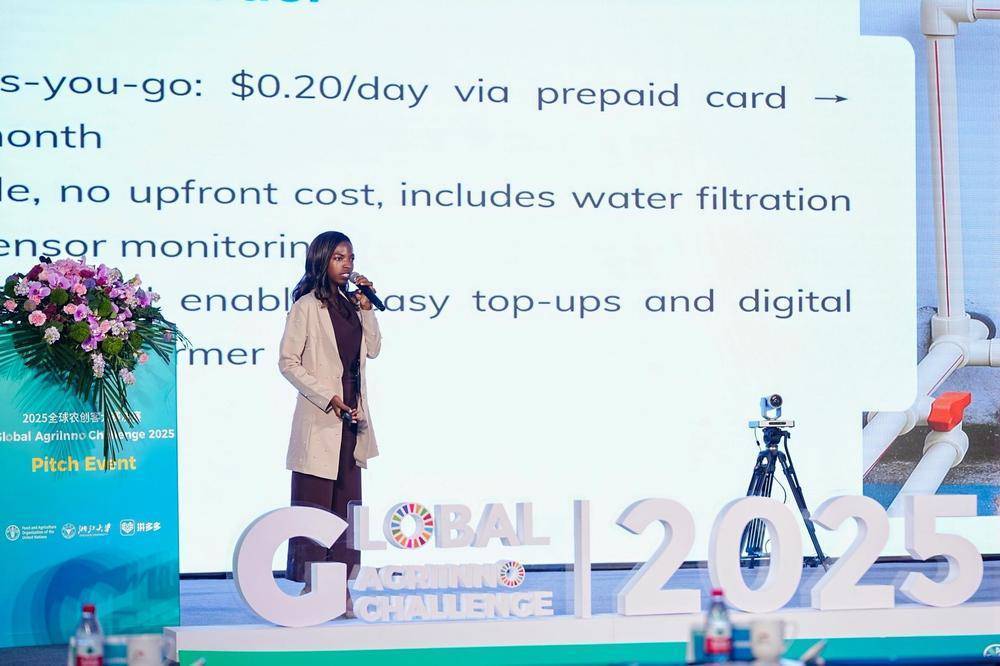
Core Insights - The 2025 Global Agri-Innovation Competition, supported by Pinduoduo, showcased innovative agricultural solutions from teams around the world, emphasizing the importance of addressing agricultural pain points and promoting sustainable practices [1][6] Group 1: Award-Winning Innovations - The Tanzanian SafeSip team won the gold award for their solution targeting waterborne pathogens affecting poultry farming in East Africa, which has a mortality rate of 58% due to contaminated water [3] - The Chinese "Pig Herd Real-Time Guardian" team, composed of members under 30, developed an AI system that can predict respiratory diseases in pigs seven days in advance by analyzing cough sounds, significantly improving disease prevention [3] - The American PlanPulse Patch team created a system using nano-material VOC sensors to detect plant diseases in tomatoes before symptoms appear, aiming to expand their application to other crops [5] Group 2: Other Notable Innovations - A Hungarian team proposed a low-cost monitoring system using high-altitude balloons to observe irrigation, pest issues, and wildlife threats in agriculture [5] - A Ugandan team utilized solar technology for irrigation and cold chain storage, while a Thai team combined satellite remote sensing with AI to predict straw burning risks [5] Group 3: Support and Future Plans - Pinduoduo's Vice President announced a "100 billion support" plan to enhance digital advantages for global agricultural entrepreneurs over the next three years, reinforcing the company's commitment to agricultural innovation [6] - The competition highlighted the need for inclusive and innovative projects that benefit smallholder farmers, addressing challenges posed by climate change and resource scarcity [6]
新农人代表石嫣现场观礼阅兵:我热泪盈眶
Nan Fang Nong Cun Bao· 2025-09-04 03:31
Core Viewpoint - The article emphasizes the importance of integrating personal agricultural endeavors with national and societal responsibilities, highlighting the role of new farmers in sustainable development and rural revitalization [9][15][16]. Group 1: Event Participation - A representative of new farmers attended the 80th anniversary of the victory in the Chinese People's Anti-Japanese War and the World Anti-Fascist War [2][3]. - The event featured a strong emotional atmosphere, particularly during the aerial flag-guarding formations and the tank parade [5][6][7]. Group 2: Personal Commitment to Agriculture - The representative expresses a commitment to agricultural entrepreneurship that transcends personal gain, linking personal values with national pride [10][11]. - The experience of working in rural areas for 17 years has shaped a deep understanding of the agricultural sector and its challenges [19]. Group 3: Vision for Agriculture - The focus is on addressing sustainable agricultural development, rural revitalization, and the common prosperity of farmers [15][16]. - There is a call for the integration of research and practice, particularly in social sciences, to enhance theoretical frameworks that guide practical applications [16][18]. - The representative aims to internationalize China's agricultural practices, promoting traditional values and ecological agriculture as a means of fostering peace [20][21].

多国专家齐聚新疆共商盐碱地治理
Xin Hua She· 2025-08-25 14:49
Core Viewpoint - The China-Central Asia Saline-Alkali Land Technology Innovation and Cooperation International Academic Exchange Conference was held in Xinjiang, focusing on technological innovation and cooperation in saline-alkali land management and sustainable agricultural development [1][2]. Group 1: Conference Overview - The conference gathered nearly 200 experts and representatives from research institutions, universities, and enterprises from China, Kazakhstan, Uzbekistan, and Tajikistan [1]. - The event aimed to promote the efficient use of saline-alkali land resources in China and Central Asia, improve regional ecological environments, and ensure food security and social stability [2]. Group 2: Saline-Alkali Land Management - China has approximately 500 million acres of saline-alkali land, with Xinjiang accounting for 36.8% of the total saline soil area in the country, indicating significant potential for development and improvement [1]. - The China Agricultural Academy plans to focus on key technologies such as saline-alkali land improvement, biological breeding, and smart irrigation, conducting a series of cutting-edge research and integrated demonstrations [1]. Group 3: International Collaboration - The China Agricultural Academy's Western Agricultural Research Center signed memorandums of understanding with research institutions from Uzbekistan and Kazakhstan to collaborate in areas such as saline-alkali land management, livestock breeding, food safety, and international education [2]. - The aim of these collaborations is to share technologies and achieve higher yields at lower management costs [2].
构建市场化轮作休耕生态补偿机制
Jing Ji Ri Bao· 2025-08-23 22:18
Core Viewpoint - The market-oriented mechanism for crop rotation and fallow ecological compensation is a crucial practice for sustainable agricultural development globally, balancing ecological protection and farmer income through a combination of government policy support and market incentives [1]. Group 1: International Practices - Developed countries and regions, such as the United States and the European Union, have implemented policies and market mechanisms like carbon credit trading and ecosystem service payments to promote eco-friendly agricultural practices and enhance farmer participation in crop rotation and fallow [1]. - Developing regions, including Southeast Asia and Brazil, are gradually exploring market-based compensation mechanisms, although their agricultural ecological compensation systems are still in the early stages compared to developed countries [1]. Group 2: Importance for China - Establishing a market-oriented and diversified ecological compensation mechanism for crop rotation and fallow is significant for achieving sustainable agricultural development, ecological protection, and increasing farmer income in China [1]. - Key strategies to enhance ecological compensation effectiveness include the integration of government policies with market mechanisms, the development of carbon trading markets, and the promotion of ecosystem service payment mechanisms [1]. Group 3: Role of International Cooperation - The role of international cooperation and green finance is essential, as it can introduce more external funding and innovative experiences to support the development of ecological compensation mechanisms [1].
哈萨克斯坦减少粮食作物增加经济作物种植面积
Xin Hua Cai Jing· 2025-08-21 06:14
Core Viewpoint - Kazakhstan's government is actively adjusting its agricultural development strategy to reduce the planting area of grain and water-intensive crops while increasing the cultivation of socially significant and economically beneficial crops, aiming for crop diversification and balanced planting ratios [1] Agricultural Development Strategy - The total cultivated area in Kazakhstan is projected to reach 23.6 million hectares by 2025, an increase of over 320,000 hectares compared to the previous year [1] - The area for grain and legume crops is expected to decrease by nearly 630,000 hectares to 16 million hectares, while the area for oilseed crops will increase by approximately 1.05 million hectares to 4 million hectares [1] - Sunflower planting area is set to reach a record 1.8 million hectares, an increase of 480,000 hectares from the previous year [1] Water Resource Management - Kazakhstan is reducing the planting area of water-intensive crops such as rice and promoting water-saving irrigation techniques in cotton cultivation [1] Agricultural Sustainability and Food Security - The Ministry of Agriculture emphasizes the need for more rational use of land and water resources, aiming to achieve diversified and balanced crop planting, reduce dependence on single crops, improve agricultural sustainability, enhance food security, and increase farmers' income [1] - A government meeting held on August 18 discussed agricultural development and food security, emphasizing the need for stability in supply and prices of various agricultural products [1]
农废变“金肥” 杭州以智慧农服绘就绿色“丰景”
Zhong Guo Xin Wen Wang· 2025-08-13 19:19
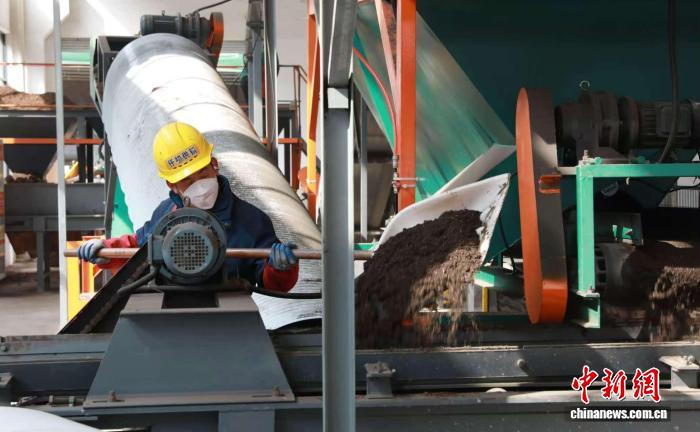
Core Viewpoint - The article highlights the successful implementation of agricultural waste resource utilization in Hangzhou, focusing on the transformation of agricultural and forestry waste into organic fertilizers, which supports sustainable agriculture and environmental protection [1][3][5]. Group 1: Agricultural Waste Utilization - The center processes agricultural waste such as straw and tree branches into organic fertilizers, significantly reducing environmental pollution caused by straw burning and land occupation [3][5]. - The application of microbial fermentation technology has reduced the traditional composting cycle from 45 days to approximately one week, producing high-quality organic fertilizers that benefit local farmers [3][5]. Group 2: Digital Technology Integration - Digital technology is enhancing production efficiency across the entire supply chain, with real-time monitoring of parameters like temperature and humidity in the fermentation workshop [5][6]. - The "soil testing and fertilizer matching + precise delivery" system allows for customized fertilizer delivery to remote farmers within 48 hours, improving waste processing efficiency by 30% and service response time by 50% [5][6]. Group 3: Economic and Environmental Impact - The conversion of agricultural waste into high-efficiency organic fertilizers not only mitigates environmental pollution but also promotes soil ecological restoration and supports sustainable agricultural development [5][6]. - The establishment of a collaborative agricultural service network is underway, which integrates storage resources and reduces logistics costs by approximately 30% [5][6].
农发行吴江区支行科创学院项目发放1515万元贷款助力服务长三角一体化发展
Jiang Nan Shi Bao· 2025-08-05 02:56
Core Viewpoint - The Agricultural Development Bank of China (ADBC) Wujiang Branch has successfully issued a policy loan of 15.15 million yuan to the new development construction company of the Yangtze River Delta Integration Demonstration Zone for the Sci-Tech Park project, providing strong financial support for regional development [1] Financial Support - The loan is primarily aimed at the construction of supporting facilities for the Sci-Tech Park, with the core goal of enhancing the level of agricultural technology [1] - The funding will facilitate the improvement of rural infrastructure and promote agricultural quality enhancement and efficiency [1] Strategic Alignment - ADBC Wujiang Branch is actively implementing the national strategy for the integration of the Yangtze River Delta by optimizing credit processes and accurately matching project needs [1] - The bank ensures efficient fund allocation to support the deep integration of agricultural technology and production [1] Future Plans - The bank will continue to leverage its policy financial advantages, focusing on sustainable agricultural development and rural revitalization [1] - ADBC aims to inject more financial resources into the high-quality development of the Yangtze River Delta integration [1]
《科学》发表中国农业大学张福锁院士团队新成果:调控植物-土壤反馈,推动农业可持续发展
Huan Qiu Wang Zi Xun· 2025-07-26 09:46
Core Insights - The article discusses a significant achievement by a team from China Agricultural University, which introduces a new paradigm for sustainable agriculture by integrating the concept of "plant-soil feedback" into agricultural ecosystems [1][2] - The research emphasizes the need to address soil health, which has been neglected, leading to imbalances in soil ecosystems and threatening agricultural quality and green development [2] Group 1 - The study proposes a systematic approach to achieve high crop yields while maintaining soil health, offering innovative solutions for sustainable agricultural development [1] - The research is based on long-term practical observations and analyses of the limitations faced in agricultural green development, focusing on the interactions between plants, soil, and microorganisms [2] - The paper highlights the importance of developing soil health management techniques to enhance soil multifunctionality, reduce external dependencies, and promote green productivity [2] Group 2 - The research advocates for a balanced approach that considers beneficial organisms and pest control, integrating short-term production goals with long-term soil health [2] - The study is co-authored by experts from the Netherlands Royal Academy and the Canadian Royal Society, indicating international collaboration in agricultural research [2] - The research received funding from the National Natural Science Foundation and the National Key Research and Development Program, showcasing institutional support for agricultural innovation [2]
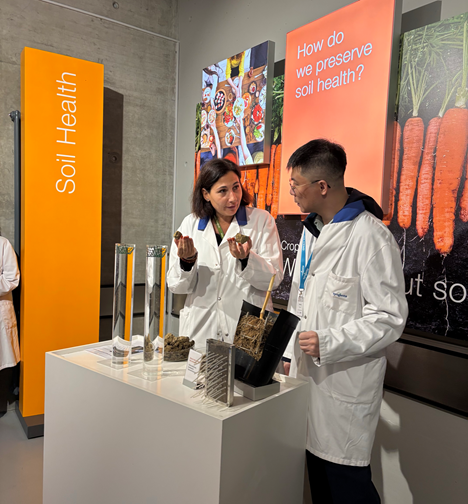
先正达集团聚焦农业可持续发展,推动绿色变革
Jing Ji Wang· 2025-07-21 10:00
Core Insights - The third China International Supply Chain Promotion Expo highlighted Syngenta Group's focus on sustainable agricultural development and innovative practices [1][2] - Syngenta Group showcased a series of achievements in sustainable agriculture, including regenerative agriculture projects and bio-based products that enhance crop quality and yield [1] - The company emphasizes soil health as a core agricultural concept, aiming to improve the ecological health of farmland through comprehensive measures [1][2] Group 1 - Syngenta Group has participated in the expo for three consecutive years, demonstrating its commitment to sustainable agricultural practices [1] - The company presented its full industry chain advantages in agriculture, from original innovations in laboratories to precision planting solutions empowered by AI [1] - Syngenta Group's systematic solutions include "good seeds + good products + good fields + good practices," promoting quality improvement and sustainable development in agricultural production [1] Group 2 - The company continues to launch green and efficient agricultural inputs that reduce usage while increasing yield and minimizing environmental impact [2] - Syngenta Group's Thick Soil Health Platform collaborates with the Panda Guide to create a closed-loop path for ecological agriculture, from soil restoration to brand recognition [2] - The company sets an industry example by providing valuable experiences and feasible paths for the green transformation and sustainable development of agriculture [2]