
碳交易市场

Search documents
控股股东12年来首度大手笔增持,海螺水泥股价低位徘徊背后现成本变数与行业需求压力
Mei Ri Jing Ji Xin Wen· 2026-03-27 07:06
Core Viewpoint - The major shareholder of Conch Cement, Conch Group, has significantly increased its stake for the first time in approximately 12 years, while the company has changed its stock repurchase plan to cancellation, indicating a strategic shift amidst ongoing industry challenges [1][2]. Company Summary - Conch Group increased its shareholding from 36.40% to 37.05% by purchasing 34.76 million A-shares, valued between 7.86 billion to 9.26 billion yuan based on share price fluctuations during the purchase period [1][2]. - The company plans to change the purpose of 22.24 million A-shares, previously intended for resale, to cancellation, which will reduce registered capital and potentially enhance earnings per share (EPS) [2][3]. - Conch Cement's revenue has declined from a peak of 176.29 billion yuan in 2020 to 82.53 billion yuan in 2025, a drop of 53.19%, while net profit decreased from 35.16 billion yuan to 8.11 billion yuan during the same period [3][4]. - Despite a 9.33% revenue decline in 2025 compared to 2024, net profit increased by 5.42%, attributed to effective cost control measures [3][4]. - The sales gross margin improved to 24.16% in 2025, up from 21.7% in 2024, while the net profit margin rose to 9.53% from 8.42% [3][4]. Industry Summary - The cement industry is experiencing a downturn, with demand expected to continue declining, although the rate of decline may slow due to supply-side policies and market consolidation [5][6]. - The domestic cement demand is projected to remain weak in 2025, with a further drop in capacity utilization and prices expected to fluctuate at low levels [5][6]. - The supply-side policies, including "overproduction control" and carbon market regulations, are anticipated to lead to the exit of excess and outdated production capacity, potentially improving profitability in the long term [6][5]. - The overall cement market is in a slow downward trend, with production expected to be around 70% of peak levels in 2025, and infrastructure investment is projected to decline for the first time since 2014 [6][5].
策略对话化工-构建商品牛市轮动框架-看好化工大周期机遇
2026-03-01 17:23
Summary of Chemical Industry Conference Call Industry Overview - The chemical industry is experiencing a demand growth rate of approximately 3%-6%, with China's GDP growth slowing to 4%-5% and global growth around 3% [1][2][3] - The main issue is not demand but supply constraints due to dual carbon policies and the scarcity of carbon credits, limiting the expansion of high-carbon industries [1][3] Key Insights - The chemical sector may evolve towards "resource-based" or "colored" characteristics, with supply chain disruptions leading to long-term price increases [1][3] - Chemical stocks have risen approximately 40%-50% since Q3 2025, but some chemical futures and spot prices have not seen significant increases, indicating a misalignment between stock prices and fundamentals [1][4] - Profitability in the chemical sector is currently at a low point, with limited downside risk, suggesting a high safety margin [1][4] - Capital expenditures for listed companies are expected to decline starting in 2024, indicating a weakening expansion drive and a potential turning point in supply [1][4] Supply and Demand Dynamics - The current cycle differs from historical patterns, with supply constraints becoming a more significant issue than demand [2][3] - The industry is likely to see a peak in capacity expansion by 2026, with some sectors nearing the end of their expansion phases [1][4] - The combination of slowing capacity growth and continued demand growth increases the likelihood of supply-demand improvement and price increases [1][4] Market Sentiment and Investment Strategy - The market is currently divided on the timing of the industry recovery, with a high probability of a turning point in the first half of 2026 [5] - Investors are advised to position themselves early in anticipation of the recovery, as waiting for clear price increases may limit potential returns [5] - The chemical sector is viewed as a key area for investment, with a focus on companies that can demonstrate pricing power and long-term value [5][6] Specific Sectors and Companies to Watch - Notable price increases have been observed in the textile chain, including dyes, PTA, and polyester filament, due to limited new capacity and high demand [6][8] - Organic silicon is expected to enter a growth phase with limited new capacity and strong demand [8] - The agricultural chemicals sector, particularly glyphosate, is highlighted for its potential price increase due to high export dependence and profitability concerns [8] - Other sectors with potential price increases include potassium fertilizers and refrigerants, with specific companies like Xingfa and Sinochem recommended for monitoring [8] Conclusion - The chemical industry is at a critical juncture, with supply constraints likely to extend the duration of the current cycle beyond historical norms [1][6] - Investors should focus on sectors with strong fundamentals and potential for price increases, while being mindful of the evolving regulatory landscape regarding carbon emissions [3][8]

申万公用环保周报:碳交易市场规模持续扩大,全球气价回落-20260209
Shenwan Hongyuan Securities· 2026-02-09 08:30
Investment Rating - The report maintains a positive outlook on the carbon trading market and related sectors, indicating a favorable investment environment for companies involved in power generation and environmental protection [2][9]. Core Insights - The carbon market in China is expanding, with a cumulative trading volume of 865 million tons and a total transaction value of 57.663 billion yuan as of December 31, 2025. The trading volume for the year increased by approximately 24% year-on-year, although the average transaction price fell by 19.23% to 62.36 yuan per ton [2][6]. - The report highlights the government's commitment to carbon reduction, transitioning from energy control to carbon control, which is expected to create investment opportunities in the environmental sector [9]. - Natural gas prices have decreased due to a combination of supply-demand dynamics and seasonal factors, with significant price drops observed in various markets, including a 39.20% decrease in the Henry Hub spot price [2][12]. Summary by Sections 1. Power Sector - The carbon trading market is projected to continue expanding, with key emission units increasing awareness of carbon reduction. The number of units under management reached 3,378, with significant representation from the power, steel, cement, and aluminum industries [2][6]. - Recommendations for investment include companies with stable revenue sources such as Guodian Power, Inner Mongolia Huadian, and China Huaneng, which benefit from diversified income streams [9][11]. 2. Natural Gas Sector - Natural gas prices have seen a significant decline, with the Henry Hub spot price at $4.37/mmBtu, reflecting a 39.20% week-on-week drop. The report notes that the supply-demand balance is improving, contributing to this price decrease [2][12]. - Investment recommendations include companies like Kunlun Energy and New Hope Energy, which are expected to benefit from lower upstream resource costs and improved sales volumes [34][35]. 3. Market Performance Review - The report indicates that the power equipment and gas sectors outperformed the broader market during the review period from February 2 to February 6, 2026 [37]. 4. Company and Industry Dynamics - Recent regulatory updates include the National Development and Reform Commission's notification on improving the capacity pricing mechanism for coal and gas power generation, which aims to enhance revenue recovery for power plants [39][40]. - Key company announcements include performance forecasts from major players like Datang Power and Shanghai Electric, indicating significant year-on-year profit growth [41]. 5. Valuation Tables - The report provides valuation metrics for key companies in the utility sector, with several companies rated as "Buy," indicating strong growth potential and favorable market conditions [43][44].



“十五五”能源规划应聚焦新能源基础设施建设
Zhong Guo Dian Li Bao· 2026-01-27 03:14
Core Viewpoint - The key to building a strong energy nation in China lies in overcoming the bottleneck of grid stability and constructing a new energy system, focusing on seven types of infrastructure development [1]. Group 1: Infrastructure Development - The seven types of infrastructure include: flexible and clean transformation of coal power; large-scale energy storage to reduce costs; development of charging facilities and "vehicle-grid interaction"; enhancement of grid intelligence through artificial intelligence; construction of transmission channels for renewable energy bases in the west; resource-oriented energy consumption; and deepening market reforms to establish a unified national carbon market and green electricity market [1][2]. Group 2: Coal Power Transformation - Clean and flexible coal power is a solid support and important infrastructure for the new energy system, with a significant decline in operating hours for coal power due to its role in supporting grid stability [2]. Increasing coal power utilization hours to 5,500 could match current wind and solar generation levels [2]. Group 3: Energy Storage - The cost reduction effect from advancements in energy storage technology is diminishing, necessitating economies of scale for future cost reductions, particularly for grid-side energy storage [3]. While coal power has lower short-term costs, its long-term costs are rising, whereas large-scale energy storage costs are expected to decrease over time [3]. Group 4: Electric Vehicle Infrastructure - The rapid increase in electric vehicle adoption necessitates widespread charging infrastructure, with projections indicating that by 2025, the penetration rate of new energy vehicles will exceed 50% [4]. This infrastructure will allow for flexible charging times, leveraging peak and off-peak electricity prices [4]. Group 5: Artificial Intelligence in Energy - Artificial intelligence enhances the intelligence of the grid, improving the efficiency of matching electricity supply and demand, and enabling real-time monitoring and dynamic optimization of the entire energy production, transmission, and consumption process [5]. Group 6: Renewable Energy Bases and Transmission - The construction of large-scale renewable energy bases in the west and transmission channels to the eastern load centers is crucial, with anticipated high costs for long-distance transmission [6]. Two main transmission routes are expected to connect the west and east, focusing on wind, solar, and hydrogen energy [6]. Group 7: Resource Optimization in Energy Consumption - Viewing energy consumption as a vital resource allows for economic benefits through optimized resource allocation, including virtual power plants and load aggregation platforms [7]. Enhancing existing system capacity and scheduling efficiency can help meet energy supply demands without relying solely on new energy sources [7]. Group 8: Market-Oriented Energy Reforms - The establishment of a unified national energy market, including carbon trading, green electricity, and green certificates, is essential for supporting new energy infrastructure [8]. These reforms aim to enhance market competitiveness and adapt to dynamic energy changes, with the potential for residential electricity price reforms as electric vehicle adoption increases [8].
水库碳汇经济价值如何实现?
Ren Min Ri Bao· 2026-01-27 00:05
Core Insights - Reservoir carbon sinks represent the process by which aquatic ecosystems absorb and fix carbon dioxide through photosynthesis and biochemical actions, providing ecological, economic, and social value [1] Group 1: Economic Value Realization - The economic value of reservoir carbon sinks can be realized through a closed-loop process of "ecological carbon fixation - quantification and accounting - market conversion - revenue feedback" [1] - The specific implementation mechanism consists of four stages: ecological carbon fixation, quantification and accounting, market conversion, and revenue feedback [1] - Ecological carbon fixation occurs as aquatic plants convert carbon dioxide into biomass carbon, while chemical reactions in the water body also fix and sequester carbon dioxide [1] Group 2: Quantification and Market Conversion - Quantification and accounting involve standard methods to convert reservoir carbon sink volumes into tradable and verifiable "carbon assets," aligning with market mechanisms [1] - A carbon accounting model is constructed based on "vegetation carbon storage + water body carbon storage + sediment carbon storage," detailing calculation methods, monitoring indicators, and measurement cycles [1] - Market conversion is achieved through policy guidance and market mechanisms, allowing verified carbon sink volumes to be monetized, either through direct sales in carbon trading markets or by diversifying ecological product values [1] Group 3: Sustainable Cycle - The realization of reservoir carbon sink value is not a one-time transaction; it creates a sustainable cycle of "protection - appreciation - re-protection" through revenue feedback [2] - Revenue from carbon trading or related industries can be reinvested into ecological maintenance of reservoirs, including pollution control, vegetation restoration, and establishing long-term monitoring systems for carbon sinks [2]
与AI抢电力、价格创新高,铝产业“反内卷”的突围之路
Tai Mei Ti A P P· 2025-12-09 12:29
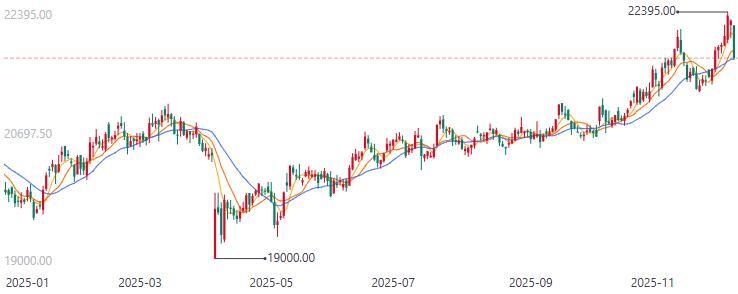
Core Viewpoint - The aluminum industry is experiencing a remarkable turnaround by the end of 2025, with prices surpassing 22,000 yuan/ton, marking a three-year high, driven by structural changes in supply and demand, energy dynamics, and environmental reforms [1][3]. Price Surge: The "Reversal Curve" of Aluminum Market in 2025 - Aluminum prices began at around 19,700 yuan/ton in early 2025, dipped to 19,000 yuan/ton in April, and surged to over 22,000 yuan/ton by December, indicating a significant upward trend [3]. - The price increase is attributed to supply-demand imbalances, with stable domestic production capacity and seasonal fluctuations in hydropower affecting supply, while demand from sectors like electric vehicles and renewable energy is rising [3][4]. Energy Cost Restructuring - The explosive growth in electricity demand from AI data centers is creating competition for power resources, leading to structural increases in industrial electricity prices, which directly impact aluminum production costs [4]. - Electricity accounts for over one-third of the production cost of electrolytic aluminum, making it sensitive to price fluctuations [4]. Carbon Market and Industry Transformation - The inclusion of the aluminum smelting industry in the national carbon trading market in March 2025 introduces new costs for carbon emissions, pushing companies to adopt energy-saving technologies and increasing the share of recycled aluminum production [6][7]. - The proportion of recycled aluminum is expected to exceed 25% in 2025, reflecting a significant shift towards green transformation in the industry [6][9]. Competitive Landscape and Industry Evolution - The focus of competition is shifting from production capacity to energy consumption and carbon emissions, leading to a consolidation of the industry where companies with clean energy and advanced technology gain competitive advantages [7][8]. - Leading aluminum companies are diversifying into high-value products such as aerospace materials and lightweight automotive components, enhancing their resilience against market fluctuations [7][8]. Future Outlook: The New Metal King in 2026 - The aluminum industry is expected to continue its transformation in 2026, with a focus on clean energy integration and product structure upgrades, particularly in high-performance aluminum alloys for strategic sectors [8][9]. - The share of recycled aluminum is projected to surpass 30%, with urban mining and recycling systems becoming new industry hotspots [9][10]. - Chinese aluminum companies are likely to accelerate international expansion, particularly in regions rich in hydropower, while enhancing risk management through financial instruments [10]. Conclusion - The aluminum industry has demonstrated its vitality through significant price performance and profound changes, reflecting a shift from factor-driven to innovation-driven growth, emphasizing energy efficiency and high-end production in the new industrial landscape [11].

矿业资本热潮来袭:黄金股领跑,中小矿企成融资主力
Sou Hu Cai Jing· 2025-10-30 09:09
Core Insights - The mining and metals industry has shown remarkable resilience and vitality amidst ongoing global capital market turbulence, with North American mining and metals companies raising $2.9 billion through 185 transactions by the end of October, potentially marking the highest monthly IPO volume since November 2013 [1][6] - Gold and silver companies have captured a significant share of the market, accounting for one-third of the total issuance, despite recent price corrections in gold and silver [1] - The average oversubscription rate for mining stock issuances has reached 1.8 times, with some high-quality projects exceeding 3 times, indicating strong demand from institutional investors [2] Market Dynamics - The current financing wave is characterized by a diverse range of companies, with small and medium-sized mining firms accounting for 78% of the financing transactions, averaging $12 million per deal [3] - The demand for battery metals such as lithium, cobalt, and nickel is projected to grow by over 300% in the next decade, significantly enhancing the valuation expectations for related companies [2] - The Bank of Montreal has emerged as the most active advisor in mining stock issuances, underwriting $820 million across 17 transactions in the past month [3] Notable Transactions - NexGen Energy Ltd. raised approximately $287.2 million through a public offering on the Toronto Stock Exchange and an additional $395.9 million on the Sydney Stock Exchange, leveraging advanced in-situ recovery technology that reduces production costs by 40% [4] - Hycroft Mining Holding Corp. secured $171.4 million in financing by attracting strategic investment from SPDR Gold Shares, which also led to a 37% increase in its stock price following the announcement of new gold reserves [4] Investor Sentiment - The significant issuance volume signals strong institutional investor demand for mining stocks, with private equity investments in the mining sector projected to rise from $1.2 billion in 2024 to $4.5 billion in 2025 [5] - The gold sector's Sharpe Ratio has reached 1.2 over the past 12 months, outperforming the S&P 500 index's ratio of 0.8, making it an attractive asset class for institutional investors [5] Future Outlook - Analysts predict over 100 equity financing events in the mining sector within the next 12 months, with 30% expected to occur through initial public offerings (IPOs) [8] - The integration of blockchain technology in mining supply chain finance and the policy support for green mining projects are expected to foster innovative financing models in the mining sector [8] - The current market dynamics reflect a shift in investment logic from resource dependency to technology empowerment, driven by cost optimization and business model innovation [9]

云铝股份(000807):量价齐升助力业绩同比增长,中期分红比例达到40%:——云铝股份(000807.SZ)动态跟踪报告
EBSCN· 2025-09-21 10:13
Investment Rating - The report maintains an "Accumulate" rating for the company [5] Core Views - The company achieved a year-on-year revenue growth of 17.98% in the first half of 2025, reaching 29.078 billion yuan, and a net profit growth of 9.88%, amounting to 2.768 billion yuan [1] - The mid-term dividend payout ratio is set at approximately 40.10%, with a cash dividend of 3.20 yuan per 10 shares [1] - The growth in performance is attributed to an increase in both volume and price of aluminum products, with production rising by 15.59% to 1.6132 million tons and an average price increase of 2.6% to 20,317.4 yuan per ton [1] - The decline in alumina prices, which fell by 44.7% to 3,170 yuan per ton, has also positively impacted the company's performance [1] - The domestic aluminum consumption is expected to grow by 1.46% in 2025, with significant contributions from sectors like new energy vehicles and air conditioning [2] - The company is actively expanding its resource acquisition and project development, including successful bids for exploration rights and the commissioning of new production lines [2] - The inclusion of electrolytic aluminum in the national carbon market is anticipated to create cost pressures for coal-fired aluminum production, potentially benefiting companies utilizing hydropower [2] Summary by Sections Financial Performance - The company reported a revenue of 29.078 billion yuan and a net profit of 2.768 billion yuan for the first half of 2025, with respective growth rates of 17.98% and 9.88% [1] - The projected net profits for 2025 and 2026 are 6.188 billion yuan and 6.919 billion yuan, with a new forecast for 2027 at 7.590 billion yuan [3][10] Profitability and Valuation - The report forecasts a PE ratio of 11 for 2025, decreasing to 9 by 2027, indicating an attractive valuation [3][12] - The company’s gross profit margin is expected to improve to 15.2% in 2025, with a net profit margin of 9.4% [12] Market Outlook - The domestic aluminum consumption is projected to reach 54.3549 million tons in 2025, with a growth rate of 3.06% when excluding exports [2] - The report highlights the resilience of aluminum prices despite potential market fluctuations, driven by ongoing demand in key sectors [2]

护绿换金、聚绿成金、借绿生金,“金山银山”是这样炼成的
Ren Min Ri Bao Hai Wai Ban· 2025-09-03 08:35
Group 1 - The core idea is the transformation of ecological advantages into economic benefits through three main pathways: "Protecting Green for Gold," "Gathering Green for Gold," and "Borrowing Green for Gold" [1][2][3] - "Protecting Green for Gold" involves direct economic returns through ecological compensation and transfer payments, exemplified by the ecological compensation mechanism in Hainan Province, which created a funding pool of 600 million yuan [1] - "Gathering Green for Gold" focuses on converting ecological elements into industrial advantages, as seen in Ningxia's wine industry and Jiangsu's offshore wind power industry, which collectively contribute significantly to the economy [2] - "Borrowing Green for Gold" introduces innovative mechanisms for realizing the value of ecological products, such as the "Forest Ecological Bank" in Fujian, which has managed over 252,600 acres of forestry resources [2] - The carbon trading market is emerging as a new channel for "Borrowing Green for Gold," with significant transaction volumes and values in both mandatory and voluntary carbon markets [3] Group 2 - The three pathways work together to promote the transformation from "Green Mountains and Clear Water" to "Golden Mountains and Silver Water," with "Protecting Green for Gold" as the foundation, "Gathering Green for Gold" as the means, and "Borrowing Green for Gold" as the innovation [3] - Continuous exploration of diversified pathways is necessary to balance ecological protection with economic development, ensuring that both ecological and economic accounts are considered [3]
构建市场化轮作休耕生态补偿机制
Jing Ji Ri Bao· 2025-08-23 22:18
Core Viewpoint - The market-oriented mechanism for crop rotation and fallow ecological compensation is a crucial practice for sustainable agricultural development globally, balancing ecological protection and farmer income through a combination of government policy support and market incentives [1]. Group 1: International Practices - Developed countries and regions, such as the United States and the European Union, have implemented policies and market mechanisms like carbon credit trading and ecosystem service payments to promote eco-friendly agricultural practices and enhance farmer participation in crop rotation and fallow [1]. - Developing regions, including Southeast Asia and Brazil, are gradually exploring market-based compensation mechanisms, although their agricultural ecological compensation systems are still in the early stages compared to developed countries [1]. Group 2: Importance for China - Establishing a market-oriented and diversified ecological compensation mechanism for crop rotation and fallow is significant for achieving sustainable agricultural development, ecological protection, and increasing farmer income in China [1]. - Key strategies to enhance ecological compensation effectiveness include the integration of government policies with market mechanisms, the development of carbon trading markets, and the promotion of ecosystem service payment mechanisms [1]. Group 3: Role of International Cooperation - The role of international cooperation and green finance is essential, as it can introduce more external funding and innovative experiences to support the development of ecological compensation mechanisms [1].