发展新质生产力

Search documents
毕盛投资创立30周年 继续看多、做多中国
Zhong Guo Zheng Quan Bao· 2025-11-09 20:15
Core Insights - APS celebrated its 30th anniversary in Shanghai, emphasizing its commitment to long-term investment in Chinese assets and the belief in China's growth potential [1][2][3] Group 1: Company Overview - APS has grown alongside the Chinese economy since its establishment in 1995, with China's GDP increasing approximately 25 times over the past 30 years [2][3] - The company has focused its resources on the Chinese market, particularly after strategic adjustments in 2020, marking a decisive shift to "All in China" [3][5] - APS has developed a unique "4 Alpha Perspective" investment framework, categorizing stocks based on their Alpha attributes, which enhances its investment strategy [4][5] Group 2: Market Insights - Experts at the summit discussed the vast development prospects of China, highlighting the shift in global economic dynamics towards resilience and reliable networks [1][2] - The dialogue on artificial intelligence underscored its potential to democratize knowledge and reshape production relationships, with confidence in China's ability to leverage these opportunities [2][3] Group 3: Performance and Strategy - APS has achieved significant success in the Chinese market, managing over 18 billion RMB in Chinese stock funds and consistently outperforming market benchmarks [5][6] - The company aims to deepen its strategic role as a bridge between Chinese and global capital markets, providing insights and support for both international and local investors [6]
创立30年、在华深耕23年!毕盛投资,“点赞”中国资产
Sou Hu Cai Jing· 2025-11-09 04:07
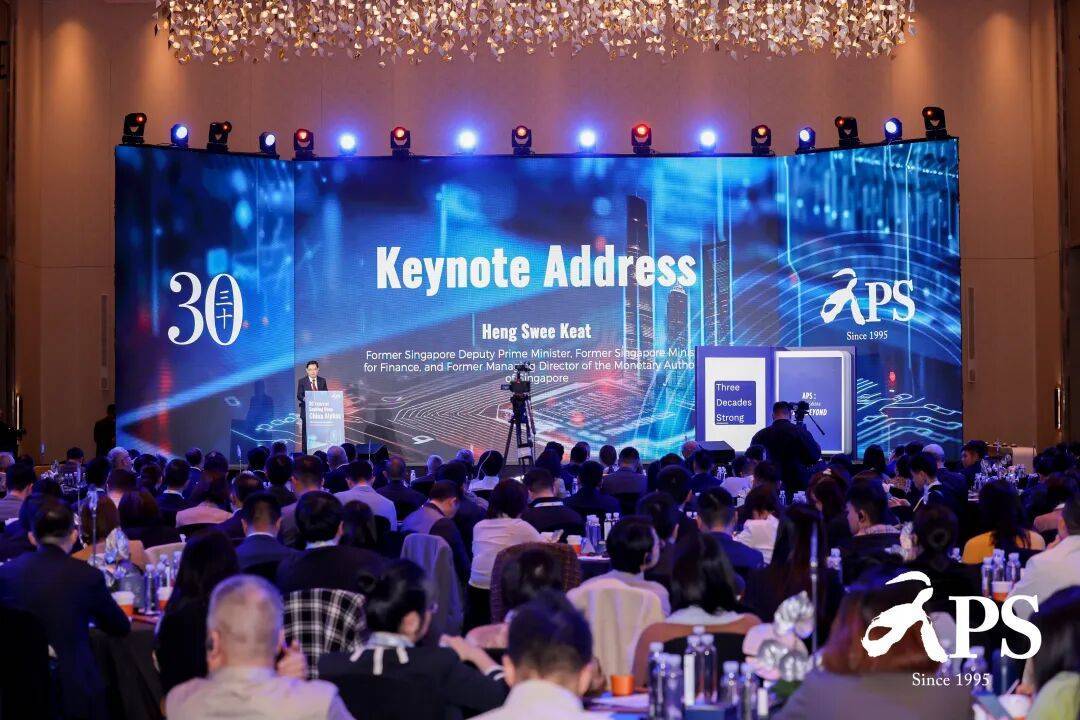
Core Viewpoint - APS Investment celebrates its 30th anniversary, emphasizing its commitment to long-term investment in the Chinese market and its belief in the value of Chinese assets [1][10]. Group 1: Event Overview - The 30th anniversary summit of APS Investment in Shanghai gathered prominent speakers from Singapore, top think tank experts, chief economists, industry leaders, and executives from global financial institutions, creating a platform for intellectual exchange [1]. - The founder of APS Investment, Wang Guohui, reflected on the company's growth alongside the Chinese market and reiterated the firm's long-term investment philosophy [1][12]. Group 2: Insights on China's Development - Experts at the summit discussed China's vast development prospects from various perspectives, including macro trends and technological innovations [3]. - Former Singapore Deputy Prime Minister Wang Rui Jie highlighted the shift in global economic dynamics, emphasizing the importance of resilience and reliable networks, and praised China's "dual circulation" strategy [3][5]. Group 3: Perspectives on Innovation - A panel discussion on "The Genesis and Revival of Chinese Innovation" featured insights on artificial intelligence (AI) and its potential to democratize knowledge, with experts expressing strong confidence in China's ability to seize opportunities in the AI wave [9]. - The discussion included the unique advantages China holds in hardware and robotics, driven by decreasing costs and rapid implementation [9]. Group 4: APS Investment's Strategy and Achievements - Since its establishment in Singapore in 1995, APS Investment has closely intertwined its growth trajectory with the rise of the Chinese economy, focusing on disciplined investment processes and a reliable team [11][12]. - The firm has developed a proprietary "4 Alpha Perspective" investment framework, categorizing stocks based on their Alpha attributes, which has contributed to its success in the Chinese market [14]. - APS Investment has achieved significant results in China, managing over 18 billion RMB in assets and consistently outperforming market benchmarks [15]. Group 5: Future Outlook - Looking ahead, APS Investment aims to deepen its strategic role as a bridge between Chinese and global capital markets, focusing on three key roles: a window for global investors to understand China, a platform for local investors to gain global insights, and a research support institution for Singapore policymakers [16][17].

创立30年、在华深耕23年!毕盛投资“点赞”中国资产
Zhong Guo Zheng Quan Bao· 2025-11-09 00:33
Core Insights - APS Investment celebrated its 30th anniversary, emphasizing its commitment to long-term investment in Chinese assets and the importance of the Chinese market as a core value in Asia [1][4]. Group 1: Company Overview - APS Investment has been deeply intertwined with the rise of the Chinese economy since its establishment in 1995, focusing on the unique advantages of China's large population, improving education levels, and successful economic transformation [4][5]. - The company has developed a disciplined investment process and a reliable team, which are key to its successful investment strategy in China [5][7]. - APS Investment has accumulated significant local insights and performance in the Chinese market over its 23 years of operation, utilizing a proprietary "4 Alpha Perspective" investment framework [6][7]. Group 2: Market Insights - Experts at the summit discussed China's broad development prospects, highlighting the shift in global economic dynamics towards resilience and reliable networks, with a focus on China's "dual circulation" strategy [2]. - The summit featured discussions on the opportunities presented by artificial intelligence, with experts expressing confidence in China's ability to leverage AI for innovation and economic growth [3][6]. Group 3: Future Strategy - APS Investment aims to deepen its strategic role in the Chinese market, acting as a bridge between Chinese and global capital markets, and providing insights for both international and local investors [8]. - The company has outlined a clear strategic plan to continue its long-term vision of connecting Asia with the world, focusing on its unique positioning in the Chinese market [8].
“十五五”投资:“投资于人”成为主线,“投资于物”布局未来
2 1 Shi Ji Jing Ji Bao Dao· 2025-10-30 00:12
Group 1 - The core idea of the article emphasizes the importance of "investing in people" as a key focus in China's 14th Five-Year Plan, highlighting the need to combine investments in material and human capital to enhance people's livelihoods and promote consumption [1][3][4] - Fixed asset investment in China has reached 50 trillion yuan, with a shift from physical capital to human capital investment being deemed necessary due to declining returns on traditional investments [3][4] - The article outlines specific measures to enhance human capital, including improving population quality through education and healthcare investments, and implementing supportive policies for population growth [3][4][6] Group 2 - The article discusses the strategic emphasis on "investing in material" to layout future industries, with a focus on emerging sectors such as new energy, aerospace, and advanced manufacturing, which are expected to create trillion-yuan markets [5][6] - It highlights the role of technological innovation in driving new industries and enhancing productivity, with a call for deeper integration of technology and industry to support high-quality development [6][7] - The article notes that while fixed asset investment growth has slowed, there is a trend towards optimizing the industrial structure, with significant growth in high-tech sectors [7][8] Group 3 - Effective investment is defined as directing funds towards areas with positive returns and consumer willingness, with a focus on enhancing living standards and fostering new industries [8] - The relationship between central and local government investments is discussed, emphasizing the need for government investments to create a conducive environment for private sector participation and enhance overall investment effectiveness [8]
全国超深竖井建造技术交流研讨会在江苏徐州召开
Huan Qiu Wang· 2025-10-24 02:03
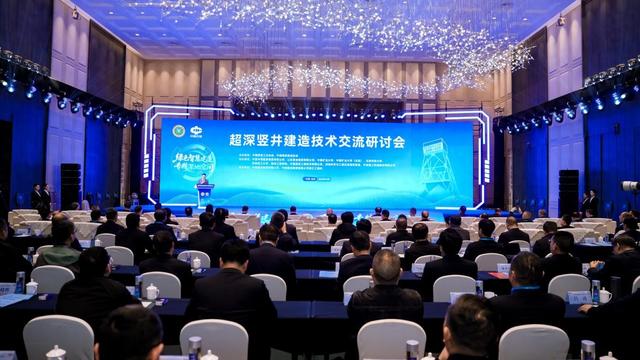
Core Insights - The seminar on ultra-deep shaft construction technology was held in Xuzhou, Jiangsu, with over 300 attendees, including academicians, industry experts, and representatives from research institutions and enterprises [2][4] - The theme of the conference was "Green Intelligent Construction and Specialized Deep Space," focusing on advancements in ultra-deep shaft construction technology and its integration with modern engineering disciplines [2][4] Group 1: Technology and Innovation - Ultra-deep shaft construction technology represents the highest technical level in underground space development, integrating geotechnical engineering, mechanical engineering, materials science, and information technology [2] - The conference highlighted the construction process of China's first ultra-deep shaft, the 2005-meter San Shan Island gold mine auxiliary shaft, as a case study to summarize recent achievements in the field [2] - Experts discussed key topics such as technological innovation in energy security, advancements in ultra-deep construction technology, and critical transportation technologies for deep mineral resource development [4] Group 2: Industry Transformation - The breakthrough in ultra-deep shaft technology is seen as a pivotal shift from "shallow experience construction" to "deep intelligent construction," driving innovation across the industry [4] - This transformation is expected to lead to advancements in intelligent drilling equipment, deep geological exploration, disaster prevention, and green construction processes, marking a shift from resource-dependent to technology-driven industry practices [4] - The establishment of an innovation consortium by 15 organizations, including China Coal Construction Group and Shandong Gold Group, aims to focus on technological innovation and application research in deep underground engineering [6]
“同心共谋发展,携手筑梦未来”——第十九届台商论坛侧记
Xin Hua She· 2025-10-18 13:52
Core Insights - The 19th Taiwan Business Forum, themed "Jointly Expanding Markets, Smartly Inspiring the Future," was held in Huai'an, Jiangsu, attracting over 200 guests from both sides of the Taiwan Strait [1][2] - The forum has become a significant platform for Taiwanese businesses to understand trends, build confidence, and promote cross-strait industrial cooperation since its inception in 2006 [1] - Huai'an is highlighted as a key area for Taiwanese investment, with a strong emphasis on its favorable business environment and development potential [2] Group 1 - The forum aims to address critical topics such as high-quality development, transformation paths for Taiwanese enterprises, and the inheritance of businesses by the second generation of Taiwanese entrepreneurs [2] - Huai'an has established over 1,500 Taiwanese-funded projects with a total investment of nearly 26 billion USD [3] - Taiwanese companies, such as the Taiwan Sustainable Materials Technology Co., have shown confidence in the mainland market by establishing production bases in Huai'an [1][2] Group 2 - The forum's themes resonate with the current concerns of Taiwanese businesses regarding transformation and development needs, indicating a strong desire for practical cooperation platforms [2] - The local government and business leaders express optimism about the continuous improvement of the business environment in Huai'an, making it a preferred investment destination for Taiwanese enterprises [2]
第十九届台商论坛在淮安举行
Yang Zi Wan Bao Wang· 2025-10-17 16:12
Core Insights - The 19th Taiwan Business Forum was held in Huai'an, focusing on enhancing cross-strait economic cooperation and integration [1][2][3] - The forum serves as a significant platform for Taiwanese businesses to understand market trends and opportunities in Jiangsu province [1][3] - Huai'an is positioned as a new high ground for Taiwanese enterprises, emphasizing its favorable business environment and support for investment [1][4] Group 1: Forum Highlights - The forum included various activities such as opening ceremonies, main forums, sub-forums, and closing ceremonies, attended by over 200 leaders, experts, and business representatives from both sides of the Taiwan Strait [1] - Zhang Zhijun, Chairman of the Association for Relations Across the Taiwan Straits, highlighted the forum's role in promoting cross-strait industrial cooperation and shared development opportunities [1][2] - The forum's significance has grown over its 19-year history, witnessing the development of Taiwanese businesses in Huai'an and the city's economic transformation [3] Group 2: Government Support and Future Plans - Jiangsu's Vice Governor Zhao Yan emphasized the province's commitment to creating a conducive environment for Taiwanese businesses, aiming for deeper integration in technology and industry innovation [2] - Huai'an's municipal leaders expressed their intention to enhance cooperation with Taiwanese enterprises, focusing on high-quality development and creating a new cooperative framework [3][4] - Agreements were signed during the forum to promote the gathering of Taiwanese enterprises in Huai'an and support their digital transformation and market expansion [4]
“十四五”规划的重要意义及启示
Zhong Yang Ji Wei Guo Jia Jian Wei Wang Zhan· 2025-10-17 12:44
Group 1 - The core viewpoint emphasizes the importance of the "Five-Year Plan" as a governance tool that reflects China's unique political advantages and strategic vision for modernization [1][2][3] - The "14th Five-Year Plan" serves as a roadmap for building a modern socialist country, marking the transition towards the second centenary goal [2][3] - The plan integrates new development concepts and focuses on high-quality development, ensuring alignment with the Party's governance philosophy [2][4] Group 2 - The "14th Five-Year Plan" outlines strategic directions such as "three new and one high," providing a comprehensive framework for economic and social development [4] - It emphasizes the importance of balancing development and security, establishing safety indicators to safeguard national interests [5] - The plan aims to promote common prosperity through substantial improvements in public welfare and income distribution [5][6] Group 3 - Significant achievements during the "14th Five-Year Plan" period include a notable increase in economic strength, with a projected growth of over 35 trillion yuan [6] - Major breakthroughs in technological innovation have been realized, including advancements in nuclear power and space exploration [6] - The plan has led to improvements in living standards, with a focus on education, healthcare, and social security systems [6] Group 4 - The interaction between planning and institutional advantages has enabled efficient completion of major strategic tasks, ensuring policy continuity and stability [7] - The "14th Five-Year Plan" incorporates a scientific top-level design that balances immediate needs with long-term goals [8] - The plan emphasizes a people-centered approach, integrating public feedback into its development and implementation [8] Group 5 - The execution of the "14th Five-Year Plan" showcases the country's strategic execution capabilities through systematic mechanisms and effective resource mobilization [9] - The plan demonstrates flexibility in responding to environmental changes, with mechanisms for mid-term evaluations and adjustments [9][10] - It highlights the importance of maintaining strategic focus while allowing for dynamic optimization in response to new challenges [10] Group 6 - The methodology embedded in the "14th Five-Year Plan" emphasizes forward-thinking, comprehensive planning, and strategic layout to ensure continuity and stability in national development [10][11] - The plan advocates for a scientific development approach that integrates systemic thinking and practical measures [11][12] - It aims to enhance the adaptability and precision of planning, focusing on high-quality development indicators [12][13]
四中全会前,人民日报连发八篇钟才文,传递什么信号
21世纪经济报道· 2025-10-07 23:56
Group 1 - The core viewpoint of the article emphasizes the long-term stability and resilience of China's economy under the guidance of Xi Jinping's economic thought, highlighting the significant achievements and transformations since the 18th National Congress of the Communist Party of China [3][4][8] - China's GDP is projected to grow from 54 trillion yuan in 2012 to nearly 135 trillion yuan by 2024, with an average annual growth rate of 6%, nearly double the global average of 3.1% [3][4] - The shift from traditional factor-driven growth to innovation-driven growth is evident, with the contribution of consumption to economic growth expected to reach around 63% during the 14th Five-Year Plan period [4][5] Group 2 - The article discusses the deep transformation of development dynamics, with innovation becoming the primary driving force, as evidenced by China's rise in the global innovation index from 34th in 2012 to 10th by 2025 [4][5] - The rural income growth rate has consistently outpaced urban income growth, with nearly 100 million rural poor lifted out of poverty, marking a significant achievement in poverty alleviation [5][6] - China's commitment to green transformation is highlighted, with a focus on ecological protection and sustainable development, as reflected in the significant improvements in environmental quality [6][31] Group 3 - The article outlines the importance of coordinated regional development strategies, such as the integration of the Beijing-Tianjin-Hebei region and the Yangtze River Delta, which have led to notable economic improvements [5][6] - China's foreign trade has remained robust, with the total volume of goods trade consistently ranking first globally, and the country has become a major trading partner for over 150 countries [6][32] - The article emphasizes the enhancement of people's well-being, with improvements in public services and social security systems contributing to increased life satisfaction and security among citizens [7][30] Group 4 - The article highlights the significant investment opportunities arising from China's economic transformation, particularly in traditional industries transitioning to high-end, intelligent, and green production [19][20] - The rapid growth of the consumer market is noted, with expectations for retail sales to exceed 50 trillion yuan by 2025, solidifying China's position as the world's second-largest consumer market [21][22] - The ongoing urbanization and infrastructure development present substantial investment opportunities, especially in less developed regions [22][23] Group 5 - The article discusses the certainty of China's development strategy, which ensures a stable direction for economic growth, contrasting with the policy fluctuations seen in some Western countries [23][24] - China's macroeconomic policies are characterized by stability and adaptability, allowing for effective responses to both domestic and international challenges [24][25] - The article emphasizes the resilience of China's economy, which has demonstrated the ability to withstand external pressures and maintain growth despite global uncertainties [25][26] Group 6 - The article underscores China's commitment to high-level openness and its role as a contributor to global economic stability, with a focus on multilateralism and cooperation [32][33] - The Belt and Road Initiative is highlighted as a significant platform for international cooperation, enhancing connectivity and economic collaboration with numerous countries [35][36] - China's market offers vast opportunities for foreign investment, with a focus on creating a favorable business environment and expanding market access [36][40]

事关中国经济 人民日报连续6天刊发“钟才文”署名文章 信息量很大
Hua Xia Shi Bao· 2025-10-05 01:14
Group 1 - The core argument emphasizes that China's economy has maintained strategic stability and high-quality development despite global uncertainties, showcasing resilience and vitality [3][4][6] - From 2012 to 2024, China's GDP is projected to grow from 54 trillion yuan to nearly 135 trillion yuan, with an average annual growth rate of 6%, nearly double the global average of 3.1% [3] - The contribution of consumption to economic growth is expected to reach around 63% during the 14th Five-Year Plan period, indicating a shift towards a consumption-driven economy [4] Group 2 - China's innovation index has significantly improved, rising from 34th in 2012 to 10th in 2025, with a notable increase in patent applications [4] - The country has become the world's largest market for industrial robots and is rapidly advancing in artificial intelligence and biotechnology [20][21] - The integration of technology and industry is accelerating, with high-tech manufacturing growth outpacing overall industrial growth [15] Group 3 - The rural population's income growth has consistently outpaced that of urban residents, reflecting successful poverty alleviation efforts [5] - Nearly 100 million rural poor have been lifted out of poverty, marking a significant achievement in social development [5] - The construction of new infrastructure and urban renewal projects is expected to create substantial investment opportunities [22][23] Group 4 - China's foreign trade has remained robust, with the total goods trade volume ranking first globally for several years [6] - The Belt and Road Initiative has positioned China as a key player in international cooperation and trade [6] - The country has established itself as a major trading partner for over 150 countries and regions [6] Group 5 - The focus on green development has led to significant improvements in environmental quality, with China ranking first in renewable energy capacity [36] - The country aims to achieve carbon neutrality and has implemented various ecological protection measures [36] - The energy transition index shows a substantial rise in China's ranking, reflecting progress in sustainable development [5]