国企改革深化提升行动

Search documents
北京亮出国有资产最新“家底”
Xin Jing Bao· 2025-11-27 11:53
Core Insights - The report presented by the Beijing Municipal Government highlights significant progress and achievements in the management of state-owned assets for the year 2024 [1][2] Group 1: State-Owned Asset Scale - The total assets of state-owned enterprises (excluding financial enterprises) in Beijing reached 9.59 trillion yuan, a year-on-year increase of 2.99% [1] - The total assets of financial enterprises in the city amounted to 10.62 trillion yuan, reflecting a year-on-year growth of 6.79% [1] - The total assets of administrative and public institutions reached 1.53 trillion yuan, with an increase of 8.33% year-on-year [1] - The total area of state-owned land is 355,000 hectares, with 129 types of mineral resources discovered [1] - Forest resources cover a total area of 864,000 hectares, and the total volume of water resources is 5.29 billion cubic meters [1] Group 2: Management Efficiency and Reforms - The efficiency of state-owned asset management in Beijing has significantly improved, with over 70% of the tasks in the new round of "deepening and enhancing state-owned enterprise reform" completed [1][2] - The restructuring of state-owned capital continues to optimize its layout, focusing on strategic emerging industries such as integrated circuits [1] - The management of state-owned financial capital has strengthened, effectively supporting the development of the real economy [1] Group 3: Future Directions - The city plans to enhance the management and governance of state-owned assets, aiming to boost the high-quality development of state-owned enterprises [2] - There will be a focus on improving financial services for the real economy and refining the management of administrative and public assets [2] - Efforts will be made to promote the integration of natural resource protection and urban development, ensuring that state-owned assets contribute to the qualitative and quantitative growth of the capital's economy [2]
全疆第三!塔城地区国资国企改革答卷亮眼
Sou Hu Cai Jing· 2025-11-27 07:59
Core Insights - The Xinjiang Tacheng region's State-owned Assets Supervision and Administration Commission (SASAC) has significantly enhanced the operational efficiency and core competitiveness of state-owned enterprises (SOEs) through reform initiatives [1][2] Group 1: Financial Performance - As of the end of October, the total assets of state-owned enterprises in the Tacheng region reached 81.794 billion yuan, a year-on-year increase of 0.6% [1] - The operating revenue for the same period was 11.389 billion yuan, reflecting a year-on-year growth of 33.3% [1] - Tax contributions amounted to 576 million yuan, showing a substantial year-on-year increase of 132.6% [1] Group 2: Reform and Structural Optimization - The region has completed 197 reform measures with a completion rate of 97.9%, ranking third in the entire Xinjiang region [1] - A modern industrial system comprising "5+2" sectors, including modern agriculture, clean energy, port logistics, mineral development, cultural tourism integration, and urban services, has been established [2][5] - The SASAC has implemented six special governance actions to optimize enterprise structure, resulting in the reduction of 17 redundant legal entities and the adjustment of nine underperforming management personnel [5] Group 3: Strategic Initiatives and Future Plans - The region aims to transform resource endowments into tangible development advantages by engaging in comprehensive cooperation with central enterprises, regional enterprises, and high-quality market players from outside Xinjiang [2] - Future plans include the cultivation of 3 to 5 state-owned enterprises with core competitiveness, referred to as "Tacheng State-owned Enterprise Benchmarks" [5] - The SASAC emphasizes the importance of modern enterprise systems and talent retention to enhance the role of SOEs in economic growth, industrial innovation, and social welfare [5]

抓改革创新 促高质量发展 | 烟台国资委监管企业净利润率全省第一
Feng Huang Wang Cai Jing· 2025-11-27 07:43
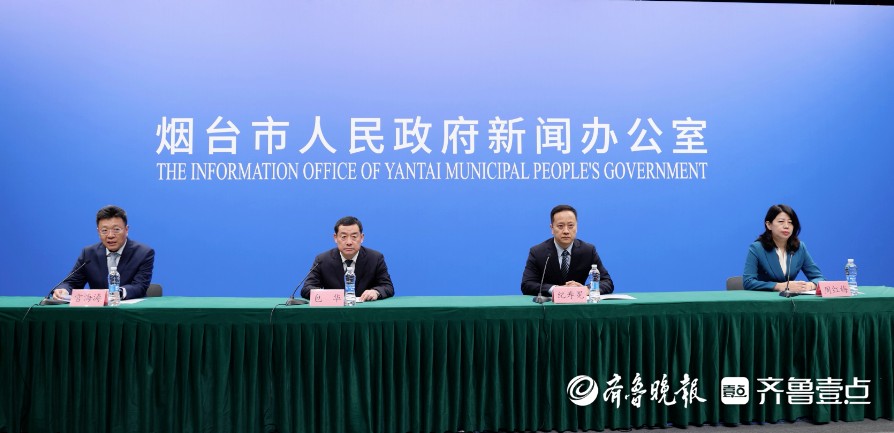
Core Insights - The Yantai government held a press conference to report on the economic performance and reform progress of state-owned enterprises (SOEs) in the first three quarters of 2025, emphasizing high-quality development through reform and innovation [1] Group 1: SOE Reform and Development - Yantai has implemented a high-standard reform action since 2023, with 97 tasks largely completed, leading to significant achievements, including two enterprises' reform experiences being promoted nationally [2] - The city has optimized capital layout by categorizing 129 enterprises into 19, reducing management levels to within four tiers, and directing 90% of state capital towards advanced manufacturing and strategic emerging industries [2] - The overall labor productivity of municipal enterprises reached 770,000 CNY per person, ranking first in the province [2] Group 2: Industry Upgrading and Innovation - SOEs are leading transformations towards high-end, digital, and green industries, with emerging sectors like green chemicals and aerospace showing robust growth [3] - R&D investment by municipal enterprises totaled 15.2 billion CNY, with 77 provincial-level innovation platforms established, contributing to breakthroughs in key technologies [3] - Governance improvements include integrating party leadership into corporate governance and establishing a comprehensive management system for the board and executive levels [3] Group 3: Economic Performance of Regulated Enterprises - From January to September, regulated enterprises achieved revenues of 165.85 billion CNY and net profits of 9.77 billion CNY, ranking second and first in the province, respectively [4] - Total assets reached 619.73 billion CNY, with a year-on-year growth of 5.5%, and a stable asset-liability ratio of 62% [4] - The investment in key projects amounted to 29 billion CNY, with R&D expenditures of 4.3 billion CNY, also leading the province [4] Group 4: Talent Development Initiatives - The Yantai government has prioritized talent acquisition, recruiting 7,982 individuals since 2024, including 1,923 master's, doctoral, and overseas talents [5] - A "1+N" school-enterprise cooperation model has been established to attract graduates through scholarships and tailored training programs [5] - Over 3,000 training sessions have been organized, and various incentives have been implemented to retain talent, including housing support and enhanced employee benefits [5]
截至今年三季度末,烟台市管(市直)企业资产总额达6197亿元
Qi Lu Wan Bao· 2025-11-26 11:40
齐鲁晚报.齐鲁壹点闫丽君 11月26日上午,烟台市人民政府新闻办公室举行"抓改革创新促高质量发展"主题系列第四场新闻发布会。会上,烟台市委常 委、副市长包华,烟台市国资委党委书记、主任纪寿冕,烟台市国资委党委副书记、副主任周红梅通报了2025年烟台国资国企 改革发展有关情况以及市国资委监管企业前三季度经济运行情况,并回答记者提问。发布会由烟台市委宣传部分管日常工作的 副部长宫海涛主持。 支持国资国企引领产业高质量发展,瞄准高端化、数字化、绿色化方向,推动传统产业设备更新、数字赋能、工艺升级,促进 绿色化工、新材料和航空航天等新兴产业集群蓬勃起势。目前,"东方慧眼"星座计划正式落户,东方航天港累计完成20次发射 任务、入轨130颗卫星,东方电子(000682)数字化虚拟电厂入选全国示范项目,战略性新兴产业营收占比始终保持在50%以 上。持续完善评价考核与激励约束机制,为国有资本投资运营公司高质量发展注入强劲动力。国丰、蓝天与交通集团均取得国 内顶级的AAA信用评级,其中国丰和蓝天集团更成功获得3B+国际信用评级,且债券发行利率屡创全省乃至全国同类别最低纪 录。 科技创新多点突破 建成省级以上创新平台77个 深入 ...
市值管理升维长期战略 央企多手段提升价值实现能力
Shang Hai Zheng Quan Bao· 2025-11-14 18:39
Core Insights - Central state-owned enterprises (SOEs) are crucial to national strategy and play a key role in maintaining the stability of the capital market, accounting for approximately 30% of the total market capitalization of A-shares [1] - The "value management" strategy has become a core focus for SOEs, transitioning from a marginal topic to a central strategy, with the National New SOE Composite Index rising over 20% in 2024 [1][2] - Experts emphasize that SOE value management is a systematic project aimed at aligning intrinsic value with market value, rather than merely short-term stock price management [1][2] Value Creation and Performance - The fundamental aspect of value management is enhancing intrinsic value, with over 220 SOEs reporting year-on-year growth in net profit in the first three quarters of 2025, and 19 companies doubling their net profits [2] - The State-owned Assets Supervision and Administration Commission (SASAC) emphasizes the need for SOEs to focus on improving the quality of development through mergers, share buybacks, and cash dividends [2] Case Study: China Mobile - China Mobile serves as a leading example of effective value management among SOEs, achieving an A-grade in SASAC's annual assessment and focusing on strategic emerging industries like artificial intelligence for growth [3] - SOEs are increasingly using market-oriented methods such as mergers and acquisitions to concentrate resources in core and strategic emerging sectors, enhancing asset securitization and capital operation efficiency [3] Value Transmission - Effective communication of created value to the market is critical for successful value management, with cash dividends being a direct method for SOEs to convey value to investors [4] - Over 310 SOEs distributed dividends totaling over 408 billion yuan in 2024, with several companies making their first-ever dividend payments [4][5] - Stock buybacks and increases in shareholding are also important tools for maintaining investor confidence, with over 60 SOEs announcing buyback or increase plans in 2024 [5] Long-term Strategy and Institutionalization - The SASAC has incorporated value management into the performance assessment of SOE leaders, enhancing its importance and prompting SOEs to develop specific value management systems [6] - More than 120 SOEs have disclosed dedicated value management systems, with over 45 companies creating targeted valuation enhancement plans [6] - The shift towards institutionalized value management aims to transform it from a short-term action into a long-term strategy, focusing on sustainable value creation [7]

国有资本保值增值如何? 全国人大常委会专题询问
Xin Hua Wang· 2025-10-29 00:37
Core Insights - The report highlights the positive performance of state-owned enterprises (SOEs) in terms of asset preservation and appreciation during the 14th Five-Year Plan period, with significant growth in total assets and equity [2] - The progress of SOE reform is on track, with confidence in achieving high-quality completion of key tasks by the end of 2025 [3] - There is a focus on optimizing the layout and structure of state-owned economy to enhance its strategic functions and improve resource allocation [4] - SOEs have made notable advancements in technological innovation, contributing to high-quality development and national security [6] Group 1: State-Owned Capital Performance - The total assets of national SOEs increased from 268.5 trillion yuan at the end of the 13th Five-Year Plan to 401.7 trillion yuan by the end of 2024, while owners' equity rose from 97 trillion yuan to 141 trillion yuan [2] - National SOE capital equity grew from 76 trillion yuan to 109.4 trillion yuan, with total operating revenue consistently above 80 trillion yuan in recent years [2] - Overall, the preservation and appreciation of state capital during the 14th Five-Year Plan period is deemed satisfactory, with improved asset quality and financial strength [2] Group 2: SOE Reform Progress - The State-owned Assets Supervision and Administration Commission (SASAC) has been actively implementing reform measures to enhance the core functions and competitiveness of SOEs, with progress aligning with expectations [3] - Key achievements include promoting the rational flow and optimization of state capital, activating the development potential of SOEs, and improving the overall effectiveness of state asset supervision [3] Group 3: Economic Layout Optimization - The optimization of the state-owned economy's layout and structure is essential for strengthening and expanding state capital and enterprises [4] - The focus is on concentrating state capital in critical industries related to national security and public services, as well as in strategic emerging industries [4] - Significant progress has been made in optimizing industrial and regional layouts, with ongoing efforts to enhance the mechanisms for layout optimization and structural adjustment [4] Group 4: Technological Innovation in SOEs - The government has introduced various policies to support technological innovation in SOEs, leading to significant improvements in their innovation capabilities and core competitiveness [6] - SOEs have successfully tackled key technologies and contributed to the national innovation system, supporting high-quality development and security [6] - Future initiatives will focus on integrating innovation, industry, and talent chains, enhancing resource allocation, and addressing critical technology challenges [6]
人大常委会丨国资“家底”更厚 改革扎实推进——来自全国人大常委会专题询问现场的声音
Xin Hua Wang· 2025-10-28 00:26
Core Insights - The 18th meeting of the 14th National People's Congress Standing Committee reviewed the State Council's special report on the management of state-owned assets for 2024, addressing the preservation and appreciation of state capital and the progress of state-owned enterprise reforms [1] Group 1: State-Owned Capital Preservation and Appreciation - The total assets of state-owned enterprises increased from 268.5 trillion yuan at the end of the 13th Five-Year Plan to 401.7 trillion yuan by the end of 2024, with owners' equity rising from 97 trillion yuan to 141 trillion yuan and state capital equity from 76 trillion yuan to 109.4 trillion yuan [2] - The total operating revenue of state-owned enterprises has consistently remained above 8 trillion yuan in the last three years, with stable total profits [2] - Overall, the preservation and appreciation of state capital during the 14th Five-Year Plan period is considered good, with improved asset quality and a stronger financial foundation for state-owned enterprises [2] Group 2: Progress in State-Owned Enterprise Reform - The deepening reform of state-owned enterprises is expected to conclude in 2025, with the State-owned Assets Supervision and Administration Commission (SASAC) reporting that the progress of key tasks is in line with expectations [3] - The main achievements include enhancing the strategic functions of state-owned capital, promoting the reasonable flow and optimization of state capital, and improving the overall effectiveness of state asset supervision [3] Group 3: Optimization of State-Owned Economic Layout and Structural Adjustment - The optimization of the state-owned economic layout and structural adjustment is essential for advancing the reform of state-owned assets and enterprises [4] - The focus is on adjusting the existing structure and optimizing new investments, with a strategy to concentrate state capital in key industries related to national security and public services [4] - Significant progress has been made in optimizing the industrial layout and restructuring state-owned enterprises since the 18th National Congress [4] Group 4: Technological Innovation in State-Owned Enterprises - The government has implemented various policies to support technological innovation in state-owned enterprises, leading to significant advancements in their innovation capabilities and core competitiveness [6] - State-owned enterprises have made breakthroughs in key technologies and have become a vital part of the national innovation system, supporting high-quality development and security [6] - The focus for the 15th Five-Year Plan period will be on enhancing the role of state-owned enterprises in stabilizing and strengthening industrial supply chains [6]
国资“家底”更厚 改革扎实推进——来自全国人大常委会专题询问现场的声音
Xin Hua She· 2025-10-27 16:21
Core Viewpoint - The report presented at the 18th meeting of the 14th National People's Congress Standing Committee highlights the positive performance of state-owned enterprises (SOEs) in terms of asset preservation and appreciation, as well as the progress in deepening SOE reforms and optimizing the layout of state-owned capital [1][2][3][4][5][6]. Group 1: State-Owned Capital Performance - During the 14th Five-Year Plan period, the total assets of state-owned enterprises increased from 268.5 trillion yuan at the end of the 13th Five-Year Plan to an estimated 401.7 trillion yuan by the end of 2024, with owners' equity rising from 97 trillion yuan to 141 trillion yuan [2]. - The total revenue of state-owned enterprises has consistently remained above 8 trillion yuan in recent years, with profit totals stabilizing [2]. - Overall, the preservation and appreciation of state capital during the 14th Five-Year Plan period is considered good, with improved asset quality and a stronger financial foundation for SOEs [2]. Group 2: SOE Reform Progress - The deepening reform of state-owned enterprises is on track to meet expectations, with significant progress made in enhancing the strategic functions of state-owned capital and optimizing its allocation [3]. - Key achievements include breaking down institutional barriers to high-quality development and improving the overall effectiveness of state-owned capital supervision [3]. Group 3: Optimization of State-Owned Economic Layout - The optimization of the state-owned economic layout and structural adjustments are essential for advancing SOE reforms and enhancing the strength and quality of state capital [4]. - The focus is on concentrating state capital in critical industries related to national security and public services, as well as in strategic emerging industries [4]. - Significant progress has been made in optimizing industrial and regional layouts, with ongoing efforts to enhance the mechanisms for optimizing and adjusting state-owned economic structures [4]. Group 4: Technological Innovation in SOEs - The 14th Five-Year Plan has seen the implementation of various policies to support technological innovation in state-owned enterprises, leading to significant advancements in their innovation capabilities [6]. - SOEs have made strides in overcoming key core technologies and have become vital components of the national innovation system, supporting high-quality development and security [6]. - Future efforts will focus on integrating innovation, industry, and talent chains, enhancing resource allocation, and addressing critical technology challenges [6].
人大常委会|国资“家底”更厚 改革扎实推进——来自全国人大常委会专题询问现场的声音
Xin Hua She· 2025-10-27 15:31
Core Insights - The report highlights the positive performance of state-owned enterprises (SOEs) in terms of asset preservation and appreciation during the 14th Five-Year Plan period, with significant growth in total assets and equity [2][3] Group 1: State-Owned Capital Performance - The total assets of state-owned enterprises increased from 268.5 trillion yuan at the end of the 13th Five-Year Plan to 401.7 trillion yuan by the end of 2024, while owners' equity rose from 97 trillion yuan to 141 trillion yuan [2] - State-owned capital equity grew from 76 trillion yuan to 109.4 trillion yuan, with total operating revenue consistently above 80 trillion yuan over the past three years [2] - The overall labor productivity and R&D investment intensity of SOEs have steadily improved, indicating a stronger financial foundation and better asset quality [2] Group 2: Progress in SOE Reform - The State-owned Assets Supervision and Administration Commission (SASAC) is on track to complete the key tasks of the SOE reform by the end of 2025, focusing on enhancing the strategic functions of state-owned capital and optimizing its allocation [3] - The reform efforts have successfully addressed systemic barriers to high-quality development and improved the overall effectiveness of state asset supervision [3] Group 3: Optimization of State-Owned Economy - The optimization of the state-owned economy's layout and structural adjustments are essential for strengthening and expanding state capital and enterprises [4][5] - The focus is on concentrating state capital in critical industries related to national security and public services, as well as emerging strategic industries [4] - Significant progress has been made in optimizing industrial and regional layouts, with strategic restructuring and professional integration of SOEs [4][5] Group 4: Technological Innovation in SOEs - The government has implemented various policies to support technological innovation in SOEs, leading to enhanced innovation capabilities and core competitiveness [6] - SOEs have made strides in overcoming key technological challenges and have become vital components of the national innovation system [6] - Future efforts will focus on integrating innovation, industry, and talent chains to strengthen the stability of industrial supply chains [6]
全力打好年度“收官战”!多家央企部署四季度工作,冲刺全年目标
Hua Xia Shi Bao· 2025-10-22 06:14
Core Viewpoint - Central enterprises are intensifying efforts to meet annual targets, with multiple companies holding economic operation analysis meetings to strategize for the fourth quarter [1][2]. Group 1: Economic Performance - In the first three quarters, most central enterprises have shown resilience against multiple pressures, achieving a dual focus on quality and efficiency [2]. - China Resources Group reported a revenue of 651.4 billion yuan and a profit of 64.3 billion yuan in the first three quarters, both exceeding the average growth rates of central enterprises [2]. - State-owned enterprises' total revenue reached 5.396 trillion yuan from January to August, marking a year-on-year growth of 0.2%, the first positive growth rate of the year [4]. Group 2: Strategic Initiatives for Q4 - Central enterprises are formulating precise action plans for the fourth quarter, emphasizing "stabilizing growth, deepening reform, and preventing risks" [5]. - The State Power Investment Corporation aims to enhance efficiency through specific measures such as increasing electricity generation and reducing costs [5]. - Major project construction and strategic layout are identified as key growth drivers, with a focus on advancing significant projects in renewable energy and resource management [6]. Group 3: Reform and Innovation - The current year marks a critical phase for deepening reforms among central enterprises, with many focusing on enhancing operational efficiency and innovation [6]. - The State-owned Assets Supervision and Administration Commission emphasizes the importance of technology and industry orientation to strengthen core functions and competitiveness [7][8]. - Central enterprises are aligning their strategies with the "14th Five-Year Plan" while simultaneously planning for the "15th Five-Year Plan," ensuring a balance between immediate goals and long-term development [9].