国际贸易秩序

Search documents
商务部通报中欧电动汽车案磋商进展
第一财经· 2026-01-12 09:26
为落实中欧领导人会晤共识,妥善解决欧盟对华电动汽车案,中欧双方本着相互尊重的态度,进行了多 轮磋商。双方一致认为, 有必要向对欧盟出口纯电动汽车的中国出口商,提供关于价格承诺的通用指 导 ,以便中国出口商可通过更加实用、有针对性且符合世贸组织规则的方式,解决相关关注。 为此, 欧方将发布《关于提交价格承诺申请的指导文件》,并在文件中确认,欧方将秉持非歧视原 则,根据世贸组织规则有关规定,对每一项价格承诺申请,适用相同法律标准,并以客观和公正的方式 进行评估 。 这充分体现了中欧双方的对话精神和磋商成果。中欧双方有能力、有意愿,在世贸组织规则框架下,通 过对话磋商妥善化解分歧,维护中欧及全球汽车产业链供应链稳定。这不仅有利于中欧经贸关系健康发 展,也有利于维护以规则为基础的国际贸易秩序。 商务部今日通报中欧电动汽车案磋商进展。 编辑 | 钉钉 来源|央视新闻 ...


事关中欧电动汽车案磋商进展,商务部通报
Yang Shi Xin Wen· 2026-01-12 09:13
这充分体现了中欧双方的对话精神和磋商成果。中欧双方有能力、有意愿,在世贸组织规则框架下,通 过对话磋商妥善化解分歧,维护中欧及全球汽车产业链供应链稳定。这不仅有利于中欧经贸关系健康发 展,也有利于维护以规则为基础的国际贸易秩序。 为此,欧方将发布《关于提交价格承诺申请的指导文件》,并在文件中确认,欧方将秉持非歧视原则, 根据世贸组织规则有关规定,对每一项价格承诺申请,适用相同法律标准,并以客观和公正的方式进行 评估。 商务部今日通报中欧电动汽车案磋商进展。 为落实中欧领导人会晤共识,妥善解决欧盟对华电动汽车案,中欧双方本着相互尊重的态度,进行了多 轮磋商。双方一致认为,有必要向对欧盟出口纯电动汽车的中国出口商,提供关于价格承诺的通用指 导,以便中国出口商可通过更加实用、有针对性且符合世贸组织规则的方式,解决相关关注。 ...
中国外交正在变得柔和
Hu Xiu· 2025-09-29 06:26
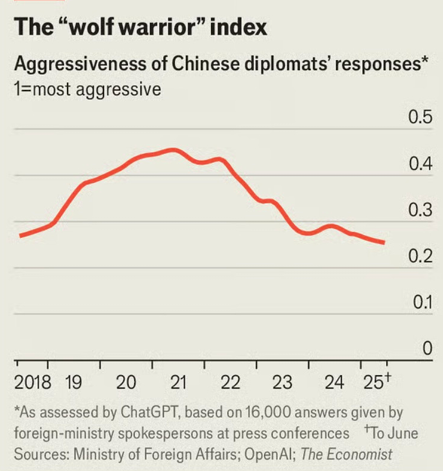
经济学人期刊制作了"战L指数",通过AI判断中国外交发布会上1.6万条回应里辞令的攻击性,并制成指数追踪,发现2022年之后显著下降,愈加柔和。 本文来自微信公众号:嬉笑创客,作者:CB,题图来自:AI生成 中国的外交姿态在肉眼可见变得柔和。 当国家面临选择时,跟随哪个体系更能致富,让民众体感更好,让领导层更有安全感,有时候成为了胜负手。 毕竟,从统计来说大部分国家都是弱国,越是弱肉强食的价值观,越容易会引起恐惧、不安。 当然驻军、离岸制衡等传统现实主义的手段也有效,但柔和硬,两者都不能少。 另一方面,近期商务部在海外呼吁出海企业之间不要再内卷、徒然自相残杀,也是一个进步。值得注意的是,呼吁的其中一个出发点是,这是我们和美方 达成协议的一部分,要"稳定中美关系"。 其实无论于中于外,这都是一个良好的姿态。并非美方支持的我们都要反对。举个例子,反内卷这点或许每一个跨境电商领域的人都深有体会:整个亚马 逊最大的威胁往往来自于抄款和降价竞争的中国友商,而非海外竞对。互相砍价,最后海外消费者和平台成最大赢家。甚至有时候平台都看不下去而介 入,因为知道无底线的竞价最终会扰乱商业秩序,反而排挤了高质量的商家。 从拒绝产能 ...
中方代表在华盛顿最后一天,特朗普突然变卦:美国一定会赢到最后
Sou Hu Cai Jing· 2025-09-07 07:39
Core Points - The Chinese government emphasizes its commitment to maintaining international trade order and insists on the principle of equality and mutual benefit in trade negotiations [1] - A significant ruling by the U.S. Court of Appeals declared several tariffs imposed during the Trump administration as unconstitutional due to lack of congressional authorization, highlighting the overreach of executive power [3][5] - The ruling exposes the flaws in the unilateral trade policies of the Trump administration and raises questions about the adherence to constitutional principles in U.S. trade practices [5][7] Group 1 - The U.S. court's decision has created a challenging situation for U.S.-China trade relations, revealing deep political divisions within the U.S. [7][9] - The Chinese delegation's visit to the U.S. demonstrated a willingness to engage in dialogue, but emphasized the need for mutual respect [9][11] - The U.S. faces a critical choice between seeking equitable dialogue or continuing to impose tariffs that disrupt global supply chains [9][11] Group 2 - The ruling provides a temporary buffer for the Trump administration, allowing time to appeal before the decision takes effect on October 14 [5] - The response from former President Trump reflects a defensive stance, indicating the political significance of tariffs in his administration's agenda [7] - China's diplomatic approach remains firm on not compromising principles in the face of external challenges, showcasing strategic patience and adaptability [11]
保加利亚各界不满欧盟对美妥协
Jing Ji Ri Bao· 2025-08-07 22:48
Core Points - The European Commission announced a suspension of two countermeasures against the U.S. tariffs for six months, indicating a temporary resolution to the transatlantic tariff dispute [1] - The agreement has sparked internal criticism within Europe, raising concerns about the EU's positioning on the international stage and its future policy directions [1][2] Economic Implications - The EU will accept an average 15% import tariff on certain European industrial goods imposed by the U.S., while the U.S. has only promised limited market access for some European products [1] - European Parliament member Peter Volkin highlighted that Europe will pay $250 billion annually for U.S. energy over the next three years, significantly higher than the $60-80 billion previously paid to Russia for energy [2] - The agreement is viewed as detrimental to the EU's economic interests, with critics arguing it imposes a higher tariff burden on European exports while providing no substantial benefits in return [3][4] Political and Strategic Concerns - Critics argue that the agreement undermines established international trade rules and could lead to systemic disruptions in the global trade order [3] - There are calls for the EU to demonstrate its capability as a global player and to utilize various trade protection mechanisms to safeguard its interests [3] - The agreement is perceived as a capitulation, with some industry leaders suggesting that the current EU leadership should resign to facilitate necessary reforms [4]
对印度发难后,特朗普又想对华加征关税,金砖无惧与美国对抗
Sou Hu Cai Jing· 2025-08-07 14:03
Core Insights - The trade tensions initiated by President Trump's tariff increases on India and China highlight the complexities of global economic interdependence and serve as a response to changing international dynamics [1][6] - The tariffs imposed on India, reaching as high as 50%, are seen as punitive measures against perceived non-cooperation, particularly regarding oil purchases from Russia [1][6] - The potential for similar tariffs on China indicates a broader strategy aimed at challenging the economic resilience of these emerging markets [1][3] Group 1: Economic Impact - Historical evidence suggests that U.S. protectionist policies often backfire, failing to alter the procurement behaviors of other nations and potentially tightening economic ties between China and India instead [3][5] - The complexity of global supply chains is often overlooked in U.S. trade policies, which could lead to increased uncertainty in the global economy and negatively impact American businesses and consumers [5][8] Group 2: BRICS Response - The BRICS nations are uniting in response to Trump's tariffs, with leaders like Lula of Brazil advocating for strategic communication and collaboration among member countries [6][8] - The collective GDP of BRICS countries has surpassed that of the G7, indicating a significant shift in global economic power dynamics and the potential for a more equitable international trade order [6][8] Group 3: Long-term Consequences - Trump's tariff strategy may lead to unintended consequences, including a potential isolation of the U.S. in global trade and a failure to achieve desired economic outcomes such as job growth and economic repatriation [8] - The evolving international trade order is likely to reflect the interests of developing countries, suggesting a reconfiguration of global economic rules in the aftermath of the tariff conflicts [8]
特朗普公布全球关税,美国这次要硬碰硬?美财长见完中方代表后,知道对中国已毫无办法
Sou Hu Cai Jing· 2025-08-07 05:47
Core Viewpoint - The exclusion of China from the recent global tariff list by the Trump administration indicates a significant shift in the U.S.-China trade dynamics, suggesting that China is no longer an easily manipulated entity in international trade negotiations [1][3][5]. Tariff Strategy - The global tariff list differentiates between trade surplus and deficit countries, imposing a 10% tariff on surplus countries and starting at 15% for deficit countries, with Canada facing the highest penalty of 35% [1][4]. - The absence of China from the tariff list, which would typically incur at least a 15% tariff, raises questions about the underlying strategic considerations of the U.S. [3][4]. Negotiation Dynamics - The recent U.S.-China trade talks in Stockholm featured a significant disparity in negotiation teams, with China sending a 75-member professional team, which placed the U.S. in a weaker negotiating position [3][4]. - U.S. Treasury Secretary's remarks post-negotiation reflect a strategic concession, acknowledging China's autonomy in energy imports and recognizing the U.S.'s lack of leverage on key issues [3][4]. Economic Implications - The U.S. faces three critical vulnerabilities: reliance on China for 90% of global rare earth resources, potential inflation from tariffs that could raise the U.S. CPI by 1.5%, and the risk of pushing China closer to Russia [4][5]. - The retaliatory measures from allies, such as Canada considering a 50% tariff on U.S. steel, highlight the backlash against U.S. tariff policies [4]. Historical Context - The previous imposition of a 25% tariff on China did not reduce the trade deficit but instead encouraged China to enhance self-sufficiency in critical technology sectors, indicating the ineffectiveness of tariff strategies against China [4].
美国的关税战遭到巴西和日本的硬扛,摩根大通警告将加剧美国通胀
Sou Hu Cai Jing· 2025-07-13 06:01
Group 1 - The U.S. President Trump threatened to impose a 50% tariff on goods imported from Brazil unless Brazilian President Lula stops the "political persecution" of former President Bolsonaro [1][3] - The total trade volume between the U.S. and Brazil is approximately $92 billion, with a U.S. trade surplus of $7.4 billion against Brazil [3] - Trump's proposed tariffs are the highest globally, raising questions about the motivations behind targeting a surplus country like Brazil [3][5] Group 2 - Brazilian Vice President Alckmin criticized the tariffs as unjust, highlighting that over 80% of U.S. imports from Brazil enjoy zero tariffs [1][5] - Lula emphasized Brazil's independence and the significant trade surplus the U.S. has maintained with Brazil over the past 15 years, amounting to $410 billion [5] - The tariffs are expected to negatively impact both Brazilian exports and the U.S. juice industry, particularly affecting products like orange juice [7][8] Group 3 - The tariffs have led to a nearly 3% drop in the Brazilian real against the dollar, affecting Brazilian companies listed in the U.S. [7] - Brazil's GDP is only 1.7% dependent on trade with the U.S., indicating that Brazil can survive without this trade [7][8] - The U.S. unilateral tariff actions have sparked global criticism and may accelerate regional economic integration, particularly among emerging markets [12][14]

美法院出手:加征关税违宪!特朗普关税被叫停,全球贸易松口气?
Sou Hu Cai Jing· 2025-06-05 12:49
Core Viewpoint - The U.S. International Trade Court ruled that Trump's tariff policies are unconstitutional, leading to a significant impact on global trade dynamics [1][2]. Group 1: Court Ruling and Legal Basis - The court's decision invalidated Trump's tariffs, stating that the president does not have unlimited authority to impose tariffs without congressional approval [2]. - The ruling emphasized that the International Emergency Economic Powers Act only allows the president to impose tariffs in cases of extraordinary threats to national security [1][4]. Group 2: Impact on Trade Policies - The ruling effectively halts three types of tariffs imposed by Trump, including those against China, Canada, and Mexico, as well as the so-called reciprocal tariffs against multiple countries [1][4]. - The decision is seen as a positive development for global trade, potentially easing tensions and promoting a more equitable trade environment [6]. Group 3: Political and Economic Implications - The lawsuit was initiated by five small U.S. businesses adversely affected by Trump's tariffs, highlighting the internal conflict and economic strain caused by these policies [6]. - The outcome of the ruling may influence the future of U.S. trade policy and the ongoing trade war, with global stakeholders closely monitoring the situation [6].