
城市轨道交通建设

Search documents
青岛南北向交通大动脉建设取得重大突破
Zhong Guo Jing Ji Wang· 2025-12-16 14:45
Core Viewpoint - The successful completion of the shield tunneling for the Qindao Metro Line 15 marks a significant milestone in the construction of a major north-south transportation artery connecting multiple districts in Qingdao, entering a new phase of development [1][2]. Group 1: Project Overview - The Qingdao Metro Line 15, a key project in the city's third phase of rail transit planning, spans approximately 31.5 kilometers with all underground construction and includes 17 stations and one vehicle depot [1]. - The project is constructed by China State Construction Engineering Corporation, specifically by its second bureau, which is responsible for one station and two sections of the line [1]. Group 2: Construction Achievements - The recently completed section of the vehicle depot's access line is approximately 1.28 kilometers long, featuring complex construction challenges such as crossing multiple commercial properties and infrastructure [1]. - The project team has demonstrated a strong sense of responsibility and professional expertise, maintaining rigorous control over construction parameters and ensuring the stability of the shield tunneling process [2]. Group 3: Future Prospects - Upon completion, the metro line will connect the eastern and western parts of Qingdao's urban areas, significantly alleviating traffic pressure and promoting urban development [2]. - The project aims to achieve a standard of "zero accidents, zero pollution, and zero defects," contributing to the high-quality development of Qingdao as an international metropolis [2].

2025年城轨建设投资额预计达4500亿元 连续五年下滑
Zhong Guo Jing Ying Bao· 2025-12-13 12:55
Core Insights - The "14th Five-Year Plan" for urban rail transit in China has seen a total construction investment of 21,267.2 billion yuan in the first four years, with an expected investment of around 4,500 billion yuan by 2025, leading to a total investment exceeding 25,000 billion yuan during the period, which is a 2.1% decrease compared to the "13th Five-Year Plan" [1] - The annual construction investment in urban rail has been declining since peaking in 2020, with projected investments of 6,286 billion yuan, 5,859.8 billion yuan, 5,444 billion yuan, 5,214 billion yuan, and 4,749.41 billion yuan from 2020 to 2024 [1] - The "15th Five-Year Plan" is expected to see a further 15% reduction in construction investment compared to the "14th Five-Year Plan" [1] Investment and Market Trends - Following the increase in approval thresholds for urban rail projects since 2018, the focus will shift to "controlling increments and optimizing existing resources," leading to growth in the operation and maintenance market while intensifying competition among design and construction firms [2] - The "15th Five-Year Plan" is projected to add approximately 4,000 kilometers of new operational lines, bringing the total operational length to nearly 17,000 kilometers by the end of the period [2] - The total passenger volume for urban rail in the first four years of the "14th Five-Year Plan" reached 1,047.2 billion trips, with an expected total of about 340 billion trips by 2025, resulting in an average annual passenger volume of approximately 277 billion trips, a 43% increase compared to the "13th Five-Year Plan" [2]
北京地铁:3条新线年底开通!
Huan Qiu Wang· 2025-12-12 08:38
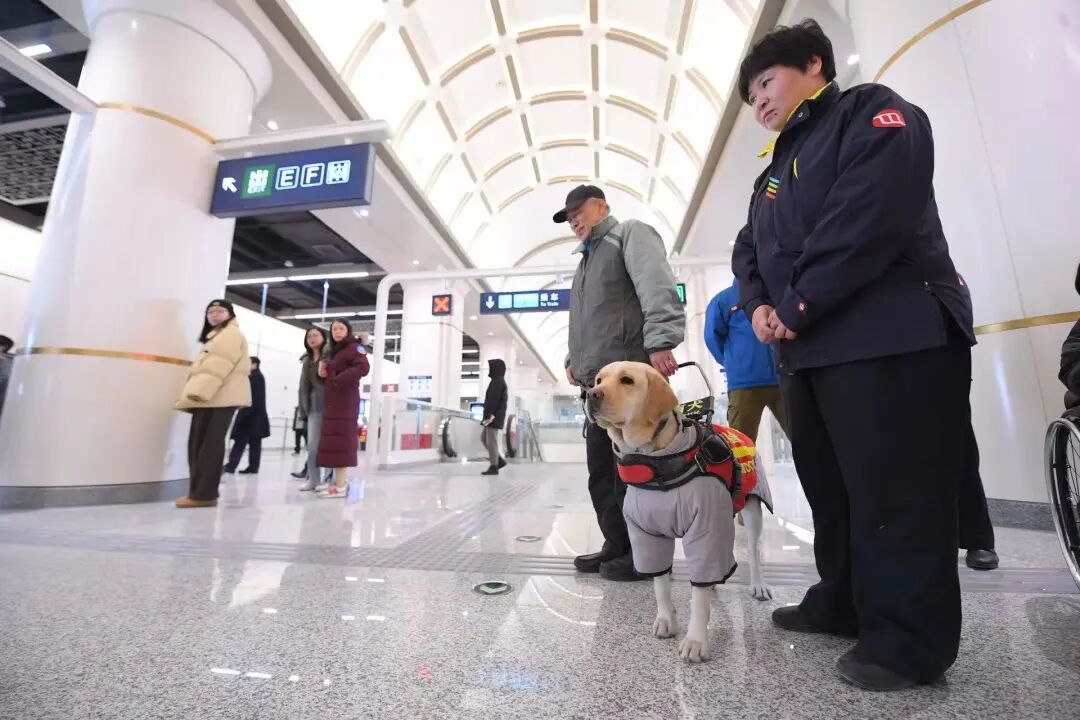
Core Points - Beijing's subway network will see the addition of three significant lines by the end of 2025, including Line 17 (mid-section), Line 18, and the southern extension of Line 6 [1] - A public engagement initiative titled "Citizen Experience to Identify Issues, Open Transportation for Suggestions" was conducted to gather feedback from residents and commuters [1] Group 1: New Subway Lines - Line 17 will connect major residential and business areas, significantly improving commuting efficiency, with a travel time of 66 minutes from嘉会湖 to未来科学城北 once fully operational [8] - The line will operate with a fast train model, reaching speeds of up to 100 km/h, alleviating pressure on existing lines such as Line 5 and Line 10 [8] Group 2: Station Features and Accessibility - Stations are equipped with facilities such as mother and baby rooms, family-friendly accessible restrooms, and AED devices [10] - Specific stations like潘家园西站 and 永安里站 have been designed with cultural elements and enhanced accessibility features, including dual-sided escalators and multi-language translation devices [5][10]

地铁4号线二期盾构将完成“穿江之旅”
Nan Jing Ri Bao· 2025-12-11 02:48
Core Points - The completion of the shield tunnel construction at Jiangbei Citizen Center Station marks a significant progress in the Nanjing Metro Line 4 Phase II project, specifically the cross-river shield project [1] - The shield receiving well has a wall thickness of 1.5 meters and an inner diameter of 12.1 meters, with a depth of 45.28 meters, facing high leakage risks due to the surrounding sandy and highly permeable soil [1] - The project team employed a layered demolition method to ensure efficiency while minimizing the impact on surrounding structures [1] Project Details - The Phase II of Line 4 starts from Longjiang Station, traverses through various areas including the Jiangxinzhou, and ends at Zhenzhuquan East Station, covering a total length of approximately 10 kilometers, all underground with 6 stations [1] - The cross-river tunnel, a critical segment, extends 3062.6 meters with the lowest point being 68.58 meters below the Yangtze River surface, setting a record for the deepest cross-river metro tunnel in the Yangtze River Delta [1] - Upon completion, the Phase II of Line 4 will enhance the urban cross-river metro network, alleviate traffic pressure, and provide more convenient public transportation services for citizens [1]
等了九年,这座新一线城市的地铁终于脱单了
Sou Hu Cai Jing· 2025-12-09 08:44
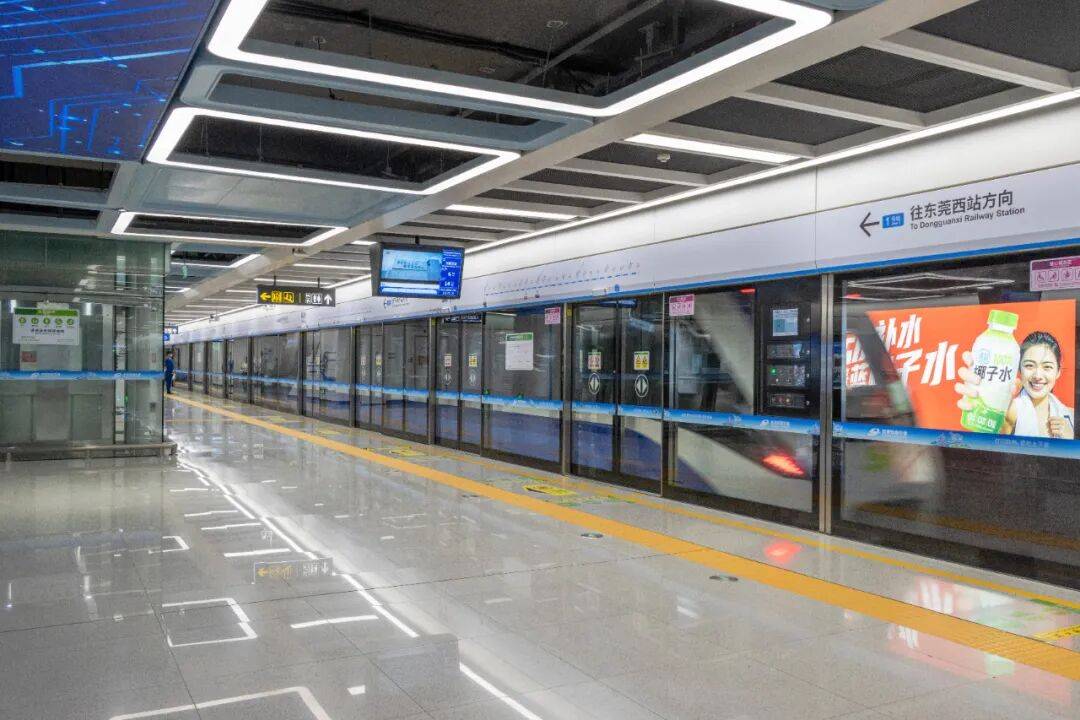
Core Points - Dongguan has opened its first new metro line in nine years, marking a significant milestone for the city as it joins the ranks of cities with metro systems and aims to enhance urban mobility and connectivity [2][4][6] - The Dongguan Metro Line 1 spans 57.46 kilometers with 25 stations, connecting key urban areas and commercial centers, thus facilitating better access for residents [7][8][10] - The opening of the metro line has led to a surge in ridership, with over 400,000 passengers recorded in the first weekend, surpassing previous records and indicating strong public interest [16][18] Summary by Sections Metro Line Overview - Dongguan's Metro Line 1 is the city's first fully automated metro line, featuring an open driver's cabin for passenger engagement [4][6] - The line connects various districts and key development areas, enhancing the overall transportation network in Dongguan [7][10] Economic and Social Impact - The metro line is expected to stimulate local economic growth by improving access to commercial hubs and recreational areas, thus integrating the metro into daily life [8][10][12] - The line's opening is seen as a response to the long-standing demand for improved public transportation in Dongguan, which has been characterized by a heavy reliance on private vehicles [27][34] Future Developments - Plans are in place for the metro line to extend further west to connect with Guangzhou's metro system, enhancing regional connectivity within the Guangdong-Hong Kong-Macau Greater Bay Area [10][12][14] - The ongoing development of additional metro lines and public transport options is crucial for sustaining growth and meeting the transportation needs of Dongguan's population [29][36]
今年底共增6条地铁线(段)
Nan Fang Du Shi Bao· 2025-12-09 03:13
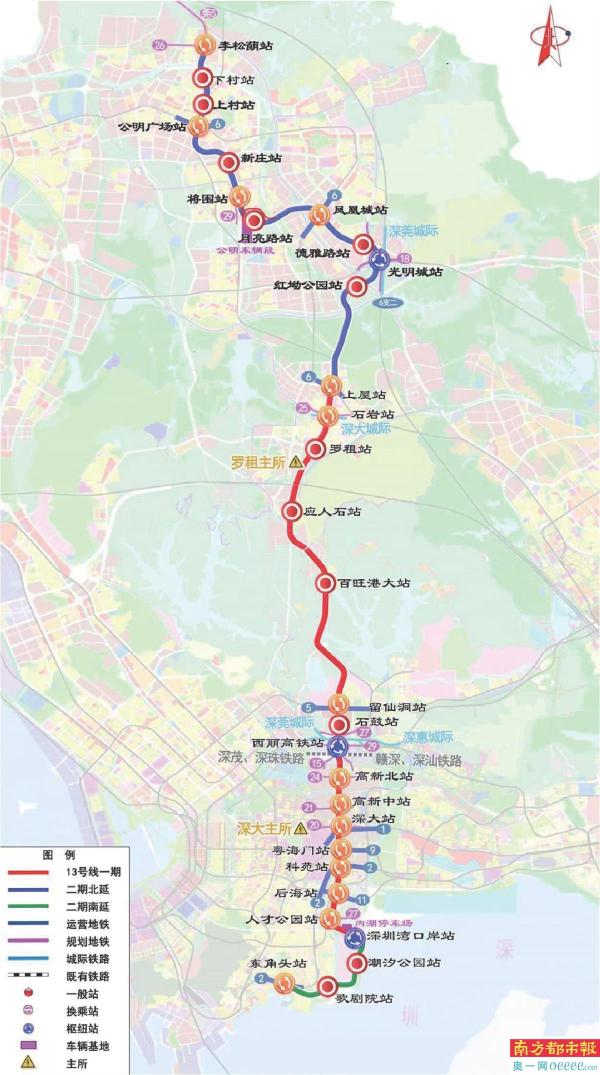
Group 1 - Shenzhen plans to open four new metro lines by the end of the year, including the west extension of Line 5, Phase III of Line 8, Phase II of Line 11, and Phase I of Line 13 operated by MTR (Shenzhen) [2] - The total length of the new metro lines will add up to 635 kilometers, with the number of stations increasing to 441, enhancing the scale of the urban rail transit network [2] - The first phase of Line 13, which connects Shenzhen Bay Port Station to Shangwu Station, spans 22.441 kilometers and includes 16 stations, linking key areas such as the Houhai Central District and the High-tech Park [3] Group 2 - The west extension of Line 5, measuring 2.88 kilometers, will add three new stations and connect the bustling core area of Luohu, significantly easing transfer pressure at Huangbeiling Station [3] - Line 11's second phase will extend from Gangxia North Station to Hongling South Station, covering 2.3 kilometers, and will enhance cross-district travel efficiency for residents [4] - Phase III of Line 8 will serve as a backbone transit line, extending approximately 3.69 kilometers from Xiaomeisha Station to Xiyong Station, improving public transport services in the eastern districts [4]
年内迎来修建爆发期 谁是地铁里程“增长之王”?
Mei Ri Jing Ji Xin Wen· 2025-11-24 12:55
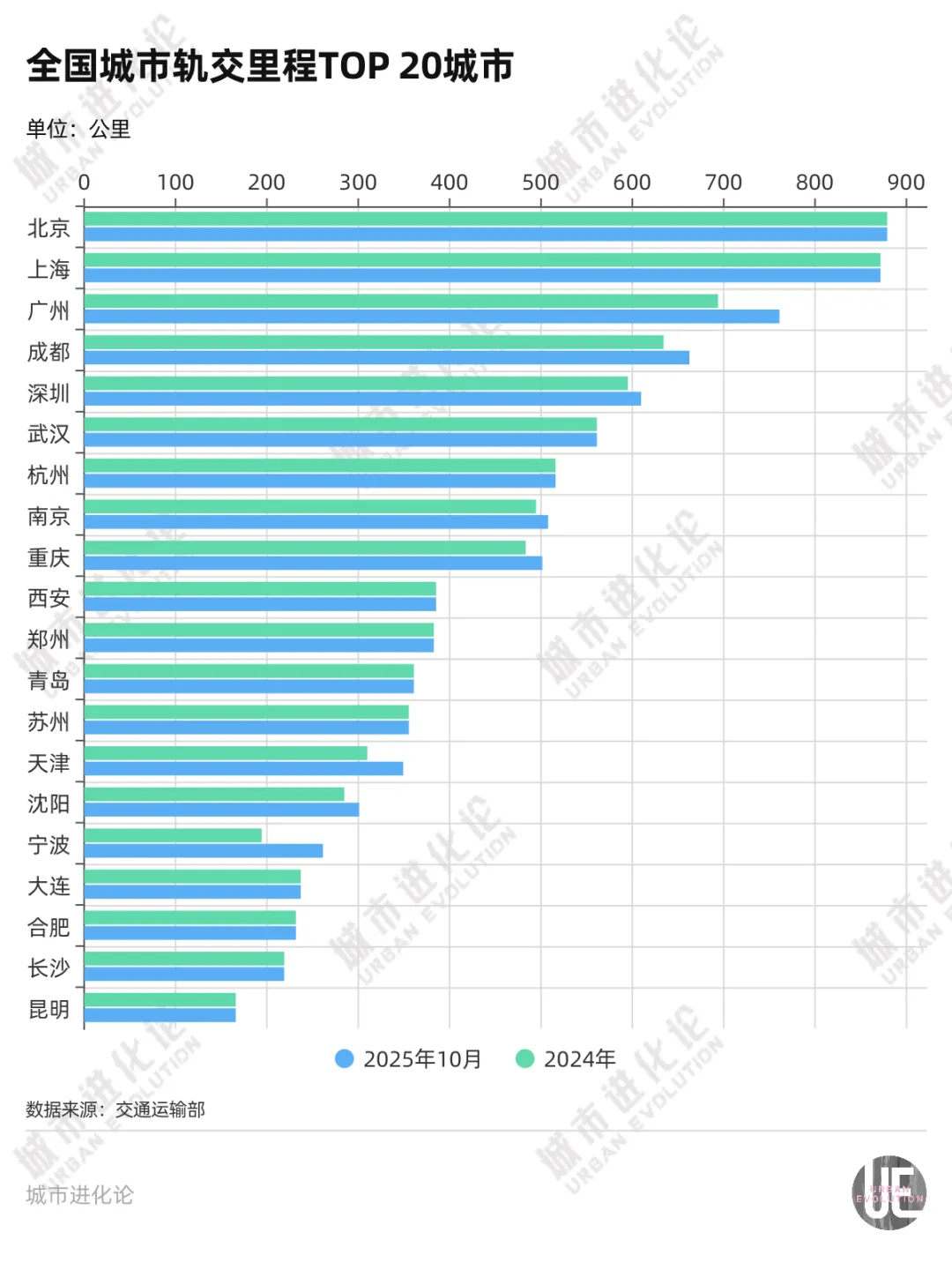
Core Insights - The article highlights a significant surge in urban rail transit construction across multiple cities in China, with cities like Guangzhou, Chengdu, and Hangzhou leading the way in expanding their metro systems [1][2][3] Group 1: Urban Rail Transit Developments - Chengdu's Metro Line 13 Phase 1 is set to open soon, contributing to the city's total metro operational mileage exceeding 750 kilometers by the end of the year, with a daily passenger volume of over 6 million [1] - Guangzhou has reached a milestone of over 700 kilometers of metro lines, with five lines currently under construction and the successful acceptance of the Guangqing intercity railway southern extension [2][4] - Hangzhou is making progress on its Metro Phase IV project, with multiple lines under construction and plans for Phase V advancing steadily [1][2] Group 2: Growth Leaders in Metro Mileage - Guangzhou and Ningbo are tied for the most new metro mileage added this year, each with 67.2 kilometers, while Tianjin and Chengdu follow closely [3] - Shenzhen is also on track to expand its metro system significantly, with six new lines totaling 39.48 kilometers expected to be operational by year-end, aiming to reach 634.6 kilometers in total [6] Group 3: Future Prospects and Challenges - The construction of intercity and suburban railways is becoming a focus for major cities, with Guangzhou's new lines comprising nearly half of its new projects being intercity railways [6][8] - Cities like Chengdu and Shenzhen are also planning to enhance their suburban rail networks, indicating a shift towards a more integrated transportation system [7][8] - However, cities like Ningbo are facing challenges in advancing their new construction plans due to insufficient passenger flow and regulatory requirements [11]
宁马线(南京段)完成冷热滑试验
Nan Jing Ri Bao· 2025-11-21 04:07
Core Points - The Nanjing to Ma'anshan intercity railway (Ningma Line) has completed its cold and hot sliding tests, marking the transition from equipment installation to system debugging [1] - The Ningma Line spans approximately 54.23 kilometers and includes 16 stations, enhancing connectivity between Nanjing and Ma'anshan [1] - The successful operation of the Ningma Line is crucial for the integrated transportation network of the Nanjing metropolitan area, enabling a 30-minute travel time between the two cities [1] Summary by Sections - **Project Development**: The Ningma Line has moved from the equipment installation phase to the system debugging phase after completing essential tests [1] - **Route and Stations**: The railway covers a total length of about 54.23 kilometers with 16 stations, facilitating better access to key urban areas [1] - **Significance**: The line is a vital part of the Yangtze River Delta's rail transit planning and serves as a model for integrated transportation development in the Nanjing metropolitan area [1] - **Next Steps**: Following the successful tests, the Nanjing Metro will continue to advance the overall debugging and testing processes to meet project acceptance deadlines [1]
爆发期再临,谁是地铁增长之王?
Mei Ri Jing Ji Xin Wen· 2025-11-20 14:08
Core Insights - The article highlights the significant progress in urban rail transit construction across several cities in China, particularly Guangzhou, Chengdu, and Hangzhou, marking 2023 as a year of explosive growth in metro construction [2][4][22] Summary by Sections Urban Rail Transit Developments - Chengdu's Metro Line 13 Phase I is set to officially open, contributing to a total operational mileage of over 750 kilometers by the end of the year, with a daily passenger volume exceeding 6 million [1] - Guangzhou has seen the completion of the main structures for two stations on Metro Line 8 North Extension, with five metro lines currently under construction [1] - Hangzhou is advancing its Metro Phase IV project, with multiple lines under construction and the planning of Phase V progressing steadily [2] Growth Statistics - Guangzhou has surpassed the 700-kilometer mark in metro mileage, filling the gap after Shanghai and Beijing crossed the 800-kilometer threshold [4] - Shenzhen has entered the 600-kilometer era with simultaneous openings of multiple lines, while Nanjing and Chongqing have also achieved significant milestones, joining the 500-kilometer club [4][8] Key Players in Growth - Guangzhou and Ningbo are tied for the most new mileage added this year, each with 67.2 kilometers, followed by Tianjin and Chengdu [7] - Guangzhou's metro system is experiencing a historic year with multiple new lines opening, driven by the need for improved transportation for events like the National Games [8] Challenges and Delays - Some cities, such as Ningbo, are facing obstacles in their metro construction applications, highlighting the complexities of urban rail development [3][15] - The approval process for new metro plans has been slow, with cities like Guangzhou and Wuhan awaiting new planning approvals due to previous investment completion rates not meeting required thresholds [16][19] Future Outlook - The construction of suburban and intercity railways is becoming a focus for major cities, with Guangzhou's new lines comprising nearly half of these types of projects [11][12] - The development of city rail systems is seen as essential for urbanization and the establishment of multi-layered transportation networks, with significant room for growth in suburban rail systems [14][22]
穿江“大动脉”已开挖 地铁15号线一期工程大盾构顺利始发
Mei Ri Shang Bao· 2025-11-20 02:51
Core Points - The construction of Hangzhou Metro Line 15 Phase I has reached a critical milestone with the successful launch of the "Kechuang" shield tunneling machine, marking the start of a new phase of simultaneous multi-point advancement [1][2] - The total length of Line 15 is approximately 40.5 kilometers, connecting four districts: Linping, Gongshu, Shangcheng, and Xiaoshan, with a total investment of about 446.8 billion yuan [1] - The SG15-8 section is a key control project, featuring a shield tunnel that runs under the Qiantang River, with a total length of 2,448 meters and an outer diameter of 11.3 meters, making it the only section of Line 15 to use large-diameter shield construction [1] Industry Insights - The successful initiation of the shield tunneling process is expected to accelerate the construction timeline of the north-south urban transit line, with six to seven shield machines anticipated to operate simultaneously during peak construction periods [2] - The completion of Line 15 will significantly enhance the transportation connectivity across the Qiantang River, playing a vital strategic role in improving the overall transportation capacity of Hangzhou [1]