基金风格漂移

Search documents
重大!证监会、中基协齐发力,公募重要文件新鲜出街!
Sou Hu Cai Jing· 2025-11-02 05:12
Group 1 - The core viewpoint of the article highlights the new regulations from the China Securities Regulatory Commission (CSRC) aimed at addressing the discrepancies between fund names and their actual investment strategies, ensuring transparency for investors [1] - The new rules mandate that fund performance benchmarks must align closely with the fund's stated investment strategy, preventing misleading marketing practices [1] - Fund managers will face direct salary cuts if they engage in "style drift," where the fund's investments deviate from its declared focus, such as a fund named "Consumption Selection" heavily investing in new energy stocks [1] Group 2 - The regulations require fund companies to establish independent departments to monitor deviations from benchmarks, which may lead to increased operational costs [3] - Currently, the management fees for actively managed equity funds are around 1.5%, while index funds charge approximately 0.5%, indicating a potential rise in costs for fund companies due to the new compliance requirements [3]


基金管理人应加强基金投资风格的稳定性管理,防范基金风格漂移
Bei Ke Cai Jing· 2025-10-31 10:36
Core Viewpoint - The China Securities Regulatory Commission (CSRC) has released a draft guideline for the performance comparison benchmarks of publicly raised securities investment funds, emphasizing the need for fund managers to enhance the stability of investment styles and monitor deviations from performance benchmarks [1] Group 1: Guidelines for Fund Managers - Fund managers are required to strengthen the management of the stability of fund investment styles [1] - An independent department, separate from the investment management team, should monitor the actual investment and deviations from performance benchmarks to prevent style drift [1] - Fund managers must set differentiated monitoring indicators and thresholds for investment deviations based on product type, investment objectives, and strategies [1] Group 2: Response to Deviation Indicators - If deviation indicators trigger a warning, fund managers are expected to make adjustments within a specified timeframe or seek review from the investment decision committee [1] - The investment decision committee should prioritize the protection of fund shareholders' interests when deciding on breaches of threshold indicators [1] - The committee is required to analyze fund investment deviations at least quarterly and maintain proper records of the analysis reports for future reference [1]
证监会征求意见:基金管理人应监测基金实际投资与业绩比较基准的偏离情况,防范基金风格漂移
Sou Hu Cai Jing· 2025-10-31 10:35
Core Viewpoint - The China Securities Regulatory Commission (CSRC) is soliciting public opinions on the draft guidelines for the performance comparison benchmarks of publicly raised securities investment funds, emphasizing the need for fund managers to enhance the stability management of investment styles [1] Group 1: Fund Management Guidelines - Fund managers are required to monitor the deviation of actual investments from performance benchmarks independently from the investment management department to prevent style drift [1] - Different monitoring indicators and thresholds for investment deviations should be prudently set based on product types, investment objectives, and strategies [1] - If warning indicators are triggered, fund managers are expected to make necessary adjustments within a specified timeframe or seek review from the investment decision committee [1] Group 2: Investment Decision Committee Responsibilities - The investment decision committee must prioritize the protection of fund shareholders' interests when deciding on breaches of threshold indicators and should enhance tracking and evaluation of decision execution [1] - The committee is required to analyze fund investment deviations at least quarterly and maintain proper records of the analysis reports for future reference [1]
亏损近50%仍收巨额管理费,浦银安盛蒋佳良旗下产品陷“旱涝保收”争议
Guan Cha Zhe Wang· 2025-10-15 10:53
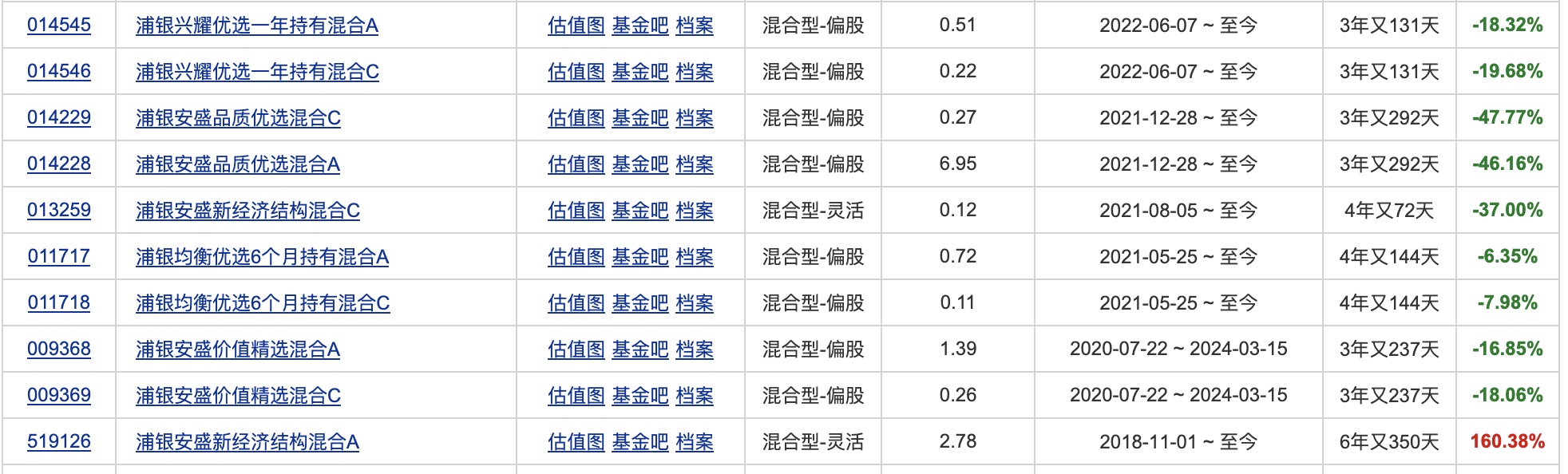
Core Viewpoint - The performance of the funds managed by Jiang Jialiang, Chief Equity Investment Officer of浦银安盛基金管理有限公司, has been disappointing, with significant losses reported across multiple funds despite the overall growth of the public fund industry in China [1][5]. Fund Performance - The浦银安盛品质优选混合A fund has lost over 46% since its inception in December 2021, with a three-year return of -34.21% [1][5]. - Out of the eight funds managed by Jiang, seven have negative returns, with two funds losing nearly 50% [1][5]. - The浦银安盛价值成长混合A fund, which Jiang will no longer manage starting September 30, 2025, has resulted in an estimated loss of approximately 53.95 million yuan for investors during his tenure [3][5]. Management Fees - Despite the poor performance, Jiang's management fees have been substantial, amounting to 12.17 million yuan from the浦银安盛价值成长混合A fund alone [3][5]. - The浦银安盛品质优选混合 fund collected over 50 million yuan in management fees during 2022 and 2023, contrasting sharply with the losses experienced by investors [7][11]. Investment Strategy Issues - Jiang's investment decisions have been criticized for being inconsistent, with significant losses attributed to poor sector choices, such as holding onto the electric vehicle sector during downturns and missing out on the AI market [7][11]. - The high turnover rates of the funds managed by Jiang, such as 619.66% for浦银安盛品质优选混合A, indicate frequent trading attempts to capitalize on short-term market fluctuations, which have not yielded positive results [8][9]. Regulatory Context - The case of浦银安盛基金 highlights broader industry issues, as the China Securities Regulatory Commission is implementing reforms aimed at improving fund performance and accountability, including setting clear performance benchmarks for each fund [11][12].
不慌!基金业绩比较基准,小白也能看懂的投资导航
Morningstar晨星· 2025-10-01 00:35
Core Viewpoint - Understanding the performance benchmark of mutual funds is crucial for investors to establish a rational investment perspective, as it conveys important information about the fund's investment direction, style, and strategy [1][2]. Group 1: Importance of Performance Benchmarks - The regulatory framework has elevated the significance of performance benchmarks in mutual funds, guiding product positioning, investment strategies, and performance evaluation [1]. - Performance benchmarks help investors identify the investment focus and style of funds, such as large-cap blue-chip stocks or specific sectors like semiconductors [2][3]. - Composite benchmarks, such as a mix of equity and bond indices, indicate a balanced investment strategy, while more complex benchmarks reflect specific asset allocation strategies [3]. Group 2: Evaluating Fund Performance - Performance benchmarks serve as a tool to filter market styles and assess the true management capabilities of fund managers, allowing for a more accurate evaluation of their performance [3][4]. - For actively managed funds, deviations from benchmarks can indicate attempts to achieve excess returns, while passive index funds rely heavily on accurately tracking their benchmarks [4]. - The introduction of floating fee structures linked to performance benchmarks ensures that investors pay for value, with fund managers receiving higher compensation only when they outperform the benchmark [4]. Group 3: Analyzing Fund Selection - Investors should analyze benchmarks to determine if a fund aligns with their preferences, considering the composition of the benchmark and its implications for risk and return [5][6]. - The choice of benchmark is critical; funds using price indices rather than total return indices may mislead investors regarding their true performance and management effectiveness [6]. - Adjustments to performance benchmarks may occur as funds change their investment focus, necessitating investor awareness of such changes to ensure alignment with their investment goals [7].

10只基金被指“风格漂移” 华泰柏瑞、交银施罗德在列
Sou Hu Cai Jing· 2025-08-26 12:10
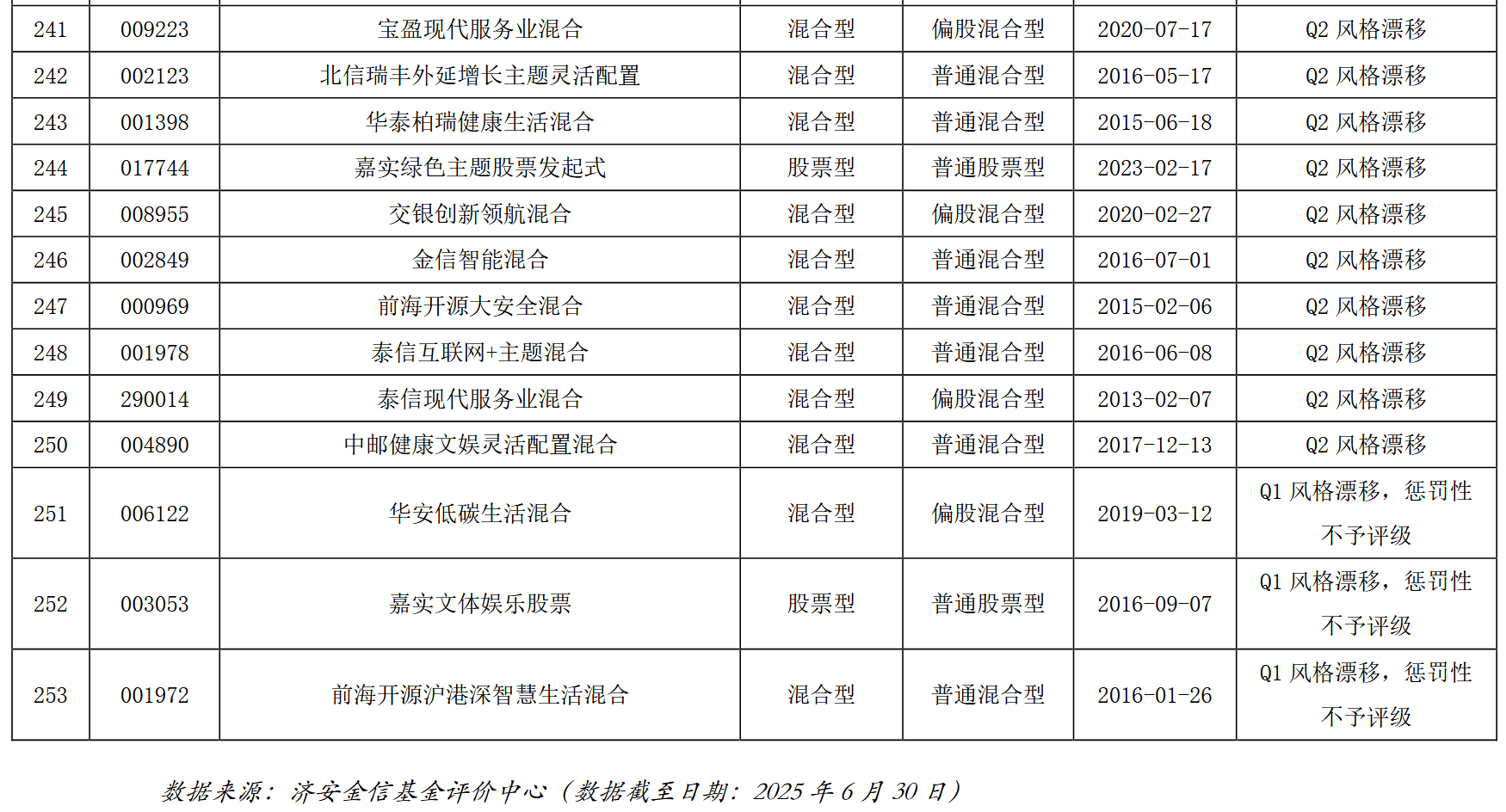
Core Viewpoint - The phenomenon of "style drift" in public funds continues to exist, leading to the exclusion of certain funds from ratings due to significant deviations from their stated investment styles [1][2][9] Fund Rating and Style Drift - Ji'an Jinxin reported that ten funds were excluded from ratings in the second quarter due to "style drift," along with three funds penalized in the first quarter for the same reason [1][2] - The funds affected include those managed by major institutions such as Huatai-PB and Jiao Yin Shirode [2] Regulatory Response - Regulatory bodies have been actively addressing the issue of "style drift," with the CSRC emphasizing the need for clear performance benchmarks for each fund to ensure alignment with their stated investment strategies [1][9] - The CSRC's recent action plan aims to strengthen the constraints of performance benchmarks and improve the clarity of fund classifications to prevent misleading practices [9][10] Market Environment and Fund Performance - The "style drift" reflects conflicts between market conditions and fund positioning, as well as imbalances between performance pressure and investment discipline [1][5] - Some funds have shown significant deviations from their intended investment styles, with examples including a shift towards banking stocks in the Jiao Yin Innovation Leading Fund [5][6] Fund Characteristics and Performance Metrics - The ten funds that experienced "style drift" had varying performance metrics, with some showing declines in net value while others performed better [6][8] - For instance, the Jiao Yin Innovation Leading Fund had a net asset value of 2.066 billion yuan and a net value growth rate of 8.86% in the second quarter [7] Long-term Returns and Risks - Long-term performance varies significantly among funds, with some achieving high returns while others have incurred substantial losses over three years [8] - The issue of "style drift" poses multiple risks for investors, including mismatched expectations and increased exposure to non-hedged risks [8][10]
北信瑞丰外延增长被指风格漂移成“水电主题” 年内下跌1.3%,基金经理王玉珏坦言“看错风格”
Xin Lang Ji Jin· 2025-08-26 10:29
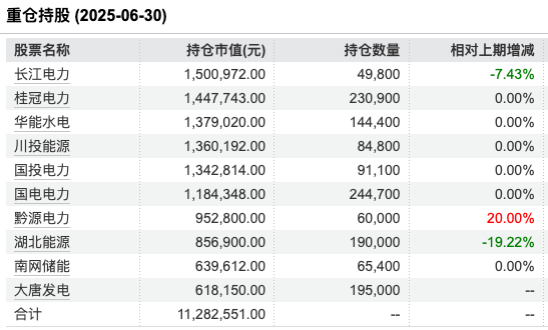
Core Viewpoint - The article highlights the phenomenon of "style drift" in public funds, particularly focusing on the North Trust Ruifeng External Growth Flexible Allocation Mixed Fund, which has deviated significantly from its original investment strategy, raising concerns in the market [1]. Fund Manager and Strategy Changes - The current fund manager, Wang Yuque, took over in January 2024 and has shifted the fund's focus entirely to the hydropower industry, contradicting its original theme of "external growth" through mergers and business expansion [1][10]. - The fund has experienced frequent changes in management, with an average tenure of only 1.87 years for its five managers since inception [1]. Portfolio Composition - As of the end of Q2 2025, the fund's top ten holdings are exclusively in the hydropower sector, including companies like Changjiang Electric Power and Guiguan Electric Power, leading to extreme industry concentration [1][2]. - The total market value of the fund's holdings is approximately 11.28 billion yuan, with a significant portion allocated to public utility stocks, which reflects a defensive investment strategy [2]. Performance Metrics - The fund has shown poor performance, with a return of -1.27% in 2025, -1.21% over the past year, and -15.16% over the past two years, consistently underperforming against its benchmark and the CSI 300 index [4][7]. - Since its inception, the fund has achieved a total return of 47.20%, with an annualized return of only 4.25%, failing to deliver significant excess returns to investors [4]. Market and Manager Reflection - Wang Yuque acknowledged the mismatch between his investment strategy and market conditions, stating that his deep value approach based on net cash accumulation has not been suitable in the current environment [7][10]. - The fund's small size of 0.16 billion yuan puts it at risk of being liquidated, highlighting the challenges faced by mini funds under pressure to perform [8]. Implications of Style Drift - The case of North Trust Ruifeng External Growth Fund illustrates that frequent changes in fund management and persistent small fund sizes are more prone to style drift, raising concerns about adherence to investment themes [10].
偏离“创新”主线,交银创新领航混合被指风格漂移,近一年跑输基准超7%
Xin Lang Ji Jin· 2025-08-26 10:26
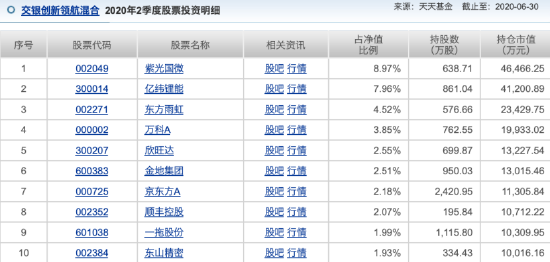
Core Viewpoint - The article discusses the phenomenon of "style drift" in public funds, highlighting the significant deviation of the Jiayin Innovation Leading Mixed Fund from its original investment strategy, raising concerns among investors and regulators [1][7]. Fund Performance and Strategy - The Jiayin Innovation Leading Mixed Fund, managed by Guo Fei for 5.5 years, has shifted its investment focus from technology growth stocks to low-valuation, high-dividend assets such as banks and power companies, which contradicts its "innovation" branding [1][6]. - As of Q2 2025, the fund's top holdings include Jiangsu Bank and Industrial and Commercial Bank, reflecting a clear low-risk, high-dividend characteristic [2]. - The fund's performance has been relatively mediocre, with a return of 10.48% since 2025, significantly lower than the average return of 27.11% for equity mixed funds and 13.58% for the CSI 300 index [3][4]. Historical Performance Data - The fund's annual returns from 2021 to 2025 show fluctuations, with a notable decline in 2022 (-20.12%) and a recovery in 2024 (13.26%) [4]. - Over its 5.5-year history, the fund has achieved a total return of 50.09% and an annualized return of 7.66%, which, while outperforming its benchmark, does not demonstrate a clear "innovation" advantage [4][6]. Investment Logic and Market Implications - Guo Fei's investment logic emphasizes defensive positioning and dividend yield, contrasting sharply with the fund's original growth-oriented theme [6]. - The fund's significant shift in strategy poses a mismatch risk for investors who initially subscribed based on the "innovation" theme, indicating potential challenges in maintaining investor trust and adherence to investment discipline [6][7].


从健康生活到军工有色,华泰柏瑞健康生活风格漂移近三年跑输基准30%,规模缩水至0.66亿,持有人全为散户
Xin Lang Ji Jin· 2025-08-26 10:22
Core Viewpoint - The article highlights the ongoing issue of "style drift" in public funds, particularly focusing on the HuaTai BaRui Health Life Mixed Fund, which has significantly deviated from its intended investment themes of healthcare and consumer life towards cyclical industries like non-ferrous metals and military manufacturing [1][9]. Fund Performance and Holdings - As of the end of Q2 2025, the fund's top ten holdings include companies such as Luoyang Molybdenum, Zhongbing Hongjian, and CATL, primarily concentrated in non-ferrous metals, defense, and power equipment sectors, with no direct allocation to healthcare or consumer-related industries [3][4]. - The fund has shown significant cyclical volatility, achieving a return of 33.33% in 2025 and 43.63% over the past year, but has a weak performance sustainability with declines of 13.11% in 2024, 13.99% in 2023, and 26.65% in 2022, resulting in negative returns over three and five years (-19.41% and -14.51% respectively) [4][6]. Fund Management and Strategy - Fund manager Lv Huijian indicated a cautious approach, focusing on military, non-ferrous, and midstream manufacturing sectors, which further confirms the strategy's disconnection from the "health life" theme and emphasizes macroeconomic cycles and manufacturing trends [7]. - The fund's total return since inception is 43.20%, with an annualized return of only 3.58%, ranking it low among similar flexible allocation funds (290 out of 528) [6]. Investor Composition - Since the mid-2023 report, institutional investors have completely exited, leaving individual investors holding 100% of the shares, reflecting a cautious attitude from institutional funds towards the fund's strategy deviation and performance [9]. Regulatory and Compliance Issues - The long-term and significant deviation from its established investment direction raises compliance concerns regarding style drift and highlights governance issues between thematic constraints and strategy execution, warranting ongoing attention from investors and regulatory bodies [9].

十只基金被指“风格漂移”,涉嘉实基金、华泰柏瑞等头部公募
Nan Fang Du Shi Bao· 2025-08-19 07:24
Core Insights - A total of 10 mutual funds have been identified with style drift in Q2 2025, with some funds from major asset management firms like Harvest Fund, Huatai-PineBridge Fund, and China Merchants Jinling Fund [2][3] - The China Securities Regulatory Commission (CSRC) has emphasized the need for clear performance benchmarks for each fund to prevent deviations from their stated investment objectives [2][12] - As of August 18, 2025, five of the identified funds have underperformed their benchmarks over the past three years, indicating potential issues with their investment strategies [2][9] Fund Performance and Characteristics - The largest fund among those identified is the China Merchants Jinling Fund's "Innovation Leading" mixed fund, with a scale of 2.067 billion yuan, which has shown a significant style drift towards banking stocks [5][11] - Other funds with notable style drift include "Smart China 2025" and "Modern Service Industry," which have concentrated holdings in sectors that do not align with their thematic names [7][11] - The performance of the identified funds varies, with some achieving positive returns over the last three years, while others have recorded significant losses, such as the "Modern Service Industry" fund with a return of -55.17% [9][11] Regulatory Context - The CSRC has been actively addressing the issue of style drift in mutual funds, implementing measures to enhance the stability of fund investment behaviors and ensure that investors receive what they expect based on fund names [12][13] - Recent regulatory actions include the introduction of clearer guidelines for fund performance benchmarks and restrictions on excessive trading behaviors that may lead to style drift [12][13]