增强现实技术

Search documents
AI大模型引爆智能眼镜热潮!全市场唯一一只VRETF(159786)今日微涨0.35%,光线传媒涨超4%
Xin Lang Cai Jing· 2025-06-12 02:56
Group 1 - The smart glasses market is experiencing significant growth due to the integration of AI models and augmented reality technology, with online and offline sales surging [1] - A specific e-commerce platform reported a year-on-year increase in transaction volume exceeding 800%, with features like smart teleprompters and real-time translation being popular among various user groups [1] - Global smart glasses shipments are projected to reach 12.8 million units by 2025, representing a 26% year-on-year growth, while the Chinese market is expected to surpass 2.75 million units, growing by 107% and becoming the largest globally [1] Group 2 - The A-share market showed a positive trend on June 12, with AI glasses-related stocks performing actively, including notable gains from companies like Light Media and Aofei Entertainment [1] - Tianfeng Securities highlighted the significant investment value of the AI glasses sector, driven by accelerated technological iteration, expanded application scenarios, and collaborative development within the industry [2] - Recent developments from leading companies indicate that AI glasses are transitioning from concept to commercial viability, exemplified by Raybird Innovation's X3 Pro AR glasses, which feature advanced energy control and AI processing capabilities [2]

AI加速赋能消费电子产业,AI人工智能ETF(512930)、消费电子ETF(561600)双双翻红涨近1%
Sou Hu Cai Jing· 2025-06-12 02:32
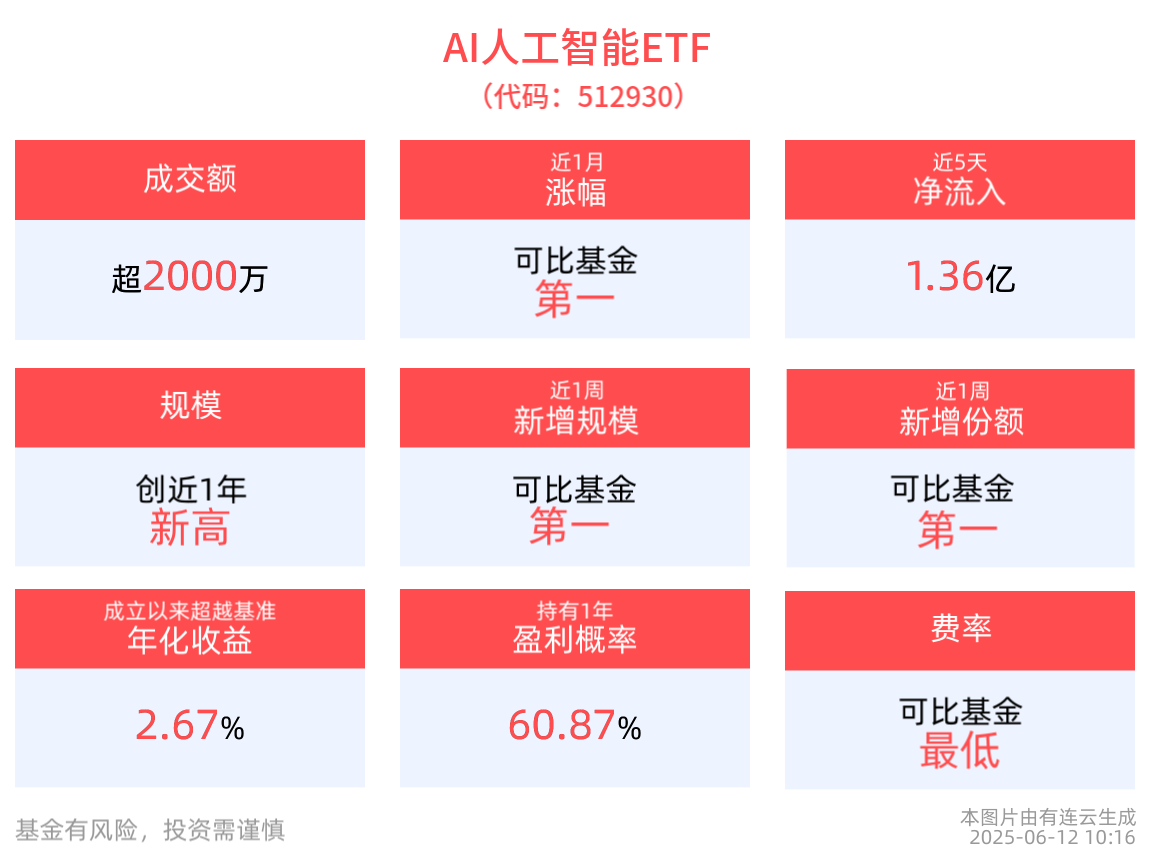
Group 1: AI Industry Insights - The AI Artificial Intelligence ETF (512930) has seen a recent increase of 0.61%, with a latest price of 1.33 yuan, and a weekly cumulative increase of 1.69% as of June 11, 2025 [1] - The liquidity of the AI Artificial Intelligence ETF showed a turnover rate of 1.03%, with a transaction volume of 21.5981 million yuan, and an average daily transaction of 109 million yuan over the past week [1] - The total scale of the AI Artificial Intelligence ETF reached 2.1 billion yuan, marking a new high in nearly a year, with a significant increase in shares by 116 million over the past week [1] Group 2: Smart Glasses Market - The smart glasses market is experiencing explosive growth, with sales volume increasing over 8 times year-on-year, driven by the integration of AI large models and augmented reality technology [2] - Global smart glasses shipment is expected to reach 12.8 million units by 2025, a year-on-year growth of 26%, with China's shipments projected to exceed 2.75 million units, a significant increase of 107% [2] - The combination of artificial intelligence and hardware is identified as a key trend, with current AI glasses offering basic functionalities like real-time translation and information display, indicating room for improvement in product experience [2] Group 3: Consumer Electronics Sector - The Consumer Electronics ETF (561600) has increased by 0.51%, with a latest price of 0.78 yuan, and a weekly cumulative increase of 1.17% as of June 11, 2025 [4] - The liquidity of the Consumer Electronics ETF showed a turnover rate of 0.78%, with a transaction volume of 1.3919 million yuan, and an average daily transaction of 15.0255 million yuan over the past year [4] - The scale of the Consumer Electronics ETF has grown by 24.4175 million yuan over the past six months, with a notable increase in shares by 27 million over the past three months [4] Group 4: Online Consumption Index - The online consumption theme index (931481) has seen a slight increase of 0.03%, with notable performances from stocks like Giant Network and NetEase Cloud Music, which rose by 9.98% and 5.90% respectively [5] - The index tracks 50 companies involved in online shopping, digital entertainment, online education, and telemedicine, reflecting the overall performance of the online consumption sector in mainland China and Hong Kong [7] - The top ten weighted stocks in the online consumption index account for 56.98% of the total index, including major players like Alibaba and Tencent [7] Group 5: Consumer Electronics Index Composition - The Consumer Electronics Index (931494) has a top ten weighted stock composition that includes companies like SMIC and Luxshare Precision, accounting for 53.04% of the index [8] - The index reflects the performance of companies involved in component production and consumer electronics brand design and manufacturing [8] - The AI Artificial Intelligence ETF closely tracks the AI theme index, which includes 50 companies providing foundational resources, technology, and application support for artificial intelligence [9]

影响市场重大事件:外交部:中方将对53个非洲建交国实施100%税目产品零关税
Mei Ri Jing Ji Xin Wen· 2025-06-11 22:41
每经记者|杨建 每经编辑|彭水萍 |2025年6月12日 星期四| NO.1 外交部:中方将对53个非洲建交国实施100%税目产品零关税 外交部发言人林剑6月11日主持例行记者会表示,中非合作论坛成果落实协调人会议在湖南长沙举行。 中方宣布,将落实对53个非洲建交国实施100%税目产品零关税举措,为非洲最不发达国家对华出口提 供更多便利,愿同非方深入落实"十大伙伴行动",为中非携手推进现代化、建设新时代全天候中非命运 共同体提供了重要指引。去年北京峰会以来,中方新增对非投资超133亿元人民币,对非资金支持总额 超1500亿元人民币。今年前5个月,中国对非进出口达9630亿元,同比增长12.4%,创历史同期新高。 NO.2 超10家车企纷纷宣布将供应商支付账期统一至60天内 近日,超10家汽车企业接连宣布将供应商支付账期统一至60天内,以切实行动提高产业链资金周转效 率,推动汽车产业健康、可持续发展。截至目前,比亚迪汽车、中国一汽、东风汽车、吉利汽车集团、 广汽集团、赛力斯集团、长安汽车、奇瑞集团、长城汽车、小鹏汽车、小米汽车等近日纷纷发声,宣布 将供应商支付账期统一至60天内。相关举措有利于保障产业链供应链稳 ...
智能眼镜市场不断升温,线上线下销售火热
news flash· 2025-06-11 10:43
受益于AI大模型与增强现实技术的深度融合,近期,智能眼镜市场不断升温,线上线下(300959)销 售火热。某电商平台数码业务部负责人介绍,智能眼镜市场呈现出了爆发式的增长,成交量同比增长超 过了8倍。数据显示,2025年全球智能眼镜出货量预计将达到1280万台,同比增长26%;其中,中国市 场将突破275万台,同比增长高达107%,跃居全球第一。随着智能眼镜软硬件的不断成熟,未来,终端 产品售价将持续下降。某消费电子品牌扩展现实业务线总经理介绍:像光波导的眼镜,由于它技术难度 稍微高,一般在2000到3000元这一区间;像观影类的眼镜现在已经掉到1000到2000元的区间了。(央视 财经) ...
苹果自研芯片帝国,更进一步
半导体芯闻· 2025-05-09 11:08
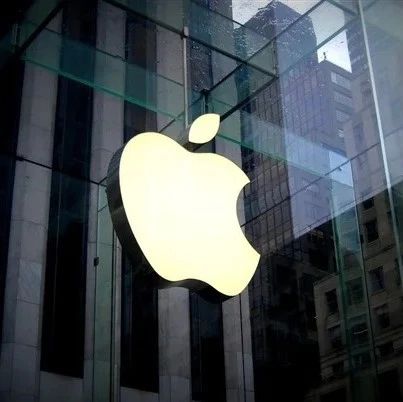
Core Viewpoint - Apple is making significant progress in developing a custom chip for smart glasses, indicating an acceleration in its product development to compete with Meta's offerings [1][2]. Group 1: Smart Glasses Development - Apple is developing smart glasses that will utilize a custom chip based on the technology used in the Apple Watch, designed for low power consumption [1]. - The company plans to start mass production of the smart glasses processor by the end of next year or in 2027, suggesting a potential market launch within the next two years [1]. - Apple is also exploring non-AR smart glasses that will use cameras and AI to assist users, similar to Meta's products [2]. Group 2: Semiconductor Advancements - Apple's silicon team has become a crucial part of its product development, especially since the transition to in-house Mac chips in 2020 [1]. - The company is developing new chips for various devices, including a camera-equipped Apple Watch and AirPods, with plans to have these ready by around 2027 [3]. - Apple is also working on advanced Mac chips, including potential M6 and M7 processors, with the M5 processor expected to be applied to iPad Pro and MacBook Pro by the end of this year [3]. Group 3: AI Server Chips - Apple is developing its first dedicated AI server chips, named "Baltra," which are expected to enhance the speed and functionality of its AI services by 2027 [4][5]. - The AI server project will utilize components co-developed with Broadcom, aiming to significantly increase processing capabilities compared to current models [5]. - The hardware technology team is also working on future components, including sensors for non-invasive blood glucose measurement for future Apple Watch versions [5].

AI眼镜专家:产业链一线动态更新及趋势展望
2025-05-06 02:28
Summary of Key Points from the Conference Call Industry Overview - The conference call focuses on the AR and AI glasses industry, highlighting key players such as Meta, Ray-Ban, Xiaomi, and RocketDNA, along with their product developments and market performance [1][3][7]. Core Insights and Arguments - **Meta's Performance**: Meta's AR glasses sales surged, with Q1 2025 sales tripling year-over-year to 600,000 units. The company anticipates total sales for the year to reach between 4.5 million and 5 million units, despite skepticism about achieving a target of 10 million units [1][3][4]. - **Product Launches**: Meta plans to release three new products by the end of 2025, including the third-generation Ray-Ban AI glasses and a sports version in collaboration with Oakley, which has an annual shipment volume of approximately 10 to 12 million units [1][6]. - **Xiaomi's Entry**: Xiaomi is set to launch AI glasses without display functionality, weighing around 40-50 grams, priced between 1,799 and 1,899 yuan [1][9]. - **RocketDNA's Growth**: RocketDNA's smart glasses, featuring dual green waveguide displays, are expected to launch before the 618 shopping festival, with pre-orders exceeding 200,000 units. The company’s valuation is nearing 10 billion yuan [2][11][12]. - **Market Dynamics**: The domestic AR and AI glasses market is projected to sell around 1 million units in 2025, with Xiaomi expected to sell 300,000 to 500,000 units, and Rokid around 120,000 units [2][15]. Additional Important Insights - **Technological Innovations**: The focus on waveguide technology is significant, with diffraction waveguides seen as the future direction despite current low optical efficiency. The combination of diffraction waveguides and Micro LED technology is anticipated to dominate the market in the coming years [34][36]. - **User Experience Enhancements**: Improvements in AI applications for message display and voice recognition are critical for enhancing the practicality of waveguide glasses. Companies like Tencent are researching better voice understanding to improve user interaction [19][20]. - **Impact of Government Promotion**: The endorsement of AR technology by high-profile figures, such as Premier Li Qiang, has significantly raised public awareness and interest in the sector, positively affecting market performance and expectations for companies like RocketDNA [10][12]. - **Competitive Landscape**: Domestic brands are actively competing with international leaders, leveraging technological innovations and market strategies to enhance their competitiveness. The market is expected to see more domestic brands emerging in the coming years [7][11]. Conclusion The AR and AI glasses industry is experiencing rapid growth, driven by significant advancements in technology and strategic product launches from key players. The market dynamics are shifting, with both international and domestic brands vying for a share, influenced by government endorsements and evolving consumer preferences.

250秒解锁→透过增强现实技术了解神舟十九号回家全过程
Yang Shi Wang· 2025-04-30 02:36
Core Viewpoint - The Shenzhou 19 mission is set to return to Earth on April 30, showcasing advancements in space travel technology, particularly through the use of augmented reality to illustrate the return process. Group 1: Return Process Overview - The Shenzhou 19 spacecraft will utilize a "fast return plan," reducing the number of orbits around Earth from 11 to 5, taking approximately 7.5 hours for the return journey, which alleviates discomfort for astronauts during their time in the capsule [1] - The return journey involves a series of critical maneuvers, including two attitude adjustments and the separation of the return capsule from the orbital module at an altitude of approximately 390 kilometers [2][4] Group 2: Key Maneuvers - The first set of maneuvers includes two attitude adjustments and the separation of the return capsule, which is completed in about 120 seconds [7] - After the separation, the spacecraft enters a braking phase, where the main engine ignites alongside the attitude control engines to maintain stability during deceleration, lasting between 150 to 180 seconds [7] - At around 145 kilometers above the ground, the propulsion module is destroyed upon re-entry, while the return capsule continues its descent [11] Group 3: Atmospheric Re-entry - As the return capsule descends to about 120 kilometers, it must adjust its angle to ensure the heat shield faces forward [13] - Upon entering the atmosphere at approximately 100 kilometers, the capsule travels at about 7 kilometers per second, creating a plasma shell that disrupts radio communication, known as the "blackout zone" [15] - After exiting the blackout zone, the capsule's speed decreases to around 200 meters per second, still requiring further deceleration [17] Group 4: Landing Sequence - At 10 kilometers altitude, the capsule initiates the parachute deployment sequence, which consists of three stages: the pilot chute, deceleration chute, and the main parachute, which has an area of 1200 square meters, reducing the descent speed to 7 to 8 meters per second [19] - At approximately 6 kilometers, the heat shield is discarded [21] - Finally, about 1 meter above the ground, four landing retro-thrust engines ignite to further slow the capsule, allowing for a safe landing at a speed of around 2 meters per second [23]
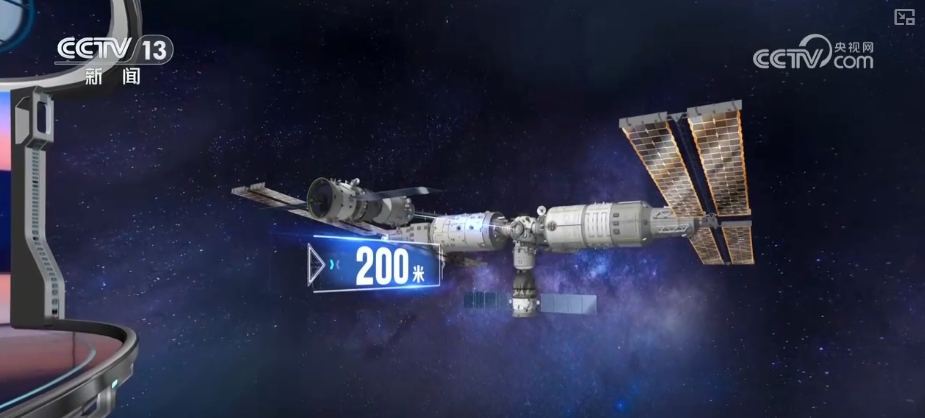
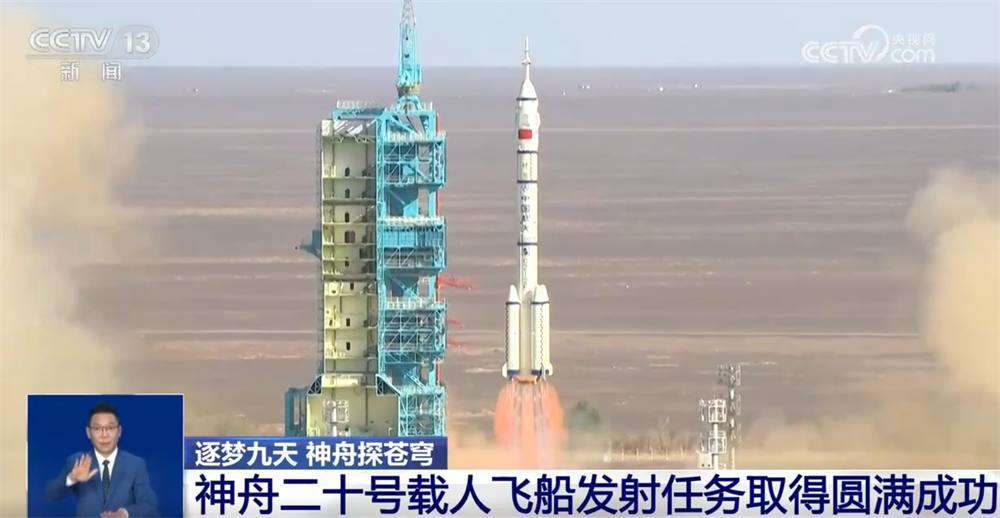
增强现实技术展示神二十“发射+交会对接”全流程 “太空会师”在望
Yang Shi Wang· 2025-04-24 11:28
Core Points - The Shenzhou-20 manned spacecraft was successfully launched on April 24, 2023, at 17:17, from the Jiuquan Satellite Launch Center, marking a significant achievement in China's manned spaceflight program [1][3] - This mission is the fifth manned flight in the application and development phase of China's manned space program and the 35th launch since the project's inception, with a total of 26 astronauts having completed missions in space [3] Launch Details - The Long March 2F rocket, weighing approximately 500 tons, was used for the launch, with 90% of its weight consisting of liquid fuel [4] - The rocket executed a program turn after 12 seconds of flight to save fuel, transitioning from vertical ascent to a trajectory aligned with the Earth's tilt [6] - The escape tower separated from the rocket at around 120 seconds, ensuring continued safety for the astronauts through high-altitude escape engines [8] - The rocket's boosters and first stage separated at approximately 152 seconds and 205 seconds, respectively, allowing the second stage to continue propelling the spacecraft [10][11] - The spacecraft successfully exited the dense atmosphere and entered its designated orbit after the fairing separation at around 13 minutes [13][15] Docking Process - Following the successful launch, the spacecraft will undergo a 6.5-hour rapid rendezvous and docking process with the space station, involving multiple orbital maneuvers [18] - The docking sequence includes a series of adjustments to align the spacecraft with the space station's core module, culminating in a final capture and locking mechanism [21] - After docking, a total of six astronauts will be present in the Chinese space station, facilitating a "space reunion" [22]