
外汇市场干预

Search documents
韩元暴涨!汇率保卫战全面升级
财联社· 2025-12-24 05:19
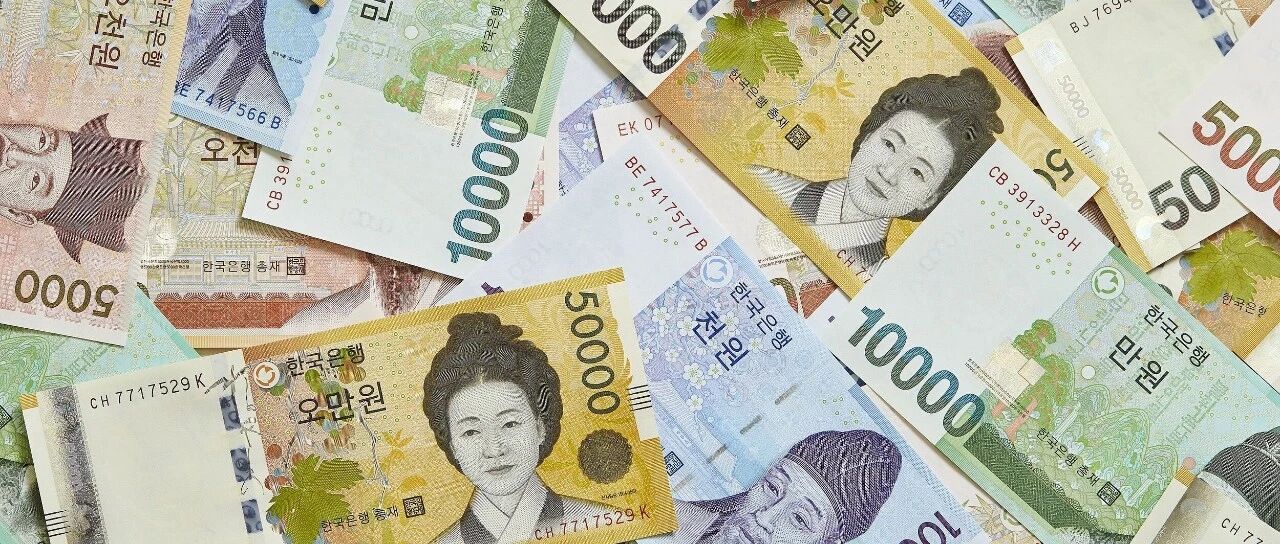
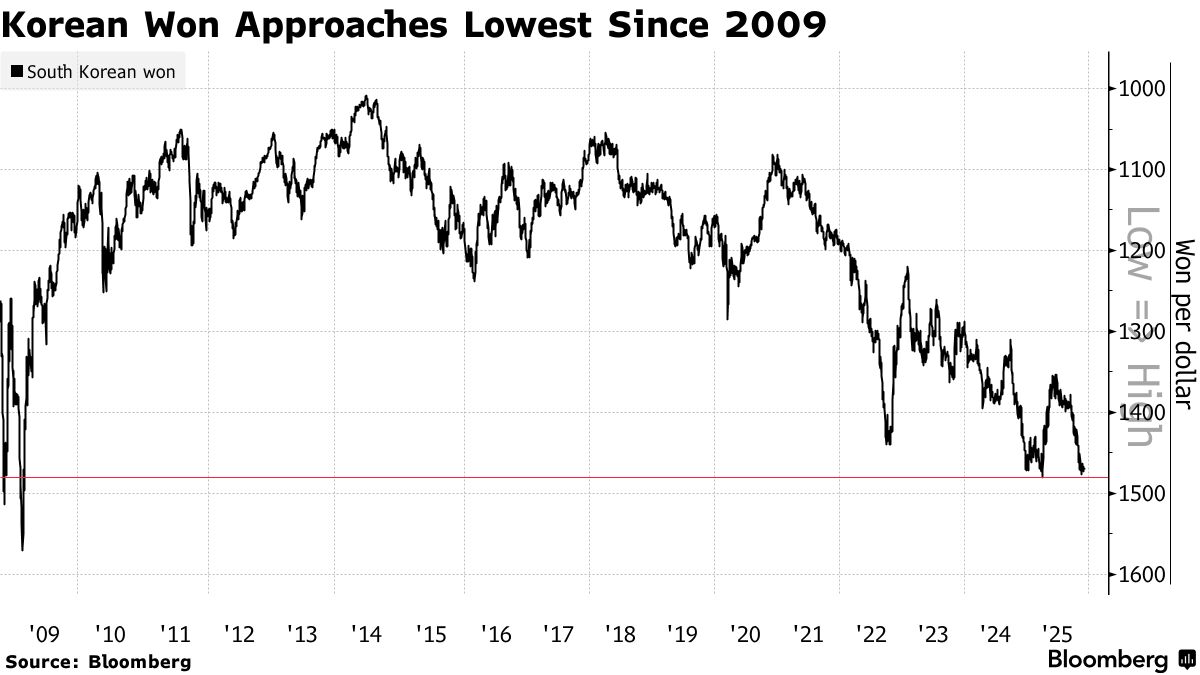
上述消息发布后,韩元短线一度跳涨1.4%,升至1美元兑1460.00韩元。此前韩元周二曾贬值至1美元兑1485韩元,逼近2009年全球金融 危机以来的最低水平。 韩国当局周三(12月24日)表示,韩元过度疲软并非好事, 外汇市场将很快就会看到政府的"坚定决心" 。 此言一出,韩元汇率随即大幅走 强…… 韩国央行与韩国财政部周三共同表示,过去两周已多次召开会议讨论韩元近期走弱问题。韩国财政部同时宣布,将采取多项新税收措施以稳 定外汇市场。 但自六月底以来,韩元仍贬值逾7%,成为同期亚洲表现第二差的货币。 韩国当局亮明"坚定决心" 韩国财政部表示,将推出针对回流投资账户的新税收激励计划,以鼓励海外投资资本回流国内市场。 根据相关最新方案,韩国个人投资者在出售海外股票后,在将收益兑换成韩元并长期投资于国内股票时,将在1年内暂时减免出售海外股票 所得的所得税。 此外,韩国政府将支持大型券商迅速推出面向个人投资者的远期销售产品,因为许多散户投资者目前缺乏足够的外汇风险管理工具。韩国财 政部还表示,为了减少国内母公司从海外子公司收到的股息的双重征税,政府将把股息收入排除率从目前的95%提高到100%。 目前,韩国当局正竭 ...

日元领涨G-10货币兑美元 此前日本财务大臣称必要时可对汇率大胆行动
Xin Lang Cai Jing· 2025-12-23 05:04
Core Viewpoint - The Japanese yen outperformed other G-10 currencies following comments from Finance Minister Shunichi Suzuki, indicating the government's willingness to take bold actions if the yen's movement diverges from fundamentals [1][2]. Group 1: Yen Performance - The yen appreciated by 0.5% against the US dollar, reaching 156.28 yen per dollar, rebounding from a near one-month low after the Bank of Japan's interest rate decision [1][2]. - The US dollar has been declining against major currencies for the second consecutive day, contributing to the yen's rebound [1][2]. Group 2: Market Sentiment - Market participants are cautious about potential Japanese intervention in the currency market, especially after significant selling pressure on the yen [1][2]. - Hiroyuki Machida from ANZ noted that the yen's exchange rate reflects the overall weakness of the US dollar, alongside declining US Treasury yields [1][2]. Group 3: Monetary Policy Context - The Bank of Japan raised its policy interest rate to the highest level in 30 years, but Governor Kazuo Ueda did not provide clear guidance on future rate hikes, leading to the yen approaching levels that previously triggered central bank intervention [1][2]. - Chief Foreign Exchange Officer Jun Miura stated that appropriate measures will be taken to address excessive volatility in the foreign exchange market [1][2]. Group 4: Intervention Expectations - Historical experience suggests that if the yen falls below 158, market tension will increase sharply, with expectations of potential intervention rising [1][2].
日本央行“谨慎加息”致日元下跌 日本最高外汇官员发出“干预警告”
智通财经网· 2025-12-22 03:07
继日本央行上周五宣布加息后,日本央行行长植田和男选择维持政策选择余地,并未发出过于鹰派的信 号,而非提振日元。这导致日元兑美元汇率周末一度跌至157.78,表明投资者对日本央行未能释放出更 强烈的加息信号感到失望。 周一,三村淳发表讲话后,日元兑美元汇率一度走强至157.51。由于分析师普遍预期日本央行将在下一 次加息前未来六个月左右维持利率不变,如果日元兑美元汇率继续走弱至160关口,日本财务省可能不 得不干预外汇市场。 智通财经APP获悉,在日本央行上周五的利率决议导致日元对美元走弱后,日本首席货币官员就近期外 汇市场的波动发出警告。日本最高外汇外交官三村淳(Atsushi Mimura)表示:"尤其是在上周货币政策会 议之后,我们看到市场出现单向、突然的波动,我对此深感担忧,我们希望对这种过度波动采取适当的 应对措施。" ...
美元兑韩元汇率逼向1500红线!韩国当局或强力干预保卫本币
智通财经网· 2025-12-11 03:50
Core Viewpoint - Analysts suggest that if the KRW/USD exchange rate approaches the psychologically significant level of 1,500 KRW per USD, the South Korean authorities may intensify efforts to defend the won [1][4] Group 1: Currency Exchange and Government Response - The KRW has depreciated over 4% since the fourth quarter due to foreign capital outflows and increased overseas investments by residents, putting pressure on the South Korean authorities to defend the currency [4] - South Korean government officials express concerns over increasing uncertainty in the foreign exchange market, emphasizing the need to actively utilize all available tools to address the situation [4] - An emergency meeting was held on November 24 by multiple government departments, led by the Ministry of Finance, to discuss specific measures for stabilizing the market and alleviating the depreciation pressure on the won [4] Group 2: National Pension Service (NPS) Actions - The National Pension Service (NPS), South Korea's largest institutional investor with approximately $545 billion in overseas assets, has resumed selling dollars to support the won [1][4] - The NPS has a hedging cap set at about 15% of its global assets and employs various methods, including selling dollar forward contracts, to execute its hedging strategy [5] - Recent reports regarding the NPS's foreign exchange hedging appear to have created a signaling effect in the market, leading to expectations that South Korean authorities will defend the 1,500 KRW level [5]
瑞郎飙升央行却“躺平”?瑞银:11月恐才是“真战场”
Jin Shi Shu Ju· 2025-12-01 14:07
Core Viewpoint - UBS analysis indicates that the Swiss National Bank (SNB) likely did not intervene in the foreign exchange market in October to curb the appreciation of the Swiss franc [1] Group 1: SNB's Market Activity - UBS economist Florian Germanier estimates that the SNB's trading volume in October ranged from buying up to 20 million Swiss francs (25 million USD) in foreign exchange to selling up to 50 million Swiss francs, significantly lower than the 5.1 billion Swiss francs spent in the second quarter [1] - Germanier states that there are no signs of intervention by the SNB, as the data from the balance sheet does not indicate strong actions taken by officials during this period [1] Group 2: Currency Fluctuations - In October, the Swiss franc approached a critical level of 0.92 against the euro, leading to speculation about potential currency sales by decision-makers to limit the increase, which did not occur [1] - The lack of intervention aligns with a shift from large-scale sales of the Swiss franc by the SNB to a more cautious approach [1] Group 3: Future Expectations - Germanier suggests that the SNB may have entered the market in November in response to the Swiss franc reaching a ten-year high following a trade agreement with the United States [1] - The volatility in the Swiss currency market in mid-November, when the franc reached its strongest level since the SNB removed the exchange rate cap in January 2015, may indicate potential intervention [1]
日本政府小组委员:日本可以积极干预以支撑日元
Sou Hu Cai Jing· 2025-11-24 00:12
Core Viewpoint - Japan can mitigate the negative impact of yen depreciation on its economy through active intervention in the foreign exchange market, as stated by Takuji Aida, a key advisor to the Japanese government [1] Group 1 - Takuji Aida emphasized that Japan has sufficient foreign exchange reserves to conduct intervention operations [1] - The intervention measures can effectively alleviate the side effects caused by the depreciation of the yen [1]
持续贬值!日本发出“最强烈警告”
Sou Hu Cai Jing· 2025-11-21 14:10
Core Viewpoint - The Japanese Finance Minister, Katsunobu Kato, issued a strong warning regarding the rapid depreciation of the yen, indicating the possibility of intervention in the foreign exchange market due to the alarming trend [1][3]. Group 1: Yen Depreciation Concerns - The yen has been depreciating rapidly against the US dollar, recently falling to around 157 yen per dollar, which is causing economic pressure in Japan, particularly affecting the costs for importers and impacting households and small businesses [3]. - Kato expressed deep concern over the "one-sided and rapid" movement of the yen against the dollar, marking this statement as the strongest warning since the depreciation began [3]. Group 2: Economic Impact and Future Outlook - The depreciation of the yen is expected to increase costs for imported goods, which could further strain the Japanese economy [3]. - There are concerns that potential travel or export restrictions from China could exacerbate the situation, leading to increased downward pressure on the yen [5]. - Factors such as weakened inbound demand and a slowing economy may prevent the Bank of Japan from considering interest rate hikes, adding to the depreciation pressure on the yen [5].

日本政府顾问:在日元跌至160之前可能会触发干预
Xin Hua Cai Jing· 2025-11-20 23:26
Core Viewpoint - The Japanese authorities may be closer to intervening in the foreign exchange market than many investors realize, as the USD/JPY exchange rate approaches the 160 level [1] Group 1: Economic Indicators - The USD/JPY exchange rate fell below 157, reaching a new low since January [1] - The last intervention by Japanese authorities occurred in July 2024 when the exchange rate hit 160 [1] Group 2: Expert Opinions - Takuji Aida, Chief Economist at Crédit Agricole, noted that Japan's substantial foreign exchange reserves could be utilized for intervention if necessary [1] - Aida suggested that if the yen's movement becomes "dramatic," authorities might intervene before the yen reaches the 160 level [1]
日元、韩元,一个比一个惨?
财联社· 2025-11-20 07:03
Core Viewpoint - The article discusses the significant depreciation of Asian currencies, particularly the Japanese yen and South Korean won, against the backdrop of a strengthening US dollar and increasing market volatility, raising concerns about potential interventions by Asian central banks [1][4][6]. Group 1: Currency Depreciation - The Japanese yen has notably weakened, with the USD/JPY exchange rate surpassing 157, marking a new high since January [1]. - The euro has also strengthened against the yen, breaking the 180 and reaching 181.44, the highest level since the euro's inception in 1999 [3]. - The nominal effective exchange rate index for the yen shows a 3% decline since the end of September, the largest drop among G10 currencies [3]. Group 2: Central Bank Responses - Japanese Finance Minister has emphasized the need to monitor market trends closely due to the yen's depreciation [3]. - South Korean officials have expressed concerns over the won's decline, which has fallen approximately 3% in the past month, and are considering measures to defend the currency [4][5]. - The Indian rupee and Philippine peso have also faced depreciation pressures, with the rupee falling over 3% this year due to external factors [5]. Group 3: Foreign Exchange Reserves - Asian economies currently hold substantial foreign exchange reserves, totaling nearly $8 trillion, providing a buffer against currency depreciation [6][7]. - Major central banks in the region have increased reserves by over $400 billion this year, with China and Japan leading in reserve growth [7]. - The import coverage ratio in the region remains robust, indicating a strong capacity to manage currency fluctuations [7].

韩国政府联合国民年金公团入市干预 全力遏制韩元贬值压力
Xin Hua Cai Jing· 2025-11-14 04:04
Core Viewpoint - The South Korean government has announced coordinated actions with key market players, including the National Pension Service, to stabilize the foreign exchange market amid concerns over the continued depreciation of the Korean won [1] Group 1: Government Actions - The South Korean Finance Minister, Koo Yun-cheol, convened an emergency meeting with the Bank of Korea Governor and financial regulators to collaborate closely with the National Pension Service and major export companies [1] - This initiative indicates a heightened alert from South Korean authorities regarding the risks of the won's depreciation [1] Group 2: Market Impact - The involvement of the National Pension Service, one of the largest pension funds globally, is seen as a significant signal of policy determination to the market [1] - Analysts suggest that the measures aim to alleviate downward pressure on the won and prevent severe fluctuations in the exchange rate, which could further impact South Korea's export-dependent economy [1] Group 3: Operational Details - Specific intervention methods, funding scales, and operational timelines have not been disclosed [1] - The Finance Ministry and the Bank of Korea have not confirmed whether foreign exchange reserves have been utilized for direct market intervention, nor have they specified how the National Pension Service will adjust its foreign asset allocation [1] - The actual effectiveness of these measures remains to be validated by subsequent market reactions [1] Group 4: Recent Currency Performance - On November 6, the exchange rate of the won against the US dollar fell to 1473.2, marking the lowest intraday level since March 13, 2009 [1]