
学科交叉融合

Search documents
“学术型学科博士+专业型AI硕士”,复旦大学创新双学位培养
Xin Jing Bao· 2025-08-29 09:04
Group 1 - Fudan University is implementing a dual-degree program combining academic doctoral degrees with professional AI master's degrees, focusing on ten key disciplines including philosophy, economics, and biology [1][2] - The university is optimizing its academic program structure to accelerate the development of disciplines that are urgently needed by the nation, including fields like integrated circuits and national security [1] - A new talent cultivation model called "integration of undergraduate and graduate education" will be launched in 2024, targeting urgent talent needs and emphasizing innovation capabilities [2] Group 2 - The dual-degree program aims to cultivate high-level interdisciplinary talents with a strong ability in cross-disciplinary research and practical application, leveraging AI technology [2][3] - Fudan University has established a mechanism for adjusting academic programs to better align with national strategic needs, focusing on urgent disciplines such as quantum science and technology [1][2] - The university's approach emphasizes project-based learning and interdisciplinary integration as effective methods for addressing future challenges and nurturing innovative talents [3]
产教融合赋能城市光域升级 构建“光域智造”育人新范式
Xin Hua Ri Bao· 2025-07-31 00:13
Core Viewpoint - The lighting industry is undergoing a transformation through interdisciplinary integration, focusing on technological innovation and humanistic considerations to enhance urban lighting environments [1][6][8] Group 1: Technological Innovation - The current iteration of lighting technology showcases interdisciplinary characteristics, such as software collaboration for precise building light and heat risk warnings and glare management systems that ensure visual comfort [2][4] - Innovative lighting services decode the physical light environment and human visual perception through cross-disciplinary approaches [2][3] Group 2: Education and Industry Integration - The "last mile" challenge in adapting innovative technologies to practical applications highlights the need for bridging the gap between academic curricula and industry practices [3][5] - Industry-education integration is essential for addressing the structural gaps in educational systems, enabling students to engage in real-world projects and develop comprehensive engineering skills [3][5] Group 3: Talent Development - The evolution of smart lighting systems requires professionals to possess a blend of skills in optical engineering, IoT protocols, and machine learning, indicating a demand for cross-disciplinary talent [4][5] - A three-dimensional collaborative mechanism in education is being implemented to enhance talent development, including modern industry academy co-construction and dual mentorship systems [5][8] Group 4: Humanistic Considerations - The shift from functional supply to humanistic empowerment in lighting technology emphasizes the importance of user needs and cultural context in design [6][7] - Collaborative efforts between academia and industry can foster the development of methodologies that prioritize human experience in lighting design [7][8] Group 5: Future Directions - The integration of education and industry is crucial for the advancement of urban lighting, requiring a dynamic coupling of educational and industrial chains [8] - The vision of empowering urban lighting through optical engineering must translate into quantifiable urban development initiatives, supporting the broader goals of health and well-being in the context of national strategies [8]
郑庆华:软学科需“硬支撑”,硬工科需“软灵魂”
Ren Min Wang· 2025-07-25 00:41
Core Viewpoint - The rapid advancement of artificial intelligence (AI) technology necessitates higher education institutions to break down disciplinary barriers and cultivate interdisciplinary talents that meet societal needs [1][2] Group 1: AI and Interdisciplinary Education - Higher education should actively explore new models for interdisciplinary "AI+" discipline construction, integrating traditional humanities and social sciences, engineering, and emerging disciplines with technology [1] - Innovative practices in disciplines like "new humanities" and "new business" have already begun, with AI stimulating new research questions and theoretical discoveries in fields such as literature, philosophy, and linguistics [1] - The focus should be on developing local characteristics and contemporary relevance in traditional disciplines, accelerating their scientific and digital transformation to foster students' innovative capabilities that cannot be replaced by AI [1] Group 2: Transformation of Traditional Disciplines - Traditional engineering education often emphasizes specialization, leading to narrow knowledge bases and insufficient humanistic background and innovation capabilities [2] - There is a need to update and iterate existing knowledge systems in traditional engineering and science disciplines to meet the demands of the AI era, extending foundational subjects like physics, mathematics, and chemistry into practical applications [2] - AI research should transcend disciplinary boundaries, responding proactively to technological advancements and educational digitalization trends, aligning with the requirements of modern Chinese development [2]
北京高校服务新时代首都发展特别报道|北京工业大学:以科研硬实力全方位助力新时代首都发展
Ren Min Wang· 2025-06-19 08:11
Group 1 - Beijing University of Technology (BJUT) is the only municipal high-level research university in Beijing that is part of both the "211 Project" and "Double First-Class" initiatives, emphasizing its commitment to serving the capital and adapting to new challenges [1][3] - The university focuses on building a discipline structure that includes first-class engineering, advantageous sciences, distinctive management, and quality arts, while enhancing its research capabilities and promoting interdisciplinary collaboration [3][4] - BJUT has contributed to significant engineering projects such as the 2008 Beijing Olympics venues, Daxing International Airport, and the Beijing-Xiongan Expressway, showcasing its strength in civil engineering [3] Group 2 - The university's research team, led by Professor Qiao Junfei, has made advancements in smart environmental protection, addressing pollution control through artificial intelligence and achieving numerous patents in the field [4] - BJUT is responding to the "dual carbon" strategy by developing new materials and technologies to support resource efficiency and low-carbon regeneration in urban settings [4] - The establishment of a national key laboratory for material recycling and low-carbon regeneration marks a significant achievement for BJUT, being the first of its kind led by a municipal university [4] Group 3 - BJUT has been actively involved in social construction research, publishing the "Beijing Social Construction Analysis Report" for 15 consecutive years, which has garnered recognition and awards [5] - The university is promoting the integration of arts and technology, contributing to various cultural projects and initiatives that enhance cultural innovation in Beijing [5] - The approval of a doctoral program in sociology represents a significant milestone in the development of BJUT's academic offerings [5]

抓住调整机遇 理性选择新赛道
Guang Xi Ri Bao· 2025-06-13 02:06
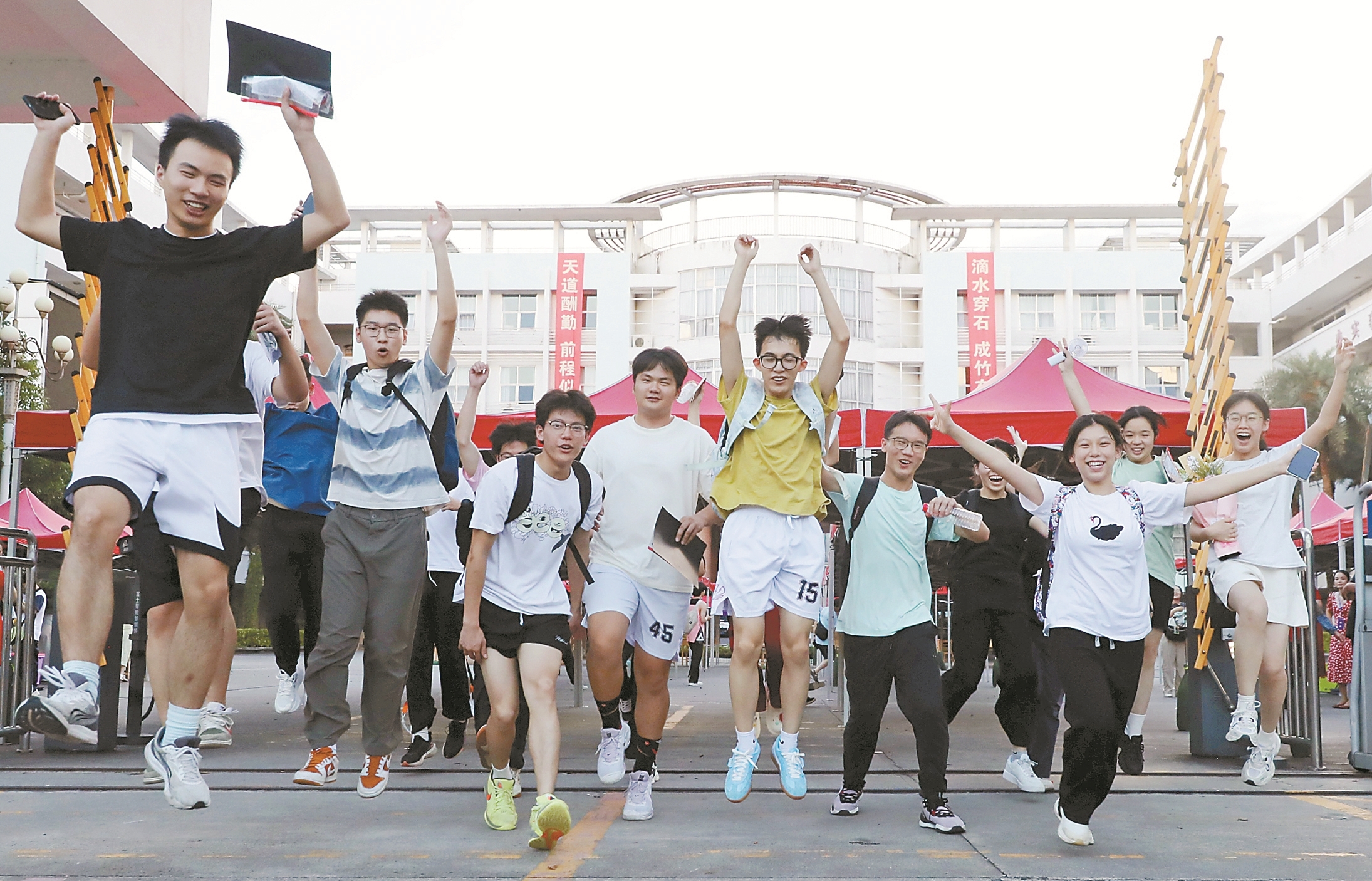
Core Insights - The 2025 college entrance examination in Guangxi has concluded, shifting focus to the enrollment process for tens of thousands of candidates and their families [2] - Universities in Guangxi are actively optimizing their academic programs and talent cultivation models in response to national strategic directions and local economic needs [3][4] Group 1: Academic Program Adjustments - The Ministry of Education has released a new directory for undergraduate programs, adding 29 new majors including artificial intelligence, carbon neutrality, and digital governance, reflecting a clear alignment with national strategies and technological innovation [4] - Guangxi University has introduced three new undergraduate programs: artificial intelligence, data computing and application, and smart agriculture, with a focus on integrating market demands and regional industry needs [4] - Guangxi Normal University has made significant adjustments, adding two new majors in education and industrial design while discontinuing seven others, aiming to align its programs with social and economic development [5] Group 2: Enrollment Trends - Nanning Normal University plans to reduce its enrollment by 1,400 students to optimize its program structure, while introducing two new majors in atmospheric science and sports training [6] - Guangxi Medical University has expanded its enrollment in core medical programs by 340 students and added 50 in midwifery, responding to the growing demand for healthcare professionals [7] - Guangxi University of Chinese Medicine has also increased its enrollment by approximately 250 students, introducing new programs that emphasize traditional Chinese medicine while expanding collaborative education paths [8] Group 3: Vocational Education Focus - Guangxi's vocational colleges, particularly those in the "Double High Plan," are adjusting their programs to align closely with emerging industry needs, such as international trade and smart logistics [9][10] - Nanning Vocational Technical University has added four new undergraduate programs, integrating artificial intelligence into its curriculum to enhance students' digital skills [9] - Liuzhou Vocational Technical University continues to focus on manufacturing-related programs, reflecting the region's industrial strengths and strategic initiatives [10] Group 4: Strategic Enrollment Considerations - The overall strategy for 2025 emphasizes aligning academic programs with key regional industries and emerging sectors, such as new generation information technology and biomedicine [11] - Students and parents are advised to consider future employment prospects and development opportunities when selecting majors, utilizing resources like the annual employment quality report [11][12] - The enrollment strategy suggests pairing "popular new majors" with "regional specialty majors" to optimize chances of admission and career success [12]
拓宽大学生职业创新能力培养路径
Xin Hua Ri Bao· 2025-05-07 02:45
Group 1 - The core viewpoint emphasizes the importance of internship practices in the national innovation system, highlighting the need for a comprehensive reform in education to align talent cultivation with economic and social demands [1] - The Ministry of Education aims to leverage local and higher education institutions' innovative capabilities to establish demonstration zones for integrating education and industry [1] - Internships are transitioning from a transitional educational phase to a generative educational mechanism, connecting the education chain, talent chain, industry chain, and innovation chain [1] Group 2 - The collaboration between universities and enterprises is deepening, making internships a core component of talent cultivation, especially in science and engineering institutions [2] - Universities are adjusting their curriculum and course offerings to meet industry needs, incorporating project-based tasks into the educational process [2] - Companies are increasingly involved in co-creating courses and sharing research outcomes, enhancing students' problem-solving abilities in real work contexts [2] Group 3 - There are existing challenges in the technology transfer mechanisms within universities, necessitating a restructuring of the integration between education and industry [3] - Universities are encouraged to involve students in real projects early on to familiarize them with market demands and enhance their innovative capabilities [3] - Some universities are establishing "research transformation" internship bases to facilitate collaboration between students and companies in key project phases [3] Group 4 - Interdisciplinary integration is becoming a significant trend in higher education, responding to the complex demands of innovation [4] - Universities are exploring cross-disciplinary practical paths through project-driven approaches, breaking down traditional academic barriers [4] - The establishment of cross-disciplinary innovation funds and workshops encourages collaborative research among students from different backgrounds [4] Group 5 - The paradigm of internships is shifting from being an auxiliary educational component to a driver of innovation [5] - Universities are adopting new practices based on "project-based internships + enterprise collaboration," fostering a collective intelligence network [5] - This model allows students to engage in all phases of real projects, enhancing their professional innovation capabilities [6]

天津大学新增三个专业,其中两个专业2025年启动招生
Xin Jing Bao· 2025-05-06 11:21
Group 1 - Tianjin University has added three new undergraduate programs: Smart Building and Construction, Preventive Medicine, and Sports Training, focusing on national needs and interdisciplinary integration [1][2] - The Smart Building and Construction program aims to cultivate top talents for complex modern engineering, with a four-year curriculum and involvement of international architects and renowned scholars [1] - The Preventive Medicine program, featuring emergency medicine, will train high-level professionals with interdisciplinary integration capabilities, targeting a recruitment scale of 30 students per year and a five-year curriculum [1] Group 2 - The Sports Training program will be launched in the second half of 2025, aligning with the strategic needs of a strong sports nation and a healthy China, and will collaborate with the Tianjin Sports Bureau on volleyball and basketball projects [2] - The program will leverage Tianjin University's strengths in engineering, medicine, and management, and will be supported by a faculty that includes five retired national team athletes, four of whom are international-level competitors [2]
勇担高水平科技自立自强使命(教育名家笔谈)
Ren Min Ri Bao Hai Wai Ban· 2025-04-28 01:19
Core Viewpoint - High-level research universities are essential for fostering innovative talent, conducting fundamental research, and driving significant technological breakthroughs, thus playing a crucial role in national strategic scientific power [5][6][10]. Group 1: Strengthening Support for Technological Independence - High-level research universities must enhance their role as the primary force in technological independence by cultivating top innovative talent and producing original innovative results [6][7]. - The integration of talent cultivation and scientific research is vital, with a focus on attracting excellent faculty and providing robust support for innovative talent development [7][9]. - Universities should balance goal-oriented approaches with free exploration in research, adapting strategies based on historical context and disciplinary characteristics [8][9]. Group 2: Improving Evaluation and Optimizing Ecosystems - Research universities need to align their services with national needs, emphasizing quality, performance, and contribution in evaluations to reflect innovation levels and societal impact [9][10]. - A shift from quantity-based to quality-based research evaluation is necessary, fostering a healthy academic ecosystem that encourages innovation and scientific spirit [9][10]. Group 3: Promoting Interdisciplinary Integration - Interdisciplinary integration is crucial for enhancing technological innovation capabilities, as many significant breakthroughs occur at the intersection of disciplines [10][11]. - Research universities should break down disciplinary barriers and adjust their academic structures to seize technological advantages and address critical challenges [10][11]. Group 4: Organized Research and Innovation Platforms - Organized research is essential for systematic responses to national and regional strategic needs, requiring universities to enhance their research innovation frameworks [11][12]. - Establishing major technological innovation platforms is necessary to gather national strategic scientific resources and improve innovation capabilities [12][13]. Group 5: Cultivating Strategic Scientists - Strategic scientists are key resources for achieving high-level technological independence, necessitating a focus on nurturing and utilizing such talent within research universities [13][14]. - Universities should develop mechanisms for cultivating strategic scientists and ensure their involvement in significant scientific decision-making [13][14]. Group 6: Pursuing Excellence and National Integration - Research universities must align their missions with national modernization goals, exploring mechanisms to enhance the synergy between education, technology, and talent development [14][15]. - Deep integration into the national innovation system is essential for universities to contribute effectively to the development of a strong educational and technological nation [15][16]. Group 7: Building Collaborative Ecosystems - Research universities should create collaborative ecosystems with regional economies, fostering innovation-driven development and enhancing educational and technological support [16][17]. - Active participation in regional development initiatives, such as the construction of innovation centers, is crucial for aligning university capabilities with local industry needs [16][17]. Group 8: Transforming into Strategic Research Universities - Research universities are encouraged to evolve into strategic research institutions, focusing on systematic reforms to enhance their educational and research capabilities [17][18]. - Continuous improvement in governance and management structures is necessary to support the transition towards a world-class university model [17][18].
今日快评丨高校专业调整透露哪些信号
He Nan Ri Bao· 2025-04-27 23:32
Core Viewpoint - The rapid update of undergraduate programs in Henan's universities is a necessary response to national and regional economic and social development, as well as market demand [1][2]. Group 1: New Programs and Trends - Henan has added 146 new undergraduate programs across 47 universities, including fields like intelligent construction, smart agriculture, and aviation maintenance engineering, which will be included in the 2025 enrollment plan [1]. - The introduction of new programs is not merely a numerical adjustment but reflects a broader trend of integrating cutting-edge fields such as artificial intelligence, electronic information, and smart manufacturing into the curriculum [2]. - The emergence of programs related to elderly care and health services indicates a response to the growing silver economy and societal needs [2]. Group 2: Educational Strategy and Industry Alignment - The focus on interdisciplinary and integrated approaches in education is becoming a significant trend, with engineering and arts merging, and medical fields incorporating psychological knowledge [2]. - Universities are encouraged to align new program offerings with their institutional capabilities and societal needs, avoiding the temptation to follow trends without considering their educational capacity [2]. - The quality of graduates remains paramount, and universities must strengthen their academic foundations to ensure that students are well-prepared for the job market [3].