实事求是

Search documents
学习进行时丨必图其终,先计于始——总书记新年贺词给我们以深刻启迪
Xin Hua Wang· 2026-01-01 20:36
Group 1 - The core message emphasizes the importance of planning and setting clear goals for the upcoming "15th Five-Year Plan" while reflecting on past achievements [2][3] - The focus on creating tangible results for the people is highlighted, with a call to avoid superficial achievements and prioritize genuine progress [3] - The integration of technology and industry is underscored, showcasing advancements in artificial intelligence and chip development as key areas of innovation [4][5] Group 2 - The emphasis on localized and practical approaches to development is crucial, advocating for strategies that align with regional strengths and realities [5] - The call for a pragmatic and results-oriented mindset is reiterated, stressing the importance of hard work and real outcomes in governance [6][7] - The overall sentiment reflects a commitment to sustained growth and modernization, with a focus on collective effort and dedication from all sectors [6][7]

点破皇帝新衣?罗永浩在“科技春晚”上称:遥遥领先成全国笑柄
Xin Lang Cai Jing· 2025-12-31 10:37
Core Viewpoint - The article discusses the phenomenon of the "遥遥领先" (far ahead) marketing rhetoric used by certain Chinese companies and self-media figures, highlighting its overuse and the backlash it has generated in public perception [2][4][10]. Group 1: Company Marketing Strategies - A prominent Chinese company has faced criticism for its excessive use of the term "遥遥领先," which has led to negative public sentiment and even internal directives to limit its use [2][4]. - The company attempted to register "遥遥领先" as a trademark but later withdrew the application, indicating a shift in marketing strategy [2][4]. - The marketing approach of using absolute terms like "best" or "first" is not only controversial but may also violate advertising laws, leading to potential backlash [2][4][8]. Group 2: Self-Media Influence - The article identifies a group of self-media figures who promote the "遥遥领先" narrative as part of a broader "流量爱国表演艺术" (patriotic performance art for traffic), which aims to generate views and engagement by praising domestic achievements while criticizing foreign competitors [4][5][10]. - These self-media personalities often exaggerate claims about China's technological and economic superiority, which can mislead the public and obscure real differences [7][10]. - The use of patriotic rhetoric in self-media is seen as a tactic to attract followers and monetize their content, rather than a genuine representation of facts [8][10]. Group 3: Public Reaction and Criticism - The article notes that public figures like 罗永浩 (Luo Yonghao) have begun to openly criticize the "遥遥领先" narrative, likening it to the story of the emperor's new clothes, which may provoke backlash from those who benefit from the status quo [10][11]. - Luo's comments reflect a growing sentiment that emphasizes the importance of factual representation over exaggerated claims, suggesting a potential shift in public discourse [10][11]. - The backlash against Luo's criticism indicates the contentious nature of discussing national pride and marketing exaggerations in the current media landscape [10][11].
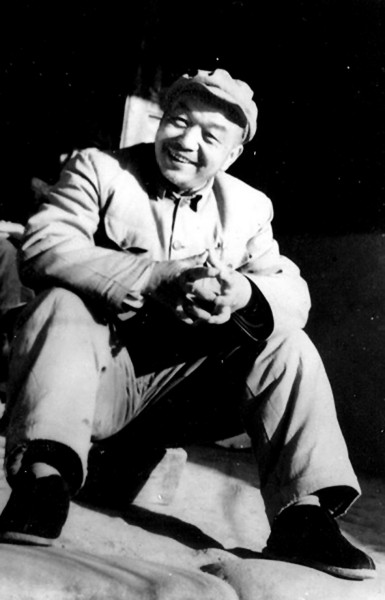
实事求是 鞠躬尽瘁
Xin Lang Cai Jing· 2025-12-26 19:01
Core Viewpoint - The article commemorates Jiang Longji, a prominent educator and revolutionary figure in China, highlighting his contributions to education and his lasting impact on various universities in China, particularly during the revolutionary period and the establishment of the People's Republic of China [11][30]. Group 1: Early Life and Education - Jiang Longji was born on December 24, 1905, in a peasant family in Shaanxi Province and was influenced by the May Fourth Movement during his youth [12]. - He joined the Communist Party of China in June 1927 and pursued studies in Marxist theory while studying in Japan and Germany [12][13]. Group 2: Educational Philosophy and Contributions - Jiang Longji believed that "education is the foundation of the nation" and emphasized the importance of revitalizing education for national development [13]. - He served in various educational roles, including principal of Xi'an No. 2 Middle School and later as vice president of Yan'an University, where he established a new educational system that produced over 6,000 anti-Japanese cadres [14][19]. Group 3: Leadership at Universities - After returning to Peking University in 1952, Jiang Longji focused on strengthening the Party's leadership and improving the university's educational quality, leading to significant advancements in teaching and research [15][16]. - At Lanzhou University, he emphasized the importance of teaching quality and established a comprehensive educational framework that integrated research and practical skills [17][18]. Group 4: Respect for Faculty and Student Development - Jiang Longji was known for his respect for faculty, often engaging with teachers to understand their needs and support their research endeavors [24][25]. - He fostered a supportive environment for students and faculty, encouraging academic freedom and collaboration while maintaining high standards for educational quality [27][28]. Group 5: Legacy and Recognition - Jiang Longji's contributions to education and his commitment to socialist values earned him high regard among students and faculty, with many recognizing his influence on their understanding of the Party and education [29][30]. - His ideals and educational philosophy continue to resonate, forming an integral part of the "Lanzhou University spirit" and inspiring future generations [30].
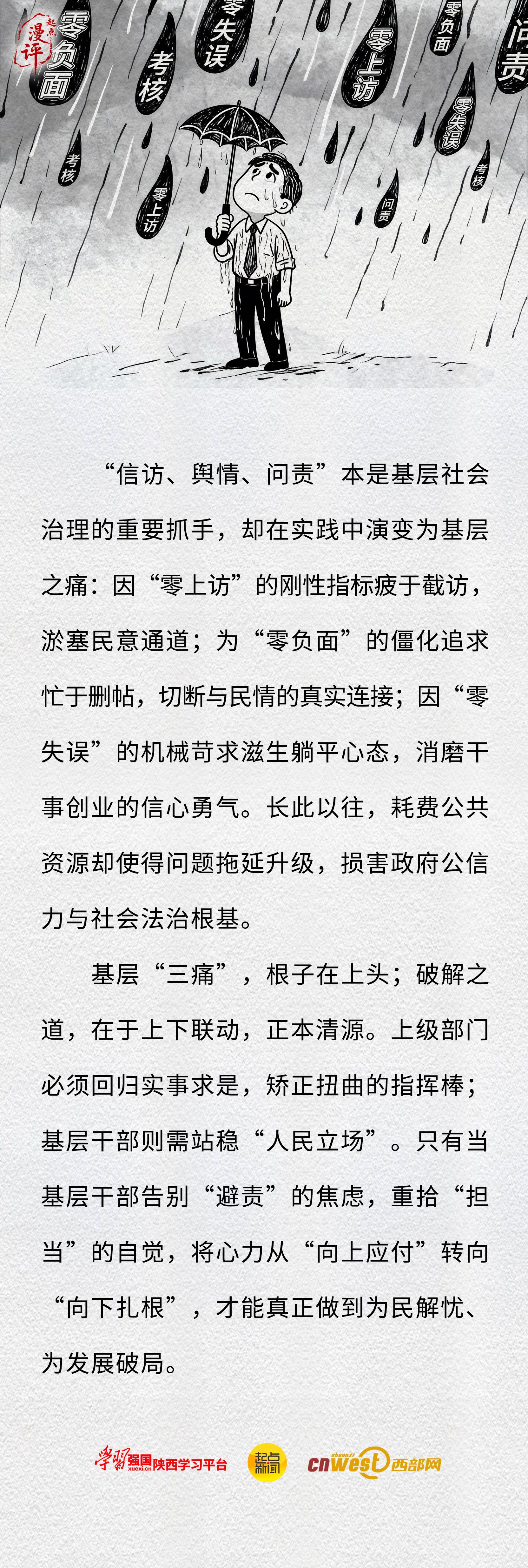
【起点漫评】破除基层之痛,让治理工具回归服务本质
Xin Lang Cai Jing· 2025-12-26 06:43
Group 1 - The article discusses the challenges faced in governance, particularly the rigidity of the "zero petition" policy that obstructs public opinion channels [2] - It highlights the negative impact of the "zero negative" approach, which leads to the suppression of genuine public sentiment and hinders the confidence and courage of grassroots initiatives [2][3] - The article emphasizes the need for grassroots officials to shift their focus from avoiding responsibility to genuinely engaging with the public to strengthen governance and address developmental issues [3]
【微镜头·习近平总书记在中央经济工作会议上】“因地制宜,本质是实事求是”
Ren Min Ri Bao· 2025-12-24 02:20
Group 1 - The core concept of the Central Economic Work Conference emphasizes the importance of "adapting to local conditions" in economic work, highlighting the need for practical and tailored approaches to various regional challenges [1][3][4] - The conference outlines the strategic tasks and policies for the upcoming year, stressing that these have been thoroughly researched and must be implemented effectively [1][4] - The complexity of the current economic landscape necessitates strong leadership from the Party to unify efforts and address diverse regional needs [1][4][5] Group 2 - The call for "adapting to local conditions" extends to various sectors, including the development of regional industries, urbanization processes, and environmental protection, advocating for strategies that reflect local characteristics and resources [2][4] - Specific examples include the need for tailored approaches in rural sanitation projects, where a one-size-fits-all model is deemed inappropriate due to significant regional differences [2][4] - The conference also emphasizes the importance of leveraging the unique advantages of key regions like Beijing-Tianjin-Hebei, Yangtze River Delta, and Guangdong-Hong Kong-Macau Greater Bay Area to drive national high-quality development [4][5]
马克思主义在“灵魂深处”得到了中国化
Bei Jing Ri Bao Ke Hu Duan· 2025-12-24 00:35
Core Viewpoint - The article emphasizes the importance of the concept "seeking truth from facts" as a fundamental principle of Marxism, particularly in the context of its integration with Chinese traditional culture, referred to as the "second combination" [1][2][4]. Group 1: Historical Context and Development - The term "seeking truth from facts" originated from the historical text "Han Shu" by Ban Gu and has been discussed by scholars throughout various dynasties, representing a significant category in Chinese academic and philosophical history [1]. - Mao Zedong provided a unique interpretation of "seeking truth from facts," defining "facts" as objective realities, "is" as the internal connections of these realities, and "seeking" as the process of research, showcasing an innovative development of this concept [2][3]. Group 2: Marxism and Chinese Culture - The integration of Marxism into Chinese philosophy and social sciences has not interrupted the analysis of core categories and significant propositions in Chinese academic history, with the Communist Party of China focusing on the inheritance and development of Chinese scholarship [2]. - The interpretation of "seeking truth from facts" by Chinese communists has made Marxist epistemology more accessible and practical, addressing concerns about Marxism being perceived as a foreign doctrine [4][5]. Group 3: Practical Application and Theoretical Innovation - The article highlights the need for Marxism to be expressed in a way that resonates with the public, using language that is relatable and understandable, thus facilitating a deeper acceptance of Marxism as the guiding ideology of the party and state [4][6]. - There is a call for continuous theoretical innovation to prevent stagnation, emphasizing the importance of adapting interpretations of concepts like "seeking truth from facts" to meet contemporary demands [8].
自觉运用“第二个结合”来推进理论创新
Bei Jing Ri Bao Ke Hu Duan· 2025-12-21 23:26
Core Viewpoint - The concept of "seeking truth from facts" has been innovatively developed and creatively transformed by the Chinese Communist Party, representing a significant integration of Marxism with traditional Chinese culture, termed the "second combination" [1][2][3] Group 1: Theoretical Development - The interpretation of "seeking truth from facts" by the Chinese Communist Party is an innovative development of a key category in Chinese academic and ideological history, originally appearing in the "Book of Han" by historian Ban Gu [1][2] - Mao Zedong's interpretation of "seeking truth from facts" emphasizes understanding objective reality and its inherent connections, marking a significant transformation of this concept [2][3] - The "second combination" aims to provide new interpretations of traditional cultural categories that align with contemporary demands, emphasizing the continuity between Chinese Marxism and traditional academic thought [2][4] Group 2: Practical Application - The principle of "seeking truth from facts" is not only a theoretical concept but also a practical methodology that can be directly applied in work, study, and life [5] - Mao Zedong and Xi Jinping both stress the importance of understanding the essence of things through practical engagement, highlighting the need for a scientific attitude in Marxism [6][7] - The goal of the "second combination" in the new era is to make Marxism more accessible and relatable to the public, breaking the notion that it is merely a foreign doctrine [4][6] Group 3: Cultural Integration - The interpretation of "seeking truth from facts" has made Marxism more understandable and has clarified the direction of new cultural pursuits for the Chinese nation [4][6] - The integration of traditional Chinese culture with Marxism aims to create a comprehensive understanding that resonates with the populace, emphasizing the unity of truth, goodness, and beauty [7][8] - The ongoing development of the "second combination" requires a commitment to theoretical innovation and practical application, avoiding rigid interpretations that hinder progress [8]
因地制宜,自觉按规律办事
Xin Hua She· 2025-12-19 00:43
近日举行的中央经济工作会议上,习近平总书记的一席话切中肯綮—— "因地制宜,本质就是实事求是。" 围绕发展新质生产力、生态环保、农村改厕等,总书记阐明因地制宜的重要性,强调落实中需要结 合实际、因地制宜,但不能自行其是、搞本位主义。 实事求是,是中国共产党人认识世界、改造世界的根本要求。因地制宜,自觉按规律办事,是中国 共产党实事求是思想路线的体现。 我国幅员辽阔、人口众多,各地区资源禀赋不同,发展的状况、面临的情况问题不同,在全国大棋 局中的定位也不同。党中央的决策部署着眼的是全局、把握的是大势、体现的是方向、谋划的是根本, 让决策部署落地见效,关键要紧密结合自身实际,尊重差异、尊重规律,创造性开展工作。 习近平总书记曾讲述过这样一段往事:"我在正定工作的时候,经济学家于光远提出一个概念—— 限于当时中国经济实力和条件,要多考虑实现现代化的'穷办法'。我在'穷办法'后面又加上了一个'土办 法',就是适应当地的办法,不一定要大而全。""土办法"蕴含的恰是因地制宜、因势利导的道理,是从 认识规律到运用规律的转化。 高质量发展是全面建设社会主义现代化国家的首要任务,这是战略的坚定性。如何实现高质量发 展?这就要求 ...
学有所悟丨守正创新展现新作为
Zhong Yang Ji Wei Guo Jia Jian Wei Wang Zhan· 2025-12-18 00:06
Core Viewpoint - The article emphasizes the need for reform in the discipline inspection and supervision work, urging officials to break free from conventional thinking and adapt to new challenges for high-quality development [1][2][3]. Group 1: Reform and Development - The call for a "year of standardized, legalized, and regularized construction of discipline inspection and supervision work" is a significant measure to implement the directives of General Secretary Xi Jinping and the Party Central Committee [1]. - Discipline inspection and supervision officials are encouraged to adapt to the standards of "three transformations" and effectively implement new policies and regulations in their work [1][3]. Group 2: Overcoming Conventional Thinking - The article highlights the dangers of relying too heavily on past experiences, which can lead to passive work and mistakes if new situations are not adequately analyzed [2]. - It stresses the importance of utilizing big data and artificial intelligence to improve work efficiency and accurately identify deep-rooted issues [2][4]. Group 3: Guiding Principles - The article advocates for a scientific theoretical approach to guide the discipline inspection and supervision work, emphasizing the integration of Xi Jinping's thoughts with practical applications [3]. - It underscores the principle of seeking truth from facts, which is essential for effective governance and compliance with regulations [3]. Group 4: Tackling Corruption - The need for a proactive approach in combating both traditional and new forms of corruption is highlighted, with an emphasis on the ability to tackle difficult issues and uncover hidden problems [5]. - The article calls for continuous improvement in professional skills and legal awareness among discipline inspection officials to effectively address complex corruption cases [5].
学习进行时|中央经济工作会议上的这个细节,蕴含深意
Xin Hua She· 2025-12-16 06:57
2025年12月10日至11日,中央经济工作会议在北京举行。中共中央总书记、国家主席、中央军委主席习近平出席会议并发表重 要讲话。新华社记者 燕雁 摄 【学习进行时】新华社近日播发2025年中央经济工作会议侧记,稿件记录下这样一个细节: "这次会议上,习近平总书记围绕发展新质生产力、生态环保、农村改厕等,进一步阐明因地制宜的重要性。 '因地制宜,本质就是实事求是。'总书记强调,落实中需要结合实际、因地制宜,但不能自行其是、搞本位主义。" 因地制宜,就是根据不同地区的具体情况制定相应的妥善办法;实事求是,就是坚持一切从实际出发,理论联系实际,在实践 中检验真理和发展真理。强调因地制宜的本质是实事求是,凸显了落实党中央决策部署必须始终坚持的正确态度和科学方法。 2024年3月5日,中共中央总书记、国家主席、中央军委主席习近平参加他所在的十四届全国人大二次会议江苏代表团审议。新 华社记者 鞠鹏 摄 2024年3月,习近平总书记在全国两会上提出"因地制宜发展新质生产力"。总书记强调,发展新质生产力不是忽视、放弃传统产 业,要防止一哄而上、泡沫化,也不要搞一种模式。各地要坚持从实际出发,先立后破、因地制宜、分类指导,根 ...