
家族传承

Search documents
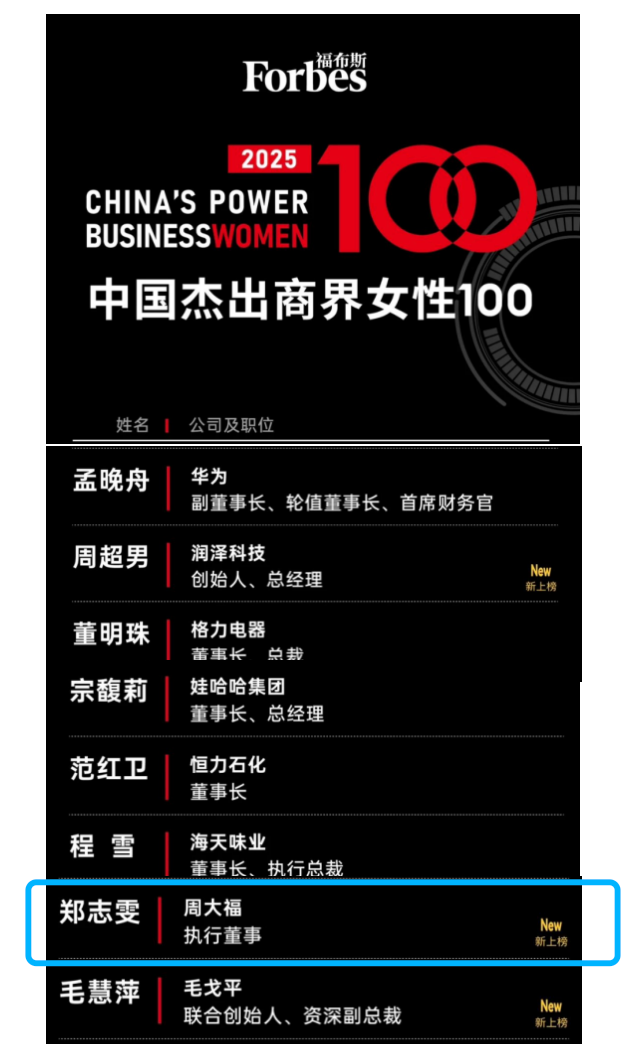
郑志雯跻身新世界核心决策层:从“珠宝女王”到家族核心丨女继承者们
2 1 Shi Ji Jing Ji Bao Dao· 2025-06-11 09:04
Group 1 - The core point of the news is the significant personnel change within the Cheng Yu-tong family business, New World Development, indicating a shift towards modern governance and succession planning with the entry of the third-generation member, Zheng Zhiwen, into the nomination committee [1][3][10] - Zheng Zhiwen's appointment to the nomination committee marks a milestone in her career and reflects her rising status within the family business, especially following her brother Zheng Zhigang's exit from management [3][5] - The new nomination committee structure includes family members, professional managers, and independent experts, showcasing a forward-thinking approach to corporate governance [8][10][11] Group 2 - Zheng Zhiwen has a strong background in luxury goods and hospitality, having previously served on the board of Chow Tai Fook Jewelry Group and led the strategic expansion of Rosewood Hotel Group, demonstrating her capability in managing high-end brands [2][3] - The transition in leadership comes after Zheng Zhigang's resignation amid company losses and investment controversies, highlighting the challenges faced by family businesses in succession planning [5][10] - The evolution of the Cheng family governance model reflects a broader trend in family businesses towards modern governance practices, combining family control with professional management to address contemporary business challenges [10][11]



“界碑在哪里,戍边人的心就在哪里”
Ren Min Ri Bao Hai Wai Ban· 2025-05-26 00:59
Core Viewpoint - The article highlights the significance of the Paikek Border Police Station in the Wakhan Corridor, emphasizing its historical role in safeguarding China's borders and the personal stories of the officers and their families who have dedicated their lives to border defense [9][10][12]. Group 1: Historical Context - The Paikek Border Police Station has been operational since 1950, serving as a critical point connecting China with Afghanistan, Pakistan, and Tajikistan along a 197.4 km border [10]. - The station's motto, "I dedicate my life to guarding the border," reflects the commitment of generations of border guards [10][12]. Group 2: Personal Stories and Legacy - Chen Dawei, a visitor, recalls the emotional connection to the classic film "The Guests on the Iceberg," which symbolizes the heroism of border guards, particularly her father's memories associated with it [9][10]. - The story of Shao Gongni Longjike, the grandson of the film's hero, illustrates a family legacy of border defense, with multiple generations serving in the military [12][14]. Group 3: Modern Developments - The article notes significant improvements in living conditions and technology in the region, such as the extension of roads and the use of drones for patrols, contrasting with the past hardships faced by border guards [15][16]. - Despite advancements, the core values of loyalty and dedication to the homeland remain unchanged among the border guards [15][16]. Group 4: Personal Motivations - Officer Yuan Xiao, a recent recruit, shares his motivation to serve at the border, inspired by his grandfather's legacy as a soldier [17][18]. - The emotional connection to family history and the desire to honor past sacrifices drive the commitment of current officers [17][18].

江丰电子董事长姚力军辞职!
是说芯语· 2025-05-25 05:06
Core Viewpoint - The strategic transition of Jiangfeng Electronics' leadership, with the founder Yao Lijun stepping down as chairman to focus on technology, is aimed at enhancing the company's innovation capabilities in the semiconductor materials sector [2][3]. Group 1: Leadership Changes - Yao Lijun, the actual controller of Jiangfeng Electronics, announced his resignation as chairman to become the Chief Technology Officer, while the original general manager Bian Yijun took over the chairman position [2]. - Yao Lijun's decision to step down is seen as a deliberate strategic shift rather than a mere retirement, allowing him to return to his technical roots [2]. - The nomination of Yao Lijun's son, Yao Shun, as a non-independent director candidate indicates a plan for family succession within the company [3]. Group 2: Implications for Company Strategy - The transition in leadership is expected to facilitate a smoother operational period for the company, leveraging Yao Lijun's extensive management experience and strategic vision [3]. - The governance structure adjustment is a response to current management needs and lays the groundwork for future generational succession, similar to models seen in companies like Midea Group [3]. - The market reacted to the leadership changes with stock price fluctuations, reflecting short-term investor concerns, but long-term prospects depend on the new management's ability to achieve technological breakthroughs and management upgrades [3].

击穿百万元门槛!年复合增长率超67%,保险金信托普惠化提速
Hua Xia Shi Bao· 2025-05-16 07:42
Core Viewpoint - The insurance trust business is experiencing significant growth and is set to lower its entry threshold to below 1 million yuan, aiming to make trust services more accessible to a broader audience [2][4]. Industry Overview - The total wealth service trust market is approximately 1.1 trillion yuan, with the insurance trust segment reaching about 420 billion yuan, marking a nearly 60% increase from 220 billion yuan in 2023 [2]. - The share of insurance trusts in the wealth management service trust sector has risen to 38%, up 2 percentage points from the end of 2024 [2]. - The insurance trust market has seen a dramatic increase from 74.793 billion yuan at the end of 2021 to a projected 1 trillion yuan in the next five years, reflecting a compound annual growth rate of over 67% [2][8]. Market Demand - The rapid growth of high-net-worth individuals in China has led to a diversified demand for wealth management solutions, which traditional tools cannot fully satisfy [3]. - The average age of clients utilizing insurance trusts is 48, with 91% opting for retirement income distribution, indicating a strong demand for retirement planning [4]. Regulatory and Competitive Landscape - Over 40 trust companies and more than 50 insurance companies are currently engaged in the insurance trust business, indicating a competitive and collaborative market environment [7]. - Regulatory policies are seen as supportive of the growth of the insurance trust sector, encouraging financial institutions to expand their offerings [4]. Operational Challenges - The long service cycle of insurance trusts poses significant operational and technological challenges for trust companies, necessitating a shift towards digital operations [10]. - There is a lack of specific legal regulations governing insurance trusts in China, which presents potential legal risks for companies involved in this sector [10]. - The industry faces challenges related to talent shortages and outdated operational systems, which may hinder the scalability of insurance trust services [10].

对话新生代:这或许是家族传承的“通关密码”
3 6 Ke· 2025-05-09 08:56
Group 1 - The article discusses the challenges of family business succession in China, highlighting the generational gap between founders and their successors, particularly the reluctance of the second generation to take over family enterprises [1][2] - It emphasizes that family legacy is not solely about wealth but also includes values and reputation, which are crucial for long-term sustainability [2][3] - The concept of sustainable development is presented as essential for family business continuity, with impact investing being a viable tool to achieve both wealth preservation and social responsibility [3][6] Group 2 - Examples of successful family offices and impact investments are provided, such as the Chen family office in Hong Kong and the establishment of Happiness Capital by the Lee Kum Kee family, which focus on social impact alongside financial returns [3][5] - The relationship between family business core operations and impact investing is described as complementary, suggesting that impact investing can help traditional businesses transition and thrive [6][11] - The article outlines how the younger generation is increasingly interested in sustainable practices and impact investing, often seeking to innovate and transform traditional industries [8][10] Group 3 - Recommendations for family members interested in impact investing include integrating it into existing family investment strategies and using it to enhance the sustainability of traditional businesses [12][13] - The article highlights the importance of early-stage investments in impact projects, emphasizing the potential for social value creation alongside financial returns [16][17] - It concludes that for families to achieve long-term success and wealth across generations, they must embed sustainable development principles into their legacy and business practices [17][18]

兴业银行升级推出家族办公室六大中心服务
Zhong Jin Zai Xian· 2025-04-22 08:48
Core Insights - The core theme of the event was "Inheriting Beauty, Co-creating Family and Enterprise," focusing on the diverse needs of ultra-high-net-worth clients in personal, family, and corporate aspects [1] - The comprehensive upgrade of the family office service system represents a strategic restructuring by the bank to respond to deep changes in the wealth management market [1] - The bank aims to leverage its multi-licensing advantages and deepen its "commercial bank + investment bank" strategy to empower family enterprises and foster new productive forces [1] Family Office Service Model - The bank introduced six core service centers: family inheritance, wealth management, legal and tax consulting, enterprise intelligence, global services, and lifestyle enjoyment, to provide systematic and customized high-end financial solutions [1][2] - In family inheritance services, the focus is on four core businesses: family charter, family trust, heir training, and charitable planning, ensuring wealth security and intergenerational transfer of both spiritual and material wealth [2] - For entrepreneur services, the bank offers a one-stop comprehensive financial service plan covering various financial needs throughout the enterprise development cycle [2] Professional Team and Strategic Partnerships - A comprehensive advisory team has been established, covering wealth management, corporate finance, tax law, and capital markets to support the family office service upgrade [2] - The bank awarded cooperation plaques to several strategic partners, including well-known enterprises and financial institutions, to expand cross-institutional service collaboration [3] - Since starting its private banking business in 2011 and receiving a dedicated license in 2021, the bank has grown its private banking client base to over 80,000, managing assets exceeding 1 trillion yuan [3]
