投早投小

Search documents
上半年江苏披露的私募投融资事件数量全国居前
Xin Hua Ri Bao· 2025-07-22 23:48
Group 1 - The core viewpoint of the article highlights the recovery of the primary market in Jiangsu, with a significant increase in private equity financing events, totaling over 530 in the first half of the year, indicating a strong preference for "hard technology" sectors and a rational return to early-stage investments [1][2] Group 2 - Advanced manufacturing and healthcare are the two favored sectors, accounting for over half of the total financing events in Jiangsu, with 270 occurrences in the first half of the year [2] - Notable investments include Jiushi Intelligent's $100 million B3 round financing, marking the largest single round in the autonomous driving sector in nearly two years, with a total of nearly $300 million raised in B rounds [2] - NuoLing Bio completed a multi-hundred million C round financing, focusing on portable inhalation therapy devices for cardiovascular treatment, which have been deployed in hundreds of hospitals [3] Group 3 - The trend of "investing early and small" has become mainstream, with early-stage investments (seed, angel, Pre-A, A rounds) accounting for nearly 60% of total investment events in Jiangsu [4] - Yanwei Semiconductor, established in 2022, has completed four rounds of financing totaling nearly 1 billion yuan, showcasing the effectiveness of early-stage funding [4] Group 4 - The "+ round" investment model is increasingly common, allowing companies to secure additional funding within the same round, which helps alleviate cash flow pressures and allows investors to manage risks more effectively [5] Group 5 - The Jiangsu mother fund has emerged as a strong engine for the growth of the venture capital market, with a total scale of 500 billion yuan and the establishment of 41 specialized funds within a year, covering all 13 districts in the province [7][8] - Various cities in Jiangsu are employing a combination of "one mother fund + several sub-funds" to target their key industries, resulting in a fast-paced and high-density investment environment [7] Group 6 - Recent regulatory innovations, such as the revised management measures for the Jiangsu strategic emerging industry mother fund, have facilitated collaboration with central enterprises and social security funds, broadening the scope for industry-specific fund applications [8] - The mother fund system has already invested in 86 projects, focusing on "hard technology" sectors, with the potential for further aggregation effects as more specialized funds are launched [8]
科技金融投早投小要攥指成拳
Jing Ji Ri Bao· 2025-07-03 22:10
Group 1 - The core viewpoint emphasizes the need for financial services to innovate in supporting early-stage technology enterprises, particularly through equity investment and bank credit [1][2][3] - The Chinese government is actively promoting a diversified and multi-channel approach to technology financing, as outlined in the recent policy measures from seven departments [1] - There is a focus on enhancing the capabilities and willingness of equity investment institutions to support technology innovation, especially in providing long-term, low-cost funding [2] Group 2 - Banks are encouraged to explore effective paths for early and small loans to technology startups, despite the inherent uncertainties in their operations [3] - The integration of loan and external direct investment models is being explored by commercial banks to mitigate risks associated with technology transfer [3] - There is a call for improved risk-sharing mechanisms and the development of technology insurance products to support the sustainability of financial services for early-stage technology companies [3]
募资持续扩容 投早投小特征显著
Jin Rong Shi Bao· 2025-06-18 03:11
Group 1 - The private equity (PE) and venture capital (VC) markets in China are showing strong resilience amid structural adjustments, with 490 new funds established in May, reflecting a 10% year-on-year increase [1][2] - Investment scale in May saw a nearly 50% year-on-year growth, reaching 739 billion yuan, with 597 investment cases recorded, marking a 5% increase compared to the previous year [4][5] - The semiconductor, artificial intelligence, and new materials sectors are particularly attractive, with electronic information leading in investment cases at 166, followed by advanced manufacturing and healthcare [4][5] Group 2 - In May, 418 institutions participated in fund establishment, with 90% of them setting up only one fund, indicating stable institutional activity compared to the previous year [2] - Notable large funds established in May include Beijing Baoshichengyuan Fund with a target of 13 billion yuan and Chengtong Science and Technology Investment Fund aiming for 10 billion yuan [3] - The majority of transactions were small-scale, with 41.7% of disclosed transactions falling between 10 million and 50 million yuan, while large transactions over 1 billion yuan accounted for only 5.6% [5]

无为福城股权投资母基金招GP
FOFWEEKLY· 2025-06-13 10:32
Group 1 - The announcement from Wuwei Fucheng Equity Investment Mother Fund indicates the launch of a call for sub-fund management institutions, focusing on supporting technology innovation and investing in hard technology [1] - Sub-funds categorized as technology innovation funds must invest at least 70% of their capital in early-stage enterprises [1] - Other types of sub-funds will focus on industries such as new energy vehicle components, green food, high-end equipment manufacturing, and next-generation information technology, with a similar investment requirement of at least 70% [1] Group 2 - The fund mandates that investments in enterprises registered in Wuwei City must be at least 1.0-1.5 times the amount contributed by the mother fund [1] - Sub-funds registered in Wuwei City are required to have a return ratio of at least 1.0-1.2 times, with technology innovation sub-funds needing a minimum return ratio of 1.0 times [1] - For industry-specific sub-funds, the return ratio must be at least 1.2 times, while sub-funds registered outside Wuwei City must achieve a return ratio of at least 1.5 times [1]


十年,临芯投资的“超级进化之路”
Sou Hu Cai Jing· 2025-05-26 05:46
Core Viewpoint - The article highlights the significant growth and evolution of the semiconductor industry in China over the past decade, emphasizing the role of investment firms like Linxin in driving this transformation through strategic investments and a focus on early-stage and merger opportunities [2][5][52]. Group 1: Investment Achievements - Linxin has managed nearly 10 billion RMB in funds over ten years, investing in over 130 semiconductor and hard technology projects, with 18 achieving IPOs and total exit amounts exceeding 17 billion RMB [2][7][47]. - Key investments include leading companies in the semiconductor sector such as Lanqi Technology and Zhongwei Company, which have become industry leaders [7][21][29]. Group 2: Investment Strategy Evolution - The investment strategy has evolved from mergers and acquisitions to early-stage investments, focusing on disruptive technologies and integrating industry resources [7][39][50]. - Linxin's approach includes a dual strategy of "mergers and early-stage investments," allowing for a comprehensive investment framework that supports both new ventures and established companies [39][40]. Group 3: Industry Context and Future Outlook - The semiconductor industry in China has transitioned from a nascent stage to a competitive landscape, with significant opportunities for growth and consolidation [4][36][52]. - The company anticipates that future investments will increasingly focus on mergers, with projections indicating that over 70% of efforts will be directed towards this area, reflecting the industry's maturation and the need for larger, more competitive entities [50][53]. Group 4: Operational and Organizational Development - Linxin has undergone significant organizational changes to enhance its fundraising and operational capabilities, transitioning from a project-based approach to a more institutionalized model [43][44]. - The firm has established a robust ecosystem by collaborating with 18 listed companies and 137 integrated circuit firms, enhancing its resource integration capabilities [41]. Group 5: Mission and Values - The core mission of Linxin is to drive technological advancement through investment, aiming to cultivate world-class enterprises in the semiconductor sector [53][54]. - The company emphasizes values such as integrity, cooperation, and simplicity, which guide its strategic direction and operational practices [54].


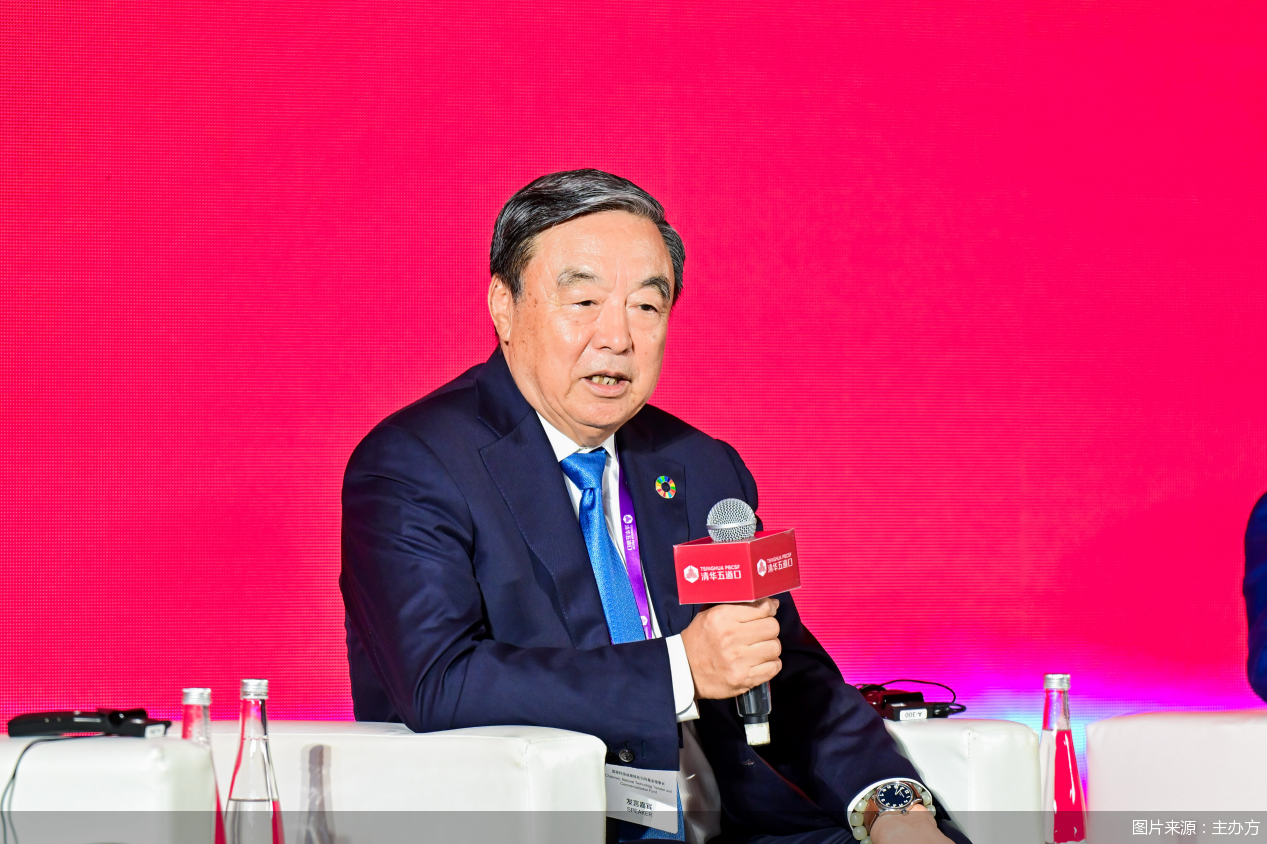
2025五道口金融论坛|马蔚华:“投早投小”风险很大,但没有宽容的容错机制
Bei Jing Shang Bao· 2025-05-18 13:53
Core Viewpoint - The integration of finance and technology is accelerating the restructuring of the industrial landscape, but significant shortcomings remain in financial support for technological innovation, particularly in early-stage investments [3][4]. Group 1: Current State of Technology Financing - The conversion rate of technological achievements in China was only 25% in 2010 and is projected to reach 35% by 2024, indicating a significant gap compared to developed countries [3]. - Early-stage venture capital (VC) and angel investments constitute a small proportion of total risk investment, leading to a lack of early funding for high-tech projects [3][4]. - The financing structure is predominantly indirect, with over 70% of social financing being indirect, which is not conducive to technological innovation [4]. Group 2: Challenges in Financial Support - There is a structural imbalance in resource allocation, with a focus on late-stage funding rather than early-stage investments [3]. - Risk investment often emphasizes commercial value assessment, neglecting the technological advantages and innovation characteristics of tech companies [3][4]. - Government goals and market behaviors are misaligned, as academic institutions focus on patent numbers without considering their conversion into tangible results [3][4]. Group 3: Proposed Solutions - Establishing government-guided funds and creating a multi-layered financing market, including technology loans and bonds, is essential for improving the funding landscape [4]. - The creation of Financial Asset Investment Companies (AIC) by banks can provide funding support throughout the entire lifecycle of tech enterprises [4]. - Investment funds, including government funds, should adhere to market and investment principles, establishing effective incentive and error-tolerance mechanisms [5]. Group 4: Importance of Technology Transfer - The transfer of technological achievements is crucial for converting technology into productivity, requiring a systematic process that includes capital attributes and cultural compatibility [5]. - Overcoming barriers such as reluctance to invest in early stages and risk aversion is necessary for transitioning from follower innovation to positioning innovation [5].