
银行信贷

Search documents
科技金融服务如何创新?
Zheng Quan Shi Bao· 2025-12-28 18:05
Core Viewpoint - The article emphasizes the importance of innovation-driven financial services to support technological innovation and the growth of science and technology enterprises in China, highlighting recent achievements and ongoing challenges in the sector [1][2]. Group 1: Financial Support for Technological Innovation - The Central Economic Work Conference has called for strengthening innovation-driven growth and expanding new economic drivers, specifically mentioning "innovative financial services for technology" [1]. - China's financial support system for technological innovation has shown initial success, with loans to technology-based SMEs growing at over 20% year-on-year and accounting for nearly 30% of new loans [1]. - The scale of science and technology bonds has surpassed 1.7 trillion yuan, and the market capitalization of the A-share technology sector exceeds 25% [1]. Group 2: Challenges in Financial Services - Many science and technology enterprises still face difficulties in accessing financial services, particularly in different stages of their lifecycle, where the current financial system does not adequately match their needs [1][2]. - Start-up tech companies often lack operational data and credit history, making it challenging for financial institutions to assess their creditworthiness and repayment capacity [1][2]. Group 3: Innovation in Financial Services - There is a need for continuous innovation in financial services to enhance resource allocation efficiency and stimulate the vitality of tech enterprises [2]. - Financial institutions should optimize loan services for tech companies, focusing on evaluating innovation capabilities and potential for technology transfer rather than just company size [2]. - The promotion of an "innovation credit system" and the development of specialized financial products tailored to the needs of tech enterprises are essential [2]. Group 4: Capital Market Development - The capital market should enhance its inclusivity and adaptability to better support the growth of tech enterprises through improved listing and merger regulations [3]. - The implementation of the "merger six guidelines" has led to a wave of mergers in the A-share market, particularly in the hard tech sector, although some mergers have been terminated, raising investor concerns [3]. - There is a need for strong regulatory oversight to ensure transparency in the reasons behind failed mergers and to encourage companies to pursue innovation [3]. Group 5: Regulatory Framework and Market Stability - The rapid evolution of financial innovation necessitates the establishment of a corresponding regulatory framework to monitor and manage risks effectively [4]. - Strengthening risk monitoring and response mechanisms will enhance the stability and vibrancy of the capital market [4]. - Continuous institutional innovation is expected to drive product and model innovation, reducing financing costs for tech companies and facilitating the market entry of more "hard tech" products [4].
上海精准护航国际经济中心建设
Xin Lang Cai Jing· 2025-12-28 01:57
Group 1 - The Shanghai Public Security Bureau has reported significant progress in combating economic crimes, having solved over 2,100 cases and recovered more than 2.8 billion yuan for the state and citizens this year [1] - The "Blue Whale" enterprise protection workstations have been established to provide comprehensive support for businesses, transitioning from a reactive to a proactive service model, with over 1,100 businesses visited and more than 1,000 needs addressed [2] - The police have successfully resolved over 1,000 economic crime cases related to enterprises, helping more than 100 companies recover approximately 200 million yuan in losses [2] Group 2 - The Shanghai Public Security Bureau is focusing on the financial sector's "black and gray industries," targeting harmful groups in banking and insurance, conducting over 20 rounds of concentrated operations, and assisting more than 30 financial institutions [3] - A crackdown on illegal fundraising activities disguised as investment schemes has led to the resolution of over 200 cases, aiming to deter such activities and purify the market environment [3] - Collaborative efforts with market regulation and industry authorities are being made to address issues like malicious business closures in sectors such as education and fitness [3]
英皇国际(00163):现有银行贷款安排将根据于11月26日已同意的商业条款函件复常
智通财经网· 2025-11-27 11:11
Core Viewpoint - The company, Emperor International (00163), has reached an agreement with all relevant banks to restore its existing bank loan arrangements based on the commercial terms letter agreed upon on November 26, 2025, providing greater financial flexibility until at least July 31, 2027 [1] Financial Flexibility - The agreement marks a significant milestone in the company's financial management, allowing for enhanced financial flexibility to support future business development [1] - The strong property portfolio and robust financial condition of the company, along with a solid relationship with banks, reflect the confidence of banking partners in the company's prospects and creditworthiness [1] Financial Impact - The financial impact related to the company's financial condition will be reflected in the full-year performance for the year ending March 31, 2026, which is scheduled to be announced in June 2026 and will require auditing by the company's auditors [1]

同科技创新相适应的科技金融体制加快构建
Jin Rong Shi Bao· 2025-11-24 00:37
Group 1 - The core viewpoint of the articles emphasizes the importance of innovative financing mechanisms, particularly the issuance of technology innovation bonds, to support technological advancements and address financing challenges faced by tech enterprises [1][2]. - The issuance of technology innovation bonds has seen significant growth, with nearly 1.5 trillion yuan issued in the first half of the year, accounting for nearly 80% of the total issuance of innovation-related bonds [2]. - The financial resource allocation logic is shifting, allowing equity investment institutions to issue bonds, transforming short-term debt into long-term capital for hard tech companies in critical R&D phases [2]. Group 2 - The banking credit system is undergoing a transformation, with the loan approval rate for tech SMEs exceeding 50%, reflecting a 2.8 percentage point increase year-on-year [3]. - Banks are innovating their lending mechanisms, moving away from traditional collateral requirements to focus on the technological value and growth potential of enterprises [3]. - The establishment of specialized technology finance departments in major banks and the creation of over 2,000 technology branches nationwide are enhancing the support for tech innovation [3]. Group 3 - The multi-tiered equity market is being strengthened to better serve technological innovation, with ongoing reforms in the Sci-Tech Innovation Board and the establishment of the Beijing Stock Exchange [4]. - There are still deep-rooted contradictions in the financial system's support for tech innovation, particularly the tendency to favor mature high-tech enterprises over seed and startup companies that face financing difficulties [4]. - The lack of government risk compensation funds is a significant barrier to improving the financing accessibility for tech enterprises, leading to higher costs due to increased risk management measures by investors and banks [4]. Group 4 - Future development of a financial system that aligns with technological innovation requires patience, breakthroughs, and innovation [5]. - Recommendations include enhancing the foundational systems of multi-tiered capital markets, exploring high-yield bond markets for riskier tech enterprises, and strengthening the linkage between equity, debt, and loans [5][6]. - There is a call for the cultivation of patient and long-term capital, including the establishment of large-scale industrial mother funds to guide social capital towards strategic emerging industries [6].
科技部:加快组建国家创业投资引导基金,预计将带动地方资金、社会资本近1万亿元
Sou Hu Cai Jing· 2025-09-19 08:40
Core Viewpoint - The Chinese government is actively promoting financial support for technological innovation during the "14th Five-Year Plan" period, focusing on collaboration between financial and technological sectors to enhance the development of a robust technology finance system [3][4][5]. Group 1: Policy Initiatives - A comprehensive policy framework has been established to support high-quality development in technology finance, including the issuance of the "Several Policy Measures to Accelerate the Construction of a Technology Finance System" by seven ministries [3]. - The National Venture Capital Guidance Fund is being set up to attract nearly 1 trillion yuan in local and social capital, with agreements signed exceeding 380 billion yuan [3][4]. Group 2: Financial Support Mechanisms - The scale of re-loans for technological innovation and technological transformation has increased to 800 billion yuan, with a reduced interest rate of 1.5%, enhancing the accessibility of loans for technology-oriented SMEs [4]. - A total of 3.46 trillion yuan in loans has been provided to technology-oriented SMEs, reflecting a year-on-year growth of 22.9%, significantly outpacing the growth of other loan categories [4]. Group 3: Capital Market Enhancements - The establishment of a "green channel" mechanism in the capital market aims to facilitate financing for leading technology enterprises through listings, mergers, and bond issuances [4]. - The introduction of the "Technology Board" in the bond market provides long-term, low-interest financing options for technology companies, with over 288 entities issuing more than 600 billion yuan in technology innovation bonds [4]. Group 4: Collaborative Efforts - A cross-departmental mechanism has been established to coordinate technology finance efforts, with pilot programs initiated in 13 key regions to promote high-quality development in technology finance [5]. - Ongoing efforts will focus on aligning financial support with the needs of technological innovation, ensuring effective policy implementation [6].


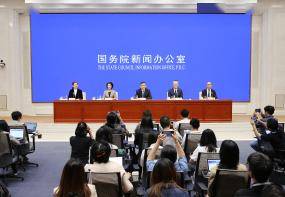
科技金融投早投小要攥指成拳
Jing Ji Ri Bao· 2025-07-03 22:10
Group 1 - The core viewpoint emphasizes the need for financial services to innovate in supporting early-stage technology enterprises, particularly through equity investment and bank credit [1][2][3] - The Chinese government is actively promoting a diversified and multi-channel approach to technology financing, as outlined in the recent policy measures from seven departments [1] - There is a focus on enhancing the capabilities and willingness of equity investment institutions to support technology innovation, especially in providing long-term, low-cost funding [2] Group 2 - Banks are encouraged to explore effective paths for early and small loans to technology startups, despite the inherent uncertainties in their operations [3] - The integration of loan and external direct investment models is being explored by commercial banks to mitigate risks associated with technology transfer [3] - There is a call for improved risk-sharing mechanisms and the development of technology insurance products to support the sustainability of financial services for early-stage technology companies [3]
推动更多金融活水涌向科技创新
Jing Ji Ri Bao· 2025-05-26 22:11
Group 1 - The core viewpoint emphasizes the necessity of financial support for technological innovation, highlighting a new policy initiative aimed at providing comprehensive financial services throughout the lifecycle of technology development [1] - The policy aims to address financing needs in key areas of technological innovation, including venture capital, bank credit, capital markets, technology insurance, and bond issuance [1] - High-tech sectors are identified as critical fronts in international competition, necessitating robust financial backing to overcome challenges in core technology development and the transformation of traditional industries [1] Group 2 - The People's Bank of China has increased the scale of re-loans for technological innovation from 500 billion to 800 billion yuan, while reducing the re-loan interest rate from 1.75% to 1.5%, to enhance support for R&D and equipment upgrades [2] - A pilot insurance mechanism for major technological breakthroughs has been implemented to provide risk-sharing solutions in key sectors like integrated circuits and commercial aerospace [2] - The bond market in China, with a total scale of 183 trillion yuan, is positioned to offer efficient and low-cost funding for technological innovation, leading to the establishment of a "technology board" for innovation bonds [2] Group 3 - The development of technology innovation bonds is expected to alleviate fundraising challenges in the equity investment sector, encouraging more social capital to enter the technology innovation field [3] - The issuance of technology innovation bonds will support private enterprises in pursuing independent innovation, thereby fostering new productive forces [3] - The initiative aims to enhance collaboration between technology and financial sectors, ensuring that policies are effectively implemented to stimulate economic growth through technological advancements [3]
科技部、人民银行、金融监管总局、证监会等7部门关于印发《加快构建科技金融体制 有力支撑高水平科技自立自强的若干政策举措》的通知
证监会发布· 2025-05-15 08:11
Core Viewpoint - The article emphasizes the importance of developing a technology finance system to support high-level technological self-reliance and innovation in China, aligning with the directives from the 20th National Congress of the Communist Party and the Central Financial Work Conference [2][4]. Group 1: Overall Requirements - The initiative aims to integrate various financial tools such as venture capital, bank credit, capital markets, technology insurance, and bond issuance to provide comprehensive financial services for technological innovation [4]. Group 2: Role of Venture Capital - Establishment of a "National Venture Capital Guidance Fund" to support the growth of technology-based enterprises and promote the transformation of major technological achievements into productive forces [5]. - Expansion of venture capital funding sources, including the involvement of insurance funds and encouraging social security funds to invest in equity funds for technology innovation [5]. - Optimization of the evaluation mechanism for state-owned venture capital investments to ensure long-term and patient capital support [5][6]. Group 3: Role of Monetary Credit - Utilization of structural monetary policy tools to enhance support for technological innovation, including expanding the scale of re-lending and optimizing support processes [7]. - Establishment of a specialized mechanism for bank credit support for technology innovation, including the creation of technology finance institutions in resource-rich areas [8]. Group 4: Role of Capital Markets - Enhancement of capital market support for technology innovation enterprises, including improving the mechanism for new stock issuance and prioritizing financing for enterprises with key technological breakthroughs [9]. - Development of a "technology board" in the bond market to promote high-quality development of technology innovation bonds [9]. Group 5: Role of Technology Insurance - Promotion of innovation in technology insurance products and services, establishing a comprehensive insurance product system covering the entire lifecycle of technology enterprises [10]. Group 6: Fiscal Policy Support - Leveraging fiscal policies to mobilize more financial resources for technological innovation, including innovative fiscal investment methods and implementing special guarantee plans for technology innovation [12]. Group 7: Central-Local Coordination - Promotion of an "innovation points system" nationwide to better evaluate and support technology-based SMEs [13]. - Support for regional technology finance innovation practices in key areas such as Beijing, Shanghai, and the Guangdong-Hong Kong-Macao Greater Bay Area [13]. Group 8: Open Innovation Ecosystem - Encouragement of foreign investment in domestic technology enterprises and facilitation of cross-border financing channels for technology firms [14]. - Establishment of a coordinated mechanism for promoting technology finance, enhancing inter-departmental coordination and policy implementation [14].

事关科技金融!重大政策出炉
Ke Ji Ri Bao· 2025-05-15 08:09
Group 1 - The core viewpoint of the news is the introduction of a new policy initiative aimed at accelerating the construction of a technology finance system to support high-level technological self-reliance and innovation in China [1][2][3] - The policy initiative includes 15 measures across 7 areas, focusing on venture capital, bank credit, capital markets, technology insurance, fiscal policies, central-local collaboration, and creating an open innovation ecosystem for technology finance [1][2] - A notable measure is the establishment of a "National Venture Capital Guidance Fund" to promote the growth of technology-based enterprises and support the development of strategic emerging industries [1][2] Group 2 - The initiative emphasizes the importance of bank credit in supporting technological innovation, encouraging financial institutions to increase support for major national technology tasks and technology-based SMEs [2][3] - It proposes a special mechanism for bank credit support for technology innovation, including the establishment of identification standards for technology-based enterprises and a recommendation mechanism to facilitate effective support from financial institutions [2] - The policy also highlights the role of capital markets in supporting technology innovation, advocating for a counter-cyclical adjustment mechanism for new stock issuances and prioritizing financing for technology-based enterprises that achieve core technological breakthroughs [2][3] Group 3 - The initiative outlines the role of technology insurance as a stabilizing factor in supporting innovation, proposing the development of a comprehensive insurance product and service system covering the entire lifecycle of technology-based enterprises [2][3] - It encourages the participation of insurance funds in implementing major national technology tasks and explores risk-sharing pilot projects in key technology areas [2][3] - The policy aims to leverage fiscal policies to mobilize more financial resources for technology innovation, utilizing existing loan interest subsidies, insurance subsidies, and risk compensation policies [3] Group 4 - The initiative promotes central-local collaboration in advancing national technology finance efforts, including the establishment of innovation point systems and the implementation of special guarantee plans linked to technology innovation [3] - It supports foreign investment in domestic technology-based enterprises and the lawful overseas listing of technology-based companies [3] - A coordinated mechanism among the People's Bank of China, the Ministry of Science and Technology, and other regulatory bodies will be established to enhance policy coordination and information sharing in technology finance [3]