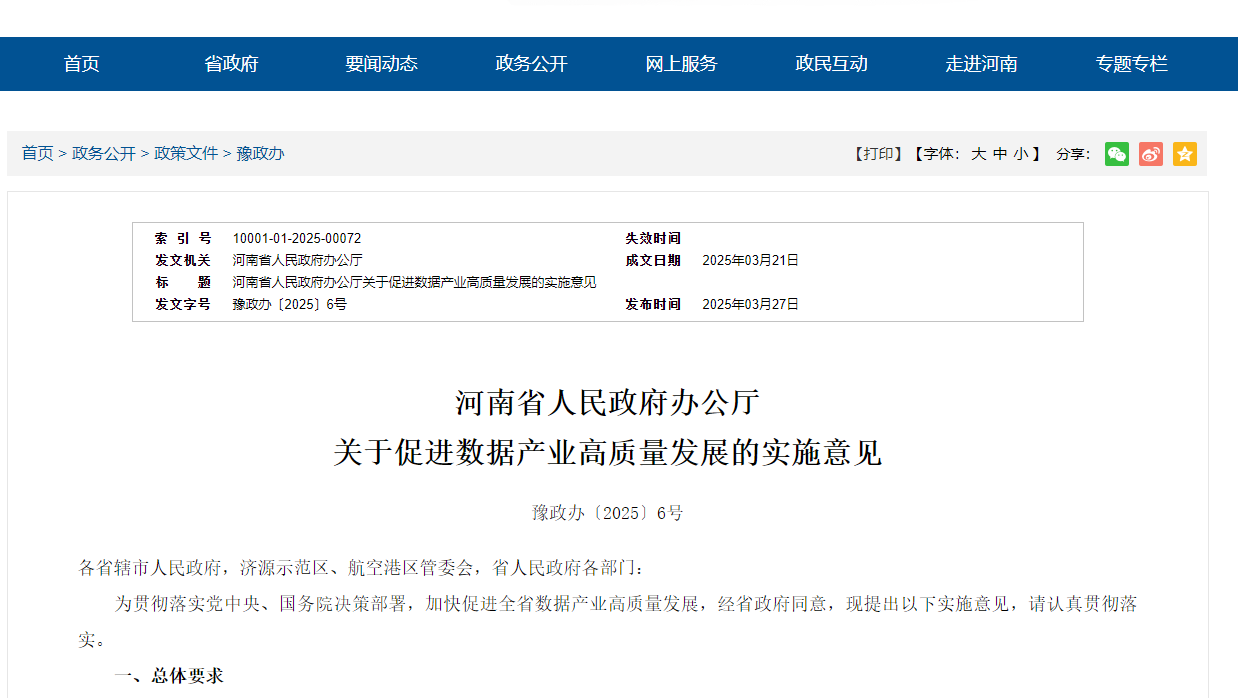
数据要素化

Search documents
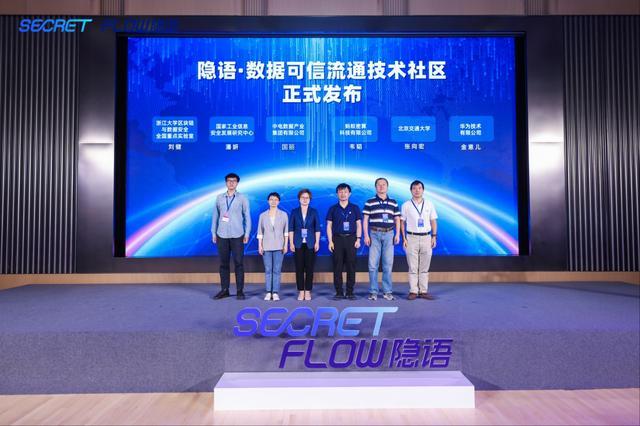
直击信任鸿沟!隐语社区升级 欲解高价值数据流通困局
Huan Qiu Wang Zi Xun· 2025-08-18 05:53
Core Insights - The article discusses the significant upgrade of the Yinyu open-source community, transitioning from a focus on privacy computing to a broader "trusted data circulation technology community" that addresses core industry pain points related to trust in data flow [1][4][9] Group 1: Industry Challenges - The core obstacle for large enterprises in data circulation is not profit motives but the risks associated with security and compliance in data external circulation [3] - The national data bureau estimates that the national data market transaction scale will exceed 160 billion yuan in 2024, with a year-on-year growth of over 30%, highlighting the challenge of bridging the trust gap in data circulation [3][4] - Current data infrastructure lacks consensus, and while enterprise-level support is advancing, public data openness is hindered by imbalances in responsibility and rights [4][5] Group 2: Technological Integration - The Yinyu community's upgrade aims to deeply integrate and reconstruct full-stack data circulation technologies, covering six major technical routes, including privacy protection computing and blockchain [4][9] - The community plans to build a "one-stop, verifiable, and interconnected" technical foundation to address the challenges faced by small and medium-sized enterprises [5][6] - The concept of "trusted data space" is crucial for ensuring secure and compliant data circulation across different entities [3][5] Group 3: Future of Data Elements - The article presents differing views on whether data transactions represent the future, with some arguing that large companies will not sell their data, as circulation does not equate to transaction [6][7] - The integration of data in supply chain finance is highlighted, where privacy computing allows data holders to output trusted results without exposing original data [6] - The emergence of artificial intelligence is seen as a new driving force for data circulation, although reliability remains a significant concern [7][8] Group 4: Open Source Ecosystem - The Yinyu community emphasizes the importance of open-source as a means to lower the application threshold for trusted data circulation technologies [8][9] - The community has linked with 20,000 developers and numerous industry partners to promote cross-domain standard building [8] - The upgrade signifies a shift from isolated breakthroughs in privacy computing to a comprehensive approach to data circulation technology [9]

有多少“数据产业基金”,是在自嗨?
Sou Hu Cai Jing· 2025-06-17 02:41
Core Insights - The rapid development of the digital economy has highlighted the value of data as a new production factor, now recognized as the "fifth production factor" following land, labor, capital, and technology [2] - China's data output accounts for 10.5% of the global total, with a national action plan aiming for a compound annual growth rate of over 15% in the data industry by 2029 [2][3] - The establishment of data industry funds across provinces is accelerating, driven by government policies to enhance the marketization of data elements and support digital economic transformation [3][4] Data Industry Fund Growth - By June 2025, the total scale of data industry funds across provinces exceeded 150 billion yuan, a significant increase from less than 50 billion yuan in 2023, indicating strong governmental support for the data element market [4][5] - The growth of data industry funds is characterized by a shift from pilot projects to large-scale implementations, with notable funds established in 2023 focusing on diverse investment directions [7][10] Regional Development Patterns - Eastern coastal provinces are leading in fund establishment, with Guangdong's fund group reaching a total scale of 100 billion yuan, making it the largest known single data industry fund in China [13][14] - Central provinces like Henan and Hubei are catching up by focusing on integrating data elements with traditional industries, emphasizing application-driven characteristics [16][17] - Western provinces are leveraging national strategies like "East Data West Calculation" to enhance their data infrastructure, focusing on foundational projects and spatial data facilities [19][20] Investment Strategies - Investment directions are diversifying, moving from traditional infrastructure to include data assetization, cross-border data flow, and privacy computing [21][33] - Funds are increasingly aligning with national strategies, such as the Chongqing fund's focus on satellite internet and the Guangdong fund's emphasis on cross-border data flow [21][22] Challenges and Considerations - The rapid expansion of provincial data industry funds presents challenges, including the need for effective project conversion and the risk of homogeneous competition among provinces [34][35] - Compliance and security governance are critical, especially for funds involved in cross-border data flow, necessitating a balance between innovation and regulatory adherence [34][35]

“无中生有”数据产业如何成长?——解码南京玄武区数据产业生态跃迁之路
Xin Hua Cai Jing· 2025-06-05 06:58
Core Insights - The article highlights the transformation of Nanjing's Xuanwu District into a key hub for data element circulation in the Yangtze River Delta, driven by the shift from traditional growth models to a focus on data as a new production factor [1][3][4]. Group 1: Data Economy Development - Xuanwu District has embraced data as a new "land" to overcome limitations posed by land scarcity and slow growth in traditional commerce and services [3][4]. - The establishment of the Jiangsu Data Exchange and various data-related initiatives, such as the first battery digital passport innovation center and a compliance data cross-border service platform, marks significant progress in the region's data economy [1][4][5]. - The district's proactive approach to data cross-border services positions it as a leader in the national data element reform landscape, despite not being part of the initial pilot areas [4][5]. Group 2: Integration of Data and Industry - The integration of data elements with Jiangsu's manufacturing capabilities is crucial for fostering new productive forces, as evidenced by the establishment of national industry clouds in the district [5][8]. - The Xuanwu Big Model Factory has attracted numerous AI companies, facilitating collaboration between traditional manufacturing and advanced data technologies, thus driving digital transformation in the manufacturing sector [9][10]. - The district's initiatives, such as the development of a digital passport for batteries, enhance the competitiveness of local industries in international markets by ensuring traceability and compliance with new regulations [9][10]. Group 3: Institutional Innovation and Ecosystem Building - Xuanwu District is actively exploring legal frameworks and institutional innovations to support data asset rights, compliance transactions, and data security governance [13][14]. - The establishment of a data quality assessment base and a data element legal service laboratory reflects the district's commitment to creating a robust ecosystem for data transactions [13][14]. - The district's shift from a land-centric to a data-centric development model signifies a broader transformation in governance and economic strategy, emphasizing the importance of data in urban development [14][15]. Group 4: Future Prospects and Strategic Vision - The article suggests that the future of urban development will increasingly rely on the richness of data ecosystems rather than physical space, positioning Xuanwu District as a model for other cities facing similar challenges [17]. - The district's experience illustrates that data elements can serve as a catalyst for traditional industries to evolve, highlighting the need for continuous exploration and innovation in the digital economy [17].
数据资源“大摸底”
Ren Min Ri Bao· 2025-05-27 22:49
Core Insights - The total national data production in China reached 41.06 ZB in 2024, marking a 25% year-on-year increase, with a per capita data production of approximately 31.31 TB, also reflecting a growth of 25.17% [2][3] Data Production and Growth - The national data production volume has surpassed 40 ZB for the first time, with a growth rate increase of 2.56 percentage points compared to the previous year [2] - The total computing power in 2024 reached 280 EFLOPS, with intelligent computing power accounting for 32% of this total, indicating a significant enhancement in data processing capabilities [2] Sector and Regional Distribution - Data production is concentrated in major economic provinces, with Guangdong, Jiangsu, Shandong, Zhejiang, Henan, and Sichuan accounting for 57.45% of the national total [4][5] - The financial sector remains a leader in data production, with the financial cloud market projected to reach $5.23 billion in the second half of 2024, reflecting an 11% year-on-year growth [6] Emerging Trends and Technologies - The rapid development of artificial intelligence has led to a 40.95% increase in data used for AI training and inference, with smart home and connected vehicle data growing at 51.43% and 29.28%, respectively [3] - New sectors such as low-altitude economy and robotics are emerging as significant contributors to data production, with growth rates exceeding 30% [3] Data Utilization and Market Dynamics - The report indicates that only 2.9% of the produced data is stored, highlighting a significant underutilization of data resources [7] - Active data utilization has improved, with a 22.73% increase in active data volume, and over 66% of leading enterprises have purchased data [8] Future Projections - The national data production is expected to continue growing, with projections indicating it may exceed 50 ZB by 2025, driven by emerging industries such as autonomous driving and low-altitude economy [9] - The data industry in China is anticipated to reach a scale of 7.5 trillion yuan by 2030, with over 190,000 related enterprises currently operating in the sector [9]

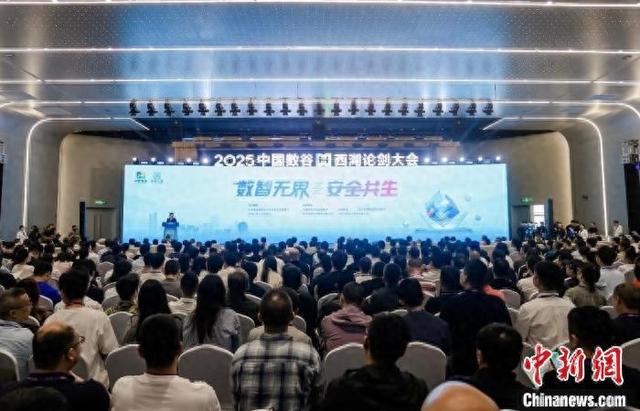
共谋数据要素与人工智能深度融合 政产学研界探未来趋势
Huan Qiu Wang Zi Xun· 2025-05-10 13:28
Group 1 - The 2025 China Digital Valley·West Lake Forum opened in Hangzhou, focusing on the integration of data elements and artificial intelligence to drive technological and industrial transformation [1][3] - The "Data Elements × Artificial Intelligence Empowering High-Quality Development Initiative" was launched, aiming to create an open, integrated, collaborative, and secure new framework for data and AI [3][5] - Hangzhou is implementing the "Artificial Intelligence +" initiative to upgrade its digital economy to an intelligent economy, supported by national AI innovation platforms [3][6] Group 2 - The integration of data elements and AI requires a balance between security and development to ensure sustainable empowerment of digital technology in the economy and society [5] - The importance of data quality in defining the capabilities of AI models was emphasized, highlighting the need for data to be treated as a critical production factor [6] - Hangzhou is a pilot city for national data infrastructure, continuously strengthening its digital economy through market-oriented reforms and key technological innovations [6]
依托“数据金库”,郑州在数据要素市场化配置改革中跑出 "加速度"
Huan Qiu Wang· 2025-04-10 03:15
Group 1 - The core viewpoint of the article is that the Henan provincial government aims to establish Henan as a significant data circulation hub and industrial development highland by 2029, supported by the successful completion of the "Data Vault" project by China Electronics (Zhengzhou) Data Industry Co., Ltd. [1][3] - The implementation of a "negative list management" model for public data supply in Zhengzhou has led to the first batch of 275 items of external data being made available, creating a clear governance system for data elements [1][3] - Zhengzhou has been recognized as a pilot city for national data circulation infrastructure, achieving rapid progress in market-oriented data element allocation through institutional innovation and technological breakthroughs [3][4] Group 2 - The establishment of a "1+5+24" data foundation system in Zhengzhou integrates "institution + technology + market" to accelerate the construction of a national data warehouse, facilitating large-scale circulation across key sectors such as finance, transportation, education, and healthcare [3] - In the financial sector, eight types of public data, including household registration and real estate, have been opened for application in Henan, while in transportation, data assetization has been advanced through collaboration with China Electronics [3] - Zhengzhou has received multiple honors, including being named a "National Data Element Comprehensive Pilot Zone" and an "Excellent Public Data Authorization Operation Model Award" [3] Group 3 - Zhengzhou is collaborating with China Electronics to operate the China Electronics (Zhengzhou) Data Innovation Center, attracting 35 ecosystem enterprises across the data processing, trading, and compliance consulting sectors [4] - The 2024 "Data Element ×" Ecological Conference, co-hosted by China Electronics and the Zhengzhou government, attracted nearly 2,000 participants and around 650 ecosystem enterprises, focusing on deepening cooperation in data-driven industrial integration [4] - Future efforts will focus on optimizing data authorization systems, enriching urban data asset connotations, and building a new type of infrastructure for data security and elementization, aiming to create a data element industry cluster centered in Zhengzhou and radiating across Central China [4]