
新能源开发

Search documents
新疆木垒着力打造绿色能源供应高地
Zhong Guo Xin Wen Wang· 2025-11-11 14:14
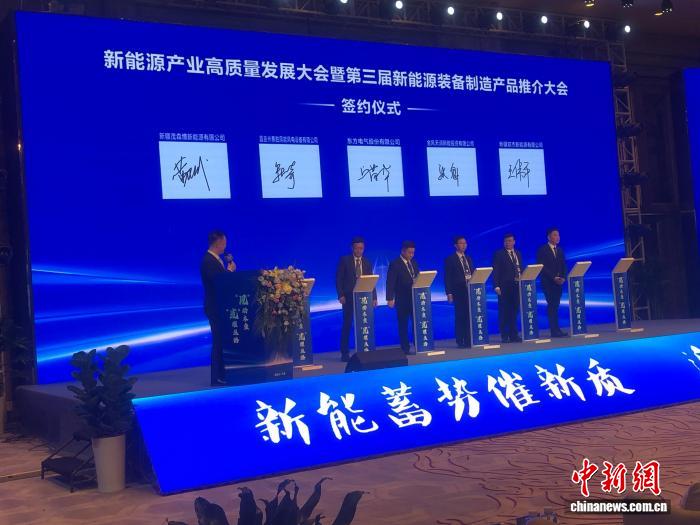
Core Insights - The "Chain on Changji Source Dynamic Mule" New Energy Industry High-Quality Development Conference was held in Urumqi, focusing on new trends, technologies, and models in the new energy sector [1][2] - Key industry players such as Dongfang Electric, Goldwind Technology, and Shuangjie Electric showcased advanced achievements in wind turbine intelligent manufacturing, energy storage system integration, and high-end bearing processing [1] - The conference resulted in multiple project signings in new materials manufacturing, circular economy, and new energy storage, promoting coordinated development across the entire industry chain [1] Industry Developments - Mule County has established Xinjiang's first county-level new energy base with a capacity of over 10 million kilowatts, aiming for a grid-connected capacity of 20 million kilowatts and an electricity generation exceeding 16 billion kilowatt-hours by the end of 2025 [2] - The local government plans to continue advancing the development of three major industrial chains: equipment manufacturing, energy storage, and new materials, while accelerating grid construction to ensure efficient operation of new energy projects [2]

建投能源(000600) - 000600建投能源投资者关系管理信息20251103
2025-11-03 09:46
Financial Performance - As of September 2025, the total assets of the company reached 482.27 billion yuan, a year-on-year increase of 2.31% [2] - The net profit attributable to shareholders was 15.83 billion yuan, reflecting a significant year-on-year growth of 231.79% [2] - The operating revenue for the first three quarters decreased by 3.73%, amounting to a reduction of 164.82 million yuan [2] Operational Metrics - The company's power generation for the first three quarters was 390.34 billion kilowatt-hours, a decrease of 3.43% year-on-year [2] - The average utilization hours of power generation units were 3,163 hours, down by 188 hours compared to the previous year [2] - The average on-grid electricity settlement price was 435.22 yuan per megawatt-hour (including tax), a decrease of 0.61% year-on-year [2] Market Conditions - The comprehensive standard coal price was 690.87 yuan per ton, down 16.54% year-on-year [3] - The coal market price has stabilized due to balanced supply and demand, despite a recent upward trend influenced by seasonal factors [3] Future Projects and Strategy - Ongoing construction projects include the Xibaipo Power Plant Phase IV (1,000 MW) and the Renqiu Heat Plant Phase II (700 MW), expected to be operational by 2026 [4] - The company aims to enhance its energy business during the 14th Five-Year Plan, focusing on a dual-wing strategy of thermal power and renewable energy [4] Investor Relations and Dividends - The company has increased its profit distribution policy for 2025, raising the proportion of distributable profits to 50% [4] - A cash dividend of 1.00 yuan per 10 shares is proposed for the first three quarters of 2025, totaling approximately 1.8 billion yuan [4]

财报解读|油价下跌致前三季度减利超350亿元,“三桶油”加速战略转型
Di Yi Cai Jing· 2025-10-31 12:08
Core Viewpoint - The "Three Barrel Oil" companies in China are facing significant profit declines due to the ongoing drop in international oil prices, prompting a strategic shift towards comprehensive energy services including oil, gas, hydrogen, and electricity [2][5]. Financial Performance - In the first three quarters, China Petroleum, China National Petroleum, and China National Offshore Oil Corporation reported net profits of 29.984 billion yuan, 126.279 billion yuan, and 101.971 billion yuan respectively, reflecting year-on-year declines of 32.2%, 4.9%, and 12.6% [2]. - The combined net profit decrease exceeded 35 billion yuan compared to the previous year, averaging a loss of approximately 3.8 billion yuan per day [2]. - The average selling price of crude oil for China Petroleum fell by 14.7% to $65.55 per barrel, while China National Offshore Oil's average selling price dropped by 13.6% to $68.92 per barrel, impacting their oil and gas revenue [2][3]. Operational Efficiency - Despite the profit declines, the reduction in net profit for China Petroleum and China National Offshore Oil was less severe than the drop in oil prices, attributed to effective cost management and operational efficiency [3]. - China Petroleum's oil and gas equivalent production increased by 2.6% to 1,377.2 million barrels, with unit operating costs decreasing by 6.1% to $10.79 per barrel [3]. - China National Offshore Oil's net production rose by 6.7% to 578.3 million barrels of oil equivalent, with costs per barrel down by 2.8% to $27.35 [3]. Natural Gas Segment - The natural gas segment showed positive growth, with China National Offshore Oil's natural gas production increasing by nearly 12%, significantly outpacing overall production growth [3]. - The average price of natural gas rose by 1% to $7.86 per thousand cubic feet, leading to a 15.2% increase in natural gas sales revenue [3]. Downstream Business Impact - The downstream oil product sales and refining chemical businesses of China Petroleum and China Sinopec are facing challenges due to declining market demand and falling prices of key petroleum and petrochemical products [3][4]. Chemical Business Challenges - The chemical business is experiencing reduced profit margins due to the continuous release of new production capacity, with China Petroleum's chemical operations reporting a profit of 1.787 billion yuan, halving year-on-year, while China Sinopec's chemical sector faced a pre-tax loss of 8.223 billion yuan, widening by nearly 68% [4]. Strategic Shift Towards New Energy - In response to the pressures from new energy on traditional markets, the "Three Barrel Oil" companies are accelerating their non-oil business development [5]. - China Sinopec plans to focus on stabilizing oil, expanding gas, promoting hydrogen, increasing electricity, and strengthening services, aiming to transform into a comprehensive energy service provider [5]. - China Petroleum's president emphasized the construction of integrated energy stations and the integration of oil and gas exploration with new energy development [5].



湖南发展:签署24亿光伏项目投资开发协议
Sou Hu Cai Jing· 2025-10-24 11:17
Core Points - The company has signed an investment development agreement for a photovoltaic project with a total investment of approximately 2.4 billion RMB [1] - The planned construction scale of the project is set at 800MW, with investments to be made in phases from 2026 to 2029 [1] - The final construction scale and total investment will depend on the actual approved renewable energy installation capacity [1] Summary by Category Investment Agreement - The company has entered into an investment development agreement with the People's Government of Jiahe County for a photovoltaic project [1] - The agreement indicates a focus on the company's core energy business and aims to accelerate the development of renewable energy projects [1] Project Details - The photovoltaic project has a preliminary construction scale of 800MW and a total investment of approximately 2.4 billion RMB [1] - The investment will be executed in phases between 2026 and 2029, subject to final approvals [1] Uncertainty Factors - The agreement is classified as an investment intention agreement and has not yet reached a final investment decision [1] - There remains uncertainty regarding the project's implementation based on various factors, including land characteristics [1]


湖南发展:拟24亿投建800MW光伏项目 2026 - 2029年分批建设
Sou Hu Cai Jing· 2025-10-24 10:46
Core Points - Hunan Development has signed an investment development agreement with the Jiahe County People's Government for a photovoltaic project with a planned capacity of 800MW and a total investment of approximately 2.4 billion yuan [1][2] - The project is scheduled to be constructed in phases from 2026 to 2029, with the final construction scale to be determined based on land characteristics and approved new energy installation capacity [1][2] - The signing of this agreement is expected to help Hunan Development focus on its energy business, accelerate the development of new energy projects, and enhance its overall strength [1][2] - It is important to note that this agreement is an investment intention agreement and has not yet completed the investment decision, indicating uncertainty in project implementation [1][2]

青海超级镜阵高原追“光”——探访世界首个风光热储调荷多能互补项目
Ke Ji Ri Bao· 2025-10-20 23:44
Core Insights - The multi-energy complementary integrated optimization national demonstration project in Golmud, Qinghai Province, showcases advanced technology in renewable energy, combining solar, wind, thermal, and storage systems [1][2][3] Group 1: Project Overview - The project has a total installed capacity of 700,000 kilowatts, including 50,000 kilowatts of solar thermal, 200,000 kilowatts of photovoltaic, 400,000 kilowatts of wind power, and 50,000 kilowatts of energy storage [1][2] - It is the world's first project to integrate wind, solar, thermal, storage, regulation, and load, serving as a testing ground for multi-energy complementary technology [1][2] Group 2: Technological Innovations - The solar thermal project utilizes a tower system with a maximum temperature of 565 degrees Celsius, converting solar energy into high-temperature molten salt for steam generation [1][2] - The energy storage system employs lithium iron phosphate batteries, which became the largest power-side centralized electrochemical storage station in China upon its first discharge to the grid [2] Group 3: Energy Output and Efficiency - The demonstration project generates approximately 1.263 billion kilowatt-hours of electricity annually, saving about 401,500 tons of standard coal each year [2] - During periods of reduced transmission capacity, the project maintains a wind and solar abandonment rate of less than 5%, enhancing energy stability and supporting ecological development [2] Group 4: Regional Energy Landscape - Qinghai Province has abundant clean energy resources, ranking second in national solar radiation and being the fourth-largest wind farm in China, with over 100,000 square kilometers of desert land available for renewable energy development [3] - By 2024, Qinghai's total installed power capacity is expected to exceed 71 million kilowatts, with clean and renewable energy accounting for 94.6% and 70% of the total capacity, respectively [3]
华能水电成立新公司,含电动汽车充电基础设施等业务
Qi Cha Cha· 2025-10-17 06:39
Core Viewpoint - Huaneng Hydropower has established a new subsidiary focused on electric vehicle charging infrastructure and emerging energy technologies [1] Group 1: Company Overview - Huaneng Lancang River (Lancang) New Energy Co., Ltd. has been founded with a registered capital of 10 million yuan [1] - The new company is wholly owned by Huaneng Hydropower (600025) through indirect holdings [1] Group 2: Business Scope - The business operations of the new subsidiary include electric vehicle charging infrastructure operation, research and development of emerging energy technologies, wind power technology services, and solar power technology services [1]

我国能源开发实现“飞天遁地”突破 沙、戈、荒与高空能量不断聚集
Yang Shi Wang· 2025-10-10 08:17
Core Insights - During the "14th Five-Year Plan" period, Xinjiang's energy industry is experiencing rapid development, particularly in wind and solar energy sectors, achieving breakthroughs in energy development [1][5]. Renewable Energy Development - By the end of the "14th Five-Year Plan," Xinjiang's installed capacity for wind and solar power is expected to reach 112 million kilowatts, with green electricity accounting for over 55%, ranking first in Northwest China and third nationally [5]. - The region is home to the world's largest single photovoltaic power station and advanced floating wind power stations, continuously harnessing energy from its vast deserts and high altitudes [7]. - A new high-altitude floating wind power device, capable of capturing wind energy at approximately 1500 meters, has been successfully tested, marking a significant advancement in wind energy technology [18]. Energy Transmission and Storage - The "Xinjiang Power Transmission to Chongqing" ultra-high voltage transmission line has been established, enabling rapid long-distance electricity transmission, with power reaching Chongqing in just 7 milliseconds [9]. - Xinjiang plans to construct and operate 218 new energy storage stations during the "14th Five-Year Plan," positioning itself among the leaders in the western region for energy storage capacity [11]. - The largest all-vanadium flow battery energy storage project in China, located in Xinjiang, is expected to provide stable green electricity to the grid, sufficient for approximately 197,000 households annually [13]. Traditional Energy Development - Xinjiang is also enhancing its traditional energy sector, with plans to drill over 200 ultra-deep oil wells in the Taklamakan Desert, reaching depths of over 8000 meters by the end of the "14th Five-Year Plan" [14]. - The successful drilling of the Deep Taka 1 well, reaching 10,910 meters, has set multiple world records, showcasing Xinjiang's potential in oil and gas development [14]. - Xinjiang is projected to contribute over 150 million tons of crude oil and more than 250 billion cubic meters of natural gas to the national market, maintaining its position as a leading energy supplier in Western China [16].
库布齐基地特高压外送通道启动建设推动沙戈荒治理与新能源开发
Zhong Guo Dian Li Bao· 2025-10-07 10:14
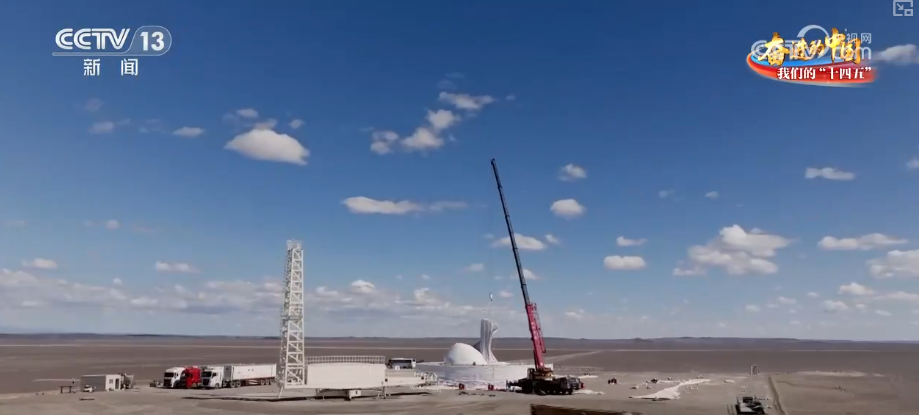
Core Insights - The construction of the Kubuqi Base ultra-high voltage transmission channel officially commenced on September 29, marking the full implementation phase of the largest sand and desert wind and solar power base in China's 14th Five-Year Plan [1][3] - Once completed, the Kubuqi Base is expected to deliver approximately 36 billion kilowatt-hours of electricity annually to the Beijing-Tianjin-Hebei region, with 60% of this energy coming from clean sources [1][3] Project Details - The transmission channel utilizes ±800 kV ultra-high voltage direct current technology, starting from Dalad Banner in Ordos, Inner Mongolia, passing through Shanxi Province, and ending in Cangzhou, Hebei Province, covering a total length of 699 kilometers [3] - The Kubuqi Base project plans to construct 8 million kilowatts of solar power and 4 million kilowatts of wind power, along with 4 million kilowatts of supporting coal power and 5 million kilowatt-hours of new energy storage facilities [3] Environmental and Ecological Impact - The project adheres to the principle of "ecology first, sand control as the main focus," employing a comprehensive management model of "power generation on panels, restoration below panels, and planting between panels" [3] - A three-tier protective system has been established, including high vertical sand barriers, grass grids, and ecological restoration beneath solar panels, creating a three-dimensional ecological barrier that achieves dual benefits of power generation and sand control [3] - To date, approximately 300,000 acres of desertified land have been treated, with expectations to exceed 1.5 million acres by the end of the 15th Five-Year Plan, resulting in an estimated annual electricity generation of nearly 140 billion kilowatt-hours, saving about 42 million tons of standard coal and reducing carbon dioxide emissions by approximately 100 million tons [3]
郴电国际: 加大新能源项目开发力度
Shang Hai Zheng Quan Bao· 2025-09-30 13:46
Core Insights - The company is focusing on expanding new strategic power sources and increasing the development of renewable energy projects to enhance the proportion of renewable energy in its overall power generation [1] - The company aims to improve the quality of power transmission channels to facilitate the cross-regional consumption of renewable energy, thereby reducing overall electricity procurement costs [1] - The company is exploring high-potential projects in various sectors such as industrial gases, hydropower development, wastewater treatment, integrated energy, and low-altitude economy to diversify its business strategy [1] Business Development - The company has transitioned from a "single power supply" model to a collaborative approach across six business segments, expanding its operations from Chenzhou to eight provinces, cities, and autonomous regions nationwide [1] - The company has received multiple industry honors and has become a benchmark enterprise in the local energy sector, contributing to public electricity and water supply, environmental responsibility, and local economic development [1] Strategic Initiatives - Since 2025, the new management team has been implementing reforms to enhance internal efficiency through organizational streamlining and mechanism optimization, focusing on cost reduction and efficiency improvement across various dimensions [1] - The company is actively promoting the development and integration of renewable energy, with significant growth in installed capacity and procurement of renewable energy in the first half of 2025 [2] Renewable Energy Focus - The company operates five wastewater treatment plants in Anren County, with good overall payment collection for wastewater treatment services [2] - The renewable energy business segment will deepen regional layouts, focusing on areas rich in renewable resources and strong policy support, while advancing distributed photovoltaic projects and charging infrastructure [2] Cost Advantages - The renewable energy purchased by the company has a cost advantage compared to conventional electricity from the national grid, positively impacting profit levels [3] - The company benefits from a dual revenue model through self-invested renewable projects, generating both investment returns and cost savings by reducing external electricity procurement expenses [3]
