智能新能源汽车

Search documents
北汽蓝谷(600733):两极向上:享界渐入佳境、极狐破局在即
Great Wall Securities· 2025-09-11 13:28
Investment Rating - The report upgrades the investment rating to "Buy" for the company [4] Core Views - The company is expected to benefit from the product cycle of its ARCFOX brand, with a potential turnaround in profitability, while the high-margin Xiangjie brand is beginning to stabilize in volume [7] - The company anticipates revenues of 331 billion, 596 billion, and 820 billion for the years 2025, 2026, and 2027 respectively, with corresponding net profits of -44 billion, -17 billion, and 14 billion [7] Financial Summary - Revenue projections for 2023A to 2027E show significant growth, with 2023A at 14,319 million and expected to reach 81,962 million by 2027E, reflecting a growth rate of 50.5% in 2023 and 37.5% in 2027 [1] - The net profit is projected to improve from -5,400 million in 2023A to 1,388 million in 2027E, with a notable increase of 182.8% in 2027 [1] - The report indicates a P/S ratio of 1.4 for 2025, 0.8 for 2026, and 0.6 for 2027, suggesting a favorable valuation trend [7] Brand Development - The Xiangjie brand, in collaboration with Huawei, is gaining traction with the launch of the Xiangjie S9, which has achieved over 3,000 units in sales and aims to lead the market for new energy vehicles priced above 300,000 yuan by June 2025 [2] - The ARCFOX brand is expanding its product lineup with a focus on mainstream consumer markets, including the upcoming A0-class pure electric SUV, ARCFOX T1, priced starting at 68,800 yuan [3] Strategic Partnerships - The collaboration with Huawei has deepened over the years, leading to the successful launch of the Xiangjie S9, which has become a market leader in its segment [46] - The company is leveraging Huawei's advanced technology in smart driving and electric vehicle solutions to enhance its product offerings [21][30]

搭载“车位到车位”智驾系统 全新坦克500以智能豪华撬动越野车市场增量
Zhong Guo Jing Ying Bao· 2025-09-01 15:31
Core Insights - Great Wall Motors reported strong financial performance in Q2 2025, achieving revenue of 52.316 billion yuan, a year-on-year increase of 7.72%, and a net profit of 4.586 billion yuan, up 19.42% year-on-year and 161.87% quarter-on-quarter, marking the best Q2 results in the company's history [2] - The company showcased its six brands at the 2025 Chengdu International Auto Show, highlighting the new Tank 500 model, which emphasizes smart technology and luxury in the off-road segment [2][6] Financial Performance - In Q2 2025, Great Wall Motors achieved a cumulative sales volume of 312,000 vehicles, representing a year-on-year increase of 11.63% and a quarter-on-quarter increase of 21.51%, also the best Q2 sales performance in history [2] - The company's focus on smart new energy vehicles and its strategic positioning in technology, off-road capabilities, and globalization contributed to its high-quality growth [2] Product Launch and Features - The new Tank 500 model features the third-generation Coffee Pilot Ultra driver assistance system, equipped with 27 sensors, enabling full-scene navigation assistance [3] - The Tank 500 is available in three power versions, with prices ranging from 335,000 to 375,000 yuan, and includes advanced features such as a 2.0T engine with dual motors and a battery capacity of 59.05 kWh [6] - The vehicle's charging capabilities have been significantly upgraded, allowing for a fast charge from 30% to 80% in just 16 minutes, with a 30% increase in charging speed [6] Market Performance and Outlook - Despite the strong launch of the Tank 500, the Tank brand experienced a 10.67% decline in sales in the first half of the year, totaling 104,000 units, marking the first negative growth since the brand's independence [7] - The potential for the new Tank 500 to drive sales growth in the off-road market remains to be seen [7]


长城汽车(601633):国内、海外完善生产布局,销量同比稳健增长
CAITONG SECURITIES· 2025-09-01 09:05
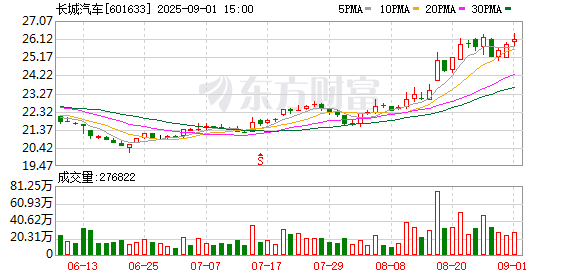
Investment Rating - The investment rating for the company is maintained at "Accumulate" [2] Core Views - The company has achieved a revenue of 92.33 billion yuan in the first half of 2025, representing a year-on-year growth of 0.99%, while the net profit attributable to shareholders decreased by 10.2% to 6.34 billion yuan [7] - The gross margin has slightly declined, and the expense ratio has increased, with a gross margin of 18.38%, down by 1.56 percentage points year-on-year [7] - The company has established a comprehensive production layout both domestically and internationally, with a total sales volume of 568,852 vehicles in the first half of 2025, a year-on-year increase of 2.52%, including 160,435 new energy vehicles, which grew by 23.64% year-on-year [7] - The company is expected to achieve net profits of 14.62 billion, 17.53 billion, and 21.47 billion yuan for the years 2025 to 2027, corresponding to PE ratios of 15.1, 12.6, and 10.3 respectively, maintaining the "Accumulate" rating [7] Financial Performance - Revenue forecast for 2023A to 2027E shows a growth from 173.21 billion yuan in 2023 to 331.06 billion yuan in 2027, with a revenue growth rate of 26.1% in 2023, gradually decreasing to 18.6% in 2027 [6] - The net profit forecast indicates a recovery from a decline of 15.1% in 2023 to a growth of 22.5% by 2027 [6] - The earnings per share (EPS) is projected to increase from 0.82 yuan in 2023 to 2.51 yuan in 2027 [6] Production and Sales - The company has 10 fully integrated vehicle production bases in China and has established three fully integrated vehicle production bases in Thailand and Brazil, along with several KD factories in Ecuador, Malaysia, and Pakistan [7] - The company is focusing on the smart new energy vehicle segment, enhancing its market influence [7]
携手华为 江淮汽车开启新一轮成长曲线
Zhong Guo Jin Rong Xin Xi Wang· 2025-08-28 02:48
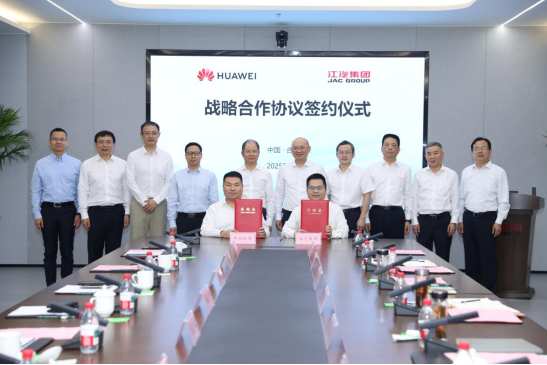
Core Viewpoint - Jianghuai Automobile, in collaboration with Huawei, has launched its high-end luxury passenger car brand, Zun Jie, with the first model, Zun Jie S800, priced between 708,000 to 1,018,000 yuan, achieving 12,000 pre-orders within 87 days of its launch [1][2][14]. Group 1: Company Background and Market Entry - Jianghuai Automobile has a long history, starting with commercial vehicles in 1968 and entering the passenger car market in 2002, but has not been particularly prominent in the passenger vehicle sector until the recent launch of Zun Jie S800 [2][3]. - The company aims to enter the high-end luxury car market, which raises questions about its previous performance in the passenger vehicle segment [2][3]. Group 2: Strategic Collaboration and Technological Innovation - The collaboration between Jianghuai and Huawei is based on the need for technological and energy transformation, leveraging Jianghuai's industrial foundation and Huawei's advanced technology [3][4]. - The Zun Jie S800 features significant advancements in smart technology, including the "Six Domain Fusion Technology" and various innovative features such as zero-gravity seats and gesture-controlled systems [3][4]. Group 3: Research and Development Investment - Jianghuai has increased its R&D investment, with 2025's first half seeing an investment of 2.216 billion yuan, a 34.47% increase year-on-year, representing 11.44% of revenue, focusing on smart and new energy technologies [10][14]. - The company emphasizes original innovation and aims to develop unique technologies rather than relying on existing ones, with a focus on four key areas: vehicle integration, user experience design, key technology mastery, and production process innovation [10][11]. Group 4: Manufacturing and Quality Assurance - Jianghuai and Huawei have established a digital twin factory for the Zun Jie S800, utilizing Huawei's industrial data model technology to optimize production processes [11][13]. - The Zun Jie S800 has led to a systemic upgrade across the supply chain, with Jianghuai forming partnerships with over 220 global suppliers to enhance quality and innovation [13][14]. Group 5: Market Performance and Future Plans - Since its launch, the Zun Jie S800 has exceeded market expectations, contributing to a 34.5% increase in Jianghuai's stock price from January 2 to August 27, 2025, ranking among the top in the automotive sector [14]. - Jianghuai plans to accelerate the development of additional models under the Zun Jie brand, aiming to provide more domestic ultra-luxury products to the market [14].

江淮汽车: 江淮汽车2025年半年度报告
Zheng Quan Zhi Xing· 2025-08-25 17:05
Core Viewpoint - The Anhui Jianghuai Automobile Group Co., Ltd. reported a significant decline in financial performance for the first half of 2025, with a notable drop in revenue and net profit compared to the same period in the previous year [3][4][5]. Financial Performance - The company's operating revenue for the first half of 2025 was approximately CNY 19.36 billion, a decrease of 9.10% from CNY 21.30 billion in the same period last year [4][5]. - The total profit for the period was a loss of approximately CNY 810.89 million, compared to a profit of CNY 242.22 million in the previous year, marking a decline of 434.78% [4][5]. - The net profit attributable to shareholders was a loss of approximately CNY 772.81 million, down 356.89% from a profit of CNY 300.83 million in the previous year [4][5]. - The net cash flow from operating activities was negative CNY 3.15 billion, a significant decrease from positive cash flow of CNY 60.60 million in the previous year [4][5]. Business Overview - The company operates in the automotive industry, focusing on a comprehensive range of commercial and passenger vehicles, including both fuel and new energy vehicles [4][6]. - The automotive industry in China saw production and sales growth in the first half of 2025, with total vehicle production reaching 15.62 million units, a year-on-year increase of 12.5% [4][6]. - The company has been actively pursuing technological innovation and product upgrades, particularly in the new energy vehicle sector, to enhance its competitive edge [4][6]. Market Dynamics - The company faced challenges in its export business due to increasing competition in international markets and the ongoing complexities of the global economic environment [4][6]. - The sales of passenger vehicles decreased by 16.12%, while the sales of pickup trucks increased by 15.00%, indicating a mixed performance across different vehicle segments [4][6]. Strategic Initiatives - The company is focusing on enhancing its research and development capabilities, particularly in the areas of intelligent and new energy vehicles, to align with market trends and consumer demands [4][6]. - Collaborations with technology firms like Huawei and CATL are aimed at advancing product development and integrating smart technologies into their vehicles [4][6].
吉利汽车:半年营收首破1500亿元,上调全年销量目标至300万辆
Zheng Quan Shi Bao· 2025-08-14 06:52
Core Insights - Geely Auto reported a record revenue of 150.3 billion yuan for the first half of 2025, a 27% year-on-year increase, with a net profit attributable to shareholders of 9.29 billion yuan, and a core net profit of 6.66 billion yuan, reflecting a 102% growth [1] - The company achieved a total sales volume of 1.409 million vehicles, a 47% increase year-on-year, with a market share surpassing 10% for the first time [1] - Geely has raised its full-year sales target from 2.71 million to 3 million vehicles based on strong market performance [1][4] Financial Performance - Geely's gross profit increased to 24.7 billion yuan, with a gross margin of 16.4% [1] - Total cash levels rose to 58.8 billion yuan [1] New Energy Segment - The new energy segment emerged as a significant growth driver, with total sales exceeding 725,000 units and a penetration rate of 51.5% [3] - The Galaxy series, now an independent brand, sold 548,000 units, marking a 232% increase [3] High-end Luxury Brands - Zeekr and Lynk & Co have become core supports for brand value enhancement, with Zeekr selling 90,740 units and Lynk & Co selling 154,137 units in the first half of 2025 [3][4] - Lynk & Co achieved a three-year resale rate of 54.58% and has nine models in the top ten of their respective segments [3] International Expansion - Geely's global influence is growing, with over 180,000 units exported and a sales network covering 85 countries and regions [3] - The company has launched ten high-value models in key markets, with the Galaxy E5 international version becoming a global star product [3] Future Outlook - Geely plans to launch five new energy products in the second half of 2025, aiming to enhance its global competitiveness in the smart new energy sector [4]

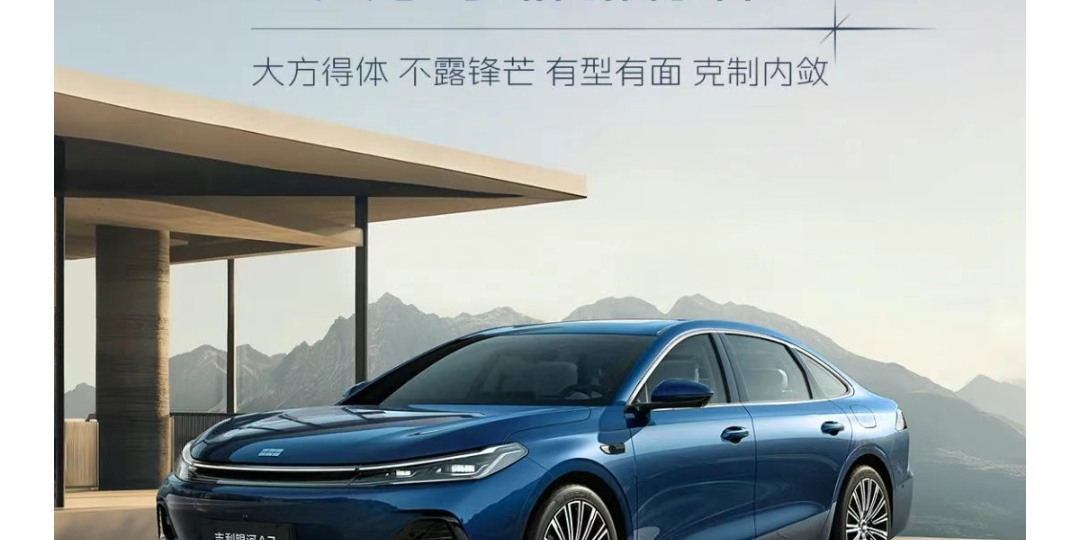
电混家轿市场迎来越级新车 吉利银河A7正式上市
Bei Jing Ri Bao Ke Hu Duan· 2025-08-13 04:11
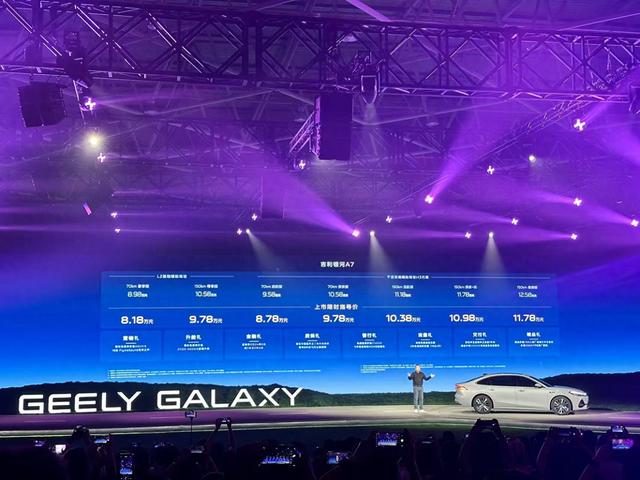
Core Viewpoint - Geely Galaxy A7 has officially launched with seven models priced between 81,800 to 117,800 yuan, offering various consumer benefits including financial plans and trade-in incentives [1][3]. Group 1: Product Features - The Geely Galaxy A7 features the Thunder AI Hybrid 2.0 system, achieving a thermal efficiency of 47.26% and a fuel consumption of 2.67 liters per 100 kilometers when running on gasoline [3]. - The vehicle boasts a comprehensive range of over 2,100 kilometers and can be charged from 30% to 80% in just 18 minutes, addressing range anxiety for consumers [3]. - With a length of 4,918 mm and a wheelbase of 2,845 mm, the car offers a spacious interior of 4.2 square meters, with rear legroom of 950 mm and knee space of 132 mm, both leading in its class [5]. Group 2: Comfort and Design - The design includes a flat floor and 10-layer cotton candy SPA seats with 14-point massage functions, enhancing passenger comfort [5]. - The vehicle features 28 storage spaces and a trunk capacity of 535 liters, expandable to 988 liters, catering to diverse consumer needs [5]. Group 3: Technology and Safety - The Galaxy A7 is equipped with the Galaxy Flyme Auto intelligent cockpit, supporting voice control, navigation, and full-scene connectivity [6]. - It includes the Qianli Haohan H3 driver assistance system with 11 cameras, 3 millimeter-wave radars, and 12 ultrasonic radars, enabling advanced features like highway navigation and automatic parking [6].
8.18万元起!吉利银河A7毫不隐藏爆款决心
Xin Lang Cai Jing· 2025-08-13 01:25
Core Viewpoint - Geely Galaxy A7 is positioned as a "new benchmark for global family sedans," recently launched in Guiyang with a limited-time price range of 81,800 to 117,800 yuan [1] Group 1: Product Features - The Geely Galaxy A7 is built on the GEA global intelligent new energy architecture and features the Thor AI Electric Hybrid 2.0 system, claiming to be a "disruptor" in the electric hybrid sedan market [3] - The vehicle incorporates 21 aerodynamic drag reduction designs, achieving a drag coefficient as low as Cd 0.229, optimizing fuel consumption and range [3] Group 2: Energy Efficiency - The new model boasts a class-leading comprehensive range of over 2,100 km and a maximum charging power of 37 kW, with a fuel consumption as low as 2.67 L per 100 km under CLTC conditions [5] - In a fuel consumption test conducted in Tokyo, the vehicle achieved a real-world fuel consumption of 2.47 L per 100 km, surpassing the Guinness World Record holder Toyota Prius, making it the most fuel-efficient family sedan globally [5] Group 3: Space and Comfort - The Geely Galaxy A7 features the longest wheelbase in its class at 2,845 mm, with an overall length of 4,918 mm, providing the largest interior space of 4.2 m² in its category [5] - The rear legroom measures 950 mm, with knee space of 132 mm, both being the largest in its class [5] Group 4: Safety and Technology - The vehicle is the first electric hybrid sedan based on the GEA architecture, featuring a unique oil, electricity, and smoke separation design for enhanced safety [9] - It includes the Shendun battery safety system, which has passed over 100 extreme scenario tests, demonstrating superior safety performance [9] - The Galaxy A7 introduces the new Galaxy Flyme Auto intelligent cockpit and the Qianli Haohan H3 driving assistance plan, equipped with advanced features such as voice control, high-definition cameras, and various radar systems for enhanced driving safety and convenience [9] Group 5: Performance - The chassis tuning of the Geely Galaxy A7 was conducted by the Lotus team, utilizing full-domain AI to enhance driving comfort and experience [10]
主流家轿的新选择 吉利银河A7上市8.18万元起售
Zhong Guo Zhi Liang Xin Wen Wang· 2025-08-09 14:29
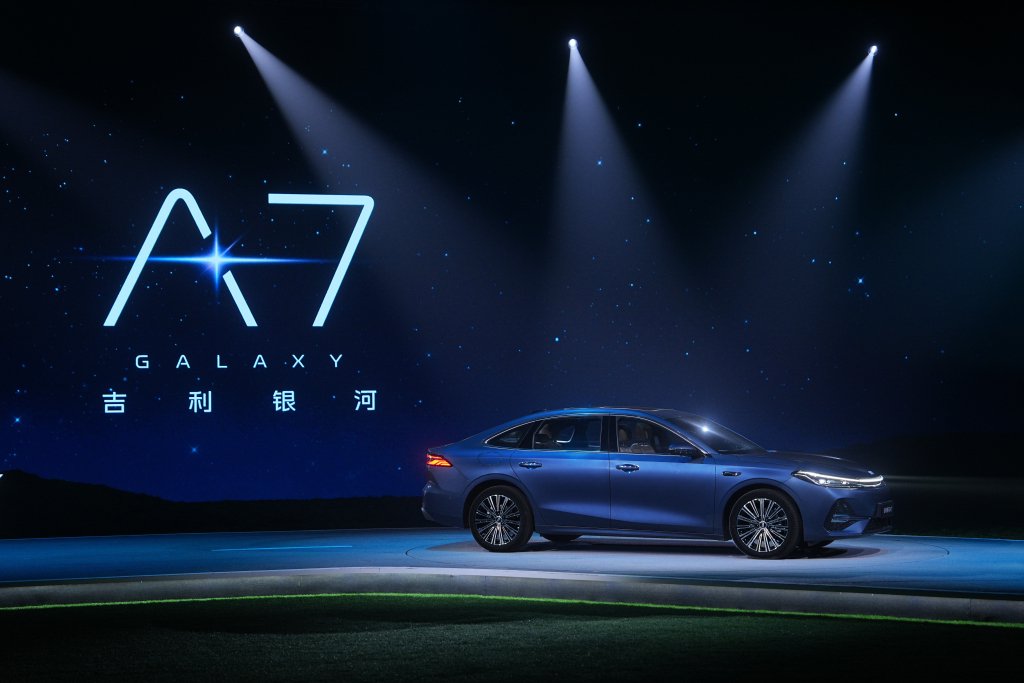
Core Insights - Geely Galaxy A7 was officially launched on August 8, with a limited price range of 81,800 to 117,800 yuan, featuring advanced technologies and impressive specifications [1][3]. Performance and Efficiency - The vehicle is equipped with the Thunder AI Hybrid 2.0 engine, achieving a thermal efficiency of 47.26%, and boasts a fuel consumption of only 2.67L per 100km under CLTC conditions [3][12]. - In a fuel efficiency test in Tokyo, the Galaxy A7 recorded a remarkable fuel consumption of 2.47L per 100km, surpassing the previous record held by the Toyota Prius [3]. Range and Charging - The Galaxy A7 offers a comprehensive range of over 2,100 km and can accelerate without power limitations, ensuring fuel efficiency without sacrificing performance [5]. - It supports a maximum charging power of 37kW, allowing for a 30-80% charge in just 18 minutes [5]. Space and Comfort - With a wheelbase of 2,845 mm and a body length of 4,918 mm, the vehicle provides spacious interior dimensions, including 950 mm of rear legroom [5][8]. - The interior features luxurious amenities such as 10-layer cotton candy SPA seats and a total of 28 storage spaces, with a trunk capacity of 535L, expandable to 988L [7][8]. Safety Features - The GEA global intelligent new energy architecture includes a separation design for oil, electricity, and smoke routes, enhancing the vehicle's safety [12]. - The vehicle's safety system has passed over 100 extreme scenario tests, ensuring high safety standards [12]. Intelligent Technology - The Galaxy A7 is equipped with the new Galaxy Flyme Auto intelligent cockpit, featuring a computing power of 23.5 EFLOPS and advanced AI capabilities for enhanced user experience [14]. - It includes the Qianli Haohan H3 assisted driving solution, with multiple sensors and high computing power to support advanced driving features [14]. Design and Aesthetics - The vehicle's design follows the "Galaxy Ripple" aesthetic, blending traditional Chinese elements with modern luxury [16]. - Interior design options are inspired by "West Lake Impression," offering various color choices to enhance the visual and tactile experience [16].
吉利银河A7上市 弥补中型轿车布局空白
Jing Ji Guan Cha Wang· 2025-08-09 12:43
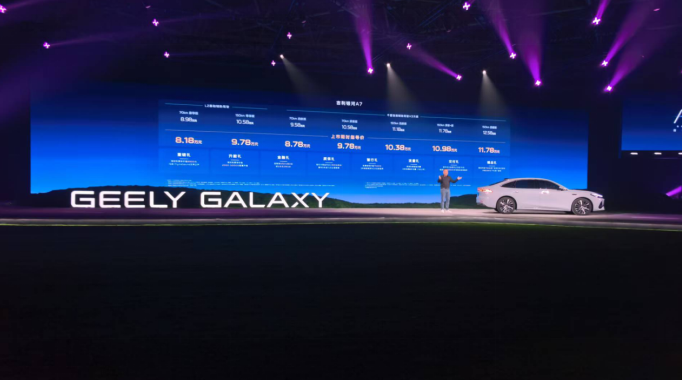
Group 1 - Geely Galaxy A7 was officially launched on August 8, with a price range of 81,800 to 117,800 yuan, filling the gap in the mid-size car market for Geely Galaxy [2] - The A7 is built on the GEA intelligent new energy architecture and features advanced technologies such as the Thor AI hybrid 2.0, H3 assisted driving, and the new Galaxy Flyme Auto intelligent cockpit [2] - The A7 boasts impressive specifications, including a fuel consumption of 2.67L per 100km under CLTC conditions, a comprehensive range of over 2100 km, and a wheelbase of 2845 mm [2] Group 2 - Geely Galaxy has successfully launched multiple models in the sedan market, particularly excelling in the small and micro car segments, with the Star Wish and Panda ranking first and third respectively in their categories [3] - However, the Geely Galaxy has not yet made an appearance in the top 20 sales list for mid-size cars, prompting the launch of the A7 to address this market gap [4] - The mid-size car market has seen significant changes, with models like BYD Qin L and BYD Seal 06 gaining traction against traditional competitors such as Volkswagen Passat and Toyota Camry [4] Group 3 - The A7's main competitors are the BYD Qin L and BYD Seal 06, which are priced higher than the A7, with the latter's official prices ranging from 170,000 to 250,000 yuan [4] - The A7's advantages over its competitors include superior space and energy efficiency, with a larger wheelbase and lower fuel consumption compared to the BYD models [4][6] - The A7 features a rich intelligent ecosystem compatible with Huawei HiCar and Apple CarPlay, and its chassis is tuned by the Lotus team for enhanced comfort and handling [5] Group 4 - The A7 is expected to capture market share from the BYD Qin L and BYD Seal 06, but its ability to rank among the top sellers remains to be seen [6]