
期货市场开放

Search documents
冠通期货早盘速递-20250820
Guan Tong Qi Huo· 2025-08-20 01:04
Group 1: Hot News - China Futures Association suggests continuous expansion of specific futures varieties and steady opening of the "variety pool", expanding the scope of specific varieties at a "mature one, include one" pace, and optimizing cross - border fund settlement and bonded delivery networks [2] - Zhengzhou Commodity Exchange is advancing the research and development of innovative products like the Baltic Panamax Dry Bulk Freight Index Futures (BPI Index Futures) and exploring settlement price authorization cooperation with overseas futures exchanges [2] - Regarding India media's report on China lifting rare - earth export restrictions on India, the spokesperson said she was unaware of the situation and emphasized cooperation to maintain global supply - chain stability [2] Group 2: Key Focus and Night - session Performance - Key commodities to focus on are coking coal, butadiene rubber, glass, soda ash, and urea [3] - Night - session performance shows the following sector percentage increases: non - metallic building materials 2.95%, precious metals 26.23%, oilseeds and oils 13.19%, non - ferrous metals 21.11%, soft commodities 2.63%, coal - coking - steel - minerals 14.71%, energy 3.27%, chemicals 11.72%, grains 1.21%, and agricultural and sideline products 2.99% [3] Group 3: Position Changes - The document presents the position changes of commodity futures sectors in the past five days, covering multiple sectors such as agricultural and sideline products, grains, chemicals, energy, coal - coking - steel - minerals, non - ferrous metals, etc. [4] Group 4: Performance of Major Asset Classes - Equity market: Shanghai Composite Index has a daily decline of 0.02%, a monthly increase of 4.31%, and a yearly increase of 11.20%; other indices like S&P 500, Hang Seng Index, etc., also have different performance data [5] - Fixed - income market: 10 - year, 5 - year, and 2 - year treasury bond futures have different daily, monthly, and yearly performance data [5] - Commodity market: CRB Commodity Index, WTI crude oil, London spot gold, LME copper, etc., show various price changes [5] - Other assets: US Dollar Index and CBOE Volatility Index have their respective performance data [5]
中国期货业协会:稳步扩大开放“品种池”
Zhong Guo Xin Wen Wang· 2025-08-19 23:27
Core Viewpoint - The China Futures Association emphasizes the importance of steadily expanding the "variety pool" to attract global traders to participate in the domestic futures market [1][2] Group 1: Market Overview - The commodity futures and derivatives market is inherently global, with a high correlation between domestic and international futures market prices [1] - China is one of the world's largest consumers of bulk commodities, with significant reliance on imports for crude oil, iron ore, and soybeans [1] - China's commodity futures market accounts for over 60% of the global total trading volume, maintaining a leading position for several consecutive years [1] Group 2: Expansion of Futures Products - Since the launch of the first open futures product, crude oil futures, in 2018, a diverse product system covering energy, metals, agricultural products, and shipping has been established [1] - As of the end of July this year, there are 24 specific futures products available for foreign participation [1] Group 3: Foreign Participation and Infrastructure - As of June 2025, Chinese futures companies have established 22 first-level subsidiaries, 39 second-level subsidiaries, and 6 third-level subsidiaries overseas [2] - These subsidiaries are located in regions such as Hong Kong, Singapore, the UK, and the US, and hold trading and clearing memberships with major global commodity exchanges [2] - The association aims to expand the range of specific products for foreign participation, prioritizing mature and controllable risk futures options [2]
期货市场交投活跃
Jing Ji Ri Bao· 2025-07-26 01:11
Group 1 - The core viewpoint of the news highlights the significant growth and activity in China's futures market, with a total trading volume of 4.076 billion contracts and a trading value of 339.73 trillion yuan in the first half of the year, representing year-on-year increases of 17.82% and 20.68% respectively, indicating a rising awareness of risk management in the real economy [1] Group 2 - As of June 30, 2023, there are 148 listed futures and options varieties in China, with the top three products by trading value being gold, crude oil, and silver from the Shanghai Futures Exchange, and by trading volume being rebar, fuel oil, and silver [2] - The financial futures and options trading volume at the China Financial Futures Exchange reached 18.379 million contracts, accounting for 2.49% of the national market, with a trading value of 14.94 trillion yuan, representing 28.29% of the national market [2] - Precious metals remain the most active products in the futures market, with their trading value accounting for 17.61% of the national market, driven by increased demand for safe-haven assets due to rising U.S. Treasury risks and global trade tensions [2] Group 3 - The market structure shows a dual-driven characteristic, with institutional investors leading the market and the asset management scale of futures companies increasing by 15% year-on-year, while the proportion of industry clients' positions continues to rise, indicating a significant increase in corporate hedging demand [3] - The total funds settled in the commodity futures market reached 434.083 billion yuan, growing by 15%, reflecting the trend of institutionalization and industrialization in the futures market [3] Group 4 - The internationalization of China's futures market is accelerating, with the recent listing of the Shanghai natural rubber futures contract on the Osaka Exchange marking a significant milestone in Sino-Japanese capital market cooperation [4] - The China Securities Regulatory Commission plans to expand the number of futures and options varieties available for foreign investors to 100, with recent announcements adding 16 new varieties, bringing the total to 91 [4] - The number of foreign clients in the futures market is expected to grow by 17% year-on-year by the end of 2024, with a 28% increase in positions, indicating a growing interest from foreign institutional investors [4] Group 5 - The futures market is increasingly seen as a necessary tool for ensuring stable operations of enterprises and promoting industrial upgrades amid changing external environments [6] Group 6 - The newly listed casting aluminum alloy futures have shown stable operation and increasing market participation, providing a transparent pricing benchmark for the recycling aluminum industry, helping companies manage costs and optimize inventory [7] - Over 60% of the spot trading in soybean oil futures adopts the basis point pricing model, establishing a pricing benchmark for the domestic and international soybean oil industry chain [7] - In 2024, the number of A-share listed companies participating in hedging reached 1,503, with a participation rate of 28.6%, reflecting the growing ability of the futures market to serve the real economy [7]
新增16个可交易品种!三大商品期货交易所官宣
券商中国· 2025-06-18 23:16
Core Viewpoint - The internationalization of China's futures market is further enhanced with the introduction of new trading products for qualified foreign institutional investors (QFII and RQFII) [2][3]. Group 1: Expansion of Trading Products - Starting from June 20, 2025, 16 new futures and options products will be available for qualified foreign investors, increasing the total number of tradable products to 91 [2][6]. - The new products include futures and options for natural rubber, lead, tin, glass, soda ash, silicon iron, ethylene glycol, and liquefied petroleum gas [4][5]. Group 2: Regulatory Support and Future Plans - The China Securities Regulatory Commission (CSRC) has approved the expansion of tradable products, aiming to increase the total number of products available to foreign investors to 100 [3]. - The recent policy changes are part of a broader initiative to accelerate the opening of China's capital markets, as outlined in the strategic opinions issued by the central government [7]. Group 3: Global Integration and Pricing Influence - The number of foreign investors participating in the Chinese futures market is significantly increasing, contributing to the growth of international trade priced in "Chinese prices" [6]. - The establishment of futures contracts based on Chinese prices in international markets, such as the listing of contracts in Malaysia and Japan, indicates a successful international outreach of Chinese futures standards [7].


证监会有关部门负责人:推动中国期货价格成为全球贸易的“锚”
Shang Hai Zheng Quan Bao· 2025-05-22 18:56
Core Viewpoint - The 2025 Shanghai Derivatives Market Forum emphasizes the importance of the futures market in stabilizing the macro economy and enhancing its functions to better serve the real economy [2][3][4]. Group 1: Service to the Real Economy - The mission of serving the real economy remains unchanged, requiring the futures market to enhance its functions and create a virtuous cycle with industries, thereby improving service efficiency and precision [3]. - The futures market should deepen the linkage between spot and futures markets, guiding resources towards high-efficiency sectors to promote high-quality development and address resource misallocation [3]. Group 2: High-Level Opening Policies - The policy of high-level opening remains unchanged, with a focus on promoting comprehensive institutional opening to better support enterprises in expanding internationally and attracting quality foreign participants [3][5]. - The futures market aims to enhance the international influence of Chinese futures prices, contributing to the establishment of a new competitive advantage in an open economy [3]. Group 3: Risk Prevention and Management - The bottom line of risk prevention remains unchanged, with an emphasis on strengthening political guidance and integrating regulatory aspects to enhance risk management capabilities [4]. - The market should diversify its product offerings to support traditional industries and foster emerging sectors, providing effective risk management tools for enterprises [4]. - Continuous improvement of service quality is essential, with tailored strategies for different products to enhance enterprises' willingness and ability to manage risks through the futures market [4]. Group 4: Expanding Cooperation and Open Markets - The commitment to expanding openness and deepening win-win cooperation is emphasized, with plans to broaden the range of specific products available for foreign participation [5]. - The goal is to enhance cross-border delivery capabilities and position Chinese futures prices as a global trade benchmark, attracting advanced resources [5]. Group 5: Unique Functions of Shanghai Futures Market - The Shanghai futures market plays a unique role in enhancing the city's capabilities while achieving steady development, such as the launch of the shipping index futures providing risk management tools for logistics companies [6]. - Ongoing development of the Sci-Tech 50 stock index futures and options aims to better serve the high-level development of technology enterprises [6].
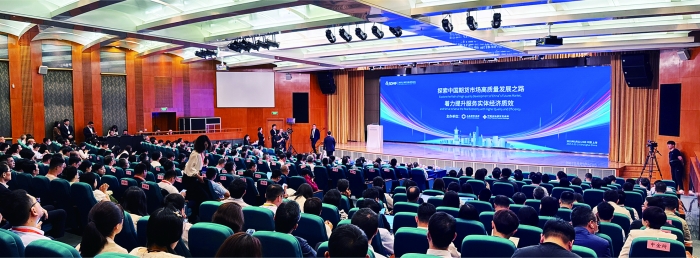
扩大“中国价格”影响力 期货市场深化对外开放
Zhong Guo Chan Ye Jing Ji Xin Xi Wang· 2025-05-03 22:48
Group 1 - The recent policy document emphasizes the opening of the futures market, focusing on specific domestic futures products, which is expected to enhance market development and attract more domestic and foreign investors [1] - The current global commodity pricing power is dominated by Western markets, and there is a pressing need for China to enhance its influence in the international commodity futures market to stabilize its supply chain and promote high-quality economic development [2][3] - The authorization of domestic futures product settlement prices to foreign exchanges is seen as a way to increase the international dissemination and influence of Chinese futures prices, making "Chinese prices" a significant reference in global commodity trade [2] Group 2 - The diversification of the futures market is anticipated to improve its competitiveness, transparency, and stability, necessitating a gradual exploration of suitable opening paths based on market conditions and investor needs [3] - The China Securities Regulatory Commission has been steadily promoting the opening of the futures market, with plans to expand the range of tradable products for qualified foreign institutional investors, increasing the number of futures and options products available [4] - The number of effective foreign clients in China's futures market has seen a 17% year-on-year increase, while the participation of foreign clients in trading has also grown, with a 28% increase in their positions [4] Group 3 - The opening of the futures market is directly related to China's financial market competitiveness and influence, with expectations that it will attract more international capital and promote the prosperity of the domestic financial market [5] - The increasing diversity of opening paths for the futures market is expected to broaden its service scope for the national economy and enhance the influence of "Chinese prices" in international markets [5]
中共中央、国务院:有序扩大金融开放,推进以境内期货特定品种为主的期货市场开放
news flash· 2025-04-21 09:19
Core Viewpoint - The document outlines the strategic opinions of the Central Committee of the Communist Party of China and the State Council on enhancing the Free Trade Zone, focusing on improving data flow, transportation services, and financial openness [1] Group 1: Data Flow and Market Rules - The strategy emphasizes promoting efficient, convenient, and secure data flow, establishing comprehensive market rules for data elements, and enhancing the facilitation of cross-border data movement [1] Group 2: Transportation and Logistics - The plan includes constructing efficient and open transportation channels, improving shipping service levels, and strengthening land and air transport capabilities [1] - It allows for the blending and mixing of high and low sulfur fuel oil under different tax codes through bonded logistics [1] - Liquefied natural gas is permitted to enjoy bonded policies as fuel for international navigation vessels [1] Group 3: Financial Sector Innovation - The strategy aims to deepen financial sector openness and innovation, promoting financial services for the real economy and gradually expanding financial openness [1] - It supports pilot programs for multinational companies' integrated currency pools and qualified foreign limited partner trials in designated Free Trade Zones [1] - The plan encourages the opening of the futures market, focusing on specific domestic futures products and exploring diverse paths for settlement price authorization [1] Group 4: Talent Policy - The document calls for the implementation of more proactive and effective talent policies, innovating talent cultivation and utilization mechanisms, and facilitating personnel exchanges [1]