
权钱交易

Search documents
在隐蔽场所吃喝,项目有油水就捞,唐仁健贪腐细节曝光
Yang Shi Xin Wen· 2026-01-11 14:04
李勇是北京的一名古玩商,认识唐仁健后发现他酷爱古玩,就从此入手,经常邀请他一起到古玩市场鉴 宝、捡漏,不时送上几件藏品,逐渐成为唐仁健的心腹密友。 唐仁健每到一地任职,李勇就跟到当地租一套房,作为方便他吃喝聚会的私密场所。表面上两人结交是 出于共同的"高雅爱好",其实双方各取所需。 2025年9月,经法院一审公开宣判,以受贿罪判处唐仁健死刑,缓期两年执行,剥夺政治权利终身,并 处没收个人全部财产。 由中央纪委国家监委宣传部与中央广播电视总台央视联合摄制的电视专题片《一步不停歇 半步不退 让》,1月11日晚播出第一集《纠风治乱为民》。 党的作风就是党的形象,关系人心向背,关系党的生死存亡。风腐交织是现阶段党风廉政建设和反腐败 斗争要着力解决的突出问题。 唐仁健,农业农村部原党组书记、部长,曾任广西壮族自治区党委常委、政府副主席,甘肃省委副书 记、省长。2024年5月,接受中央纪委国家监委纪律审查和监察调查。他的违纪违法轨迹,极其典型地 呈现出由风及腐、风腐交织的特点。 借"高雅爱好"掩盖权钱交易 商人成了他的"钱袋子" 唐仁健长期痴迷于奢靡享乐,爱热闹、讲排场、图享受,经常和各色人员混在一起吃喝玩乐,即便在党 ...
中纪委专题片剖析唐仁健案:酷爱古玩,古玩商成其“白手套”
Xin Lang Cai Jing· 2026-01-11 13:08
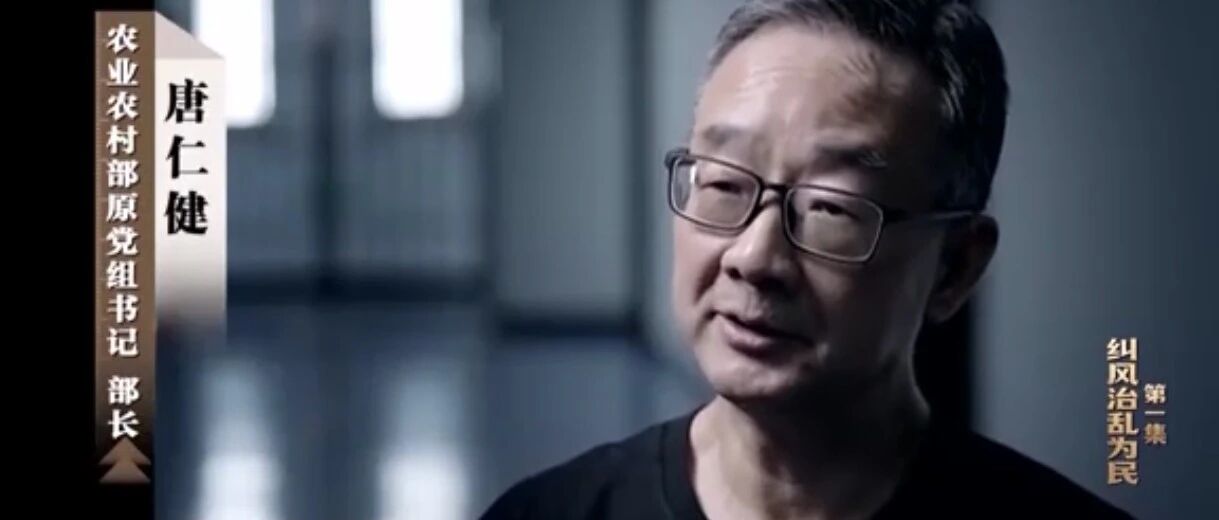
1月11日,电视专题片《一步不停歇 半步不退让》第一集《纠风治乱为民》在总台央视综合频道晚8点 档播出,央视新闻新媒体平台同步播发。 专题片第一集《纠风治乱为民》讲述纪检监察机关不断加大风腐同查同治力度,锲而不舍落实中央八项 规定精神,严肃查处违规吃喝背后的团团伙伙、请托办事和利益输送,集中整治群众身边不正之风和腐 败问题,让群众真切感到正风反腐加力度、清风正气在身边。 第一集中,农业农村部原党组书记、部长唐仁健亮相忏悔。 专题片介绍,党的作风就是党的形象,关系人心向背,关系党的生死存亡。风腐交织是现阶段党风廉政 建设和反腐败斗争要着力解决的突出问题。要坚持正风肃纪反腐相贯通,深入推进风腐同查同治, 以"同查"严惩风腐交织问题,以"同治"铲除风腐共性根源,以"查""治"贯通阻断风腐演变。 李勇是北京一名古玩商,认识唐仁健后发现他酷爱古玩,就从此入手,经常邀请他一起到古玩市场鉴 宝、捡漏,不时送上几件藏品,逐渐成为唐仁健的心腹密友。唐仁健每到一地任职,李勇就跟到当地租 一套房,作为方便他吃喝聚会的私密场所。表面上两人结交是出于共同的"高雅爱好",但其实,双方都 各取所需。 农业农村部原党组书记、部长唐仁健:自己 ...
在隐蔽场所吃喝,项目有油水就捞,唐仁健贪腐细节曝光
21世纪经济报道· 2026-01-11 13:04
由中央纪委国家监委宣传部与中央广播电视总台央视联合摄制的电视专题片《一步不停歇 半 步不退让》,1月11日在总台央视综合频道晚8点档播出第一集《纠风治乱为民》,央视新闻新 媒体平台同步播发。 党的作风就是党的形象,关系人心向背,关系党的生死存亡。风腐交织是现阶段党风廉政建设 和反腐败斗争要着力解决的突出问题。要坚持正风肃纪反腐相贯通,深入推进风腐同查同治, 以"同查"严惩风腐交织问题,以"同治"铲除风腐共性根源,以"查""治"贯通阻断风腐演变。 农业农村部原党组书记、部长 唐仁健: 自己的教训,一定对中央的这些要求,这些纪律和规 矩,要真当回事,真不要侥幸,但现在都成为悔之晚矣的事情。 唐仁健,农业农村部原党组书记、部长,曾任广西壮族自治区党委常委、政府副主席,甘肃省 委副书记、省长。2024年5月,接受中央纪委国家监委纪律审查和监察调查。他的违纪违法轨 迹,极其典型地呈现出由风及腐、风腐交织的特点。 中央纪委国家监委第八监督检查室副主任 周典: 唐仁健案的行贿人主要来自于唐仁健的日常 吃喝玩乐圈,许多请托事项和利益输送的约定都是在酒桌上和牌桌上完成的,唐仁健的问题也 是腐败问题和作风问题相伴相生、相互传染的 ...

“借钱”作幌“投资”为名,一大型超市高管受贿逾700万落网
Xin Jing Bao· 2025-11-21 07:09
Core Viewpoint - A significant bribery case involving a senior executive of a large chain supermarket in Shanghai has been uncovered, revealing a scheme where the executive solicited substantial "loans" from suppliers, amounting to over 7 million yuan, disguised as friendly financial transactions [1][2]. Group 1: Case Details - The investigation began after numerous anonymous complaints targeted the supermarket's East China operations head, who was found to have intervened in bidding processes for personal gain [1]. - The executive, identified as Guan, requested over 3 million yuan from a logistics supplier during a critical contract renewal period, without any formal loan agreements, which indicated a clear violation of normal lending practices [1]. - Guan's actions were characterized as a form of "buying road money" to secure business opportunities, as he promised continued business in exchange for the funds [1]. Group 2: Background and Methodology - Prior to his promotion, Guan had established a relationship with the supplier, who initially used gifts to gain favor, which escalated into blatant bribery over time [1]. - The investigation revealed that Guan regularly solicited funds under various pretexts, accumulating a total of over 7 million yuan from the supplier by the time of the case's exposure [1][2]. Group 3: Legal Consequences - Guan has been arrested for accepting bribes, while the supplier has been charged with bribing a non-state worker, and an accomplice has been implicated for concealing the illicit funds [2]. - Authorities emphasized that such internal corruption not only harms corporate interests but also undermines fair market competition, urging companies to strengthen internal controls to combat corruption [2].
“电老虎”寇伟,被公诉!
中国基金报· 2025-11-14 04:30
Core Viewpoint - The article discusses the prosecution of Kou Wei, former Deputy Secretary of the Party Committee and General Manager of China Datang Group, for multiple charges including embezzlement and abuse of power, highlighting significant corruption issues within state-owned enterprises in China [2][4][6]. Group 1: Prosecution Details - Kou Wei has been formally charged with embezzlement, abuse of power as a state-owned enterprise employee, bribery, and using influence to accept bribes [4][6]. - The charges stem from his positions in various companies, where he allegedly misappropriated public funds and caused significant losses to national interests [6][9]. - The case has been transferred to the Inner Mongolia Intermediate People's Court for prosecution [5]. Group 2: Background Information - Kou Wei, born in October 1961, has held several key positions in the energy sector, including roles at China Huaneng Group and State Grid Corporation of China [7][9]. - He served as General Manager and Deputy Secretary of the Party Committee at China Datang Group from January 2020 until his retirement in May 2022 [9]. - Following his investigation, he was expelled from the Party and had his benefits revoked due to serious violations of discipline and law [9]. Group 3: Impact on China Datang Group - The case has raised concerns about the integrity of China Datang Group, a major state-owned energy enterprise with a registered capital of 37 billion yuan and a power generation capacity exceeding 200 million kilowatts by the end of 2024 [10][11]. - The company has faced scrutiny as multiple individuals within its ranks have been investigated for corruption this year, indicating a broader issue of governance within the organization [9].
被特朗普赦免的赵长鹏啥来头 个人财富6000亿 其四川情人何一更传奇
Sou Hu Cai Jing· 2025-10-24 23:43
Core Viewpoint - Zhao Changpeng, once a prominent figure in the cryptocurrency world, has returned to prominence through a controversial pardon from Trump, highlighting the murky intersection of money and power in the crypto industry [1][43][49] Group 1: Zhao Changpeng's Journey - Zhao Changpeng's rise began with significant personal risk, selling his assets to invest in Bitcoin, which he later leveraged to become a major player in the crypto market [3][7][9] - His founding of Binance in 2017, which raised $15 million through token issuance, was marked by aggressive strategies that prioritized user acquisition over regulatory compliance [13][15] - Despite reaching a net worth of nearly $100 billion during the Bitcoin boom in 2021, his wealth was built on practices that led to Binance being labeled a "money laundering tool" [18][20] Group 2: Legal Troubles and Pardon - In 2023, Zhao faced serious legal challenges from the U.S. SEC, resulting in a $55 million personal fine and a four-month prison sentence, while Binance was fined $4.3 billion [20][22] - Following his release, Zhao relocated Binance to the UAE, continuing operations in a regulatory gray area [22][49] - Trump's pardon is viewed as a transaction of mutual benefit, with Zhao allegedly providing financial support to Trump's family business in exchange for his release [46][49] Group 3: He Yi's Role - He Yi, a key figure in Zhao's success, transitioned from various jobs to become a co-founder of Binance, leveraging her marketing skills to significantly grow the platform's user base [25][29][37] - After Zhao's imprisonment, He Yi took charge, implementing strategies that increased Binance's user count by one million, demonstrating her capability in crisis management [38][40] - Their relationship is characterized by mutual benefit, with He Yi gaining power and influence while Zhao relies on her marketing prowess to stabilize Binance [35][37] Group 4: Industry Implications - The events surrounding Zhao and He Yi reflect broader issues within the cryptocurrency industry, including regulatory challenges and the potential for exploitation of legal loopholes [1][49] - The partnership between Zhao and Trump underscores the intertwining of politics and business in the crypto space, raising questions about the integrity of regulatory frameworks [43][46] - The reliance on gray market practices and political connections poses risks for the sustainability of their business model, suggesting that future regulatory actions could have severe consequences [51]
以明显高于市场的价格向请托人出租房屋如何定性
Zhong Yang Ji Wei Guo Jia Jian Wei Wang Zhan· 2025-09-24 01:29
Group 1 - The case involves a public official, Ding, who is accused of accepting bribes through a rental agreement that exceeded market prices, raising questions about the legality of his actions [1][2] - There are two main viewpoints regarding Ding's potential bribery: one argues that the rental agreement was a legitimate market transaction, while the other contends that Ding's knowledge of the request for favor constitutes bribery [2][3] - The essence of bribery is characterized by the exchange of power for benefits, and Ding's actions are scrutinized based on whether he used his official position to benefit another party [2][4] Group 2 - Ding's role in the public sector involved responsibilities related to external publicity, which connects him to the request made by Wang for business favors [3][4] - The rental agreement between Liu and Wang, which involved a payment significantly above market rates, is viewed as a means for Wang to curry favor with Ding, indicating a potential quid pro quo arrangement [6][7] - The legal framework suggests that both Ding and Liu may be considered co-conspirators in the bribery scheme, as Liu was aware of the inflated rental price and the implications of the arrangement [7]
穿透租赁表象识别受贿本质
Zhong Yang Ji Wei Guo Jia Jian Wei Wang Zhan· 2025-08-27 01:34
Core Viewpoint - The case illustrates a hidden bribery scheme disguised as a rental agreement, where the essence of the transaction is a quid pro quo relationship between a government official and a construction company owner [1][3]. Group 1: Case Details - The case involves a government official (甲) and a construction company owner (乙), where甲 used his position to assist乙 in municipal projects, leading to a rental agreement for a shop that乙 never intended to use [2]. -甲 purchased a shop in 2019 and later proposed that乙 rent it, despite乙's acknowledgment of the shop's poor location and lack of demand [2]. - The rental agreement was structured to appear legitimate, with甲 receiving a total of 384,000 yuan over four years, despite乙's company never actually using the shop [2][5]. Group 2: Legal Perspectives - There are three differing opinions on the nature of甲's actions: one views it as a legitimate civil transaction, another suggests it should be evaluated against market rental prices, while the third argues it is a clear case of bribery disguised as a rental agreement [3][4]. - The third viewpoint is supported by evidence that both parties were aware of the lack of genuine rental intent, indicating that the rental payments were essentially bribes for甲's official assistance [4][5]. Group 3: Conclusion on Bribery - The actions of甲 meet the criteria for bribery, as he knowingly exploited his position to benefit乙, who had no real need for the rental, thus confirming the transaction as a means of transferring benefits [5][6]. - The total amount received by甲 should be considered as the full bribe amount, as the rental payments were not based on a legitimate rental relationship but rather a facade for the exchange of favors [6].
“靠金融吃金融”敛财逾八千万,67岁农行原副行长被判无期
Nan Fang Du Shi Bao· 2025-08-26 00:09
Core Points - Former Vice President of Agricultural Bank of China, Lou Wenlong, was sentenced to life imprisonment for bribery, with the court confirming he accepted over 84.51 million yuan in bribes [1][6][7] - Lou's career spanned various roles in the financial regulatory system, including positions at the People's Bank of China and the China Banking Regulatory Commission before becoming Vice President of Agricultural Bank of China [2][3] - The investigation into Lou began following a routine inspection by the Central Inspection Team, leading to his arrest and subsequent expulsion from the Party [3][4][6] Company and Industry Summary - Lou Wenlong utilized his positions to facilitate regulatory approvals and financial transactions for others, receiving substantial illegal benefits in return [6][7] - The court highlighted that Lou's actions caused significant losses to the state and public interests, categorizing his bribery as particularly severe [7] - Lou is the fifth high-profile financial executive sentenced this year for corruption, indicating a broader crackdown on financial misconduct within the industry [7][8]

转任新职前收钱待履新后谋利构成受贿
Zhong Yang Ji Wei Guo Jia Jian Wei Wang Zhan· 2025-08-20 00:38
Core Viewpoint - The article discusses the evolving nature of bribery, highlighting a case where a public official accepted a bribe before assuming a new position, leading to a complex relationship between the act of receiving money and the subsequent provision of benefits [1][2][3]. Group 1: Case Analysis - The case involves Wang, a deputy mayor, and Zhang, a construction company owner, where Zhang gave Wang 300,000 yuan before Wang took office as the mayor of E Town, expecting Wang to facilitate business opportunities for him [1][2]. - There are two interpretations regarding the nature of Wang's acceptance of the bribe: one argues that there was no administrative relationship at the time of receiving the money, while the other asserts that Wang's actions constitute bribery due to the subsequent benefits provided to Zhang [2][4]. - The article supports the view that Wang's actions represent a clear case of bribery, as he accepted the money with the intent to provide benefits once in his new role [3][5]. Group 2: Legal Framework - The legal definition of bribery involves a quid pro quo relationship, where the acceptance of money is linked to the provision of benefits through the abuse of official power [4][6]. - The article emphasizes that the timing of the actions (receiving money before taking office and providing benefits after) does not negate the existence of a bribery relationship, as long as there is a substantive connection between the two actions [6][7]. - It concludes that Wang's acceptance of the bribe and subsequent actions to benefit Zhang are interconnected, thus fulfilling the criteria for bribery under the law [5][7].