科研成果转化

Search documents
国家科技创新中心,高新企业1.7万家总量倍增
Chang Jiang Ri Bao· 2025-12-27 03:09
Core Insights - Wuhan is emerging as a significant global innovation hub, with a rapid increase in high-tech enterprises and innovative achievements driven by application demand [1][2] - The city has seen a substantial rise in the number of academicians and high-tech enterprises, indicating a strong foundation for innovation [2][6] - A comprehensive innovation ecosystem is being established in Wuhan, integrating various resources and breaking traditional research barriers [3][4] Group 1: Innovation and Research Growth - The number of high-tech enterprises in Wuhan has surpassed 17,000, which is 2.72 times that of 2020, showcasing a robust growth trajectory [1] - Wuhan ranks fourth nationally in the number of academicians, with 91 academicians contributing to its talent pool, which is crucial for fostering innovation [2] - The city has been recognized as the 8th in the global "Nature Index - Research Cities" ranking, reflecting its status as a key innovation growth pole [2] Group 2: Infrastructure and Facilities - Wuhan has established 41 national key laboratories, leading the nation in terms of quantity, which serve as foundational engines for basic research [4] - The city is developing 10 large scientific facilities that will enable original innovations, including a pulsed strong magnetic field facility that can generate a magnetic field 2 million times stronger than Earth's [4][5] - The construction of the Han River National Laboratory is expected to attract over 2,000 high-end research talents and drive related industry investments exceeding 10 billion [5] Group 3: Commercialization and Application - The "Han Yuan 1" quantum computer, developed in Wuhan, has entered commercial application, securing over 40 million in orders, marking a significant step in the commercialization of quantum computing [7] - Collaborative efforts among hospitals, universities, and enterprises have led to the successful development of a multimodal imaging surgical robot, achieving a 100% success rate in surgeries [7] - Wuhan has established a nurturing ecosystem for over 500 enterprises across seven new sectors, supported by 210 municipal pilot platforms and 32 concept validation centers [8]
加速成果转化 广东数智眼科与视觉健康产业创新应用中心成立
Nan Fang Du Shi Bao· 2025-12-26 14:12
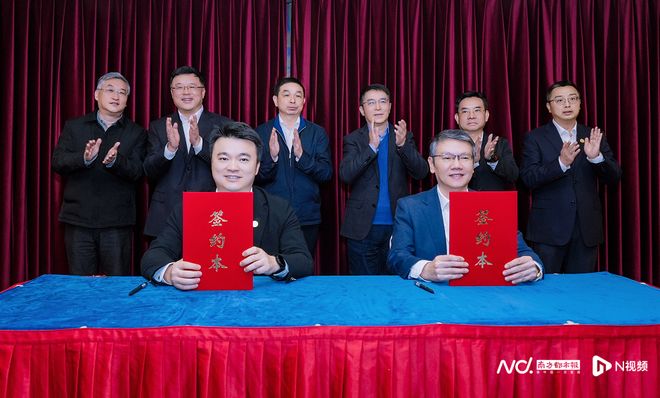
Core Viewpoint - The strategic cooperation between Sun Yat-sen University Zhongshan Ophthalmic Center and Guangdong Hengjian Investment Holdings aims to enhance technological innovation and industrial transformation in the ophthalmology field, establishing a high-level collaborative innovation platform. Group 1: Strategic Cooperation Details - A strategic cooperation framework agreement was signed between Sun Yat-sen University Zhongshan Ophthalmic Center and Guangdong Hengjian Investment Holdings [1][3] - The partnership will focus on five key areas: establishing the "Guangdong Smart Ophthalmology and Vision Health Industry Innovation Application Center," creating a technology research and transformation platform, exploring the establishment of an innovation joint fund, innovating the technology transfer mechanism, and promoting quality ophthalmic technology to rural areas [3][4] Group 2: Goals and Expectations - The cooperation aims to accelerate the development of new productive forces in the ophthalmology field by integrating clinical resources, research capabilities, and industrial capital [3] - The initiative is expected to enhance the success rate of scientific research results transformation and shorten the transformation cycle [4] - The collaboration will create a new mechanism for transforming research results by integrating six elements: government, industry, academia, research, application, and capital [4]

凤栖楚天 “博”创涌动
Xin Lang Cai Jing· 2025-12-24 20:49
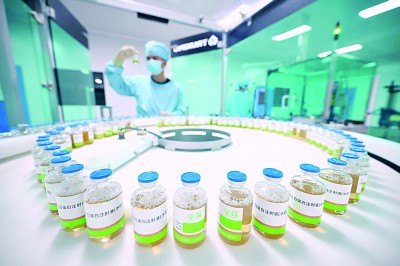
Core Viewpoint - Hubei province is actively promoting the development of postdoctoral talent through a comprehensive policy framework, significant financial investment, and the establishment of research platforms, aiming to enhance innovation and industrial application in key sectors. Group 1: Talent Development and Support - Hubei has implemented a "Postdoctoral Talent Doubling Plan," resulting in over 15,000 postdoctoral researchers trained and more than 5,000 currently active [6][10] - The provincial government has significantly increased funding for postdoctoral programs, from 3.84 million yuan in 2019 to an expected 300 million yuan in 2024, providing essential financial support for innovation [6][9] - Various support programs offer up to 1.5 million yuan for individual postdoctoral researchers, attracting talent from top global universities [6][10] Group 2: Research and Innovation Platforms - Hubei has established 468 research platforms for postdoctoral work, including 212 mobile stations and 145 workstations, covering all key industries and disciplines [8][10] - The province has created a "Postdoctoral Innovation Practice Base," the first of its kind in the country, to facilitate practical research and development [8][10] - The integration of postdoctoral researchers into the "Belt and Road" initiative has led to significant advancements in high-precision positioning technology and other fields [7][10] Group 3: Industry Collaboration and Results - The province's postdoctoral researchers have undertaken 19,500 research projects, resulting in 1,671 provincial and ministerial awards and over 3,000 published papers [10][11] - Hubei's "Postdoctoral Innovation and Entrepreneurship Competition" has attracted nearly 1,000 participants, with significant financial rewards and support for project commercialization [9][10] - Successful projects, such as the "algal-bacterial cooperative green microbial agent," have led to partnerships with local companies, demonstrating effective technology transfer [10][11] Group 4: Community and Living Conditions - Hubei has developed postdoctoral apartments that provide free housing and facilities, fostering a collaborative environment for research and innovation [7][10] - The living conditions include amenities like gyms and community gardens, enhancing the quality of life for postdoctoral researchers [7][10] - The integration of living and working spaces has created a vibrant community that encourages idea exchange and collaboration among researchers [7][10]
科研成果在这里“破茧成蝶”
Xin Lang Cai Jing· 2025-12-22 23:27
Core Viewpoint - Tianjin's Tiankai Higher Education Science and Technology Innovation Park is rapidly developing into a hub for scientific research and innovation, facilitating the transformation of research achievements into practical applications and fostering a vibrant entrepreneurial ecosystem [1][9]. Group 1: Development and Achievements - The Tiankai Park has registered over 1,000 companies from various universities within two years, becoming a "dream factory" for the transformation of research outcomes in Tianjin [1][13]. - The park focuses on five major services: government affairs, scientific innovation, finance, business, and knowledge, providing tailored support for startups and facilitating the commercialization of technology [2][13]. - The establishment of a financial support system, including the "Tiankai Science and Technology Innovation Board" and industry funds, aims to assist companies in achieving long-term growth [2]. Group 2: Collaboration and Innovation - The park encourages collaboration between universities and enterprises, allowing researchers to focus on development while easily connecting with industry partners [7][9]. - Notable projects include the development of a comprehensive "technology package" addressing agricultural challenges, showcasing the collaborative efforts of various stakeholders [8]. - The park has become a breeding ground for innovative technologies, such as the holographic imaging technology developed by a company founded by faculty from Nankai University [4]. Group 3: Educational Initiatives - Universities are actively reforming their technology transfer processes to facilitate quicker commercialization of research, exemplified by Tianjin University’s streamlined procedures [4]. - New educational programs, such as the "Technology Transfer Master's" and "Innovation and Entrepreneurship Academy," aim to cultivate talent with both research capabilities and entrepreneurial spirit [10][11]. - The Tianjin Municipal Education Commission is committed to enhancing innovation and entrepreneurship education, fostering a high-level professional technology service team [12].
刘馨:搭建细胞产业的“共享实验室”
Huan Qiu Wang Zi Xun· 2025-12-18 02:25
Core Insights - Liu Xin, a scientist from Yunnan, is dedicated to advancing the cell industry and transforming her respect for life into a driving force for innovation [2][3] Group 1: Background and Motivation - Liu Xin's childhood experiences with illness motivated her to pursue a career in medicine, leading her to study biochemistry and molecular biology at China Union Medical University [3] - After completing her PhD, she worked on vaccine development at the Chinese Academy of Medical Sciences and later studied in the United States, where she recognized the importance of translating research into practical applications [3][4] Group 2: Career Transition - In 2012, Liu Xin became an associate professor at Shanghai Jiao Tong University but felt a gap between basic research and practical application [4] - In 2014, she made the decision to leave academia for the industry to facilitate faster development and application of technology [4] - Inspired by the approval of a cell therapy for lymphoma in 2017, she decided to return to Yunnan to start a business focused on translating scientific research into practical solutions [4] Group 3: Entrepreneurship and Challenges - In 2018, Liu Xin co-founded Kunming Shiguangji Biological Technology Co., Ltd., facing challenges such as funding and talent acquisition [4][5] - The company started with a small team and gradually expanded to nearly 50 members by recruiting key personnel and training graduates [4][5] Group 4: Industry Development and Platform Building - Liu Xin identified common industry challenges such as long approval cycles and a lack of professional service platforms, leading her to establish a collaborative platform for the cell industry [5] - In 2019, her company partnered with a state-owned enterprise to create the Yunnan Cell Engineering Center, aiming to provide a one-stop service platform for the cell therapy sector [5] - The establishment of a testing center has significantly reduced costs and time for cell product testing, benefiting nearly 20 companies [5] Group 5: Talent and Future Vision - Liu Xin emphasizes the importance of talent in innovation, focusing on professional skills, practical spirit, and intrinsic motivation in her team [6] - The company aims to create an open, collaborative ecosystem among the 30+ enterprises in the park to lower innovation costs and foster synergy [6] - Liu Xin envisions developing the park into a leading international professional hub in Southwest China, leveraging Yunnan's unique biodiversity for innovative product development [6]
破解科研成果转化难题,安徽合肥这样做
Yang Shi Wang· 2025-12-13 17:09
Core Viewpoint - The Chinese government is promoting the development of new application scenarios as a key driver for enhancing productivity, with Hefei actively facilitating the connection between innovative products and suitable application scenarios [1]. Group 1: Government Initiatives - The State Council issued implementation opinions to accelerate the cultivation and large-scale application of new scenarios, positioning them as crucial for developing new productive forces [1]. - Hefei has established a "scene working group" to identify and match technological capabilities with market needs, creating a bridge between supply and demand [7]. Group 2: Transportation Innovations - Hefei's Metro Line 4 transports over 250,000 passengers daily, supported by an intelligent system that utilizes quantum precision measurement technology and fiber optics for safety monitoring [3]. - The intelligent system can detect anomalies and deploy drones for safety inspections, showcasing the integration of innovative technology in public transport [5]. Group 3: Collaboration and Support - Hefei's government has invested initial funding to support technology companies in finding application scenarios, facilitating collaboration with state-owned enterprises for research and development [5]. - The city has published over 1,400 scenario opportunities and 1,500 capability listings, serving more than 4,100 technology enterprises and facilitating over 1,200 cooperative projects [9].

中国同辐:附属与北师大签署氟[18F]贝他嗪一类创新核药专利转让协议及产学研项目合作协议
Zhi Tong Cai Jing· 2025-12-11 13:50
Core Viewpoint - China Tongfu (01763) announced a collaboration with Beijing Normal University to sign a patent transfer agreement and a cooperation agreement for the fluorine-18 labeled beta-amyloid imaging agent project, aimed at early diagnosis of Alzheimer's disease [1] Company Summary - The fluorine-18 labeled beta-amyloid imaging agent is a new drug developed by a team led by Professor Cui Mengchao from Beijing Normal University in collaboration with China Tongfu, possessing complete independent intellectual property rights [1] - The drug has shown significant improvement in clinical applications, demonstrating a notable reduction in non-specific uptake in brain white matter compared to similar products approved by the FDA [1] Industry Summary - The signing event marks a significant milestone in the collaboration between academia and industry, emphasizing the importance of transforming scientific research outcomes into national strategic productivity [1] - The nuclear medicine industry is currently experiencing a golden development period, with China Tongfu emerging as a core player in the field due to its deep industry experience and distinctive industrial characteristics [1] - Future collaborations will focus on accelerating the clinical transformation of core results and building a talent cultivation pathway, contributing to the global competition in new nuclear medicine technologies and supporting the high-quality development of China's nuclear medicine sector [1]
中国同辐(01763):附属与北师大签署氟[18F]贝他嗪一类创新核药专利转让协议及产学研项目合作协议
智通财经网· 2025-12-11 13:46
Core Viewpoint - The announcement highlights a significant collaboration between China Tongfu (01763) and Beijing Normal University, focusing on the patent transfer and academic-industry cooperation for the development of a new drug, Fluorine [F] Betazone, aimed at early diagnosis of Alzheimer's disease [1] Company Summary - China Tongfu's subsidiary, Atom High-Tech, signed a patent transfer agreement and an academic-industry cooperation agreement with Beijing Normal University on December 10, 2025 [1] - The Fluorine [F] Betazone project is a result of collaboration with Professor Cui Mengchao's team and is characterized by having complete independent intellectual property rights [1] - The drug shows significant improvement in clinical applications, demonstrating a notable reduction in non-specific uptake in brain white matter compared to similar products approved by the FDA [1] Industry Summary - The signing event represents a milestone in the collaboration between academia and industry, aimed at transforming scientific research outcomes into national strategic productivity [1] - The nuclear medicine industry is currently experiencing a golden development period, with Atom High-Tech positioned as a core player due to its deep industry experience and distinctive characteristics [1] - Future collaboration will focus on accelerating the clinical transformation of core results and building a talent cultivation pathway, contributing to global competition in new nuclear medicine technologies and supporting the high-quality development of China's nuclear medicine sector [1]
中国同辐(01763.HK)附属与北京师范大学签署氟[18F]贝他嗪一类创新核药专利转让协议及产学研项目合作协议
Ge Long Hui· 2025-12-11 13:42
Core Viewpoint - The announcement highlights a significant collaboration between Yuanzi Gaoke Co., Ltd. and Beijing Normal University, focusing on the development and commercialization of a new drug, Fluorine-18 Betazide, aimed at early diagnosis of Alzheimer's disease [1] Group 1: Collaboration and Agreements - Yuanzi Gaoke signed a patent transfer agreement and a collaborative research agreement with Beijing Normal University on December 10, 2025 [1] - The collaboration is a culmination of previous efforts and marks a critical starting point for transforming scientific research into national productive forces [1] Group 2: Product Development - Fluorine-18 Betazide is a new drug with complete independent intellectual property rights, developed by a team led by Professor Cui Mengchao from Beijing Normal University [1] - The drug has shown significant improvements in clinical applications, particularly in reducing non-specific uptake in brain white matter compared to similar products approved by the FDA [1] Group 3: Industry Context - The nuclear medicine industry is currently experiencing a golden development period, positioning Yuanzi Gaoke as a core player in the field due to its deep industry experience and distinctive characteristics [1] - The partnership aims to accelerate the clinical transformation of core results and build a talent cultivation pathway, contributing to the high-quality development of China's nuclear medicine sector [1]
规模超1800亿,2025年10月这些基金的GP被LP选中
母基金研究中心· 2025-11-16 08:52
Group 1 - The core viewpoint of the article highlights significant fundraising activities in October 2025, with a total of 9 fundraising events amounting to over 180 billion RMB [1] - Brookfield has successfully raised a total of 20 billion USD for its clean energy fund, surpassing its initial target and becoming the largest private fund focused on clean energy transition globally [2][3] - The Hong Kong University of Science and Technology and Gobi Partners have established a strategic fund aimed at nurturing early-stage startups incubated by the university, focusing on commercialization of cutting-edge research [4][6] Group 2 - CICC Hebei Steel Development Equity Investment Fund has been established with a total scale of 32 billion RMB, focusing on private equity investments [5][7] - The Fujian Cultural and Tourism Digital Innovation Fund has officially launched with a total scale of 30 billion RMB, aimed at supporting innovation in the cultural and tourism sectors [5][8] - Prologis has completed fundraising for its first new materials and new energy-themed fund, with a total scale of 5 billion RMB [5][9][10] Group 3 - Kangqiao Capital's R-Bridge Healthcare Fund II has raised 500 million USD, focusing on investments in the healthcare sector [5][11] - Shanghai Xinjucyuan Fund has signed agreements with several high-tech enterprises, with a total scale of 4.5 billion RMB, targeting advanced manufacturing and other cutting-edge fields [5][12][13] - The China-Portuguese Economic and Trade Development Fund has been established with a total scale of 1 billion RMB, focusing on enhancing economic cooperation between China and Portuguese-speaking countries [5][14][15] Group 4 - Jiangsu Yangzhou Aerospace Industry Special Mother Fund's third sub-fund has been successfully registered with a total scale of 5 billion RMB, leveraging public selection for management [5][16] - The fourth Davos Global Mother Fund Summit is scheduled for January 2026, aiming to facilitate dialogue among global fund industry leaders [5][18][20] - The 2025 Global Best Investment Institutions ranking has commenced, highlighting the importance of recognizing top investment entities [5][23]