稀土资源

Search documents
中国如何赢得芯片与稀土之争?
半导体芯闻· 2025-06-16 10:13
Core Viewpoint - The article discusses the escalating trade and technology conflict between the U.S. and China, particularly focusing on the strategic importance of rare earth elements and semiconductors in this rivalry [3][4][6]. Group 1: U.S.-China Trade Conflict - Following the first round of tariffs imposed by the U.S. in April, China began restricting export licenses, leading to warnings from U.S. manufacturers about potential production halts [2]. - The U.S. was caught off guard by China's control over rare earth elements, which are crucial for various technologies, including electric motors and military applications [3][5]. Group 2: Semiconductor Industry and Investments - Since mid-2019, leading Chinese chip manufacturers have invested $33.5 billion in capital expenditures and $4 billion in R&D, while Huawei reportedly spends approximately 180 billion yuan annually on R&D [4]. - The U.S. has invested only $439 million since early 2020 to establish a rare earth supply chain, highlighting a significant disparity in investment compared to China's extensive funding in the semiconductor sector [5]. Group 3: Future Implications and Military Concerns - The article suggests that the advancements in rare earth magnets could revolutionize mechanical power, making devices smaller, stronger, and more efficient, which could impact future warfare strategies [5]. - There are concerns that the U.S. military may find itself lacking critical minerals and batteries needed to counteract drone threats in future conflicts, emphasizing the risks of relying on foreign supply chains [6].

央企现代能源ETF(561790)盘中飘红,中国稀土领涨,机构建议关注上游稀土资源企业的供需边际好转
Sou Hu Cai Jing· 2025-06-16 05:31
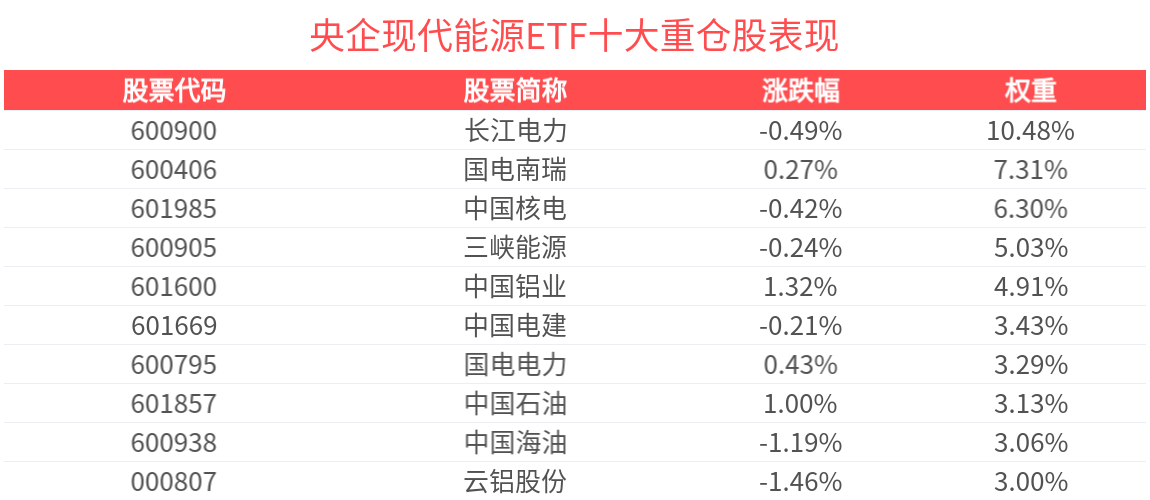
Core Viewpoint - The Central State-Owned Enterprises Modern Energy Index (932037) has shown mixed performance among its constituent stocks, with a slight overall decline of 0.11% as of June 16, 2025, while specific companies like China Rare Earth (000831) and China Aluminum (601600) experienced gains [1] Group 1: Index Performance - The Central State-Owned Enterprises Modern Energy ETF (561790) increased by 0.09%, with a latest price of 1.07 yuan and a turnover rate of 8.11%, amounting to 3.99 million yuan in trading volume [1] - The ETF's average daily trading volume over the past week was 6.88 million yuan, ranking it first among comparable funds [1] Group 2: Investment Recommendations - Xiangcai Securities suggests focusing on upstream rare earth resource companies due to improved supply-demand dynamics, driven by expectations of supply contraction and relaxed export controls [1] - The Ministry of Commerce has approved a certain quantity of rare earth-related export applications, indicating potential short-term benefits for companies in the magnetic materials sector [1] Group 3: ETF Performance Metrics - The latest size of the Central State-Owned Enterprises Modern Energy ETF reached 49.28 million yuan, marking a one-month high [2] - Since its inception, the ETF has achieved a maximum monthly return of 10.03% and a longest consecutive monthly gain of 7 months, with an overall annualized return of 100% [2] - The ETF's maximum drawdown this year was 7.91%, with a management fee of 0.50% and a custody fee of 0.10%, the lowest among comparable funds [2] Group 4: Top Holdings - As of May 30, 2025, the top ten weighted stocks in the Central State-Owned Enterprises Modern Energy Index accounted for 51.1% of the index, with Longjiang Power (600900) being the largest at 10.48% [3][5]

中美谈判期间,美国施压泽连斯基:不能让中国进入稀土市场
Sou Hu Cai Jing· 2025-06-12 00:38
Core Viewpoint - The ongoing negotiations between the US and China regarding rare earth resources highlight the strategic importance of these materials, with the US seeking to alleviate its dependence on China while facing challenges in securing alternative sources [1][3][5]. Group 1: US-China Negotiations - The US has proposed a "three-for-one" trade deal involving rare earths in exchange for lifting restrictions on key technologies, but the specifics of the concessions remain vague and lack strategic value for China [3][5]. - The US is attempting to pressure China into relaxing its export controls on rare earths, but China is unlikely to make concessions without substantial and genuine US commitments [1][3]. Group 2: Rare Earths Dependency - The US military heavily relies on Chinese rare earths, with over 80% of the heavy rare earths needed for advanced military technologies sourced from China [5]. - Despite attempts to source rare earths from other countries, the US has found that the refining process remains dependent on Chinese technology, which is significantly advanced [5][11]. Group 3: Ukraine's Role - The US is trying to prevent China from entering the Ukrainian rare earth market, believing that Ukraine's resources could be a potential lifeline for the US [7][8]. - However, Ukraine's high-quality mineral resources are largely in Russian-controlled areas, limiting the potential for US access to these resources [8][10]. Group 4: China's Position - China has developed a self-sufficient rare earth industry and does not require Ukrainian resources, as it has established partnerships in Africa and Southeast Asia for rare earth projects [11][13]. - The geopolitical instability in Ukraine increases investment risks, making China's existing partnerships in more stable regions more attractive [11][13].
一切都是为了稀土,美媒透露:中国限制稀土出口
Sou Hu Cai Jing· 2025-06-08 08:50
Group 1 - The core issue revolves around the U.S.-China relationship, particularly regarding the trade tensions and the critical role of rare earth elements in this dynamic [1][2][4] - The U.S. is facing significant pressure from China, especially concerning the supply of rare earths, which are essential for various industries, including automotive manufacturing [1][4] - China's control over rare earth resources is seen as a strategic advantage, with reports indicating that 90% of the world's rare earth production comes from China, highlighting the potential impact on global high-tech industries if supply is restricted [4][6] Group 2 - The U.S. government's recent actions, such as banning the use of Huawei's Ascend chips, reflect a rapid shift in policy that complicates the negotiation landscape with China [2][6] - There is a clear indication that China is not inclined to reconcile with the U.S., as evidenced by its strict control over rare earth exports and the U.S.'s simultaneous restrictions on technology exports to China [6][7] - For meaningful dialogue to occur, the U.S. must cease its pressure tactics on issues that are core to China's interests, such as military presence in the South China Sea and Taiwan, to demonstrate genuine intent for negotiation [7]
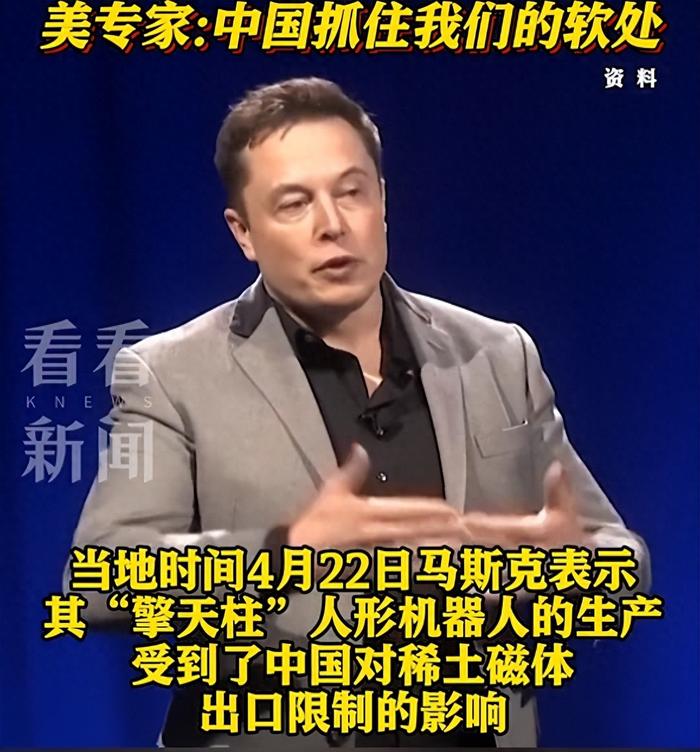
中美只能二选一,马斯克急着与特朗普划清界限,想让中国松一次口
Xin Lang Cai Jing· 2025-05-07 01:24
Group 1 - Tesla's market value has plummeted by 700 billion, largely due to rising component costs from Trump's tariffs, which have increased costs by 5,000 dollars per unit [1] - Tesla heavily relies on the Chinese market, with 40% of its production capacity located in China, creating a dilemma amid US-China tensions [1] - Musk is attempting to distance himself from Trump, possibly seeking leniency from China during this critical period [1] Group 2 - China dominates the global rare earth market, producing over 70% of the world's supply, which is crucial for modern technology [6][22] - The US faces significant challenges due to its reliance on rare earths, with potential shortages threatening production capabilities for companies like Tesla [8][21] - The shortage of rare earths could lead to production delays for Tesla's humanoid robot project, "Optimus," which relies on rare earth permanent magnet materials [11][14] Group 3 - The increase in component costs due to tariffs has severely impacted Tesla's global competitiveness, causing market panic and stock volatility [26] - Tesla's stock price dropped over 10% on April 4, resulting in a loss of 31 billion dollars in Musk's net worth in a single day, totaling 130 billion dollars in losses for the year [28] - Despite reassurances from the Chinese government regarding the protection of foreign investments, tariff issues remain a significant obstacle for Tesla [30][32] Group 4 - Musk's brother, Kimbal Musk, criticized Trump's tariff policies, suggesting they may have short-term benefits but ultimately burden consumers [33] - Trump has firmly stated he will not alter his "reciprocal tariffs" policy, insisting on a tougher trade stance for the US [35]

2025年全球稀土行业发展现状分析:储量有所下滑,产量不断增长
Qian Zhan Wang· 2025-04-27 09:27
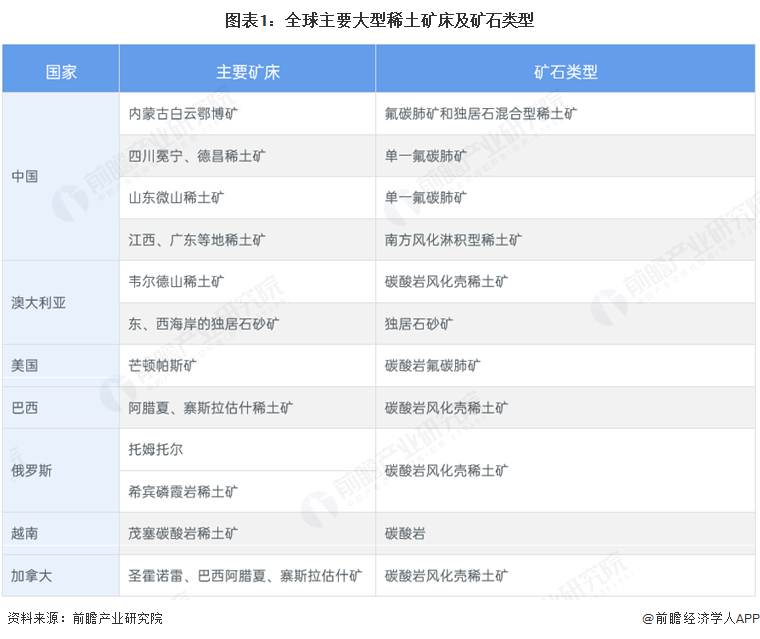
转自:前瞻产业研究院 行业主要上市公司:北方稀土(600111);中国稀土(000831);广晟有色(600259);厦门钨业(600549);中科三环 (000970);英洛华(000795)等 本文核心数据:全球稀土储量;全球稀土产量 全球主要大型稀土矿床及矿石类型 经过半个多世纪的超强度开采,中国稀土储量下降明显。除中国外,美国、澳大利亚、俄罗斯、巴西、加拿 大、印度等国的稀土资源也较为丰富。近年来,在越南也发现了大型稀土矿床。非洲大陆也蕴藏着丰富的稀 土资源。目前,全球大约有30多个国家和地方发现了稀土资源或从事稀土生产,主要稀土资源国中有一批大 型或以超大型稀土矿床。 全球稀土储量下滑,中国为最大稀土资源国 据美国地质调查局(USGS)数据,2024,全球已探明稀土资源储量0.9亿吨,已连续两年出现较大的下滑。 全球稀土资源部分不均,高度集中在中国、越南、巴西和俄罗斯四大国家。根据最新美国地质调查局 (USGS)数据显示,截至2024年末,全球已探明稀土资源储量9000万吨,其中,中国稀土资源储量4400万 吨,是世界最大稀土资源国;巴西稀土储量位列第二,为2100万吨;其次是印度和澳大利亚,稀土资 ...