
绿色储粮

Search documents
年中经济观察丨粮食住进“好房子” “油瓶子”工厂迎来“数字工友”
Zhong Guo Xin Wen Wang· 2025-07-27 06:47
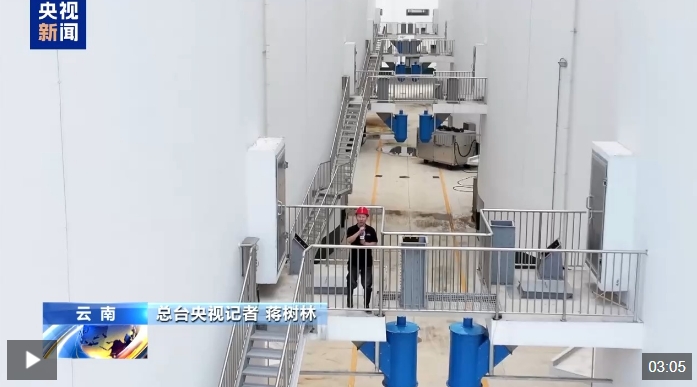
Group 1 - The core viewpoint of the article highlights the importance of technological advancements in grain storage and processing, ensuring food security and quality for the population [1][8] - In the first half of the year, China's primary industry added value reached 31,172 billion yuan, with a year-on-year growth of 3.7%, supported by stable summer grain production [1] - The National Food and Strategic Reserves Administration reports that summer grain procurement is at its peak, emphasizing the need for effective grain storage and management [1][3] Group 2 - The Kunming Direct Grain Storage Facility utilizes advanced technology, including a micro weather station that monitors temperature and humidity, crucial for grain safety [3][4] - The facility employs a digital twin system for efficient management, allowing for quick inspections and monitoring of grain storage conditions [3][4] - The storage strategy includes a grid management system with 420 temperature sensors in a single warehouse, enabling rapid identification of any issues [4] Group 3 - The article discusses the modernization of grain storage, comparing it to preserving vegetables in a refrigerator, ensuring the quality of stored grains [5] - The Central Reserve Grain Management requires regular rotation of stored grains to maintain quality, with specific timelines for different types of grains [5] Group 4 - The article transitions to the edible oil industry, showcasing the automation and smart technology in the COFCO Guangdong Industrial Park, which processed over 750,000 tons of soybeans in the first half of the year [6][8] - The facility features an automated production line and intelligent robots, enhancing operational efficiency and reducing manual labor [6][7] - The logistics system includes a digital warehouse management system that ensures real-time inventory monitoring and order matching [7] Group 5 - The promotion of high-quality grain projects aims to improve the quality of food available to consumers, with 273 demonstration planting bases established by mid-year [8][9] - Over 5,500 post-harvest service centers have been built, ensuring comprehensive service coverage in major grain-producing counties [10] - The implementation of 1,057 grain industry upgrade projects and the promotion of 33,000 sets of grain machinery equipment are key initiatives to enhance processing capabilities [11][12] - The National Food and Strategic Reserves Administration plans to further advance high-quality grain projects to ensure nutritious food supply for the public [13]

多措并举保障夏粮市场购销活跃、节粮减损 绿色科技筑牢大国粮仓根基
Yang Shi Wang· 2025-07-04 03:03
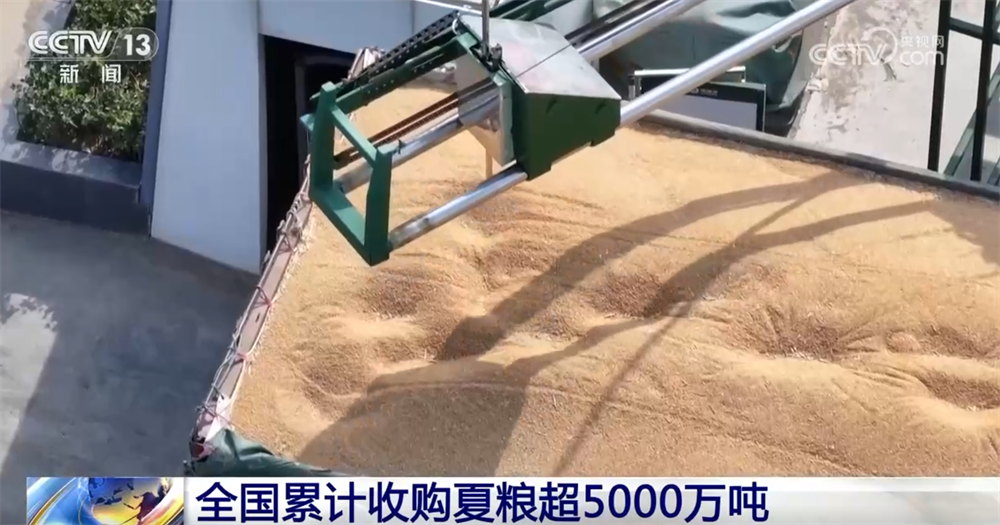
Core Viewpoint - The summer grain purchase in China has reached a peak, with over 50 million tons collected so far, highlighting new characteristics in the market and the impact of weather conditions on grain production and pricing [1][3]. Group 1: Grain Purchase and Pricing - The implementation of the minimum purchase price policy for wheat continues in major production areas, with approximately 1.8 million tons of wheat being purchased under this policy, effectively meeting farmers' selling needs [3]. - The expansion of the minimum purchase price collection range has strengthened the bottom support for domestic wheat prices, leading to increased market activity [3]. Group 2: Logistics and Storage Solutions - To address post-harvest storage, transportation, and sales issues, the China Supply and Marketing Cooperative has initiated collection and transfer operations in several provinces, utilizing 12 docks and logistics bases [5]. - The Zhengzhou Railway Bureau has developed a comprehensive logistics plan to minimize transportation losses, promoting bulk grain transport to provide high-quality service for summer grain transportation [9]. Group 3: Technological Innovations in Grain Storage - The National Grain and Material Reserve Bureau aims to establish a "five-in-one" green storage technology system, with plans to create 100 demonstration sites for green storage technology within three years [12][18]. - The introduction of advanced technologies, such as the wheeled grain suction machine, is expected to enhance the efficiency of grain storage and reduce losses during the storage phase [14][16]. Group 4: Support for Farmers - Various departments are optimizing services to assist in grain conservation and loss reduction, ensuring that farmers can sell their grain confidently [11]. - The establishment of intelligent drying towers and processing workshops by grain cooperatives, supported by local postal savings departments, has improved grain drying efficiency and reduced spoilage [8].
“绿色储粮”新方向 大国粮仓焕发“智能体”数字生命力
Yang Shi Xin Wen Ke Hu Duan· 2025-06-27 08:07
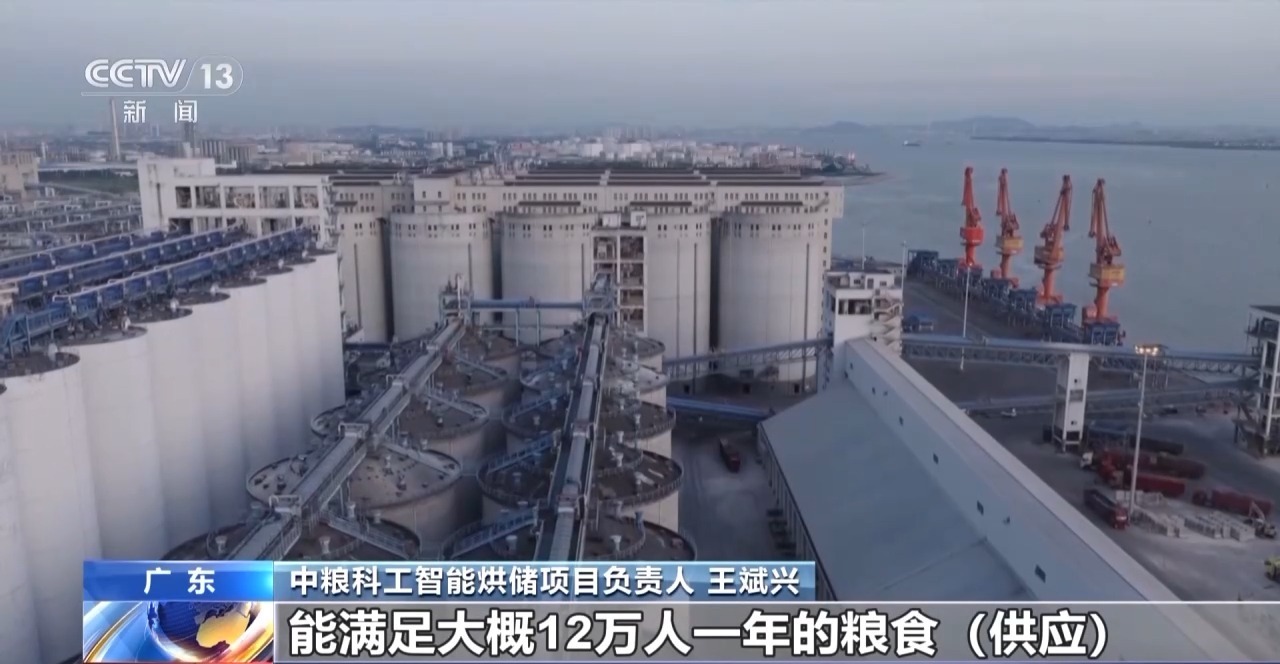
Core Viewpoint - The article highlights the advancements in grain logistics and storage in the Guangdong-Hong Kong-Macao Greater Bay Area, particularly in Dongguan, showcasing the integration of technology in enhancing efficiency and management in grain supply chains [1][9]. Group 1: Grain Logistics and Processing - The summer grain harvest and procurement have commenced, with a significant portion of the grain entering logistics and processing stages [1]. - Dongguan's Shenchiwang Port features specialized grain terminals capable of unloading up to 4,000 tons per hour, facilitating efficient grain supply [3]. - The grain hub spans over 350 acres, equivalent to 33 standard football fields, and utilizes modern technology for remote monitoring and management [4]. Group 2: Technological Integration - The grain hub employs a digital control center that manages over a thousand devices, optimizing grain flow and minimizing traffic congestion [6]. - Real-time monitoring and digital twin technology are utilized to enhance operational efficiency, allowing for precise management of grain storage conditions [8][11]. - Each batch of grain has a dedicated digital record, enabling quality monitoring and traceability throughout the storage process [15]. Group 3: Agricultural Support and Community Engagement - The Greater Bay Area has established 11 standardized supply farms and 4 service stations, connecting over 30,000 farming households through an "order agriculture + full-service" model [9][17]. - The region is developing a comprehensive grain industry chain service that includes order procurement, drying, processing, and storage, fostering closer ties with local farmers [17]. Group 4: Green Storage Initiatives - China has identified seven ecological zones for grain storage, promoting "green ecological storage" as a mainstream direction for modern grain management [18][20]. - The southern ecological zone faces challenges due to high temperatures and humidity, necessitating advanced monitoring and pest control technologies [22]. - Innovative biological pest control methods, such as the use of predatory mites, are being implemented to manage grain pests without introducing new ecological threats [26][28].
粮食住进“好房子”
Jing Ji Ri Bao· 2025-06-15 22:02
Core Viewpoint - The development of modern grain storage facilities in China is significantly influenced by technological advancements, aiming to enhance grain storage capacity, safety, and quality to meet consumer demands and ensure national food security [1][4]. Group 1: Technological Innovations in Grain Storage - The National Grain and Material Reserve Bureau has introduced innovative technologies such as smart green storage systems, pest monitoring, and intelligent sampling systems to support modern grain storage [1][2]. - New types of grain storage facilities, such as the 9000-ton membrane silos, are being constructed, showcasing improved insulation, airtightness, and water resistance, marking a new phase in modern grain storage [2][3]. - The integration of IoT, big data, and AI in grain management is transforming traditional practices into smart storage solutions, enhancing monitoring and operational efficiency [7][8]. Group 2: Green and Intelligent Storage Practices - The grain storage industry is undergoing a "green revolution," focusing on quality and safety through low-temperature storage, nitrogen gas treatment, and biological pest control methods [4][5]. - The establishment of 100 green storage technology demonstration sites across seven ecological zones aims to promote the application of advanced storage technologies [6]. - Intelligent monitoring systems and automated processes are being implemented to ensure real-time oversight and improve the efficiency of grain storage operations [9][10]. Group 3: Industry Impact and Future Outlook - The modernization of grain storage facilities is crucial for maintaining food security in China, with over 7 billion tons of standard storage capacity currently available [2][3]. - The shift towards intelligent and automated grain storage solutions is expected to enhance safety, efficiency, and overall management of grain resources in the future [10].
新粮“入住”绿色智慧粮仓 15分钟完成一车小麦入库
Zhen Jiang Ri Bao· 2025-06-14 23:18
Group 1 - The first high-standard green ecological grain storage facility in Jiangsu province has commenced efficient operations, with a daily grain storage capacity of 10,000 tons [1] - The facility is located in Danyang, a key grain-producing county in southern Jiangsu, which has an annual grain production of approximately 500,000 tons [1] - The construction of the facility's first phase, with a storage capacity of 154,600 tons, includes ten green ecological cylindrical grain silos [1] Group 2 - The implementation of a digital unloading system has significantly reduced the waiting time for grain farmers from 6 hours to approximately 15 minutes [1] - The grain storage facility operates primarily on clean energy, supported by two solar power stations with a total capacity of 12 megawatts, with plans for additional solar installations [1] - The local government is enhancing the construction of modern grain storage facilities, aiming to add 454,600 tons of storage capacity this year, which will strengthen food security and stabilize the grain market [2]
推进绿色储粮技术集成应用示范,这场全国科企交流会在穗举行
Nan Fang Du Shi Bao· 2025-06-10 17:29
Core Viewpoint - The conference focused on promoting the integration and application of green grain storage technologies, aiming to transition from traditional storage methods to more sustainable practices that enhance quality preservation and reduce waste [1][2]. Group 1: Conference Highlights - The event showcased new technologies, equipment, and materials related to green grain storage, emphasizing a comprehensive approach to improve storage quality and efficiency [1]. - A total of 30 demonstration sites for green grain storage technology integration will be launched in 2025, including the Dongguan branch of Guangdong Provincial Reserve Grain Management Group [1]. - The initiative aims to shift the focus from merely ensuring food safety and reducing losses to enhancing quality preservation and promoting environmentally friendly storage practices [1]. Group 2: Strategic Recommendations - Emphasize the development of a systematic green grain storage technology innovation framework that aligns with low-carbon, waste reduction, and quality improvement goals [2]. - Promote the establishment of demonstration points to lead the industry and enhance the level of industrialization while increasing awareness and promoting green storage standards [2]. - Tailor technology applications to regional characteristics, ensuring the use of advanced technologies for high-quality green storage initiatives [2]. - Strengthen project organization and communication, ensuring effective funding supervision and performance management to achieve tangible results from the demonstrations [2]. - Focus on talent development by forming expert service teams and providing technical training to cultivate a skilled workforce in the field of scientific grain storage [2].
推进绿色储粮 守好天下粮仓
Jing Ji Ri Bao· 2025-06-04 22:02
Core Viewpoint - The article emphasizes the importance of a comprehensive green storage system for grain, which integrates intelligent monitoring, physical and biological control, and minimized use of chemical agents to prevent grain pests and ensure food quality [1][4]. Summary by Sections Green Storage Techniques - Green storage does not completely eliminate chemical agents but focuses on a "prevention first, integrated control" approach to form a collaborative ecological grain storage system [1][4]. - The annual loss of grain during storage in China exceeds 200 billion jin, with over half attributed to storage pests [1]. Low-Temperature and Low-Oxygen Environments - Creating low-temperature environments in grain storage can suppress pest activity and microbial growth, with temperatures below 15°C causing pests to enter dormancy or die [2]. - Technologies such as internal circulation temperature control and nitrogen gas storage are employed to maintain low temperatures and low oxygen levels, effectively killing pests without chemical residues [2]. Biological Control Methods - Establishing a micro-ecosystem in storage facilities can help control pests through biological means, such as introducing natural enemies like parasitic wasps and using targeted microbial agents [3]. - Despite challenges in large-scale application, biological control methods have shown promising results in specific ecological zones and may complement chemical methods in the future [3]. Digital Monitoring and Data Analysis - Transitioning from passive to active pest control involves utilizing advanced intelligent monitoring systems that integrate various data sources to predict pest outbreaks and trigger preventive measures [3]. - Technologies such as distributed traps and high-spectral cameras are used to collect real-time data on pest activity, enabling targeted interventions [3].
科技赋能大国粮仓 储粮守护舌尖幸福 探访我国首批5座9000吨级气膜粮仓(在现场)
Ren Min Ri Bao· 2025-05-19 21:41
Core Viewpoint - The article highlights the construction of China's first batch of five 9,000-ton gas membrane grain silos, which represent the fourth generation of new grain storage technology, emphasizing their advanced features and benefits for grain preservation [1][2]. Group 1: New Grain Silos Features - The gas membrane silos are 33 meters tall and have a diameter of 24 meters, each capable of storing approximately 9,000 tons of grain [1]. - The silos feature a unique multi-layer structure that includes a waterproof PVDF membrane, an insulation layer made of polyurethane, and a supporting structure of reinforced concrete, enhancing their airtightness and thermal insulation [2][4]. - The gas membrane silos have an airtightness performance that exceeds national high standards by more than six times and thermal insulation performance that is over three times better than traditional silos [2]. Group 2: Importance of Airtightness and Insulation - Airtightness and thermal insulation are crucial for grain storage as grains respire, consuming oxygen and releasing carbon dioxide, which can lead to nutrient loss if not properly managed [2][3]. - In high-temperature and high-humidity conditions, improper storage can significantly degrade grain quality over time [3]. Group 3: Cost and Safety Considerations - The initial construction cost of gas membrane silos is comparable to traditional silos, but they offer faster construction times, saving on time costs [4]. - The silos have passed fire safety audits due to the incorporation of flame-retardant materials, ensuring safety during operation [4]. - The five gas membrane silos are expected to be completed by the end of the year, adding a total storage capacity of 45,000 tons to the grain reserve [4].