
能源安全保障

Search documents
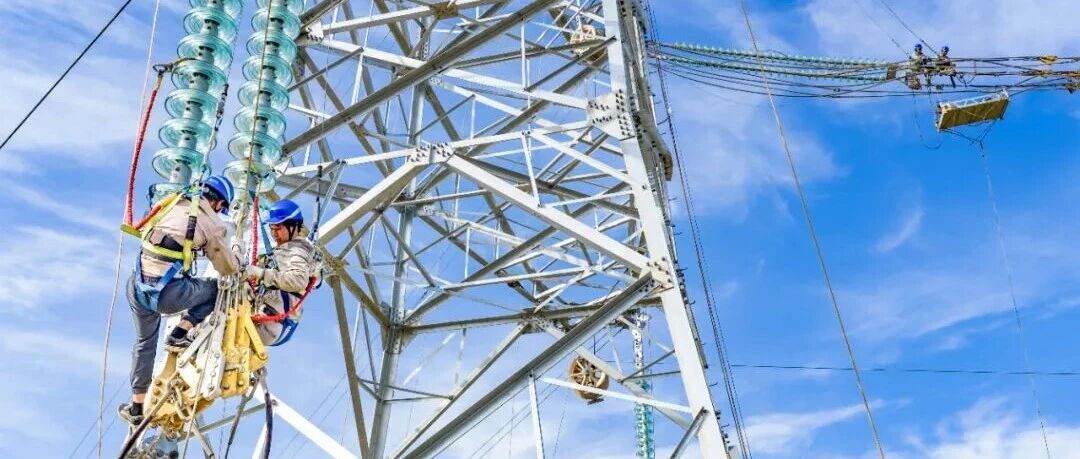
国网官宣:首条深入川藏腹地特高压工程投运
Zhong Guo Dian Li Bao· 2025-12-18 02:47
Core Viewpoint - The State Grid announced the successful commissioning of the Jinshang-Hubei ±800 kV UHVDC transmission project, marking a significant advancement in clean energy transmission and enhancing national energy security [1][2]. Group 1: Project Overview - The Jinshang-Hubei project is the first UHVDC transmission project to penetrate the Tibetan Plateau, facilitating the cross-regional optimization of clean energy [1]. - The project spans approximately 1900 kilometers, starting from the upper reaches of the Jinsha River and passing through Tibet, Sichuan, Chongqing, and Hubei [1]. - It utilizes ±800 kV rated voltage and an 8 million kW rated capacity, featuring a dual converter station setup to enhance operational flexibility [1]. Group 2: Environmental Impact - The project is expected to deliver approximately 40 billion kWh of clean electricity annually, equivalent to replacing about 12 million tons of standard coal and reducing carbon dioxide emissions by around 30 million tons [2]. - It will promote the large-scale development of integrated water, wind, and solar energy bases in the upper reaches of the Jinsha River, optimizing the energy structure at the sending end [2]. Group 3: Infrastructure and Capacity - The State Grid has completed a total of 42 UHV projects, achieving a cross-regional transmission capacity of 370 million kW [2]. - The project contributes to the formation of a robust UHVAC backbone network across East, North, Central, and Southwest China, integrating advanced dispatch control systems and electricity market trading platforms [2].
国家能源局:持续提高新能源供给比重
Qi Huo Ri Bao· 2025-12-16 18:13
Core Insights - The 2026 National Energy Work Conference was held to summarize the energy work of 2025 and the 14th Five-Year Plan, while deploying key tasks for 2026 [1] Group 1: Energy Security - The conference emphasized achieving a higher level of energy security in 2026 [1] - It aims to strengthen the coal supply guarantee, enhance electricity supply levels, and improve oil and gas production and supply capabilities [1] - The optimization of energy backbone channel layout and enhancement of the inherent safety level of energy infrastructure were also highlighted [1] Group 2: Green and Low-Carbon Transition - The conference outlined the need to advance the green and low-carbon transition in the energy sector [1] - There is a continuous effort to increase the proportion of renewable energy supply, with a target of adding over 20 million kilowatts of wind and solar power capacity throughout the year [1] - The orderly promotion of major hydropower projects and the safe and orderly development of nuclear power were also discussed, alongside the emphasis on the clean and efficient utilization of fossil energy [1]
2025年中国油、气产量双创历史新高
Xin Hua She· 2025-12-16 04:09
Core Insights - In 2025, China's oil and gas production reached historical highs, with crude oil production at approximately 215 million tons and natural gas production exceeding 260 billion cubic meters, marking a continuous increase of over 10 billion cubic meters for nine consecutive years [1] Group 1: Energy Security and Supply - The National Energy Administration reported that 2025 was the best year for energy supply security since the 14th Five-Year Plan, effectively responding to peak summer electricity load challenges, which exceeded last year's peak 20 times [1] - The "Seven-Year Action Plan" for oil and gas storage and production concluded successfully, with continuous improvement in the level of energy resource complementarity [1] Group 2: Infrastructure Development - The optimization of national electricity flow layout was emphasized, with the approval of five inter-regional electricity mutual assistance projects and the commencement of the Tibet-Guangdong ultra-high voltage direct current transmission project [1] - The national capacity for west-to-east electricity transmission reached 340 million kilowatts, while the west-to-east gas transmission lines were fully operational, and the first section of the Sichuan-East Gas Transmission Line was completed [1] - The total length of long-distance oil and gas pipelines reached 200,000 kilometers, with coal transportation from major production areas exceeding 1.9 billion tons [1] Group 3: Future Energy Work - In 2026, the energy work will focus on achieving a higher level of energy security, solidifying coal supply guarantees, enhancing electricity supply levels, and optimizing the layout of energy backbone channels [1] - There will be an emphasis on improving the essential safety level of energy infrastructure [1]
2025年我国油、气产量双创历史新高
Xin Hua She· 2025-12-15 14:57
Core Insights - In 2025, China's oil and gas production reached historical highs, with crude oil production at approximately 215 million tons and natural gas production exceeding 2600 billion cubic meters, marking a continuous increase of over 10 billion cubic meters for nine consecutive years [1] Group 1: Energy Security and Supply - The National Energy Administration reported that 2025 was the best year for energy supply security since the 14th Five-Year Plan, effectively responding to peak summer electricity load challenges with 20 instances exceeding last year's peak [1] - The "Seven-Year Action Plan" for oil and gas storage and production concluded successfully, enhancing the level of energy resource complementarity and mutual assistance [1] Group 2: Infrastructure Development - The optimization of national electricity flow layout and the strengthening of inter-provincial and inter-regional transmission channel construction were highlighted, with five regional power mutual assistance projects approved, including the commencement of the Tibet-Guangdong ultra-high voltage direct current transmission project [1] - The capacity for west-to-east electricity transmission reached 340 million kilowatts, while the west-to-east gas transmission lines were fully operational, and the first section of the Sichuan-East Gas Transmission Line was completed and put into operation [1] - The total length of long-distance oil and gas pipelines reached 200,000 kilometers, with coal transportation from major production areas exceeding 1.9 billion tons [1] Group 3: Future Energy Work - The energy work for 2026 aims to achieve a higher level of energy security, solidify coal supply guarantees, enhance electricity supply levels, and improve oil and gas production capabilities [1] - There will be an emphasis on optimizing the layout of energy backbone channels and enhancing the inherent safety level of energy infrastructure [1]
今年全社会用电量首超10万亿千瓦时,油气产量双创历史新高
Ren Min Ri Bao· 2025-12-15 13:54
Group 1 - The total installed power generation capacity in the country is expected to exceed 3.8 billion kilowatts this year, representing a year-on-year growth of 14% [1] - The total electricity consumption is projected to surpass 10 trillion kilowatt-hours for the first time, equivalent to Japan's annual electricity consumption [1] - Oil and gas production has reached historical highs, with crude oil production at approximately 215 million tons and natural gas production exceeding 260 billion cubic meters, marking nine consecutive years of over 10 billion cubic meters increase [1] Group 2 - The share of non-fossil energy consumption has exceeded the target of 20%, with significant investments in energy projects expected to reach 3.54 trillion yuan, a year-on-year increase of 11% [2] - New energy sources, particularly wind and solar power, are projected to add approximately 370 million kilowatts of installed capacity, with a utilization rate maintained at over 94% [2] - Major hydropower and nuclear power projects are accelerating, with the total hydropower installed capacity exceeding 440 million kilowatts and the number of operational and under-construction nuclear power units reaching 112 [2]
“十四五”期间,内蒙古煤、电、油、气保障国家能源安全
Zhong Guo Xin Wen Wang· 2025-12-09 13:32
Group 1 - During the "14th Five-Year Plan" period, Inner Mongolia's coal transportation capacity continues to enhance, with the construction of 17 coal transportation railway lines, achieving an annual transportation capacity of approximately 1.45 billion tons, meeting an external transportation demand of about 780 million tons of coal each year [1][2] - The electricity grid structure in Inner Mongolia is being optimized, with 42 new approved 500 kV projects and 18 new projects put into operation, aiming to complete over 5 additional projects by the end of the year. The total length of 220 kV and above lines reaches 67,000 kilometers, equivalent to circling the Earth 1.6 times, with a power delivery capacity of about 75 million kilowatts [1] Group 2 - Inner Mongolia is continuously optimizing its natural gas pipeline infrastructure, expanding coverage and enhancing interconnectivity, with over 7,400 kilometers of long-distance oil and gas pipelines constructed. The annual crude oil transportation capacity is 37 million tons, and the refined oil transportation capacity is 3.91 million tons, while the natural gas pipeline system has an annual transportation capacity exceeding 110 billion cubic meters [2]
人民日报︱五年规划首提“建设能源强国”,有何深意
国家能源局· 2025-11-11 01:54
Core Viewpoint - The article emphasizes the significance of building an energy powerhouse as part of China's "14th Five-Year Plan," highlighting its role in modernizing the country and ensuring energy security [2][3][6]. Group 1: Economic and Social Development - The construction of an energy powerhouse is essential for providing a material foundation for modernizing the country, as energy is crucial for daily life and economic operations. During the "14th Five-Year Plan" period, energy consumption is expected to grow rigidly, with an estimated annual increase of approximately 600 billion kilowatt-hours [3]. - The energy industry is characterized by a long supply chain and strong innovation, which can support the development of a modern industrial system. During the "14th Five-Year Plan," China accounted for over 40% of global new energy patents and led the world in new energy storage capacity [5]. Group 2: Energy Security and Strategic Autonomy - Energy issues are a priority in national security for many countries, and controlling energy resources can lead to significant development opportunities. Building an energy powerhouse aims to create a robust energy supply chain and innovation system, enhancing China's strategic position in global power dynamics [6][7]. Group 3: Green and Low-Carbon Transition - The transition to a green and low-carbon economy is crucial for addressing global challenges like climate change. China has established the world's largest and fastest-growing renewable energy system, with one-third of electricity consumption coming from green energy. The goal is to increase the share of renewable energy and facilitate the orderly replacement of fossil fuels [8][9]. - By contributing to global low-carbon transitions, such as reducing carbon emissions by approximately 4.1 billion tons through wind and solar exports during the "14th Five-Year Plan," China aims to enhance its leadership in global energy transformation [9]. Group 4: Current Energy Landscape - China has a diversified energy supply system, maintaining over 20% of global energy production and an energy self-sufficiency rate of over 80%. The country is also the world's largest producer of renewable energy, with installed capacities in hydropower, wind, and solar energy leading globally [9]. - The reliance on foreign oil and gas is a shortcoming, but as fossil fuel consumption peaks, this dependency is expected to decrease to a more reasonable level [9].

国家电投集团与福建省福州市举行工作会谈
Zheng Quan Shi Bao Wang· 2025-11-05 14:31
Core Viewpoint - The meeting between Liu Mingsheng, Chairman of State Power Investment Corporation, and Guo Ningning, Deputy Secretary of Fujian Provincial Committee, focused on enhancing cooperation between central and local governments in energy projects and green energy transition [1] Group 1: Cooperation and Projects - The discussion emphasized the planning of key energy projects during the 14th Five-Year Plan period [1] - Both parties expressed commitment to deepen practical cooperation in areas such as technological innovation and key projects [1] Group 2: Green Energy and Low-Carbon Transition - The meeting highlighted the acceleration of green energy and low-carbon transformation efforts [1] - There was a focus on improving energy security and ensuring a stable energy supply [1] Group 3: Communication and Collaboration - The parties agreed to strengthen communication regarding zero-carbon parks and other collaborative initiatives [1]
台湾成俄罗斯石脑油全球最大进口地
日经中文网· 2025-10-11 04:00
Core Insights - Taiwan's imports of Russian naphtha surged to $1.3 billion in the first half of 2025, marking a 44% increase year-on-year, and reaching approximately six times the monthly import amount compared to 2022 [1][4] - Taiwan has become the largest importer of Russian naphtha globally, with total imports amounting to $4.9 billion since Russia's invasion of Ukraine in February 2022 [1][4] - The reliance on Russian naphtha poses potential risks to Taiwan's relationships with strategic partners like the US and EU, as it contributes $1.7 billion in resource tax revenue to the Russian government [4][7] Group 1: Import Dynamics - Taiwan's naphtha imports from Russia are primarily driven by the chemical industry's needs, particularly for semiconductor manufacturing processes [2][10] - The price of Russian naphtha has decreased due to international sanctions, leading to increased procurement through international bidding [4][5] - Major Taiwanese petrochemical companies, such as Formosa Petrochemical, are significant consumers of Russian naphtha, although they assert compliance with international sanctions [4][5] Group 2: Regulatory and Strategic Considerations - Taiwan has not established explicit restrictions on naphtha imports, leaving it to companies to make procurement decisions, while state-owned enterprises have ceased imports from Russia [7] - Taiwan's government has expressed willingness to align with friendly nations on additional restrictions if necessary, emphasizing the need for diversified resource procurement [7][8] - Reports indicate that Taiwan's over-reliance on Russian naphtha could heighten economic security risks for major semiconductor firms like TSMC and their clients, including Nvidia [7][8]

新疆精河县煤炭储备项目竣工投用
Zhong Guo Xin Wen Wang· 2025-10-09 02:22
Core Insights - The Xinjiang Jinghe County coal reserve project has successfully passed completion acceptance and is now officially in operation, contributing to regional energy security and the economic development of Xinjiang during the "14th Five-Year Plan" period [1] Group 1: Project Overview - The coal reserve base covers a total area of 136,000 square meters and has a total investment of 150 million yuan [1] - The project plans to construct two static coal storage warehouses with a total storage capacity of 500,000 tons [1] - The first phase of the project includes one static coal storage warehouse with a storage capacity of 250,000 tons [1] Group 2: Technological Features - The warehouse is equipped with advanced automated safety and environmental protection facilities [1] - A digital management system has been established, including features such as unmanned weighing, temperature monitoring, and smoke detection alarms [1] - The project aims to ensure comprehensive safety supervision, environmental control, and intelligent operation [1]