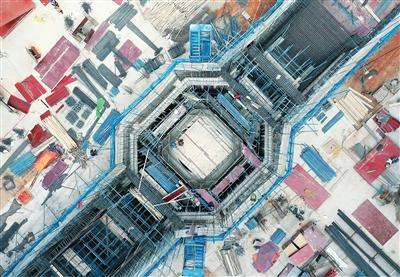
能源强国建设

Search documents
能源强国建设“大家谈”丨以集成融合引领新能源高质量发展
Zhong Guo Dian Li Bao· 2026-02-04 09:18
Core Viewpoint - The construction of an energy powerhouse is crucial for national security, economic development, and global governance, with a strong emphasis on the development of renewable energy as a strategic pillar [2][3]. Group 1: Strategic Importance of Renewable Energy - The development of renewable energy is essential for ensuring national energy security and supporting modernization, as China's energy demand continues to grow, and reliance on fossil fuel imports poses risks [2]. - Since the 14th Five-Year Plan, renewable energy has accounted for over 80% of all new power generation installations, with cumulative installed capacity ranking first globally, making it a dominant source of new power [2]. - Large-scale renewable energy development is fundamental to reducing dependence on foreign energy and establishing a self-sufficient energy supply system, providing stable energy support for a large population [2]. Group 2: Economic Growth and High-Quality Development - The renewable energy sector is a key driver for cultivating new growth engines and promoting high-quality economic development, characterized by its green technology and long industrial chain [3]. - The sector creates significant investment opportunities and jobs across various areas, including large wind and solar bases, distributed photovoltaics, and smart microgrids [3]. - New business models are emerging through the integration of renewable energy with digital economies, such as virtual power plants and vehicle-to-grid interactions, shaping a modern industrial system [3]. Group 3: Challenges and Solutions for High-Quality Development - The core challenges in renewable energy development have shifted from grid connection issues to efficient consumption and system support, highlighting the need for improved system integration and optimization capabilities [4]. - A fundamental shift in development philosophy is required, moving from scale expansion to integrated development, including multi-energy integration and breaking down silos in energy production, transmission, consumption, and storage [5]. - The recognition of value must expand from a single dimension to a multi-dimensional perspective, encompassing various benefits such as green electricity, flexible system regulation, and international cooperation [6]. Group 4: Implementation Strategies for Integrated Development - Strengthening planning guidance is essential for building system-friendly renewable energy projects, with clear goals and regional layouts outlined in national energy planning [7]. - Market reforms are necessary to create a power market system that accommodates a high proportion of renewable energy, including the establishment of a multi-tiered market system [7]. - Fostering technological advancements and establishing integrated technical standards are crucial for optimizing multi-energy systems and enhancing smart energy capabilities [7]. Group 5: Pilot Projects and Collaborative Ecosystems - Pilot projects for integrated renewable energy development are being planned in key areas, focusing on replicable and scalable business models [8]. - Collaborative mechanisms between energy and other sectors, such as industry, transportation, and construction, are being developed to promote infrastructure interconnectivity and sharing [9].
水电水利规划设计总院总经理易跃春:大力推动可再生能源高质量发展 筑牢能源强国建设根基
Zhong Guo Dian Li Bao· 2026-02-04 07:33
Core Viewpoint - The development of renewable energy is crucial for building a strong energy nation, which is integral to achieving the "dual carbon" goals and establishing a new energy system in China [2][4]. Group 1: Background and Core Connotations of Energy Nation Construction - The construction of an energy strong nation is a strategic choice to balance supply security and low-carbon transition, addressing high dependence on foreign energy and geopolitical risks [3]. - Energy technology self-reliance is a core driving force for building an energy strong nation, necessitating advancements in core technologies and high-end equipment [3]. - The strategy also involves optimizing domestic development and participating in international energy governance to enhance resilience and address regional imbalances [3]. Group 2: Strategic Value and Key Role of Renewable Energy - During the 14th Five-Year Plan, renewable energy has achieved significant high-quality development, laying a solid foundation for the construction of an energy strong nation [4]. - Renewable energy serves as a crucial safety pillar, with its share in China's electricity consumption nearing 40%, enhancing energy supply autonomy [4][5]. - It is also the cornerstone for green transformation, essential for achieving the "dual carbon" goals and increasing the share of non-fossil energy consumption to over 30% by 2035 [4][5]. Group 3: Promoting High-Quality Development of Renewable Energy - The 15th Five-Year Plan faces challenges such as insufficient resource guarantees and market mechanism imperfections, necessitating a focus on problem-solving and goal orientation [7]. - Emphasis on multi-energy integration and enhancing renewable energy supply capacity aims for an annual increase of 20 million kilowatts in wind and solar power installations [7]. - Strengthening clean low-carbon consumption involves expanding green electricity usage in key sectors and promoting green hydrogen applications [8]. Group 4: Innovation and Policy Mechanisms - Focusing on critical areas like chips and industrial software, the industry aims to enhance self-reliance and promote the integration of renewable energy with digital technologies [8][9]. - The establishment of a unified national electricity market and improved market mechanisms for renewable energy transactions are essential for optimizing the business environment [9]. - Promoting international cooperation and sharing China's renewable energy development experience will contribute to a fair and cooperative global energy governance system [9].

中广核高层带队,接连拜访三大发电央企集团
Zhong Guo Dian Li Bao· 2026-02-04 01:13
Core Viewpoint - China General Nuclear Power Group (CGN) is strengthening collaborations with major power companies in nuclear energy, new energy, and technological innovation to promote high-quality development in the energy sector and contribute to the construction of a strong energy nation [2][4][6]. Group 1: Collaboration with China Huaneng - CGN's Chairman Yang Changli and General Manager Pang Songtao visited China Huaneng to discuss deepening cooperation in nuclear power projects, new energy, and digital control technologies [2]. - Yang expressed gratitude for China Huaneng's support and highlighted the successful collaboration on projects like Shidaowan Nuclear Power [2]. - Both parties aim to solidify existing cooperation and enhance collaboration in various fields to contribute to the energy sector's development [3]. Group 2: Collaboration with China Datang - CGN's leadership met with China Datang to discuss enhancing industrial cooperation, particularly in nuclear energy project operations and technological innovation [4]. - Yang congratulated China Datang on its achievements and emphasized the importance of their partnership, citing successful projects like Ningde Nuclear Power [4]. - The focus is on further collaboration in nuclear and new energy projects to support the construction of a strong energy nation [5]. Group 3: Collaboration with State Power Investment Corporation - CGN engaged in discussions with State Power Investment Corporation (SPIC) to reinforce cooperation in nuclear energy, new energy, and policy alignment [6]. - Yang acknowledged SPIC's ongoing support and highlighted the fruitful outcomes of their partnership [6]. - The goal is to deepen practical cooperation in energy projects to contribute to the construction of a strong energy nation and achieve high-level technological self-reliance [7].




分类施策 夯实电力安全之基
Zhong Guo Dian Li Bao· 2026-02-03 01:53
"新老划段"完善抽蓄容量电价机制。 国家于2021年出台《关于进一步完善抽水蓄能价格形成机制的意见》(发改价格〔2021〕633号,以下 简称"633号文"),完善抽水蓄能两部制电价政策,细化制定抽水蓄能容量电价核定办法,打通容量电 费疏导渠道,给相关投资主体吃下"定心丸",为抽水蓄能行业发展注入了强劲动力。2023年,相关部门 进一步出台《关于抽水蓄能电站容量电价及有关事项的通知》(发改价格〔2023〕533号),核定在运 及2025年底前拟投运的48座抽水蓄能电站容量电价。 完善发电侧容量电价机制是服务新型电力系统构建,助力能源强国建设的内在要求。两部门近日发布的 《通知》坚持立足当前与着眼长远相结合,统筹能源安全保障与绿色低碳转型,将为加快构建新型电力 系统、推进能源强国建设奠定坚实基础。 合理提高煤电容量电价标准,鼓励建立气电容量电价机制。 煤电是保障电力安全充裕供应的"压舱石",承担兜底保供、调峰调频等多重关键功能,气电则是提升系 统调节能力的重要支撑,在保障负荷高峰时段用电和新能源消纳中发挥着关键作用。《通知》精准契合 两类电源的功能定位,通过分类施策进一步优化容量电价机制。 在煤电方面,明确各地 ...
中电联:2026年全国年用电量有望达到11万亿千瓦时!太阳能发电装机规模预计将首次超过煤电
Mei Ri Jing Ji Xin Wen· 2026-02-02 16:30
Core Insights - The China Electricity Council (CEC) predicts that by 2026, the national electricity consumption will reach between 10.9 trillion to 11 trillion kilowatt-hours, representing a year-on-year growth of 5% to 6% [1] - By the end of 2026, the installed capacity of solar power is expected to surpass that of coal power for the first time, with the combined installed capacity of wind and solar power reaching half of the total installed capacity [1] Group 1: Electricity Consumption - In 2025, China's total electricity consumption surpassed 10 trillion kilowatt-hours for the first time, reaching 10.4 trillion kilowatt-hours, a 5% year-on-year increase and approximately double that of ten years ago [2] - High-end manufacturing has emerged as a new growth point for electricity consumption, with the internet-related services and charging industries experiencing year-on-year growth rates exceeding 30% and 50%, respectively [2] Group 2: Supply Side Developments - By the end of 2025, the total installed power generation capacity in China is expected to reach 3.89 billion kilowatts, with non-fossil energy sources accounting for 61.7% of the total installed capacity [2] - A total of 46 ultra-high voltage projects have been completed, enhancing cross-provincial and cross-regional transmission capacity to over 370 million kilowatts [2] Group 3: Technological and Governance Innovations - The pace of technological innovation in the electricity sector is accelerating, with advancements in renewable energy, advanced nuclear power, large-capacity hydropower, and clean coal technologies being internationally leading [3] - The establishment of a national unified electricity market is progressing, with improvements in market systems for medium- and long-term trading, spot trading, auxiliary services, and green electricity certificates [3]

为什么要建设能源强国
Xin Hua She· 2026-02-02 09:00
新华社北京2月2日电 《中共中央关于制定国民经济和社会发展第十五个五年规划的建议》提出:"建设 能源强国。"能源是现代化的重要基础和动力,能源保障和安全事关国计民生,是须臾不可忽视的"国之 大者"。当前,世界百年未有之大变局加速演进,科技革命和大国博弈相互交织,全球能源供需格局深 度重塑,能源绿色低碳转型步伐加快,能源强国建设的意义更加凸显。加快建设能源强国十分重要、正 当其时。 ...
能源研究所康艳兵拆解“AI+能源”发力点:2方向、3原则、5个化+全场景
Zhong Guo Neng Yuan Wang· 2026-02-02 02:45
Core Insights - The AI + Energy Development Conference emphasized the integration of AI in the energy sector to achieve carbon neutrality and enhance energy security, highlighting the importance of energy transformation in addressing environmental and developmental challenges [1][2]. Group 1: Energy Transformation and AI Integration - The rapid development of AI complements the energy transition, which is crucial for achieving carbon reduction goals, as energy sources like coal, oil, and natural gas account for nearly 90% of carbon emissions [1][2]. - Two core pathways for energy transformation are identified: energy efficiency improvement and clean energy substitution, both of which can be significantly enhanced by AI technologies [2]. Group 2: Strategic Directions and Principles - Future energy transformation is characterized by "2 directions" (efficiency and cleanliness), "3 principles" (reliability, affordability, sustainability), and "5 transformations" (continuous efficiency improvement, electrification of end-use, decarbonization of energy sources, decentralization of energy systems, and intelligent energy supply-demand management) [3]. - AI plays a pivotal role in enabling these transformations, particularly in optimizing energy supply and demand interactions [3]. Group 3: Key Areas for New Energy Systems - The construction of a new energy system is essential for the energy transition, focusing on three areas: new power systems, new thermal systems, and new fuel raw material systems, all of which can leverage AI for optimization [4]. - The energy transition is expected to trigger a new industrial revolution, with AI being a core driver of this change, fostering new business models and production capabilities [4]. Group 4: Application Scenarios of AI + Energy - AI applications span three major sectors: energy supply (including AI in coal, oil, gas, and electricity), energy consumption (smart manufacturing, urban energy use), and interactive energy supply-demand systems [5]. - The focus on dual-direction interaction in energy systems, such as virtual power plants and vehicle-to-grid interactions, represents a critical battlefield for AI empowerment [5]. Group 5: Support Mechanisms for Development - High-quality development of AI + Energy requires robust support mechanisms, including infrastructure upgrades, user engagement, enterprise and platform support, and policy frameworks [6]. - The integration of AI in energy systems is seen as a promising avenue for achieving smart upgrades and supporting carbon neutrality goals, contributing to sustainable economic and social development [6].
情暖能源桑榆,共话强国大计——国家能源局举办2026年退休干部新春茶话会
国家能源局· 2026-01-30 10:26
会上,局领导向退休老同志们送上了诚挚祝福,详细通报了 "十四五"时期及 2025 年能源领域重 点工作情况,介绍了 "十五五"能源规划编制情况 和 2026 年 度工作安排。随后,局领导与退休老 同志们进行了座谈交流。老同志们对近年来能源发展取得的成就给予了高度评价,对局党组的关心 关怀表示衷心感谢,并围绕下一步做好能源工作提出了宝贵意见和建议。 1 月 27 日下午 , 国家能源局举办 2026 年退休干部新春茶话会 ,史玉波、徐锭明、吴吟、戴晓 曙、张玉清、林山青等 26 名退休老同志参加。国家能源局党组书记、局长王宏志出席会议并讲 话,局党组成员、副局长何洋主持会议。 王宏志在讲话中表示,老干部是能源事业的宝贵财富,局党组高度重视退休干部工作,将持续用心 用情提高服务保障水平。欢迎退休老同志们继续发挥经验优势,为能源高质量发展积极建言献策、 贡献智慧。希望各位老同志当好政治建设的推动者、能源强国建设的支持者、社会稳定和谐的促进 者、全面从严治党的践行者。 国家能源局综合司、规划司、机关党委(人事司)、机关纪委、机关服务中心主要负责同志参加会 议。 ...

能源强国建设“大家谈”︱以集成融合引领新能源高质量发展 更好支撑能源强国建设
国家能源局· 2026-01-28 00:52
Core Viewpoint - The article emphasizes the importance of integrated development in the renewable energy sector to support the construction of a strong energy nation, transitioning from rapid growth to high-quality development and creating diverse value [3][4]. Group 1: Strategic Role of Renewable Energy - The construction of a strong energy nation is crucial for national security, economic development, and global governance, with renewable energy serving as a strategic pillar [4]. - Since the 14th Five-Year Plan, over 80% of new power installations have come from renewable sources, positioning China as a global leader in installed capacity [4]. - Increasing renewable energy capacity is essential for reducing dependence on foreign energy and ensuring stable energy supply for a population of 1.4 billion [4]. Group 2: Economic Growth and High-Quality Development - The renewable energy sector is a key driver for economic growth, creating significant investment opportunities and jobs across various segments, including offshore wind, energy storage, and green fuels [5]. - The integration of renewable energy with digital economy initiatives is fostering new business models and enhancing the modern industrial system [5]. - Renewable energy plays a vital role in achieving carbon neutrality goals and enhancing China's influence in global energy governance [5]. Group 3: Integrated Development Approach - The current challenges in renewable energy development have shifted from grid integration to efficient consumption and system support, necessitating a transformation in development philosophy [6]. - The focus should shift from scale expansion to integrated development, promoting multi-energy integration and breaking down silos in energy production, transmission, and consumption [6][7]. - A multi-dimensional value recognition approach is needed, expanding beyond electricity provision to include green fuels, ecological restoration, and international cooperation [7]. Group 4: Policy and Market Reforms - Planning and guidance are essential for developing system-friendly renewable energy projects, with clear goals and evaluation metrics for system value [8]. - Market reforms should create a multi-tiered electricity market system that includes various market products and enhances demand-side response capabilities [9]. - Establishing a technology standard system for integrated development is crucial, focusing on optimizing multi-energy systems and enhancing smart energy capabilities [9][10]. Group 5: Pilot Projects and Industry Ecosystem - Pilot projects in key areas like the Shagou Desert and coastal wind farms should be developed to explore replicable business models for integrated renewable energy [10]. - Collaboration across industries such as transportation, construction, and energy is necessary to create a cohesive ecosystem that supports green energy initiatives [10].
能源强国建设加速推进
Ren Min Ri Bao· 2026-01-26 21:47
TORIAN 4 (80.6 TV -1092 68,5 % it 1 (85.4- 0 11:3 在 T H il al star 14 45 . B al up STARTS IT K n 134 下 s L 0 2 10 A t 11 - 2 r 11 4168 STANDARDA . . i 3 2 国家能源局日前发布数据显示,2025年全社会用电量历史性突破10万亿千瓦时。这一数字在全球单一国 家中尚属首次,彰显出中国超大规模经济体的强劲韧性,更折射出中国能源供给体系的升级与新型电力 系统建设的成效。 "持续提高新能源供给比重,推进化石能源安全可靠有序替代,着力构建新型电力系统,建设能源强 国。""十五五"规划建议首次在五年规划中提出建设能源强国。当前,中国能源转型不断加快"逐绿向 新","十五五"时期,将会有更多绿电跨越山海,点亮万家灯火。 ...