
能源结构优化

Search documents
山东省地矿局鲁南院承建的济宁兖州高新区2×5万千瓦背压机组热电联产项目正式开工建设
Zhong Guo Fa Zhan Wang· 2025-11-12 17:34
Core Insights - The construction of the 2×5 MW back-pressure unit cogeneration project in Jining Yanzhou High-tech Zone has officially commenced, which is a significant energy infrastructure project in Shandong Province [1] - This project is crucial for ensuring stable steam supply to Yandian Technology Industrial Park and Yanzhou Industrial Park, and it supports the creation of a national-level development zone [1] - The project has been included in the Shandong Province coal and electricity industry transformation and upgrading implementation plan, the "14th Five-Year" electricity development plan, and the key projects for green, low-carbon, and high-quality development by 2025 [1] Project Management and Execution - The Lunan Institute organized a dedicated team and equipment for the construction, establishing a party member task force and QC group to enhance project execution [2] - Specific measures were developed for key aspects such as technical disclosure, quality control, and safety inspections, with a focus on checklist management and project-based promotion [2] - The project team is committed to maintaining high standards in engineering quality, safety production, and environmental protection, ensuring the project is completed on time and to a high standard [2]
一组关键词看前三季度全国能源形势
Xin Hua She· 2025-11-01 08:44
Core Insights - The National Energy Administration reported significant growth in electricity consumption and renewable energy capacity in the first three quarters of the year, highlighting the resilience of the energy supply system amid challenges posed by extreme weather and economic recovery [2][4]. Group 1: Electricity Consumption - In July and August, electricity consumption in China exceeded 1 trillion kilowatt-hours for the first time, setting a world record [2]. - There were 66 days where daily electricity consumption surpassed 30 billion kilowatt-hours since July, an increase of 29 days compared to the previous year [2]. - The increase in electricity demand is attributed to economic recovery and prolonged high-temperature weather, which posed new challenges for summer electricity supply [2]. Group 2: Charging Infrastructure - By September 2025, the total number of electric vehicle charging facilities in China is expected to reach 18.063 million, a year-on-year increase of 54.5% [3]. - The total rated power of public charging facilities is approximately 200 million kilowatts, reflecting a 59.2% increase since the beginning of the year [3]. - The introduction of high-power charging facilities has improved charging speed significantly, with capabilities of charging for 10 minutes to achieve over 300 kilometers of range [3]. Group 3: Renewable Energy - In the first three quarters, China added 31 million kilowatts of renewable energy capacity, a year-on-year increase of 47.7%, accounting for 84.4% of the total new capacity [4]. - As of September, the total installed capacity of renewable energy reached 2.198 billion kilowatts, a 27% increase year-on-year, representing 59.1% of the country's total power generation capacity [4]. - Renewable energy generation reached 2.89 trillion kilowatt-hours, a 15.5% increase year-on-year, making up about 40% of total electricity generation [4].
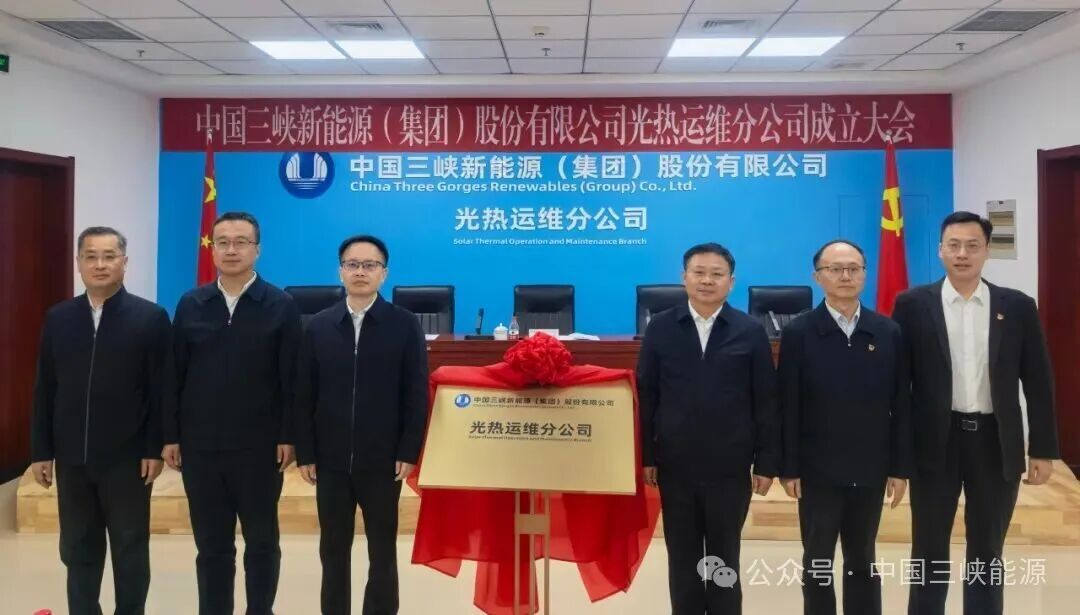
三峡成立新公司
Bei Jing Ri Bao Ke Hu Duan· 2025-10-29 03:31
Group 1 - The establishment of the solar thermal operation and maintenance subsidiary marks a significant step for the company in the solar thermal sector, aligning with the "14th Five-Year Plan" for energy structure optimization and industrial upgrading [3] - The company aims to create a first-class professional operation and maintenance company, focusing on safety, efficiency, and high-quality development [3] - There is an emphasis on strengthening capability building through a professional operation and maintenance system, driven by talent and innovation [3] Group 2 - The company plans to deepen the integration of party building and corporate culture, fostering a positive development environment for high-quality growth in the solar thermal sector [3]


能源结构持续优化
Jing Ji Ri Bao· 2025-10-20 22:01
Group 1 - The core viewpoint of the articles highlights the stable growth of China's economy and energy consumption, with a significant increase in the share of non-fossil energy consumption [1] Group 2 - Energy production has steadily increased, with major energy products such as coal, oil, and gas showing growth. The industrial raw coal output reached 3.57 billion tons, a year-on-year increase of 2.0% [2] - Oil and gas production also saw moderate growth, with industrial crude oil output at 160 million tons (up 1.7%) and natural gas output at 194.9 billion cubic meters (up 6.4%) [2] - Electricity production was robust, with industrial power generation at 7.3 trillion kilowatt-hours, a year-on-year increase of 1.6%. Notably, clean energy sources like nuclear, wind, and solar power saw significant growth rates of 9.2%, 10.1%, and 24.2% respectively [2] Group 3 - Energy supply security has improved, with a decrease in energy imports. Coal imports fell to 35 million tons, down 11.1%, while crude oil imports increased to 42 million tons, up 2.6% [3] - Natural gas imports decreased to 9.286 million tons, down 6.2%, indicating a narrowing decline compared to the first half of the year [3] - The electricity supply has been effective, with record-high national power loads and enhanced coordination among power sources, networks, and storage [3] Group 4 - The energy consumption structure is undergoing a green transition, with total energy consumption increasing by 3.7% year-on-year. The share of non-fossil energy in total energy consumption rose by 1.7 percentage points [4] - The share of clean energy sources in industrial power generation reached 35.3%, an increase of 1.9 percentage points compared to the previous year [4]
前三季度清洁能源发电占比达35.3%
Zhong Guo Dian Li Bao· 2025-10-20 03:54
Core Viewpoint - The national economy of China has shown stable growth in the first three quarters, with energy consumption growth remaining steady and a continuous optimization of the energy structure [2] Energy Production - Energy production has steadily increased, with major energy products such as coal, oil, gas, and electricity all showing growth. The industrial raw coal output reached 3.57 billion tons, a year-on-year increase of 2.0% [3] - Crude oil production was 160 million tons, up 1.7% year-on-year, while natural gas production hit 194.9 billion cubic meters, marking a historical high with a growth of 6.4% [3] - Electricity generation amounted to 7.3 trillion kilowatt-hours, reflecting a year-on-year increase of 1.6%. Notably, nuclear, wind, and solar power generation saw significant growth rates of 9.2%, 10.1%, and 24.2% respectively [3] Supply Assurance - Domestic coal supply has been sufficient, leading to a decrease in energy imports. Coal imports fell to 35 million tons, down 11.1% year-on-year, while crude oil imports increased by 2.6% to 42 million tons [3] - Natural gas imports decreased by 6.2% to 9.286 million tons, indicating a narrowing decline compared to the first half of the year [3] Green and Low-Carbon Transition - Energy consumption in the first three quarters showed a robust growth in electricity, with total energy consumption rising by 3.7% year-on-year. The share of non-fossil energy in total energy consumption increased by 1.7 percentage points compared to the previous year [5] - The share of clean energy generation from hydropower, nuclear power, wind power, and solar power reached 35.3%, an increase of 1.9 percentage points year-on-year [5]

国家统计局能源统计司:前三季度能源保供坚实有力 能源结构持续优化
Sou Hu Cai Jing· 2025-10-20 03:36
Core Insights - China's economy has shown stable growth in the first three quarters, with energy consumption growth remaining steady and the energy sector performing well overall [1] Group 1: Energy Production - Energy production has steadily increased, with major energy products such as coal, oil, and gas showing growth. The industrial raw coal output reached 3.57 billion tons, a year-on-year increase of 2.0% [2] - Crude oil production was 160 million tons, up 1.7% year-on-year, while natural gas production hit 194.9 billion cubic meters, marking a historical high with a growth of 6.4% [2] - Industrial electricity generation totaled 7.3 trillion kilowatt-hours, reflecting a year-on-year increase of 1.6%, with significant growth in nuclear, wind, and solar power generation [2] Group 2: Supply Security - Domestic coal supply has been sufficient, leading to a decrease in overall energy imports. Coal imports fell to 35 million tons, down 11.1% year-on-year, while crude oil imports rose to 42 million tons, an increase of 2.6% [3] - Natural gas imports decreased to 9.286 million tons, down 6.2% year-on-year, indicating improved energy self-sufficiency and security [3] - The power supply has been robust, with record-high electricity loads due to high temperatures, enhancing the coordination of power generation and consumption [3] Group 3: Green and Low-Carbon Transition - Energy consumption in the first three quarters grew by 3.7% year-on-year, with a notable shift towards greener energy sources [4] - The proportion of non-fossil energy in total energy consumption increased by 1.7 percentage points compared to the previous year, indicating a continued optimization of the energy consumption structure [4] - Clean energy sources, including hydropower, nuclear power, wind, and solar, accounted for 35.3% of the power generation mix, up 1.9 percentage points year-on-year [4]
胡汉舟:能源保供坚实有力,能源结构持续优化
Bei Jing Ri Bao Ke Hu Duan· 2025-10-20 02:36
Core Insights - China's economy has shown stable growth in the first three quarters, with energy consumption growth remaining steady and a significant increase in the share of non-fossil energy consumption [1] Group 1: Energy Production - Energy production has steadily increased, with major energy products such as coal, oil, and gas showing growth. The industrial raw coal output reached 3.57 billion tons, a year-on-year increase of 2.0% [2] - Crude oil production was 160 million tons, up 1.7% year-on-year, while natural gas production hit 194.9 billion cubic meters, marking a historical high with a growth of 6.4% [2] - Industrial electricity generation totaled 7.3 trillion kilowatt-hours, reflecting a 1.6% year-on-year increase, with significant growth in nuclear, wind, and solar power generation [2] Group 2: Supply Security - Domestic coal supply has been sufficient, leading to a decrease in energy imports. Coal imports fell to 35 million tons, down 11.1% year-on-year, while crude oil imports rose to 42 million tons, an increase of 2.6% [3] - Natural gas imports decreased to 9.286 million tons, down 6.2% year-on-year, indicating improved energy self-sufficiency and security [3] - The power supply has been robust, with record-high electricity loads due to sustained high temperatures, enhancing the coordination of power generation, grid, and storage [3] Group 3: Green and Low-Carbon Transition - Energy consumption in the first three quarters grew by 3.7% year-on-year, with a notable shift towards greener energy sources [4] - The share of non-fossil energy in total energy consumption increased by 1.7 percentage points compared to the previous year, indicating a significant structural transformation [4] - Clean energy sources such as hydropower, nuclear power, wind, and solar accounted for 35.3% of the power generation mix, up 1.9 percentage points year-on-year [4]
胡汉舟:能源保供坚实有力 能源结构持续优化
Guo Jia Tong Ji Ju· 2025-10-20 02:08
Group 1 - The core viewpoint of the articles highlights the stable growth of China's economy in the first three quarters, with a steady increase in energy consumption and a significant development in renewable energy sources [1] Group 2 - Energy production has shown steady growth, with major energy products such as coal, oil, gas, and electricity maintaining an upward trend [2] - The production of raw coal remained stable, with an output of 3.57 billion tons, reflecting a year-on-year increase of 2.0% [3] - Oil and gas production also increased, with crude oil output reaching 160 million tons (up 1.7%) and natural gas output hitting 194.9 billion cubic meters (up 6.4%) [4] Group 3 - Energy supply has been effectively secured, with a decrease in energy imports; coal imports fell to 35 million tons (down 11.1%), while crude oil imports rose to 42 million tons (up 2.6%) [5] - The electricity supply has been robust, with record-high power loads due to high temperatures, enhancing the coordination of power sources and ensuring stable supply for economic and social operations [5] Group 4 - The transition to a green and low-carbon economy is accelerating, with total energy consumption increasing by 3.7% year-on-year; the share of non-fossil energy in total consumption rose by 1.7 percentage points [6] - The share of clean energy sources in electricity generation reached 35.3%, an increase of 1.9 percentage points compared to the previous year [6]
山东落地全国首个新能源机制电价
Qi Lu Wan Bao· 2025-10-15 11:25
Core Insights - The announcement of the 2025 renewable energy mechanism electricity prices in Shandong marks a significant shift from reliance on policy subsidies to competitive pricing in the renewable energy sector, setting a benchmark for the industry nationwide [1][6] - The mechanism electricity prices for wind and solar projects reflect the market's willingness to pay, with wind power receiving a higher price due to its complementary output profile compared to solar [2][3] Summary by Category Mechanism Electricity Prices - The mechanism electricity volume for wind power is 5.967 billion kWh at a price of 0.319 yuan per kWh, while solar power is 1.248 billion kWh at 0.225 yuan per kWh, indicating a significant preference for wind power [1][2] - The bidding range for wind power was 0.094-0.35 yuan per kWh, with a final clearing price of 0.319 yuan, which is 91% of the upper limit; for solar, the range was 0.123-0.35 yuan, with a final price of 0.225 yuan, only 64% of the upper limit [3] Market Dynamics - The disparity in pricing and volume allocation between wind and solar is attributed to the challenges of integrating solar energy into the grid, as solar output peaks during low demand periods, while wind energy complements it during high demand times [2] - The new pricing structure encourages companies to focus on cost control and technological innovation, shifting the industry from a scale competition to an efficiency competition [3] Electricity Pricing Reform - Shandong's electricity pricing reform includes a "five-segment" time-of-use pricing model, which differentiates prices based on demand throughout the day, encouraging users to shift their electricity consumption to off-peak times [4][5] - The reform aims to address the core issue of energy mismatch, where energy is generated but not consumed effectively, by aligning supply and demand through price signals [5] Implications for the Industry - The mechanism established in Shandong serves as a reference for other provinces in China, particularly those with similar resource and market conditions, providing a standard for project investment return calculations and bidding rules [6] - The transition from a focus on scale to quality in the renewable energy sector is reshaping the investment landscape, emphasizing the importance of efficiency and integration of various energy sources [6]
山东新能源机制电价“价格锚”正式落地,背后信号几何?
Qi Lu Wan Bao Wang· 2025-10-14 11:58
Core Insights - The core point of the articles is the establishment of a market-driven pricing mechanism for renewable energy in Shandong Province, marking a significant shift from reliance on policy subsidies to competitive pricing based on market capabilities [1][2][6]. Group 1: Pricing Mechanism - The 2025 Shandong renewable energy mechanism pricing results show wind power at 59.67 billion kWh with a price of 0.319 yuan per kWh, and solar power at 12.48 billion kWh with a price of 0.225 yuan per kWh [1]. - The wind power price is significantly more attractive than solar power, reflecting a preference for wind energy due to its ability to complement solar output and alleviate grid pressure [2][3]. - The pricing ranges for wind and solar were 0.094-0.35 yuan per kWh and 0.123-0.35 yuan per kWh respectively, with wind power achieving a clearing price that is 91% of the upper limit, while solar power reached only 64% [3]. Group 2: Market Dynamics - The transition to a market-based pricing system is expected to shift the revenue logic from guaranteed stable returns to competitive returns based on market prices, compelling companies to focus on cost control and technological innovation [3][7]. - The pricing signals indicate a strategic shift in Shandong's energy structure, promoting a balanced development of wind, solar, and storage technologies [3][6]. Group 3: Demand Response and Consumption - Shandong's pricing reform includes a "five-segment" time-of-use pricing system designed to encourage users to shift their electricity consumption to off-peak times, thereby enhancing renewable energy absorption [4][5]. - The implementation of this pricing strategy has already shown results, with significant increases in renewable energy consumption during midday and reductions in peak load pressures during the evening [5]. Group 4: Broader Implications - The Shandong model of renewable energy market reform is seen as a replicable path for other regions in China, providing a reference for pricing and investment strategies in similar markets [6]. - The transformation requires all segments of the energy industry to adapt, including enhancing flexibility in power generation and promoting demand-side responses to optimize energy consumption [7].